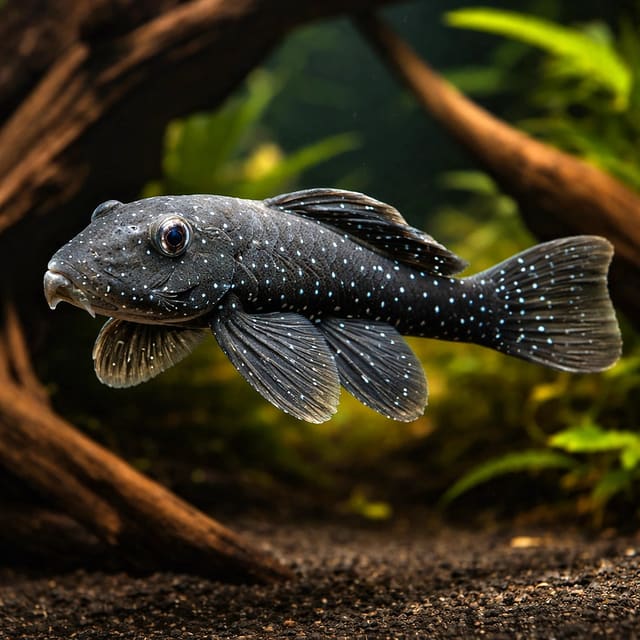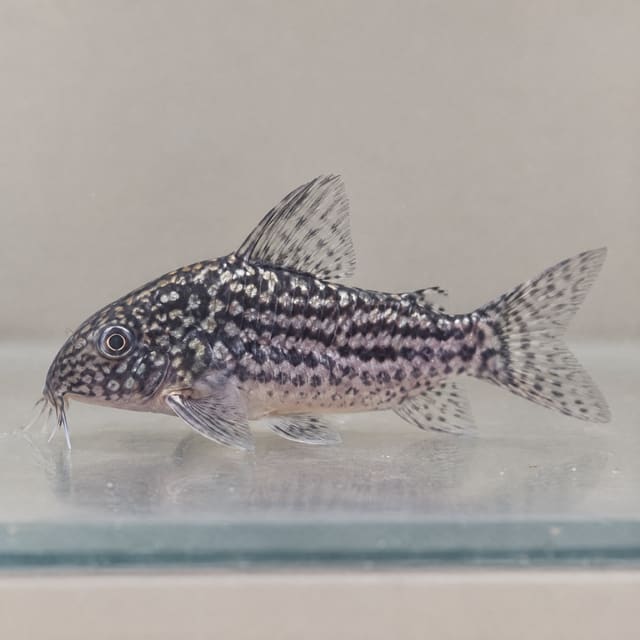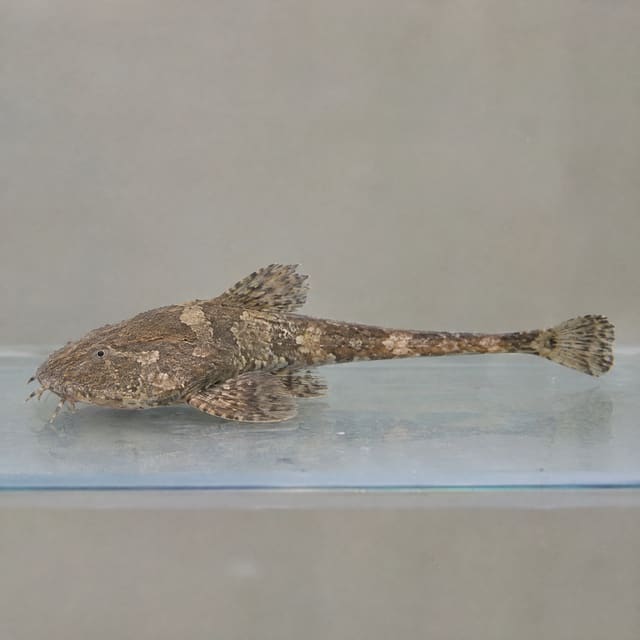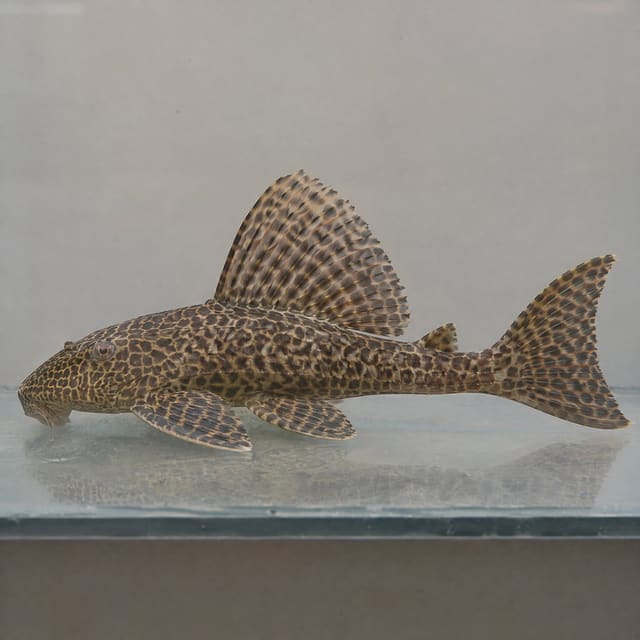
Royal Whiptail Catfish (Sturisomatichthys panamensis)
£19.99
The Rostratum Whiptail Catfish (Sturisoma rostratum) is a slender, long-snouted armoured catfish from the lower Amazon basin in Brazil, growing to about 19 cm standard length plus long tail filaments. It is a peaceful grazer that needs a mature, well-oxygenated aquarium at least 90 cm long. Sold individually as one live fish.
Sturisoma rostratum
The Rostratum Whiptail Catfish (Sturisoma rostratum) is a slender, long-snouted armoured catfish from the lower Amazon basin in Brazil, growing to about 19 cm standard length plus long tail filaments. It is a peaceful grazer that needs a mature, well-oxygenated aquarium at least 90 cm long. Sold individually as one live fish.
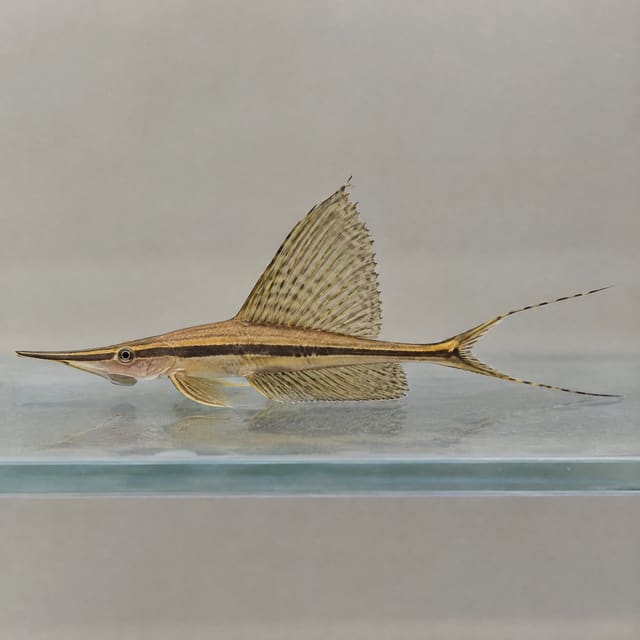
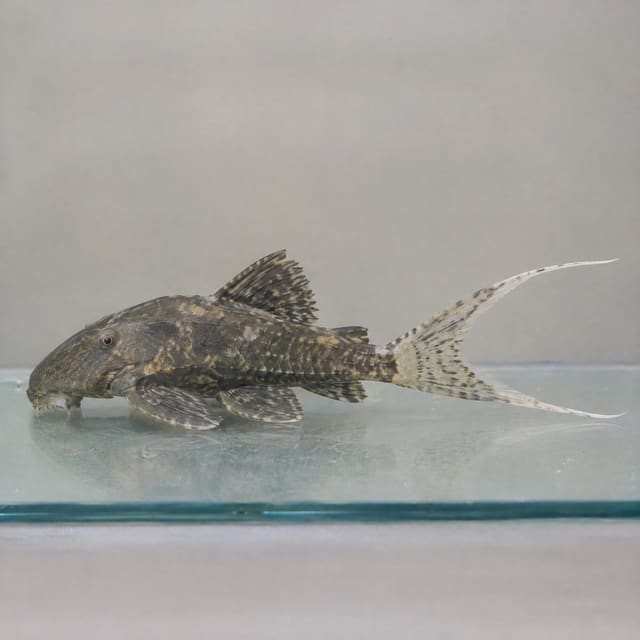
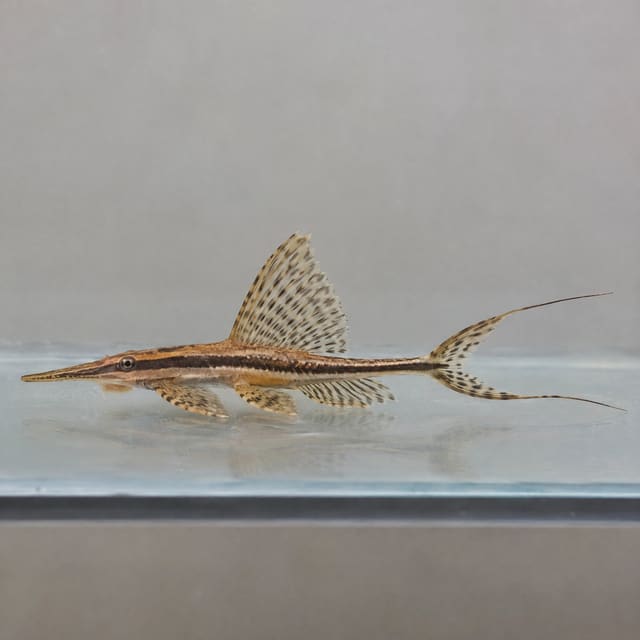
The Rostratum Whiptail Catfish (Sturisoma rostratum) is a slender armoured catfish with a long, pointed snout, a tall sail-like dorsal fin and fine filaments trailing from both tips of the tail. It lives on wood and stone in rivers of the lower Amazon basin in Brazil and grazes the algae and biofilm that grow there. For a peaceful, spacious aquarium with clean, moving water it is one of the most striking catfish you can keep.
It belongs to the armoured suckermouth family Loricariidae, subfamily Loricariinae, and is the type species of the genus Sturisoma, the species to which the genus name is anchored. The genus name means "sturgeon body", and rostratum means beaked, after that long snout. The species was first described as Loricaria rostrata.
A peer-reviewed revision of the genus (Londoño-Burbano and Britto, 2024) found that S. rostratum is limited to the lower Amazon basin, in the Araguaia, Tocantins, Tapajós, Maranhão and Mearim rivers and their tributaries. Earlier, the name was thought to cover whiptails across most of South America's main river basins. That history means older care notes filed under this name may describe other species, so the advice below uses current sources and says where it borrows from close relatives.
| Feature | Sturisoma | Sturisomatichthys |
|---|---|---|
| Plates on the belly | Central plates in three clear rows | Less organised, no clear rows |
| Fin markings | No dark spots, except sometimes on the pectoral fins | Dark spots usually on one or more fins |
| Plates along the side | 20–21 in the middle row | 15–18 in the middle row |
| Range | East of the Andes | Mostly west of the Andes |
These differences come from Planet Catfish, which adds that snout length alone is not a reliable way to separate the two genera. Our Royal Whiptail Catfish is a Sturisomatichthys, while the Black-Nosed Whiptail Catfish and the Bearded Whiptail Catfish are true Sturisoma. See them all among our Sturisoma whiptails.
One purchase supplies one live Rostratum Whiptail Catfish. The size option is "Standard": the fish is sent at the size currently available, which is smaller than the adult size. Sex is not chosen or guaranteed.
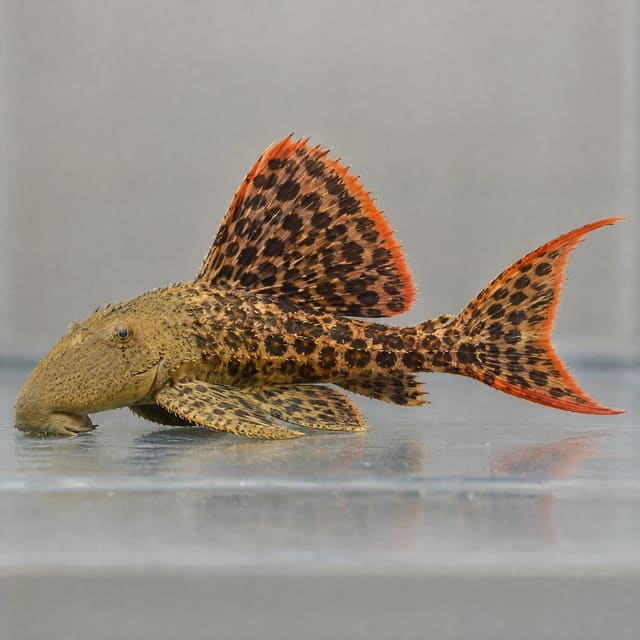
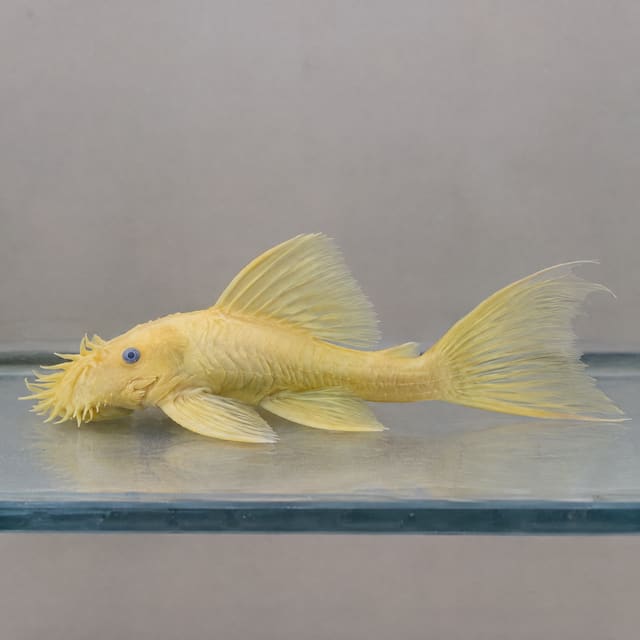
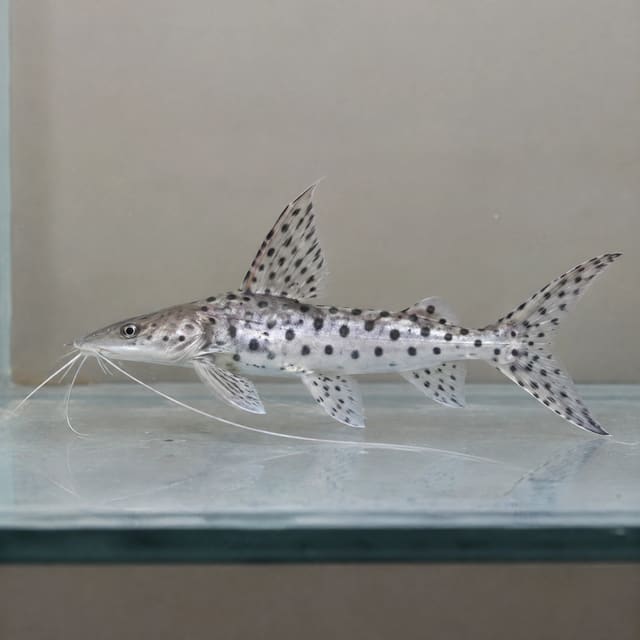
The photographs show the type of fish, not the individual you will receive. Pattern and shade vary between fish and change with lighting and background, so expect some difference.
Prepare the aquarium before ordering and check our delivery page for dispatch days and the Live Arrival Guarantee.
FishBase and Planet Catfish give a maximum of 19 cm standard length. Standard length stops at the base of the tail, so the tail filaments add more. This is a long fish that likes to stretch out on wood and stone, and it needs room to do so.
No published source gives a minimum aquarium for S. rostratum itself. ScotCat recommends a tank at least 90 cm (3 ft) long, lightly stocked, for the larger S. barbatum, and Neale Monks in Tropical Fish Hobbyist says Sturisoma need a spacious tank. We use 90 cm as the minimum length here; a bigger tank holds oxygen and water quality more steadily.
Monks explains that Sturisoma belong to a whiptail group that lives on solid surfaces such as wood and rock, often in flowing water, and grazes the algae growing there. ScotCat advises large flat stones or roots so the fish can sprawl out at full length. Planet Catfish notes that the habitat of the related Amazonian S. nigrirostrum has no plants apart from floating ones, and that the fish feeds on biofilm from stones and driftwood.
| Element | Purpose |
|---|---|
| Large pieces of driftwood | Resting places and a surface that grows biofilm |
| Smooth, flat stones | Grazing surfaces where it can lie full length |
| Fine sand or smooth gravel | A soft floor that will not scratch the belly |
| A few hardy plants | Shade at the edges without crowding the open water |
| Open water in front | Room to swim and for the current to run |
Monks also recommends a mature aquarium with good light so that algae grows for the fish to graze. Let the tank run with its lights on for some weeks before the fish arrives so the wood and stones carry a film to graze. Secure all wood and stone firmly so nothing shifts when the fish rests on it.
No published water values exist for S. rostratum. The best guide is its close Amazonian relative S. nigrirostrum, which Planet Catfish lists at 24–28°C and pH 6.0–7.0 in naturally soft water. Monks warns that the commonly kept Sturisoma do not tolerate very warm water, and ScotCat gives 22–24°C for the southern S. barbatum. Putting those together, we suggest 24–26°C: within the Amazonian relative's range and away from its warmest end.
| Reading | Target |
|---|---|
| Temperature | 24–26°C (our suggestion from related species) |
| pH | 6.0–7.0 |
| Hardness | Soft to medium, up to about 15 dH |
| Ammonia | 0 mg/l |
| Nitrite | 0 mg/l |
| Nitrate | As low as possible; no more than 20 mg/l above tap water |
The 15 dH upper hardness is Planet Catfish's figure for S. barbatum; the waste limits are from OATA's catfish guidance. ScotCat stresses keeping nitrate down with regular water changes, because these catfish decline quickly when it climbs. If your tap water is very hard, mixing in some reverse-osmosis water at every change helps keep the values steady. Use our water matcher to compare your readings, and treat every change with a dechlorinating conditioner.
This is the part of Sturisoma care most often underestimated. Monks writes that brisk currents and ample oxygen are essential for this group, and that they are very sensitive to the stagnant, oxygen-poor water of overstocked or poorly kept tanks. ScotCat likewise calls for a good current and filtration that keep oxygen high.
Use a filter rated well above the tank volume and add a circulation pump if needed, aimed along the length of the tank so water moves past the wood and stones and the surface keeps rippling. Monks notes that the circulation pumps sold for reef tanks create strong currents easily. Our guide to aquarium filtration explains flow rates and media.
Monks describes Sturisoma as largely herbivorous and says they really need green algae in their diet, with algae wafers, spirulina flake, sliced courgette and cooked spinach as good foods. ScotCat lists algae and green foods such as lettuce, peas, cucumber and courgette for the related S. barbatum, with occasional flake and frozen bloodworm.
Our algae control guide explains how to keep useful algae on surfaces without letting it take over the glass. A grazer does not replace good maintenance, and heavy algae usually means too much light or too many nutrients. The pleco care guide covers feeding other suckermouth catfish in the same way.
Add this whiptail only to a mature, fully cycled aquarium with zero ammonia and nitrite, strong circulation and grazing surfaces already in place. A brand-new tank has neither the biofilm it eats nor the stable water it needs.
Follow OATA's method with the lights off: float the sealed bag for about 10 minutes, add small amounts of tank water over up to 20 minutes, then release the fish with as little bag water as possible. Our step-by-step acclimatisation guide shows each stage.
| Checkpoint | What to do |
|---|---|
| Before arrival | Test the water, confirm the current reaches every part of the tank and lower the light |
| Arrival | Acclimatise and leave the lights off for the rest of the day |
| First evening | Offer a small algae wafer near the wood |
| Days 2–7 | Check it is grazing, the belly is filled and breathing is steady |
| End of week | Retest the water and do the normal change |
ScotCat describes Sturisoma as very peaceful and warns against fin-nipping fish, because the long tail filaments attract nipping. Monks adds that whiptails are slow feeders and easy targets for nippy or aggressive fish, while docile midwater fish make the best companions.
| Suits | Avoid |
|---|---|
| Peaceful tetras, rasboras and danios | Tiger barbs, serpae tetras and other fin-nippers |
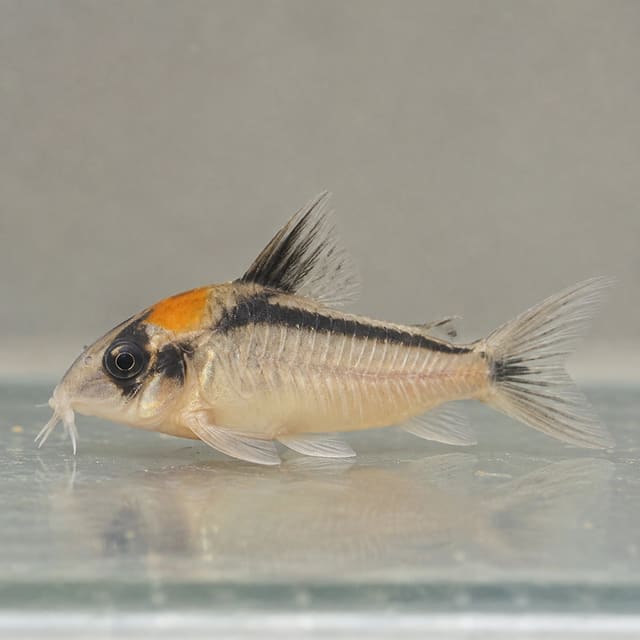
| Corydoras in a large tank | Pufferfish |
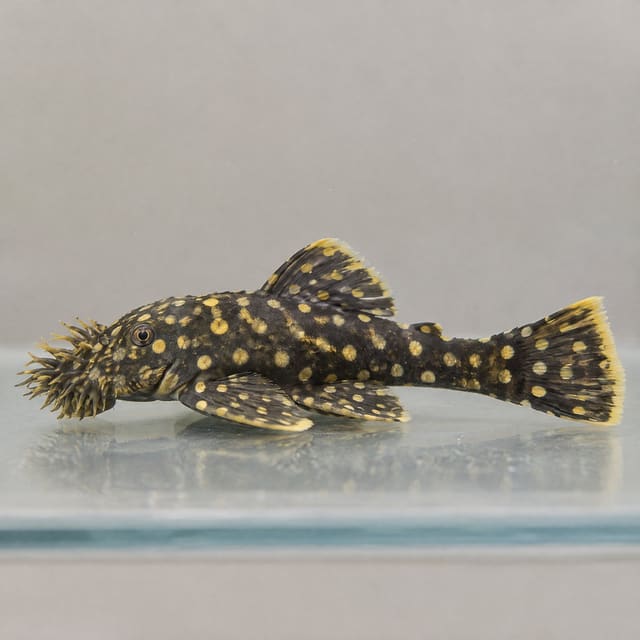
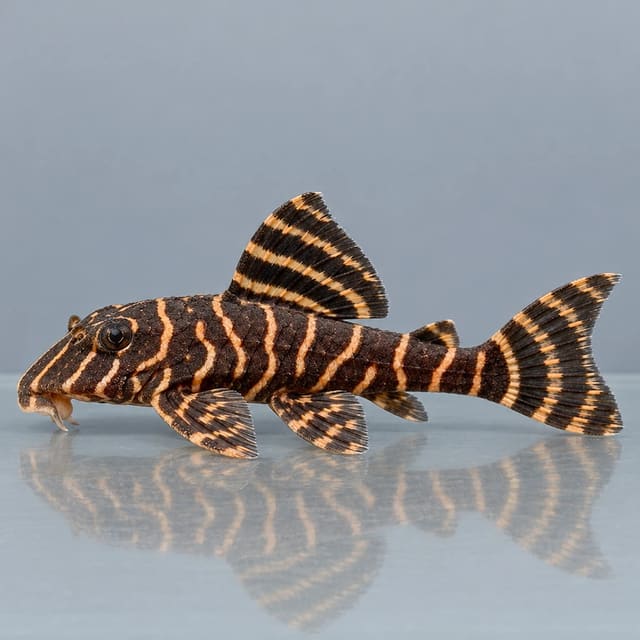
| Calm loricariids with similar needs | Aggressive cichlids |
| Fish that like moving, oxygen-rich water | Pushy feeders such as large plecos and loaches |
The Twig Catfish is a smaller relative from the same whiptail group with similar needs for clean water and grazing. Check a planned community with our tank mates checker, and browse more grazers among our algae eaters, all catfish and plecos or the wider South American catfish range.
| If you see | Do this |
|---|---|
| Rapid breathing or resting near the surface | Test ammonia, nitrite and temperature at once and increase water movement |
| A thin or hollow belly | Add more grazing food and feed after lights-out |
| Frayed fins or lost filaments | Look for a nipping tank mate |
| Rising nitrate between changes | Change more water, more often, and review stocking |
| White spots or fluffy patches | Test the water and seek fish-health advice before treating |
OATA lists clear eyes, intact fins, steady breathing and normal swimming as signs of health. With this fish, falling oxygen is often the first problem, so watch breathing closely on warm days and whenever the filter flow drops.
Planet Catfish has no breeding report for S. rostratum. Monks says Sturisoma are bred less often than smaller whiptails and spawn on flat surfaces, often vertical ones such as the aquarium glass. Broods are small and the male guards them until the fry swim freely. ScotCat describes the male of the related Sturisomatichthys aureus guarding and cleaning the eggs for up to 8 days.
Monks stresses that brisk currents and plenty of oxygen are essential both for healthy eggs and fry and for getting adults to spawn at all. Once the yolk sacs are used up, the fry are reared on algae, infusoria and finely powdered flake.
It is Sturisoma rostratum, a long-snouted armoured whiptail catfish (family Loricariidae) from the lower Amazon basin in Brazil. It is the type species of the genus Sturisoma and a peaceful grazer of wood and stone surfaces.
FishBase and Planet Catfish give 19 cm standard length. The long tail filaments add more on top, so plan for a long fish.
No minimum is published for this species. ScotCat recommends a tank at least 90 cm long for the larger Sturisoma barbatum, which we use as the minimum here, with more space better.
There are no published values for S. rostratum itself. We suggest 24–26°C, pH 6.0–7.0 and soft to medium water, based on the Amazonian S. nigrirostrum and on advice that Sturisoma do not tolerate very warm water. Keep it well oxygenated with zero ammonia and nitrite.
Yes. Sturisoma are largely herbivorous and graze algae and biofilm. Algae alone is not enough in most tanks, so add algae wafers, spirulina-based food and vegetables such as courgette.
Yes, Sturisoma are very peaceful. Keep it away from fin-nippers, which target the long tail filaments, and from fish that compete hard for food.
Planet Catfish has no breeding report for this species. Related Sturisoma lay eggs on flat surfaces such as the aquarium glass, and the male guards them until the fry swim.
One live fish of the standard size currently available.
No reviews for this item yet. Bought one? Honest reviews only, good or bad.
What customers say about ordering from us
Easy website plenty of info on fish your buying great to pick a time slot
TRACEY DURRANT · 7 Oct 2026
Got some lovely fish thank you
Kevin Mackie · 7 Oct 2026
Reviews of our shop, collected by Judge.me, an independent third-party review collector. Newest first.
Moved by UK carriers licensed to handle live animals
Hand-packed with oxygen bags, poly box, heat pack
Email photos the same day; an optional unboxing video helps us review problems faster — claim terms apply
Klarna & PayPal Pay in 3 at checkout