Moderate
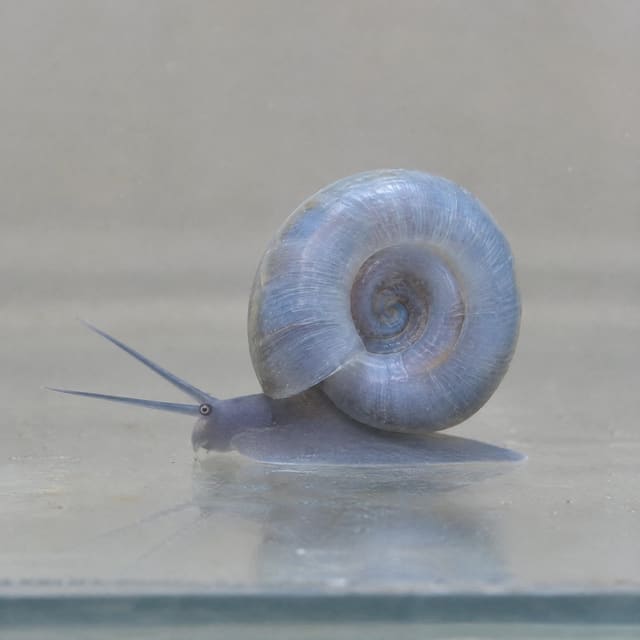
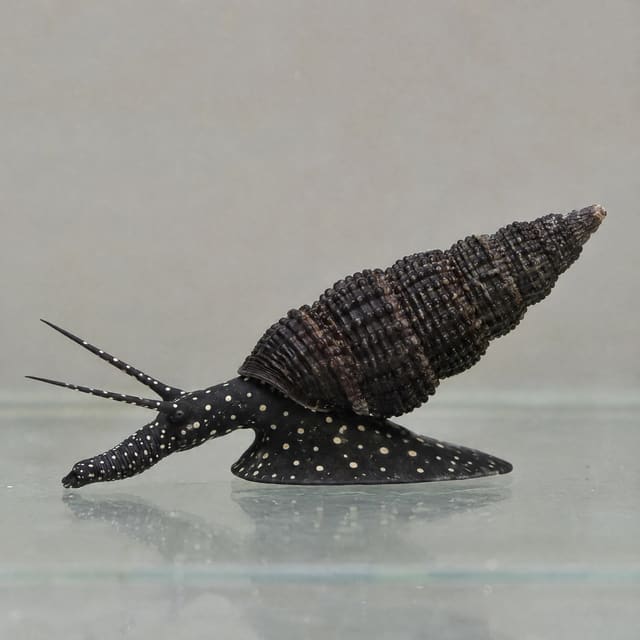
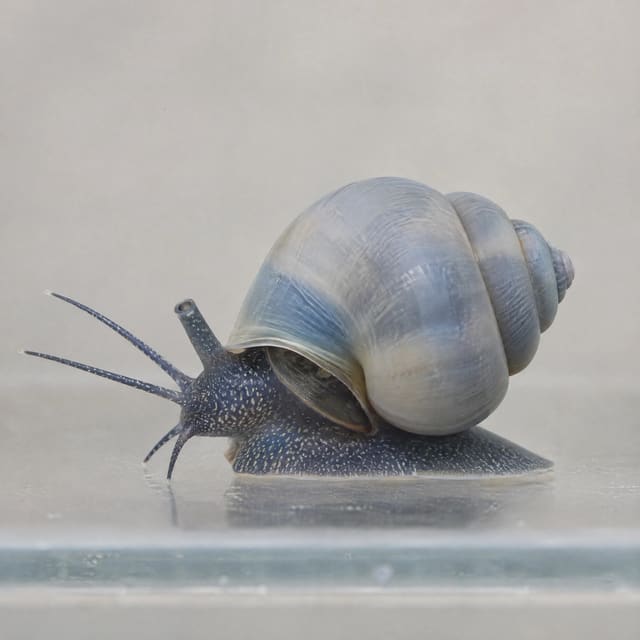
Australs Blue Aquarium Snail (Amularis sp. Trade Name)
20–26°C · pH 7–8.2
£9.99
The Golden Tropical Mussel (Pilsbryoconcha sp.) is a honey-gold Southeast Asian freshwater mussel that buries itself in soft sand and filter-feeds. It needs a mature heated aquarium, fine sand and small target feeds of fine food most days, or it slowly starves. Sold singly at the Medium grade.
Adult size is the maximum length this species reaches at full maturity (scientific sources). The livestock you receive will be younger and smaller. Product-photo provenance and any image-specific limitations are stated on the listing.
Pilsbryoconcha sp.
The Golden Tropical Mussel (Pilsbryoconcha sp.) is a honey-gold Southeast Asian freshwater mussel that buries itself in soft sand and filter-feeds. It needs a mature heated aquarium, fine sand and small target feeds of fine food most days, or it slowly starves. Sold singly at the Medium grade.
Adult size is the maximum length this species reaches at full maturity (scientific sources). The livestock you receive will be younger and smaller. Product-photo provenance and any image-specific limitations are stated on the listing.
Read the full care guidance when planning conditions for your aquarium.
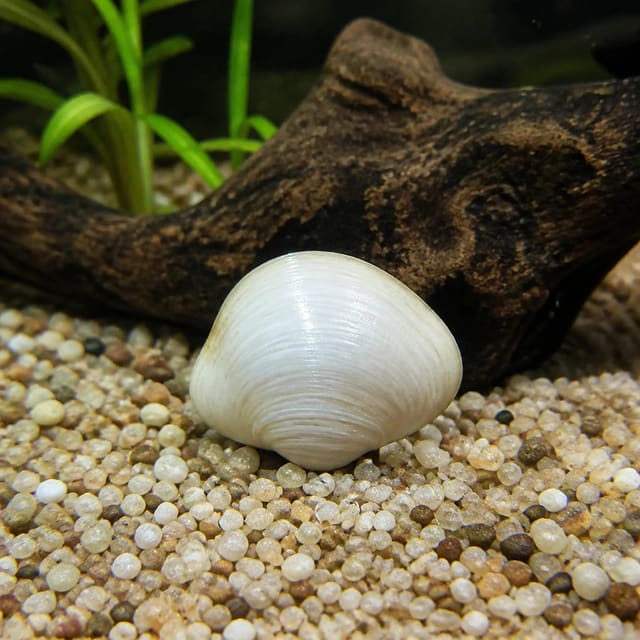
The Golden Tropical Mussel is a freshwater mussel of the genus Pilsbryoconcha from Southeast Asia, sold for its long, honey-gold shell. The animal in our photographs has an elongated, tongue-shaped shell in warm gold and amber, darkening to brown along the lower edge, with fine growth lines and a glossy finish. It lives partly buried in soft sand with only the rear edge showing, filtering fine particles from the water. It is a quiet, slow, fascinating animal for a keeper who is ready to feed it properly, which is the hard part.
The genus was named by Simpson in 1900, with the type species Anodonta exilis Lea, 1838, now Pilsbryoconcha exilis, according to the MUSSEL Project genus list. It belongs to the Unionidae, the family of river and pond mussels. Browse our other bivalves in the molluscs category and our snails in the snails collection.
A 2022 revision by Jeratthitikul and colleagues recognised eight genetically confirmed Pilsbryoconcha species, four of them new to science, plus a ninth from Sumatra that was not sequenced. The authors found the species difficult to tell apart from the shell, especially when young, and separated them by DNA. That is why this mussel is sold as Pilsbryoconcha sp. rather than under a species name. The most widespread species, P. exilis, is recorded from Thailand, Laos, the Malay Peninsula, Singapore and Java.
| Name you may see | What it means |
|---|---|
| Golden Tropical Mussel, golden clam | Trade names for gold-shelled Pilsbryoconcha |
| Pilsbryoconcha exilis | The type species and most widespread member of the genus |
| Golden mussel, Limnoperna fortunei | A different, invasive mussel that clings to hard surfaces and fouls pipes; not this animal |
Shell colour varies. The 2022 study describes the outer shell layer of most species as greenish to dark brown, and one species as yellowish to green, more yellowish in young specimens. Expect individuals to differ from the photographs, and the colour may change as the shell grows.
Freshwater mussels are filter feeders. Wikipedia's article on freshwater bivalves describes them removing fine silt, organic matter, bacteria and phytoplankton from the water, trapping the particles on mucus as water passes over the gills. A clean, well-filtered aquarium holds very little of that food. In our judgement, starvation is the commonest reason aquarium mussels die, and it happens slowly and out of sight, because a closed shell gives no clue that the animal inside is losing condition. We found no published survival figures for Pilsbryoconcha in aquariums, so we do not quote one.
| Check | Suits a mussel | Not suited |
|---|---|---|
| Tank maturity | A tank that has run for several months, with plants and a settled biofilm | A new or recently restarted tank |
| Tank size | We recommend 60 litres or more, for stable water and more natural food | Nano tanks |
| Substrate | Fine, soft sand deep enough to bury most of the shell | Gravel, pebbles or bare glass |
| Your time | Happy to give small target feeds most days and test the water weekly | Looking for a hands-off water cleaner |
Our tank volume calculator gives the litres from your tank's dimensions.
One purchase quantity is one live Golden Tropical Mussel, supplied at the Medium size grade. The grade describes the animal on the day of dispatch rather than a fixed measurement, and the photographs show the colour form rather than the individual you receive, so shape, colour and size vary. For adult size, the 2022 study measured its type specimens at 68.6–106.2 mm long, depending on the species. Those are reference specimens, not maximum sizes, so plan for a mussel of around 10 cm.
Wikipedia's account of the Unionidae explains that adult mussels burrow into the bottom with the rear margin of the shell exposed. That rear edge carries the openings through which water enters and leaves, so a mussel needs a bed it can sink into, upright and steady. Coarse gravel prevents this and can damage the soft foot.
No checked source publishes aquarium water values for Pilsbryoconcha, so we will not invent them. The genus comes from tropical Southeast Asia, where the 2022 study collected it from rivers and streams and one species from a man-made pond beside a paddy field, so it belongs in a heated tropical aquarium. The table gives OATA's general guidance for tropical freshwater invertebrates; treat it as a safe envelope rather than a species-specific optimum.
| Value | OATA invertebrate guidance |
|---|---|
| Temperature | 17–27°C (keep it heated within this range) |
| pH | 6.5–8.0 |
| General hardness | 4–18 °dH |
| Carbonate hardness | 3–15 °dKH |
| Ammonia and nitrite | Zero |
| Nitrate | No more than 20 mg/l above your tap water |
Mussel shells are made of calcium carbonate, which acidic water slowly dissolves, so avoid the soft, acidic end of the range and keep pH steady. OATA asks for weekly tests of ammonia, nitrite, nitrate, pH and hardness, a 25% water change at least weekly with conditioned water, and filter media rinsed only in removed tank water. Those steps matter even more when you are adding food for a filter feeder. Our water matcher compares your tap water with these values, and our nitrogen cycle guide explains why ammonia must stay at zero.
The Golden Tropical Mussel cannot graze or chase food. It eats only what drifts into its inhalant opening, so feeding means putting a fine suspension of food close to it. Aquarium Glaser, describing another Southeast Asian aquarium mussel, notes that such mussels must be fed with a suspension of yeast in water placed near them with a pipette. Ready-made options include liquid or powdered mussel food such as Muschel-VITAL, and very fine frozen foods such as frozen filter feeder food and microplankton, thawed and diluted.
Fish and shrimp will pick at the cloud too, which is fine; it simply means a little more food may be needed.
Use the floating-bag method OATA recommends for invertebrates. Switch off the lights, float the sealed bag for about 10 minutes to equalise temperature, then add small amounts of tank water to the bag over at least 30 minutes. Lift the mussel out by hand, place it on the sand hinge side up, and discard the bag water. Our acclimatisation guide explains the method step by step.
| When | Check |
|---|---|
| Arrival | Slow acclimatisation, mussel placed on soft sand, lights low |
| Days 1–2 | It should begin to dig in. Do not lift it repeatedly. |
| Days 3–7 | Start small target feeds. Test ammonia and nitrite. |
| End of week 1 | Partly buried with the rear edge showing; a gentle touch makes it close |
Like other unionid mussels, Pilsbryoconcha reproduces through a larval stage called the glochidium, which must attach to a fish for a while before dropping off as a tiny mussel. Pfeiffer and colleagues (2018) record Pilsbryoconcha as brooding its young in all four gills and producing glochidia without hooks. Wikipedia's glochidium article explains that the larvae attach to gills, fins and scales; under normal circumstances they do little harm, but heavy infections can greatly reduce a fish's ability to breathe.
Aquarium Glaser notes that a few glochidia look much like white spot to the naked eye and do no harm, while a mass infection may be fatal, and that no medicine can kill them in the skin without harming the fish. Its advice is to separate the mussel from the fish if glochidia are seen, as they are released over several days or weeks. If you do treat fish for a confirmed disease, move the mussel out first: OATA warns that shrimp and snails are very sensitive to copper, and even low levels can kill them; treat mussels with the same care.
A mussel that dies unnoticed can foul a tank quickly. A short daily look and a gentle weekly touch catch problems in time.
| What you see | Likely meaning | Action |
|---|---|---|
| Shell gaping, does not close when touched | Dead or dying | Remove at once; test ammonia and change water |
| Lying on top of the sand for days | Weak, stressed or unable to dig | Check the sand is fine and deep enough; check water quality |
| Repeatedly moving around the tank | Searching for better conditions or food | Check flow, feeding and water values |
| Thin, pitted or chalky patches on the shell | Acidic or very soft water | Test pH and hardness |
| Fish nipping at the open shell | Unsuitable tank mates | Rehome the fish or move the mussel |
A mussel needs calm companions that will not pick at its soft parts or keep digging it up. OATA's advice for snails, which applies just as well to mussels, is to avoid fish that eat them, such as pufferfish and loaches, and Wikipedia's freshwater bivalve article notes that invasive crayfish prey on mussels in Europe. Filter-feeding fan shrimp such as the Wood / Bamboo Shrimp are peaceful but compete for the same fine food, so feed more if you keep both.
| Suits | Use with care | Avoid |
|---|---|---|
| Peaceful community fish that feed in midwater | Bottom-digging fish that may uproot it | Pufferfish and snail-eating loaches |
| Dwarf shrimp and snails such as the Malaysian Trumpet Snail | Fan shrimp, which compete for fine food | Crabs and crayfish |
| Other bivalves on the same feeding plan, such as the Green Ornamental Mussel | Large cichlids that rearrange the substrate | Copper-based medicines |
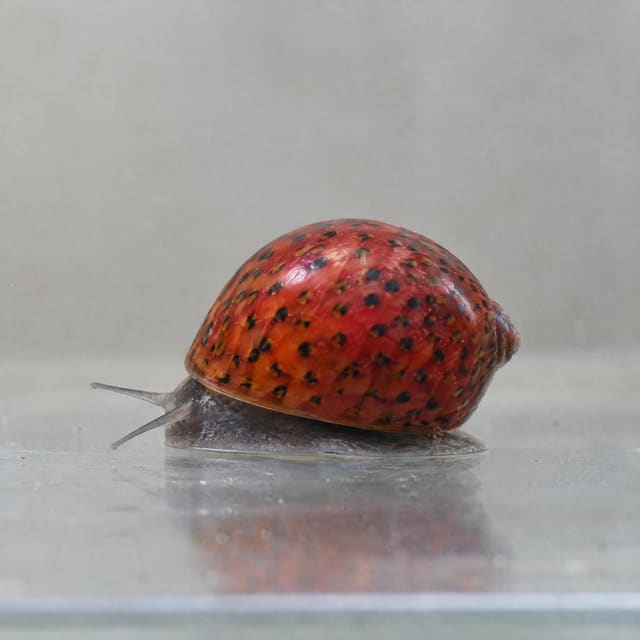
For a quick check of a particular mix, try our tank mates checker. If you are comparing bivalves, our Batman Clam is a larger specialist mussel, and the Purple Asian Clam is a small clam with its own needs.
The 2022 study describes Pilsbryoconcha as an important food resource in its home range, used in fish farming as a living filter to reduce suspended particles, and sold as ornamental pets. It also traces the genus back about 43 million years to the Khorat Plateau of north-eastern Thailand, from where it spread across Indochina as river systems changed.
OATA's advice is never to release aquarium animals or plants into the wild, and to dispose of old tank water and substrate where it cannot reach a natural watercourse. A tropical mussel will not survive a British winter outdoors, and its larvae ride on fish, so it must stay in your aquarium. If you can no longer keep it, pass it to another aquarist. Delivery and arrival details are on our delivery page, and our water chemistry guide explains pH and hardness in plain terms.
It is sold as Pilsbryoconcha sp., a genus of Southeast Asian freshwater mussels. A 2022 study recognised eight genetically confirmed species and found them hard to tell apart from the shell, especially when young, so we do not name a species.
No. The invasive golden mussel is Limnoperna fortunei, a different family of mussels that clings to hard surfaces and fouls pipes. The Golden Tropical Mussel is a burrowing unionid mussel named for its honey-gold shell.
Only a little, and that is not a reason to buy one. It filters fine particles from the water, but a mussel needs that food to survive, and a well-filtered tank rarely contains enough. Plan to feed it; do not rely on it as a filter.
Give small target feeds of a fine filter-feeder food, a liquid mussel food or a little yeast stirred into tank water, released near the mussel with a pipette while the filter flow is reduced. Feed little and often and test ammonia regularly.
The type specimens measured in the 2022 study were about 6.9–10.6 cm long, depending on the species. They are not maximum sizes, so plan for a mussel of around 10 cm. This listing is supplied at the Medium grade.
Yes, with peaceful community fish, dwarf shrimp and snails. Avoid pufferfish, loaches that eat molluscs, crabs and crayfish, and digging fish that keep uprooting it. Fan shrimp compete with it for the same fine food.
A healthy mussel closes when touched, slowly buries itself, and shows its rear edge above the sand. A shell that gapes and will not close, or a bad smell, means it has died and must be removed before it fouls the water.
It is very unlikely. Like other unionid mussels it has a larval stage, called glochidia, that must spend time attached to a fish. Its natural host fish are not described in the sources we checked, so breeding cannot be planned.
Every figure on this page comes from these sources, checked in November 2026. No checked source gives species-specific aquarium water values, survival figures or host fish for Pilsbryoconcha, and the page says so where that matters.
No reviews for this item yet. Bought one? Honest reviews only, good or bad.
What customers say about ordering from us
Easy website plenty of info on fish your buying great to pick a time slot
TRACEY DURRANT · 7 Oct 2026
Got some lovely fish thank you
Kevin Mackie · 7 Oct 2026
Reviews of our shop, collected by Judge.me, an independent third-party review collector. Newest first.
Moved by UK carriers licensed to handle live animals
Hand-packed with oxygen bags, poly box, heat pack
Email photos the same day; an optional unboxing video helps us review problems faster — claim terms apply
Klarna & PayPal Pay in 3 at checkout