Moderate
Emerald / Chocolate Cichlid (Hypselecara temporalis)
24–28°C · pH 6–7.5 · 300L
£21.99
The Rostratus Cichlid (Cribroheros rostratus), long sold as Amphilophus or Astatheros rostratus, is a Central American cichlid from Lake Nicaragua and nearby waters with a long, pointed snout. It grows to about 18.5 cm standard length, sifts sand for insects and detritus and needs a large aquarium with open sand. It is not the Malawi Fossorochromis rostratus. Sold individually as one live fish.
Cribroheros rostratus
Save when buying multiple fish. Each quantity is one fish; sex and pair formation are not guaranteed unless the selected variant explicitly states them.
The Rostratus Cichlid (Cribroheros rostratus), long sold as Amphilophus or Astatheros rostratus, is a Central American cichlid from Lake Nicaragua and nearby waters with a long, pointed snout. It grows to about 18.5 cm standard length, sifts sand for insects and detritus and needs a large aquarium with open sand. It is not the Malawi Fossorochromis rostratus. Sold individually as one live fish.
Cichlids are a family of roughly 1,800 accepted species, not one care type. Before buying, identify the exact species and source, then compare adult measurement, usable tank dimensions, social system, territory, tested water, diet and an exit plan. No family-wide minimum tank, water range or tank-mate list is safe.
The Rostratus Cichlid (Cribroheros rostratus) is a Central American cichlid from Lake Nicaragua and the rivers and lakes around it. Rostratus is Latin for "beaked", a fair description of its long, pointed snout. It is a fish of open sandy floors, where it takes in mouthfuls of substrate and sorts out insects and other food. In shops it is usually labelled with one of its older names, Amphilophus rostratus or Astatheros rostratus.
It is not the Lake Malawi fish with the same species name. Fossorochromis rostratus, sold by us as the Copper Rostratus Hap and the Sand Diver Cichlid, is an African haplochromine that needs hard, alkaline lake water and Malawi tank mates. The two fish share a Latin word, not a continent, a family branch or a care sheet.
| Name | Status |
|---|---|
| Cribroheros rostratus (Gill, 1877) | Current name in Eschmeyer's Catalog of Fishes and FishBase |
| Amphilophus rostratus, Astatheros rostratus | Older names, still common on shop labels and in books |
| Heros rostratus, Cichlasoma rostratum, Thorichthys rostratus | Earlier placements listed by the Catalog of Fishes |
| Rostratus Cichlid | Trade name |
| Fossorochromis rostratus | A different fish from Lake Malawi; not this species |
Theodore Gill described the species in 1877 from fish taken in Lake Nicaragua, according to Eschmeyer's Catalog of Fishes. In 2016 Říčan and Piálek created the genus Cribroheros for it and its relatives. Wikipedia lists eight species, including the Pastel Cichlid (C. alfari), the Red-breast Cichlid (C. longimanus) and the False Firemouth (C. robertsoni), ranging from western Panama to southern Mexico and reaching up to 19 cm standard length. TFC files its long-time relatives under Amphilophus cichlids.
One purchase supplies one live Rostratus Cichlid. The size option is "Standard": the fish is sent at the size currently available, which is well below adult size. Sex is not chosen or guaranteed, and the sources we checked do not describe a reliable way to sex young fish.
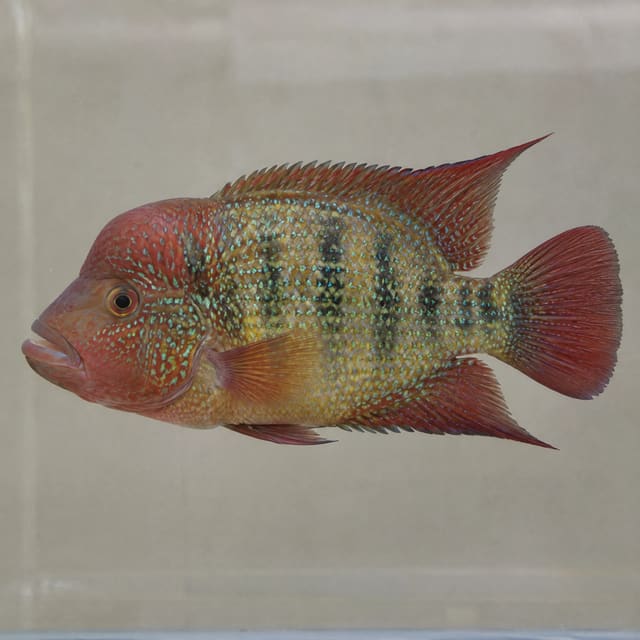
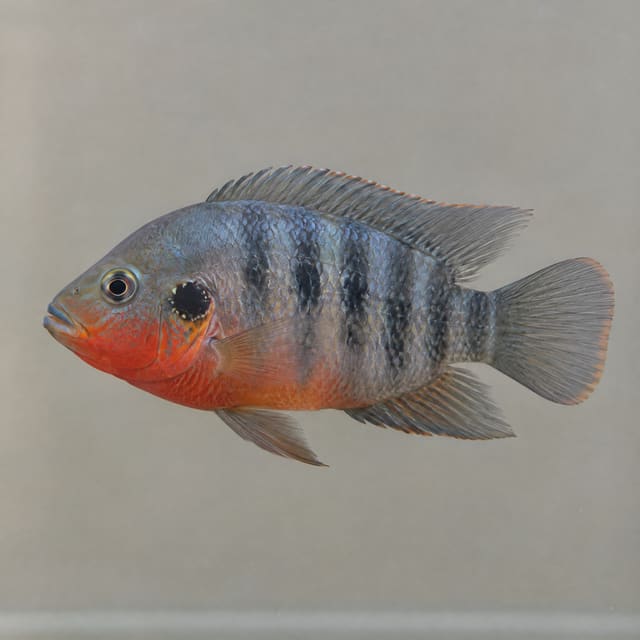
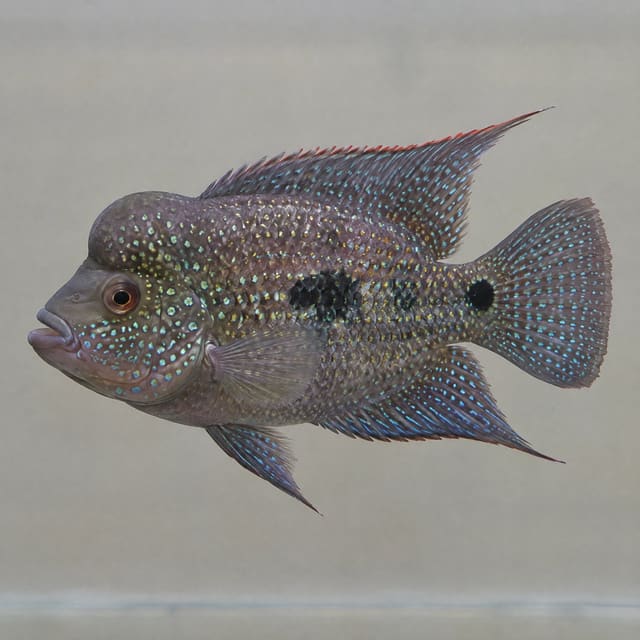
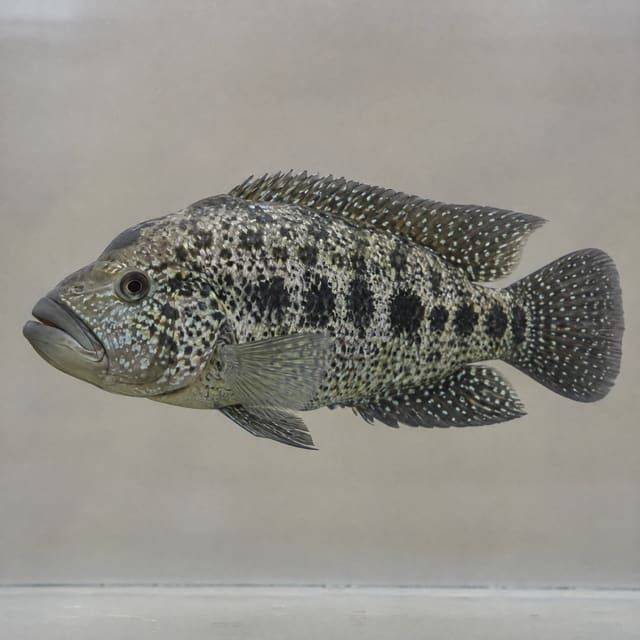
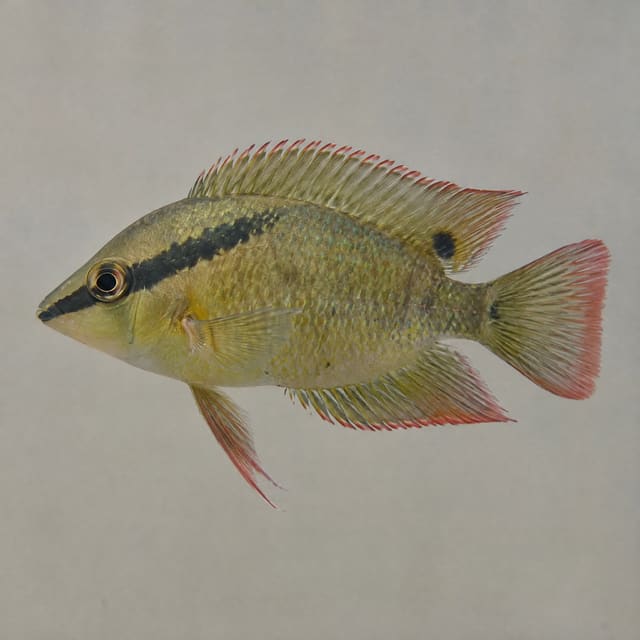
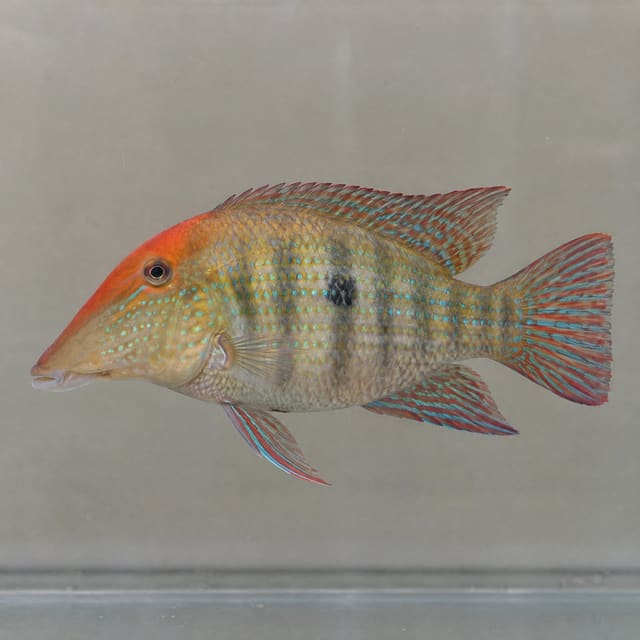
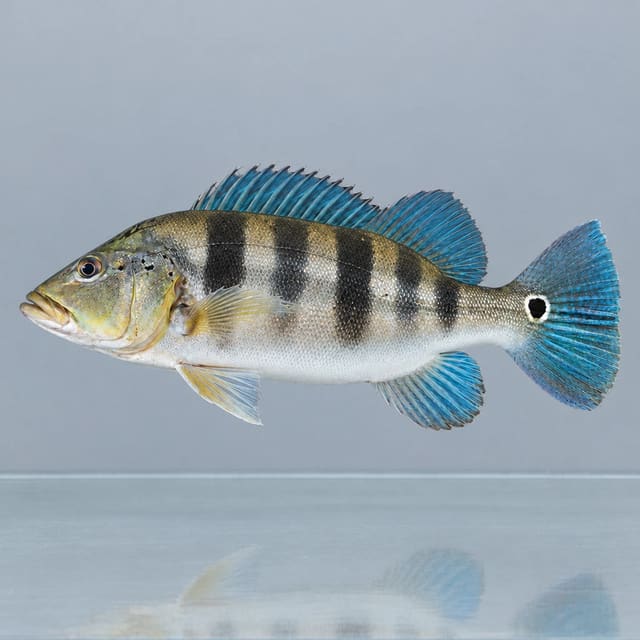
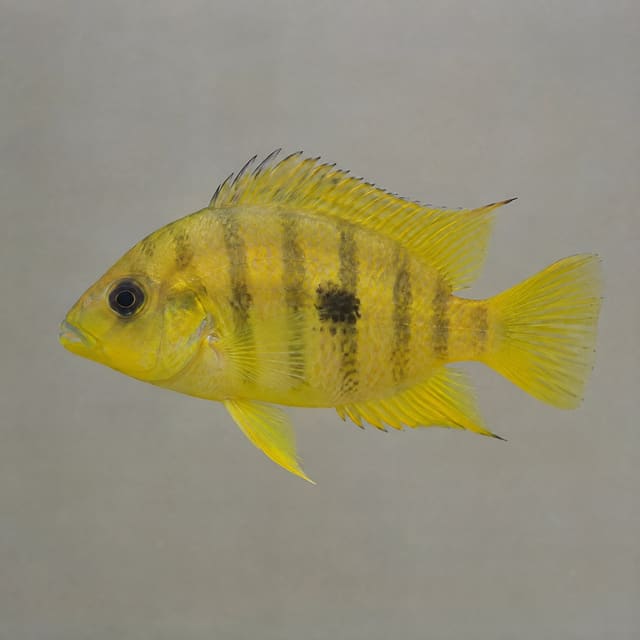
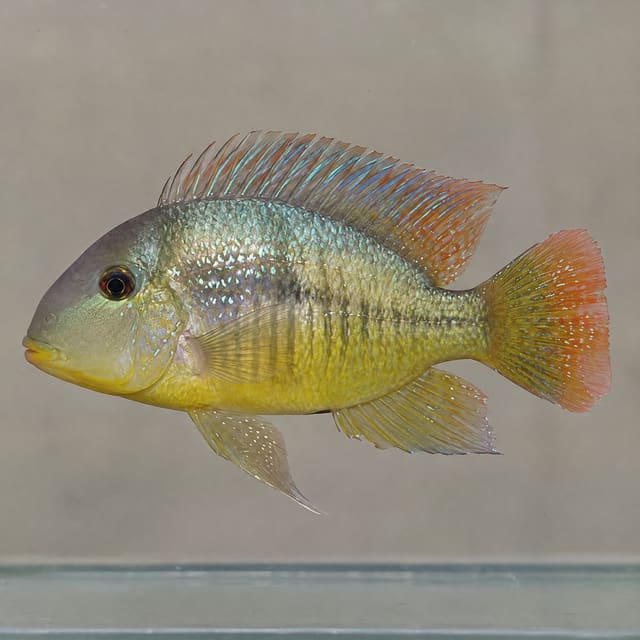
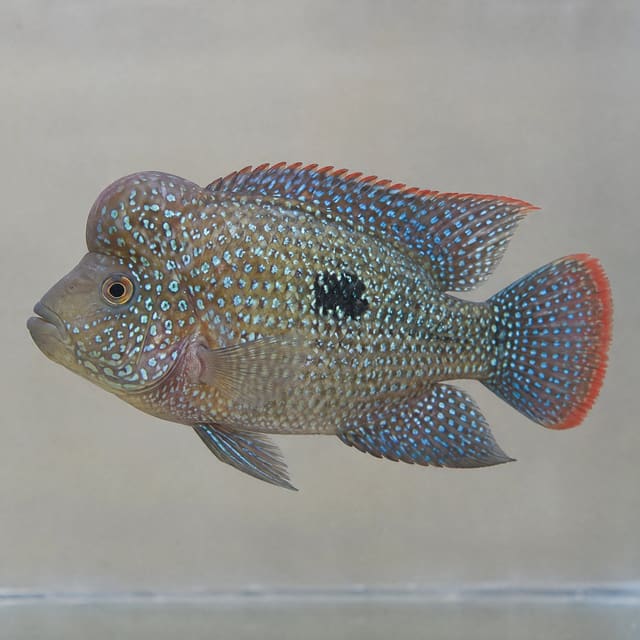
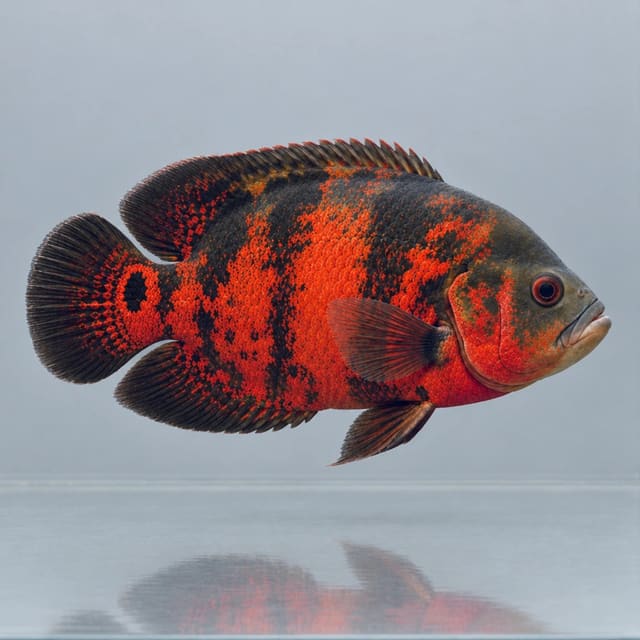
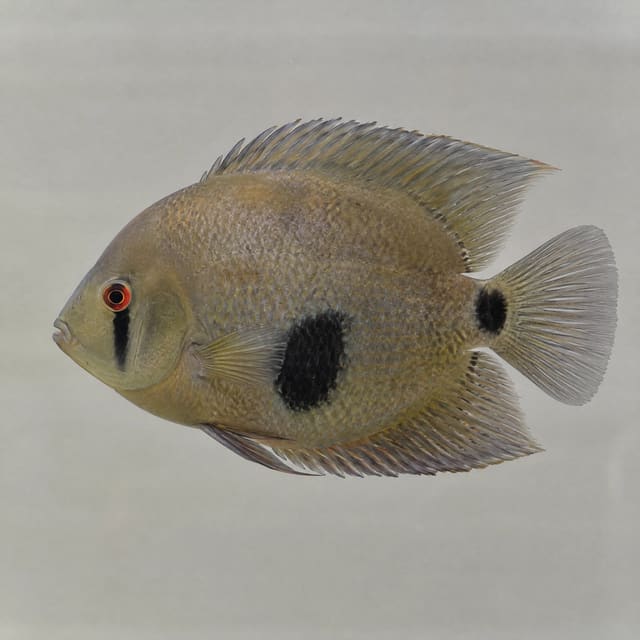
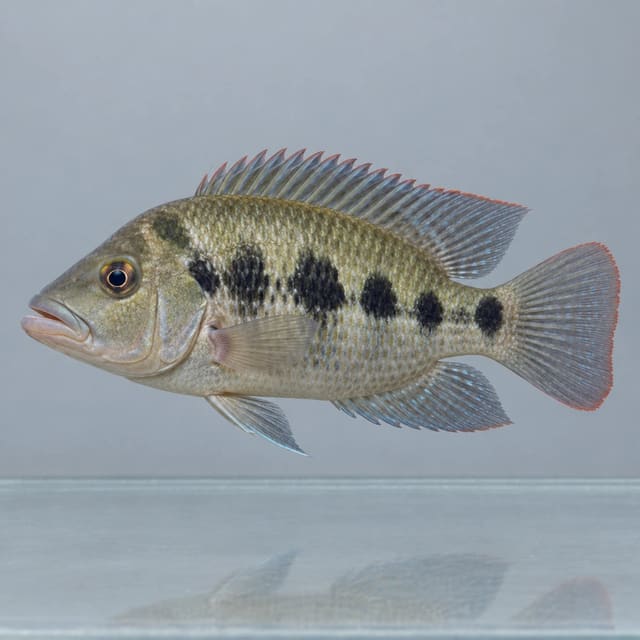
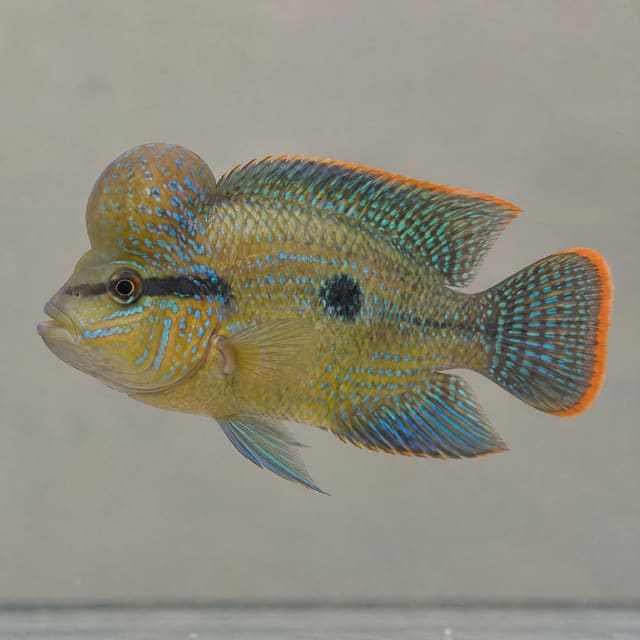
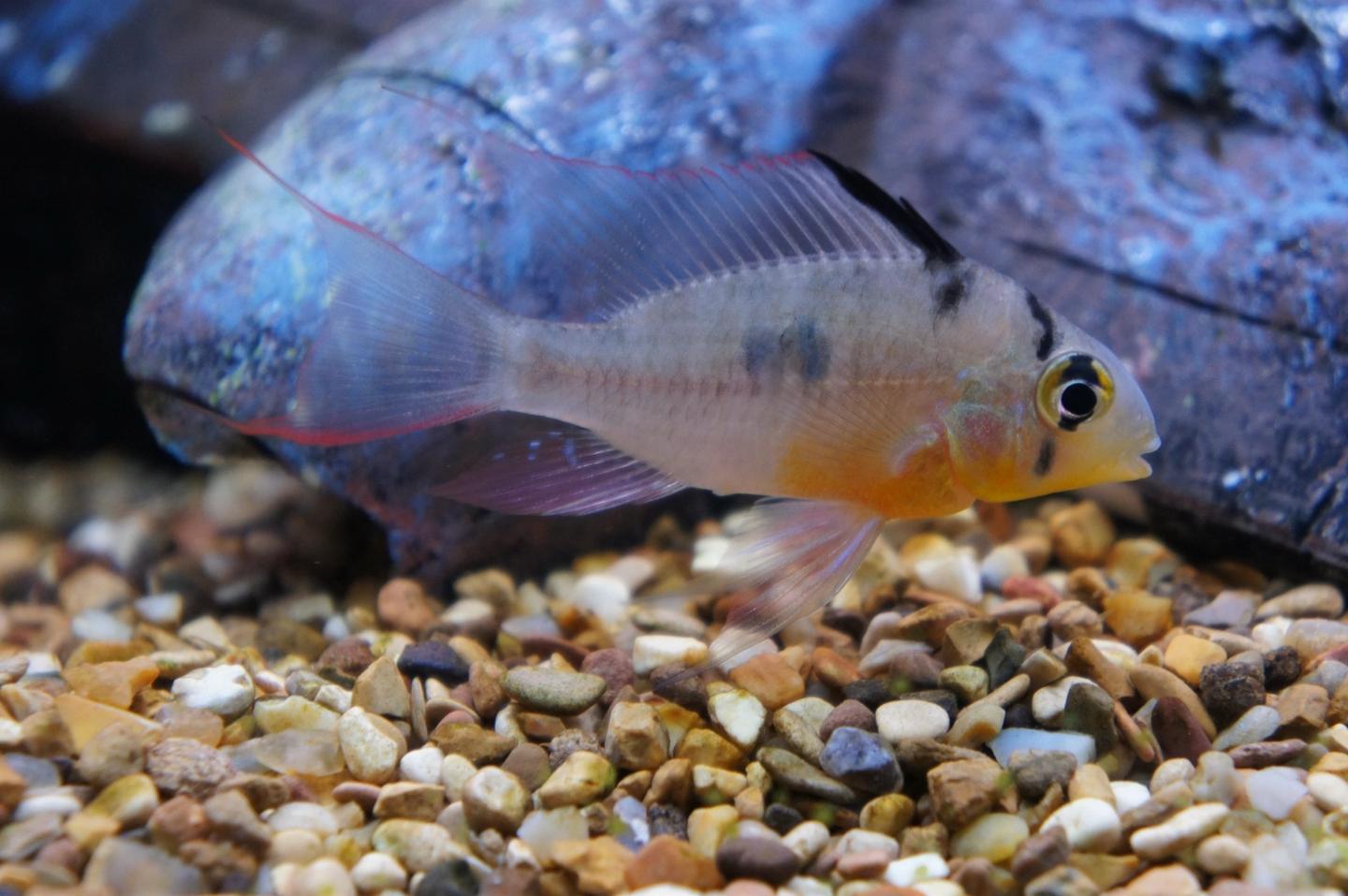
The photographs show the type of fish, not the individual you will receive. Colour and the dark markings along the flank vary with age, mood and lighting, and a newly moved fish is usually paler than one that has settled in.
Read our delivery and Live Arrival Guarantee information before ordering, and browse more rare and collector fish if you enjoy unusual species.
FishBase gives a maximum of 18.5 cm standard length, measured from the snout to the base of the tail, so the whole fish is noticeably longer. Some shop descriptions quote 20–25 cm; we have not found that figure in a published source and use the FishBase value.
No minimum tank is published for this species. OATA advises at least 300 litres for American cichlids that grow over 15 cm. Practical Fishkeeping suggests about 227 litres for the related Cribroheros rhytisma, an 18 cm fish of a similar build. We suggest at least 300 litres and a tank of 150 cm or longer for a pair or a mixed group, because these fish use the floor area rather than the height.
FishBase describes it as a floodplain fish found between sea level and 200 m, in lakes and rivers with low to high current, across the Atlantic slope of Nicaragua and Costa Rica, including the San Juan drainage and Lakes Managua and Masaya. Studies quoted by FishBase found mainly aquatic insects in its diet, together with abundant detritus and sediment, which is what you expect from a fish that sifts the bottom.
Practical Fishkeeping recommends silver sand, river-worn boulders and pebbles for the related C. rhytisma, so that the fish can sift for food naturally. The same layout suits this species. Use soft, rounded sand, never sharp gravel, and leave a wide open area at the front.
| Area | Purpose |
|---|---|
| Open soft sand | The main feeding ground, deep enough to sift |
| Large smooth boulders, bedded on the glass | Territory markers and possible spawning sites |
| Driftwood | Shade and visual barriers between fish |
| Hardy plants on wood or in pots | Green that sifting cannot uproot |
Place heavy stones before adding the sand and keep heaters and pipework guarded. Seriously Fish gives the same advice for the large cichlids of the Nicaraguan lakes: decor heavy enough that the fish cannot move it, and protected or concealed equipment.
FishBase records 23–34°C for wild fish, a broad range typical of shallow tropical lakes. No pH or hardness is published for this species. As a guide we use two sources: Seriously Fish gives pH 6.0–8.0 and 5–25 dGH for the Midas cichlid, which lives in the same Nicaraguan lakes, and OATA gives 22–27°C, pH 6.5–8.0 and 4–12°dH for American cichlids in general.
| Reading | Our target | Basis |
|---|---|---|
| Temperature | 24–27°C | Inside FishBase's wild range and OATA's guidance |
| pH | 7.0–8.0 | Inside the Midas cichlid and OATA ranges |
| General hardness | 5–15 dGH | Inside the Midas cichlid range |
| Ammonia and nitrite | 0 mg/l | OATA limit |
| Nitrate | No more than 20 mg/l above tap water | OATA limit |
Most UK tap water, once treated with a conditioner, falls inside these ranges. Hard, alkaline supplies in southern and eastern England need no adjustment; very soft supplies benefit from a little crushed coral in the filter to steady the pH. Compare your readings with our water matcher, and read our water chemistry guide if any number is unfamiliar.
A large cichlid that sifts all day produces plenty of waste and keeps fine particles in suspension. Fit a filter rated for several times the tank volume per hour, with sponge or floss to trap fine sand and plenty of biological media. Practical Fishkeeping notes that the related C. rhytisma comes from moderate to fast-flowing water and benefits from decent flow. Our aquarium filtration guide explains sizing and maintenance.
In the wild it lives mainly on aquatic insects picked out of the sediment. In the aquarium it takes prepared foods readily. OATA recommends cichlid pellets or granules supplemented with frozen or freeze-dried foods, with larger items such as cockles, lance fish and prawns for larger species, fed once a day.
Feed over the open sand so the fish can search for food the way it does in the wild, and remove anything left after a few minutes.
Add the fish only to a matured, filtered aquarium with ammonia and nitrite at zero. OATA's floating-bag method is to switch off the aquarium lights, float the sealed bag for about 10 minutes, add small amounts of tank water over up to 20 minutes, and release the fish with as little bag water as possible. Our guide to acclimatising new fish shows each step.
| Checkpoint | What to do |
|---|---|
| Before arrival | Test the water, set 24–27°C and finish the rockwork |
| Arrival day | Acclimatise with lights off; no food until the next day |
| Days 2–4 | Offer small sinking portions and watch for sifting |
| Days 5–7 | Watch for chasing, torn fins or a fish hiding all day |
| End of week | Retest the water and make the usual 25% change |
The sources we checked say little about this species' temperament. Practical Fishkeeping describes its close relative C. rhytisma as an open spawner that becomes aggressive during reproduction. OATA advises that calmer American cichlids such as severums can share a robust community with larger fish, while aggressive species should be kept alone or only with equally aggressive cichlids. Its lake neighbour the Midas cichlid is, in Seriously Fish's words, one of the most belligerent cichlids, so keep the two apart.
| Suits | Avoid |
|---|---|
| The Nicaragua Cichlid, another sturdy Central American of similar size | The Red Devil Midas Cichlid and Thick-Lipped Red Devil Cichlid |
| The Severum and other calm large cichlids | Large predators such as the Jaguar Cichlid |
| Large, robust catfish that stay out of its way | Small fish and shrimp that fit in its mouth |
| Fish that share 24–27°C and neutral to alkaline water | Lake Malawi cichlids, including the Malawi "rostratus" |
Check a planned mix with our tank mates tool. Our Jack Dempsey guide covers the planning for another medium-large Central American cichlid, and our cichlid care guide explains territories and aggression. Browse all South and Central American cichlids or the full American cichlid category.
OATA describes a healthy fish as having clear, bright eyes, undamaged fins, intact scales, no ulcers or lumps, normal swimming and steady breathing. Clamped fins, flicking against decor and shimmying are early warning signs. Most problems in large cichlids follow a fall in water quality, so test before you treat.
| If you see | Do this |
|---|---|
| Rapid breathing or hanging near the surface | Test ammonia, nitrite and temperature at once; increase surface movement |
| Cloudy eyes or frayed fin edges | Test ammonia, nitrite and nitrate and review the water-change routine |
| Loss of appetite or a swollen belly | Pause feeding for a day, then feed smaller, varied meals |
| Torn fins, chasing or a fish pinned in a corner | Add visual barriers or separate the fish; check whether a pair is forming |
| White spots or fluffy patches | Test the water and seek advice before medicating |
We found no published aquarium breeding report for this species. Its relatives are open spawners: Practical Fishkeeping says the related C. rhytisma becomes aggressive during reproduction, that females should be given shelter, and that you should be ready to remove the fish and raise the brood yourself if disputes break out. A sexing method for C. rostratus is not described in the sources we checked.
No. This is Cribroheros rostratus, a Central American cichlid from Nicaragua and Costa Rica. The Malawi fish sold as Rostratus or Sand Diver is Fossorochromis rostratus from Lake Malawi in Africa. They share only the species name, which means "beaked".
Gill described it in 1877 as Heros rostratus from Lake Nicaragua. It was later placed in Cichlasoma, Thorichthys, Astatheros and Amphilophus. In 2016 Říčan and Piálek moved it to the new genus Cribroheros, the name Eschmeyer's Catalog of Fishes and FishBase use today.
FishBase gives a maximum of 18.5 cm standard length, measured without the tail, and the genus is listed as reaching up to 19 cm. Some shop descriptions quote 20–25 cm, which we have not found in a published source.
OATA advises at least 300 litres for American cichlids that grow over 15 cm. We suggest a tank of at least 150 cm long and 300 litres for a pair or a mixed group, with plenty of open sand.
FishBase records 23–34°C in the wild. No pH or hardness is published for the species, so we suggest 24–27°C, pH 7.0–8.0 and 5–15 dGH, which sits inside the published ranges for the Midas cichlid from the same lakes and inside OATA's American cichlid guidance.
It is a sturdy fish rather than a bully, but like most Central American cichlids it becomes defensive when breeding. Keep it with fish of a similar size and temperament and avoid the very belligerent Red Devil and Midas cichlids, which share its home lakes.
Wild fish eat mainly aquatic insects, with plenty of detritus and sediment in the gut. In the aquarium give a sinking cichlid pellet as the staple, with frozen foods such as bloodworm, mysis, chopped prawn or cockle.
Yes. It feeds by taking in mouthfuls of substrate and sorting out food, so a soft sand floor lets it behave normally and protects its gills.
One live fish of the standard size currently available. Sex is not chosen or guaranteed.
No reviews for this item yet. Bought one? Honest reviews only, good or bad.
What customers say about ordering from us
Easy website plenty of info on fish your buying great to pick a time slot
TRACEY DURRANT · 7 Oct 2026
Got some lovely fish thank you
Kevin Mackie · 7 Oct 2026
Reviews of our shop, collected by Judge.me, an independent third-party review collector. Newest first.
Moved by UK carriers licensed to handle live animals
Hand-packed with oxygen bags, poly box, heat pack
Email photos the same day; an optional unboxing video helps us review problems faster — claim terms apply
Klarna & PayPal Pay in 3 at checkout