Moderate
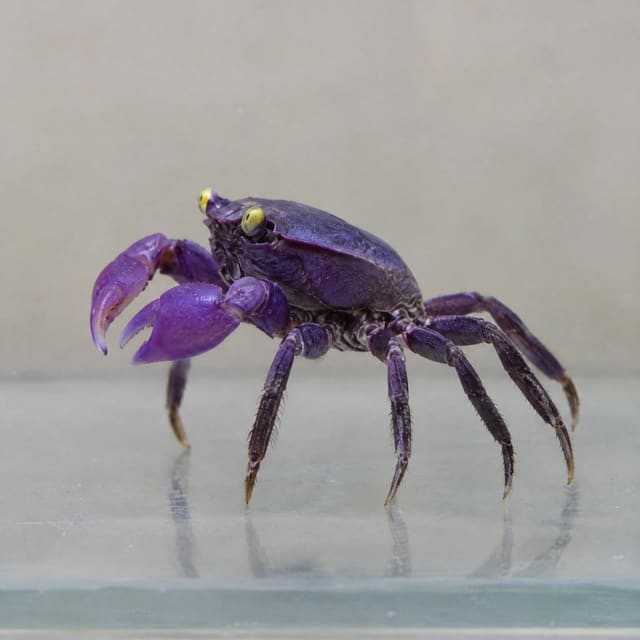
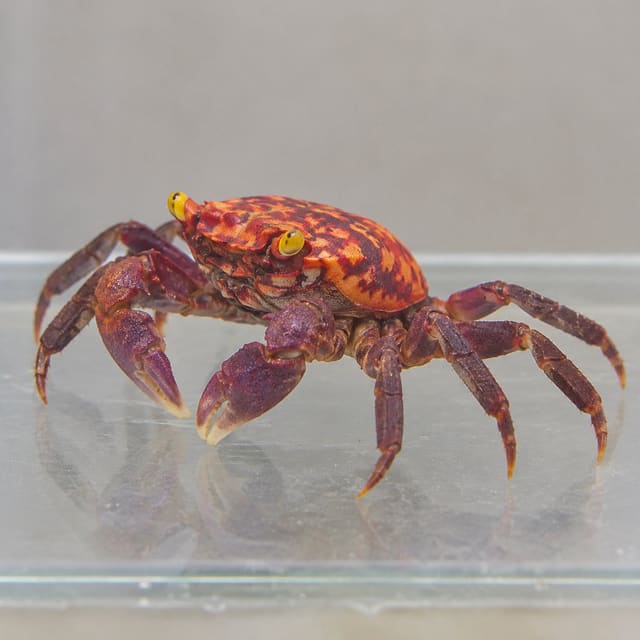
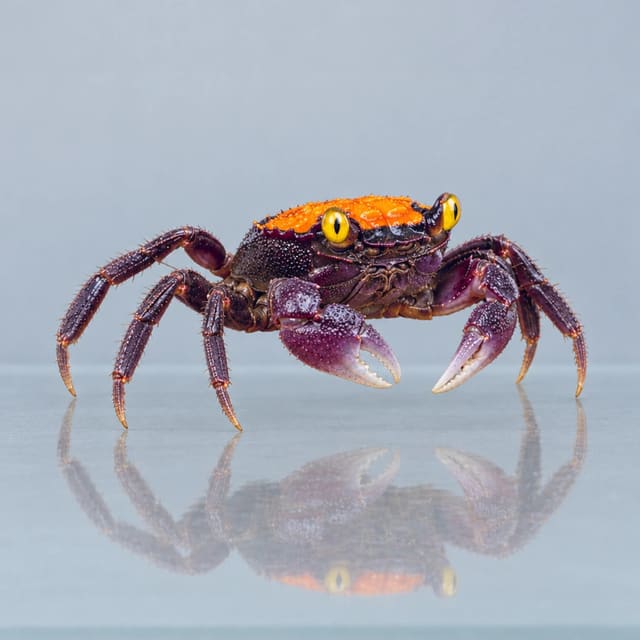
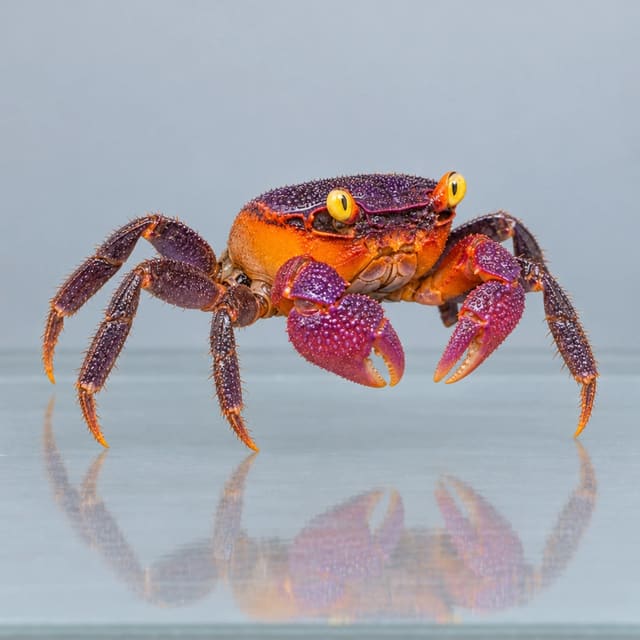
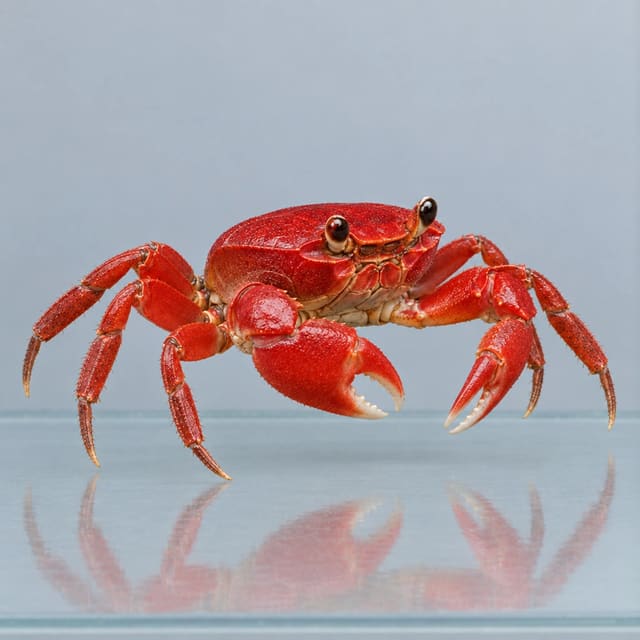
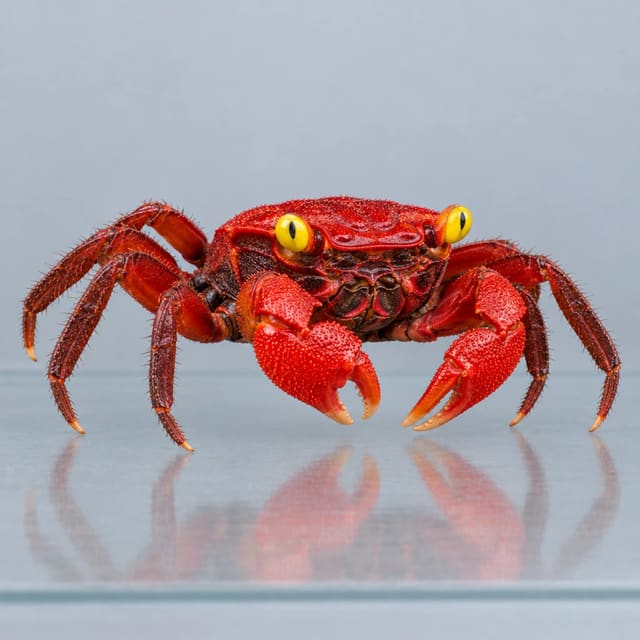
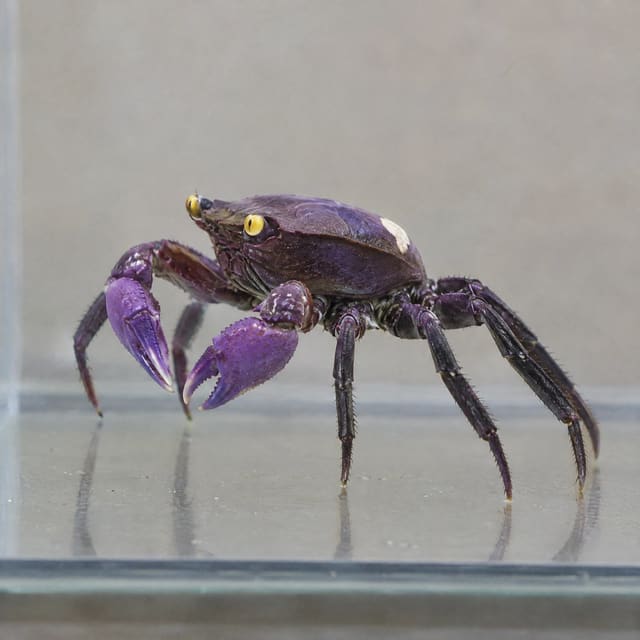
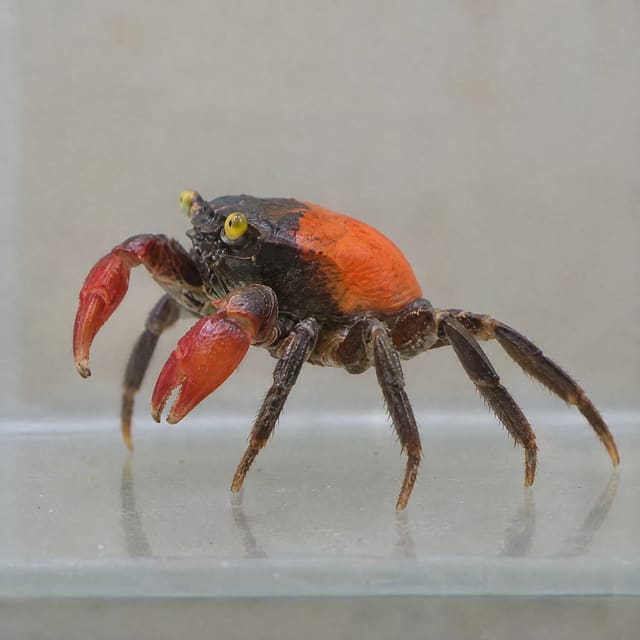
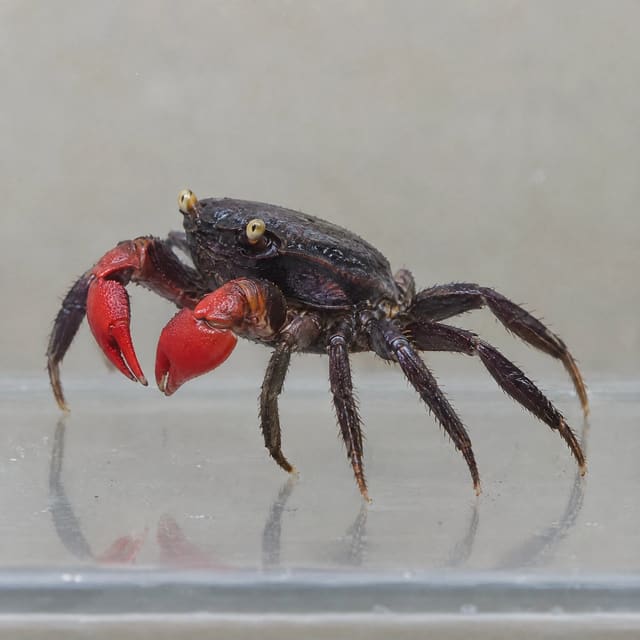
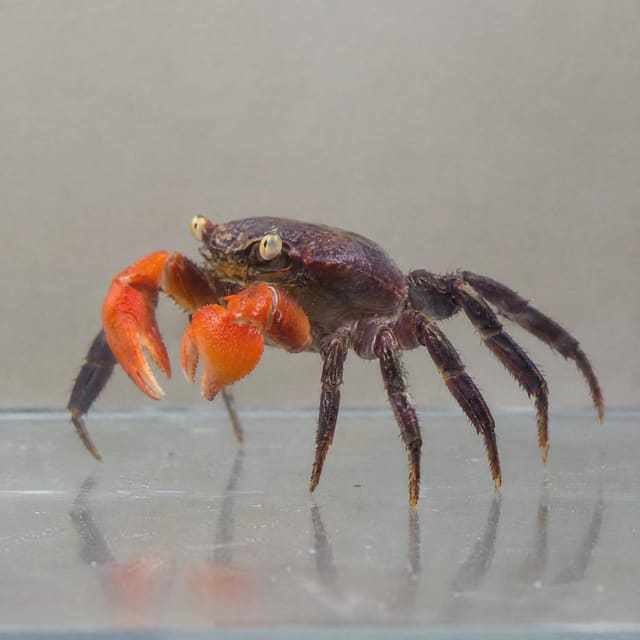
Orange Vampire Crab (Geosesarma sp.)
£18.99
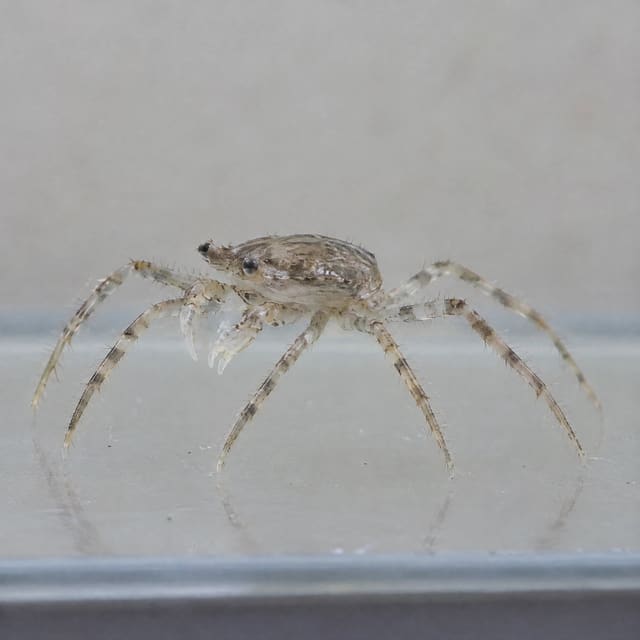
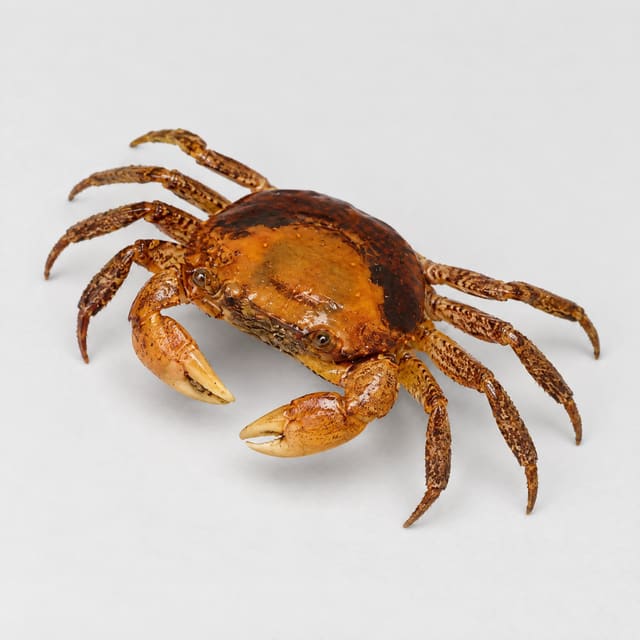
The Female Fiddler Crab is a small brackish shore crab with two equal feeding claws instead of the male's single giant claw, which makes females the calmer choice for a group. Keep it in a sandy paludarium of at least 60 × 30 × 30 cm with twice as much land as water, water no deeper than 5 cm and a lid that seals. Sold individually as one live female crab.
Uca sp. (trade label; species not identified)
The Female Fiddler Crab is a small brackish shore crab with two equal feeding claws instead of the male's single giant claw, which makes females the calmer choice for a group. Keep it in a sandy paludarium of at least 60 × 30 × 30 cm with twice as much land as water, water no deeper than 5 cm and a lid that seals. Sold individually as one live female crab.
The female fiddler crab gives you all the charm of a fiddler crab colony without the claw-waving rivalry of the males. Fiddler crabs are small shore crabs of the family Ocypodidae that live on sandy beaches, muddy mangroves and rocky shores, where they dig burrows, sift the sand for food and spend low tide out on the open ground. Males are famous for one giant claw; females have two small, equal claws and use both to pick food from the sand, so a group of females is constantly busy and much less quarrelsome.
This listing is for one live female fiddler crab sold under the trade label Uca sp. The exact species is not identified. Like every fiddler crab, it is semi-terrestrial and comes from salty water, so it needs a brackish paludarium: a sandy beach, a shallow pool of brackish water and a lid that seals. It is not a crab for a freshwater fish tank.
| Name | What it means |
|---|---|
| Female Fiddler Crab | The shop name we use: a female, recognised by her two small, equal claws |
| Uca sp. | The trade label for fiddler crabs; "sp." means the species is not identified |
| Fiddler crabs, Ocypodidae | The family, shared with the ghost crabs |
| Eleven genera | Fiddler crabs were long placed in the single genus Uca, but a 2019 peer-reviewed overview by Michael Rosenberg describes their expansion into eleven genera, such as Uca, Tubuca, Gelasimus and Austruca |
Practical Fishkeeping counted about 100 species and subspecies of fiddler crab and notes that even one trade name can cover several species, which is why we do not name a species we cannot confirm. The good news for keepers is that their care is very similar: brackish water, sand, shallow water, plenty of land and a secure cover.
Practical Fishkeeping explains that the male's enlarged claw is used for courtship and ritual fights, while the small claw picks up food. Females normally have both claws developed as small feeding claws. A group of females therefore gives you constant feeding activity with little fighting, and it suits keepers who want a peaceful display. If you would like to see the famous claw-waving as well, add a male from one of our other fiddler crab listings, such as the Rainbow Fiddler Crab or the Thick-legged Fiddler Crab, but remember that a female of unidentified species may not be the same species as the male.
Practical Fishkeeping gives 3–4 cm across the shell for the trade fiddler crabs it described; species differ, and a female without the big claw looks smaller than a male of the same shell size. What matters most is floor space. Practical Fishkeeping gives 60 × 30 × 30 cm as the minimum for three or four males with the same number of females, and notes that bigger tanks are easier to keep stable. OATA recommends at least 60 litres for a small group of crabs and a tank as long and wide as possible.
Practical Fishkeeping describes the layout: a land section of fine sand, held in place with stones or a strip of glass so it cannot slip into the water, and a water section no more than 5 cm deep with good aeration from an air tube. Without enough water movement the sand turns foul and smelly. You do not need to imitate the tides. In the wild, fiddler crabs hide in self-dug burrows at high tide and come out to feed and mate on land as the tide goes out, so give the sand enough depth to dig and keep part of it damp.
| Zone | What to build | Why it matters |
|---|---|---|
| Beach | Fine sand over two-thirds of the floor, deep enough to dig | Feeding ground and burrows |
| Damp margin | Sand that stays moist near the water | The most used feeding area |
| Retaining edge | Stones or a glass strip along the waterline | Stops the beach slumping into the pool |
| Pool | Brackish water no deeper than 5 cm, aerated | Wetting the gills and moulting |
| Cover | Flat stones, roots and leaf litter | Shelter, especially after a moult |
OATA warns that crabs are very good at escaping and that a secure lid must be fitted with every hole blocked. Fiddler crabs walk out along airline, cables and filter pipes, and a crab that escapes onto a dry carpet does not survive long. Shallow water makes it even easier for them to reach the rim, because the beach is high in the tank.
Practical Fishkeeping explains that all fiddler crabs are more or less euryhaline, meaning they cope with a range of salt levels, and advises keeping them in strong brackish or pure marine water. On a real shore, heavy rain can leave them briefly in fresh water and waves return them to salt water, so salinity may drift a little without harm, but it should not swing. Practical Fishkeeping does not give a temperature, so we use OATA's general range for crabs in the trade.
| Value | Guidance | Source |
|---|---|---|
| Salinity | Strong brackish to full marine, kept steady | Practical Fishkeeping |
| Water depth | No more than 5 cm | Practical Fishkeeping |
| Temperature | 22–27°C | OATA (crabs in general) |
| pH | 7.0–8.0 | OATA (crabs in general) |
| General hardness | 8–18 dGH | OATA (crabs in general) |
| Ammonia and nitrite | Zero | OATA |
| Nitrate | No more than 20 mg/l above tap water | OATA |
Mix marine aquarium salt into conditioned tap water in a bucket, measure it with a refractometer or hydrometer and use the same reading at every water change. UK tap water ranges from soft to very hard by region, but once marine salt is added the salt mix largely sets the hardness, so the salinity reading is the number to watch. Our guide to pH, GH and KH explains the other readings, and the water parameter matcher helps you compare your water with what the crab needs.
Evaporation removes water but not salt, Practical Fishkeeping points out, so a tank topped up with salty water slowly gets saltier. Mark the correct level on the glass and top up with plain conditioned fresh water. Make water changes with pre-mixed brackish water at the same salinity.
Five centimetres of water fouls quickly, so filtration and aeration matter more here than in an ordinary aquarium. An air-driven sponge filter or a small internal filter that works at a low level keeps the pool moving, and the air tube Practical Fishkeeping recommends stops the sand at the edge going stale. Mature the filter before the crabs arrive; our page on how the nitrogen cycle works explains why. Like all invertebrates, fiddler crabs are very sensitive to copper (OATA), so never use a medicine that is not labelled safe for invertebrates.
Fiddler crabs feed by picking small particles from the sand with their small claws, and Practical Fishkeeping notes that they prefer small food particles. It recommends fish-food tablets that break up in water, which the crabs readily take, and a permanent layer of dead oak or beech leaves together with the detritus that forms on them. It warns against ordinary fish-food pellets, because their high protein content can drive nitrite to fatal levels in a small, shallow tank. Crabs that refuse food may be suffering from transport stress or disease, so watch new arrivals closely.
Feed once a day and leave the food for about 30 minutes, as OATA advises for crabs, then remove what is left. Crumble the tablet over the damp margin of the beach as well as at the water's edge, so every crab finds food without crossing the whole tank. If you still see food after half an hour, the next meal should be smaller.
Check that ammonia and nitrite read zero and that salinity and temperature are stable before the crabs arrive. OATA's floating-bag method works for crabs: switch off the lights, float the closed bag for 10 minutes to equalise the temperature, then add small amounts of tank water to the bag over at least 30 minutes. That slow mixing matters even more for a brackish crab, because the bag water may not match your salinity, so measure both and take longer if they differ. Release the crabs at the water's edge with as little bag water as possible. Our step-by-step acclimatisation guide covers the method in detail.
| When | What to check | What to do |
|---|---|---|
| Day 1 | Crabs dig in or hide | Leave them alone with the lights low |
| Days 2–3 | Feeding on the damp sand | Small portions only; remove leftovers after 30 minutes |
| Days 1–7 | Ammonia, nitrite and salinity | Test more often; OATA advises close monitoring in the first week |
| Day 7 | Every crab seen feeding | Look for a crab that never feeds and ask us for advice |
A fiddler crab tank is a shallow brackish beach, so very few fish can live in it. Practical Fishkeeping suggests some companions for a larger set-up: the zebra snail Neritina turrita, the brackish water hermit crab Clibanarius africanus, the dwarf mudskipper Periophthalmus novemradiatus and small mangrove seedlings. It also notes that three or four fiddler crab species can share one area in the wild. OATA's general advice is that crabs are opportunistic and are best kept in a dedicated set-up.
| Suits | Avoid |
|---|---|
| Other fiddler crabs on a large beach | Freshwater community aquariums |
| Brackish nerite snails | Fish large enough to eat a crab |
| A dwarf mudskipper in a large set-up | Deep water with no easy exit |
| Small mangrove seedlings | Copper-based treatments |
Browse our nerite snails and check each one's salt tolerance; Practical Fishkeeping names Neritina turrita specifically. Our Mudskipper listing gives that fish's own size and care, so check that it is a small species before you mix it with crabs. The brackish fish category shows other animals for salty water, and our tank mate checker helps you test a mix.
We also keep the Giant Fiddler Crab alongside the Rainbow and Thick-legged Fiddler Crabs. Browse every species on our fiddler crabs (Uca) page, the full crayfish and crabs category and our shrimps and crustaceans collection.
Crabs grow by shedding their shell, and OATA warns that a shed skin can look just like a dead crab. A freshly moulted crab is soft and vulnerable for a few days, so leave it in peace, keep the water clean and make sure it has cover. OATA lists the changes that signal a problem in crabs.
| What you see | What to do |
|---|---|
| A crab stays in the water and does not come out | Check the beach is reachable and the water no deeper than 5 cm |
| Inactivity or restlessness | Test ammonia, nitrite and salinity first |
| Colour turning darker or paler than usual | Check water quality and temperature |
| Trouble moulting or a partly shed shell | Check salinity and diet; keep the crab undisturbed |
| Refusing food, losing weight or swelling | Test the water and ask us for advice |
A female fiddler crab on her own will not breed. In a mixed group, a mated female carries hundreds to thousands of eggs under her abdomen, according to the fiddler crab life-cycle notes of Michael Rosenberg; such females are sometimes called "sponge" crabs. When the eggs are ready she enters the water and they hatch into tiny swimming larvae called zoea, which live in open water for a few weeks to a few months before settling as young crabs. Practical Fishkeeping adds that the larvae eat rotifers and newly hatched brine shrimp, pass through a megalopa stage and can only be reared in marine water. Captive breeding is therefore rare, and a female group is best treated as a display rather than a breeding project.
Success with female fiddler crabs comes down to three things that depend on each other: a wide sandy beach with water no deeper than 5 cm, steady brackish water topped up with fresh water only, and a lid with no gaps. Keep all three right and a small group of female fiddler crabs will keep you watching for hours.
Fiddler crabs are small, semi-terrestrial shore crabs of the family Ocypodidae. Males have one hugely enlarged claw; females have two small claws of equal size. This listing is for one female fiddler crab, sold under the trade label Uca sp. because the exact species is not identified.
Practical Fishkeeping explains that males use their big claw for courtship displays and ritual fights. Females have no big claw, so they spend their time feeding with both small claws and are easier to keep in a calm group. Both sexes need the same brackish, sandy, land-and-water set-up.
Brackish to marine. Practical Fishkeeping says all fiddler crabs are more or less euryhaline and should be kept in strong brackish or pure marine water. They are sometimes sold as freshwater crabs, but they will not thrive long-term in plain fresh water.
The species is not identified. The trade still uses the old genus name Uca for all fiddler crabs, although scientists now divide them into eleven genera (Rosenberg, 2019). Practical Fishkeeping notes that even a single trade name can cover more than one species, so we sell this crab as Uca sp.
Practical Fishkeeping gives 60 × 30 × 30 cm as the minimum for three or four males and the same number of females, with twice as much land as water. OATA recommends at least 60 litres for a small group of crabs. A larger tank is easier to keep stable.
Shallow. Practical Fishkeeping says the water should not be more than 5 cm deep, and the crabs must always be able to walk out onto dry sand. Mark the water level on the glass and top up evaporation with fresh water only.
They pick small particles from the sand with their small claws. Practical Fishkeeping recommends food tablets that break up in water and a permanent layer of dead oak or beech leaves, and warns against high-protein fish pellets, which can push nitrite to fatal levels. Feed once a day and remove leftovers after about 30 minutes, as OATA advises.
Only with care. They need very shallow brackish water and a large land area, which suits very few fish. Practical Fishkeeping suggests brackish snails, small brackish hermit crabs and the dwarf mudskipper for larger set-ups. Most community fish cannot live in a fiddler crab tank.
Not on her own, and rarely in captivity. A mated female carries eggs under her abdomen, but the larvae swim in open water for weeks to months and can only be reared in marine water, according to Practical Fishkeeping and the fiddler crab life-cycle notes of Michael Rosenberg.
No reviews for this item yet. Bought one? Honest reviews only, good or bad.
What customers say about ordering from us
Easy website plenty of info on fish your buying great to pick a time slot
TRACEY DURRANT · 7 Oct 2026
Got some lovely fish thank you
Kevin Mackie · 7 Oct 2026
Reviews of our shop, collected by Judge.me, an independent third-party review collector. Newest first.
Moved by UK carriers licensed to handle live animals
Hand-packed with oxygen bags, poly box, heat pack
Email photos the same day; an optional unboxing video helps us review problems faster — claim terms apply
Klarna & PayPal Pay in 3 at checkout