Moderate
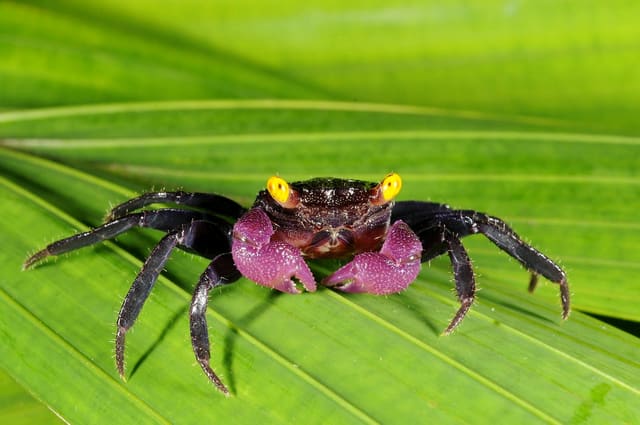
Red Carnival Vampire Crab (Geosesarma sp.)
£14.99

A striking, burrow-building brackish crab with bold behavior and fascinating courtship displays, ideal for a dedicated paludarium setup. Moderate care, semi-aggressive. 24-30C, pH 7.5-8.5.
Adult size is the maximum length this species reaches at full maturity (scientific sources). The livestock you receive will be younger and smaller. Product-photo provenance and any image-specific limitations are stated on the listing.
Gelasimus vocans
Confirm your email, then we’ll send an availability message for this exact item if it returns within 180 days.
This request is only for this product—no newsletter or other promotions. A mail-provider retry may very rarely duplicate the same availability message. Unconfirmed addresses are removed after 48 hours. See our privacy policy.
A striking, burrow-building brackish crab with bold behavior and fascinating courtship displays, ideal for a dedicated paludarium setup. Moderate care, semi-aggressive. 24-30C, pH 7.5-8.5.
Adult size is the maximum length this species reaches at full maturity (scientific sources). The livestock you receive will be younger and smaller. Product-photo provenance and any image-specific limitations are stated on the listing.
Maintain these water conditions for optimal health and vibrant colors
The Giant Fiddler Crab (Gelasimus vocans, syn. Uca vocans) is a spectacular brackish-water crustacean renowned for its impressive size, striking colouration, and elaborate courtship displays. Native to the Indo-Pacific region — from the Red Sea and East Africa to Southeast Asia and the central Pacific — this species is one of the larger fiddler crabs available in the aquarium trade, reaching an adult size of approximately 5.5cm. Males are particularly impressive, with a single massively enlarged claw used in territorial displays and competition for mates. The species is semi-aggressive and territorial, making it unsuitable for traditional community aquariums, but it thrives in dedicated brackish paludarium setups where its burrowing behaviour and fascinating social interactions can be observed. For those seeking an engaging and visually stunning fiddler crab for sale UK-wide, the Giant Fiddler Crab is an outstanding choice.
Quick Care Summary: Semi-aggressive brackish crab; adult size 5.5cm; minimum 40L paludarium; requires land and shallow water; burrowing behaviour; secure lid essential; fascinating displays.
The Giant Fiddler Crab displays variable but typically vivid colouration, with shades of blue, purple, orange, yellow, and cream combining to create a striking appearance. The exact colour pattern varies between individuals and can change with mood, diet, and environmental conditions. Males are immediately recognisable by the single, dramatically enlarged claw (either left or right), which can be as large as the body itself. This claw is brightly coloured and used primarily for display rather than feeding. The smaller claw is used for gathering food and grooming. Females have two small, symmetrical claws and are generally more subdued in colouration. The carapace is smooth and rounded, and the eyes are mounted on tall stalks that retract into protective sockets. Legs are long and robust, adapted for rapid movement across mud and sand. Healthy specimens display vibrant colouration, active behaviour, and smooth, intact exoskeletons. Observing the colour changes and behaviours of this species is one of the great pleasures of keeping fiddler crabs.
In the wild, Gelasimus vocans inhabits coastal intertidal zones, mudflats, mangrove swamps, and estuarine habitats across the Indo-Pacific, including the Red Sea, East Africa (Zanzibar, Madagascar), Southeast Asia, and the central Pacific. The species is adapted to brackish conditions where freshwater and seawater mix, and is subject to tidal fluctuations that alternately expose and submerge the substrate. Fiddler crabs are semi-terrestrial and spend much of their time on exposed mudflats, where they excavate deep burrows (up to 50cm) for shelter, moisture retention, and protection from predators. The burrows provide a stable microenvironment and are essential to the crabs' survival. They are highly active during the day, foraging for algae, biofilm, and detritus on the substrate surface, and males engage in elaborate claw-waving displays to attract females and warn off rivals. Understanding this ecology is essential for replicating suitable conditions in captivity.
A minimum aquarium size of 40 litres is recommended, with larger systems preferred for keeping multiple crabs or creating a more naturalistic environment. The setup must be a paludarium-style habitat with both land and shallow water zones. Use fine sand or mud substrate to a depth of at least 15-20cm to allow natural burrowing behaviour. Create a gradual slope or beach to provide easy access between water and land. The land area should comprise at least 40-50% of the total floor space. Furnish the setup with smooth rocks, driftwood, cork bark, and mangrove roots to create climbing structures, visual barriers, and additional hiding places. Water depth should be shallow (5-10cm), as fiddler crabs are not strong swimmers and can drown if unable to reach land. Maintain brackish conditions by adding marine salt to achieve a specific gravity of 1.005-1.010. A secure, well-ventilated lid is absolutely essential, as fiddler crabs are exceptional climbers and notorious escape artists. Provide gentle filtration and ensure water quality is maintained through regular partial changes.
Maintaining stable brackish water is critical for the health of Gelasimus vocans. Specific gravity should be between 1.005 and 1.010, achieved using marine salt (not table salt). Temperature should be kept between 24-30°C, with 26-28°C being ideal. pH should be slightly alkaline, ranging from 7.5-8.5, reflecting the brackish coastal environment. Monitor salinity regularly using a hydrometer or refractometer, and adjust as necessary through water changes or evaporation replacement. Ammonia, nitrite, and nitrate should be kept as low as possible through efficient biological filtration and regular partial water changes. Calcium availability is essential for successful moulting; add cuttlebone, crushed coral, or calcium supplements to the substrate or water. Avoid sudden changes in salinity, temperature, or water chemistry, as these can cause stress and moulting complications. Ensure good surface agitation to maintain oxygen levels, especially in warmer water.
Top Tip: Provide deep sand substrate (15-20cm) — fiddler crabs will excavate extensive burrow systems and this is essential for their wellbeing and natural behaviour.
The Giant Fiddler Crab is an omnivorous scavenger with a natural diet consisting of algae, biofilm, detritus, and small organic particles. In the aquarium, offer a varied diet of sinking crab or omnivore pellets, algae wafers, spirulina flakes, blanched vegetables (such as courgette, spinach, or peas), and occasional protein sources like frozen bloodworms, brine shrimp, mysis, or finely chopped seafood. Leaf litter (Indian almond or oak leaves) provides natural foraging opportunities and releases beneficial tannins. Feed small amounts daily or every other day, and remove uneaten food promptly to prevent water quality degradation. Fiddler crabs use their small claw to pick up food particles and bring them to the mouth; this behaviour is fascinating to observe. A calcium-rich diet supports healthy shell development and reduces the risk of moulting complications. Variety is essential to ensure balanced nutrition and vibrant colouration.
Gelasimus vocans is a highly active, diurnal species with complex social behaviours. Males engage in elaborate courtship displays, waving the enlarged claw in rhythmic, species-specific patterns to attract females and advertise territorial ownership. These displays are one of the most captivating aspects of keeping this species and are frequently observed in healthy, well-maintained setups. Aggression between males is common and usually involves claw displays and ritualistic combat rather than serious injury, though actual fighting can occur in overcrowded or poorly structured tanks. Females are generally less aggressive but will defend burrows and feeding areas. The species is an industrious burrower, excavating complex tunnel systems in the substrate and constantly rearranging its environment. Fiddler crabs are not fully aquatic and require regular access to land to rest, breathe air, and regulate moisture. Observing their burrowing, foraging, climbing, and display behaviours is endlessly entertaining and rewarding.
Choosing tank mates for the Giant Fiddler Crab requires careful planning. Suitable companions include other brackish-water crabs of similar size and temperament (though territorial disputes are likely), and robust brackish-tolerant snails such as Neritina or Clithon species. Fast, non-aggressive brackish fish that occupy the upper water column — such as Brachygobius gobies or mollies acclimated to brackish conditions — may coexist peacefully, though there is always some risk of harassment. Avoid slow-moving or bottom-dwelling fish, small shrimp and other tiny invertebrates (which will be preyed upon), aggressive crabs or larger predatory crustaceans, and any freshwater-only species. Because fiddler crabs require a paludarium setup with significant land area, most traditional aquarium fish are unsuitable. A species-only setup or a carefully planned brackish community with similarly adapted species is the safest approach. Ensure ample space, multiple burrow sites, and visual barriers to reduce aggression.
Breeding Gelasimus vocans in captivity is challenging and rarely successful in home aquaria. In nature, females carry fertilised eggs under the abdomen until they hatch into planktonic larvae, which are released into the water column during high tide. The larvae require specific brackish to marine conditions, precise salinity gradients, and microscopic planktonic foods to survive — conditions that are difficult to replicate in a home setup. Successful captive breeding would require a mature, stable brackish paludarium, well-conditioned adults, and a separate larval rearing system with controlled salinity and specialised foods. For most aquarists, breeding is not a realistic goal, and the species is kept primarily for its fascinating behaviour, striking appearance, and industrious nature. Those interested in attempting breeding should consult specialist literature and be prepared for a lengthy, experimental process with no guarantee of success.
Tropical Fish Co is proud to offer healthy, carefully quarantined Giant Fiddler Crabs sourced from reputable suppliers and acclimated to ensure they arrive in peak condition. Every crab is inspected for health, colour, and shell integrity before dispatch, and we provide expert advice and ongoing support to help you create the ideal brackish paludarium environment. With fast, reliable delivery across the UK and a commitment to customer satisfaction, Tropical Fish Co is your trusted partner for brackish-water invertebrates for sale UK-wide. Whether you're setting up your first paludarium or expanding an established brackish system, our team is here to help you succeed. Shop with confidence and discover the extraordinary world of fiddler crabs with Tropical Fish Co.
No reviews for this item yet. Bought one? Honest reviews only, good or bad.
What customers say about ordering from us
I have a small group of long finned mountain minnows. So was delighted to be able to order ten of this variety to increase the genetics in my tank . The ones I recieved are healthy but it’s to early to give a verdict on wether they are of a long finned type since they are small currently.
Gordon Walker · 23 Sept 2026
100% success travel and "installation". Pleased with quality of purchase. The Siamese fighter a bit "shy" so have not yet seen him at his best yet but looking good. Happy customer. GG
George E Garratt · 21 Sept 2026
Reviews of our shop, collected by Judge.me, an independent third-party review collector. Newest first.