Moderate
Red Carnival Vampire Crab (Geosesarma sp.)
£14.99

A striking, active brackish-water fiddler crab that adds constant movement and personality to a well-planned paludarium. Moderate care, semi-aggressive. 22-30C, pH 7.5-8.5.
Adult size is the maximum length this species reaches at full maturity (scientific sources). The livestock you receive will be younger and smaller. Product-photo provenance and any image-specific limitations are stated on the listing.
Uca forcipata
Confirm your email, then we’ll send an availability message for this exact item if it returns within 180 days.
This request is only for this product—no newsletter or other promotions. A mail-provider retry may very rarely duplicate the same availability message. Unconfirmed addresses are removed after 48 hours. See our privacy policy.
A striking, active brackish-water fiddler crab that adds constant movement and personality to a well-planned paludarium. Moderate care, semi-aggressive. 22-30C, pH 7.5-8.5.
Adult size is the maximum length this species reaches at full maturity (scientific sources). The livestock you receive will be younger and smaller. Product-photo provenance and any image-specific limitations are stated on the listing.
Maintain these water conditions for optimal health and vibrant colors
The Rainbow Fiddler Crab (Uca forcipata) is a captivating brackish-water crustacean that brings constant activity, bold personality, and striking colour to the specialised paludarium. Native to coastal intertidal zones of Southeast Asia, this species is best known for the dramatically enlarged claw displayed by males — a feature that gives the entire fiddler crab family its name. Reaching an adult size of around 4.5cm, the Rainbow Fiddler Crab is semi-aggressive and territorial, making it unsuitable for traditional community aquariums but ideal for dedicated brackish setups with both land and water access. The vivid colouration and fascinating behaviours — including claw-waving displays, burrowing, and foraging — make this species a rewarding choice for intermediate to advanced aquarists. For those seeking freshwater crabs for sale UK (though technically brackish), this species offers a unique alternative to fully aquatic invertebrates.
Quick Care Summary: Semi-aggressive brackish crab; requires paludarium with land access; adult size 4.5cm; minimum 60L; needs sand substrate for burrowing; not fully aquatic.
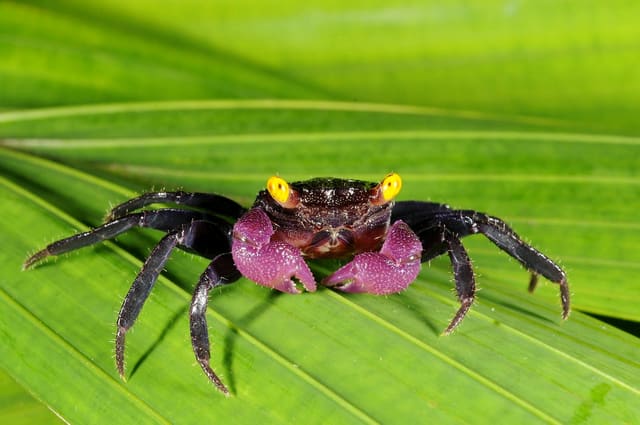
The Rainbow Fiddler Crab is aptly named for its vivid and variable colouration, which can include shades of blue, purple, orange, red, and yellow depending on individual genetics, diet, and environmental conditions. Males are particularly striking due to the single massively enlarged claw (either left or right), which can be as large as the body itself and is used in territorial displays and courtship. The smaller "feeding" claw is used for gathering food. Females have two small, symmetrical claws. The carapace is smooth and rounded, and the eyes are mounted on stalks that can retract into protective sockets. Legs are long and slender, adapted for rapid movement across substrate and climbing on rocks and driftwood. Colouration intensifies with a high-quality diet and proper environmental conditions. Freshly moulted individuals may appear paler until the new exoskeleton hardens and colour develops fully. Observing the colour changes and behaviours of this species is one of the great pleasures of keeping fiddler crabs.
Uca forcipata inhabits coastal intertidal zones across Southeast Asia, where it occupies mudflats, mangrove swamps, and estuarine margins subject to tidal fluctuations. These environments are characterised by brackish water (a mixture of fresh and saltwater), muddy or sandy substrates, and abundant organic detritus. Fiddler crabs are semi-terrestrial, spending much of their time on exposed mudflats or among mangrove roots, retreating to shallow burrows for protection and moisture retention during low tide. They are highly active during the day, foraging for algae, biofilm, and detritus on the substrate surface. Males engage in elaborate claw-waving displays to attract females and defend territory. The brackish conditions, regular exposure to air, and access to both land and water are essential to their biology and must be replicated in captivity to ensure their health and natural behaviour.
A minimum aquarium size of 60 litres is recommended, though a paludarium design with both aquatic and terrestrial zones is essential. Use fine sand or mud substrate to allow natural burrowing behaviour, and provide smooth rocks, driftwood, and cork bark to create climbing structures and visual barriers. The land area should be at least 30-40% of the total floor space, with a gradual slope or beach allowing easy access between water and land. Water depth should be shallow (5-10cm), as fiddler crabs are not strong swimmers and can drown if unable to reach land. Maintain brackish conditions by adding marine salt to achieve a specific gravity of 1.005-1.010 (roughly 5-10 grams of salt per litre). A secure, well-ventilated lid is essential, as fiddler crabs are excellent climbers and escape artists. Provide hiding places and multiple burrow sites to reduce territorial aggression. Gentle filtration and regular partial water changes help maintain water quality.
Fiddler crabs require brackish water to thrive, with a specific gravity between 1.005 and 1.010. Temperature should be maintained between 22-30°C, with 25-26°C being ideal. pH should be slightly alkaline, ranging from 7.5-8.5, which reflects the brackish coastal environment they inhabit in nature. Use marine salt (not table salt) to achieve the correct salinity, and monitor with a hydrometer or refractometer. Ammonia, nitrite, and nitrate should be kept as low as possible through regular water changes and efficient biological filtration. Calcium is essential for successful moulting, so consider adding cuttlebone, crushed coral, or calcium-rich supplements to the setup. Avoid sudden changes in salinity or temperature, as these can cause stress and moulting complications. Ensure good surface agitation to maintain oxygen levels, especially in warmer water. Regular testing and consistent maintenance are key to long-term success.
Top Tip: Add a cuttlebone or calcium-rich supplement to the tank — fiddler crabs need calcium for healthy shell development and successful moulting.
The Rainbow Fiddler Crab is an omnivorous scavenger with a natural diet consisting of algae, biofilm, detritus, and small invertebrates. In the aquarium, offer a varied diet of sinking omnivore pellets, algae wafers, spirulina flakes, blanched vegetables (such as courgette, spinach, or peas), and occasional protein sources like frozen bloodworms, brine shrimp, or finely chopped seafood. Leaf litter and dried botanicals encourage natural foraging behaviour and provide additional grazing surfaces. Feed small amounts daily or every other day, and remove uneaten food promptly to prevent water quality issues. Fiddler crabs use their small claw to pick up food particles and bring them to the mouth; this behaviour is fascinating to observe. A calcium-rich diet supports healthy exoskeleton development and reduces the risk of moulting difficulties. Variety is essential to ensure balanced nutrition and vibrant colouration.
Fiddler crabs are highly active, diurnal creatures that spend much of the day foraging, burrowing, and engaging in territorial displays. Males use their enlarged claw in dramatic waving motions to attract females and signal dominance to rival males. Aggressive encounters typically involve claw displays rather than physical combat, though actual fighting can occur in overcrowded or poorly structured tanks. Females are generally less aggressive but will defend burrows and feeding areas. Fiddler crabs are not fully aquatic and require regular access to land to rest, breathe air, and regulate moisture levels. They are excellent climbers and will explore every available surface, so a secure lid is essential. Providing multiple burrow sites, visual barriers, and ample space reduces territorial conflict and allows natural behaviours to flourish. Observing their complex social interactions and industrious foraging is one of the highlights of keeping this species.
Choosing tank mates for the Rainbow Fiddler Crab requires careful consideration. Ideal companions include other brackish-water crabs of similar size and temperament, fast-swimming non-aggressive brackish fish such as Brachygobius gobies or Poecilia mollies (acclimated to brackish conditions), and robust brackish-tolerant snails. Avoid slow-moving or long-finned fish, as they may be harassed or nipped. Small shrimp and other tiny invertebrates are likely to be preyed upon. Aggressive crabs, larger predatory crustaceans, and fully freshwater species are incompatible. Because fiddler crabs require a paludarium with significant land area, most traditional aquarium fish are unsuitable. If keeping multiple fiddler crabs, provide ample space, multiple burrows, and plenty of visual barriers to minimise aggression. A species-only or carefully planned brackish community is the safest approach.
Breeding Uca forcipata in captivity is challenging and rarely successful in home aquaria. In nature, females carry fertilised eggs under the abdomen until they hatch into planktonic larvae, which require specific brackish marine conditions and microscopic foods to survive. The larval stage is difficult to raise, and most hobbyist attempts fail due to the specialised requirements. For those determined to attempt breeding, a mature, stable brackish setup with excellent water quality, plenty of cover, and well-conditioned adults is essential. Providing a calcium-rich diet and suitable nesting sites may encourage breeding behaviour. However, most aquarists keep fiddler crabs for their fascinating behaviour and striking appearance rather than for breeding purposes. If larvae do appear, raising them successfully requires a dedicated larval rearing system and considerable expertise.
Tropical Fish Co is your trusted source for healthy, carefully quarantined Rainbow Fiddler Crabs and expert advice on brackish aquarium setups. Every crab is inspected for vitality, colour, and shell condition before dispatch, and we provide comprehensive care guidance to ensure your success. With fast, reliable delivery across the UK and a commitment to customer satisfaction, we make it easy to add these fascinating invertebrates to your collection. Whether you're building your first paludarium or expanding an established brackish system, our team is here to support you every step of the way. Shop with confidence and discover the joy of keeping these industrious, colourful crustaceans from Tropical Fish Co.
No reviews for this item yet. Bought one? Honest reviews only, good or bad.
What customers say about ordering from us
I have a small group of long finned mountain minnows. So was delighted to be able to order ten of this variety to increase the genetics in my tank . The ones I recieved are healthy but it’s to early to give a verdict on wether they are of a long finned type since they are small currently.
Gordon Walker · 23 Sept 2026
100% success travel and "installation". Pleased with quality of purchase. The Siamese fighter a bit "shy" so have not yet seen him at his best yet but looking good. Happy customer. GG
George E Garratt · 21 Sept 2026
Reviews of our shop, collected by Judge.me, an independent third-party review collector. Newest first.