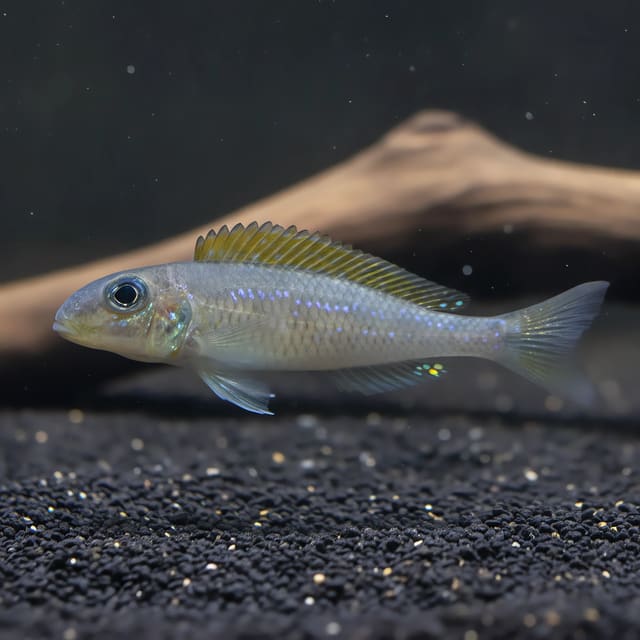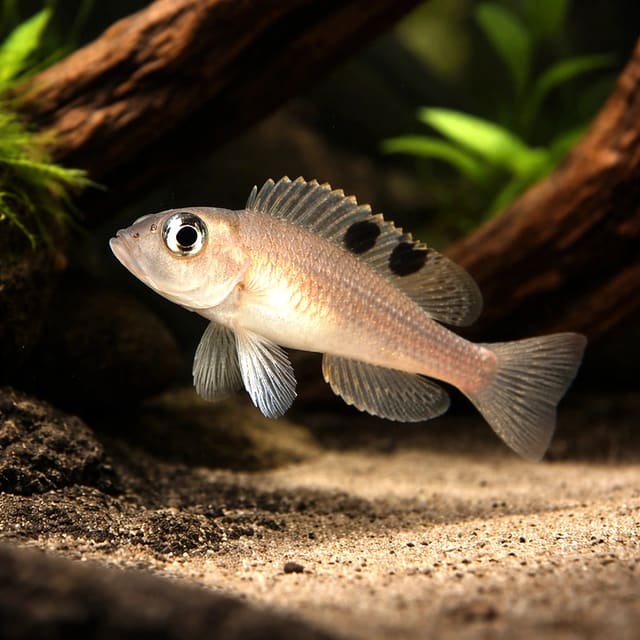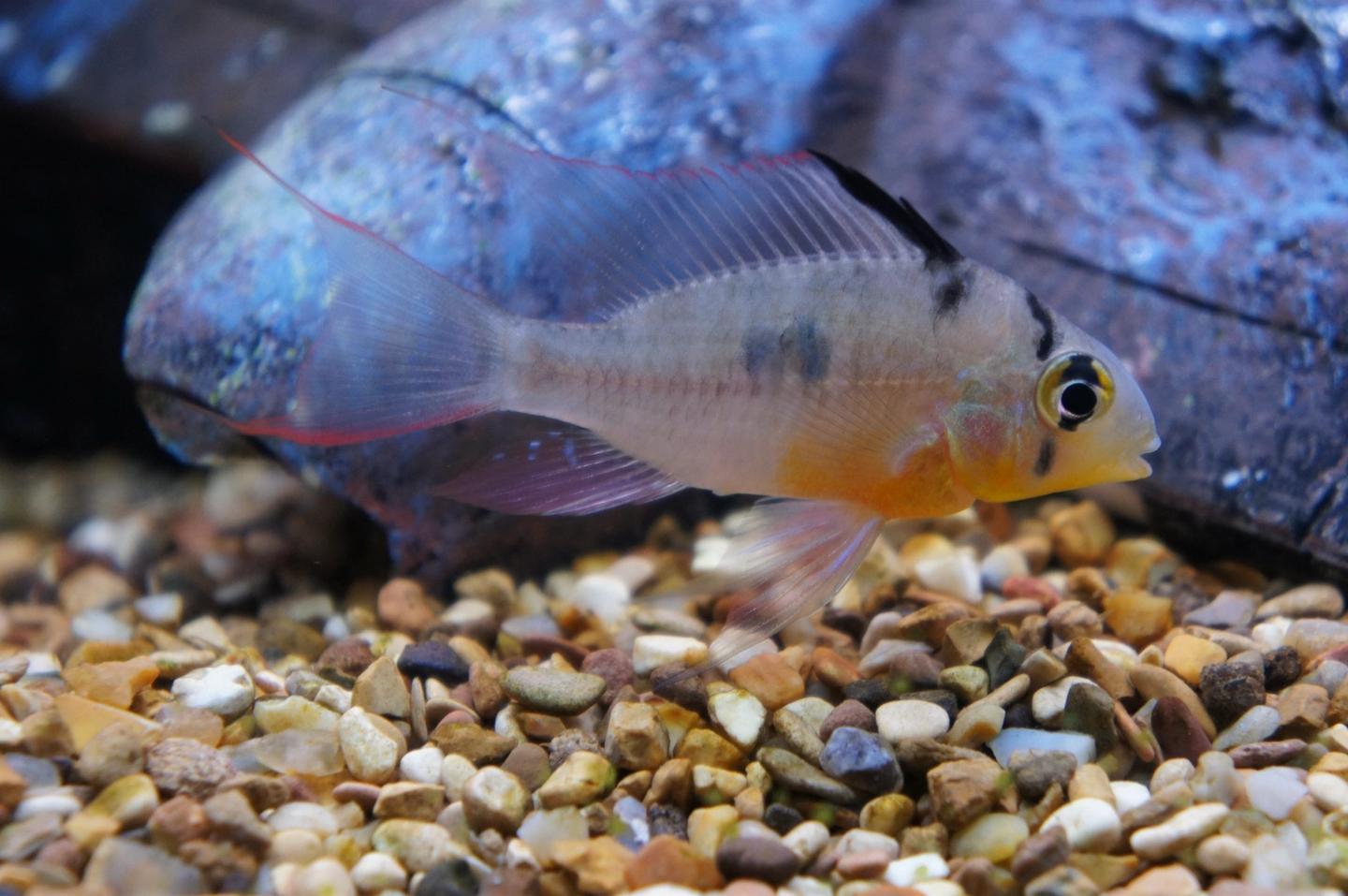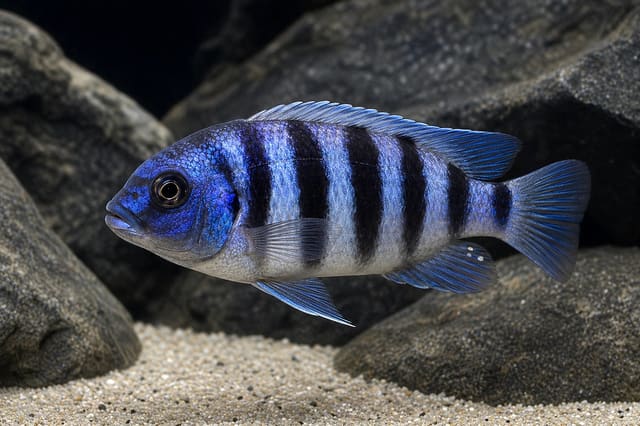
Titcha Mandarin Compressiceps (Altolamprologus compressiceps)
23–25°C · pH 8–8.5 · 250L

Rare Lake Tanganyika cichlid for mature hard-water aquariums. Neolamprologus nigriventris stays compact, uses rock caves, and needs carefully chosen tank mates. Out of stock now; Live Arrival Guarantee applies when restocked.
Adult size is the maximum length this species reaches at full maturity (scientific sources). The livestock you receive will be younger and smaller — pick a size variant above for the actual shipping size. Product-photo provenance and any image-specific limitations are stated on the listing.
Neolamprologus nigriventris
Save when buying multiple fish. Each quantity is one fish; sex and pair formation are not guaranteed unless the selected variant explicitly states them.
Confirm your email, then we’ll send an availability message for this exact item if it returns within 180 days.
This request is only for this product—no newsletter or other promotions. A mail-provider retry may very rarely duplicate the same availability message. Unconfirmed addresses are removed after 48 hours. See our privacy policy.
Rare Lake Tanganyika cichlid for mature hard-water aquariums. Neolamprologus nigriventris stays compact, uses rock caves, and needs carefully chosen tank mates. Out of stock now; Live Arrival Guarantee applies when restocked.
Adult size is the maximum length this species reaches at full maturity (scientific sources). The livestock you receive will be younger and smaller — pick a size variant above for the actual shipping size. Product-photo provenance and any image-specific limitations are stated on the listing.

23–25°C · pH 8–8.5 · 250L

24–27°C · pH 7.5–8.5 · 450L

24–27°C · pH 7.5–8.5 · 250L

18–26°C · pH 6.5–8 · 30L

Cichlids are one of the most diverse fish families in the hobby. From tiny apistogrammas to massive oscars, this guide covers the basics of keeping them well.
Maintain these water conditions for optimal health and vibrant colors
Nigriventris Cichlid (Neolamprologus nigriventris) is a compact Lake Tanganyika rock cichlid for aquarists who can keep hard, alkaline water stable. It suits a mature specialist aquarium with caves and broken sightlines, not a soft-water community setup.
| Scientific name | Neolamprologus nigriventris |
|---|---|
| Adult size | About 7 cm |
| Minimum aquarium | 100 litres for a pair; larger for mixed Tanganyika displays |
| Water | 24-27C, pH 7.8-9.0, hard alkaline water |
| Temperament | Semi-aggressive and territorial around caves |
Use rock piles, caves and open sand or fine gravel, with enough structure for the fish to hold a territory without seeing every tank mate at once. Stable mineral-rich water, strong filtration and regular maintenance matter more than chasing daily parameter changes.
Feed small frozen foods such as brine shrimp and bloodworm alongside quality crushed cichlid pellets. Offer measured portions so food does not sit inside the rockwork.
Best choices are carefully matched Lake Tanganyika cichlids or suitable Synodontis in a spacious layout. Avoid shrimp, very small fish, soft-water community species and cramped mixed aquariums.
Let me tell you about the Nigriventris Cichlid, Neolamprologus nigriventris. If you’re looking for something a bit different from the usual aquarium livestock hobbyists see every week, this one really stands out. It’s a compact Tanganyika cichlid with a bold attitude and a proper sense of territory. What I love about this fish is that it doesn’t just sit there looking pretty. It has presence. It has character. And in the right tank, it becomes the sort of fish you keep watching, even when you meant to be doing something else.
Now, here’s the thing. This isn’t a fish for a random mixed setup. It comes from Lake Tanganyika in the Democratic Republic of the Congo, and that tells you a lot straight away. Tanganyika fish are shaped by a very specific world. Clear water. Hard water. Rocky shorelines. Stable conditions. Neolamprologus nigriventris is native to the southwestern coast of the lake, where it lives among rock piles, crevices, and broken stone structures. That kind of habitat gives it shelter, breeding sites, and plenty of places to claim as its own.
So when you’re setting one up, you’re not just filling a tank. You’re recreating a slice of that rocky lake edge. If you’ve ever searched for a online tropical-fish shop and wanted something more specialised than the standard community stock, this is exactly the sort of fish people mean. In the wild, Lake Tanganyika is one of the oldest and most species-rich freshwater lakes in the world. It’s mineral-rich and alkaline, with exceptional water clarity. That matters a lot. These fish are used to stable chemistry, not constant swings.
They’re rock-dwellers, and they rely on structure more than open water. That’s why a proper setup needs caves, crevices, and broken lines of sight. It’s a fish that feels at home in a carefully built Tanganyika display, not in a bare tank with a few ornaments dropped in for decoration. If you want something with a genuine natural story behind it, this species has that in spades. Appearance-wise, the Nigriventris Cichlid is all about subtle strength. It has a rich dark body tone, with darker ventral shading, and a confident posture that gives it a really distinctive look in the tank.
It’s not a fish that needs neon colour to grab your attention. Its appeal is in the shape, the stance, and the way it carries itself. At around seven centimetres in aquarium conditions, it stays compact, but it never feels insignificant. The body shape is neat and purposeful, which suits its bottom-dwelling habits. You’ll often notice that bold, grounded look that makes it feel like it knows exactly where it belongs. In a Tanganyika setup, that darker body can look especially striking against pale rock and open stonework.
When it comes to tank setup, this is where the Nigriventris Cichlid really asks you to think like a Tanganyika keeper. You’ll want at least a one hundred litre tank, and honestly, that’s the starting point for giving a pair enough room to establish themselves properly. A rocky layout is essential. That’s not optional. Build in caves, piles of stone, and plenty of broken sightlines so they can claim space without constantly seeing each other across the whole tank. Because they’re bottom region fish, the lower part of the aquarium is where all the action happens.
Keep the layout secure and stable. You want places they can retreat to, defend, and, if they breed, use as a spawning site. This species is especially rewarding in an established tropical setup where the biology is mature and the water chemistry is already stable. If you’re used to the flexibility of more general tropical fish available, this is a different mindset. It’s more deliberate. More specialist. And that’s part of the appeal. Water parameters matter a great deal here. Keep the temperature between twenty-four and twenty-seven degrees Celsius.
The pH should sit between seven point eight and nine point zero. Hardness needs to be between ten and twenty dGH. Those numbers aren’t just a preference. They reflect the lake they come from. Stable, alkaline, mineral-rich water is the key. If you’re used to asking what should tropical fish tank pH be for a general community fish, this species pushes you firmly into Tanganyika territory. Keep things consistent, and avoid sudden changes. This fish is suited to aquarists who are comfortable maintaining hard, alkaline conditions over the long term.
Feeding is straightforward, but it should still be thoughtful. The diet listed for this species includes frozen brine shrimp, bloodworm, and crushed pellets. That gives you a nice practical range to work with. Feed a varied diet and keep it appropriate for a cichlid with a bottom-dwelling habit. Because it’s a moderate care fish, you’ll want to stay attentive rather than casual. Good food supports health, colour, and behaviour. If you’re used to browsing a tropical fish store and picking up standard flakes for a community tank, this fish asks for a bit more intention.
Frozen foods are a strong choice, and crushed pellets help round things out. The key is consistency. Don’t overdo it, and make sure the fish gets what it needs without turning the tank into a feeding mess. In a well-run Tanganyika setup, feeding time becomes one of those moments you look forward to. The fish comes to life, and you get to see that confident personality properly. Behaviour is one of the best reasons to keep Neolamprologus nigriventris. It’s semi-aggressive, bottom-oriented, and full of territorial attitude.
That doesn’t mean it’s a bully for no reason. It means it knows its space. You’ll notice them holding ground, especially once a pair settles in. The first time you see them claim a cave or a patch of rock, you’ll understand why Tanganyika keepers love these fish. They’re not shy little background fish. They have opinions. They have boundaries. And they show them. In a mature tank, that behaviour is fascinating to watch day after day, especially when the pair starts moving with purpose around their chosen area.
Compatibility needs a careful hand. The best tank mates are other Tanganyika cichlids and Synodontis. That makes sense, because they share the same sort of hard-water, specialist setup. You want companions that can handle the environment and the temperament. Avoid very small fish, because they’re likely to be intimidated or outcompeted. Avoid shrimp as well. This species is not the right choice for tiny invertebrates in a mixed display. One thing worth mentioning is breeding behaviour. When they’re breeding, they become territorial, so even otherwise suitable tank mates need to be chosen with care.
When comparing Nigriventris Cichlid (Neolamprologus nigriventris) with similar livestock, focus on clear identification, settled feeding, accurate care guidance, careful packing and a realistic match for your aquarium. Those details matter more than repeated search phrases or a low headline price, especially with specialist species.
Breeding is described as moderate, and that fits the fish well. It has fascinating cave-spawning habits, which ties neatly into its natural rocky habitat. That means the caves and crevices in your setup aren’t just for show. They matter. They become part of the fish’s behaviour and breeding cycle. A pair will need its own space, and once they settle, they can become very territorial around that area. That’s why a group size of one pair is the right way to think about this species.
It’s a fish that really benefits from a planned pairing and a tank arranged around their needs. If you enjoy watching fish behaviour as much as fish colour, this is a lovely species to keep. Health-wise, prevention is the big one. Stable water is crucial. So is the right pH and hardness. Because this fish comes from such a specific environment, poor chemistry can stress it more quickly than some more forgiving species. Keep the tank mature, keep the conditions steady, and don’t make sudden changes.
That’s the best way to support long-term health. With good care, it can live up to eight years, which gives you plenty of time to appreciate its personality. What makes Tropical Fish Co a great place to choose a fish like this? It’s the care and the specialist focus. When you’re looking for aquarium livestock hobbyists can trust, it helps to buy from people who understand the difference between a general community fish and a proper Tanganyika species. This isn’t just another listing.
When comparing Nigriventris Cichlid (Neolamprologus nigriventris) with similar livestock, focus on clear identification, settled feeding, accurate care guidance, careful packing and a realistic match for your aquarium. Those details matter more than repeated search phrases or a low headline price, especially with specialist species.