Easy
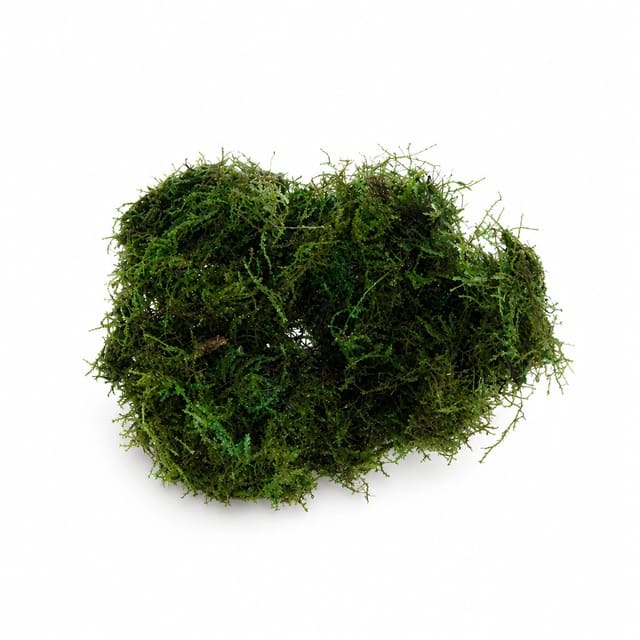
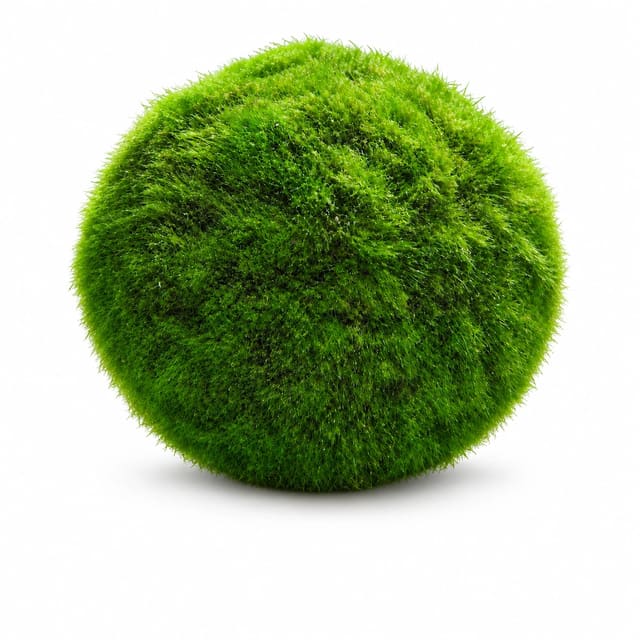
Marimo Moss Ball (Aegagropila linnaei)
£5.19
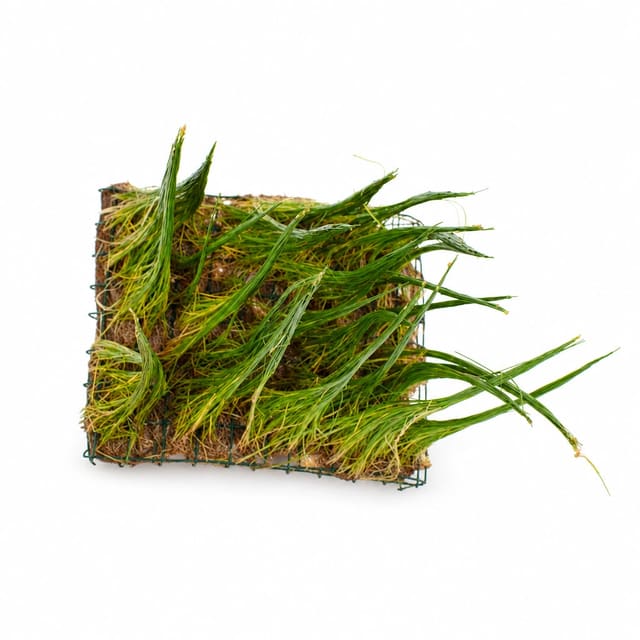
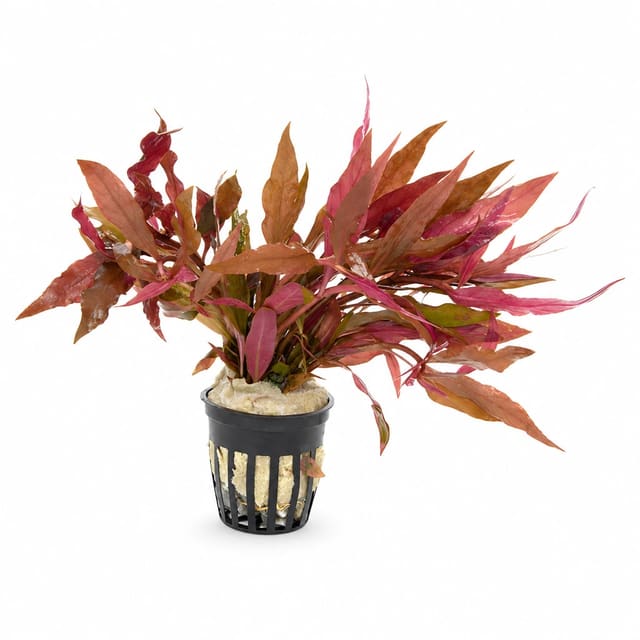
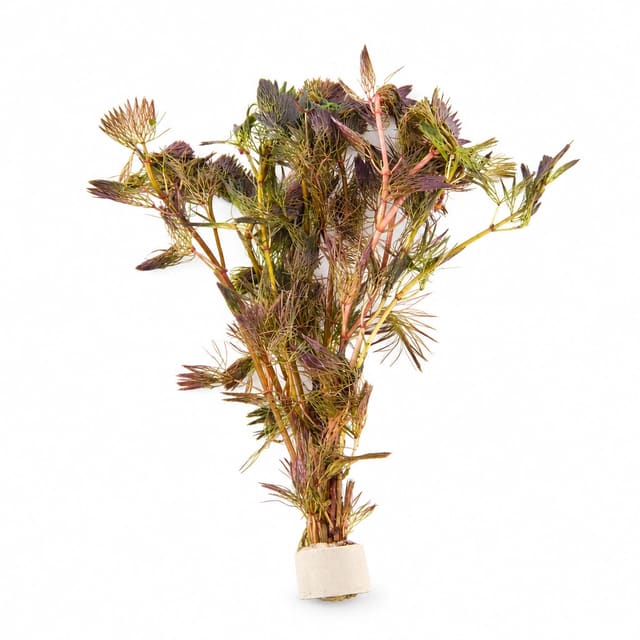
Ready-grown aquarium plants on bogwood: one piece of wood, graded 4–6 inches, carrying established rhizome plants about 10–25 cm tall. The species varies; the piece photographed carries an Anubias. Place it straight into a tropical tank for an instant planted look, with no planting or special substrate needed.
Anubias barteri and other rhizome-forming epiphytes (species varies)
Ready-grown aquarium plants on bogwood: one piece of wood, graded 4–6 inches, carrying established rhizome plants about 10–25 cm tall. The species varies; the piece photographed carries an Anubias. Place it straight into a tropical tank for an instant planted look, with no planting or special substrate needed.
Read the full care guidance when planning conditions for your aquarium.
Aquarium plants on bogwood are plants that already grow on a piece of wood, so you simply stand the wood in your tank. There is no planting, no special substrate and no waiting for roots to take in the gravel: the plants arrive established, with their roots gripping the wood, and the piece looks settled from the first day. It is the quickest way to add mature green growth to a new tank, a shrimp tank or a layout that needs a natural focal point.
The plants used for wood are epiphytes: plants that grow on surfaces rather than in the ground, from a creeping stem called a rhizome. In the wild, Java fern grows attached to riverside roots and rocks, as the Wikipedia account of Java fern describes, and Tropica's Anubias profile says that plant gives its best results on a stone or tree root. A piece of wood is simply the aquarium version of that habitat.
| Suits | Not suited to |
|---|---|
| Heated tropical tanks | Garden ponds and unheated tanks: Anubias prefers 22–28°C |
| Low to medium lighting | Keepers who want fast growth to fill a tank quickly |
| Gravel, sand or bare-bottomed tanks | Layouts where the wood would be buried in substrate |
| Shrimp, snail and small-fish tanks | Tanks dosed with copper-based treatments while shrimp or snails live there |
| Tanks with fish that nibble soft plants | Keepers who want one exact species (the species varies) |
One purchase is one piece of bogwood with established aquarium plants growing on it, in the 4–6 inch size grade. The plants are typically 10–25 cm tall. The species varies from piece to piece: the piece in our photograph carries an Anubias with broad, glossy leaves, and other pieces may carry a different rhizome plant, such as Java fern. Each piece of wood is natural, so its shape and the way the plants sit on it are unique. Please read our delivery information before ordering.
| Plant | How to recognise it | Origin | Height in the tank |
|---|---|---|---|
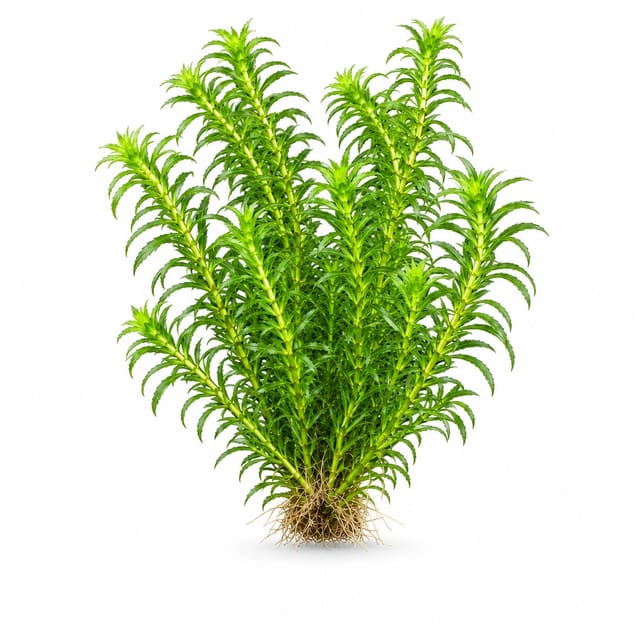
| Anubias (Anubias barteri, including var. nana) | Thick, leathery, dark green leaves on stalks rising from a stout rhizome | South-eastern Nigeria, Cameroon and Bioko | 5–15 cm for var. nana (Tropica); the broad-leaved var. barteri is larger |
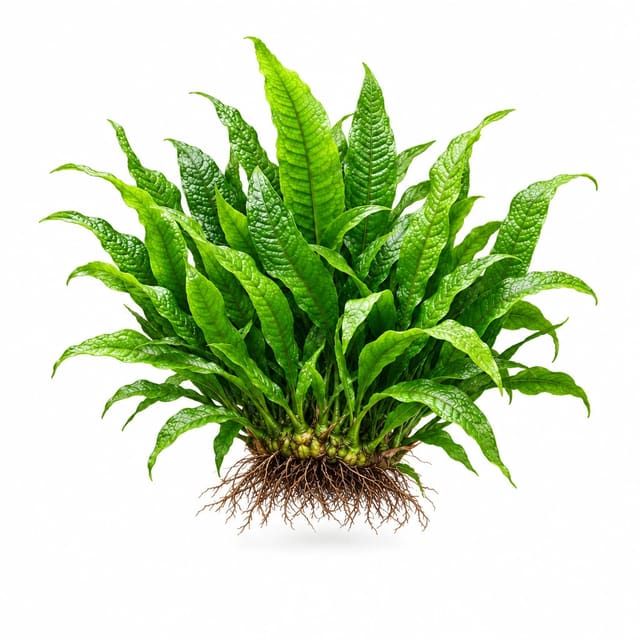
| Java fern (Microsorum pteropus, now Leptochilus pteropus) | Long, tough fern fronds; dark dots on the undersides are spore cases | Malaysia, Thailand, north-eastern India and southern China | 15–30 cm or more (Tropica) |
| African water fern (Bolbitis heudelotii) | Dark green, divided fern fronds from a creeping rhizome | West Africa | 15–40 cm (Tropica) |
Tropica points out that the black spots under Java fern leaves are its reproductive organs (sporangia), not a disease. Our Java fern category page lists Java fern varieties, and the potted aquarium plants category shows plants that go into the substrate instead.
The one rule that matters with every rhizome plant is never to bury the rhizome. Tropica warns that Anubias, Java fern and Bolbitis rhizomes rot if they are covered with substrate. On a piece of wood, the rhizome is already held above the gravel, which is exactly what makes these plants so easy.
Tropica's set-up guide asks for an aquarium out of direct sunlight, and warns during planting that letting plants dry out may harm the leaves, so have the tank ready before you open the parcel. Tropica's FAQ recommends rinsing new plants under tap water before they go in.
Bogwood also changes the water a little. Wood releases tannins and other organic compounds that darken and acidify the water, as Wikipedia's article on planted-tank design notes. A tea-coloured tint is the wood at work, not a fault, and regular water changes dilute it; if you prefer clear water, change water a little more often in the first weeks.
The plants used on wood are low-light plants, but the published figures vary a little by species and even between Tropica's own listings, so we show them side by side:
| Plant | Light | Added CO2 | Growth | Difficulty |
|---|---|---|---|---|
| Anubias barteri var. nana | Low on Tropica's on-wood listing; medium (about 0.5 W per litre) on its standard listing | Low on the on-wood listing; medium (6–14 mg/l) on the standard listing | Slow | Easy |
| Java fern | Low | Low | Slow | Easy |
| Bolbitis heudelotii | Medium (about 0.5 W per litre) | Medium; added CO2 considerably increases growth | Slow | Medium |
Tropica adds that Anubias thrives in shady spots where other plants struggle, which makes a piece of wood under taller plants or floating cover a good home for it. Wikipedia notes that stronger light makes Anubias grow faster and more compactly, and that it tolerates a range of lighting. Java fern tolerates dim or bright light, according to Wikipedia.
These are tropical aquarium plants. Wikipedia gives 22–28°C for Anubias barteri, which matches a typical heated community tank. Java fern is unfussy: Wikipedia says it tolerates tap water, gravel or no gravel, and dim or bright light. Bolbitis is the most particular of the three, and Tropica says it grows best in soft, slightly acidic water.
| Value | Guidance | Source |
|---|---|---|
| Temperature | 22–28°C for Anubias | Wikipedia |
| Water hardness | Java fern tolerates ordinary tap water; Bolbitis prefers soft, slightly acidic water | Wikipedia; Tropica |
| Weekly water change | About 25% | Tropica |
| Substrate | None needed for plants on wood | Tropica (grow on stone or root) |
UK tap water varies from soft to very hard by region. Anubias and Java fern cope with most of it; if your piece carries Bolbitis and your water is hard, expect slower growth. Check your water with our water matcher and read our water chemistry guide if pH and hardness are new to you. Keep these plants indoors: OATA's aquatic plants guidance asks that plants sold for aquariums are not put in ponds, and a British pond falls far below the 22–28°C that Anubias prefers.
Slow-growing plants need little fertiliser. Tropica's care guide suggests adding liquid fertiliser once plant growth is in full swing, starting below the recommended dose and raising it gradually as the plants respond. Pale or transparent leaves are its sign that plants need more nutrients. Tropica's listings give Java fern a low CO2 demand and Anubias a low to medium one; of the three, only Bolbitis is noted to grow considerably faster with added CO2.
If shrimp or snails share the tank, check every product before dosing. OATA's shrimp and snail care sheet warns that these invertebrates die if exposed even to low levels of copper. Tropica says its own fertilisers have been tested as safe with shrimp.
Slow growth has one drawback. Tropica explains that Anubias leaves live for several years, which gives slow-growing algae time to settle on them. Its care guide lists the early signs of algae (cloudy water, a film on glass, leaves or decoration, or fine threads) and the remedies: water changes, less fertiliser, more fast-growing plants and algae-eating animals. It names overfeeding fish as the most common cause. Wikipedia's article on planted-tank design agrees that algae mostly comes from excess nutrients and waste, and notes that algae-eating fish, shrimp and snails are widely used to control it.
| Task | Why |
|---|---|
| Change about 25% of the water | Tropica says this stops harmful substances building up |
| Remove dead leaves and debris | Tropica notes that decay uses oxygen and releases nutrients that feed algae |
| Feed fish only what they finish | Overfeeding is the most common cause of algae, according to Tropica |
| Keep grazers in the tank | Shrimp, snails and algae-eating fish clean the leaf surfaces |
Our algae control guide explains the causes in more detail.
Plants on wood suit almost any peaceful tropical tank. Tropica notes that herbivorous fish do not eat Anubias, which makes it a good choice where fish nibble plants, and Wikipedia describes Java fern as more snail-resistant. The leaves and roots give shrimp and small fish cover and grazing surfaces.
| Animal | Why it works with plants on wood |
|---|---|
| Amano Shrimp | Grazes algae and film from leaves and wood |
| Cherry Shrimp | Picks over the wood and shelters among the roots |
| Nerite Snail | Scrapes algae from the slow-growing leaves |
| Otocinclus | A small, peaceful algae-grazing catfish for planted tanks |
| Celestial Pearl Danio | A small shoaling fish that likes cover from plants |
Browse our fish for planted tanks and cherry shrimp, and read our shrimp-keeping guide, Amano shrimp care guide and nerite snail care guide.
Because these plants grow slowly, trimming is occasional. Tropica's care guide asks keepers to remove dead plant material as soon as possible. Anubias flowers frequently under water, according to Tropica, so do not be surprised to see a flower spike on your piece. Over time, plants on wood can be divided: Tropica says Java fern and Bolbitis are propagated by splitting the horizontal rhizome, and Wikipedia says Anubias barteri can be divided the same way or by separating side shoots. Java fern also produces small plantlets from the tips and edges of mature leaves, which Wikipedia notes can drift off to a new spot once the mother leaf detaches.
OATA's Plant Wise guidance asks every keeper never to release aquarium plants into the wild and to dispose of plant material where it cannot reach rivers, streams or lakes. For more plants, browse our aquarium plants, the Aquarium Plants category and our mosses and portions, and read our live plants guide for beginners.
No. Stand the wood on the substrate. The plants grow on the wood, and their rhizomes rot if buried, as Tropica warns.
The species varies from piece to piece. The piece in our photograph carries an Anubias; other pieces may carry a different rhizome plant such as Java fern.
Not for Anubias or Java fern, which have low to medium CO2 needs on Tropica's listings. Added CO2 considerably speeds up Bolbitis.
Low to medium light. Tropica suggests 6 hours a day for the first three weeks, then up to 8 hours.
Tropica says herbivorous fish do not eat Anubias, and Wikipedia describes Java fern as resistant to snails.
Wood releases tannins that tint and slightly acidify the water. It is normal, and regular water changes dilute it.
They are sporangia, the fern's reproductive organs, not a disease, according to Tropica.
No. These are tropical plants; Anubias prefers 22–28°C, and OATA asks that aquarium plants stay out of ponds.
No reviews for this item yet. Bought one? Honest reviews only, good or bad.
What customers say about ordering from us
Easy website plenty of info on fish your buying great to pick a time slot
TRACEY DURRANT · 7 Oct 2026
Got some lovely fish thank you
Kevin Mackie · 7 Oct 2026
Reviews of our shop, collected by Judge.me, an independent third-party review collector. Newest first.