Sold Out
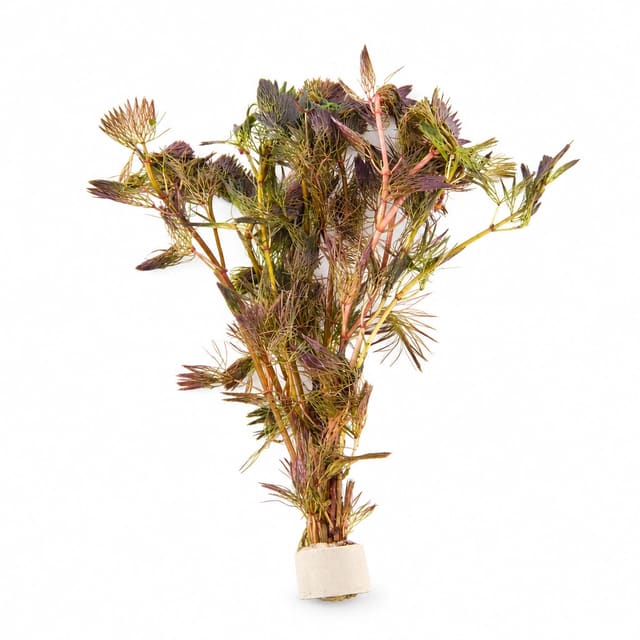
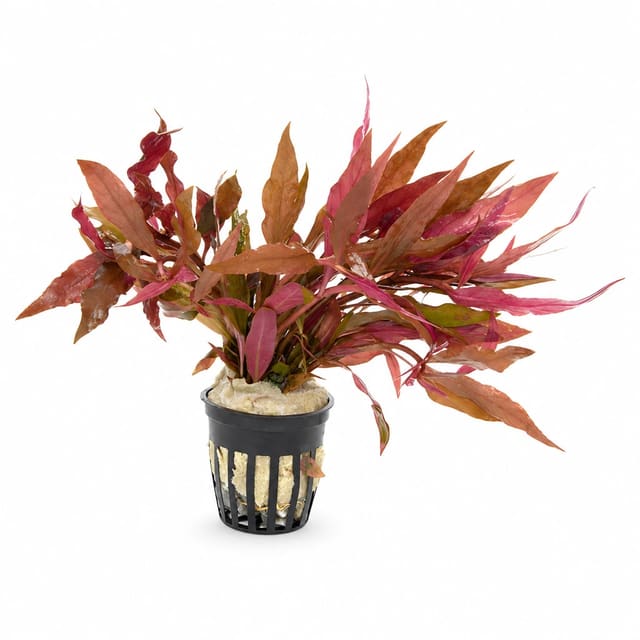
Red Alternanthera (Alternanthera reineckii)
22–28°C · pH 5–8
£3.89
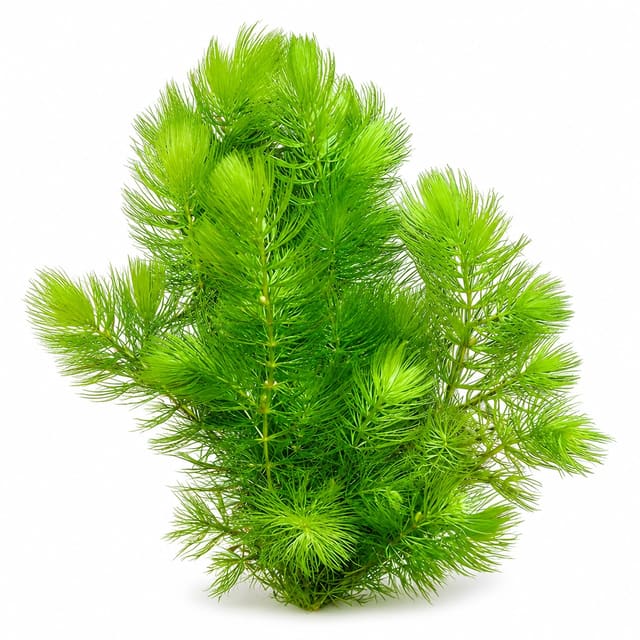
Egeria najas, also sold as narrow-leaf anacharis, is a very easy, very fast-growing South American stem plant with narrow, finely toothed leaves. It needs good light but no added CO2, grows at 15–30°C (best 15–26°C) in soft or hard water, and gives shrimp and fry dense cover. Choose one bunch or one potted plant.
Egeria najas
Egeria najas, also sold as narrow-leaf anacharis, is a very easy, very fast-growing South American stem plant with narrow, finely toothed leaves. It needs good light but no added CO2, grows at 15–30°C (best 15–26°C) in soft or hard water, and gives shrimp and fry dense cover. Choose one bunch or one potted plant.
Read the full care guidance when planning conditions for your aquarium.
Egeria najas, sold as narrow-leaf anacharis, is a submerged stem plant from central and southern South America. The Flowgrow plant database records it from Brazil, Paraguay, Uruguay and northern Argentina and places it in the frogbit family, Hydrocharitaceae. Its stems carry closely spaced leaves that are narrower and more clearly toothed than those of its better-known relative Egeria densa.
Egeria najas grows very quickly and makes few demands, which makes it one of the simplest ways to bring living green cover into a new aquarium. It needs no added CO2, tolerates a wide spread of water hardness and grows in both tropical and unheated indoor aquariums, provided the light is good.
The names can be confusing. "Anacharis" is an older genus name that survives as a common name, and it is used for several related waterweeds. Some current botanical lists fold the genus Egeria into Elodea, so you may also see this plant written as Elodea najas. The aquarium trade still uses Egeria najas, and so do we. Flowgrow also warns that it can be confused with Hydrilla verticillata, so keep the label that comes with your plant.
| Suits | Not suited to |
|---|---|
| Tropical or unheated indoor aquariums kept between 15 and 30°C | Garden ponds, water features and any outdoor water |
| Medium to bright lighting | Very dim aquariums: both plant profiles ask for good light |
| Informal, natural-looking planting with space to trim | Neat, formal layouts that must keep a fixed outline |
| Shrimp, fry and small community fish that use dense cover | Fish that readily eat soft live plants, such as goldfish |
Flowgrow rates Egeria najas very easy and very fast-growing, and it notes that the fast, rather untidy growth form is hard to fit into neat aquarium designs. That is the honest trade-off: it fills space quickly, but it rewards a keeper who enjoys a natural look and is happy to trim. If you are planning a planted community, our fish for planted aquariums collection shows species that make good use of this kind of cover.
Each purchase is one bunch of cut stems or one potted plant, chosen with the Format option. The number and length of stems vary with the growing season and the batch, so the photograph shows the plant, not the exact bunch or pot you will receive.
Both formats grow into the same plant. The difference is how it arrives and how you plant it on the first day.
For a background screen, plan on more than one purchase so the group looks full from the start. A single bunch is enough for a fast-growing accent, or as cover in a small breeding or fry tank where you want growth rather than a tidy shape.
Prepare the aquarium before you order, so the stems go in on the day they arrive rather than waiting in a bag. Dispatch days and arrival times are on our delivery information page.
Flowgrow gives no height for Egeria najas. Aquasabi recommends keeping it at about 15–40 cm and describes it as decorative in rather tall aquariums. Both place it in the background or midground. In practice the stems keep growing until they reach the surface, so the height you see is the height you choose to trim to.
Because it grows very fast, it can shade slower and smaller plants that sit beneath or in front of it. Give it its own zone and leave a gap between it and anything that needs light near the substrate.
Our tank volume calculator gives the aquarium volume from its dimensions, which you need to dose liquid fertiliser correctly.
Aquasabi lists it for nano aquariums as well. In a small tank it works, but you will trim more often, and you should never let it take over the whole surface: fish still need open water and a clear surface for gas exchange.
Light is the main requirement. Flowgrow lists medium to high light; Aquasabi rates it medium but adds that it should be well lit. Read together, the sources agree that a bright position suits it best, and that a dim corner is the wrong place for it.
CO2 is optional. Flowgrow says it grows without added CO2, although CO2 speeds its growth, and gives a range of 5–40 mg/l. Aquasabi says a CO2 supply is not always necessary and that nutrient-rich water is very beneficial.
| Factor | Published value | What it means in practice |
|---|---|---|
| Light | Medium to high (Flowgrow); medium, well lit (Aquasabi) | Place it under the brighter part of the lamp |
| CO2 | 5–40 mg/l; not required, speeds growth (Flowgrow) | Grows well without CO2; with CO2 expect even more trimming |
| Nitrate | 10–50 mg/l (Flowgrow) | Test before you add a nitrogen fertiliser |
| Phosphate | 0.1–3 mg/l (Flowgrow) | Usually supplied by fish food and a complete fertiliser |
| Potassium | 5–30 mg/l (Flowgrow) | Supplied by most complete liquid plant fertilisers |
| Iron | 0.01–0.5 mg/l (Flowgrow) | A small, regular dose rather than an occasional large one |
It anchors with a few long roots but takes up much of its food from the water, so a liquid fertiliser suits it better than root tablets alone. If you keep shrimp, choose a fertiliser labelled as safe for them.
Fast growth also makes Egeria najas a useful partner against algae. Flowgrow notes that it can take up large amounts of nutrients, which leaves less for algae, but it is not a cure. Our guide to aquarium algae control explains how light, feeding and maintenance work together.
Egeria najas tolerates 15–30°C and grows best at 15–26°C, according to Flowgrow; Aquasabi adds that 30°C is tolerated at least temporarily. It copes with warmer water than Egeria densa, which is why it is the one recommended for tropical aquariums.
It is also very tolerant of water chemistry: pH 5–9, carbonate hardness (KH) 0–20 °dKH and, according to Aquasabi, general hardness (GH) 0–30 °dGH. That covers soft and hard UK tap water alike, so you will not need to change your water for the plant.
| Reading | Egeria najas range | What to check |
|---|---|---|
| Temperature | 15–30°C, best 15–26°C | Your fish set the target; keep it inside both ranges |
| pH | 5–9 | Rarely limits this plant |
| Carbonate hardness (KH) | 0–20 °dKH | Rarely limits this plant |
| General hardness (GH) | 0–30 °dGH | Rarely limits this plant |
Because the plant tolerates so much, your animals decide the water you keep. Test your tap water and the aquarium, then compare the readings with your fish using our water matcher. Our water chemistry guide explains pH, KH and GH, and why stable readings matter more than chasing a number.
One practical point for tropical keepers: at 24–26°C the plant sits at the top of its best range. If your fish need water warmer than 26°C for long periods, the plant is still within its tolerance, but it is outside its optimum.
Plant cut stems by pushing the lower end into the substrate, after taking the leaves off the part that will be buried. Aquasabi notes that the stems anchor with a few long, unbranched roots and can also float at the surface, so a stem that comes loose will keep growing while you replant it.
Live plants can carry passengers. Aquasabi warns that plants can contain snails or other invertebrates, and advises that bunched or potted plants should be soaked for at least a week, with regular water changes, before they go near invertebrates. If you keep shrimp, that is a sensible precaution; our shrimp-keeping guide covers the rest of a shrimp set-up.
| Checkpoint | What to do |
|---|---|
| Before planting | Rinse, inspect for snails and eggs, remove pot and growing material |
| Planting day | Separate the stems, strip the leaves from the buried part, plant in the chosen zone |
| Days 2–3 | Replant any stems that have floated up; remove any that have turned soft |
| Days 4–7 | Look for new pale-green tips: a sign the plant has started to grow |
| End of week | Test the water, then start a regular liquid-fertiliser routine |
A few older leaves may yellow while the stems adjust to new water and light. Remove them rather than leaving them to break down. Healthy new growth at the tips matters more than the condition of the leaves the plant arrived with.
Every trim gives you new plants. Flowgrow lists propagation by fragmentation and cuttings, and notes that side shoots or top cuttings planted in the substrate root quickly and shoot up. Very fast growth means you will trim often: plan a quick check at every water change.
Trimmed regularly, the group stays dense from top to bottom. Left untrimmed, the stems spread across the surface, the lower parts lose light and the planting becomes thin underneath.
Most problems with Egeria najas come from light, nutrients or neglected trimming. Check the simple causes first and change one thing at a time so you can see what worked.
| If you see | Do this |
|---|---|
| Pale, stretched stems with wide gaps between leaves | Move it to a brighter spot or check the lamp and its daily hours |
| Growth that starts well and then stalls | Test nitrate and check your fertiliser routine; consider CO2 |
| Algae on older leaves | Trim the affected stems, review lighting hours and feeding, and replant clean tops |
| Soft, brown lower stems | Cut above the damage and replant the healthy part |
| Small snails appearing | They arrived with the plant; remove them by hand if you do not want them |
| Leaves eaten away | Check whether a fish is grazing it; some fish readily eat soft plants |
| Fragments in the filter | Trim more carefully and net out loose pieces at every water change |
If the fish themselves look unwell, treat that as a water-quality question rather than a plant question. Test ammonia, nitrite and nitrate first.
The dense stems make Egeria najas a good shelter plant. Aquasabi notes that it produces a lot of oxygen and provides hiding places, which makes it useful in breeding tanks, and the stems give fry and cherry shrimp somewhere to hide and graze.
Its 15–26°C sweet spot overlaps both cool and tropical communities. In an unheated indoor aquarium that stays above 15°C, it suits fish such as White Cloud Mountain Minnows; our White Cloud Mountain Minnow guide explains their needs. In a tropical tank, it gives cover to shrimp such as assorted cherry shrimp and Amano shrimp, and to the fry of livebearers such as Endler guppies.
| Suits | Use caution with |
|---|---|
| Cherry shrimp and other dwarf shrimp | Goldfish and other fish that graze soft plants |
| Livebearer fry and other young fish | Fish that need water above 26°C for long periods |
| Small cool-water fish kept indoors above 15°C | Large, boisterous fish that tear stems |
| Peaceful tropical community fish | Very small aquariums where it would fill the surface |
Egeria najas is an aquarium plant. Flowgrow lists its suitability for outdoor use and its winter hardiness as unknown, and OATA, the UK ornamental aquatic trade association, says aquarium plants should never be sold for use in ponds because of their potential to become invasive. OATA also notes that its relative Egeria densa is sometimes sold under the incorrect name Elodea densa.
Related waterweeds have caused serious problems where they reached the wild, and they spread by fragments, so even a small piece matters. Keep Egeria najas in an indoor aquarium and never plant it in a garden pond.
For more easy plants and how to combine them, read our live plants for beginners guide.
Egeria najas, sold as narrow-leaf anacharis, is a submerged stem plant in the frogbit family (Hydrocharitaceae) from Brazil, Paraguay, Uruguay and northern Argentina. Flowgrow rates it very easy and very fast-growing, and it is planted in the background or midground of an aquarium.
No. It is a close relative with narrower, more clearly toothed leaves that stand closer together, and it copes better with tropical temperatures, which is why it is the one recommended for tropical aquariums.
No. It grows without added CO2, although Flowgrow notes that CO2 speeds its growth. Good light matters more: both plant databases we checked ask for a well-lit position.
Yes, in an indoor aquarium that stays between 15 and 30°C. It grows best at 15–26°C, so a room-temperature aquarium that never drops below 15°C suits it.
The bunch gives you several cut stems to plant straight away. The potted plant comes with roots in growing material, which you remove before planting. Both grow into the same plant; choose the bunch for quick coverage and the pot if you prefer stems that already have roots.
Often. It is a very fast grower, so expect to cut back stems that reach the surface or shade smaller plants. Replant the healthy tops and remove every loose fragment from the water.
Yes. The dense stems give shrimp and fry places to hide. Rinse new plants, check them for snails, and use only a shrimp-safe fertiliser. One specialist grower advises keeping new plants in separate water with regular changes for at least a week before they go in with invertebrates.
No. Flowgrow lists its outdoor and winter hardiness as unknown, and OATA advises that aquarium plants should never be used in ponds because some can become invasive. Keep it in an indoor aquarium.
It can help but is not a cure. Because it grows so fast, it takes up large amounts of the nutrients that algae would otherwise use. Balanced lighting, sensible feeding and regular maintenance still matter.
No reviews for this item yet. Bought one? Honest reviews only, good or bad.
What customers say about ordering from us
Easy website plenty of info on fish your buying great to pick a time slot
TRACEY DURRANT · 7 Oct 2026
Got some lovely fish thank you
Kevin Mackie · 7 Oct 2026
Reviews of our shop, collected by Judge.me, an independent third-party review collector. Newest first.