Easy
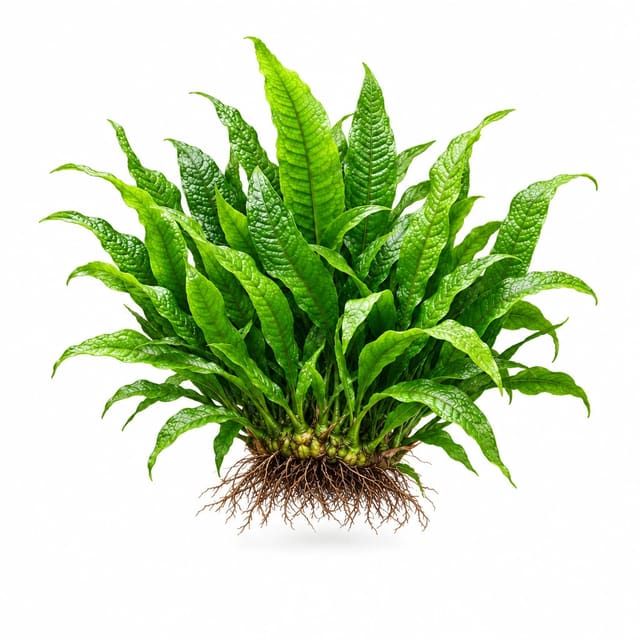
Java Fern (Microsorum pteropus)
20–28°C · pH 5–8
£7.29
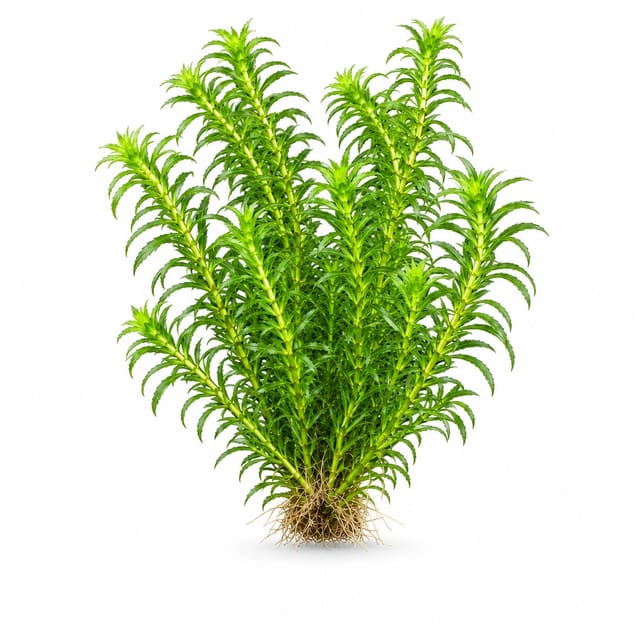
Hornwort (Ceratophyllum demersum) is a fast-growing, rootless plant with whorls of stiff, forked, needle-like leaves. It floats or can be anchored, needs no CO2, grows in coldwater and tropical aquariums and garden ponds, and gives dense cover for fry and shrimp. Sold as one bunch.
Ceratophyllum demersum
Confirm your email, then we’ll send an availability message for this exact item if it returns within 180 days.
This request is only for this product—no newsletter or other promotions. A mail-provider retry may very rarely duplicate the same availability message. Unconfirmed addresses are removed after 48 hours. See our privacy policy.
Hornwort (Ceratophyllum demersum) is a fast-growing, rootless plant with whorls of stiff, forked, needle-like leaves. It floats or can be anchored, needs no CO2, grows in coldwater and tropical aquariums and garden ponds, and gives dense cover for fry and shrimp. Sold as one bunch.
Hornwort (Ceratophyllum demersum), also called rigid hornwort or coontail, is a submerged aquatic plant with long, branching stems ringed by whorls of stiff, forked, needle-like leaves. It has no true roots. It belongs to its own small family, the Ceratophyllaceae, and it is one of the fastest and least demanding plants you can add to an aquarium or a garden pond.
Hornwort is a native British plant. The Royal Horticultural Society lists it as native to Great Britain and Ireland, and NatureSpot describes it as fairly widespread in lowland Britain in ponds, slow-flowing rivers and canals. Worldwide it occurs on every continent except Antarctica, and Tropica describes its origin simply as cosmopolitan.
You can tell it from its close relative, soft hornwort (Ceratophyllum submersum), by the leaves: in rigid hornwort each leaf forks only once or twice, while soft hornwort’s leaves divide three or four times. The leaves are stiff and finely toothed, which gives the plant its bristly look. Sources differ on the count per whorl: Wikipedia gives 6–12 leaves of 8–40 mm, while NatureSpot gives whorls of 3–8.
| Suits | Not suited to |
|---|---|
| Coldwater and tropical aquariums, and garden ponds | Tanks where you cannot trim regularly |
| Low to bright lighting, with no CO2 needed | A neat, slow-growing foreground or carpet |
| Floating cover for fry, shrimp and shy fish | Tanks treated with snail-killing products |
| Soaking up spare nutrients in a new or busy tank | Keepers who want a plant they never need to thin |
New to live plants? Start with our live plants for beginners guide. The photograph shows the plant, not the exact bunch you will receive.
One purchase supplies one bunch of live hornwort stems. The number and length of stems vary with the growing season, because hornwort grows fastest in the warmer months. Every stem is a complete plant: with no roots to damage, a cut stem simply carries on growing from its tip and side shoots.
Hornwort grows so quickly that one bunch is often enough to start with. Rather than buying more than you need, plant or float the bunch, let it grow, and use the trimmings to fill other spaces or other tanks.
Plants travel with our livestock; see our delivery information for dispatch days. Unpack the bunch as soon as it arrives and put it into water at a similar temperature.
Because hornwort has no true roots, you have more choice than with most plants. Wikipedia notes that although it has no roots it may attach itself to the substrate or objects in the aquarium. Tropica says it can be planted in the substrate, and Flowgrow recommends anchoring it at regular intervals by pressing the bases into the substrate or fixing them to rocks. The RHS describes it floating freely in ponds.
| Method | Best for | Watch for |
|---|---|---|
| Floating at the surface | Fastest cover; a refuge for fry and shrimp | Shades plants below; thin it often |
| Weighted with a plant weight | A tidy upright clump at the back | Do not crush the stems with a tight weight |
| Base pushed into the substrate | A natural-looking background stand | Re-anchor any stems that lift free |
| Tied to a stone or wood | Holding stems in place where the flow is stronger | Use soft cotton thread, not wire |
Rinse the bunch in a bucket of old tank water before you add it, and look it over for snails or debris. If it arrived held together with a band or a weight, loosen it so the stems are not pinched, then separate them a little so light and water reach every whorl.
The sources disagree about light, and both views are useful. Tropica rates hornwort easy, with low light demand and low CO2 demand, and gives 5–30+ cm of growth in two months, with stems able to reach 80 cm. Flowgrow, a German aquatic plant database, lists very fast growth and recommends medium to high light. In practice hornwort survives in dim tanks and grows faster and denser as the light increases. In the wild, Wikipedia records stems of 1–3 m.
| Your set-up | What to expect |
|---|---|
| Low light, no CO2 | Steady growth with more open stems; trim every few weeks |
| Medium to bright light, no CO2 | Fast, dense growth; trim weekly |
| Bright light with added CO2 | Very fast growth; Flowgrow notes CO2 is not required but enhances growth |
With no roots, hornwort takes its nutrients from the water, and Flowgrow notes that it absorbs them very quickly. In a tank with fish it usually finds enough from fish waste alone. Flowgrow’s working ranges are 10–50 mg/l nitrate, 0.1–3 mg/l phosphate, 5–30 mg/l potassium and 0.01–0.5 mg/l iron. If you use a liquid fertiliser in a tank with shrimp or snails, choose one labelled safe for invertebrates.
Room to grow matters as much as light. A hornwort mat across the whole surface blocks light from the plants below and reduces surface movement, so keep part of the surface open.
Hornwort tolerates a very wide range of water, which is why it suits both coldwater and tropical aquariums. Wikipedia lists it as a popular plant for both, and describes wild habitats with summer water temperatures of 15–30°C and rich nutrient levels in still or very slow water.
| Value | Range | Source |
|---|---|---|
| Temperature tolerated | 4–30°C | Flowgrow |
| Temperature for best growth | 10–30°C | Flowgrow |
| Summer water in wild habitats | 15–30°C | Wikipedia |
| pH | 6–9 | Flowgrow |
| Carbonate hardness | 5–24 dKH | Flowgrow |
| Outdoor hardiness | H4, hardy through most of the UK | RHS |
Most fish and shrimp you would keep with it need narrower limits than the plant does, so match the water to your animals first. Our water matcher compares your tap water readings with a species’ needs, and the tank volume calculator gives the real water volume when you work out treatment or fertiliser doses.
Hornwort spreads by branching: each stem grows side shoots that build into a bushy mass. Flowgrow notes that it needs frequent trimming to keep its form, and lists fragmentation and cuttings as its means of propagation. The RHS propagates it from stem cuttings left to float in water. Any piece with a growing tip will carry on growing.
Trimming also controls how much light reaches the rest of the tank. In a busy tank, removing a third of the hornwort every week or two keeps it dense without letting it take over.
Hornwort is a favourite plant for new tanks for two reasons. First, it grows fast and takes up nutrients quickly, leaving less for algae. Second, Wikipedia and Flowgrow both describe it as allelopathic: it releases substances that hold back phytoplankton and blue-green algae (cyanobacteria).
Research supports this, with limits. In a six-day laboratory study published in 2019, Amorim and colleagues grew hornwort at 6 g fresh weight per litre alongside single cultures of algae. The biomass of a toxic strain of the blue-green alga Microcystis aeruginosa fell by 99.5% and that of a non-toxic Microcystis by 86.2%. One green alga fell by 50.4%, while another was not significantly affected. That was a flask experiment, not an aquarium, so treat hornwort as a helpful partner rather than a cure.
Our aquarium algae control guide covers the other causes of algae and how to tackle each one.
Hornwort’s leaves are stiff and brittle, and the plant sheds them when conditions change. Wikipedia notes that it drops its leaves when exposed to snail-killing products but regrows within a few weeks. A bunch may also shed needles after transport or after a big change in light, temperature or water.
| Problem | Likely cause | What to do |
|---|---|---|
| Needles dropping in the first days | Transport, or a change in light or water | Net out loose needles, trim bare stems and wait for new growth |
| Sudden heavy needle drop | A snail treatment or other medicine | Stop the treatment if you can, change water and trim; it usually regrows |
| Brown, bare lower stems | Shaded by the growth above | Cut off the healthy tops and replant or float them |
| Pale, thin new growth | Too little light or too few nutrients | Move it nearer the light or reduce shading from floating stems |
| Needles clogging the filter | Shedding and fragments | Net out debris during maintenance and check the intake |
If you need to medicate fish, move the hornwort to a bucket of untreated tank water for the course of treatment where you can, and return it afterwards.
Hornwort is a classic submerged pond plant in the UK. The RHS rates it hardiness H4, hardy through most of the UK, and suggests growing it in water up to 150 cm deep in full sun to shade, where it floats freely. It dies back in winter: overwintering buds called turions sink to the mud and grow into new plants in spring, so a pond that looks empty of hornwort in January usually fills again by summer.
Even a native plant should never be released into wild waters from an aquarium or a garden pond. Aquarium plants can carry snails, algae and diseases, and hornwort itself is a problem weed where it has been introduced: Wikipedia records it as a declared weed in Tasmania and an unwanted organism in New Zealand. OATA reminds keepers that releasing aquarium animals or plants into the wild is illegal.
Wikipedia notes that hornwort’s fine, bright green leaves give newly hatched fish somewhere to hide, and shrimp and snails graze its many surfaces. It suits most peaceful community tanks and many of the fish for planted tanks in our range.
| Good companions | Use caution |
|---|---|
| Yellow Cherry Shrimp and other cherry shrimp, which graze it | Snail-killing or copper treatments, which strip the plant and kill invertebrates |
| Amano Shrimp working through the stems | Fish known to strip fine-leaved plants |
| Livebearers such as Tiger Endlers, whose fry hide in it | Very strong filter outlets that break up floating stems |
| White Cloud Mountain Minnows and other fish from our coldwater fish range | Covering the whole surface where fish need open water |
Hornwort grows across the temperature ranges of both coldwater and tropical fish, so it is one of the few plants you can move between those tanks. Match the water to the animals and let the plant adapt.
No. It has no true roots, so you can float it, hold the stems down with a plant weight, or push the lower end into the substrate. All three work.
Yes. It grows in coldwater and tropical aquariums, and it is a native British pond plant that the RHS rates hardy through most of the UK. In ponds it dies back in winter and regrows from winter buds.
No. Tropica rates it easy with low light and low CO2 demand. Flowgrow recommends medium to high light, so expect faster, denser growth under brighter lighting.
Usually after transport or a sudden change in light or water. Snail-killing treatments also make it shed its leaves. Trim the bare parts and new growth usually follows within a few weeks.
It helps. It grows fast and takes up nutrients that algae would use, and laboratory studies show it releases substances that hold back blue-green algae. It does not replace water changes and sensible lighting.
Tropica gives 5–30+ cm in two months, with stems up to 80 cm. Cut the tips and side shoots when it crowds the surface or shades other plants, and float or replant the cuttings to grow more.
Yes. The dense whorls give fry somewhere to hide and shrimp surfaces to graze. Keep every treatment invertebrate-safe and free of copper.
One bunch per purchase. The number and length of stems vary with the growing season.
No reviews for this item yet. Bought one? Honest reviews only, good or bad.
What customers say about ordering from us
Easy website plenty of info on fish your buying great to pick a time slot
TRACEY DURRANT · 7 Oct 2026
Got some lovely fish thank you
Kevin Mackie · 7 Oct 2026
Reviews of our shop, collected by Judge.me, an independent third-party review collector. Newest first.