Sold Out
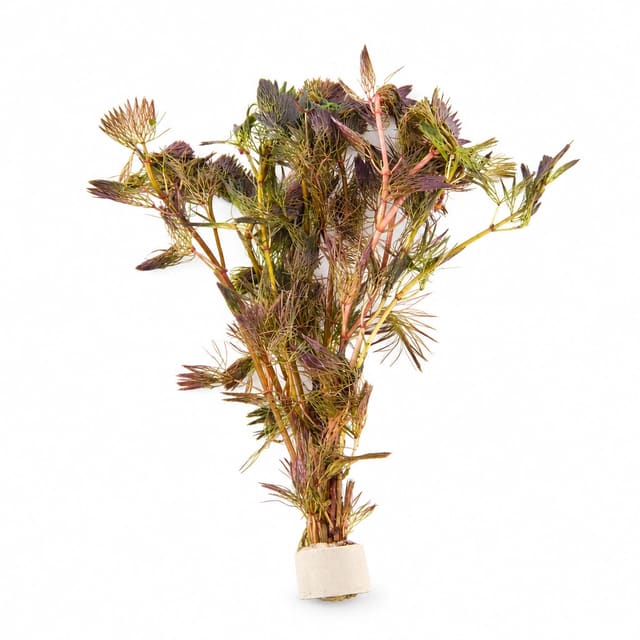
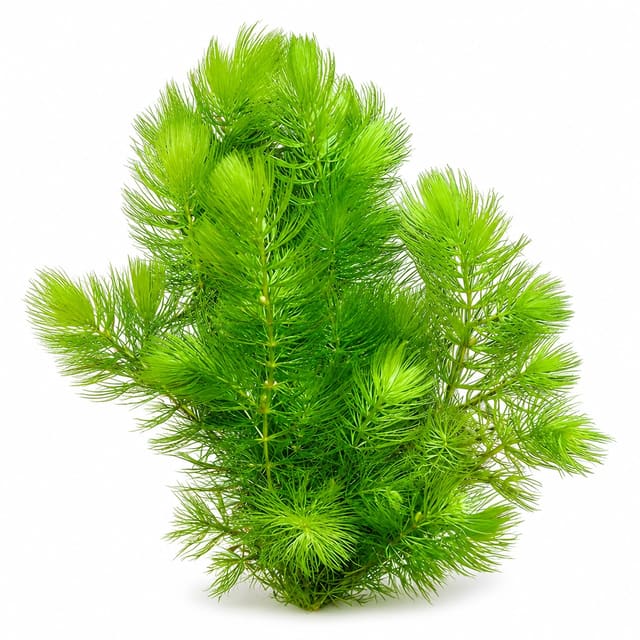
Hornwort (Ceratophyllum demersum)
£2.59
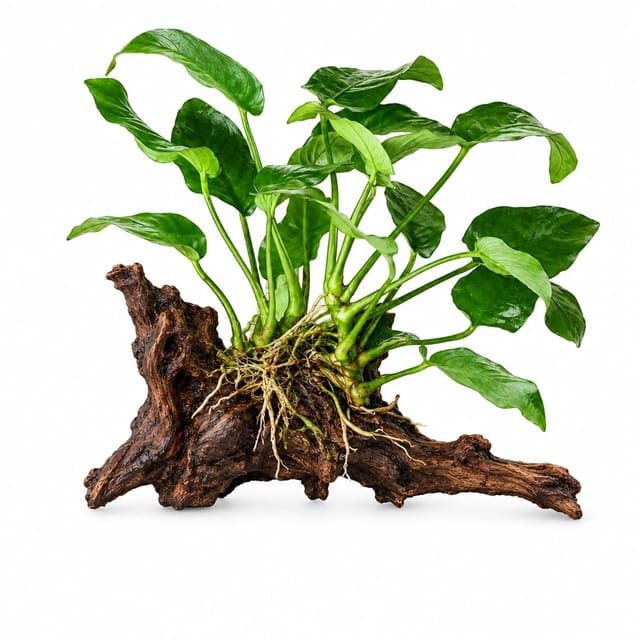
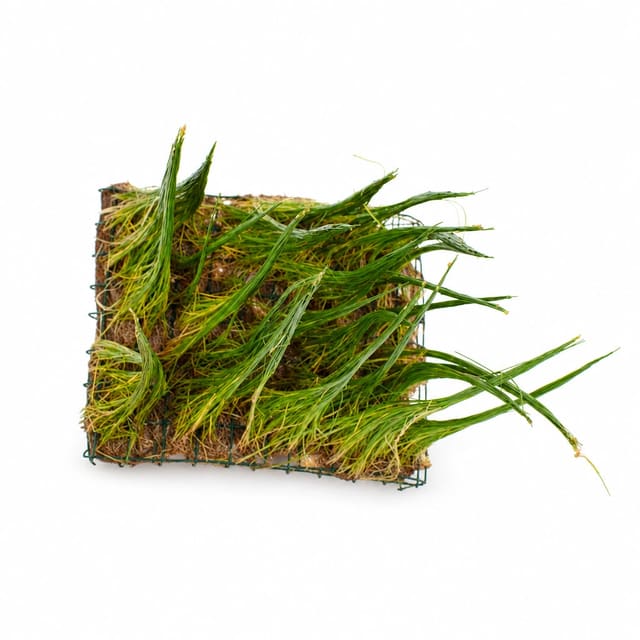
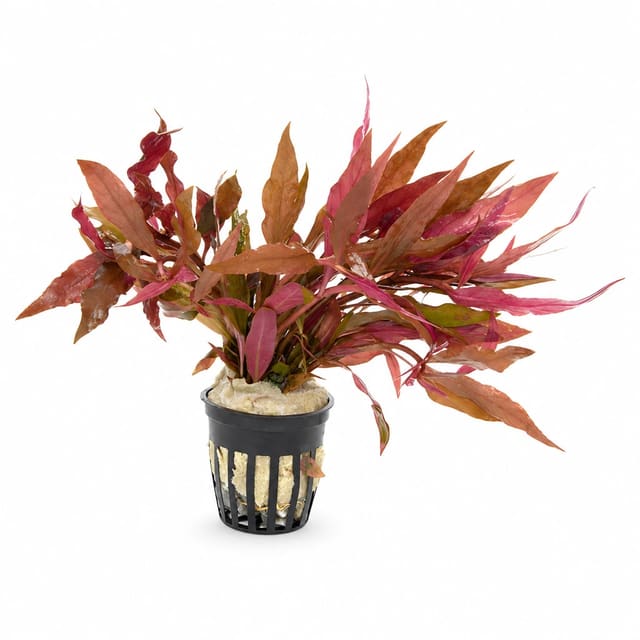
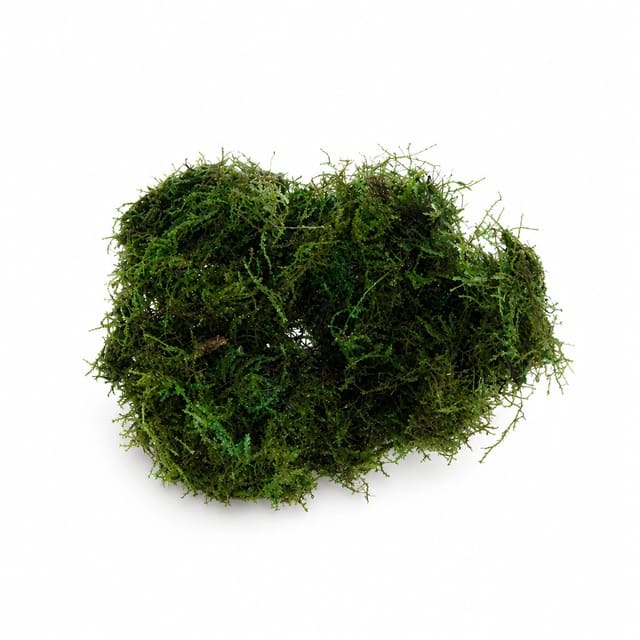
Java fern (Microsorum pteropus) is a slow-growing water fern from Asia that grows on wood or rock rather than in the substrate. Tropica rates it easy, with low light and CO2 demand and a height of 15–30 cm, and Flowgrow gives a best range of 20–28°C. Sold as one bunch or one potted plant.
Microsorum pteropus
Java fern (Microsorum pteropus) is a slow-growing water fern from Asia that grows on wood or rock rather than in the substrate. Tropica rates it easy, with low light and CO2 demand and a height of 15–30 cm, and Flowgrow gives a best range of 20–28°C. Sold as one bunch or one potted plant.
Read the full care guidance when planning conditions for your aquarium.
Java fern (Microsorum pteropus) is a water fern from tropical Asia and one of the easiest plants you can keep. It grows from a creeping rhizome that grips wood and stone with fine roots, so it does not need planting in the substrate at all. Tropica rates it easy: it grows slowly, has a low demand for light and CO2, reaches 15–30 cm and is described as a hardy plant that grows in all conditions.
In the wild it grows attached to roots and rocks along riverbanks, fully or partly under water, as long as its roots and rhizome stay wet. Wikipedia gives its range as mainly Malaysia, Thailand, north-eastern India and parts of southern China, while Flowgrow describes it as widespread in tropical and subtropical Asia, from India and southern Japan to New Guinea.
The name has changed more than once. Botanists now often place it in the genus Leptochilus as Leptochilus pteropus, the name Wikipedia uses, while Tropica, Flowgrow and the aquarium trade keep Microsorum pteropus; older names include Polypodium pteropus and Colysis pteropus. It belongs to the fern family Polypodiaceae. Several cultivars exist, including 'Narrow', 'Needle Leaf', 'Windeløv' and 'Trident'; this listing is the standard form.
| Suits | Not suited to |
|---|---|
| Low to moderate light without added CO2 | Keepers who want fast growth to fill a tank quickly |
| Wood, rock and aquariums with plain sand or gravel | Burying in the substrate, which rots the rhizome |
| Aquariums with digging fish that uproot rooted plants | Garden ponds and any outdoor water |
| Tropical aquariums at 20–28°C | Aquariums where it would sit under very strong light with algae problems |
Because it lives on hardscape rather than in the substrate, Java fern solves a common problem: fish that dig cannot uproot it. Our fish for planted aquariums collection lists peaceful species that suit a planted set-up.
Each purchase is one bunch or one potted plant, chosen with the Format option. Plant size and the number of leaves vary with the growing season, so the photograph shows the species, not the exact plant you will receive.
Plan the hardscape first. Java fern grows slowly, so it is worth deciding exactly where each plant will sit before it arrives: moving it later means untying it from the décor.
Dispatch days and arrival times are on our delivery information page.
Tropica gives a height of 15–30 cm or more. Flowgrow does not give one figure, noting that size varies widely between forms, and places it as an epiphyte in the midground or background, especially on driftwood. It also says it can be fixed to the glass with suction cups or left floating.
Slow growth means each leaf lives a long time and the plant keeps its shape for months. It also means a small plant stays small for a while, so choose a spot where its final spread will not crowd the swimming area.
For a tank with lots of bogwood, Java fern pairs naturally with fish that like wood, such as the Bristlenose Pleco; our bristlenose pleco care guide explains why wood matters to them.
Tropica rates both its light and CO2 demand as low. Flowgrow says it grows in low to high light, that moderate light is enough, and that it does not require added fertiliser or CO2. Wikipedia adds that it can grow in tap water, in dim or bright light, and with or without gravel.
| Factor | Published value | In practice |
|---|---|---|
| Light | Low (Tropica); low to high, moderate is enough (Flowgrow) | Shaded spots and dim tanks suit it |
| CO2 | Low demand (Tropica); 5–40 mg/l, not required (Flowgrow) | Grows without CO2; CO2 speeds it up |
| Nitrate | 10–50 mg/l (Flowgrow) | Fish waste usually supplies enough |
| Phosphate | 0.1–3 mg/l (Flowgrow) | Usually supplied by fish food |
| Potassium | 5–30 mg/l (Flowgrow) | A complete liquid fertiliser helps if leaves develop dark patches |
| Iron | 0.01–0.5 mg/l (Flowgrow) | Small regular doses in a complete fertiliser |
Because each leaf lives so long, any algae that settles on it stays visible, and slow-growing leaves collect algae most readily under very bright light. Keep the lighting period moderate. Our algae control guide explains how to balance light and nutrients.
Tied to wood or stone, the plant has no roots in the substrate and feeds from the water, so if you fertilise, use a liquid fertiliser rather than root tablets, and choose a shrimp-safe one if you keep shrimp.
Flowgrow gives a tolerance of 4–30°C, a best range of 20–28°C, pH 5–8 and carbonate hardness 0–14 °dKH. Tropica and Wikipedia give no water values, and Wikipedia simply notes that it grows in tap water. In practice that means a normal tropical aquarium and most UK tap water.
| Reading | Java fern range | What to check |
|---|---|---|
| Temperature | 20–28°C best; 4–30°C tolerated | Keep inside your fish's range as well |
| pH | 5–8 | Test your tap water if you are in a very hard-water area |
| Carbonate hardness (KH) | 0–14 °dKH | Very hard water may sit above this range |
The wide tolerance means Java fern also survives in cooler indoor aquariums, below its best range, where it grows more slowly. Your fish set the final targets; compare your tap water and aquarium readings with them using our water matcher.
The rhizome is the horizontal stem that the leaves and roots grow from, and it must stay uncovered. Tropica says to attach the plant to a root or stone with fishing line until it has gained a hold, and warns that if it is planted in the substrate, the rhizome must not be covered because it will rot. Flowgrow agrees: only the roots should go into the substrate, and the plant can also be held down with pins or stones. Wikipedia notes that it is usually tied or glued on by its rhizome.
| Checkpoint | What to do |
|---|---|
| Before attaching | Rinse, inspect for snails, remove pot and growing material |
| Attaching | Tie the rhizome to wood or stone with cotton thread or fishing line, or fix it with a little aquarium-safe gel glue |
| Days 2–3 | Check that the plant has not slipped and that no part of the rhizome is buried |
| Days 4–7 | Look for new pale roots reaching towards the wood or stone |
| Weeks 2–6 | Once the roots grip, loosen or remove the tie if it presses into the rhizome |
Tie firmly but not tightly. A tie that cuts into the rhizome damages it; a tie that is too loose lets the plant drift. Check it during each water change until the roots have taken hold.
Java fern multiplies in two ways. Tropica says it is easy to propagate by splitting the horizontal rhizome, and Flowgrow adds that you can cut it with sharp scissors or a knife, or break it apart. Older leaves also grow small daughter plants: Wikipedia notes that they form on the leaf tips and margins and can float away to a new spot if the parent leaf comes off, and Flowgrow says they appear on the undersides and tips, and less often on the roots.
Flowgrow notes that cutting off daughter plants or bending the midrib of a leaf can encourage more to form. Divisions grow slowly at first, just like the parent plant.
Two very different things show up as dark marks on Java fern. Tropica explains that the spots under mature leaves are sporangia, reproductive organs, and not signs of disease as many believe. They are neat dots in rows or clusters on the underside. Flowgrow, on the other hand, notes that blackish-brown spots often appear on the leaves themselves, and that a good nutrient supply, CO2 and water movement help prevent them. Those patches spread and spoil the leaf.
| If you see | Do this |
|---|---|
| Neat brown dots in rows under mature leaves | Nothing: these are sporangia |
| Black or brown patches spreading across leaves | Review fertiliser and water movement; remove badly affected leaves |
| Soft, dark rhizome and failing leaves | Check whether it is buried; lift it out and re-attach it above the substrate |
| Algae on old leaves | Shorten the lighting period, remove the worst leaves and check feeding |
| Small plantlets on the leaf edges | Normal: grow them on or remove them |
| Plant floating free | Re-tie it; check the knot at the next water change |
Change one thing at a time and judge the result by new leaves, because damaged old leaves do not recover.
Java fern suits a wide range of tropical communities. Because it is fixed to hardscape, fish that dig in the substrate cannot uproot it, which makes it a good choice for small cichlids such as the Kribensis Cichlid (see our Kribensis guide). Wikipedia notes that it is more resistant to snails than many plants and does better with higher fish loads.
It also suits calm planted communities, such as the Honey Gourami, and its leaves give Amano Shrimp a surface to graze. Use our tank mates tool to check that the fish you have in mind suit each other as well as the plant.
| Suits | Use caution with |
|---|---|
| Small cichlids and other fish that dig | Goldfish and other fish that readily eat live plants |
| Bristlenose plecos and other fish kept with bogwood | Coldwater set-ups well below 20°C, where it grows very slowly |
| Shrimp and snails | Very bright aquariums with ongoing algae problems |
| Calm planted communities such as gouramis | Tanks with no hardscape to attach it to |
Java fern is an aquarium plant. Flowgrow notes that it also grows above water in humid terrariums and paludariums as long as the substrate stays moist, which is an indoor use. OATA, the UK ornamental aquatic trade association, advises that aquarium plants should never be used in ponds because of their potential to become invasive.
Our live plants for beginners guide covers Java fern alongside other easy plants for wood and stone.
No. Attach it to wood or rock. If you do push it into the substrate, put only the roots in and keep the rhizome above the surface so it does not rot.
Neat rows or clusters of brown dots under mature leaves are sporangia, the fern's spore-bearing structures. Tropica points out that they are not a sign of disease. Black or brown patches that spread across the leaf are a different problem, usually linked to nutrients or poor water movement.
No. Tropica rates both its light and its CO2 demand as low, and Flowgrow says it needs no added fertiliser or CO2, although both help.
Tropica gives 15–30 cm or more for the standard form. Flowgrow notes that size varies widely between forms, and narrow-leaved forms stay smaller. It grows slowly, so it reaches its full size over months.
Flowgrow gives a best range of 20–28°C and a tolerance of 4–30°C, with pH 5–8 and carbonate hardness 0–14 °dKH. A normal tropical aquarium suits it.
Cut or break the creeping rhizome into pieces that each carry several leaves, or pick off the small plantlets that grow on older leaves once they have roots of their own, and attach them somewhere new.
Spreading black or brown patches usually point to a shortage of nutrients or poor water movement; Flowgrow says a good nutrient supply, CO2 and water movement help prevent them. A rotting rhizome, usually from being buried, also blackens the leaves. Remove badly affected leaves and fix the cause.
Its leaves are tough, and Wikipedia notes it is more resistant to snails than many plants. Even so, OATA warns that goldfish can readily eat live plants, so watch any plant-eating fish when you first add it.
No reviews for this item yet. Bought one? Honest reviews only, good or bad.
What customers say about ordering from us
Easy website plenty of info on fish your buying great to pick a time slot
TRACEY DURRANT · 7 Oct 2026
Got some lovely fish thank you
Kevin Mackie · 7 Oct 2026
Reviews of our shop, collected by Judge.me, an independent third-party review collector. Newest first.