Easy
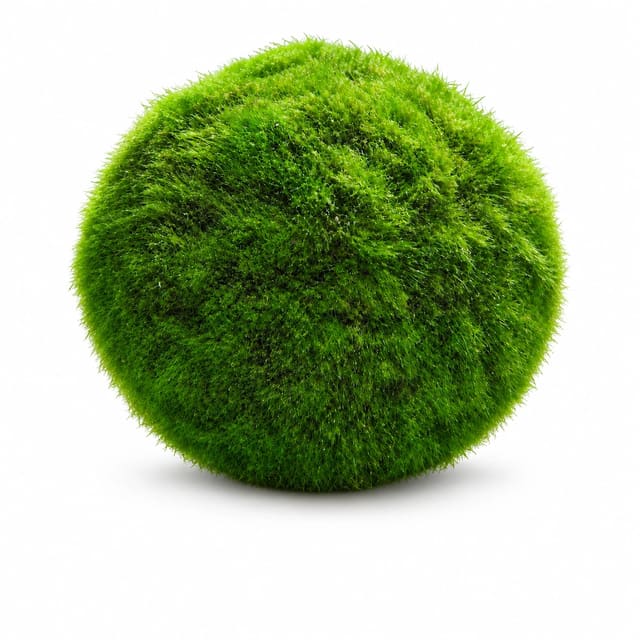
Marimo Moss Ball (Aegagropila linnaei)
£5.19
Java moss is a hardy aquarium moss with fine, branching, dark green strands that grips wood, rock and mesh. It grows in low to medium light without added CO2, tolerates most water, and gives shrimp and fry somewhere to graze and hide. Sold as one 50 g portion of loose moss.
Vesicularia dubyana
Confirm your email, then we’ll send an availability message for this exact item if it returns within 180 days.
This request is only for this product—no newsletter or other promotions. A mail-provider retry may very rarely duplicate the same availability message. Unconfirmed addresses are removed after 48 hours. See our privacy policy.
Java moss is a hardy aquarium moss with fine, branching, dark green strands that grips wood, rock and mesh. It grows in low to medium light without added CO2, tolerates most water, and gives shrimp and fry somewhere to graze and hide. Sold as one 50 g portion of loose moss.
Read the full care guidance when planning conditions for your aquarium.
Java moss is one of the toughest plants you can grow in an aquarium. Its fine, branching, dark green strands grip wood, rock and other rough surfaces and slowly build into soft cushions and carpets. It needs no substrate, no added CO2 and only low to medium light, which makes it a natural first plant and a favourite in shrimp and breeding tanks.
This portion is supplied as Vesicularia dubyana, the moss that first carried the name Java moss in the aquarium hobby; Wikipedia also lists it as Singapore moss. Most Java moss in the trade today is identified as Taxiphyllum barbieri. Flowgrow explains that it arrived in the late 1960s as "Bogor moss" under a wrong name, was widely sold as V. dubyana and largely replaced it, until a moss specialist identified the mix-up in 1982. Dennerle likewise calls T. barbieri the plant that is erroneously called Java moss. Both mosses belong to the family Hypnaceae.
The two are very hard to tell apart without a microscope. Flowgrow notes that V. dubyana has narrower leaves, more irregular branching, leaf cells more than three times longer than wide and spore capsules even under water, while T. barbieri carries its leaves at more regular intervals and a sharper angle and does not form capsules under water. In the aquarium they are kept in the same way.
| Suits | Not suited to |
|---|---|
| Low to medium light without added CO2 | Keepers who want an instant carpet: it grows steadily, not fast |
| Wood, rock, mesh and other rough surfaces | Loose placement in strong flow, where it drifts |
| Shrimp tanks, fry tanks and breeding set-ups | Aquariums where you cannot trim and collect fragments |
| Tropical aquariums and cooler indoor tanks | Garden ponds and any outdoor water |
Its weak point is that it spreads. Flowgrow warns that T. barbieri can become a nuisance, and notes for V. dubyana that a new moss plant grows from every small fragment. Our live plants for beginners guide sums it up well: useful only when contained, which mostly means trimming carefully.
Each purchase is one 50 g portion of loose Java moss. It arrives unattached, not tied to wood or rock, so you can split it and place it wherever you want it. Strand length and the shade of green vary from batch to batch, and the photograph shows the moss, not the exact portion you will receive.
Thin layers matter because moss grows from its tips and needs light and water flow through it. A thick wad shades its own centre, traps waste and turns brown inside.
Dispatch days and arrival times are on our delivery information page, so you can have the hardscape ready before the parcel comes.
Java moss stays low. Dennerle gives 5–10 cm for T. barbieri and places it in the foreground; Tropica gives 3–10 cm or more after two months. It grows as an epiphyte: Flowgrow says its rhizoids attach to wood, rock, plastic and glass, that it can cover a filter mat, and that under low light it can form a foreground carpet. Tropica calls it ideal for decorating stones and tree roots and for hiding equipment.
| Placement | How to do it | Watch out for |
|---|---|---|
| Bogwood and roots | Wrap a thin layer and tie it with cotton thread or fishing line | Trim the underside so it does not trap waste |
| Stones | Tie a thin layer on, or fix small tufts with gel glue | Keep pieces small enough to lift out for cleaning |
| Foreground carpet | Spread thinly over mesh or flat stones in low to moderate light | Fragments drifting into the substrate |
| Filter sponges and equipment | Let it grow over a sponge or behind a heater to hide it | Never let it block water flow through the filter |
Choose places you can reach. Moss needs trimming, and pieces you can lift out of the aquarium are much easier to trim cleanly than a moss wall at the back of a deep tank.
Low light is enough. Tropica rates the light demand of T. barbieri as low and Dennerle as medium to low. Flowgrow says it grows in low to high light: higher light gives a more compact, lusher growth, while lower light makes it darker and more spindly. For V. dubyana, Flowgrow notes that it needs little light but branches better under at least moderate lighting.
CO2 and fertiliser help but are not necessary. Tropica rates its CO2 demand as low; Dennerle gives 0–20 mg/l; Flowgrow gives 5–40 mg/l for T. barbieri and 10–40 mg/l for V. dubyana. Flowgrow recommends at least an iron fertiliser for strong colour.
| Light level | What to expect |
|---|---|
| Low | Slow, darker, looser and more thread-like growth |
| Medium | Steady growth with good branching; the easiest balance |
| High | Denser, more compact cushions, but algae can settle in the strands if nutrients and CO2 are short |
Algae caught in moss are hard to remove, so do not push the light harder than the rest of the aquarium needs. Our aquarium algae control guide explains how to balance light, feeding and maintenance.
Java moss is very tolerant of water chemistry. Dennerle describes T. barbieri as very tolerant of different water conditions, and Wikipedia says it accepts all kinds of water, including weakly brackish water. The published temperature and pH ranges differ between sources and between the two mosses, so the table sets them side by side.
| Source | Temperature | pH | Hardness |
|---|---|---|---|
| Dennerle, T. barbieri | 22–28°C | 5–9 | Very soft to very hard |
| Flowgrow, T. barbieri | 12–34°C tolerated, best 20–30°C, fastest around 24°C | 5–8 | 0–21 °dKH |
| Flowgrow, V. dubyana | 4–32°C tolerated, best 15–30°C | 5–8 | 0–21 °dKH |
| Wikipedia, T. barbieri | Best 20–30°C | Not given | All kinds of water |
A tropical aquarium at 22–28°C with a pH of 5–8 sits inside every source's range, whichever moss you have. That covers most UK tap water. Cooler indoor aquariums are possible within the tolerance ranges, but growth slows.
Your animals set the final targets. Compare your tap water and aquarium readings with your fish and shrimp using our water matcher.
Rinse the moss in a bowl of aquarium water and look it over before it goes in. Like any live plant, moss can carry small hitchhikers such as snails. Then spread a thin layer over the surface and hold it in place: Tropica recommends a piece of fishing line or cotton thread until the moss grips the décor, and a little aquarium-safe gel glue works for small tufts.
| Checkpoint | What to do |
|---|---|
| Arrival | Rinse, inspect for snails, split into thin patches |
| Attaching | Tie or glue thin layers onto wood, stone or mesh; keep the strands wet |
| Days 2–3 | Net out any strands that have floated free |
| Days 4–7 | Check the ties; tighten any that have loosened |
| Weeks 2–4 | Look for fresh bright-green tips and the first rhizoids gripping the surface |
Cotton thread eventually breaks down in water, while fishing line stays until you cut it off once the moss has gripped. Either way, do not tie so tightly that the moss is crushed flat, and check the ties at each water change.
Propagation is simple: Dennerle and Wikipedia list division, and Flowgrow adds that you can cut off daughter plants. Every trimming is a new piece you can attach elsewhere. Tropica says that if growth becomes too dense, it can be pruned with scissors.
Regular light trims keep the moss green and dense. Thick clumps trap waste, and loose strands drift into filters and onto other plants, so it is better to trim a little often than a lot occasionally.
Most Java moss problems come from thickness, debris or light. Change one thing at a time so you can see what worked.
| If you see | Do this |
|---|---|
| Brown inner layers | Thin the clump, lift out trapped waste and improve gentle water flow through it |
| Dark, spindly, stretched strands | Give it more light; low light makes it darker and more spindly |
| Algae threads in the moss | Shorten the lighting period, check feeding and pick algae out by hand |
| Moss not gripping the surface | Use a thinner layer, re-tie it and keep it out of strong flow |
| Strands everywhere in the tank | Trim outside the aquarium and net fragments at every water change |
| Small snails appearing | They arrived with the plant; remove them by hand if you do not want them |
If fish or shrimp behave abnormally, test the water first. Moss does not cause disease, but decaying clumps add to the waste the filter has to deal with.
Dense moss is one of the best things you can add to a shrimp or breeding aquarium. Wikipedia notes that some shrimp graze the microorganisms and detritus that collect on it, and that aquarists raising fry and tadpoles use it as cover from cannibalistic adults; Tropica calls it a wonderful hiding place for young fish in breeding tanks.
It is a natural partner for cherry shrimp such as assorted cherry shrimp and Blue Velvet Shrimp, for the larger Amano Shrimp, and for small fish such as the Celestial Pearl Danio. Our shrimp-keeping guide explains how to set up a shrimp aquarium, and our nano tank fish collection lists other small species that suit a moss-rich tank.
| Suits | Use caution with |
|---|---|
| Dwarf shrimp and their young | Unguarded filter intakes |
| Fry and small breeding fish | Large or boisterous fish that tear moss loose |
| Peaceful nano and community fish | Strong flow aimed straight at the moss |
Java moss is an aquarium plant. Flowgrow lists its outdoor use and winter hardiness as unknown, and OATA, the UK ornamental aquatic trade association, advises that aquarium plants should never be used in ponds because of their potential to become invasive. Because new plants grow from small fragments, careless disposal is the main risk.
No. It grows in low to medium light without added CO2. More light gives denser, more compact growth, and CO2 and fertiliser speed it up, but neither is necessary.
Spread a thin layer over the surface and hold it with cotton thread, fishing line or aquarium-safe gel glue until it grips by itself. A thin layer anchors better than a thick wad.
Java moss is sold under two names. Most trade Java moss has been identified as Taxiphyllum barbieri since the 1980s; this portion is supplied as Vesicularia dubyana, the plant that first carried the name. They look almost identical and are kept the same way.
One 50 g portion of loose Java moss. It arrives unattached, so you can split it and place it on wood, stone or mesh wherever you want it. Strand length and the shade of green vary from batch to batch.
Dennerle gives 22–28°C for Taxiphyllum barbieri, and Flowgrow gives a best range of 20–30°C for it and 15–30°C for Vesicularia dubyana. A normal tropical aquarium suits either; growth slows in cooler water.
Yes. Shrimp graze the tiny organisms and detritus that collect in it, and it gives young shrimp and fry somewhere to hide. Rinse new moss and check it for snails before it goes in.
Steadily rather than quickly. Tropica and Flowgrow rate the growth of Taxiphyllum barbieri as medium, Dennerle as moderate, and Flowgrow rates Vesicularia dubyana as slow. Expect weeks, not days, before it covers a surface.
Usually because the inner layers are too thick and get no light or water flow, or because debris has built up in the clump. Thin it out, trim it and lift out the loose waste. Very low light also makes it darker and more spindly.
No reviews for this item yet. Bought one? Honest reviews only, good or bad.
What customers say about ordering from us
Easy website plenty of info on fish your buying great to pick a time slot
TRACEY DURRANT · 7 Oct 2026
Got some lovely fish thank you
Kevin Mackie · 7 Oct 2026
Reviews of our shop, collected by Judge.me, an independent third-party review collector. Newest first.