Easy
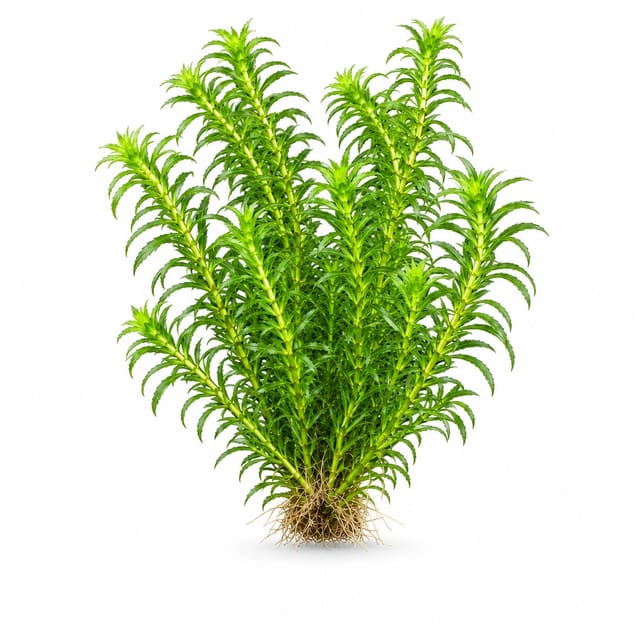
Narrow-Leaf Anacharis (Egeria najas)
15–30°C · pH 5–9
£7.29
Alternanthera reineckii is a South American stem plant grown for its red, pink and copper leaves, which stand out among green plants. Give it medium to high light, added CO2 for the best colour, a steady fertiliser routine and 22–28°C, and pinch out the tips to make it bushier. Choose one bunch or one potted plant.
Alternanthera reineckii
Confirm your email, then we’ll send an availability message for this exact item if it returns within 180 days.
This request is only for this product—no newsletter or other promotions. A mail-provider retry may very rarely duplicate the same availability message. Unconfirmed addresses are removed after 48 hours. See our privacy policy.
Alternanthera reineckii is a South American stem plant grown for its red, pink and copper leaves, which stand out among green plants. Give it medium to high light, added CO2 for the best colour, a steady fertiliser routine and 22–28°C, and pinch out the tips to make it bushier. Choose one bunch or one potted plant.
Read the full care guidance when planning conditions for your aquarium.
Alternanthera reineckii is a South American stem plant and one of the most popular red plants for planted aquariums. Depending on the form and the light, its leaves range from brown-red and copper to cherry red and pink, often with a pinker underside. Planted as a group, it stands out sharply against green plants.
It belongs to the amaranth family, Amaranthaceae. A USDA weed risk assessment gives its native range as Brazil, Paraguay and Argentina, where it grows as an amphibious perennial along river courses, in seepage areas and in rain pools, both fully submerged and above the water. Wikipedia lists older names including Alternanthera cardinalis, Telanthera osiris and Alternanthera rosaefolia, and the USDA report records the common name temple plant.
Nurseries sell several named forms, such as 'Pink', 'Red', 'Mini', 'Rosanervig' and 'Lilacina'. This listing is sold as the species without a cultivar name, so the care below draws on the published profiles of the closest standard forms and says where they differ.
| Suits | Not suited to |
|---|---|
| Medium to bright light | Dim aquariums, where the leaves stay green |
| A heated tropical aquarium at 22–28°C | Unheated or coldwater aquariums |
| Planting in a group in the midground or background | A single stem lost among large green plants |
| A regular fertiliser routine, ideally with added CO2 | An aquarium that never receives fertiliser |
| Small community fish and shrimp | Fish that dig up or eat soft-leaved plants |
Tropica and Dennerle both rate it medium difficulty. That is the honest summary: it is not hard, but the colour that makes people buy it depends on good light and steady nutrients, so it suits a keeper who is ready to give it both. Our fish for planted aquariums collection lists peaceful species that suit this kind of planted set-up.
Each purchase is one bunch of cut stems or one potted plant, chosen with the Format option. The number of stems and their colour vary with the growing season, and a plant grown in bright nursery conditions can look different once it settles in your aquarium. The photograph shows the plant, not the exact bunch or pot you will receive.
Because the species grows both under and above water, nursery stock may have been grown with its leaves in the air. New underwater leaves can then look a little different from the ones the plant arrived with, and a few older leaves may drop while it adjusts. Judge the plant by its new growth.
Leaf colour also depends on light and nutrients, so the plant can look greener on arrival and redden as it settles in good light. Have the aquarium ready before you order; dispatch days and arrival times are on our delivery information page.
The published heights vary with the form. Tropica's 'Pink' grows stems 25–50 cm tall and averages 20–30 cm or more after two months; Dennerle's 'Red' reaches up to 40 cm; the USDA assessment, citing the Tropica catalogue, gives 15–50 cm tall and 10–15 cm wide for the species; Wikipedia gives up to 30 cm. Plan for a tall stem plant that you trim to the height you want.
Dennerle places it in the background, and Tropica recommends planting it in groups. A group in the midground or background shows the colour best. The compact 'Mini' cultivar, at 5–10 cm or more, is a separate foreground form and is not what this listing describes.
To dose fertiliser accurately you need the aquarium's real volume. Our tank volume calculator works it out from the dimensions.
Light drives the colour. Tropica says good light encourages the leaves to turn red and rates the light demand of its Pink form as medium (it defines medium as about 0.5 W per litre). Dennerle rates its Red form high to medium and says the plant needs good lighting for the most intense colours. The Aquasabi aquascaping wiki explains that red leaves come from anthocyanins, pigments that protect the plant from strong light, so plenty of light is a prerequisite for a deep red.
CO2 helps. Tropica rates its demand as medium, which it defines as 6–14 mg/L; Dennerle gives 20–30 mg/l and says the plant needs an adequate supply. The sources differ by form, but both put it above the low-demand plants.
| Factor | Tropica 'Pink' | Dennerle 'Red' | In practice |
|---|---|---|---|
| Light | Medium | High to medium | Under the brightest part of the lamp |
| CO2 | Medium (6–14 mg/L) | 20–30 mg/l | Added CO2 gives the best growth and colour |
| Growth | Medium | Moderate | Trim every 6–8 weeks |
| Difficulty | Medium | Medium | Needs a steady routine |
Nutrients need balance rather than excess. Aquasabi notes that when nitrate is high, the leaves of some plants turn green or brownish, and that limited nitrogen and phosphate bring out red, but it warns that an insufficient supply puts growth at risk. It also says iron is not needed to form the red pigment, although it is needed for chlorophyll; other growers recommend iron for red plants, so the sources disagree. The practical answer is a complete liquid fertiliser, a nitrate test before you add more, and no extreme dosing. If you keep shrimp, choose a fertiliser labelled as safe for them.
Dennerle gives 22–28°C, pH 5–8 and soft to hard water for its Red form; Tropica publishes no water values for its Pink form. That means a heated tropical aquarium, and water that most UK taps supply. Hardness is rarely the problem; pH above 8 is outside the published range, so test it if you live in a very hard-water area.
| Reading | Alternanthera reineckii range | What to check |
|---|---|---|
| Temperature | 22–28°C | A heater is needed; keep it inside your fish's range too |
| pH | 5–8 | Test your tap water if you are in a hard-water area |
| Hardness | Soft to hard | Rarely limits this plant |
| CO2 | Medium demand | If you add CO2, watch the fish for fast or laboured breathing |
Your fish set the final targets. Compare the readings of your tap water and aquarium with your livestock using our water matcher, and read our water chemistry guide for what pH, KH and GH mean in practice.
Stable values matter more than perfect ones. Sudden changes in temperature or pH are more likely to make a newly planted stem drop leaves than a steady value at either end of the range.
Plant the stems singly, a short distance apart, so light reaches the lower leaves; a group of several stems looks better than a tight bundle. Push the bare lower part of each stem into the substrate deep enough that it stays put.
It is a rooted stem plant, so a nutrient-holding substrate gives it a good start, and a liquid fertiliser feeds the leaves through the water.
| Checkpoint | What to do |
|---|---|
| Before planting | Rinse, inspect for snails and eggs, remove pot and growing material |
| Planting day | Plant stems singly in a group under good light |
| Days 2–3 | Replant any stem that has floated up; remove leaves that have turned soft |
| Days 4–7 | Look for new leaves at the tips; colour often improves as they grow |
| End of week | Test nitrate, then settle into a regular fertiliser routine |
Some leaf loss in the first days can happen after a move, especially for plants grown above water. Remove dropped leaves so they do not decay in the tank, and keep conditions stable while the stems adjust.
Tropica says it is easy to propagate by nipping off the terminal bud and planting it in the substrate, and that this makes the mother plant bushier because it forms more side shoots. Dennerle lists head cuttings and side shoots, and advises trimming the stems every 6–8 weeks.
Trimming on a regular cycle keeps the group dense and stops the tops from shading the lower leaves, which is the main reason stem plants become bare at the base.
Alternanthera reineckii shows its condition in its colour. Change one thing at a time and give each change a couple of weeks, because new leaves show the result, not old ones.
| If you see | Do this |
|---|---|
| Leaves turning green or brownish | Check the light first; test nitrate and avoid overdosing |
| Slow, pale new growth | Review fertiliser and CO2; the plant has a medium demand |
| Older leaves dropping after arrival | Remove them and keep conditions stable while new leaves form |
| Bare lower stems | Trim and replant the tops; thin the group so light reaches the base |
| Algae on the leaves | Review lighting hours and feeding, and add algae grazers |
| Chewed or missing leaves | Check for plant-eating fish or snails |
Algae grow on any plant under strong light when nutrients and light are out of balance. Our algae control guide explains the causes, and grazers such as Otocinclus and Amano shrimp help keep the leaves clean.
The plant's range defines the community: tropical, peaceful fish that like a planted tank. Small schooling fish look their best swimming in front of red stems, and algae grazers keep the leaves clean.
Good partners include the Zebra Oto, a small algae-grazing catfish (see our Otocinclus care guide), the Amano Shrimp, and small schooling fish such as the Cardinal Tetra, the Ember Tetra and Harlequin Rasboras. Check each species' own temperature range against the plant's before you buy. Dennerle also suggests it as a splash of colour among sword plants.
| Suits | Use caution with |
|---|---|
| Small peaceful schooling fish such as tetras and rasboras | Fish that dig in the substrate or eat soft leaves |
| Algae grazers such as Otocinclus and Amano shrimp | Coldwater fish kept below 22°C |
| Dwarf shrimp, with a shrimp-safe fertiliser | Dense floating plants that shade the group |
More algae grazers are in our algae eaters collection.
Alternanthera reineckii is an aquarium plant. The USDA assessment found that it has naturalised in Taiwan, and that some of its close relatives, such as Alternanthera philoxeroides (alligator weed) and A. sessilis, are serious invaders. OATA advises that aquarium plants should never be used in ponds because of their potential to become invasive.
For more easy plants to combine with it, read our live plants for beginners guide.
Usually because it has too little light. Good light is what turns the leaves red. Very high nitrate can also leave some red plants greener or brownish, so test the water before adding more fertiliser.
It is not strictly required, but both growers rate its CO2 demand as medium or higher, and added CO2 gives the best growth and the strongest colour. Tropica gives 6–14 mg/L as its medium level; Dennerle gives 20–30 mg/l for the Red form.
Pinch off the top of each stem and replant it. The cutting roots, and the mother plant forms more side shoots, so the group fills out.
It depends on the form. Tropica gives 25–50 cm stems for its Pink form, Dennerle up to 40 cm for its Red form, and a USDA risk assessment 15–50 cm tall and 10–15 cm wide for the species. Trimming keeps it at the height you want.
This listing is sold as the species, Alternanthera reineckii, without a cultivar name. Leaf colour depends on light and nutrients, so plants can look greener on arrival and redden as they settle in good light.
Dennerle gives 22–28°C, pH 5–8 and soft to hard water for its Red form. That means a heated tropical aquarium; most UK tap water suits it once its pH is within that range.
Yes, provided the fertiliser is shrimp-safe. Rinse new plants and check them for snails before planting, and keep the filter intake guarded so small shrimp are not drawn in.
The bunch gives you cut stems to plant straight away in a group. The potted plant arrives rooted in growing material, which you remove before planting. Both grow into the same plant.
No reviews for this item yet. Bought one? Honest reviews only, good or bad.
What customers say about ordering from us
Easy website plenty of info on fish your buying great to pick a time slot
TRACEY DURRANT · 7 Oct 2026
Got some lovely fish thank you
Kevin Mackie · 7 Oct 2026
Reviews of our shop, collected by Judge.me, an independent third-party review collector. Newest first.