Electric Blue Acara (Andinoacara pulcher) - Live tropical fish for sale UK

Andinoacara pulcher

Andinoacara Pulcher «Neon Blue» (Nannacara sp.) - UK

Beginner Friendly
Semi-Aggressive
£6.99In Stock

Add bold Neon Blue colour to your aquarium with these South American dwarf cichlids. Moderate care and ideal for aquarists seeking a standout species.

Aquarium FishCichlidsColourful FishFreshwater FishModerate CareSouth American FishTerritorial Species

Care at a Glance

Scientific Name
Andinoacara pulcher
Adult Size
15 cm
Lifespan
10 years
Care Level
Easy
Temperament
Semi-aggressive
Temperature
22–28°C
pH Range
6.5–7.5
Hardness
5–15 dGH
Minimum Tank
200L
Diet
Omnivore; cichlid pellets, frozen foods, flakes

Premium Quality

Healthy, vibrant fish from trusted suppliers

Expert Care

Detailed care guides and support

Live Arrival Guarantee

Your fish arrives healthy or we'll replace it

Acclimated

Properly quarantined and ready for your tank

Quick Care Guide

Temperature
22–28°C
pH Range
6.5–7.5
Minimum Tank
200L
Adult Size
15 cm
Lifespan
10 years
Care Level
Easy
Temperament
Semi-aggressive
Diet
Omnivore; cichlid pellets, frozen foods, flakes
Water Hardness
5–15 dGH
Tank Region
Middle

Water Parameters

Maintain these water conditions for optimal health and vibrant colors

Temperature
22–28°C
22°CIdeal Range28°C
pH Level
6.5–7.5
6.5Ideal Range7.5
Water Hardness
5–15 dGH
5 dGHIdeal Range15 dGH

Why Choose This Fish?

Add bold Neon Blue colour to your aquarium with these South American dwarf cichlids. Moderate care and ideal for aquarists seeking a standout species.

If you are looking for dwarf cichlids for sale UK hobbyists can keep with confidence, Andinoacara pulcher “Neon Blue” is one of the most rewarding choices. Despite the search term “dwarf” often bringing up tiny Apistogramma, this fish sits in an appealing middle ground: compact enough for a well-planned home aquarium, yet large and bold enough to become the centrepiece of a South American display. Known in the trade as Electric Blue Acara, this striking form combines metallic blue scaling, a calm but watchful personality, and a reputation as one of the best dwarf cichlids for beginners moving into larger freshwater cichlids UK setups. Adult fish reach around 15cm, live up to 10 years, and do best in stable, mature aquariums with warm water, cover, and open swimming space.

Its popularity comes from a rare mix of beauty and practicality. The species is hardy, adaptable, and often more forgiving than delicate rams, making it a smart option for aquarists comparing South American cichlids for sale UK listings. See our detailed photos showing the electric sheen across the flanks, the blue edging on the fins, and the way colour intensifies over dark décor. Whether you want a peaceful show fish for a planted display or you plan to buy Andinoacara Pulcher «Neon Blue» UK for a carefully chosen community, this fish offers colour, personality, and long-term value in one impressive package.

🔹 Quick Facts

  • Scientific Name: Andinoacara pulcher
  • Care Level: Easy to moderate
  • Min Tank Size: 200 litres (about 44 gallons)
  • Temperature: 22-28°C (72-82°F)
  • pH Range: 6.5-7.5
  • Lifespan: Up to 10 years
  • Temperament: Semi-aggressive, usually manageable in the right setup
  • Diet: Omnivore

Classification

  • Order: Cichliformes
  • Family: Cichlidae
  • Genus: Andinoacara

Andinoacara pulcher is a South American cichlid long appreciated in the aquarium hobby for its manageable temperament and vivid blue-green iridescence. The Neon Blue form is especially sought after because it delivers the classic acara body shape with brighter, more concentrated colour. In the hobby it is often compared with rams, kribensis, and Apistogramma, but it occupies a different niche: sturdier than many small dwarf species, more peaceful than many medium cichlids, and ideal for aquarists wanting a colourful feature fish.

Where Do Andinoacara Pulcher “Neon Blue” Come From? Natural Habitat Explained

The wild form of Andinoacara pulcher comes from northern South America, especially Trinidad and Venezuela. In nature, these fish are associated with slow-moving rivers, floodplain margins, drainage channels, and calm backwaters where leaf litter, roots, and submerged branches create shelter. This Andinoacara Pulcher «Neon Blue» habitat helps explain why they appreciate structure in captivity: they like to patrol open water, but they also want visual barriers and secure resting areas.

Water in these regions is usually warm year-round, with moderate mineral content and a pH that can vary from slightly acidic to neutral. That is why the best Andinoacara Pulcher «Neon Blue» ideal water conditions in the aquarium are not extreme. You do not need ultra-soft blackwater to keep them well, but you do need consistency. Stable temperature, good oxygenation, and low nitrate matter more than chasing unusual chemistry.

In the wild, they feed opportunistically on insect larvae, small crustaceans, worms, plant matter, and organic debris. This natural feeding pattern supports the view that the species is an adaptable omnivore rather than a strict predator. Their body shape and mouth position also show a fish built for picking through the middle and lower water layers rather than constant surface feeding.

For aquarists in the UK searching for tropical dwarf fish UK options with South American character, this species stands out because it combines natural hardiness with strong colour. It is often listed among South American cichlids UK collections and appeals to keepers who want a fish with real presence but without the extreme aggression seen in larger Central American species. If you are researching south american dwarf cichlids for sale uk, it is worth noting that Neon Blue Acara behaves more like a peaceful medium cichlid than a tiny cave-spawning dwarf.

💡 Expert Tip

Mimicking the natural habitat improves colour and confidence. Use driftwood, rounded stones, and patches of planting to create sight breaks. Fish kept in bare, bright tanks often look washed out and become more defensive.

How Do You Set Up the Perfect Tank for Andinoacara Pulcher “Neon Blue”?

A successful Andinoacara Pulcher «Neon Blue» care guide starts with one simple rule: give them more room than their label suggests. While many people searching for Andinoacara Pulcher «Neon Blue» for small aquarium ideas are tempted by juvenile size, this is not a fish for cramped quarters. The realistic Andinoacara Pulcher «Neon Blue» minimum tank size is 200 litres, and that should be treated as the floor for a pair or a carefully planned mixed setup. The practical Andinoacara Pulcher «Neon Blue» tank size for best colour and behaviour is 240 litres or more, especially if keeping other fish.

Tank Size Requirements

The correct Andinoacara Pulcher «Neon Blue» aquarium requirements include enough horizontal swimming space for patrolling and enough floor area for territorial boundaries. A 100-120cm tank works well. This is why the species is not suited to a true dwarf cichlid nano tank setup, even though it is often searched alongside smaller dwarf species. If you want a centrepiece fish with calmer behaviour, space is one of the biggest factors.

Water Parameters

The recommended Andinoacara Pulcher «Neon Blue» water parameters are straightforward: 22-28°C, pH 6.5-7.5, and hardness 5-15 dGH. The ideal midpoint for long-term care is often 24-26°C, which suits most mixed South American community tanks. If you are checking Andinoacara Pulcher «Neon Blue» water temperature or broader dwarf cichlid temperature requirements, aim for stability over fluctuation. Sudden swings are far more harmful than being slightly above or below the midpoint.

The preferred Andinoacara Pulcher «Neon Blue» pH level is neutral to slightly acidic, though many UK aquarists keep them successfully in moderately hard tap water if acclimation is slow. General dwarf cichlid water hardness matters because very hard water can reduce breeding success, while very soft unstable water can create pH swings. For everyday display tanks, consistency is the priority.

22-28°C
Temperature
6.5-7.5
pH
5-15 dGH
Hardness
200L+
Minimum Tank

Filtration

Use filtration that turns the tank over around 4-6 times per hour without creating a torrent. External canister filters are ideal because they provide biological capacity and keep the display uncluttered. Pair the filter with a reliable aquarium heater and a thermometer so the Andinoacara Pulcher «Neon Blue» ideal water conditions stay steady. Good mechanical filtration is especially helpful because cichlids are enthusiastic feeders and produce a fair amount of waste.

Substrate

The best dwarf cichlid substrate preference for this species is fine sand or smooth, rounded gravel. Sand allows natural sifting and reduces the risk of mouth damage. Dark substrate also improves contrast, making the blue scales look brighter. If you are planning Andinoacara Pulcher «Neon Blue» aquarium ideas, think in zones: open sand at the front, wood and stones in the midground, and planting around the back and sides.

Plants & Decor

Yes, this fish can work well as Andinoacara Pulcher «Neon Blue» for planted tank centrepiece stock. Strong-rooted plants such as Amazon swords, Java fern, Anubias, and Vallisneria are good choices. They may move substrate while displaying or spawning, so delicate carpeting plants are less reliable. A proper dwarf cichlid planted tank setup should include wood, broad leaves, and caves or flat stones for spawning. If you enjoy browsing other cichlids for a themed display, the Apistogramma Elizabethae - Elizabeth'S Dwarf Cichlid and Apistogramma Agassizii - Agassiz'S Dwarf Cichlid show how different South American species use cover in different ways.

Lighting

Moderate lighting is best. Too much harsh light can make the fish skittish, while dim lighting may hide its metallic sheen. A photoperiod of 7-9 hours works well in most tanks. Floating plants can soften bright LEDs and help the fish feel secure.

Quick Setup Checklist

  • Tank length of at least 100cm, 200 litres minimum
  • Temperature kept stable between 24-26°C for most community setups
  • pH 6.5-7.5 and hardness 5-15 dGH
  • Fine sand or smooth dark gravel
  • Driftwood, rocks, broad-leaf plants, and open swimming space
  • Mature biological filtration and weekly water changes

💡 Pro Tip

Always cycle the tank for 4-6 weeks before adding cichlids. In new tanks, unstable ammonia and nitrite are a bigger risk than slightly imperfect pH. Stable, mature filtration is one of the best ways to protect long-term health.

What Do Andinoacara Pulcher “Neon Blue” Eat? Complete Feeding Guide

The Andinoacara Pulcher «Neon Blue» diet is omnivorous, which makes feeding simple as long as you focus on quality and variety. In the wild they take insect larvae, worms, tiny crustaceans, and bits of plant material. In the aquarium, the best Andinoacara Pulcher «Neon Blue» feeding guide combines a nutritious staple pellet with frozen and occasional live foods. This varied approach supports growth, colour, immune function, and breeding condition.

Staple Foods

Use a high-quality cichlid pellet or granule as the main food. Choose a size they can swallow comfortably and feed only what they finish in under a minute. Good staples should contain fish meal, krill, spirulina, and vitamin support rather than cheap fillers. This is especially important if you are comparing live Andinoacara Pulcher «Neon Blue» for sale UK listings and want your new fish to settle quickly after arrival.

Supplemental Foods

Frozen bloodworm, brine shrimp, mysis, and daphnia are excellent additions 2-4 times per week. These foods help maintain body condition and can intensify colour. Many keepers who also browse Andinoacara Pulcher for sale UK or other dwarf cichlids UK notice that fish fed a mixed diet show fuller finnage and stronger blue iridescence.

Treats & Conditioning Foods

For breeding pairs, increase protein slightly with live or frozen foods. This helps trigger stronger courtship and supports egg production. If you are evaluating Andinoacara Pulcher «Neon Blue» spawning behaviour, diet is one of the biggest variables you can control.

Feeding Frequency & Portion Control

Adults do best with two small meals daily. Juveniles may need three smaller feedings. Avoid the common mistake of feeding one huge meal; cichlids will often beg, but overfeeding leads to bloating and poor water quality. This matters for anyone using a dwarf cichlid shop UK source and wanting fish to thrive after purchase rather than merely survive.

Time Food Amount
Morning Quality cichlid pellets Only what is eaten in 30-60 seconds
Evening Frozen brine shrimp, mysis, or bloodworm Small pinch or cube portion shared by tank
Mikrogeophagus Ramirezi «Blue Brilliant» - Papiliochromis

A useful comparison species if you are choosing between hardier acaras and more delicate ram-type cichlids with similar feeding needs.

Ramirez Dwarf Cichlid Papiliochromis Ramirezi Asia

Another popular South American option often researched by keepers comparing feeding intensity, colour, and sensitivity.

⚠️ Feeding Warning

Overfeeding causes ammonia spikes, excess nitrate, and fatty degeneration over time. Remove uneaten food promptly and avoid mammal meats, bread, or heavily processed human foods.

What Does Andinoacara Pulcher “Neon Blue” Look Like? Colors, Patterns & Varieties

This is one of the most colourful dwarf cichlids-style fish sold into mixed cichlid collections, even though it grows larger than true dwarf species. The body is deep and laterally compressed, with a gently sloping forehead, long dorsal fin, and rounded to slightly pointed anal and caudal fins. Adults usually reach around 15cm, with males often appearing bulkier and more extended in the finnage.

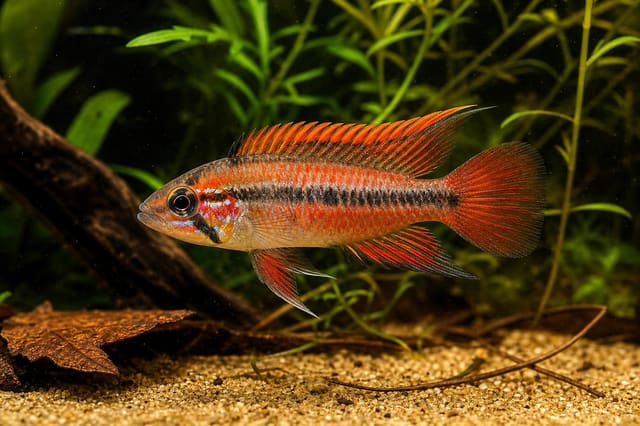
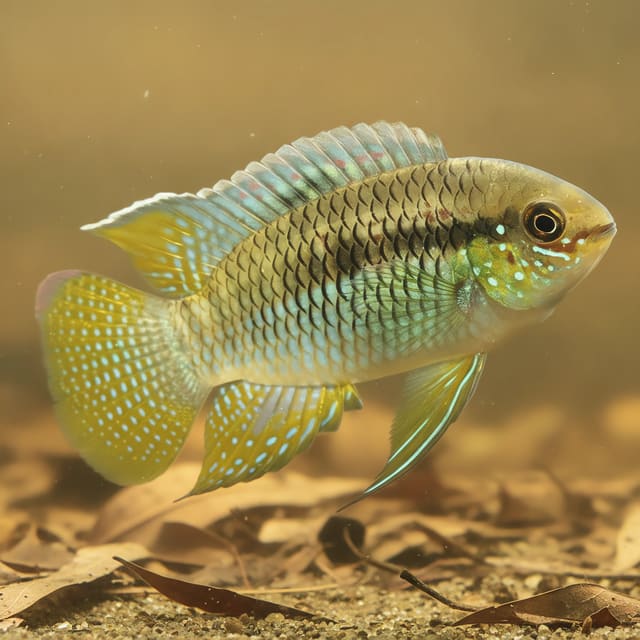
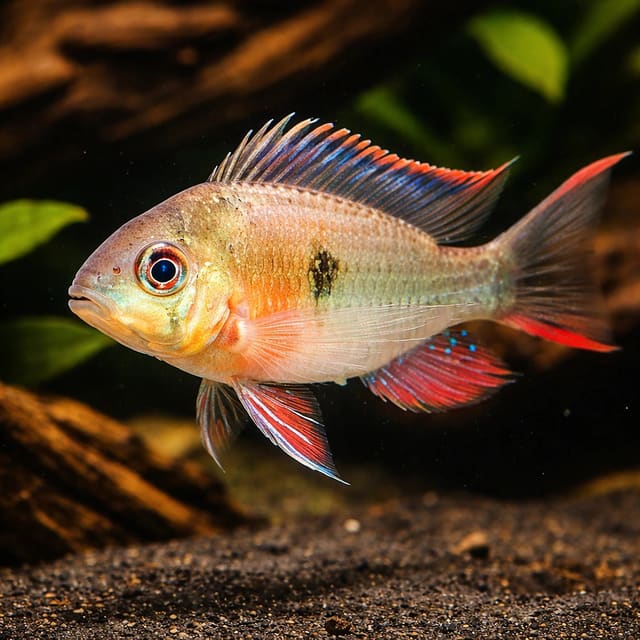
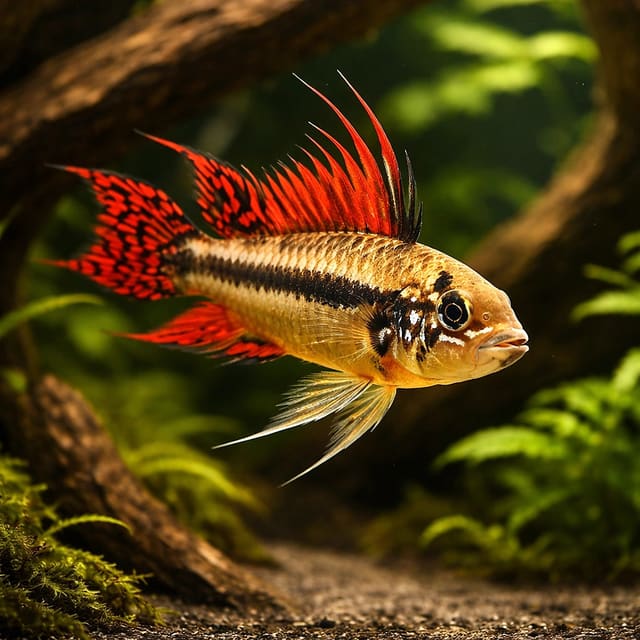
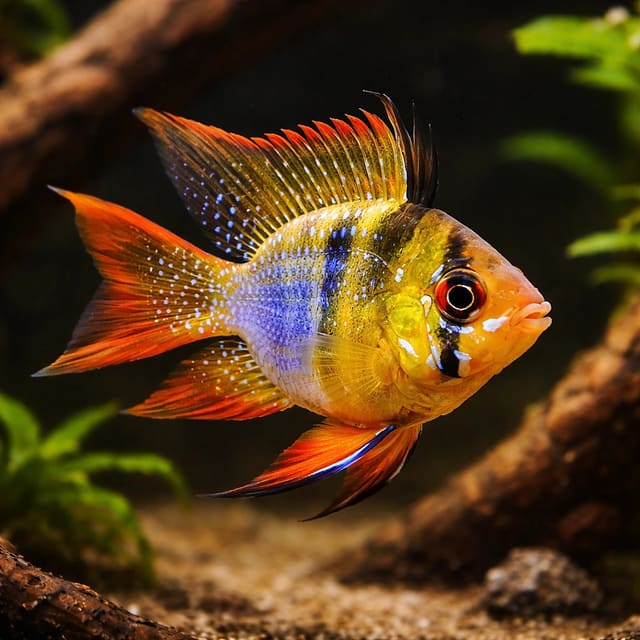
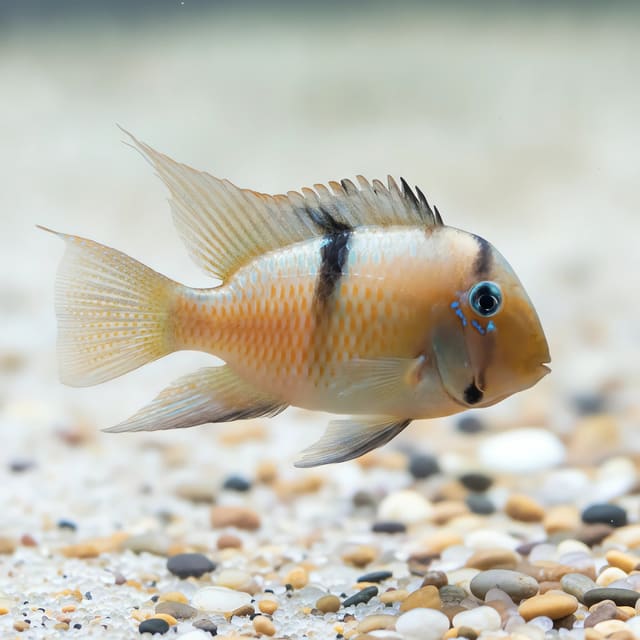
The main attraction is the electric blue scaling. Under good lighting, the flanks flash turquoise, cobalt, and green-blue, while the face and gill plates often show denser metallic spotting. The fins can carry blue edging and subtle warm tones, especially when the fish is mature and settled. Among colourful dwarf cichlids searched by UK aquarists, few match the way this fish changes with angle and light.

Sexual dimorphism is moderate. Males are usually larger, with longer dorsal and anal fin extensions and a more imposing profile. Females often stay slightly smaller and can show stronger contrast in breeding condition. If you are researching Andinoacara Pulcher «Neon Blue» colour variants, the Neon Blue form is the standout ornamental variety, selected for intensified iridescence compared with standard blue acara lines.

To maximise colour, use dark substrate, stable warm water, and a varied diet rich in carotenoids and marine proteins. Our photos show the intense blue sheen achieved through calm housing, mature water, and a balanced feeding routine rather than harsh lighting tricks.

What Fish Can Live With Andinoacara Pulcher “Neon Blue”? Compatibility Guide

The overall Andinoacara Pulcher «Neon Blue» behaviour is best described as assertive but usually manageable. In a spacious tank, they are among the more peaceful dwarf cichlids for community tank style options for aquarists wanting a cichlid centrepiece. They are not timid, and they will defend territory when breeding, but outside spawning they are often far calmer than many similarly sized cichlids.

Ideal Tank Mates

Good companions include medium tetras, larger peaceful rainbowfish, Corydoras in roomy tanks, and angelfish where dimensions are generous. Searches for Andinoacara Pulcher «Neon Blue» with tetras are common, and the answer is yes, provided the tetras are not tiny enough to be viewed as food. Congo tetras, bleeding hearts, and larger black skirt types are better choices than very small neons in mixed adult tanks.

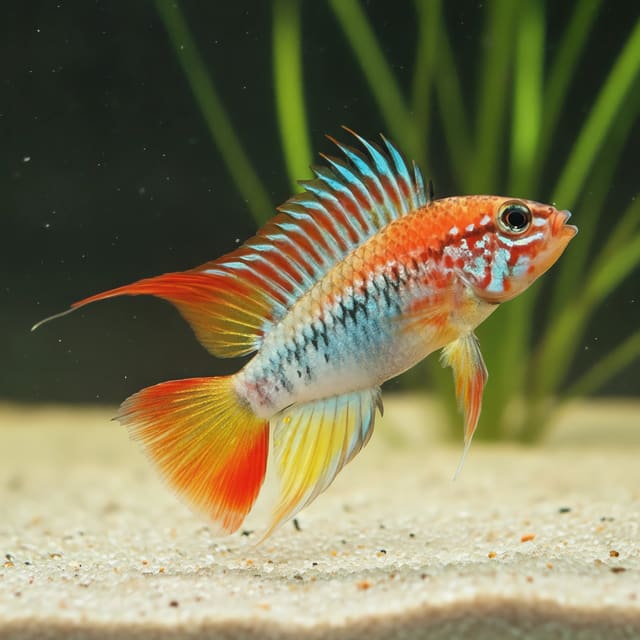
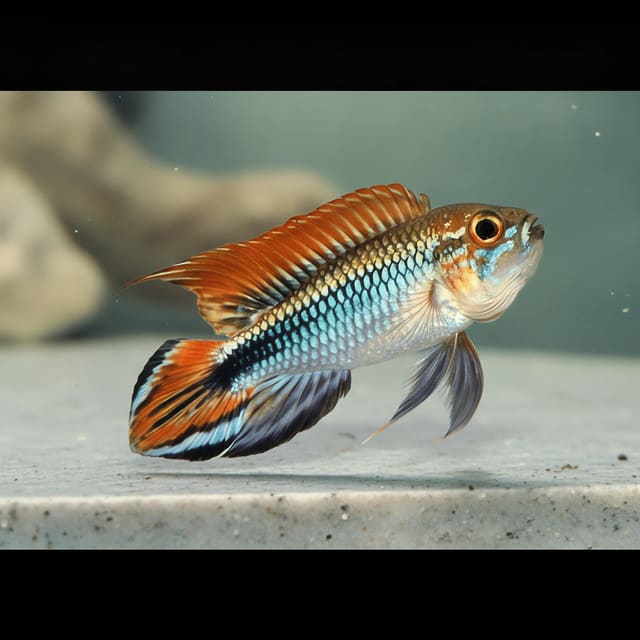
If you enjoy comparing species, the Apistogramma Hongsloi «Red Stroke» - Red, Apistogramma Cf. Viejita Gold - Dwarf, Guianacara Dacrya - Bandit Cichlid -, and Mikrogeophagus Ramirezi «Blue Brilliant» - Papiliochromis are all fish aquarists often review when building a South American community. They are not all direct tank mates for the same aquarium size, but they are useful reference points in any best dwarf cichlids comparison.

Species to Avoid

Avoid very small fish, delicate long-finned species that may be harassed, and most ornamental shrimp. The listed Andinoacara Pulcher «Neon Blue» tank mates should be robust enough to handle a confident cichlid. Shrimp are usually unsafe, and tiny rasboras or fry-sized livebearers may disappear.

Community Tank Examples

In a 240-litre tank, a pair of Neon Blue Acara can work with 12-18 medium tetras and a group of 6-8 larger Corydoras if the layout includes open swimming lanes and multiple sight breaks. In a 300-litre setup, they can be combined with angelfish or other calm South American fish. This is why many keepers looking to buy dwarf cichlids online UK compare tank footprint as closely as species temperament.

Compatibility with Invertebrates

Snails are usually tolerated, though small snails may be pecked. Shrimp should be considered prey. If your goal is a shrimp-safe layout, choose a different species from the list of dwarf cichlids rather than this one.

Species Compatible? Notes
Apistogramma Agassizii - Agassiz'S Dwarf Cichlid ⚠️ Caution Possible only in large, structured tanks; different territorial styles need space.
Medium tetras ✅ Yes Best with active schooling species too large to be eaten.
Shrimp ❌ Avoid Most shrimp will be hunted, especially juveniles.

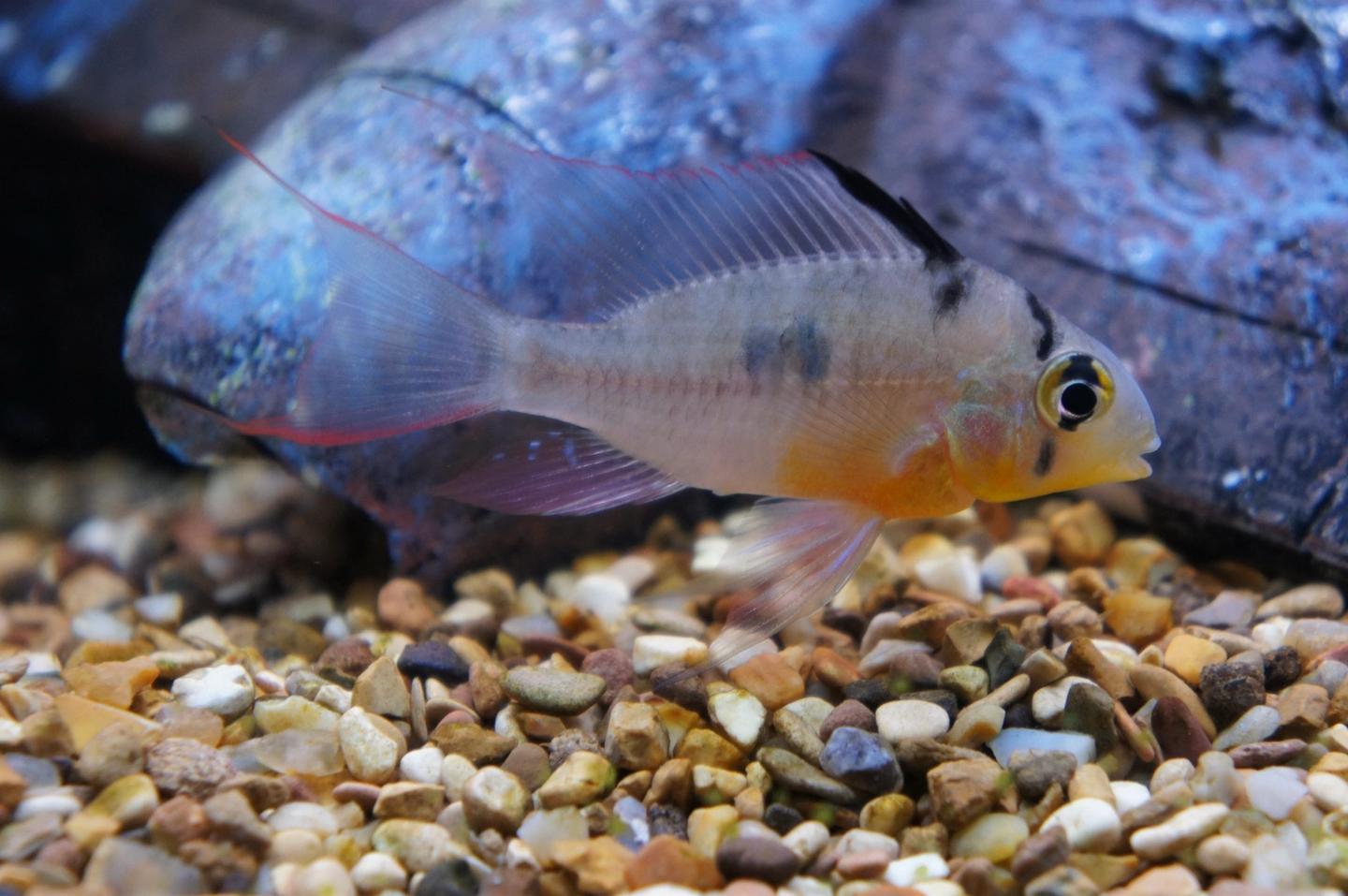
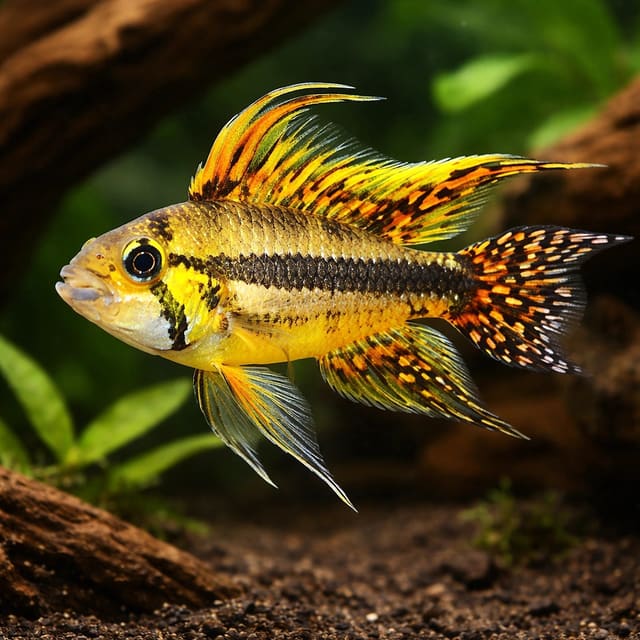
When comparing Andinoacara Pulcher «Neon Blue» vs German blue ram, the acara is tougher, larger, and generally easier in mixed tanks. In Andinoacara Pulcher «Neon Blue» vs Apistogramma cacatuoides discussions, the acara again wins for durability but needs much more space. For Andinoacara Pulcher «Neon Blue» vs kribensis, the acara is usually less relentless in aggression but larger and stronger. These comparisons matter if you are choosing among dwarf cichlids for sale in UK pages and want the right fit for your tank, not just the brightest fish.

💡 Compatibility Tip

Always quarantine new arrivals for 2-4 weeks before adding them to a cichlid community. It protects established fish from parasites and gives newcomers time to regain strength before dealing with territorial displays.

How Do You Breed Andinoacara Pulcher “Neon Blue”? Complete Breeding Guide

Andinoacara Pulcher «Neon Blue» breeding is considered relatively easy compared with many cichlids, which is one reason the species is so popular. A compatible pair will often form naturally if raised together or introduced carefully in a spacious tank. Because pair bonding matters, buying a single male and female does not always guarantee success.

Breeding Setup

Use a dedicated tank of at least 200 litres for the pair, with flat stones, broad leaves, wood, and calm corners. Keep temperature around 25-27°C, pH near neutral, and nitrate low. Frequent small water changes and a protein-rich diet are classic spawning triggers.

Spawning Behaviour

The typical Andinoacara Pulcher «Neon Blue» spawning behaviour includes cleaning a flat surface, intensified colour, and stronger territorial defence. The pair may dig shallow pits and repeatedly inspect the chosen site. Courtship can involve flaring fins, circling, and body quivering. This is one of the easiest signs that the fish are settled and in top condition.

Egg Care & Hatching

Eggs are usually laid on a flat stone or similar surface and are guarded by both parents. Good water movement nearby helps oxygenation, but avoid blasting the nest directly. Depending on temperature, eggs typically hatch in a few days, and wrigglers may then be moved by the parents to a pit.

Fry Care & Growth

Once free swimming, fry can be fed infusoria, powdered fry food, and newly hatched brine shrimp. Parents often guard the brood closely and may herd them around the tank. Growth is steady when water quality is excellent and feedings are small but frequent.

Common Challenges

First-time pairs may eat eggs, especially in busy tanks. Hard water can reduce hatch rates, and inexperienced pairs may abandon a spawn if disturbed. If you want to refine results, separate the pair from other fish and reduce traffic around the aquarium.

Advanced Breeding Tip

Condition the pair for 10-14 days with a mix of quality pellets, frozen mysis, and brine shrimp, then perform two slightly cooler water changes over a week. This often simulates fresh seasonal influx and can encourage stronger courtship and more reliable spawning.

How Does Andinoacara Pulcher “Neon Blue” Compare With Similar Species?

Comparison matters because many aquarists searching Apistogramma for sale UK, black ram cichlid for sale uk, or cockatoo cichlid for sale uk are really trying to answer one question: which cichlid best suits my tank, water, and experience level? Neon Blue Acara is often chosen by fishkeepers who want stronger hardiness than rams and more visible open-water presence than many Apistogramma.

Feature Andinoacara pulcher “Neon Blue” German Blue Ram
Max Size 15cm 6-7cm
Care Level Easy to moderate Moderate to advanced
Temperature 22-28°C 27-30°C often preferred
Price £6.78 Varies by strain
Best For Hardier show fish in larger community tanks Warm, peaceful specialist community tanks
Feature Andinoacara pulcher “Neon Blue” Apistogramma cacatuoides
Max Size 15cm 7-9cm
Care Level Easy to moderate Moderate
Tank Style Open swimming space with territories Caves, leaf litter, dense cover
Temperament Semi-aggressive Territorial, especially in breeding
Best For Feature fish with stronger presence Smaller biotope-style dwarf cichlid setups

If you want one of the best dwarf cichlids for beginners in a larger aquarium, Neon Blue Acara is often the safer choice than delicate rams. If you want a true cave-oriented dwarf with more intricate breeding behaviour, Apistogramma may suit you better. Aquarists exploring rare dwarf cichlids UK, african dwarf cichlids, or even starry night cichlid for sale uk pages are often looking for drama and colour, but this species wins on balance: vivid, sturdy, and realistic for many home aquariums.

For direct alternatives, see Stunning Mikrogeophagus Ramirezi «Balloon» Balloon Ram, Ramirez Dwarf Cichlid Papiliochromis Ramirezi Asia, and Apistogramma Cf. Viejita Gold - Dwarf. These are frequently considered in the same shortlist by aquarists comparing dwarf cichlid for sale options.

What Are the Common Health Problems in Andinoacara Pulcher “Neon Blue” and How Can You Prevent Them?

Strong Andinoacara Pulcher «Neon Blue» health starts with stable water and sensible stocking. Healthy fish hold their fins open, show clear eyes, respond quickly to food, and display even colour across the body. Mild colour shifting during mood changes is normal, but persistent darkening, clamped fins, or hiding can signal stress.

Common Diseases & Symptoms

Like many cichlids, they can suffer from ich, bacterial infections, fin damage from aggression, and digestive issues linked to overfeeding. Hole-in-the-head is less common in well-kept tanks but can appear where diet is poor and nitrate remains high. New imports or stressed fish may also carry external parasites.

Treatment Options

Early action is best. Raise observation levels, test water, and move affected fish to a treatment tank if needed. Most problems improve when ammonia and nitrite are zero, nitrate is controlled, and temperature is stable. Use medications carefully and follow manufacturer dosing exactly.

Prevention Tips

Weekly water changes of 25-40%, a varied omnivorous diet, and good filtration prevent most issues. Avoid crowding, and do not combine them with fish that constantly nip fins or provoke territorial stress. A calm environment is one of the easiest ways to preserve the full Andinoacara Pulcher «Neon Blue» lifespan.

Quarantine Procedures

Quarantine all new fish for 2-4 weeks in a separate heated, filtered tank. Observe appetite, breathing, waste, and skin condition. This is especially important if you use live dwarf cichlid delivery UK services and want to protect an established display.

⚠️ Health Warning

Never medicate the main display without checking compatibility with all livestock. Copper-based medications can be lethal to shrimp and some sensitive species, and unnecessary treatment can damage beneficial filter bacteria.

Quarantine Protocol

  • Use a separate heated and filtered tank for 2-4 weeks
  • Observe daily for spots, flashing, heavy breathing, or loss of appetite
  • Feed lightly and keep water pristine
  • Only move fish to the display after consistent feeding and normal behaviour

What Is Andinoacara Pulcher “Neon Blue” Behavior Like in the Aquarium?

The day-to-day Andinoacara Pulcher «Neon Blue» behaviour is active, curious, and surprisingly interactive. Many individuals learn the routine of the room and will come forward at feeding time. They use the middle and lower levels most, but they patrol all areas of the tank when confident.

Socially, they are best kept as a pair or as carefully managed individuals in larger communities. They are not schooling fish, and they do not need groups for security. Instead, they need territory and visual structure. During breeding, behaviour changes quickly: colours intensify, digging increases, and tolerance for other fish drops.

To encourage natural behaviour, provide open swimming lanes, shaded retreats, and décor that breaks line of sight. In well-designed tanks, they display a nice balance of confidence and calm. This is one reason they remain popular among aquarists searching both dwarf cichlids UK and broader freshwater cichlids UK categories.

Why Buy Andinoacara Pulcher “Neon Blue” from Tropical Fish Co?

When customers search Andinoacara Pulcher «Neon Blue» for sale UK, they usually want more than a low headline price. They want fish that arrive feeding, correctly packed, and already adapted to aquarium life. For this species, that matters because colour and confidence depend heavily on early handling. Fish that have been rushed through holding systems often arrive pale and defensive; fish that have been settled properly show stronger blue coverage and feed within days.

Our approach focuses on condition first. Each live Andinoacara Pulcher «Neon Blue» for sale UK listing is backed by a holding and observation period, with fish checked for feeding response, body condition, and external health. We prepare them for UK home aquariums by keeping them in stable, practical parameters rather than extreme specialist water, which makes acclimation easier for most customers. That is especially helpful if you plan to order Andinoacara Pulcher «Neon Blue» online UK for a community tank using normal UK tap-water management.

For transport, fish are packed in insulated boxes with appropriate bagging volume, oxygen, and seasonal protection such as heat packs in cold weather. Andinoacara Pulcher «Neon Blue» delivery UK orders are sent with tracked services so timing is clear and stress is reduced. We also include straightforward acclimation advice because cichlids settle best when lights are dimmed and feeding is delayed for the first few hours after arrival.

If you are comparing Andinoacara Pulcher «Neon Blue» price UK, remember to weigh long-term value. A healthy, feeding fish from a careful source is usually the better buy than a cheaper fish that arrives stressed. Whether you want to buy dwarf cichlid UK, browse buy dwarf cichlids online UK, or choose among South American cichlids for sale UK, this species is a smart centrepiece for aquarists who want colour without excessive fragility. Order your Neon Blue Acara today with confidence and build a display that looks established from the moment the fish settles in.

Why Choose Tropical Fish Co for Andinoacara Pulcher “Neon Blue”

  • Selected for strong blue sheen, full finnage, and active feeding response before sale
  • Held under stable, realistic aquarium parameters to ease transition into UK home setups
  • Packed in insulated, seasonally adjusted shipping materials with tracked delivery

You Might Also Like

If you are building a South American cichlid display, consider adding related species and comparison fish to your shortlist. The Apistogramma Elizabethae - Elizabeth'S Dwarf Cichlid is ideal for more specialised soft-water dwarf setups, while Apistogramma Hongsloi «Red Stroke» - Red offers stronger red patterning in a smaller package. For hobbyists comparing ram-type fish, Stunning Mikrogeophagus Ramirezi «Balloon» Balloon Ram and Ramirez Dwarf Cichlid Papiliochromis Ramirezi Asia are popular alternatives. If you want a different South American cichlid profile, Guianacara Dacrya - Bandit Cichlid - is another interesting option for larger, structured aquariums.