Asia Form Ram Cichlid (Mikrogeophagus ramirezi)
27–30°C · pH 4–7 · 54L
£5.99
Papiliochromis ramirezi electric blue gold head (Papiliochromis ramirezi) is a South American dwarf cichlid from the Orinoco basin in Venezuela and Colombia that reaches 4.2 cm. It suits a carefully maintained aquarium and should be kept as a pair; the overlap of Seriously Fish aquarium values and FishBase’s recorded environmental range is 27–30°C, pH 5.0–6.0 and 5–10 dGH. Sold individually in 3 - 3,5 cm, 3,5 - 4 cm and 4-6 cm sizes.
Adult size is the maximum length this species reaches at full maturity (scientific sources). The livestock you receive will be younger and smaller — pick a size above for the actual shipping size. Product-photo provenance and any image-specific limitations are stated on the listing.
Save when buying multiple fish. Each quantity is one fish; sex and pair formation are not guaranteed unless the selected variant explicitly states them.
Papiliochromis ramirezi electric blue gold head (Papiliochromis ramirezi) is a South American dwarf cichlid from the Orinoco basin in Venezuela and Colombia that reaches 4.2 cm. It suits a carefully maintained aquarium and should be kept as a pair; the overlap of Seriously Fish aquarium values and FishBase’s recorded environmental range is 27–30°C, pH 5.0–6.0 and 5–10 dGH. Sold individually in 3 - 3,5 cm, 3,5 - 4 cm and 4-6 cm sizes.
Adult size is the maximum length this species reaches at full maturity (scientific sources). The livestock you receive will be younger and smaller — pick a size above for the actual shipping size. Product-photo provenance and any image-specific limitations are stated on the listing.

Cichlids are a family of roughly 1,800 accepted species, not one care type. Before buying, identify the exact species and source, then compare adult measurement, usable tank dimensions, social system, territory, tested water, diet and an exit plan. No family-wide minimum tank, water range or tank-mate list is safe.
Maintain these water conditions for optimal health and vibrant colors
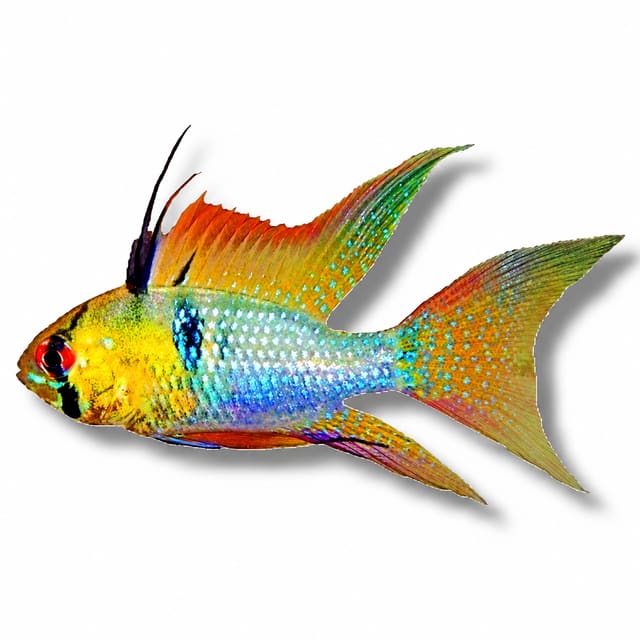
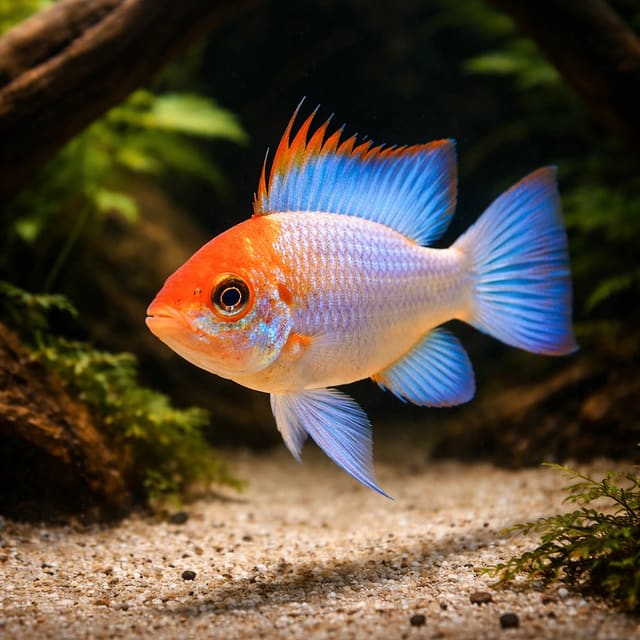
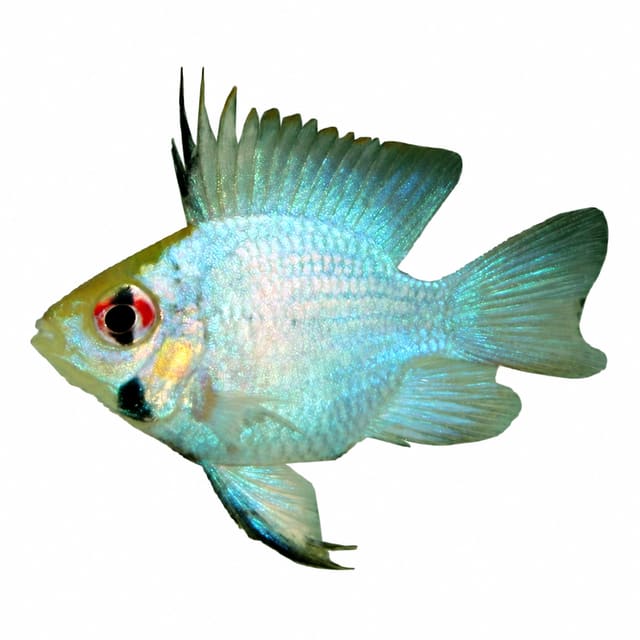
The Electric Blue Gold Head Ram (Papiliochromis ramirezi) is a small freshwater cichlid from the Orinoco River basin in the llanos of Venezuela and Colombia. It reaches a recorded maximum of 4.2 cm standard length and suits a keeper who can maintain consistently warm, clean, soft and acidic water. This ornamental ram combines an iridescent electric-blue body with a golden head while retaining the compact shape and bottom-oriented feeding behaviour associated with the species.
FishBase records the species in the family Cichlidae and gives 4.2 cm standard length as its maximum recorded size. FishBase now lists it as Mikrogeophagus ramirezi. The name Papiliochromis ramirezi remains the scientific name used for this colour form here, while Electric Blue Gold Head Ram is the useful aquarium trade name.
Use the overlap of the Seriously Fish aquarium values and FishBase’s recorded environmental range: 27–30°C, pH 5.0–6.0 and 5–10 dGH. Provide excellent biological filtration and a base measuring at least 60 × 30 cm for a pair. A practical pair aquarium should hold at least 60 litres; use at least 80 litres when planning a carefully screened mixed aquarium. Tank mates must tolerate the same warmth and acidity without competing aggressively for food.
Choose this ram when you want a small South American cichlid whose needs can shape the aquarium. It works best as the focal fish in a structured layout rather than as an afterthought in a busy collection. You can also browse our South American cichlid collection when comparing animals with different space, social and water requirements.
One purchase supplies one fish in the size selected. Use the live size selector to choose between the labels 3 - 3,5 cm, 3,5 - 4 cm and 4-6 cm. These labels describe the dispatch grade and should be used when deciding which fish best fits your immediate stocking plan.
The size you select is the size supplied, not the adult size. Plan the permanent aquarium around the recorded 4.2 cm standard length, the space needed by a pair and the territorial behaviour that may develop as the fish settle. Do not use a smaller dispatch grade as a reason to reduce the aquarium footprint or postpone filtration and cover.
Sex is guaranteed only when the selected option explicitly states male or female. This Papiliochromis ramirezi electric blue gold head listing has no sex-guaranteed option.
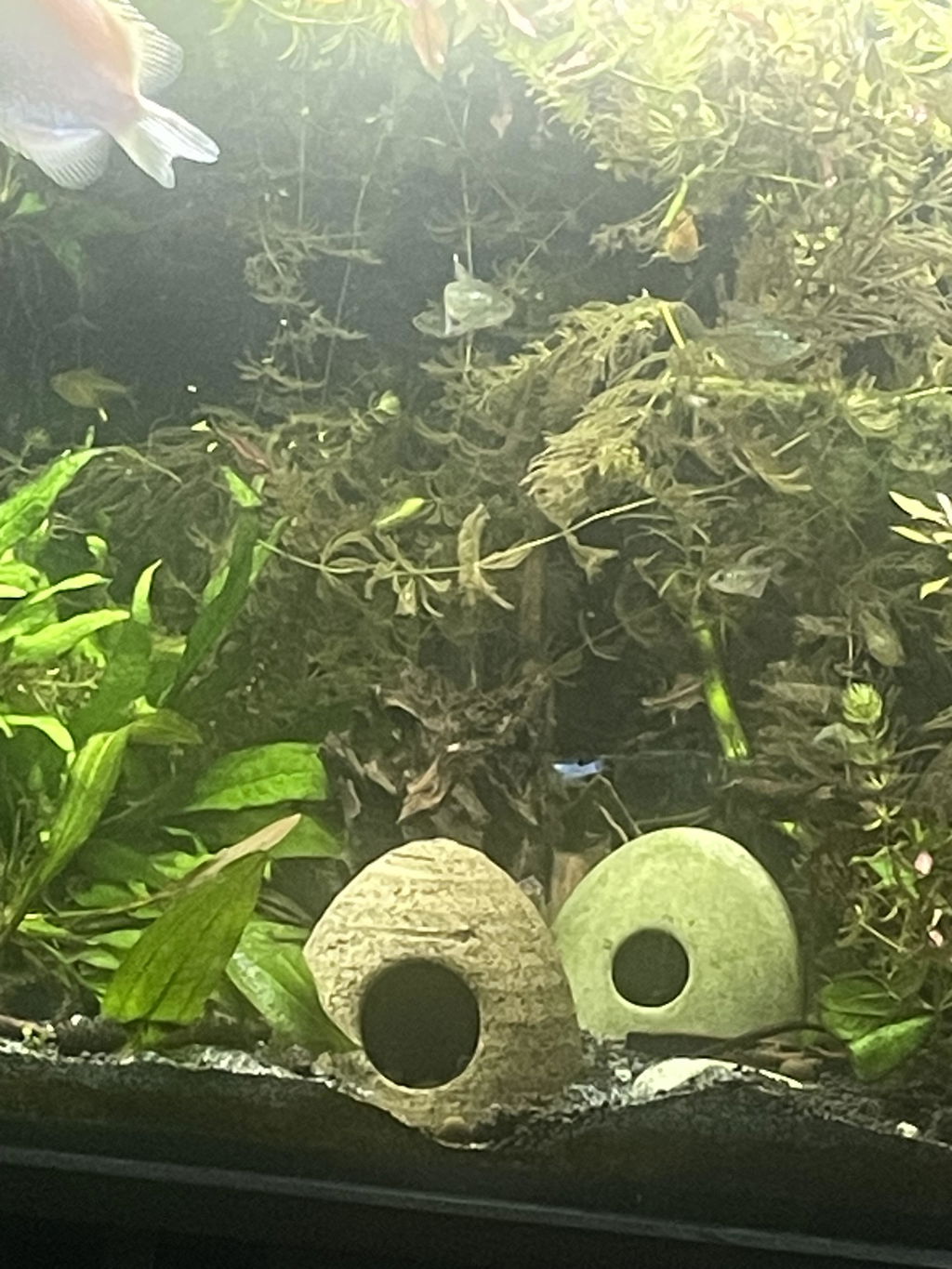
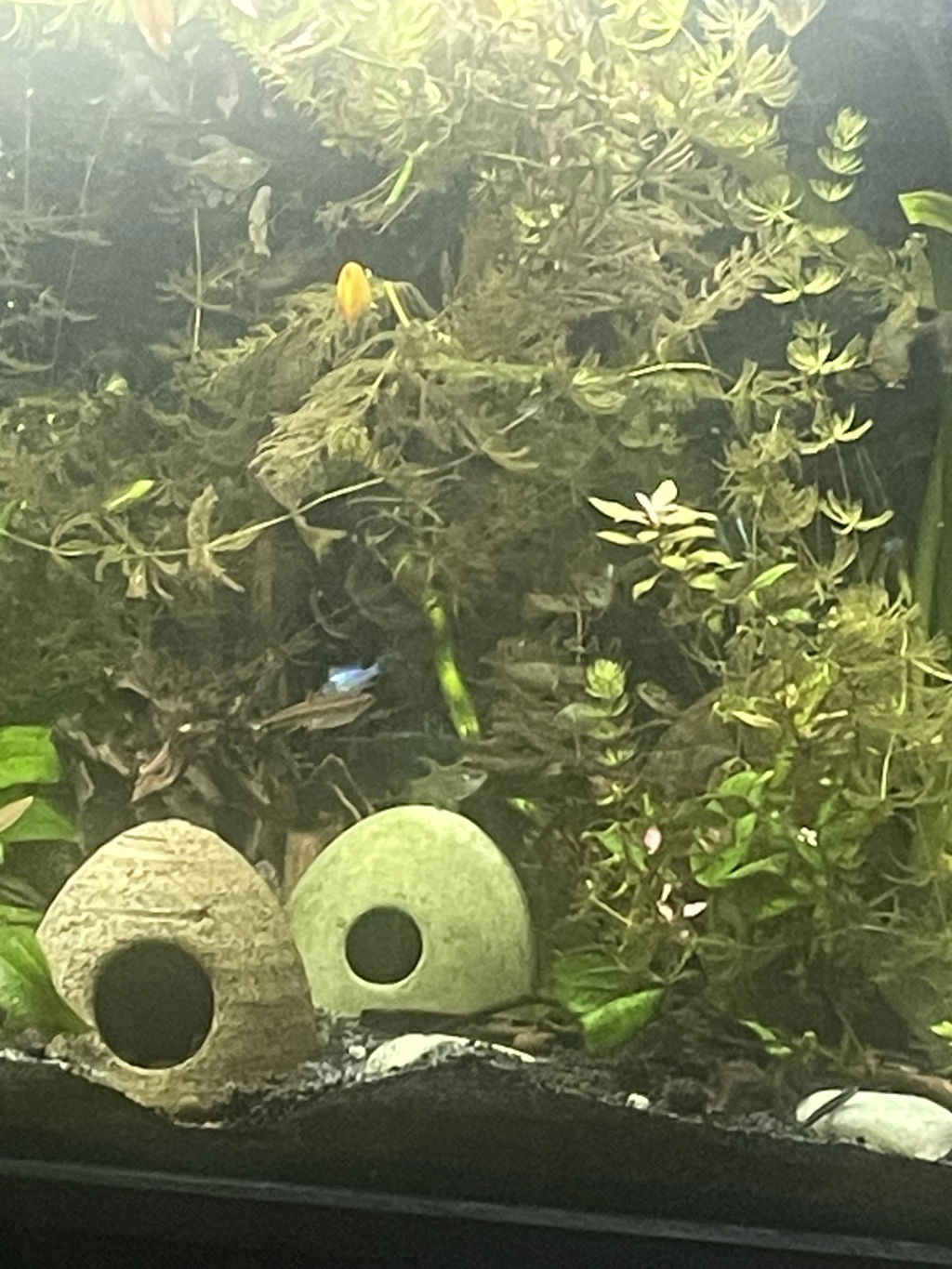
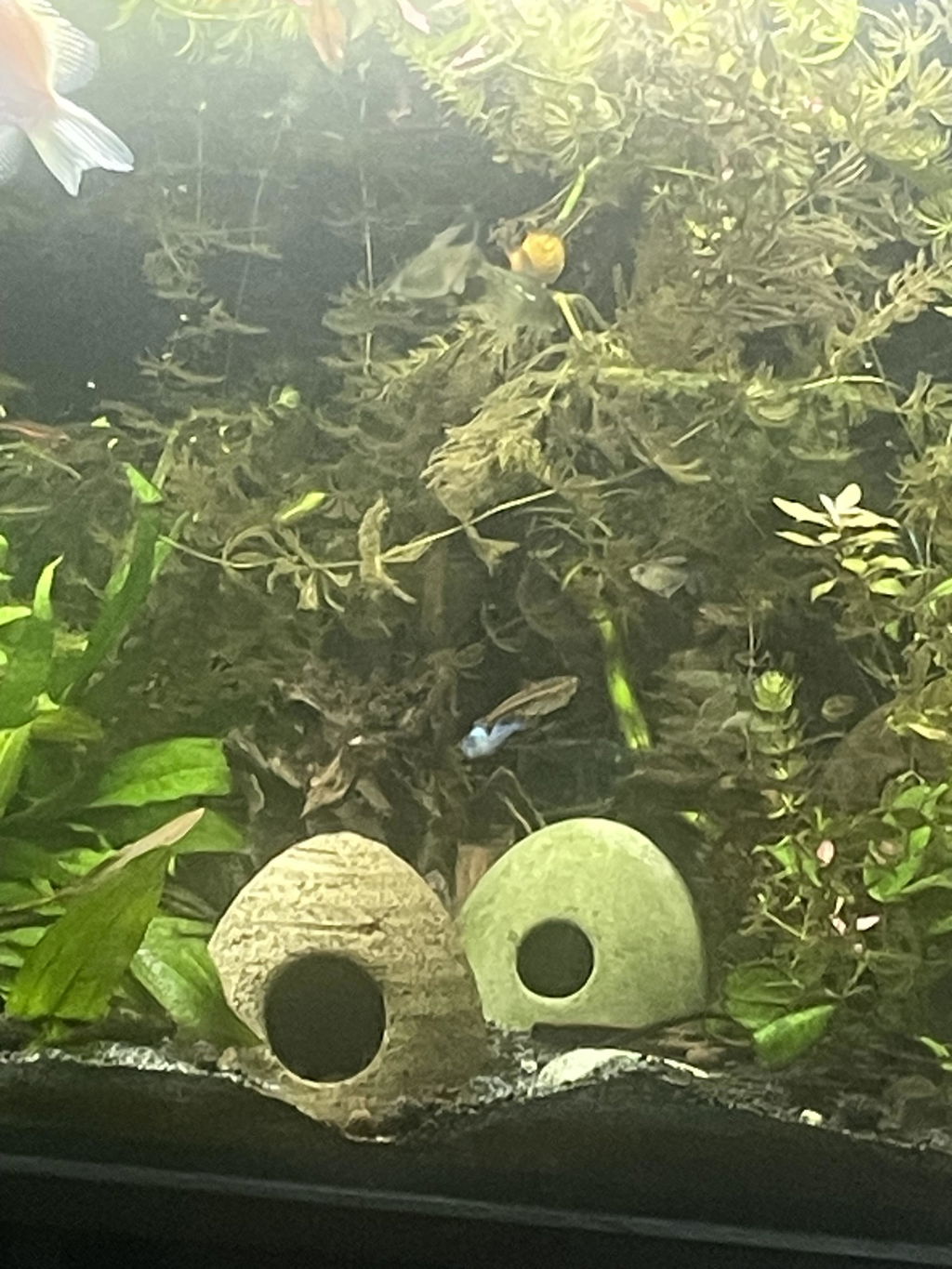
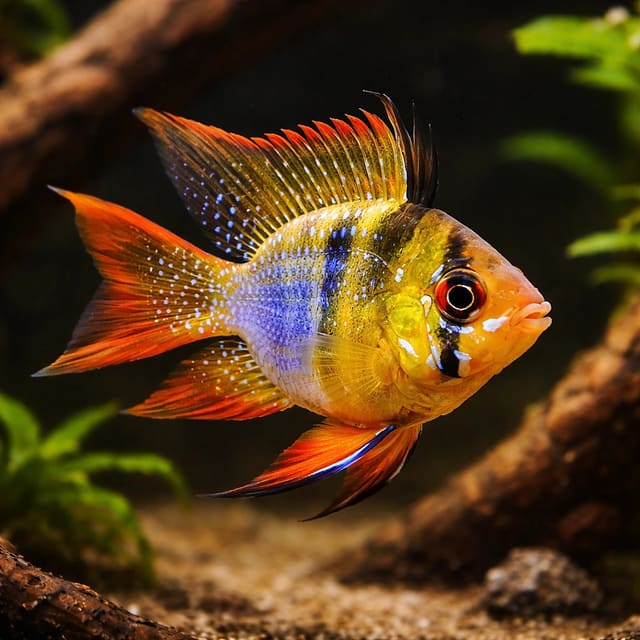
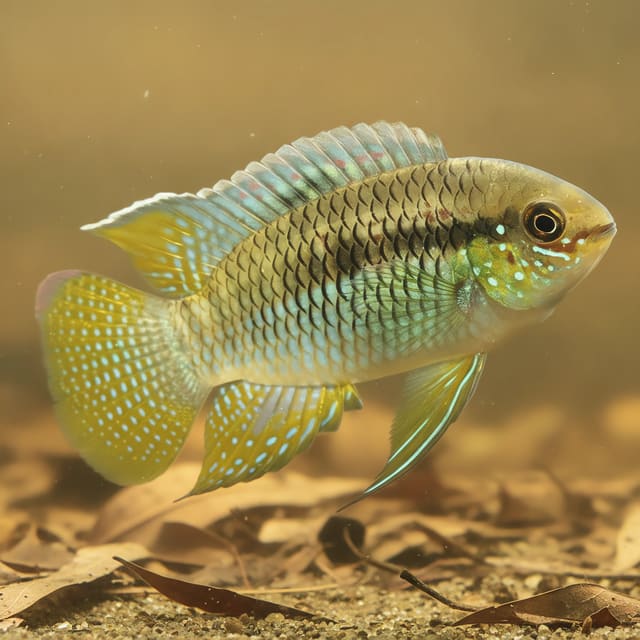
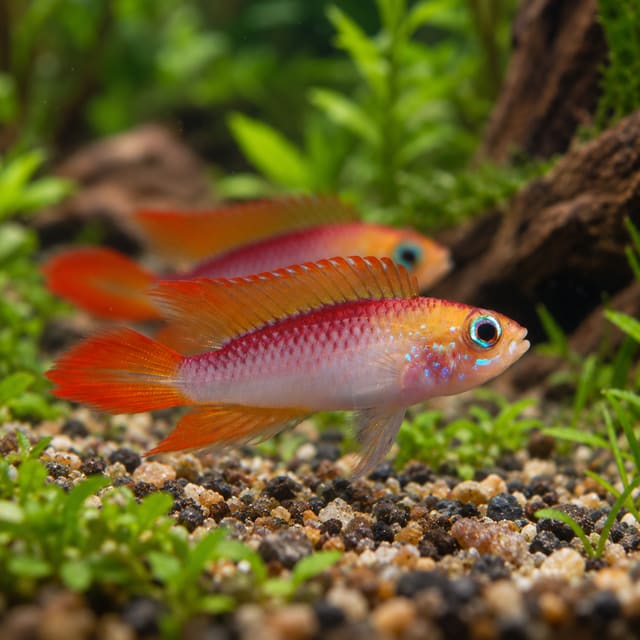
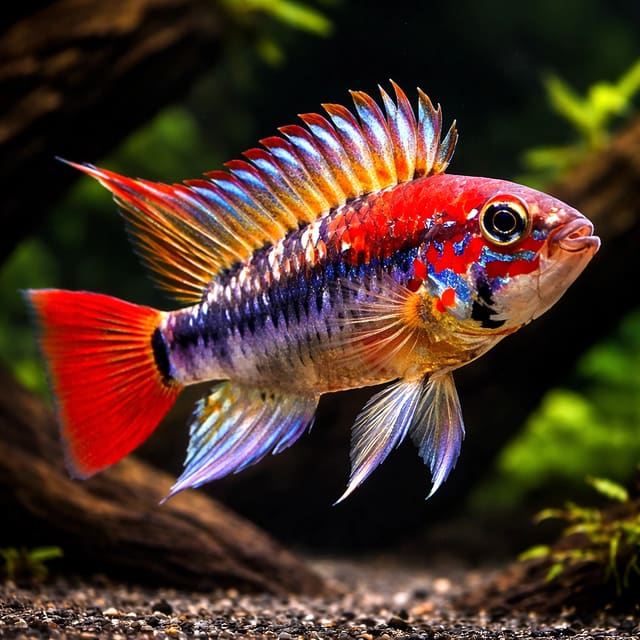
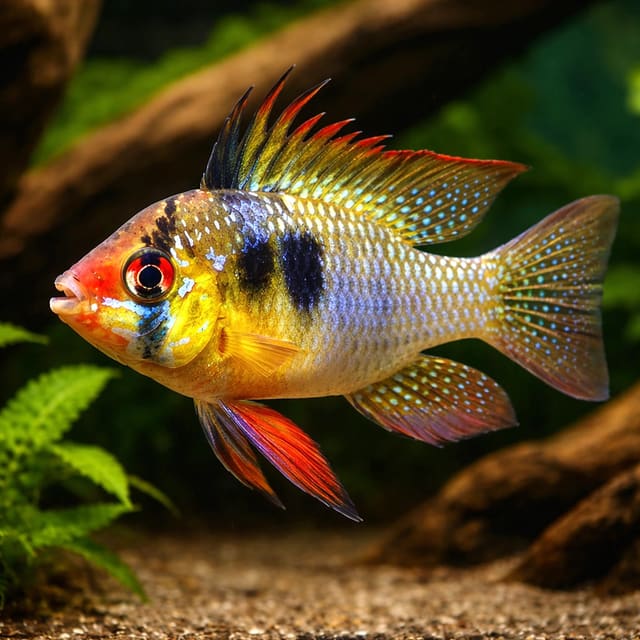
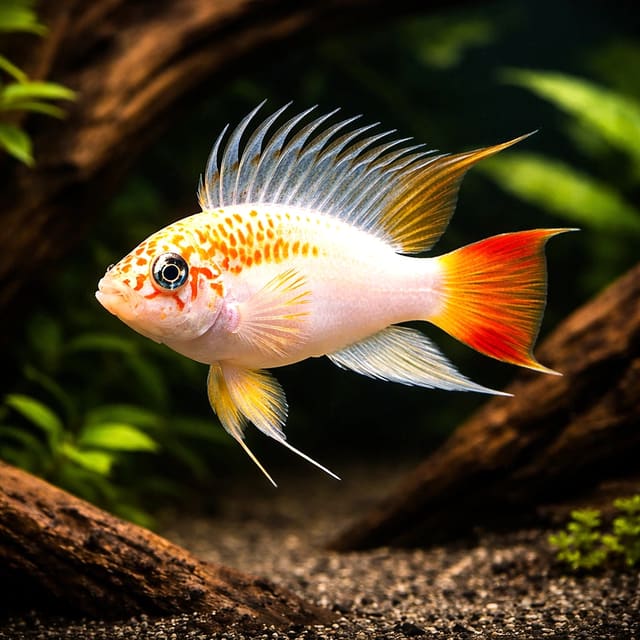
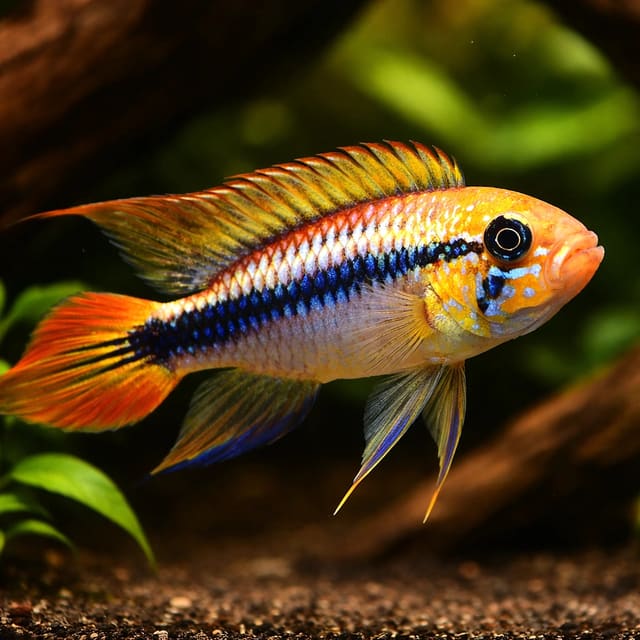
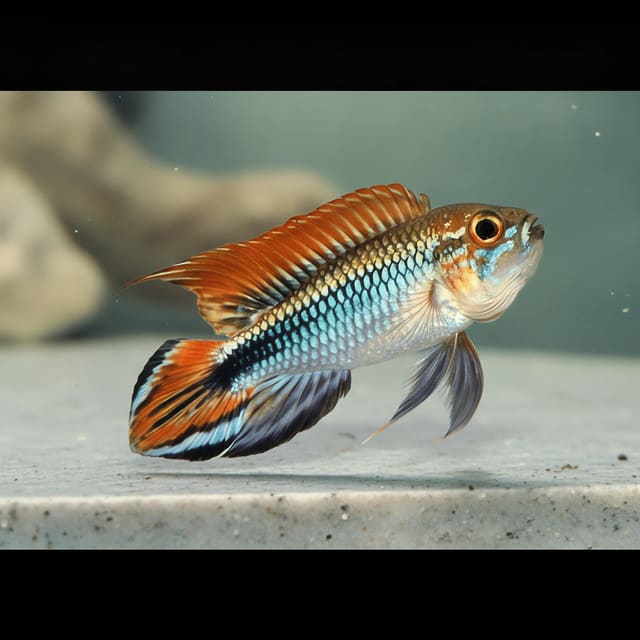
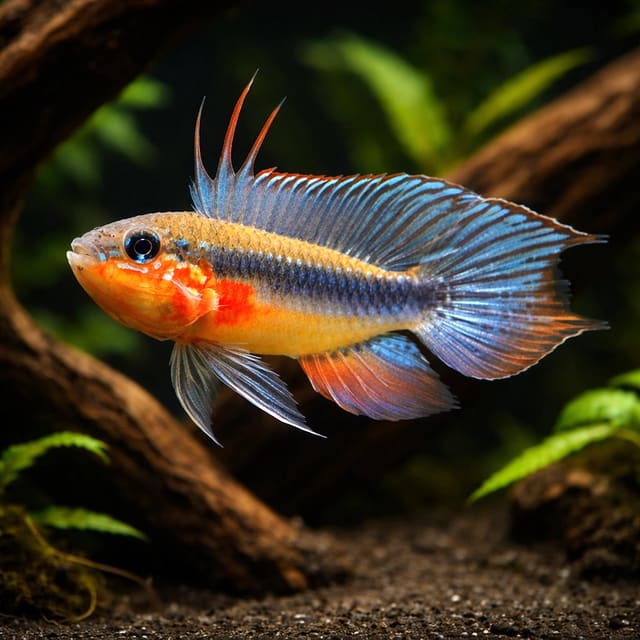
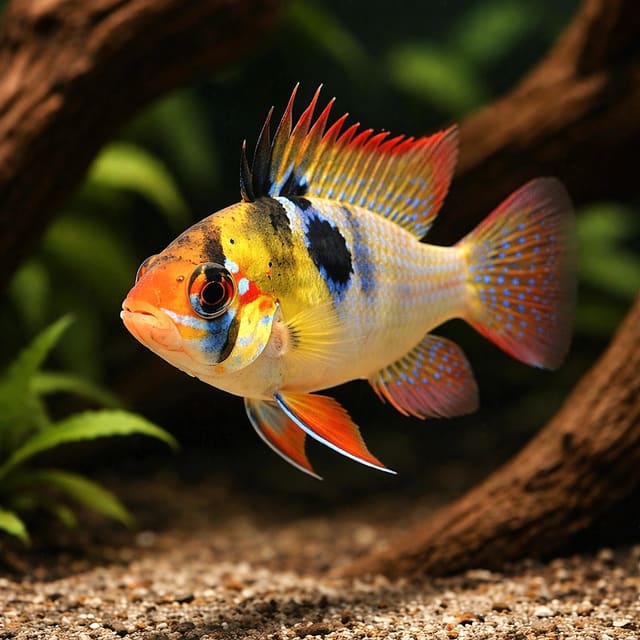
The gallery images are representative of this type of animal rather than photographs of the exact animal supplied, so colours can look slightly different from the live animal.
Use the visible colour pattern to understand the named form, not to predict the exact shade, markings or sex of an individual fish. The aquarium, diet, stress level and individual variation can all affect how a fish presents after a move, so judge its early progress through breathing, swimming, feeding and condition as well as colour.
This ram fits an aquarium built around high water quality, a warm temperature and restrained stocking. The decisive question is not whether the fish is physically small enough to enter the tank; it is whether the aquarium can remain stable at 27–30°C while giving a pair a 60 × 30 cm base, cover and reliable access to food.
| Suits | Not suited to |
|---|---|
| A mature, biologically filtered aquarium | A new or unstable aquarium |
| A pair with a 60 × 30 cm base or equivalent | A cramped layout without separate retreats |
| Warm, soft, acidic water | Hard-water communities |
| Peaceful open-water companions that tolerate 27–30°C | Territorial or otherwise aggressive fish |
| A keeper who tests water and protects feeding access | A busy community where it must compete heavily for food |
Its small adult size does not make it carefree. Seriously Fish describes the species as requiring pristine water quality and being a poor competitor, while OATA notes that dwarf cichlids may become territorial, especially when breeding. Success therefore comes from combining clean water, suitable structure and conservative companion choices rather than relying on the word “dwarf”.
Keep the aquarium at 27–30°C, pH 5.0–6.0 and 5–10 dGH. These routine targets sit within both the aquarium values published by Seriously Fish and the recorded environmental ranges given by FishBase. Seriously Fish gives 27–30°C, pH 4.0–7.0 and 1–10 dGH; FishBase records 27–30°C, pH 5.0–6.0 and 5–12 dH. Using their overlap avoids pushing the aquarium beyond either set of values.
OATA’s dwarf-cichlid guidance gives 22–27°C, pH 6.0–8.0 and 4–12 dH for the wider group. This ram requires the warmer end and a more acidic target, so set the aquarium for the species rather than applying the full dwarf-cichlid range.
Measure the aquarium before choosing livestock, then compare the results with the target. Our water chemistry guide explains what the main tests mean, while the water matcher helps compare measured values with this range. Record results over time: a stable pattern is more useful than one isolated test taken immediately after maintenance.
Give a pair a base measuring at least 60 × 30 cm. Seriously Fish describes that footprint, approximately 54 litres, as sufficient for a single pair. For practical planning, use an aquarium of at least 60 litres; OATA also recommends at least 60 litres for a pair of dwarf cichlids and at least 80 litres when they are mixed with other fish.
Footprint matters because these fish feed around the substrate and need separate areas of cover. Extra height does not replace usable floor area, caves, shaded places and clear routes between them. In a mixed aquarium, added volume is valuable only when the layout also prevents one fish from controlling every shelter and feeding point.
Seriously Fish notes that the species is flexible about décor when adequate cover and structure are present. A natural-looking arrangement may combine sand, wood, leaf litter, plants, shade and caves, but the functional goal is more important than copying a particular style. Each fish should be able to leave the other’s sight and reach shelter without crossing a single exposed route.
Before committing to companions, sketch the floor plan rather than considering litres alone. In a 60 × 30 cm pair aquarium, place retreats towards different ends and preserve a central feeding area. In an aquarium of at least 80 litres, use plants or wood to divide the base into several visible zones instead of creating one uninterrupted territory.
Use a fully established biological filter and add this ram only after ammonia and nitrite test at zero. The RSPCA explains that biological filtration supports bacteria that convert toxic ammonia first into nitrite and then into the safer nitrate. A filter is therefore essential even when the aquarium looks clean.
Seriously Fish suggests gentle movement and, for an aquarium around 54 litres, a filter rated at approximately 110–160 litres per hour. Treat that flow as a starting point for the stated tank size: the useful result is steady filtration without turning the lower part of the aquarium into a high-current channel. Position the outlet so water circulates through the tank while sheltered areas remain usable.
Our first tropical aquarium guide covers the preparation and maturation sequence in more detail. Do not treat clear water as proof that the filter is ready; ammonia and nitrite are dissolved and require tests.
OATA warns that stocking too quickly can cause new tank syndrome when the bacterial population cannot process the increased waste. This species is particularly poorly suited to that risk because Seriously Fish describes it as needing pristine water quality. Start with conservative stocking, feed carefully and test after any increase in the aquarium’s biological load.
Offer a varied diet led by small live and frozen foods such as bloodworm, Artemia, Daphnia and grindal worm, with good-quality sinking dried food of a suitably small size as a supplement. Seriously Fish describes Mikrogeophagus as benthophagous: it takes mouthfuls of substrate, sifts out edible items and expels the remaining material through the mouth and gill openings. It may also browse solid surfaces or take food from the water column.
Feed once a day and give only what the fish can finish within a few minutes. That portion and schedule follow OATA’s dwarf-cichlid guidance. Remove or reduce food when pieces remain after the feeding period, because uneaten food decomposes and adds waste to an aquarium whose water quality must remain exceptionally clean.
A gelatine-bound food containing mixed dried fish food, puréed shellfish, fruit and vegetables is another form described by Seriously Fish, provided it is cut into bite-sized pieces. The practical test is whether the ram can find, take and swallow the food without having to compete with faster or more forceful fish.
Poor feeding access can look like fussiness when the real problem is competition. If a ram hangs back while open-water fish clear the meal, adjust placement and companion stocking before simply increasing the total amount. Adding more food without checking who eats it can leave the ram underfed while raising ammonia, nitrite or nitrate through excess waste.
Change 25% of the water at least once every week, treating replacement tap water with conditioner before it enters the aquarium. OATA recommends this schedule for dwarf cichlids and advises regular testing at least weekly. Match replacement water carefully enough to avoid abrupt changes to the established 27–30°C, pH 5.0–6.0 and 5–10 dGH conditions.
When filter media needs cleaning, rinse it lightly in aquarium water removed during the partial change. Rinse filter media in water removed from the aquarium, never under the tap, because chlorine or chloramine may damage the beneficial bacteria living in the media. Avoid replacing every piece of biological media together unless the equipment instructions make that unavoidable.
Separate routine maintenance from emergency over-correction. If pH or hardness begins moving away from the target, first repeat the test, check the tap-water baseline and review recent changes to water, décor or maintenance. Sudden chemical adjustments can create a sharper swing than the original reading.
The first-month pattern should be simple: test at least weekly, change 25%, check the filter and review whether every fish is eating. Test more frequently after adding livestock, changing feeding substantially or seeing abnormal behaviour. The aim is not merely a clean-looking aquarium but a stable biological system in which waste is processed and changes are detected before they affect the fish.
Arrange for someone to receive the parcel because live fish must not be left unattended. Tropical Fish Co hand-bags fish in oxygen, uses an insulated box and adds a heat pack when the weather calls for one. A licensed live-animal courier carries the parcel, with tracking and the delivery date communicated by email.
Before introduction, use the overlap of the Seriously Fish aquarium values and FishBase’s recorded environmental range to confirm 27–30°C, pH 5.0–6.0 and 5–10 dGH. OATA advises checking that ammonia and nitrite are zero before adding fish.
These steps come from our delivery and Live Arrival Guarantee policy. Read the current policy before the delivery window so the receiver knows the unpacking, evidence and acclimatisation requirements.
After introduction, OATA advises checking that a new fish shows clear, bright eyes, intact scales and fins, appropriate swimming and a normal interest in food. Some initial caution is understandable in a covered aquarium, but the direction of travel should be towards controlled swimming, steady breathing and reliable feeding.
Increase stocking slowly after the fish has settled. Every additional fish and every increase in feeding raises the waste load handled by the biological filter. Test ammonia and nitrite following an addition rather than assuming the established filter will adapt immediately.
Before arrival day, complete a final practical check: the heater holds the target temperature, the filter has steady flow, caves remain accessible, and food is small enough for this fish. This preparation removes avoidable decisions from the first few hours and lets observation focus on the animal’s condition and behaviour.
Plan around a maximum recorded adult size of 4.2 cm standard length. FishBase gives that figure, while Seriously Fish gives 4.0 cm standard length. Use 4.2 cm consistently for adult planning and remember that a small body still needs a full territorial footprint, clean water and reliable feeding access.
FishBase describes aquarium keeping in pairs, and Seriously Fish considers a 60 × 30 cm base sufficient for a single pair. Juveniles are described as gregarious, but the long-term plan should not assume that several adults will remain comfortable within a pair-sized aquarium. Use extra space, structure and active observation whenever more than one territorial area may develop.
OATA advises watching for changes in swimming, colour, temperament, breathing, appearance, condition and feeding. If breathing becomes unusually fast or slow, feeding drops, aggression changes sharply, or white spots, fluffy growths, damaged fins or ulcers appear, test the water first and contact us for health guidance. Avoid choosing a treatment before checking temperature, ammonia, nitrite, nitrate trend, pH and recent maintenance.
Behaviour must be read in context. A fish using a cave can be making normal use of the layout; a fish confined there by repeated chasing requires action. Likewise, colour alone is a poor first-week measure. Combine it with feeding, respiration, posture, swimming and access to space before deciding whether the fish is settling successfully.
Choose peaceful open-water fish that tolerate 27–30°C, pH 5.0–6.0 and 5–10 dGH without dominating food. Seriously Fish particularly recommends groups of peaceful open water-dwelling characids or similar fish because their presence may reduce shyness. It names Paracheirodon axelrodi and Paracheirodon simulans as examples able to manage the required warmth.
Avoid territorial or otherwise aggressive fish, including most other cichlids, and avoid species that require harder water. A fish cannot be a suitable companion merely because it is peaceful at a different temperature or chemistry. It must fit all three tests: shared water values, restrained behaviour and fair access to food.
Very active or boisterous fish require caution because this ram is described as a poor competitor. For fish or invertebrates not named here, judge the combination against water, space, feeding and behaviour rather than relying on a universal compatibility label. Outcomes may depend on the aquarium layout and individual animals. Ask us for a stocking assessment with the tank dimensions, measured water values and complete livestock list.
Treat territorial behaviour as a normal possibility, especially around breeding. OATA notes that dwarf cichlids may become territorial and that even settled pairs will often chase each other. Cover is therefore not decorative excess: it gives a pursued fish somewhere to withdraw and interrupts direct lines of sight.
In a pair aquarium, provide more than one shelter and arrange them so one fish cannot watch every entrance from a single position. In a mixed aquarium, start with at least 80 litres and divide the lower area with plants, wood and caves. Keep open feeding patches within reach of more than one retreat.
| If you see | Do this |
|---|---|
| Brief chasing followed by separation | Check that both fish still feed and can use different cover |
| One fish pinned behind a single object | Add or rearrange visual barriers and prepare to separate |
| A ram repeatedly missing food | Use separate feeding points and reassess fast companions |
| Escalating aggression around a site | Increase separation and protect the excluded fish |
| Persistent stress after a stocking change | Test water and reverse the incompatible addition |
Do not wait for physical damage before acting. Repeated exclusion from food or shelter is already a husbandry problem. Check whether both fish can move around the aquarium, eat and rest without continuous pursuit.
Compatibility remains conditional throughout the fish’s life. A combination that appears calm at first may change as territories form. Keep the layout adjustable, observe interactions during feeding and retain a practical separation plan. The safest community is one built around this ram’s warm, soft, acidic water and low tolerance for aggressive competition.
The Electric Blue Gold Head Ram reaches a recorded maximum of 4.2 cm standard length. Plan its aquarium around that adult figure, not the selected dispatch size.
Seriously Fish gives a 60 × 30 cm base, approximately 54 litres, as sufficient for one pair. For practical planning, use at least 60 litres for a pair; OATA’s dwarf-cichlid guidance An aquarium of at least 80 litres is required when mixing them with other fish.
Keep them as a pair. FishBase describes aquarium keeping in pairs, and Seriously Fish bases its 60 × 30 cm aquarium recommendation on a single pair.
It suits a keeper who can maintain pristine water at 27–30°C, pH 5.0–6.0 and 5–10 dGH, test weekly and protect a poor competitor’s access to food. It is a demanding choice for a new or unstable aquarium.
Feed small live and frozen foods such as bloodworm, Artemia, Daphnia and grindal worm, supplemented with suitably small sinking dried food. Offer only what it can finish within a few minutes, once a day.
Keep this ram at 27–30°C and pH 5.0–6.0, with general hardness of 5–10 dGH. These values overlap the Seriously Fish aquarium range and FishBase’s recorded environmental range.
It may become territorial, especially when breeding, so provide several shelters and visual barriers. Screen companions for aggression, territory, water requirements and feeding competition, and act if one fish is repeatedly chased or excluded.
Choose peaceful open water-dwelling characids or similar fish that tolerate 27–30°C and soft, acidic water; Seriously Fish names Paracheirodon axelrodi and Paracheirodon simulans. Avoid territorial or aggressive fish, most other cichlids and fish requiring harder water.
Tropical Fish Co hand-bags the fish in oxygen, uses an insulated box and adds a heat pack when weather calls for one. A licensed live-animal courier transports the parcel with tracking, and someone must be present to receive it.
Independently collected by Judge.me from customers who bought this item. All reviews are shown.
These fish are absolutely stunning. They shimmer and shine so much it really is like electric. So happy with them and the service from this company will definitely be back