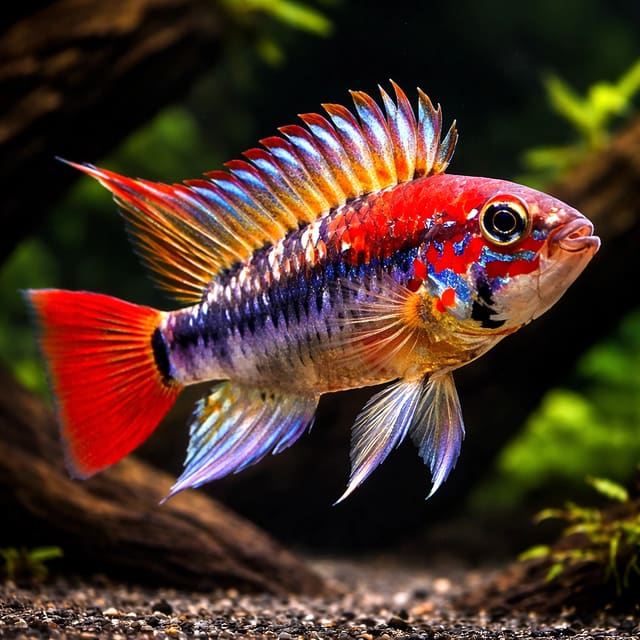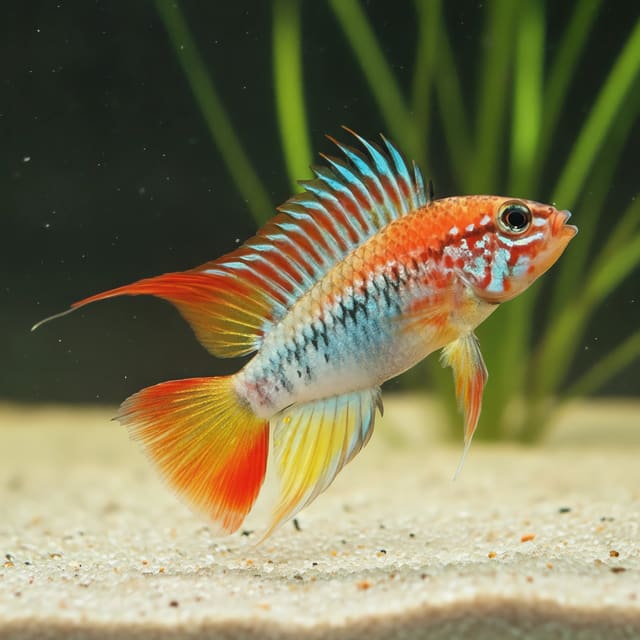
Apistogramma agassizii Alenquer Red Tail
26–27°C · 54L
£31.99

Golden Dwarf Acara (Nannacara anomala) for a mature planted aquarium with caves and gentle flow. One unsexed fish in the selected size; no guaranteed pair.
Adult size is the maximum length this species reaches at full maturity (scientific sources). The livestock you receive will be younger and smaller — pick a size above for the actual shipping size. Product-photo provenance and any image-specific limitations are stated on the listing.
Nannacara anomala
Save when buying multiple fish. Each quantity is one fish; sex and pair formation are not guaranteed unless the selected variant explicitly states them.
Golden Dwarf Acara (Nannacara anomala) for a mature planted aquarium with caves and gentle flow. One unsexed fish in the selected size; no guaranteed pair.
Adult size is the maximum length this species reaches at full maturity (scientific sources). The livestock you receive will be younger and smaller — pick a size above for the actual shipping size. Product-photo provenance and any image-specific limitations are stated on the listing.
Cichlids are a family of roughly 1,800 accepted species, not one care type. Before buying, identify the exact species and source, then compare adult measurement, usable tank dimensions, social system, territory, tested water, diet and an exit plan. No family-wide minimum tank, water range or tank-mate list is safe.
Maintain these water conditions for optimal health and vibrant colors
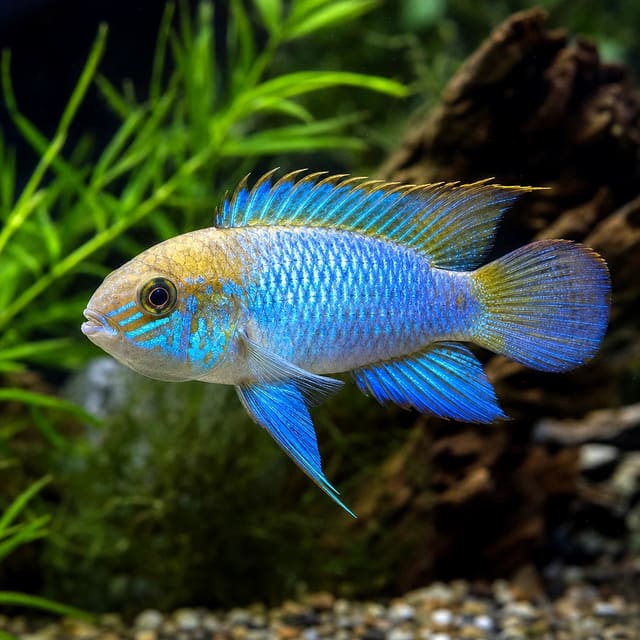
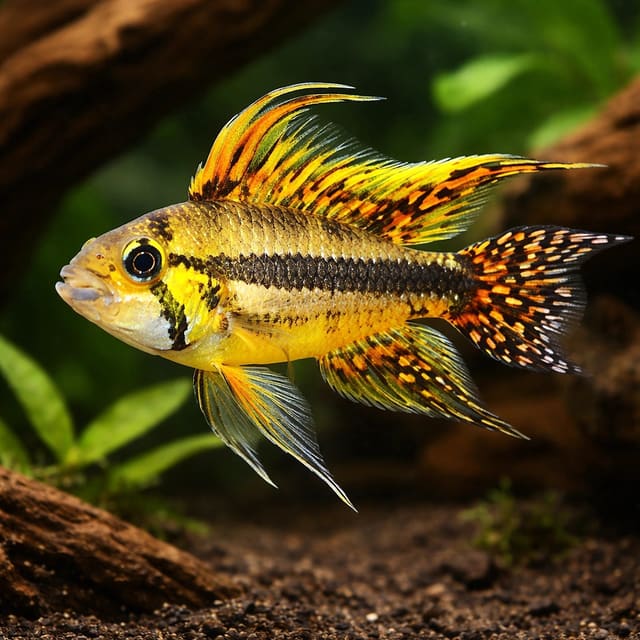
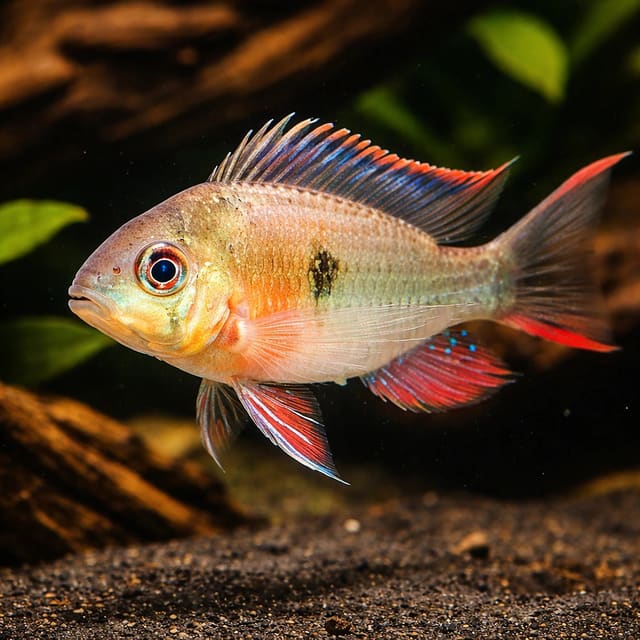
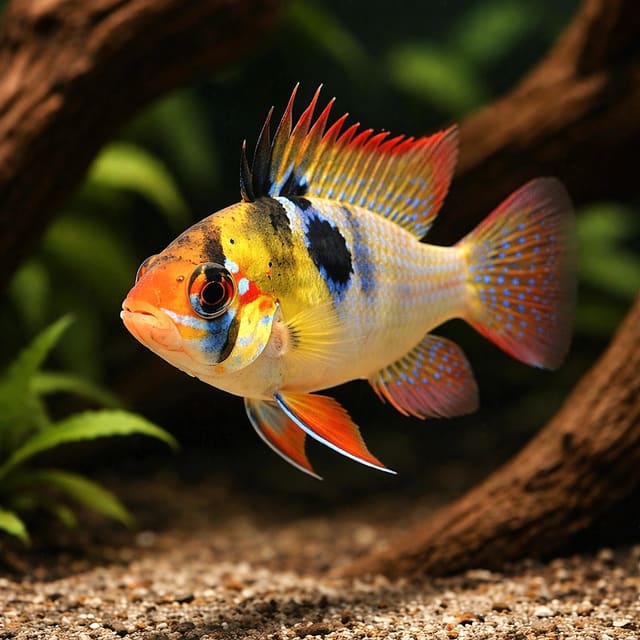
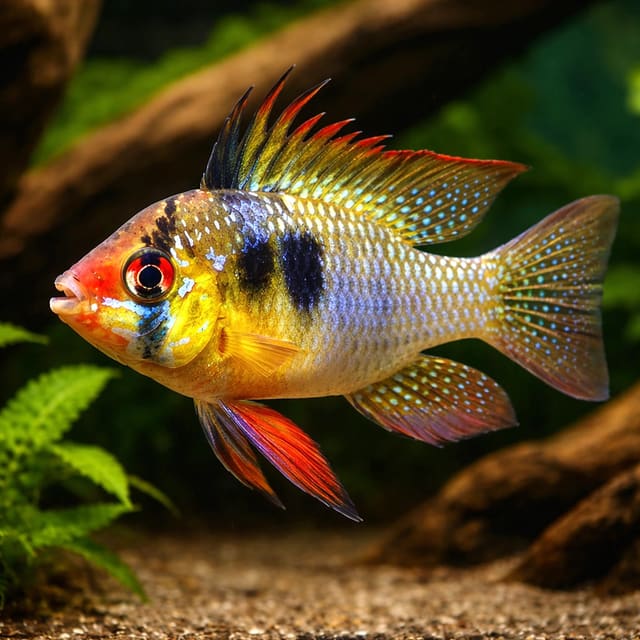
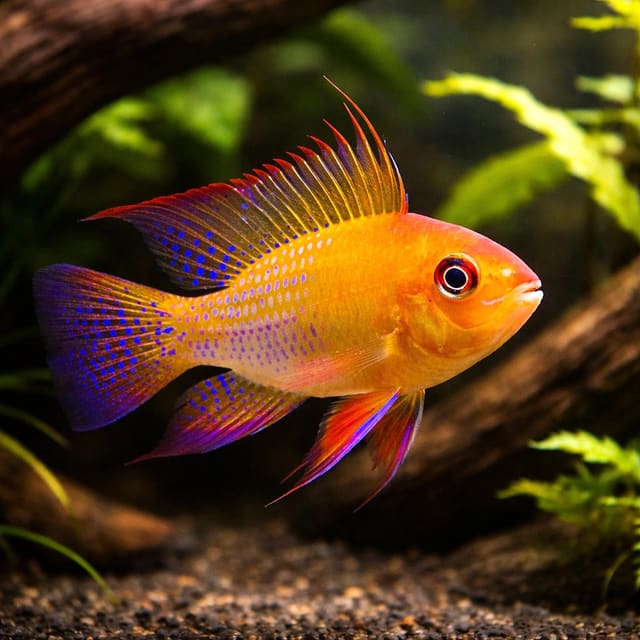
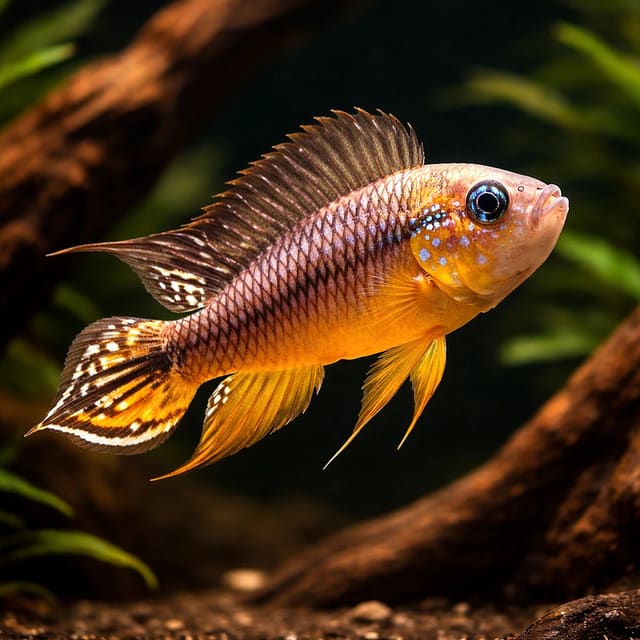
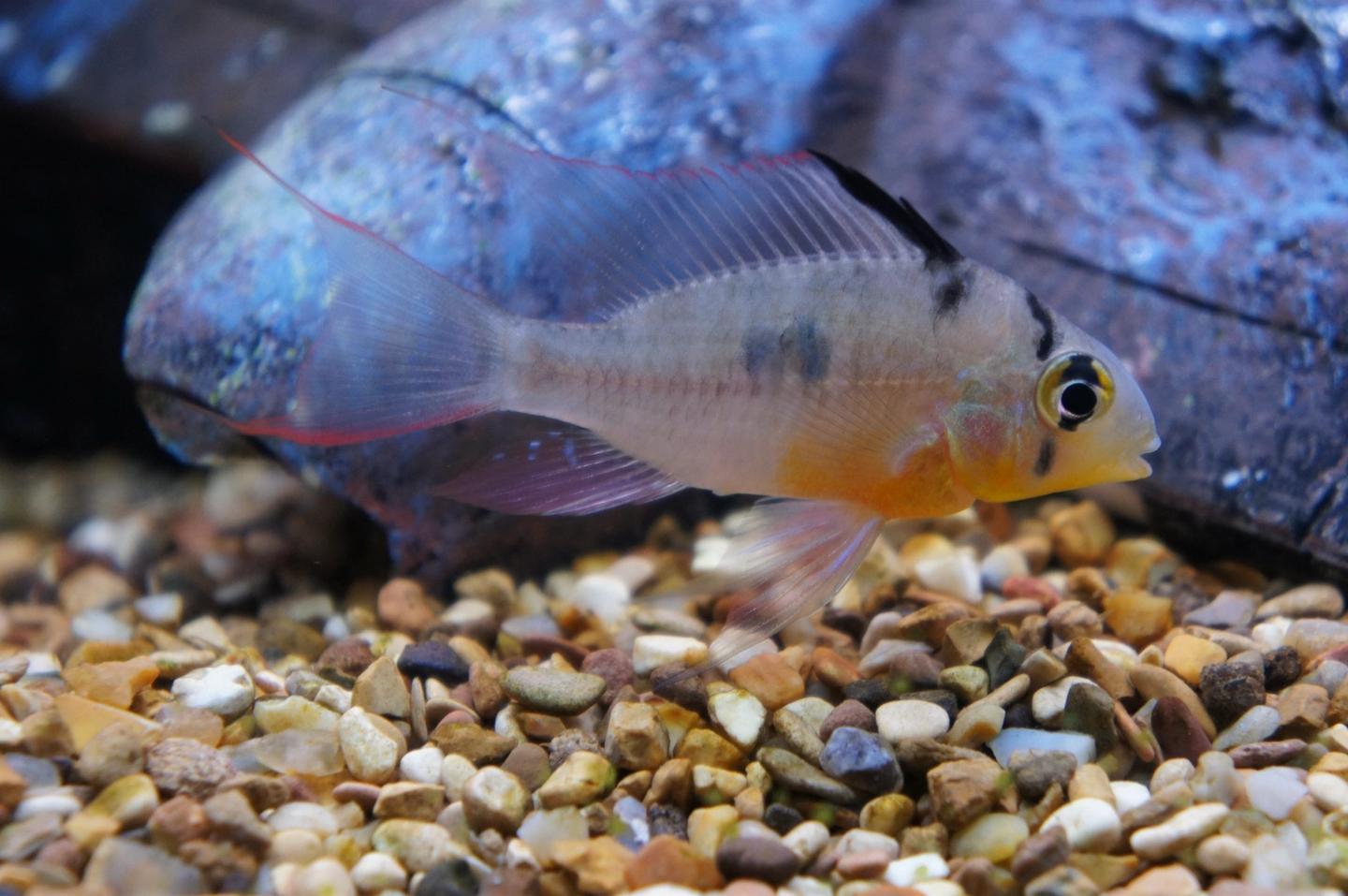
Golden Dwarf Acara / Goldeneye Cichlid (Nannacara anomala) is a small South American dwarf cichlid for planted aquariums where behaviour matters as much as colour. Males develop a green-gold sheen with blue highlights and extended fins, while mature females can become dramatically dark-and-yellow when guarding eggs or fry. This listing is for one unsexed Nannacara anomala in the selected approximate size grade, not a sexed or guaranteed compatible pair.
This is one of the more forgiving dwarf cichlids, but it is still a cichlid. Outside breeding it is usually calm with peaceful upper-water fish, yet a guarding female can become very protective around a cave or fry cloud. The best results come from a mature planted tank with cover, gentle flow, clean water and enough territory that the pair can settle without being crowded.
| Common names | Golden Dwarf Acara, Goldeneye Cichlid, Golden Dwarf Cichlid |
|---|---|
| Scientific name | Nannacara anomala |
| Native range | Coastal freshwater systems of Guyana and Suriname, including flooded savanna habitats |
| Adult size | Usually about 5-7 cm, with males larger and more colourful than females |
| Care level | Moderate; hardy for a dwarf cichlid, but water quality and territory still matter |
| Minimum aquarium | 60 litres for a settled pair; 80-120 litres is better for a planted community |
| Temperature | 22-27 C, with 24-26 C a useful everyday target |
| pH | About 6.0-7.5; stable slightly acidic to neutral water is ideal |
| Temperament | Peaceful to mildly territorial; strongly protective when breeding |
| Diet | Quality micro pellets, small frozen foods, live foods, insect larvae, crustacean-based foods and fine cichlid granules |
Nannacara anomala is a true dwarf cichlid from the South American genus Nannacara. It is often compared with rams and Apistogramma because all three are small cichlids suited to planted aquariums, but this fish has its own shape, colour and behaviour. The body is compact and sturdy rather than long-finned and flamboyant. Mature males carry the metallic green-gold look that gives the Goldeneye name its appeal, while females are smaller and can show a striking breeding dress.
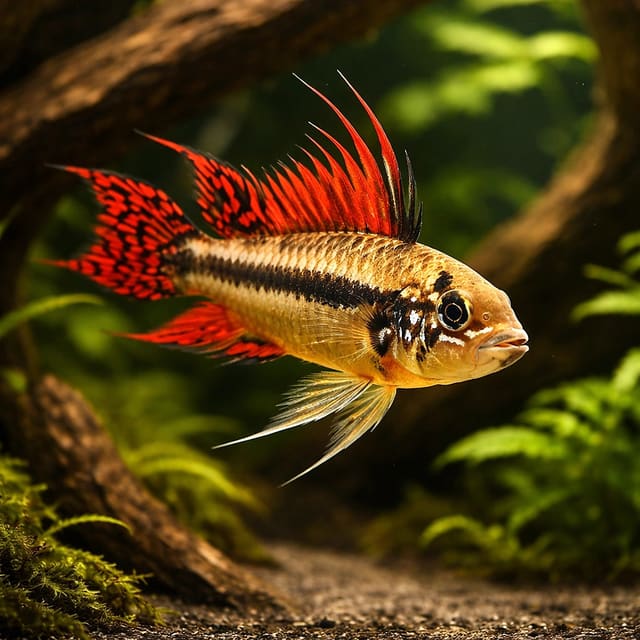
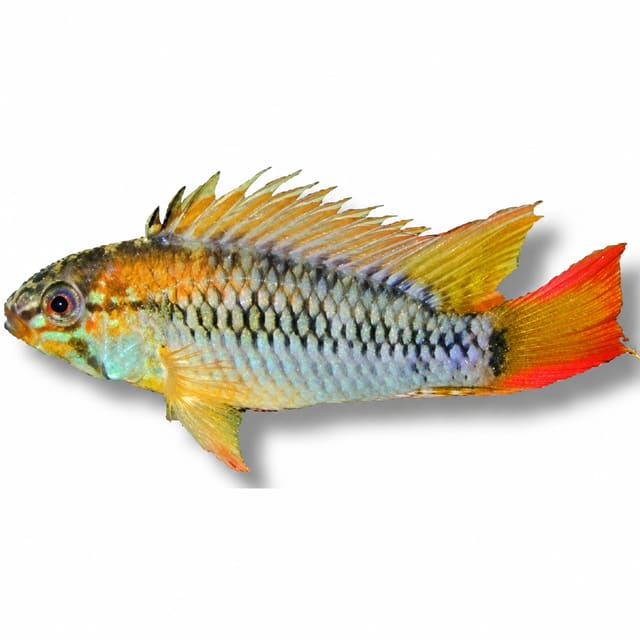
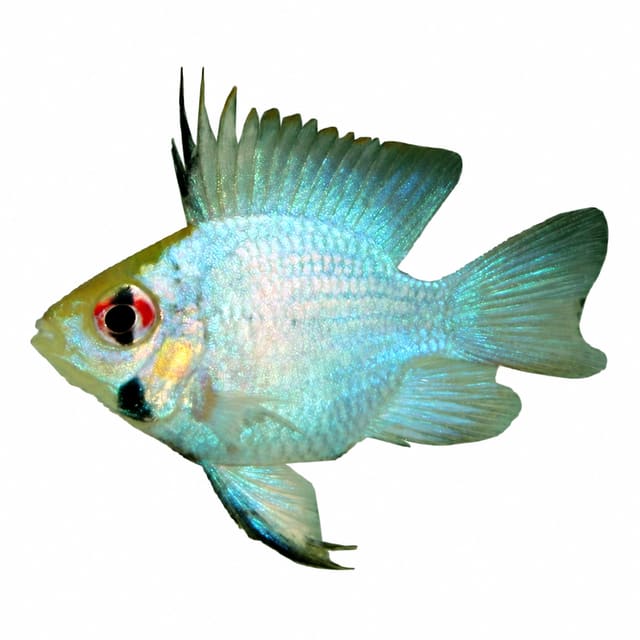
Colour and breeding dress vary with maturity, sex and aquarium conditions; photographs cannot guarantee the exact appearance of an individual fish received.
Do not confuse this product with Laetacara curviceps (Flag Acara), Mikrogeophagus altispinosus (Bolivian Ram) or Apistogramma cacatuoides. Those are useful comparison fish, but the care and behaviour notes here are written for Nannacara anomala.
Reliable references place Nannacara anomala in coastal freshwater habitats from Guyana toward Suriname, including flooded savannas and quiet vegetated waters. These are not fast river-current aquariums. Think calm margins, plant cover, submerged roots, fine substrate, leaf-litter effects and small territories. That background explains why this fish often looks best in a mature planted tank rather than a bright bare display.
In nature the diet includes small worms, crustaceans and insects. In the aquarium, that translates into small clean foods rather than large messy meals. The fish spends much of its time inspecting lower and middle areas, using caves, wood and plants as reference points. A sparse tank can make it nervous; a structured tank lets it explore confidently.
Use a mature aquarium with fine sand or smooth gravel, planted edges, wood, caves and broken sight lines. A coconut cave, small ceramic cave or rock nook gives a female a clear spawning territory. Leave open swimming space at the front, but make the back and sides feel sheltered. Floating plants or tall background growth help soften the light.
A 60 litre species-style tank can work for a bonded pair, but an 80-120 litre aquarium is a much more comfortable choice if you want tank mates. Bigger water volume also gives you more forgiveness with temperature, nitrate and social pressure. In small tanks, avoid mixing several dwarf-cichlid species that all want the same bottom territory.
Filtration should be reliable and gentle. Aim for clean, oxygenated water without blasting the fish around the tank. Sponge filters, gentle internal filters or controlled external filters all work if they are mature and maintained. Weekly water changes are more important than chasing a perfect number on a chart.
Keep conditions stable: around 22-27 C, pH 6.0-7.5 and low to moderate hardness. Captive-kept stock is usually adaptable, but sudden swings are still stressful. If your tap water is moderately hard, focus on consistency, clean water and careful acclimation before trying to force blackwater chemistry. If you keep very soft water, maintain mineral stability so pH does not crash.
Use a liquid test kit for ammonia, nitrite, nitrate and pH. Ammonia and nitrite should always be zero. Nitrate should be kept low with water changes, plant growth and sensible feeding. Because this fish is small, it can look fine until water quality has already slipped; routine testing is the quiet safety net.
Feed small foods that match the mouth size. A good routine can include quality micro pellets, fine cichlid granules, frozen daphnia, cyclops, brine shrimp, mosquito larvae and occasional bloodworm. Live baby brine shrimp is useful for conditioning and for fry, but adult fish still need variety. Avoid oversized pellets and heavy meals that pollute the tank.
Small frequent feeds are better than one large feed. A healthy Golden Dwarf Acara should be rounded but not bloated, alert, and eager without frantic surface feeding. Remove leftovers and keep the substrate clean around caves because uneaten food can rot exactly where the fish spend the most time.
Choose peaceful fish that use different parts of the aquarium. Calm tetras, pencilfish, small rasboras and suitable Corydoras can work in a larger planted tank. Avoid fin-nippers, large aggressive cichlids, pushy bottom dwellers and any fish that will crowd the cave area. Dwarf shrimp are risky because small shrimp and shrimplets may be eaten.
The phrase “community fish” needs care here. Nannacara anomala can be a good community dwarf cichlid outside breeding, but a spawning pair does not behave like a tetra. A female guarding eggs or fry may chase fish away from her territory with real determination. Give her structure, space and tank mates that can simply move elsewhere.
Male and female fish can look different once mature. Males are usually larger, more iridescent and more extended in the unpaired fins. Females are smaller and can become darker and more intense during breeding. If you are buying a size variant, remember that younger fish may not show full sex differences yet.
One settled pair is the simplest plan for most home aquariums. In larger tanks, a male with more than one female can work if there is enough territory, but it is not something to cram into a small aquarium. If a female is brooding and becomes too forceful, extra caves and visual barriers can save stress on the male and tank mates.
This species is popular partly because it can breed readily when settled. It is a substrate-spawning dwarf cichlid that often uses a cave or protected surface. The female guards eggs and fry closely, while the male may patrol the wider territory. Eggs usually hatch after a few days depending on temperature, and fry become free-swimming soon after.
Do not panic if first spawns fail. Young pairs sometimes eat eggs, choose poor sites or get distracted by tank mates. Improve privacy, feed varied conditioning foods, keep water stable and reduce disturbance. Once fry are free-swimming, use tiny foods such as newly hatched brine shrimp, microworms or suitable powdered fry food, and keep water changes gentle.
Choose from the current approximate 3–3.5 cm, 3.5–4 cm, 4–5 cm and 5–8 cm retail grades. Younger fish can be grown on, but several purchases do not guarantee sexes or compatible pairing. Mid-size 4-5 cm fish may show stronger sex differences and settle more quickly. Larger 5-8 cm fish offer more immediate presence, but they still need careful introduction and territory from day one.
Match the size to the aquarium. Do not add a small young dwarf cichlid to a tank full of boisterous adult cichlids. Equally, do not expect a larger breeding-size female to stay gentle if she is given one tiny cave and no escape routes for tank mates.
Prepare the tank before the fish arrives. Check temperature, pH, ammonia, nitrite and nitrate. Float to equalise temperature, acclimate steadily, then release with the lights dim. Keep feeding light for the first day and watch breathing, posture and how the fish uses cover. Hiding at first is normal; gasping, rolling or being pinned by tank mates is not.
If you are adding the fish to a community aquarium, introduce it when the tank is calm. Rearranging a cave or adding a new piece of wood can prevent existing bottom fish from treating the whole lower level as already owned. Quarantine is ideal whenever practical, especially with planted communities that contain long-term fish.
Watch for clamped fins, loss of colour, refusal to feed, rapid breathing, white spots, frayed fins, bloating, stringy waste or a fish hiding constantly in the top corner. Most problems begin with stress, water quality, bullying or inappropriate feeding. Test the water before reaching for medication. If treatment is needed, consider whether the aquarium contains shrimp or snails before using copper-based products.
A healthy Nannacara anomala is curious, alert and responsive. It may not rush around like a livebearer, but it should investigate food, patrol familiar cover and show steady breathing. Good colour comes from stable conditions, varied diet and social confidence.
A planted dwarf-cichlid aquarium works best when maintenance is steady rather than dramatic. Change a sensible portion of water every week, clean filter media in old tank water when flow slows, and avoid stripping every surface sterile. Biofilm on wood, leaves and mature plants helps the aquarium feel natural, but trapped waste in quiet corners still needs removing.
Because Nannacara anomala spends so much time near caves and lower cover, pay attention to the substrate around those areas. A small siphon is useful for removing uneaten food without uprooting plants. Keep nitrate under control, but do not chase sudden chemistry changes after every test. Stability is part of the care.
If you are deciding between popular dwarf cichlids, choose by temperament and water conditions rather than only colour. Bolivian Rams are larger and often prefer warmer water. Many Apistogramma species show brighter finnage, but some are more sensitive or more territorial in small tanks. Flag Acara is a different species with a different body shape and slightly larger adult plan. Golden Dwarf Acara sits in a useful middle ground: compact, attractive, usually hardy, and interesting without needing a huge tank.
| Compared fish | How it differs from Golden Dwarf Acara |
|---|---|
| Bolivian Ram | Larger and warmer-water leaning; often more open in swimming style. |
| Apistogramma species | Often showier finnage, but may be more sensitive or more territorial depending on species. |
| Flag Acara | A different acara with a larger plan and separate identity; do not use Flag Acara care as a substitute. |
| Nannacara adoketa | A more specialist Nannacara relative, usually larger, bolder and not the same listing. |
Read the current delivery and Live Arrival Guarantee policy and follow the arrival instructions supplied with the order. Dim the lights, acclimate steadily and give the fish time to settle into planted cover.
Useful add-ons include small cichlid foods, frozen/live food options, water conditioner, test kits, botanicals, caves and fine substrate for a planted dwarf-cichlid setup.
FishBase: Nannacara anomala records 5.6 cm standard length, while the matched supplier care card lists 9 cm without a measurement convention. These figures are not directly equivalent or a dispatch-size promise. Allow for adult growth and select the supplied grade separately.
For a separate comparison, see Agassiz’s Dwarf Cichlid (Apistogramma agassizii) and the South American dwarf cichlid selection. These are alternatives to research, not automatic tank mates for a territorial lower-water space.
No reviews for this item yet. Bought one? Honest reviews only, good or bad.
What customers say about ordering from us
I have a small group of long finned mountain minnows. So was delighted to be able to order ten of this variety to increase the genetics in my tank . The ones I recieved are healthy but it’s to early to give a verdict on wether they are of a long finned type since they are small currently.
Gordon Walker · 23 Sept 2026
100% success travel and "installation". Pleased with quality of purchase. The Siamese fighter a bit "shy" so have not yet seen him at his best yet but looking good. Happy customer. GG
George E Garratt · 21 Sept 2026
Reviews of our shop, collected by Judge.me, an independent third-party review collector. Newest first.