Moderate
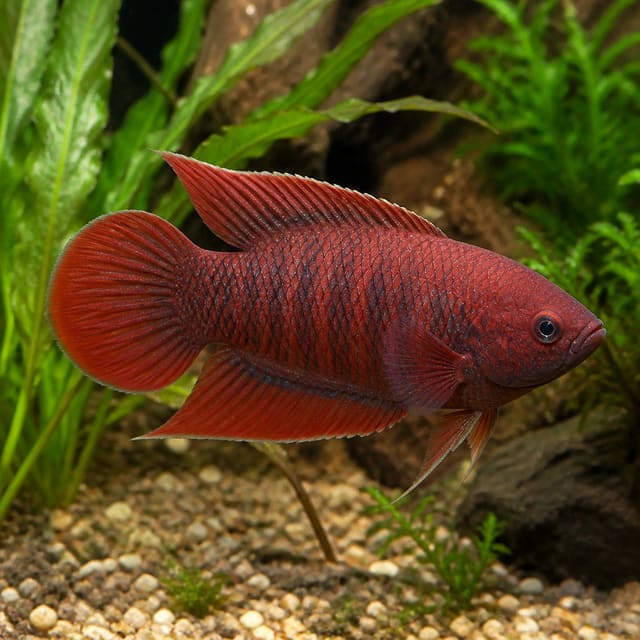
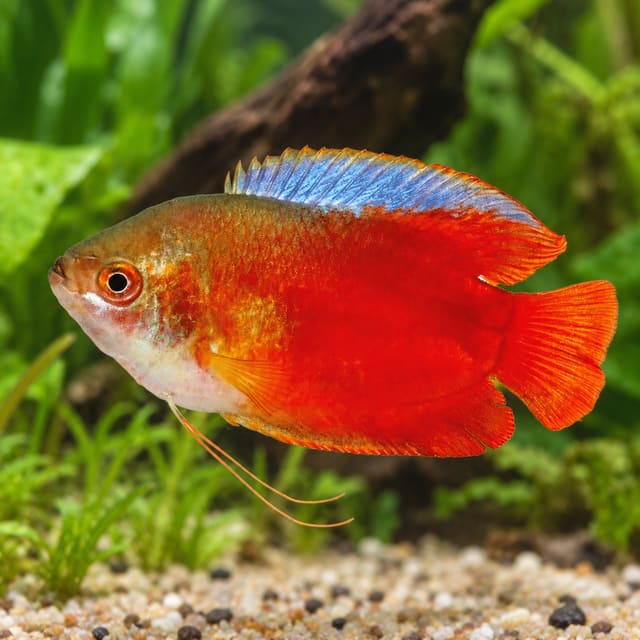
Blood Red Dwarf Gourami, Male (Trichogaster lalius)
25–28°C · pH 6–8
£7.99

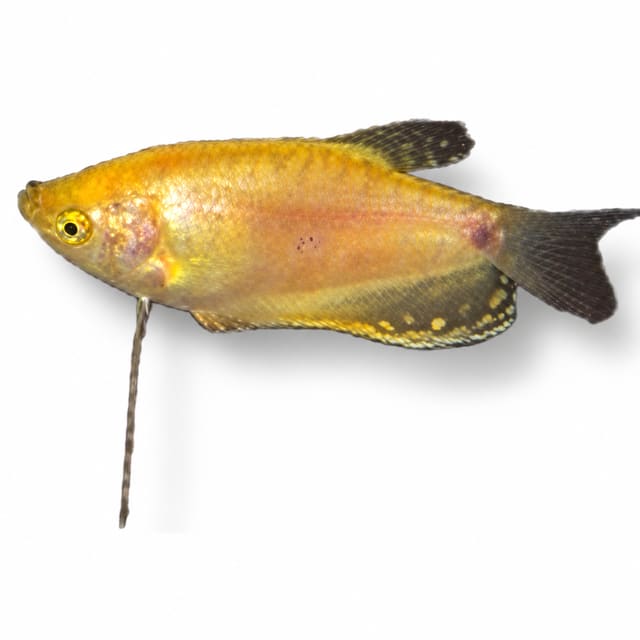
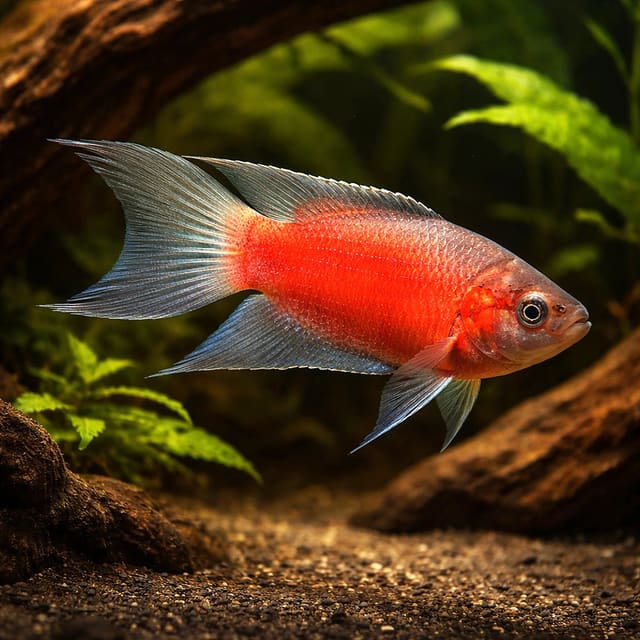
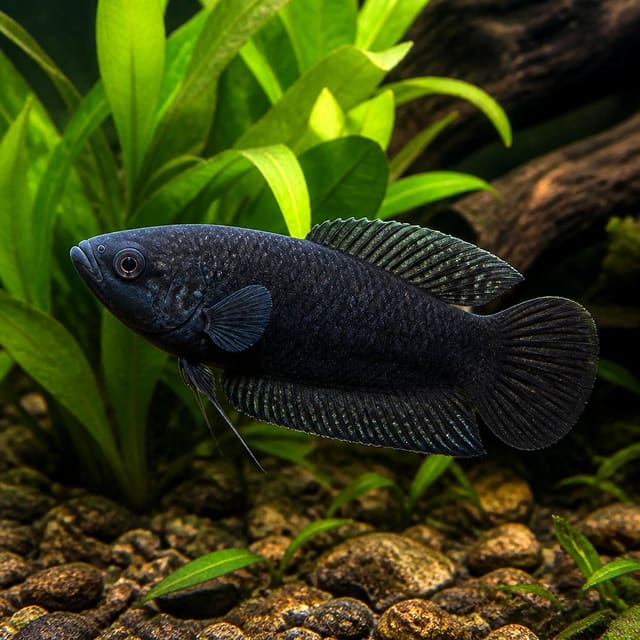
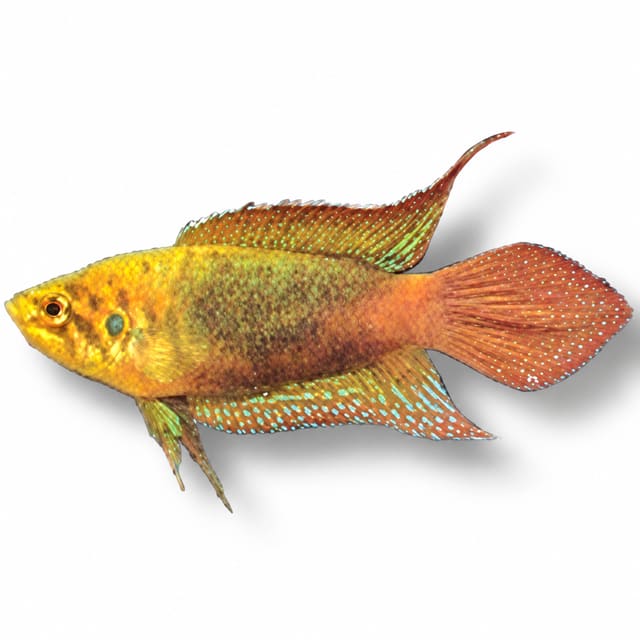
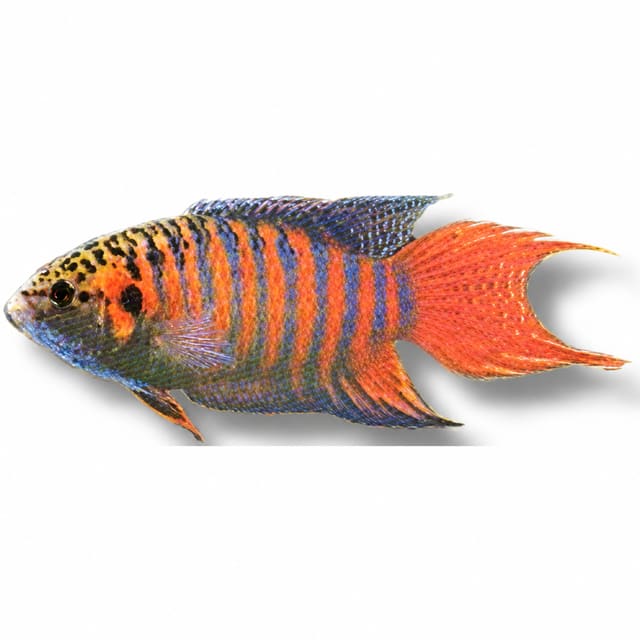
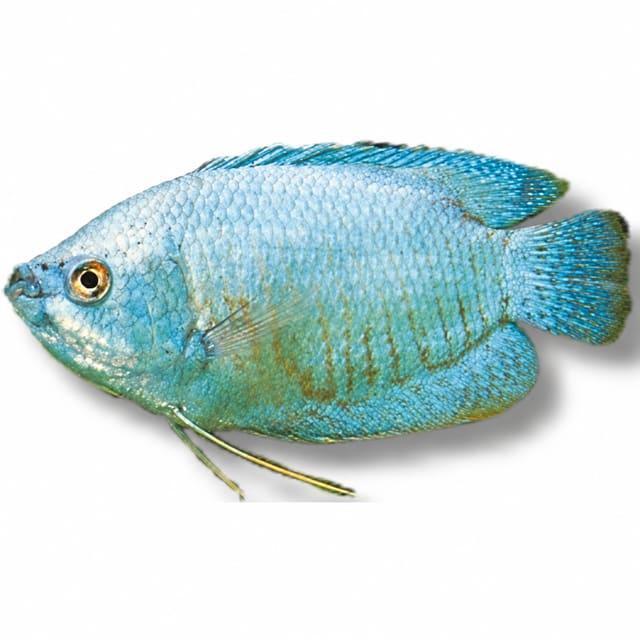
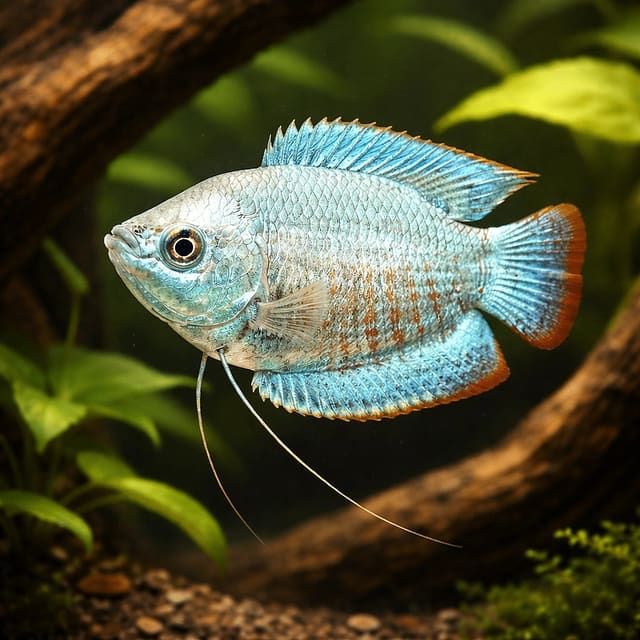
Blue Paradise Fish (Macropodus opercularis) are supplied as four live fish per purchase. The image shows one representative fish, not four pictured fish. Plan generous, planted space and a way to separate individuals if territorial behaviour develops; no sex mix or peaceful group is guaranteed.
Blue Paradise Fish (Macropodus opercularis) are supplied as four live fish per purchase. The image shows one representative fish, not four pictured fish. Plan generous, planted space and a way to separate individuals if territorial behaviour develops; no sex mix or peaceful group is guaranteed.
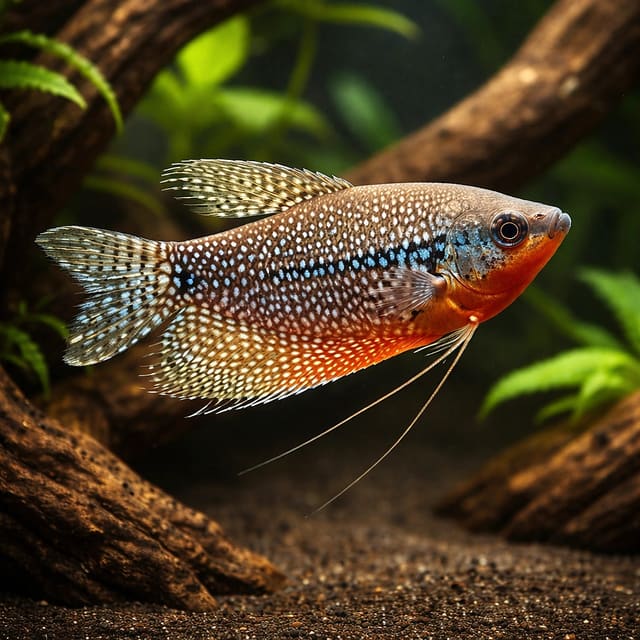
This purchase supplies four Blue Paradise Fish, the blue trade form of Macropodus opercularis. The gallery shows one representative fish; it does not show all four animals supplied. The fish you receive can differ naturally in colour, pattern, fin development and maturity. This is a living group to plan for, not a matched set with a promised male-to-female ratio. Sex is guaranteed only when the selected option explicitly states male or female. This 4 × Blue Paradise Fish listing has no sex-guaranteed option.
Paradise Fish are engaging, surface-aware members of the gourami family, Osphronemidae. They can be a rewarding choice when you can give them a roomy, mature aquarium with planted cover, calm places at the surface and a practical option for separating fish that do not get along. They are less straightforward than a peaceful shoal: males may defend territories, and conflict can intensify as fish mature or begin reproductive behaviour. Buying four does not make them a bonded group. FishBase says males will fight; Seriously Fish advises against housing males together except in a very large aquarium.
The appeal is easy to understand. A Paradise Fish has a distinct silhouette, with a tapered body and flowing fins, and the blue trade colour adds cool tones to the species' characteristic barring. The label describes a form of the species rather than another species or an exact colour promise. Watch how each fish uses the cover, surface and open swimming lanes: those everyday behaviours tell you far more about its comfort than a bright colour alone. If an individual spends its time being chased or cannot reach food, the aquascape and stocking need attention.
Before selecting this pack, consider space, water, feeding and compatibility together. Adult species figures are planning guides rather than a promise about the size of these fish on arrival. A small aquarium that cannot be divided gives you few options if territorial conflict develops. An established filter and stable water remain essential even though the species can breathe atmospheric air.
The scientific name is Macropodus opercularis. Blue describes the trade colour form, not a separate accepted species. Paradise Fish and Paradise Gourami are common names for this fish. The four fish have the same species' needs as individuals.
FishBase describes wild populations in parts of East Asia, including China, Taiwan and northern Viet Nam, and records lowland streams, backwaters, irrigation channels, rice fields and ditches. These habitats help explain why a structured aquarium with sheltered edges and access to the surface makes sense. They say nothing about the birthplace of the four fish sold here. We do not identify the origin of this particular stock from a species' wild range.
Paradise Fish are labyrinth fish. They take air at the surface using a specialised organ, a useful adaptation in some low-oxygen habitats. It is tempting to read that as permission to use a bowl or skip a filter, but it is not. Fish still produce ammonia, and the filter's established bacteria process waste through toxic nitrite to nitrate. The water must be maintained and tested as for other aquarium fish. A lid should keep fish secure while leaving ordinary access to air above the water surface. The ability to breathe air changes how the fish uses the aquarium; it does not cancel the need for clean water.
Adult size figures differ because the references do not all use the same measurement. FishBase records a maximum of 6.7 cm standard length; Seriously Fish lists 8 cm standard length; a broad OATA care sheet describes Paradise Fish at approximately 10 cm without the same measurement label. Standard length excludes the tail fin. These are adult reference figures, not a dispatch measurement or a guarantee that every individual will reach one number. Plan the aquarium around adult needs, allowing for growth and behavioural changes over time.
Start with the footprint and layout you can actually provide. Seriously Fish gives an aquarium base of 80 × 30 cm, about 72 litres, as a minimum to consider for a single pair. That is a reference for two fish, not a four-fish minimum. Four territorial animals may require appreciably more horizontal room, sight breaks and perhaps separate accommodation. Litres alone will not make a short or bare tank suitable. If your only plan depends on all four staying peaceful in one small space, this pack is a risky purchase.
Think about the fish already living with them. A peaceful community label does not make a tank mate safe: similarly shaped fish may trigger rivalry, very small animals may be viewed as food, and a timid fish can lose access to food or space without obvious fighting. Equally, these four Paradise Fish are not automatically safe together. A considered setup gives fish alternative routes and hiding places and allows you to observe individuals, especially as their behaviour changes over time. The compatibility section develops this decision in more detail.
Check the aquarium before ordering: the filter should already be biologically mature; ammonia and nitrite should test at zero; temperature and water chemistry should be stable; and a secure lid should be in place. If this is your first aquarium, the first aquarium guide explains the preparation. Set aside a second suitable home or divider plan before it is urgently needed. That is particularly useful with a four-pack because you cannot choose a guaranteed sex composition from this offer. Careful planning gives you more room to respond to the fish as individuals.
For Paradise Fish, floor area and how that area is divided matter at least as much as the litre figure. A long aquarium provides more useful separation than a tall aquarium with the same volume. Start from the species-level reference of an 80 × 30 cm base for one pair, then recognise the extra challenge of four fish with an unknown sex mix. There is no supported universal minimum volume for this exact four-pack. A very large, well-structured aquarium may allow some individuals to avoid one another; a cramped one magnifies every territorial encounter. Before purchase, decide what you would do if one fish claims the surface or chases another away from food.
Place plants, wood or other aquarium-safe cover so a fish can move out of another's direct view. Leave open lanes for ordinary swimming rather than filling every centimetre with decor. Cover near the surface can give a less dominant fish somewhere to pause, while floating vegetation and shaded areas echo the species' use of sheltered margins. Seriously Fish describes wood, branches and floating or surface plants as useful features. You can use sand or gravel if it is clean and suitable for the aquarium; a particular dark colour is an aesthetic choice, not a biological requirement of this form.
Arrange the decor so that one dominant fish cannot control the only route to the surface or every feeding point. Watch the aquarium from different angles after the fish settle. A territory can change when an individual grows or becomes reproductive; a layout that seemed fine on day one is not a lifetime guarantee. Moving cover may help break a direct line of sight, but it is not a cure for persistent attacks. Have the means to separate fish if repeated pursuit, fin damage or exclusion continues. Do not wait for a visible injury to acknowledge that one individual is not coping.
Use a secure, well-fitting lid. These active fish can reach the water surface quickly, and a lid reduces escape risk. Preserve an air space between water and cover rather than sealing the surface against normal air exchange. Be sensible around filter pipes, cables and feeding openings. A single gap can undo an otherwise careful setup. Keep accessible surface water rather than forcing a fish through a strong jet every time it rises to breathe.
Seriously Fish gives 10–22°C, pH 6.0–8.0 and 5–20 dGH as aquarium guidance for Macropodus opercularis. These are broad species-level care ranges, not an exact optimum established for the four fish in this pack. FishBase's 16–26°C record is an environmental range, while OATA's 20–28°C figure is broad advice for gouramis and Paradise Fish together. Those numbers have different scopes. Copying the widest endpoints into one supposedly ideal setting would obscure the distinction. For an indoor aquarium, choose a stable regime within appropriate species guidance and monitor how the whole setup behaves, particularly through seasonal room changes.
Cooler-water tolerance is one reason people consider Paradise Fish for an unheated indoor aquarium. That does not make a sudden cold spell harmless or mean a heater is always required. The question is whether your room and tank hold a suitable, consistent temperature without sharp changes. Measure it at different times rather than relying on how the room feels. If you need a heater for stability, set it to support the planned aquarium conditions; do not raise the temperature simply because a generic tropical-fish label suggests it. Conversely, a tank that swings outside the care plan needs attention even if the fish still rise for air.
pH and hardness are best understood as water properties to measure and keep reasonably steady. A reading inside a published range does not by itself prove a tank is healthy. Ammonia, nitrite, maintenance and behaviour matter too. Avoid abrupt attempts to chase a single 'perfect' pH number with products when your established aquarium is stable and the fish are doing well. If your tap water is far outside the species guidance, work out a consistent long-term approach before adding livestock. The water chemistry guide explains the values, and the water matcher can help compare measured readings with the stated range. Neither replaces tests for toxic waste.
Do not use a wild habitat's ability to support an air-breathing fish as a target for a home aquarium. In the wild, these fish have been recorded in low-oxygen water; in a closed tank, prevent avoidable waste and maintain a functioning filter. Stable conditions are a husbandry practice, not a claim that this pack has a special temperature tolerance or proven origin.
Use an established biological filter and test the water regularly. As the RSPCA explains, fish waste produces ammonia; beneficial bacteria convert it first to nitrite and then to nitrate. Ammonia and nitrite are toxic, and OATA's group care sheet calls for zero measured ammonia and nitrite. A tank can look clear while its filter is not ready for four additional fish. Confirm maturity through measurements, not a fixed number of weeks since filling it. This is particularly important if the aquarium has only recently been set up or if four fish are being added at once.
Choose filtration that moves and cleans the water without turning every sheltered surface area into a strong current. Paradise Fish use the surface, and Seriously Fish describes structured aquaria with surface vegetation. An adjustable outlet or a sensible arrangement of hardscape can leave calmer places without sacrificing water circulation. Watch whether every fish can reach air and feed without being swept or blocked. A labyrinth organ lets them breathe from the air; it does not remove dissolved-waste exposure or the need for a maintained filter.
Check the filter for blockage, and preserve its beneficial bacteria when cleaning it. OATA advises that filter media should not be rinsed under a tap; rinse it lightly in removed aquarium water instead, because chlorine or chloramine can harm the bacterial population. Replace water regularly using conditioned water suited to the aquarium, and avoid letting uneaten food or decaying plant matter accumulate. As a broad routine, OATA recommends a weekly partial change and regular testing; adjust your maintenance to actual readings, stocking and the condition of the tank. A calendar alone cannot tell you whether ammonia and nitrite are safe.
When you change water or service equipment, make changes steadily. A dramatic temperature or chemistry swing can stress the fish even if the final figure sits within a published range. Record routine test results so you can see a developing problem rather than reacting only when a fish looks ill. If readings rise, address the water and filter promptly and seek appropriate expert advice; adding more fish while the system is unstable compounds the problem.
FishBase reports that wild Paradise Fish feed on small aquatic animals. Seriously Fish discusses insect larvae and recommends small live or frozen foods such as Daphnia, Artemia and suitable worms, with some quality dried foods also accepted. That is a useful basis for variety in the aquarium. Offer appropriately sized foods that each fish can take; a single brand or exact pellet count is not a species requirement. OATA's wider gourami sheet also discusses good-quality flake, granules or pellets and small live or frozen food, with care to avoid overfeeding.
A four-fish group needs more observation than one display fish at feeding time. Put food where a less assertive individual can reach it without crossing a dominant fish's preferred area. Watch all four, rather than judging the group by the quickest eater. If one fish repeatedly hangs back, feed at more than one point, assess the layout and check whether persistent pursuit is the real problem. Food distribution can reveal a territorial issue, but it cannot permanently fix an incompatible grouping. A fish that is routinely denied food needs a safer arrangement.
Use modest portions and remove leftovers when practical. Excess food contributes to waste and can challenge the biological filter. The right amount depends on the food, the fish and the aquarium, so avoid rigid claims such as a fixed number of pellets or a guaranteed feeding window. Look for normal interest in food and steady body condition over time, and adjust portions based on what is actually eaten and what water tests show. A fish refusing food may be stressed by a tank mate, poor water, a recent move or illness; check the full situation rather than assuming it simply dislikes one food.
Live and frozen foods need ordinary care in storage and preparation. Feed foods of appropriate size and quality, and do not treat extra protein as a shortcut to colour or as a promise of breeding. The blue form is still Macropodus opercularis; its diet is not a separate colour-form formula. If another species shares the aquarium, observe whether both kinds can eat without competition or nipping. A calm feeding pattern is one practical sign that your layout and stocking are working.
Have the aquarium ready before the fish arrive: a mature filter, measured water conditions, a fitted lid, cover and a safe plan if individuals must be separated. Check the current delivery and Live Arrival Guarantee policy for the delivery arrangements and claim conditions. A person must be present to receive live fish. The policy calls for same-day inspection and a continuous video that starts with the sealed parcel and shows the fish still in the bag if you need to make a live-arrival claim. Check the current policy for the arrangements that apply to your order.
For introduction, follow the store's arrival guidance to float the sealed bag for roughly 20–30 minutes so temperature changes gradually. Keep the room calm, turn down strong lights if appropriate and prepare the receiving aquarium before opening bags. Release the fish without pouring transport water into the aquarium. Avoid using the need for a claim video as an animal-care step once the fish are being introduced; the two jobs serve different purposes. If anything looks wrong on arrival, use the policy's contact route on the day and retain the evidence it asks for.
Give the fish time to orient themselves and watch each individual as it finds shelter and the surface. An unfamiliar environment may change behaviour for a while, but do not dismiss persistent chasing, inability to feed or a fish held against a corner. Look at water readings as well as behaviour. Keep the aquarium secure through feeding and maintenance because the fish can move quickly near the surface. Introduce any further livestock cautiously; a maturing filter and established territories both matter when stocking changes.
There is no promise here that the four will arrive as a peaceful group or remain one. A backup arrangement is part of responsible planning, especially when the selected pack gives no sex guarantee. The first days are the right time to notice whether cover and feeding positions actually work for all four, then adjust the setup or separate individuals before repeated conflict causes damage.
Paradise Fish use the upper and middle parts of an aquarium and may make frequent trips to the surface for air. That alone is normal for a labyrinth fish. Look instead for changes from each individual's usual pattern: a fish that stays hidden, is constantly pursued, cannot eat, has damaged fins, swims unusually or changes breathing pace deserves closer attention. OATA identifies altered swimming, colour, temperament, breathing, appearance and appetite as signs worth investigating. Start with water tests and a careful look at how the fish interact.
Territory is not always a dramatic fight. One fish may control the best surface cover while another makes short, unsuccessful attempts to cross the aquarium. A less dominant fish may still be visible at feeding time yet eat too little because it is forced to retreat. Observe at different times of day, including when food is offered and when lights change. The important question is whether all four can use the space and behave normally, not whether they can be photographed in the same frame.
Reproductive behaviour may sharpen male aggression, according to species-level accounts. A bubble nest or display can be interesting to observe, but it does not establish that the group has a safe sex balance. Nor does a fish's colour, fin length or one photograph give a retail sex guarantee. Experienced keepers may distinguish mature sexes using several features, but there is no male or female guarantee for this pack. Keep your husbandry decision grounded in the behaviour of the animals in front of you.
If you see repeated attacks or fin damage, prioritise the affected fish's safety. More plants may create useful breaks, yet severe or persistent conflict calls for separation into suitable conditions. Do not force four fish to remain together just because the purchase was a pack. If an individual looks unwell, check water quality promptly and obtain knowledgeable advice rather than following a generic medication timetable.
This pack contains four Blue Paradise Fish, but they are not a schooling species. The number sold does not promise that all four will stay together indefinitely. FishBase says males fight; Seriously Fish describes male territorial aggression, especially around reproduction, and warns against keeping males together unless the aquarium is very large. The shop does not guarantee a male-to-female mix, so advice for a known male with females cannot be applied as if this pack had that composition. A workable plan includes space, visual separation, observation and somewhere suitable to move a fish if the grouping fails.
Look for the difference between brief displays and sustained exclusion. Flaring or a short chase can occur around a defended area. A fish repeatedly pinned behind the filter, prevented from feeding, or carrying torn fins is not successfully sharing space. Add cover thoughtfully, assess the footprint and intervene early. The strongest fish may change over time. Even four fish that initially coexist can need a different arrangement as they mature, so check the group regularly rather than making the first peaceful week your only evidence.
Many experienced keepers discuss one male with multiple females in a structured tank. Seriously Fish mentions that arrangement as a way of dispersing male attention, but it is conditional care context, not the contents of this pack. This pack has no sex guarantee. If your aquarium can only support one or two Paradise Fish and you have no appropriate alternative accommodation, a four-fish purchase may not fit your plans. It is better to decide that in advance than to discover it after the fish are established.
Seriously Fish advises against similarly shaped fish and says Paradise Fish may be maintained with considered peaceful schooling species that have comparable environmental requirements. OATA's broader care sheet calls the species potentially semi-aggressive and cautions against timid fish, small fish that could be eaten, and fish likely to nip fins. Those are selection principles, not a list of universally safe tank mates. Four Paradise Fish also take up more space and create more potential territories than one, so judge the whole stocking plan rather than a species pair in isolation.
A similar-shaped or long-finned surface fish may be treated as a rival, and a very small companion may be at risk as prey. A fast shoal is not automatically safe either: its temperature, feeding behaviour and space requirements must fit, and it should not be used to distract from conflict within the Paradise Fish group. Avoid promising that a named loach, minnow, gourami, shrimp or snail will work in every aquarium. The better test is whether each animal can use the tank without constant pursuit, food loss or injury.
Before combining species, compare their long-term temperature and water requirements, adult dimensions, swimming levels and likely interactions. A shared number on a care chart does not settle behaviour. The Paradise Fish's surface access and sheltered areas must remain available; the other fish need their own suitable space. Observe after introduction and again as fish mature. If a companion is persistently harassed, separate it instead of waiting for a compatibility label to become true. The same response applies if Paradise Fish are the ones under pressure from fin-nipping companions.
Invertebrates need caution. FishBase describes feeding on small aquatic animals, which is enough reason not to promise that small shrimp or young invertebrates are safe. Do not assume adult shrimp or snails will be safe in every aquarium either. If the main aim is a breeding shrimp colony, select a stocking plan based on that priority rather than assuming these four fish will ignore its smallest members.
FishBase records 6.7 cm standard length and Seriously Fish lists 8 cm standard length; OATA gives about 10 cm without the same measurement label. These are adult reference figures, not a measured size for the fish in this pack.
Seriously Fish gives an 80 × 30 cm base, about 72 litres, as a minimum to consider for one pair. Four territorial fish need more room and a separation plan; that pair figure is not a four-fish minimum.
Possibly in a sufficiently large, structured setup, but there is no guarantee. Males will fight other males. The pack has no guaranteed sex mix, and you should be able to separate individuals if conflict develops.
They suit a keeper prepared to maintain stable, filtered water and manage territorial behaviour. A beginner with a mature, roomy aquarium and a separation plan can research them, but this four-pack is a poor fit for a small, peaceful community tank.
Offer varied, appropriately sized foods. Species guidance includes small live or frozen Daphnia, Artemia and worms; some quality dried foods may also be accepted. Watch that each of the four fish can feed.
Seriously Fish gives 10–22°C, pH 6.0–8.0 and 5–20 dGH as species-level aquarium guidance. Keep conditions stable; FishBase wild-environment and OATA group ranges have different scopes.
Males are territorial and will fight other males, particularly around reproductive behaviour. Avoid assuming a long-finned or similarly shaped companion is safe, and act if a fish is repeatedly chased or damaged.
Seriously Fish mentions considered peaceful schooling species with comparable water needs, while warning against similarly shaped fish. OATA advises caution with timid, very small or fin-nipping fish. No kind is guaranteed compatible with this four-pack.
Follow Tropical Fish Co's current delivery policy for live-fish transport and arrival. Someone must receive the parcel; inspect it on the day, and keep a continuous sealed-parcel unboxing video showing the fish in the bag if a Live Arrival Guarantee claim is needed.
FishBase: Macropodus opercularis supplies the accepted species identity, family, wild distribution, habitat observations, adult standard-length record and notes on diet and male behaviour. Wild environmental records describe where the species has been found; they are not a care prescription for this retail pack.
Seriously Fish: Macropodus opercularis supplies species-level aquarium guidance on footprint, water, food and compatibility. Its stated tank base and approximate volume are for a single pair. OATA's gourami and Paradise Fish care sheet supplies UK trade-body group guidance on filtration, testing, maintenance and observation; its group temperature figures are not a species-specific optimum. RSPCA aquarium welfare guidance explains why an established biological filter matters. For transport and any claim, consult Tropical Fish Co's current policy linked in the care section.
Independently collected by Judge.me from customers who bought this item. All reviews are shown.
Very nice healthy fish as described