Moderate
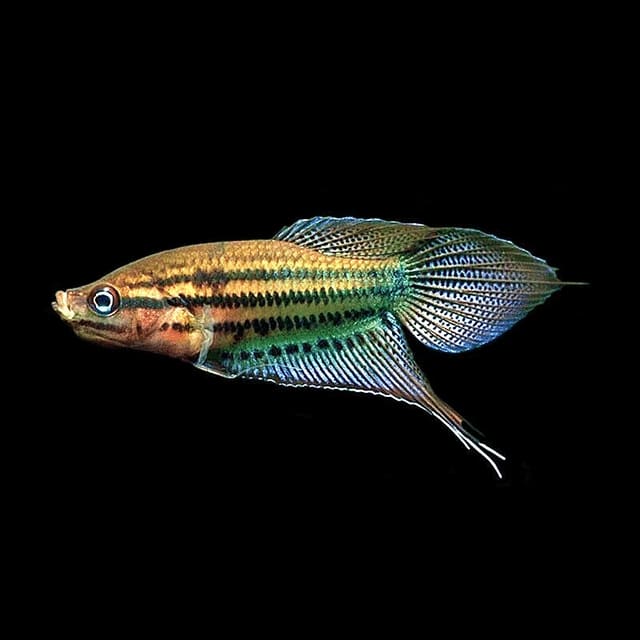
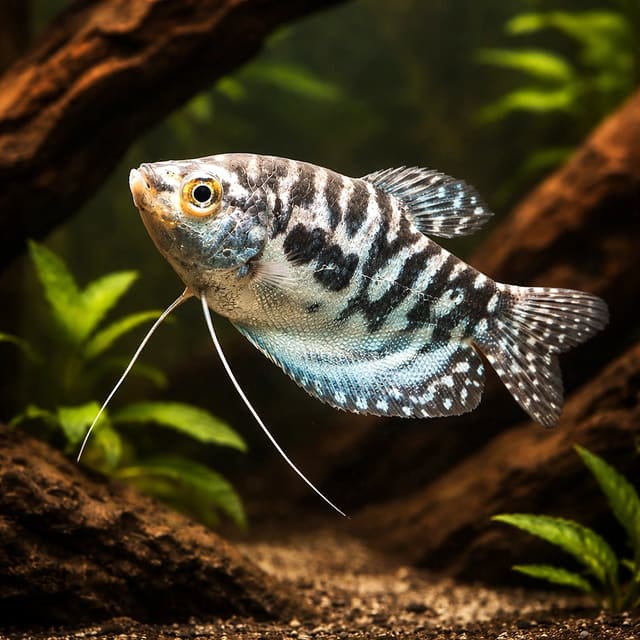
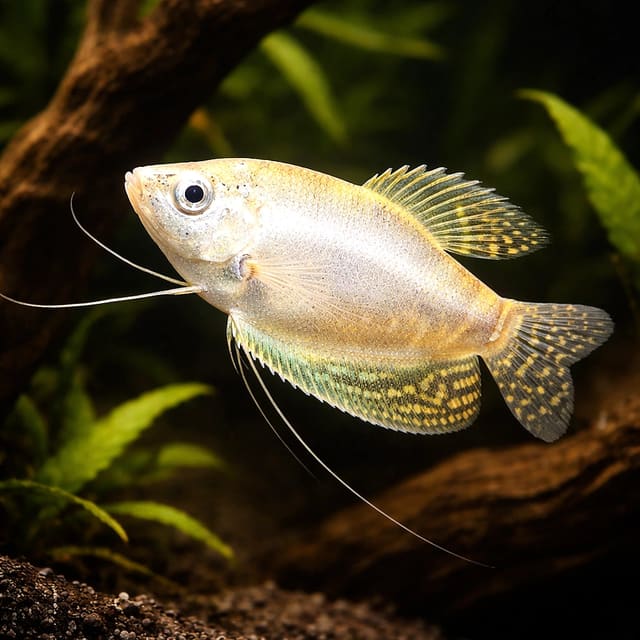
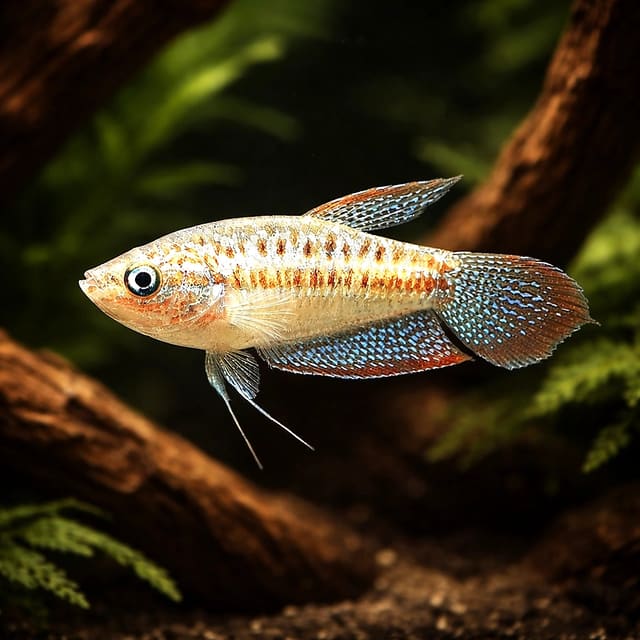
Sparkling Gourami (Trichopsis pumila) – 1–2.5cm & XL Sizes
22–28°C · pH 6–7.5 · 30L
£4.99

A tiny, peaceful gourami with subtle stripes and a charming croaking courtship display, ideal for calm planted aquariums. Moderate care, peaceful. 24-28C, pH 6.0-7.5.
Adult size is the maximum length this species reaches at full maturity (scientific sources). The livestock you receive will be younger and smaller — pick a size above for the actual shipping size. Product-photo provenance and any image-specific limitations are stated on the listing.
Trichopsis schalleri
Save when buying multiple fish. Each quantity is one fish; sex and pair formation are not guaranteed unless the selected variant explicitly states them.
Confirm your email, then we’ll send an availability message for this exact item if it returns within 180 days.
This request is only for this product—no newsletter or other promotions. A mail-provider retry may very rarely duplicate the same availability message. Unconfirmed addresses are removed after 48 hours. See our privacy policy.
A tiny, peaceful gourami with subtle stripes and a charming croaking courtship display, ideal for calm planted aquariums. Moderate care, peaceful. 24-28C, pH 6.0-7.5.
Adult size is the maximum length this species reaches at full maturity (scientific sources). The livestock you receive will be younger and smaller — pick a size above for the actual shipping size. Product-photo provenance and any image-specific limitations are stated on the listing.
Maintain these water conditions for optimal health and vibrant colors
The Three-Striped Croaking Gourami (Trichopsis schalleri) is a small, peaceful labyrinth fish for calm planted aquariums. It is also called the Mekong croaking gourami or threestripe gourami, and the appeal is not only its subtle striped body: settled fish can make audible clicking or croaking sounds during courtship and gentle display. This is a quiet, characterful choice for keepers who want a nano-sized species with real behaviour, not just colour.
This listing is for the 3-4 cm size. Adult planning size is usually around 4-5.5 cm depending on source and conditions, so it remains compact, but it still deserves a stable, mature aquarium with cover, floating plants and very gentle flow. It is best treated as a soft-water, shaded planted species rather than a bright open-water community fish.
| Scientific name | Trichopsis schalleri |
|---|---|
| Common names | Three-Striped Croaking Gourami, Threestripe Gourami, Mekong Croaking Gourami |
| Adult size | Usually about 4-5.5 cm; supplied around 3-4 cm |
| Temperament | Peaceful and shy, with mild male display behaviour |
| Best aquarium | Mature, well-planted, softly lit aquarium with floating cover |
| Temperature | 22-28C; aim for stable mid-20s for everyday care |
| pH and hardness | Soft to moderate water; pH about 6.0-7.2 and up to 12 dH suits the species well |
| Diet | Small flake, micro granules and frozen foods such as daphnia, brine shrimp and mosquito larvae |
Trichopsis schalleri is a Southeast Asian gourami associated with the Mekong basin and slow, heavily vegetated waters such as marshes, swamps, shallow streams and rice-field habitats. That background matters in the aquarium. These fish feel most secure when the tank has a darker base, plant thickets, small hiding places and floating plants to soften the light.
The croaking behaviour is part of what makes the species special. Both courtship and social display can involve short sounds produced around the air-filled swim bladder. In a busy shop tank this may go unnoticed, but in a quiet home aquarium a settled group can be surprisingly expressive. They are not aggressive fish, but males may display or bicker when in breeding condition, so visual barriers and plant cover help keep the group relaxed.
Plan this species for a mature aquarium of at least 60 litres, with a longer footprint preferred if you are keeping a group. A smaller specialist setup can work for experienced keepers, but stability matters more than squeezing them into the smallest possible tank. Use gentle filtration; a strong jet or bare bright tank will make them nervous and can stop them feeding confidently.
| Setup area | Best practice | Why it matters |
|---|---|---|
| Flow | Gentle, well-diffused filtration | Matches sluggish natural habitats and reduces stress |
| Lighting | Moderate to dim, softened with floating plants | Encourages natural colour and confident movement |
| Decor | Wood, fine plants, leafier cover and shaded corners | Gives shy fish routes to retreat and display safely |
| Water | Stable soft to moderate water, not extreme swings | They acclimatise, but look best in softer slightly acidic conditions |
A tight lid is useful for all labyrinth fish. They breathe atmospheric air as part of their normal biology, and warm, humid air above the water helps avoid temperature shock. Keep the aquarium peaceful, mature and clean rather than over-filtered and turbulent.
Three-Striped Croaking Gouramis are best with small, calm community fish that will not outcompete them. Good choices include small rasboras, peaceful tetras, gentle cory-style bottom dwellers and other quiet species that enjoy similar soft planted conditions. Avoid boisterous barbs, large cichlids, fin nippers and fast surface feeders that will make these gouramis hide.
They can be kept as a pair or small group, but a group is often more interesting if the aquarium has enough cover. Do not mix them casually with other Trichopsis species such as sparkling or larger croaking gouramis if you want to avoid confusion or possible crossbreeding in breeding projects. Use caution with tiny ornamental shrimp; adult shrimp may be ignored in a complex planted tank, but shrimplets are small prey.
This is a small-mouthed insectivore/micro-predator style fish, so offer small foods rather than large pellets. A good routine is quality micro granules or fine flake as the staple, supported with frozen daphnia, brine shrimp, cyclops, white mosquito larvae or finely chopped bloodworm. Feed little and often; the aim is calm feeding, not a rush where stronger tank mates take everything first.
| Food type | Use | Notes |
|---|---|---|
| Micro granules or fine flake | Daily staple | Choose small particles the fish can swallow easily |
| Daphnia or cyclops | Conditioning and variety | Useful for small mouths and natural hunting behaviour |
| Brine shrimp or mosquito larvae | Occasional richer feed | Helps condition adults without overloading the tank |
| Large pellets | Avoid as a main food | Too large and easy to waste in a nano community |
Breeding is possible for patient keepers. The best route is to buy a small group, let pairs form naturally, and then move a conditioned pair to a shallow, warm, plant-filled breeding tank. The male usually builds a bubble nest under a leaf, cave roof or other shelter rather than always at the open surface. Courtship may include croaking displays, and the pair embraces below the nest.
Keep water gentle, warm and clean, with floating plants or broad leaves for security. Once spawning is complete, the male may guard the nest. Fry are very small and need tiny first foods such as infusoria before they can take newly hatched brine shrimp. This is not a beginner breeding project, but it is one of the reasons experienced labyrinth-fish keepers value the species.
These are live fish, so availability and size can change with stock. This product currently carries the 3-4 cm size option, with a sibling size variant where available. Orders are packed for UK live fish delivery with oxygen, insulation and seasonal heat or cool protection as needed. Our Live Arrival Guarantee applies when the delivery and acclimation instructions are followed, and first-time customers can use WELCOME10 for 10% off eligible first orders.
When the fish arrive, float the sealed bag to equalise temperature, then acclimate gradually to your aquarium water. Keep the lights low for the first few hours and avoid heavy feeding on day one. A quiet, planted quarantine or observation tank is ideal before adding them to a community.
Choose the Three-Striped Croaking Gourami if you want a peaceful fish with subtle beauty, small size and fascinating behaviour. It is not the loudest-looking fish in the catalogue, but in the right aquarium it becomes a favourite: the stripes, blue spotting, red fin edging and croaking displays reward careful observation. For a calm planted nano or small community, Trichopsis schalleri is a refined alternative to more common gouramis.
Care notes were cross-checked against FishBase for accepted identity, Mekong distribution, water range, size and marsh/rice-field habitat; and Aquarium Glaser/AquaInfo for croaking behaviour and breeding observations. These sources support a shaded, gentle-flow, planted aquarium rather than a bright high-current setup.
No reviews for this item yet. Bought one? Honest reviews only, good or bad.
What customers say about ordering from us
I have a small group of long finned mountain minnows. So was delighted to be able to order ten of this variety to increase the genetics in my tank . The ones I recieved are healthy but it’s to early to give a verdict on wether they are of a long finned type since they are small currently.
Gordon Walker · 23 Sept 2026
100% success travel and "installation". Pleased with quality of purchase. The Siamese fighter a bit "shy" so have not yet seen him at his best yet but looking good. Happy customer. GG
George E Garratt · 21 Sept 2026
Reviews of our shop, collected by Judge.me, an independent third-party review collector. Newest first.