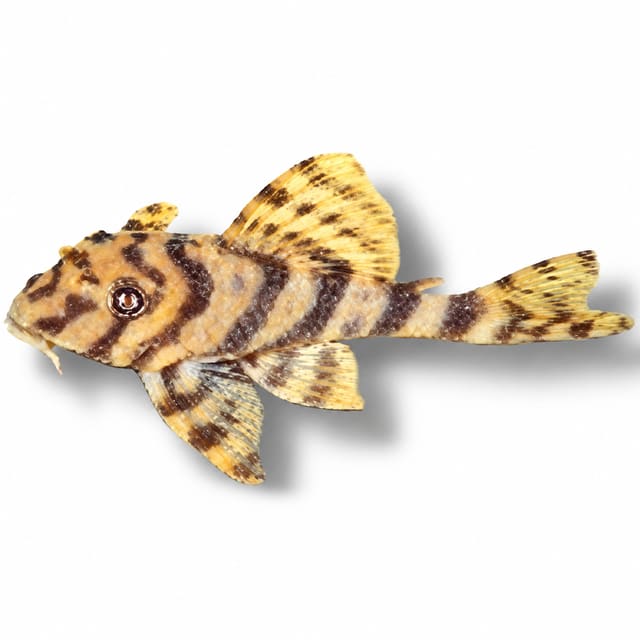
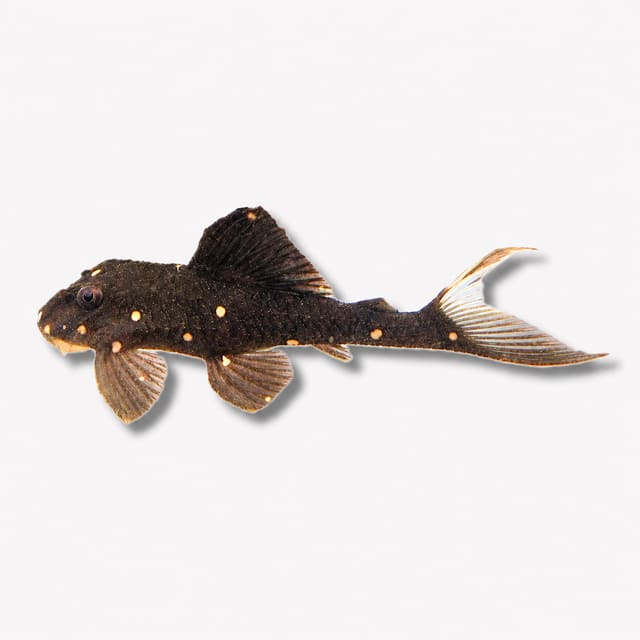
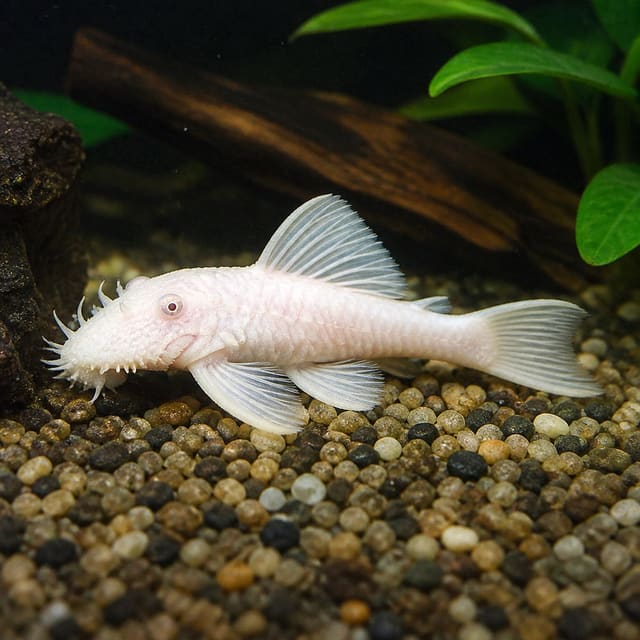
L066 King Tiger Pleco (Hypancistrus sp.)
22–27°C · pH 6–8
£84.99

Photo coming soon
The size, price and care details on this page are for this listing.
Cautious L052 Peckoltia catfish listing based on supplier provenance, for mature pleco-style aquariums with wood, caves and steady water quality.
L052 Peckoltia pulcher
Save when buying more.
Confirm your email, then we’ll send an availability message for this exact item if it returns within 180 days.
This request is only for this product—no newsletter or other promotions. A mail-provider retry may very rarely duplicate the same availability message. Unconfirmed addresses are removed after 48 hours. See our privacy policy.
Cautious L052 Peckoltia catfish listing based on supplier provenance, for mature pleco-style aquariums with wood, caves and steady water quality.
L052 Peckoltia "Pulcher" (Peckoltia sp.) is treated here as a supplier trade label for an L052-type Peckoltia catfish. Because the exact formal species identity is not confidently verified from the catalogue data, the wording stays cautious and focuses on practical pleco-style husbandry.
| Scientific name | Peckoltia sp. L052 |
|---|---|
| Adult size | 10-12 cm estimated for L052-type Peckoltia |
| Minimum aquarium | 120 litres or more |
| Temperature | 24-28 C |
| pH | 6.0-7.5 |
| Temperament | Peaceful bottom-dwelling catfish with territorial cave behaviour |
| Diet | Sinking catfish foods, wood/biofilm grazing, vegetable foods and occasional frozen protein |
Keep this catfish in a mature aquarium with strong biological filtration, warm stable water, driftwood and several caves. It should not be added to a new tank. Like many small loricariid catfish, it spends most time around wood, rockwork and shaded bottom areas.
Offer sinking catfish tablets, vegetable foods, soft wood/biofilm grazing surfaces and occasional frozen protein. Do not rely on algae alone. Feed after lights dim if faster fish intercept food during the day.
Peaceful community fish are usually better companions than aggressive cichlids or other cave-claiming plecos in cramped tanks. Similar catfish to compare include L066 King Tiger Pleco, Peckoltia vittata, L260 Queen Arabesque Pleco and L204 Panaque. The previous gallery attached to this SKU showed old molly media, so those images are blocked while a correct L052 Peckoltia image is sourced.
Livestock is packed for temperature stability, sent with a licensed live-animal courier, and covered by our Live Arrival Guarantee. After arrival, acclimate slowly, keep lights low, and watch appetite, breathing and posture during the first week.
No reviews for this item yet. Bought one? Honest reviews only, good or bad.
What customers say about ordering from us
I have a small group of long finned mountain minnows. So was delighted to be able to order ten of this variety to increase the genetics in my tank . The ones I recieved are healthy but it’s to early to give a verdict on wether they are of a long finned type since they are small currently.
Gordon Walker · 23 Sept 2026
100% success travel and "installation". Pleased with quality of purchase. The Siamese fighter a bit "shy" so have not yet seen him at his best yet but looking good. Happy customer. GG
George E Garratt · 21 Sept 2026
Reviews of our shop, collected by Judge.me, an independent third-party review collector. Newest first.