Moderate
Acei Cichlid (Pseudotropheus sp. “acei”)
24–26°C · pH 7.5–8.5 · 300L
£7.99

Mpangha Rocks Red Top Zebra (Maylandia emmiltos) is a Lake Malawi cichlid known in the wild only from the Mpanga Rocks near Chilumba, growing to 8.4 cm standard length. It belongs in a hard, alkaline Malawi cichlid aquarium with plenty of rock and a well-planned group, not in a general community tank. Each purchase is one fish in the size you choose.
Adult size is the maximum length this species reaches at full maturity (scientific sources). The livestock you receive will be younger and smaller — pick a size above for the actual shipping size. Product-photo provenance and any image-specific limitations are stated on the listing.
Maylandia emmiltos
Save when buying multiple fish. Each quantity is one fish; sex and pair formation are not guaranteed unless the selected variant explicitly states them.
Mpangha Rocks Red Top Zebra (Maylandia emmiltos) is a Lake Malawi cichlid known in the wild only from the Mpanga Rocks near Chilumba, growing to 8.4 cm standard length. It belongs in a hard, alkaline Malawi cichlid aquarium with plenty of rock and a well-planned group, not in a general community tank. Each purchase is one fish in the size you choose.
Adult size is the maximum length this species reaches at full maturity (scientific sources). The livestock you receive will be younger and smaller — pick a size above for the actual shipping size. Product-photo provenance and any image-specific limitations are stated on the listing.

Cichlids are a family of roughly 1,800 accepted species, not one care type. Before buying, identify the exact species and source, then compare adult measurement, usable tank dimensions, social system, territory, tested water, diet and an exit plan. No family-wide minimum tank, water range or tank-mate list is safe.
Maintain these water conditions for optimal health and vibrant colors
The Mpangha Rocks Red Top Zebra is Maylandia emmiltos, a small cichlid from Lake Malawi that is known in the wild only from the Mpanga Rocks near Chilumba. Its recorded maximum length is 8.4 cm standard length, so it is a compact fish, but it brings the full Malawi cichlid temperament with it. It needs hard, alkaline water, a well-filtered aquarium built around rock, and a planned group of Lake Malawi cichlids rather than a place in a mixed community tank.
Each purchase supplies one fish in the size you choose. The size you select is the size supplied, not the adult size. Young fish have not yet developed their adult proportions, and the larger sizes are already approaching the recorded maximum length for the species.
| Suits | Keepers setting up, or already running, a dedicated Lake Malawi cichlid aquarium with hard, alkaline water |
|---|---|
| Not suited to | Soft-water community tanks, planted aquascapes, small aquariums or a single fish kept on its own |
| Recorded adult length | 8.4 cm standard length |
| Water guidance | 23–27°C, pH 8.0–8.6 and general hardness of 12–18 dGH, from OATA's care sheet for Malawi cichlids as a group |
| Group planning | Groups of at least 15 Malawi cichlids, slightly overcrowded, with more females than males where possible |
| Companions | Other Lake Malawi cichlids, and some Synodontis catfish that also come from the lake |
| Diet | A Malawi cichlid food with a high algae content, plus fresh vegetables |
| Supplied as | One live fish per purchase, in the size you select |
This is a fish for a keeper who enjoys a busy rock colony, where every fish has a patch of stone it treats as its own. That activity is the appeal, and it is also the reason for the setup rules on this page. OATA, the UK ornamental aquatic trade body, describes Malawi cichlids as colourful, diverse and aggressive, and says they should be mixed with caution; beyond that, it calls them usually undemanding aquarium inhabitants that are easy to keep once the water and stocking are right.
"Mpangha Rocks" is the trade spelling of the fish's home locality, which reference works write as the Mpanga Rocks. "Red Top Zebra" is a hobby trade name rather than a scientific one. In shops you may also see this fish labelled Metriaclima sp. "Emmiltos" or Maylandia sp. "Emmiltos". FishBase lists the described species as Maylandia emmiltos, which is the name we use.
There are four sizes: 2–3 cm, 4–5 cm, 6–7 cm and 7–9 cm. Not every size can be ordered at every moment, so use the size menu on this page to see which ones can be bought.
Because one purchase is one fish, the quantity you enter is the number of fish you receive. Plan that number with the whole colony in mind, and use our African cichlid range to pick out other Lake Malawi species if you are building a mixed Malawi tank.
Each item below is explained in the care sections; tick them off before the fish is ordered.
Sex is guaranteed only when the selected option explicitly states male or female. This Mpangha Rocks Red Top Zebra listing has no sex-guaranteed option. The fish you receive may be male or female, and colour alone in a young fish is no reliable guide.
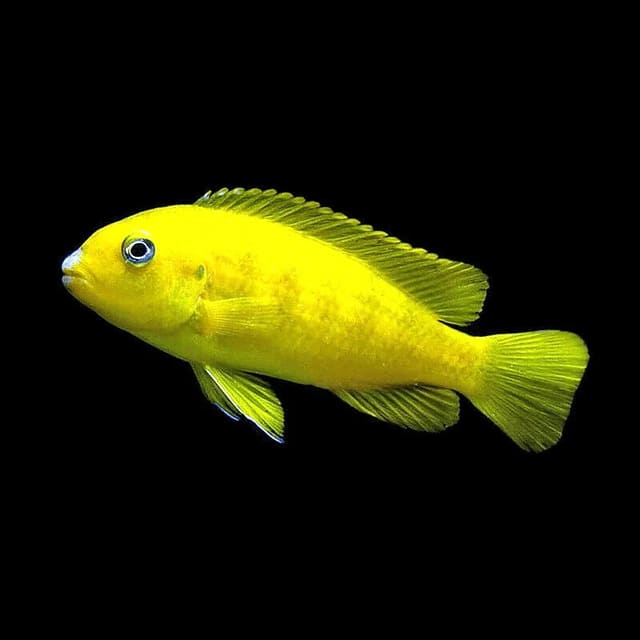
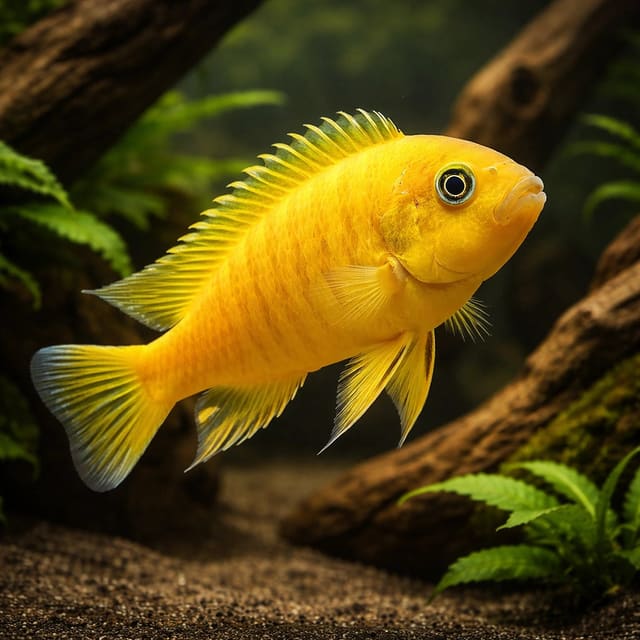
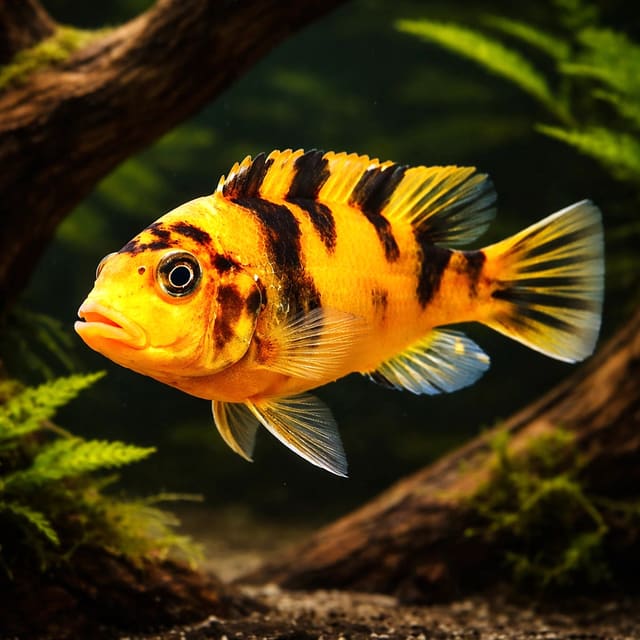
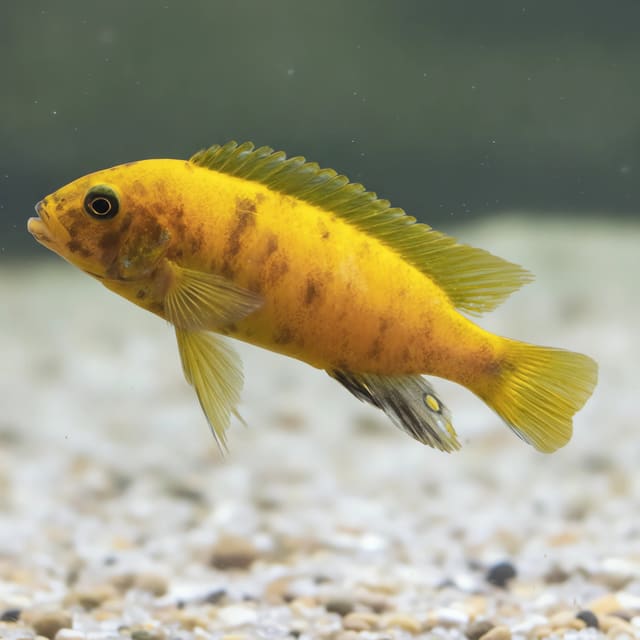
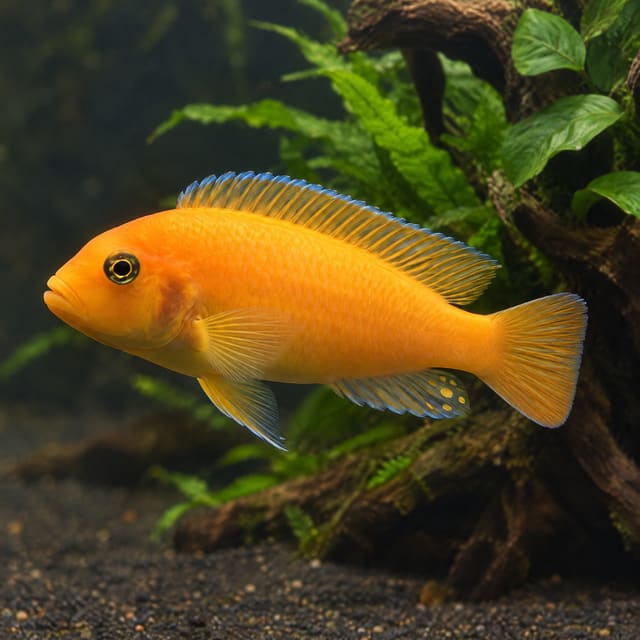
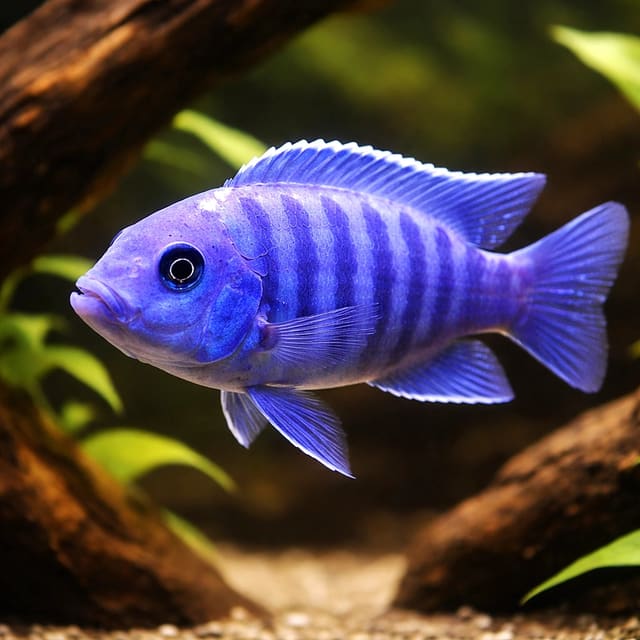
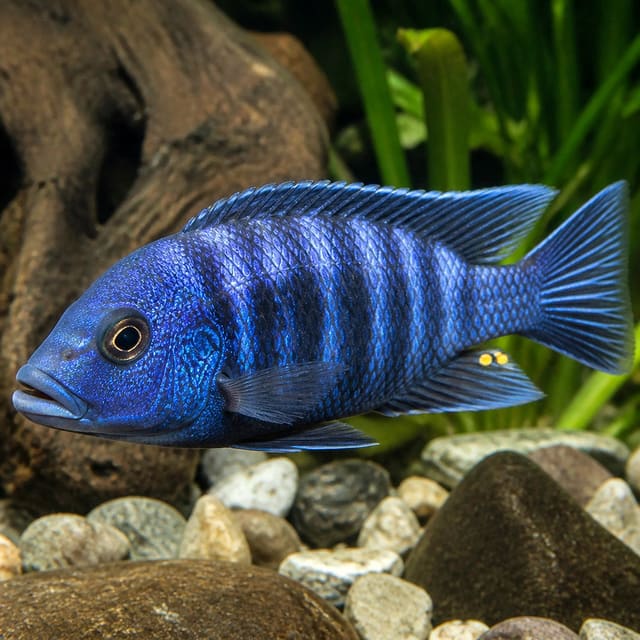
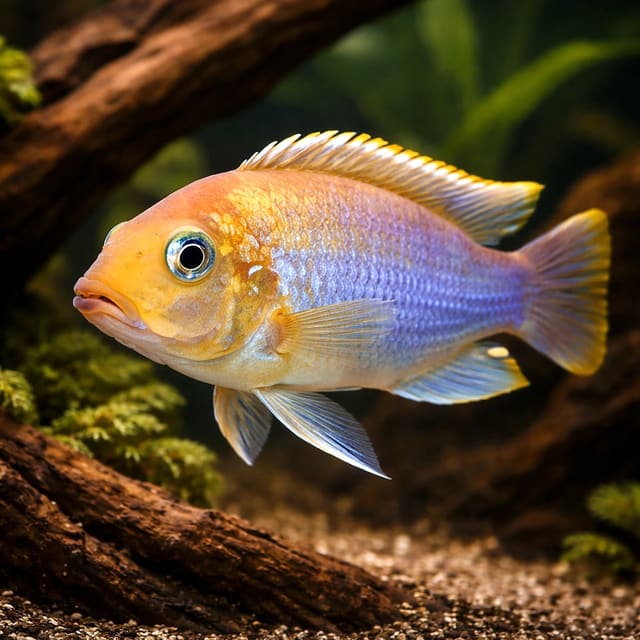
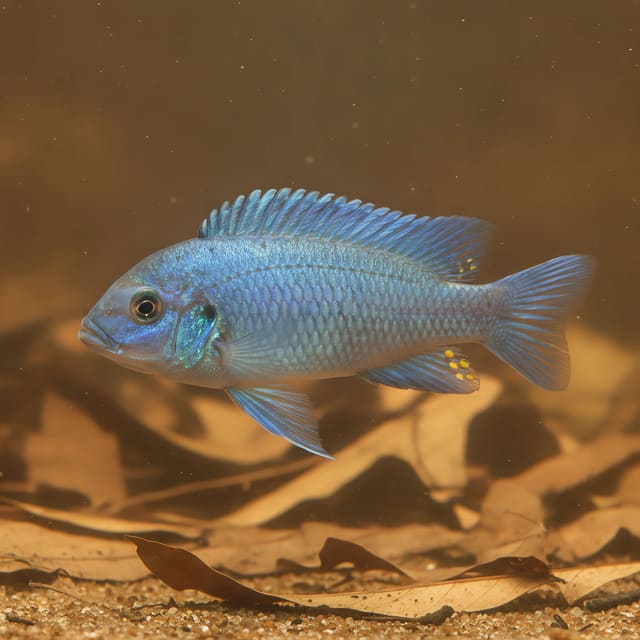
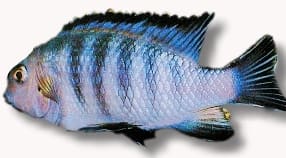
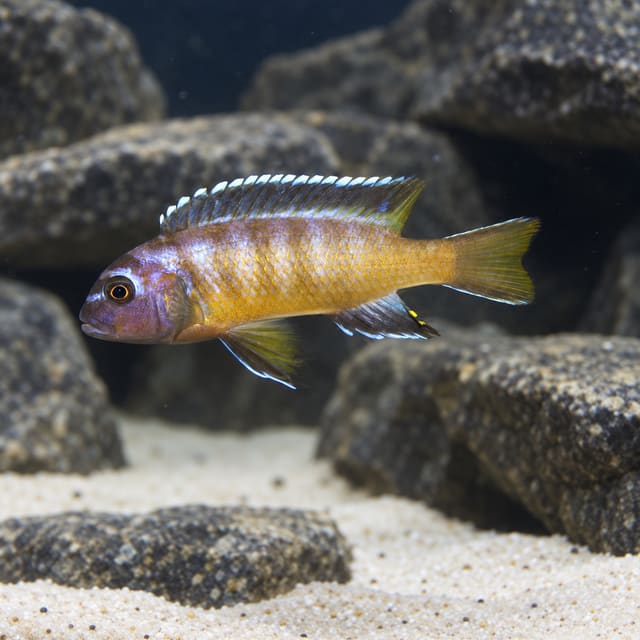
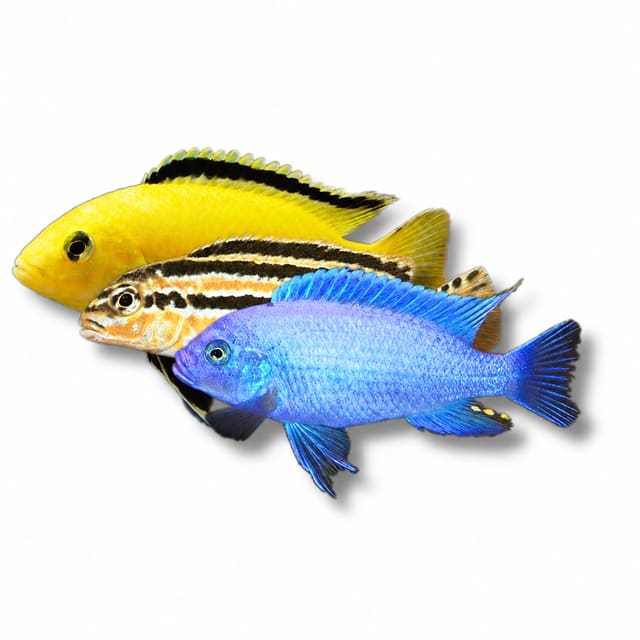
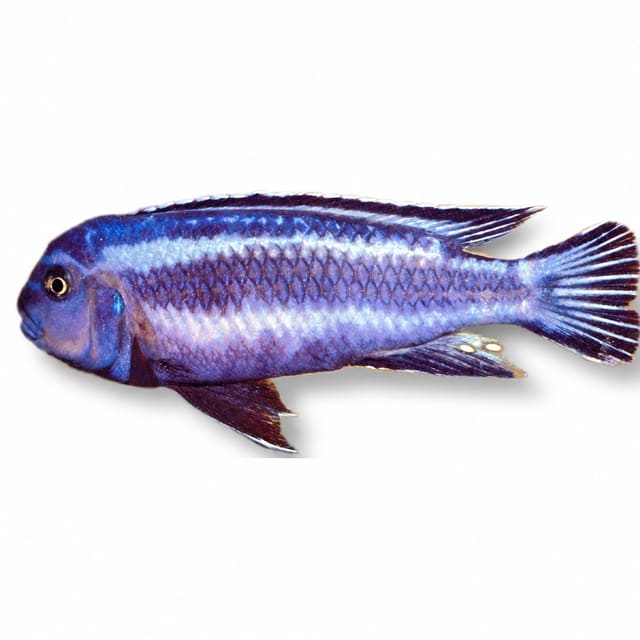
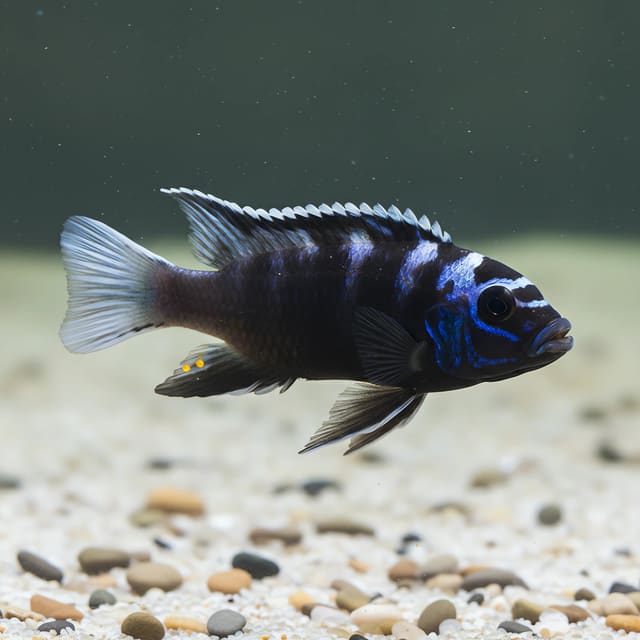
The gallery photograph shows a barred fish with a blue head and a golden dorsal fin against a grey rock. Gallery images have been digitally enhanced to improve image quality. Natural colour, pattern, size and maturity can vary between live animals.
FishBase places Maylandia emmiltos in the cichlid family, Cichlidae, and describes it as a tropical freshwater fish that is demersal, meaning it lives on or close to the bottom rather than out in open water. It is found only in Lake Malawi, and the Wikipedia species summary narrows that further: the species is known only from the Mpanga Rocks near Chilumba. That is a very small natural range, and the trade name keeps that locality in view.
The FishBase species page gives the maximum recorded length as 8.4 cm standard length and lists the conservation status as Least Concern on the IUCN Red List. Wikipedia gives the same 8.4 cm (3.3 in) figure and notes that the species is found in the aquarium trade.
OATA loosely splits Lake Malawi cichlids into two groups: the mbuna, which are rock-dwelling species, and the utaka, which swim in open water. Keepers treat the Mpangha Rocks Red Top Zebra as one of the mbuna, a bottom-living fish from a named rocky locality, and that is how the aquarium should be planned:
OATA recommends an aquarium of at least 200 litres for a reasonable-sized community of Malawi cichlids and advises buying as large a tank as you reasonably can, because a larger volume keeps temperature and water quality more stable. It adds that some more specialist species can be kept in smaller aquariums, so treat 200 litres as the planning figure for a Malawi community that includes this fish, and favour a long footprint over height.
OATA points out that Malawi cichlids are not social fish and can be highly aggressive, yet the way to keep them peacefully is in numbers. Malawi cichlids kept in small groups will often fight. Its advice is to keep them in groups of at least 15 and slightly overcrowded to limit aggression, so that no single fish becomes the constant target. Where possible, keep more females than males of each species, which stops males harassing one individual female.
Young fish make that balance harder to plan, because many Malawi cichlids only show differences between the sexes once they are adult. Plan the space and rock for the colony you may end up with, and watch the balance as the fish mature.
OATA recommends an oversized filter because Malawi communities are deliberately kept crowded, and aggressive aeration so that there is enough dissolved oxygen for everyone. A heater holds the tank inside the temperature guidance, and a separate thermometer lets you confirm the reading rather than trusting the dial. If this is your first aquarium, our guide to setting up a tropical fish tank walks through filling, heating and maturing the filter before any fish arrive.
Two pieces of OATA advice need to work together. It is best to add Malawi cichlids in groups, so that no individual fish takes all the attention as they settle in. At the same time, the number of fish should only go up slowly, because the bacteria in a matured filter need to increase every time more fish are added and feeding increases. The practical answer is to add fish in batches, several at once, with time between batches for the filter to catch up, testing ammonia and nitrite before each new batch.
OATA notes that Malawi cichlids will often dig and rearrange the substrate, and that shapes the whole layout.
Digging also means Malawi cichlids will uproot any plants present, and OATA suggests only the hardiest plants for this kind of tank. A planted aquascape is the wrong home for the Mpangha Rocks Red Top Zebra. If you want some greenery, choose tough plants that can be fixed to rock rather than rooted in the sand, and accept that the fish will rework anything loose.
Rock is not only decoration here. OATA advises that re-arranging the aquarium décor can help to reduce aggression, as fish find new territories. Build the layout so that some rocks can be moved safely, which gives you a practical tool if one fish starts to dominate.
OATA describes Malawi cichlids as a specialised group that needs particular water parameters. Its care sheet for African Malawi cichlids gives these values as a general guide for the group, and they are the values we use for this fish:
| Temperature | 23–27°C |
|---|---|
| pH | 8.0–8.6 |
| General hardness | Hard, 12–18 dGH |
| Carbonate hardness | Hard, 10–15 dKH |
| Ammonia | Zero mg per litre |
| Nitrite | Zero mg per litre |
| Nitrate | No more than 20 mg per litre above your tap water level |
These figures describe Malawi cichlids as a group rather than values measured for Maylandia emmiltos alone. OATA itself suggests checking for species-specific needs; for this fish, the sound course is to keep the whole Malawi tank inside these values and hold them steady.
Test the water from your tap for pH, general hardness, carbonate hardness and nitrate before you buy any fish. Tap water varies a great deal from one area to another, and the result tells you how much the tank will need to do to stay in range. Our water parameter matcher lets you enter your own readings and compare them with stated guidance, and our guide to aquarium water chemistry explains what each test measures and why it matters.
OATA's nitrate figure is relative to your tap water, not a fixed number. If your tap reads 10 mg per litre, the tank should stay at or below 30 mg per litre; if your tap reads 25 mg per litre, the ceiling is 45. Test the tap and the tank on the same day with the same kit so the two readings are comparable, and let the weekly water change bring the tank back down when it creeps up.
The RSPCA's guidance on the aquarium environment is plain: no fish should be kept in a tank without a well set up and maintained filter. Fish release ammonia, which is toxic. A working biological filter lets beneficial bacteria grow, and those bacteria convert ammonia to nitrite, which is also toxic, and then to nitrate, which is safer. In a crowded Malawi tank that process runs hard all the time, which is why OATA recommends an oversized filter for these communities.
In a 200-litre Malawi tank, a 25% change is 50 litres each week. Siphon it from the sand around the rock piles, where waste collects, treat 50 litres of fresh water with conditioner, and refill. Rinse filter media in a bucket of the water you removed rather than at the sink. Keep a simple log of the date, the ammonia, nitrite and nitrate readings and anything unusual you noticed; over a few weeks the log shows whether your routine is keeping up with the colony.
A rising nitrate reading between changes usually means more waste is going in than the routine removes. Check feeding first, then stocking. Any ammonia or nitrite reading above zero needs attention before you add more fish: test again, confirm the filter is running freely, and hold back new additions until both read zero.
OATA explains that the dietary needs of Malawi cichlids vary. The smaller mbuna species are more herbivorous and appreciate both specialised Malawi cichlid feeds with a high algae content and fresh vegetables, while some of the larger utaka species are more predatory and need pellets with a higher animal content. As a compact mbuna, the Mpangha Rocks Red Top Zebra belongs with the first group, so build its diet around an algae-rich Malawi cichlid food and add fresh vegetables for variety.
OATA advises feeding Malawi cichlids only what they can eat within a few minutes, twice a day. Overfeeding leaves uneaten food that breaks down and releases toxic waste into the water, so it is better to give a little less and watch than to scatter extra.
The pellets with a higher animal content and the frozen brine shrimp, prawns or cockles that OATA mentions are advice for the larger, more predatory utaka. They are built for a different kind of Malawi cichlid, so keep the Mpangha Rocks Red Top Zebra on the algae-rich side of the menu. If you are unsure which food suits your particular mix of species, ask us before you buy.
Feeding is the part of the routine that most directly changes water quality. Each extra pinch becomes waste for the filter, which is why the weekly nitrate reading is a useful check on your portions. If nitrate climbs faster than usual, look at how much food is going in before anything else.
Your fish is hand-packed by our team, bagged in pure oxygen inside an insulated poly box, with a heat pack when the weather calls for it, and carried by a licensed live-animal courier. We email you the tracking number and the confirmed delivery date so that you know when to be in. The full terms are on our delivery and Live Arrival Guarantee page; these are the steps that matter on the day.
Check that ammonia and nitrite both read zero before adding any fish. OATA explains why: overstocking or stocking too quickly can result in new tank syndrome, when there are not enough nitrifying bacteria to cope with the increased waste from the fish, leading to unhealthy levels of ammonia and nitrite, which may cause fish to become ill or die.
OATA lists the signs of a healthy fish: clear, bright eyes, undamaged fins, intact scales, no ulcers or bumps, and appropriate swimming. It also lists the changes worth watching for, because spotting them early helps you act before a problem becomes a real health issue.
| Swimming | Hanging at the surface, sitting on the bottom or swimming erratically |
|---|---|
| Colour | Turning darker or paler than normal |
| Temperament | A change in the level of aggression, or hiding more than normal |
| Breathing | Gill covers moving faster or slower than normal |
| Appearance | White spots or fluffy growths, loss of fins or scales |
| Condition | An increase or decrease in body weight and condition |
| Feeding | Eating less than usual, or showing no interest in food |
The easiest moment to check a Malawi colony is feeding time, when most fish come out from the rock. Count the fish, look at each one's fins and colour, and note any fish that does not come forward. A weekly check adds the water tests and the water change.
OATA's advice is to test your water quality first, then seek guidance. In a crowded Malawi tank a change in temperament is worth reading alongside the stocking: a fish that suddenly hides far more than normal can be under pressure from tank mates as well as from the water, and the group size, rock layout and balance of males and females covered in the compatibility section are part of keeping the colony healthy. If you are concerned about any fish you bought from us, contact us with your water test results.
OATA's rule is short: Malawi cichlids should only be kept with other Malawi cichlids or some species of Synodontis catfish, which also naturally inhabit Lake Malawi. That rules out the usual community fish, and it means the Mpangha Rocks Red Top Zebra is chosen as part of a Malawi tank rather than added to an existing mixed aquarium.
Aggression in a Malawi tank is normal, and the aim is to spread it thinly rather than remove it. OATA's tools are numbers, balance and layout: a group of at least 15, slight overcrowding, more females than males of each species, and re-arranging the aquarium décor so that fish find new territories. If one fish is being singled out, move several rocks at once so that everyone has to find a new spot, and check that the tank is not under-stocked after losses.
OATA notes that the main sex difference in Malawi cichlids is colour or the presence of egg spots on the males' anal fin, and that many fish only show these differences as adults. As a group matures, count how many fish show male colour and markings; if males outnumber females, harassment of individual females becomes more likely, and the balance needs attention.
Following OATA's advice that Malawi cichlids should only be kept with other Malawi cichlids or suitable Lake Malawi Synodontis, leave these out of the plan:
Adding the Mpangha Rocks Red Top Zebra to an established Malawi tank is possible, but the settled fish already hold the territories. Add newcomers as a group, re-arrange some rockwork on the same day so that territories are redrawn for everyone, and watch the first few feeds closely. Keep to OATA's order of adding more peaceful species before more aggressive ones when you plan where this fish fits.
FishBase records a maximum length of 8.4 cm standard length for this species, and Wikipedia gives the same figure. It is a compact cichlid, but it needs the same space, water and group planning as any Lake Malawi colony.
Plan it as part of a Malawi cichlid community. OATA recommends an aquarium of at least 200 litres for a reasonable-sized community of Malawi cichlids and advises buying as large a tank as you reasonably can, with an oversized filter, strong aeration and plenty of rock.
OATA advises keeping Malawi cichlids in groups of at least 15, slightly overcrowded to limit aggression, with more females than males of each species where possible. Malawi cichlids kept in small groups will often fight, so plan the whole colony before you buy.
It can be, if the beginner sets up a dedicated Malawi cichlid tank. OATA describes Malawi cichlids as usually undemanding and easy to keep, but also as aggressive fish with specialised water needs that should be mixed with caution. It is not a fish for a general community tank.
Feed a specialised Malawi cichlid food with a high algae content, plus fresh vegetables, as OATA advises for the smaller, more herbivorous mbuna. Give only what the group can eat within a few minutes, twice a day, and take care not to overfeed.
OATA's care sheet for Malawi cichlids as a group gives 23–27°C, pH 8.0–8.6, general hardness of 12–18 dGH and carbonate hardness of 10–15 dKH. Keep ammonia and nitrite at zero and hold the values steady rather than letting them swing.
Yes. OATA describes Malawi cichlids as aggressive fish that are not social and can be highly aggressive. Aggression is managed with a group of at least 15, slight overstocking, more females than males, plenty of rock and by adding fish in groups rather than one at a time.
Only other Lake Malawi cichlids, or some species of Synodontis catfish that also come from Lake Malawi, following OATA's advice. Add the more peaceful species first and the more aggressive ones later.
It is hand-packed, bagged in pure oxygen in an insulated poly box with a heat pack when the weather calls for it, and carried by a licensed live-animal courier on the delivery date we confirm by email. Someone must be in to receive it. Film a continuous unboxing video from the sealed parcel, which any Live Arrival Guarantee claim needs, then float the bag for 20–30 minutes before releasing the fish.
No reviews for this item yet. Bought one? Honest reviews only, good or bad.
What customers say about ordering from us
I have a small group of long finned mountain minnows. So was delighted to be able to order ten of this variety to increase the genetics in my tank . The ones I recieved are healthy but it’s to early to give a verdict on wether they are of a long finned type since they are small currently.
Gordon Walker · 23 Sept 2026
100% success travel and "installation". Pleased with quality of purchase. The Siamese fighter a bit "shy" so have not yet seen him at his best yet but looking good. Happy customer. GG
George E Garratt · 21 Sept 2026
Reviews of our shop, collected by Judge.me, an independent third-party review collector. Newest first.