Advanced
Tomini Surgeonfish (Ctenochaetus tominiensis)
24–26°C · pH 7.9–8.3
£74.99

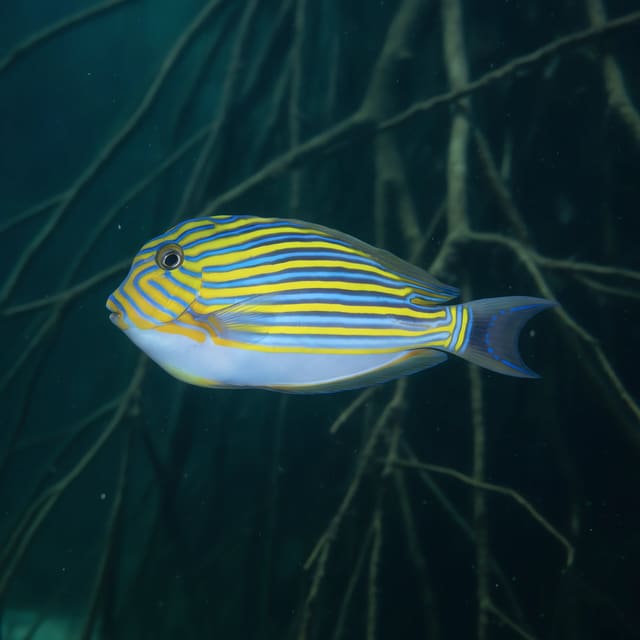
The Sailfin Tang (Zebrasoma veliferum) is a marine surgeonfish from the eastern Indian Ocean and Pacific that reaches 40 cm. It needs a larger aquarium as it grows, with 24–26°C as the FishBase and OATA overlap, plus OATA’s pH 7.9–8.3 and carbonate hardness 8–12°dKH guidance for tangs and rabbitfish. Sold individually as one live fish.
Adult size is the maximum length this species reaches at full maturity (scientific sources). The livestock you receive will be younger and smaller. Product-photo provenance and any image-specific limitations are stated on the listing.
Zebrasoma veliferum
The Sailfin Tang (Zebrasoma veliferum) is a marine surgeonfish from the eastern Indian Ocean and Pacific that reaches 40 cm. It needs a larger aquarium as it grows, with 24–26°C as the FishBase and OATA overlap, plus OATA’s pH 7.9–8.3 and carbonate hardness 8–12°dKH guidance for tangs and rabbitfish. Sold individually as one live fish.
Adult size is the maximum length this species reaches at full maturity (scientific sources). The livestock you receive will be younger and smaller. Product-photo provenance and any image-specific limitations are stated on the listing.
Maintain these water conditions for optimal health and vibrant colors
The Sailfin Tang (Zebrasoma veliferum) is a marine surgeonfish in the family Acanthuridae from the eastern Indian Ocean across much of the Pacific. It reaches 40 cm standard length, so plan around a large adult fish, stable water and active swimming behaviour. FishBase records the 40 cm maximum and the broad distribution from Christmas Island and the East Indian region through the South China Sea to Hawaii and Pitcairn, north to Japan and south to Australia. FishBase now lists it as Zebrasoma velifer.
This is a reef-associated, benthopelagic fish found around lagoon and seaward reefs. Its recorded depth extends from 0 to 45 m, usually 2 to 30 m, while solitary juveniles occur among rocks or coral in shallow, protected reefs. It is active by day and feeds naturally on leafy macroalgae. Those traits make swimming room, grazing food, rock cover and careful community planning central to aquarium care.
A Wikipedia account of its natural history also calls it the Pacific Sailfin Tang and sailfin surgeonfish and places it among the marine ray-finned surgeonfishes, tangs and unicornfishes.
Keep this fish at 24–26°C, pH 7.9–8.3, salinity 1.020–1.025 and carbonate hardness 8–12°dKH. The temperature is the overlap between FishBase’s 24–28°C wild environmental range and OATA’s tang and rabbitfish guidance, which gives 24–26°C for aquarium care. OATA’s sheet also gives the pH, salinity and carbonate-hardness ranges for the group.
Maintain ammonia and nitrite at 0 mg/l and nitrate at no more than 50 mg/l. OATA recommends at least 300 litres for a single tang or rabbitfish whose adult size stays under 20 cm and says larger and more active species will need a larger aquarium. Because the Sailfin Tang reaches 40 cm, plan a long-term aquarium larger than 300 litres. Plan the long-term aquarium around a fish that may reach the recorded maximum, with enough room to swim, turn and move away from other active fish.
| Suits | Not suited to |
|---|---|
| Keepers planning around a 40 cm fish | Compact aquariums chosen only for a smaller fish |
| Mature, filtered systems held at 24–26°C | New or unfiltered systems with detectable ammonia or nitrite |
| Active communities screened for body shape and temperament | Communities dominated by shy fish |
| Twice-daily algae-focused feeding | Routines that cannot provide regular grazing food |
One purchase supplies one Sailfin Tang. Sex is guaranteed only when the selected option explicitly states male or female. This Sailfin Tang listing has no sex-guaranteed option.
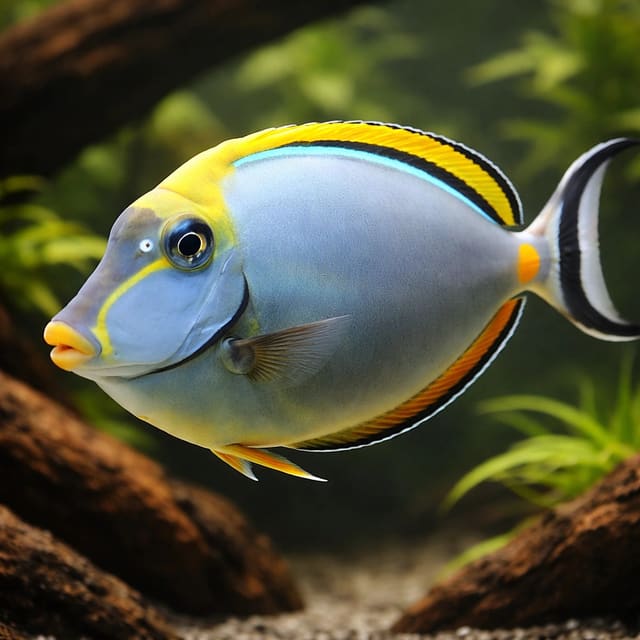
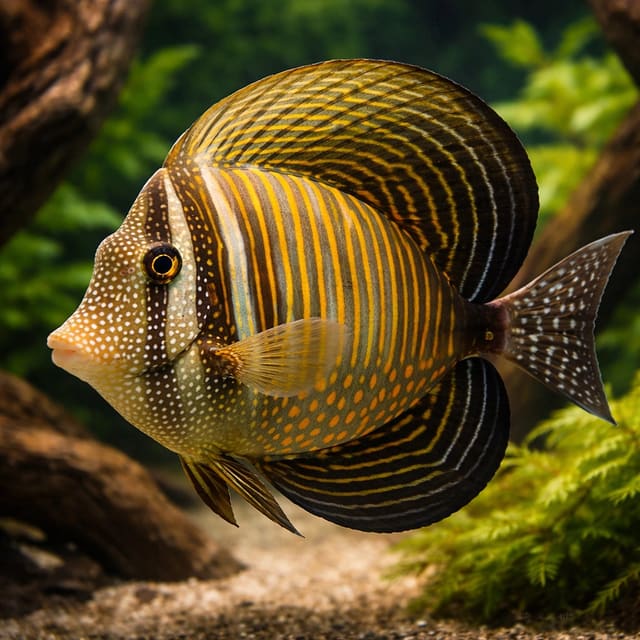
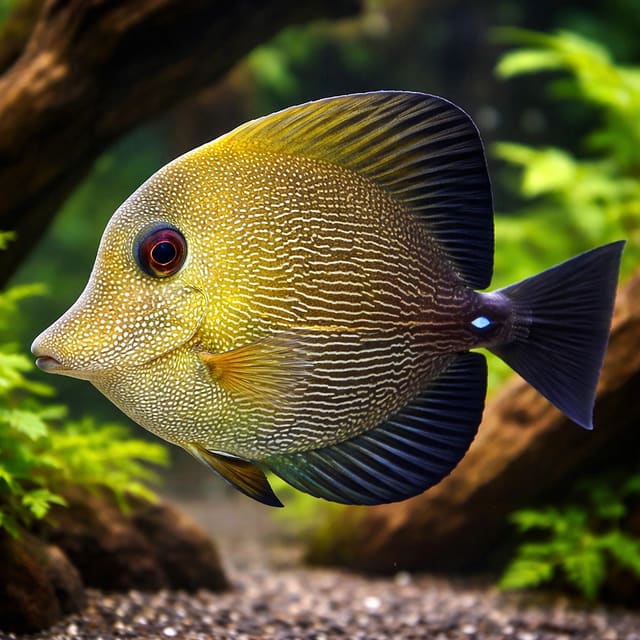
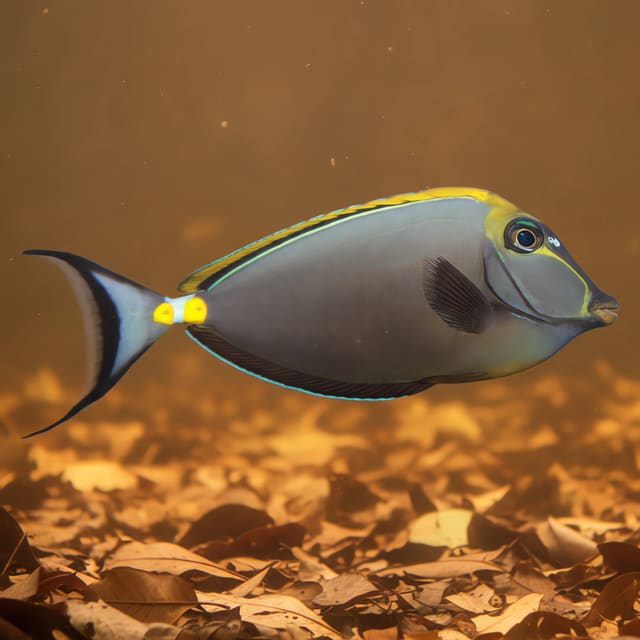
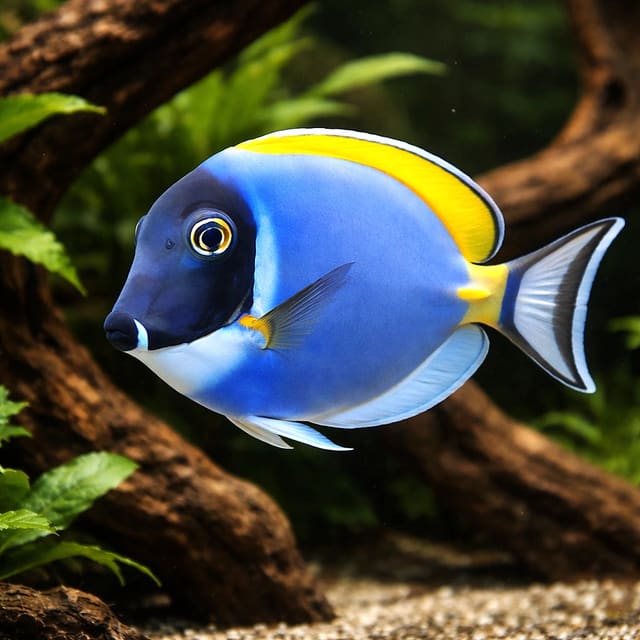
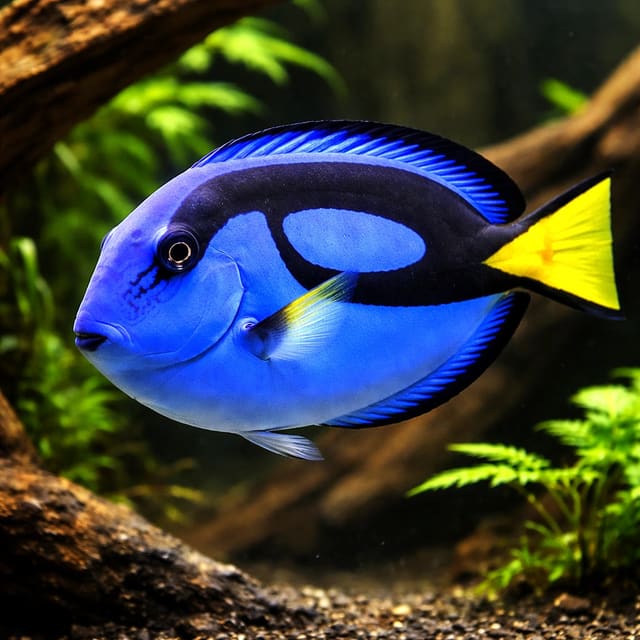
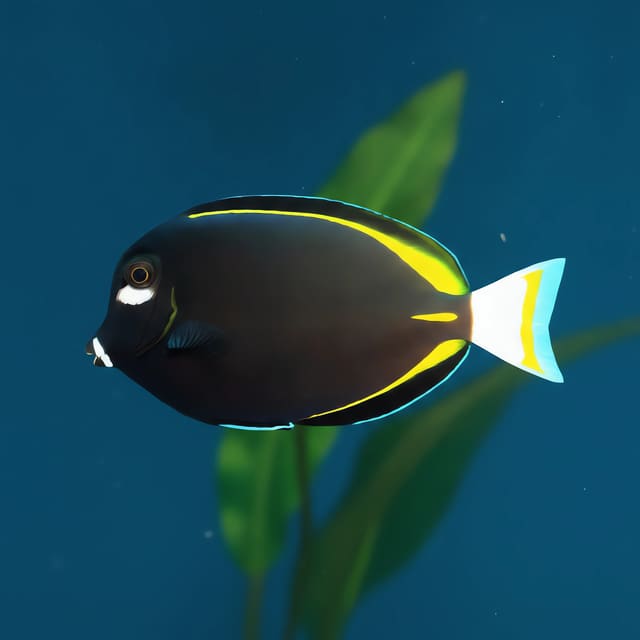
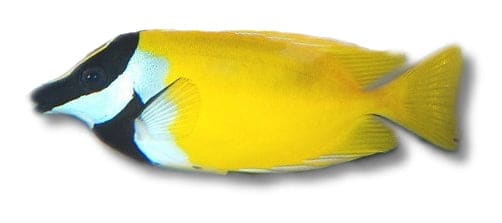
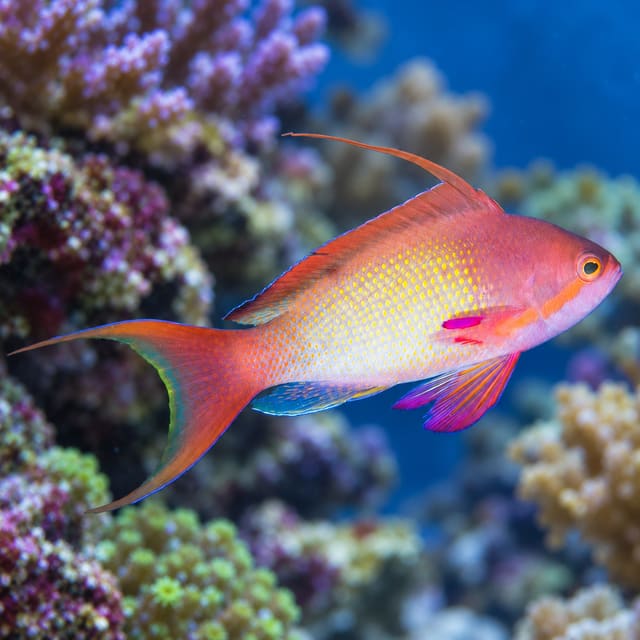
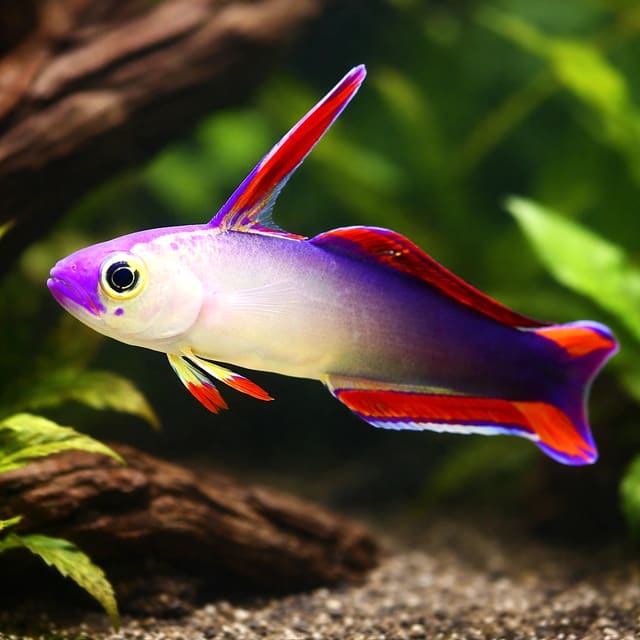
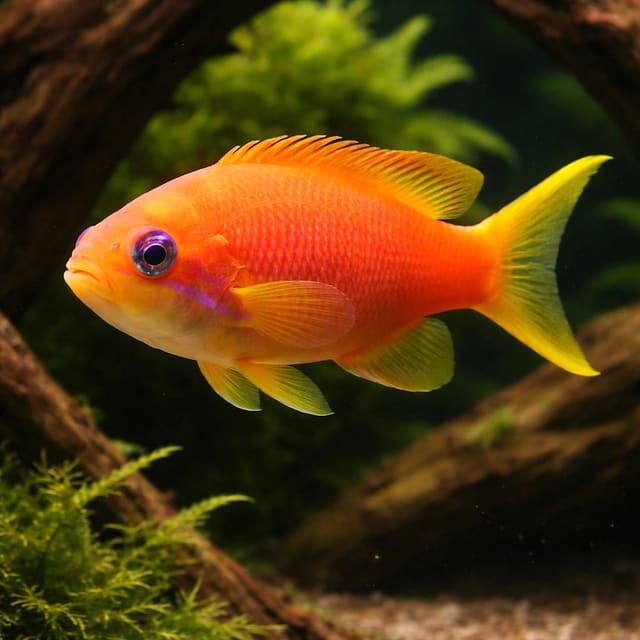
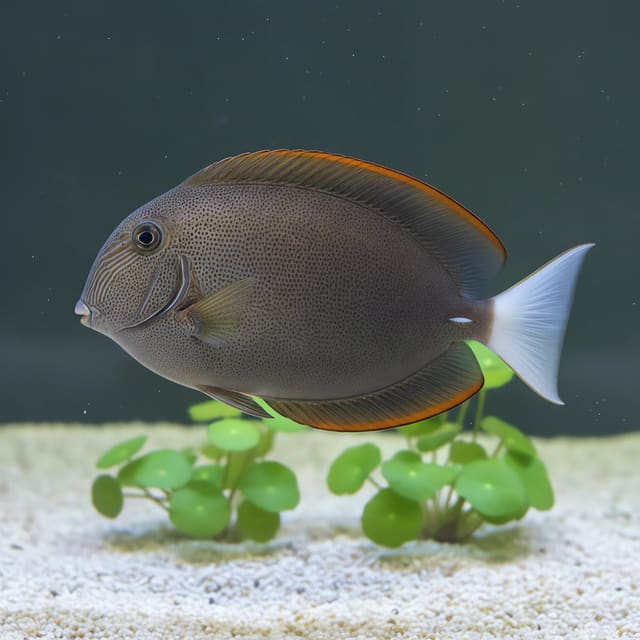
Some gallery images are representative, based on reference photographs of this species, and none shows the exact animal supplied, so colours can look slightly different from the live animal.
Before buying, make sure you can provide a larger long-term aquarium for a fish that reaches 40 cm, 0 mg/l ammonia and nitrite, algae-based food twice a day and careful screening around similar-shaped tangs.
If the adult scale or activity level does not fit your aquarium, compare other animals in our marine fish collection before deciding. Judge every candidate by its own adult size, water requirements and compatibility rather than by its appearance alone.
Use 40 cm standard length as the upper planning figure. FishBase records that maximum for the identified species; it is not a guarantee that every individual will finish at exactly that length. Planning to the recorded maximum reduces the risk of choosing an aquarium that works only while the fish is smaller.
OATA’s at-least-300-litre recommendation covers a single tang or rabbitfish whose adult size stays under 20 cm; larger and more active species will need a larger aquarium. A Sailfin Tang can reach twice that 20 cm threshold, so the 300-litre figure must not become the permanent plan for a full-sized individual.
The 300-litre figure covers one fish whose adult size stays under 20 cm. Because this species reaches 40 cm, OATA’s instruction to use a larger aquarium for larger fish controls the plan from the outset.
A larger volume also gives greater stability in temperature and water quality. Space therefore supports both movement and water management; it should not be treated as a compatibility cure for fish that are otherwise poorly matched.
Check the long-term arrangement while the fish can still turn freely and use every intended swimming route. If the fish brushes décor when it turns, move the obstruction rather than waiting for repeated contact. If another active fish controls the only open route or grazing area, reassess that combination before adding more livestock. These checks turn the 40 cm planning figure into practical decisions about usable space instead of treating aquarium volume as the only measure.
Keep the aquarium at 24–26°C, pH 7.9–8.3, salinity 1.020–1.025 and carbonate hardness 8–12°dKH. FishBase records 24–28°C in the species’ wild environment, while OATA gives 24–26°C for tang and rabbitfish aquariums, making 24–26°C the usable overlap. The pH, salinity, carbonate-hardness, calcium and magnesium figures are OATA group guidance.
| Parameter | Working instruction |
|---|---|
| Temperature | Keep at 24–26°C |
| pH | Keep at 7.9–8.3 |
| Salinity | Keep at 1.020–1.025 |
| Carbonate hardness | Keep at 8–12°dKH |
| Ammonia | Maintain 0 mg/l |
| Nitrite | Maintain 0 mg/l |
| Nitrate | Do not exceed 50 mg/l |
| Calcium | Keep at 380–450 ppm |
| Magnesium | Keep at 1,250–1,350 ppm |
Test the aquarium before adding the fish and whenever its breathing, swimming, colour, appetite or behaviour changes. Any detectable ammonia or nitrite means the biological system is not meeting the required target. Correct the water-quality problem and pause further stocking, because tangs can be stressed by even the smallest amounts of ammonia and nitrite, which may then cause them to develop diseases.
In a reef aquarium, some of the ranges above will need to be altered to accommodate more sensitive species, so set them to suit every animal in the aquarium. Confirm the complete combination before mixing animals; a temperature match alone does not settle salinity, pH, carbonate hardness or compatibility.
Stability within the stated ranges is more useful than repeatedly moving a parameter from one end of its range to the other.
If temperature remains inside 24–26°C but ammonia is detectable, address the ammonia result first because the target is 0 mg/l. If pH and salinity both remain within range but move repeatedly between their limits, examine the maintenance routine for the cause instead of making repeated isolated adjustments. When one reading changes alongside altered breathing or appetite, test the other listed parameters as well so the response considers the whole marine system.
Run a mature, well-maintained biological filter before introducing this fish. The RSPCA’s aquarium welfare guidance explains that fish release toxic ammonia, which beneficial filter bacteria convert first to toxic nitrite and then to safer nitrate. The required result for this aquarium is 0 mg/l ammonia and 0 mg/l nitrite.
OATA describes filtration as essential and lists several workable marine arrangements: live rock with sufficient water flow, an internal or external filter, or a sump-based filter. Choose a method capable of processing the waste produced by a large, actively feeding tang. A protein skimmer can help by removing dissolved organic waste before it breaks down into more harmful substances.
Adding too many fish too quickly can cause new tank syndrome because the bacterial population cannot process the sudden increase in waste. A filter that has been running is useful only when it has developed enough beneficial bacteria for the actual livestock load.
Do not judge filtration by water clarity alone. Clear water can still contain ammonia, nitrite or excessive nitrate, so testing remains the decision tool. The weekly maintenance routine should preserve the bacterial population rather than stripping it from the filter media.
A twice-daily feeding routine creates a repeated demand on filtration. After increasing livestock or food, compare ammonia, nitrite and nitrate readings with the previous pattern and inspect the filter for reduced flow or blockage. If uneaten food begins accumulating or nitrate rises towards its limit, reduce waste input, complete the maintenance cycle and confirm stable readings before considering another addition. This links stocking pace to measured filter performance rather than elapsed time alone.
Provide live or artificial rockwork for cover and grazing opportunities, then retain open space for active swimming. OATA describes tangs and rabbitfish as active animals that spend much of their time moving around reefs and grazing on algae. FishBase places this species in lagoon and seaward reef habitats, with juveniles using rocks or coral in shallow protected areas.
A crowded structure can reduce usable space even in an aquarium with a substantial nominal volume. Review the arrangement from the fish’s movement needs: a route is useful only if a 40 cm animal could use it without repeatedly brushing rock or becoming trapped by another active fish.
Take care around the base of the tail. Tangs possess sharp modified scales resembling a scalpel, and OATA warns that these can injure people. Keep hands clear of the tail, minimise handling and prepare each maintenance task so the fish is not repeatedly disturbed.
Natural reef association does not settle every aquarium compatibility question. Use habitat information to plan cover, movement and grazing, then assess fish companions separately by size, activity, shape and temperament.
Base the diet on algae-rich foods. FishBase records leafy macroalgae as the Sailfin Tang’s natural food, and OATA recommends nori sheets, algae-based flake and grazing tabs for tangs and rabbitfish. Provide enough of these algae-based foods, because tangs and rabbitfish may become ill without them.
Feed twice a day, offering only what the fish can eat within a few minutes. Algae sheets and grazing tabs need longer because the fish browses them over time, but uneaten food must not be allowed to break down and add toxic waste. Adjust the quantity by watching what remains, not by adding a large portion automatically.
Use body condition and feeding interest as practical checks. OATA lists increased or decreased body condition and reduced food intake among the changes that can signal a problem. A fish that stops grazing or cannot reach food needs a water-quality and compatibility review rather than an automatic increase in food.
Overfeeding creates two connected problems: uneaten food releases waste, and the filtration system must process the additional load. Keep portions controlled, maintain the twice-daily rhythm and use the fish’s actual feeding response to refine the amount.
If algae-based food remains untouched after the normal grazing period, remove the waste and check appetite, water readings and interference from tank mates before offering more. If the fish eats promptly but another resident takes most of the portion, change how the food is presented so this tang can feed without persistent chasing. When body condition or interest declines despite access to food, treat that change as a health or compatibility signal rather than simply enlarging every feed.
Before introduction, OATA advises checking that ammonia and nitrite are both zero in an aquarium whose filter has matured.
Our delivery and Live Arrival Guarantee policy explains that fish are hand-bagged in pure oxygen, placed in an insulated poly box and given a heat pack when the weather calls for it. Transport is handled by a licensed live-animal courier, with tracking used for the journey.
The continuous unboxing video is required for a Live Arrival Guarantee claim, together with the order number. Open and inspect the parcel the same day it arrives, and follow the linked policy for the remaining claim conditions.
OATA advises watching swimming behaviour, breathing, colour, temperament, physical condition and feeding. Use each twice-daily feed after release as an observation point: check that the fish approaches algae food, maintains normal swimming, breathes consistently and is not being driven away by another fish.
Test ammonia, nitrite and nitrate if the fish hangs at the surface, sits on the bottom, swims erratically, changes colour, hides more, breathes unusually quickly or slowly, or loses interest in food. Water readings help distinguish a system-wide problem from a stocking interaction that needs separate attention.
Change 25% of the aquarium water at least once every week. OATA strongly recommends this partial-change schedule and suggests using a siphon to remove solid waste. Keep replacement water within the aquarium’s working marine ranges so maintenance does not create an abrupt parameter shift.
Tap water may contain chlorine or chloramine that can kill beneficial bacteria in filter media. Preserving those bacteria protects the ammonia-to-nitrite-to-nitrate process described in the filtration plan. Do not replace or scrub all biological media simply because it looks discoloured.
Look for clear, bright eyes, intact scales and fins, appropriate swimming and continued interest in food. Warning changes include erratic swimming, hanging at the surface, sitting on the bottom, unusual colour, increased hiding or aggression, altered breathing, white spots, fluffy growths, ulcers, bumps, damaged fins or scales, and loss of condition.
If a health change appears, test water quality first and contact us for further guidance. Avoid choosing a treatment before the water and behaviour checks have identified the immediate problem.
Compare each week’s nitrate result, appetite and body condition with the previous cycle. A reading still below 50 mg/l can matter when it rises steadily alongside increased leftovers or reduced filter flow. Record what changed after maintenance, then confirm that ammonia and nitrite remain at 0 mg/l. Repeated observations make it easier to separate a single unusual feed from a developing water-quality or compatibility problem.
Avoid shy fish. OATA describes tangs and rabbitfish as active animals and says they should not be mixed with shy species. The Sailfin Tang’s adult scale, movement and regular grazing make that activity mismatch a practical concern even before direct aggression occurs.
OATA names angelfish, damsels and some butterflyfish as potentially good tank mates for tangs and rabbitfish. It also says tang and rabbitfish species can be mixed when they do not look too similar, so avoid combinations that look too similar. These are screening categories, not universal guarantees: compare adult size, activity, body shape, water requirements and the behaviour of the actual residents before adding any fish.
| Potential fit | Screen carefully |
|---|---|
| Angelfish | Confirm shared space, water and temperament needs |
| Damsels | Assess the behaviour of established residents |
| Some butterflyfish | Check the particular species rather than the group name alone |
| Dissimilar-looking tangs or rabbitfish | Compare body shape and plan introduction order |
| Other active marine fish | Do not extrapolate beyond the named categories without assessment |
Pass all five checks before relying on a broad tank-mate category. A water match does not cancel a temperament or space conflict.
A proposed companion fails the practical test if it shares the water values but cannot reach food or open swimming space. For example, an active fish from a named category still needs reassessment when an established resident repeatedly blocks its route to algae food. Likewise, a dissimilar body shape reduces one recognised risk but does not resolve crowding. Use feeding, movement and retreat access together when deciding whether the community works.
Treat similar-shaped tangs as a territorial risk. OATA says tangs with similar body shapes may bully new additions and advises adding them simultaneously and towards the end of stocking. This makes introduction order part of the compatibility decision rather than an afterthought.
Watch for changes in aggression, hiding, swimming, breathing, colour, fin condition and appetite. Brief movement around another fish is less informative than a pattern that prevents feeding, confines one fish to part of the aquarium or causes physical damage. Pause further stocking whenever those signs appear.
Do not place hands between fighting fish, because a tang’s sharp modified scales near the tail can injure people. Before combining similar-shaped tangs, check the aquarium volume, current residents and intended additions together as one complete stocking plan.
Plan additions individually rather than relying on a fixed group number. FishBase records solitary juveniles in shallow protected reef habitat, while OATA permits tang and rabbitfish combinations when the animals do not look too similar.
After an introduction, wait for feeding access, swimming patterns and water readings to settle before extending the community. Persistent hiding, missed feeds, damaged fins or confinement to one area means the stocking plan has not passed that checkpoint. Even when behaviour appears calm, confirm that ammonia and nitrite remain at 0 mg/l because a peaceful-looking combination can still exceed the filter’s present capacity.
FishBase records a maximum of 40 cm standard length. Use 40 cm as the adult planning figure, while recognising that it is a recorded maximum rather than a guaranteed final length for every individual.
OATA recommends at least 300 litres for a single tang under 20 cm adult size and says larger and more active species will need a larger aquarium. Because this fish reaches 40 cm, choose a larger long-term aquarium around its adult swimming space.
Avoid tangs or rabbitfish that look too similar; tangs with similar body shapes should be added simultaneously and towards the end of stocking because they can be territorial and may bully new additions.
Buy it only when you can provide a larger mature marine aquarium for a fish that reaches 40 cm, 0 mg/l ammonia and nitrite, algae-based food twice a day and careful screening around similar-shaped tangs.
FishBase records leafy macroalgae. Feed nori, algae-based flake or grazing tabs as staples, twice a day, limited to what is eaten within a few minutes; tangs will also eat small meaty frozen foods such as mysis shrimp, enriched brine shrimp or krill.
Keep it at 24–26°C, the overlap between FishBase and OATA. OATA’s tang and rabbitfish guidance gives pH 7.9–8.3, salinity 1.020–1.025 and carbonate hardness 8–12°dKH.
OATA warns that tangs with similar body shapes can be territorial and may bully new additions. Watch for persistent chasing, hiding, missed feeds or damaged fins, and pause further stocking if those signs appear.
OATA names angelfish, damsels and some butterflyfish as potential tank mates. Tangs and rabbitfish may mix when they look dissimilar; avoid shy fish and similar-looking tang or rabbitfish combinations, and assess every companion for adult size, activity and temperament.
It is hand-bagged in pure oxygen, placed in an insulated poly box with a heat pack when weather calls for it, and carried by a licensed live-animal courier. Start filming before opening the parcel, be home to receive it, float the bag for 20–30 minutes and never pour bag water into the aquarium.
No reviews for this item yet. Bought one? Honest reviews only, good or bad.
What customers say about ordering from us
I have a small group of long finned mountain minnows. So was delighted to be able to order ten of this variety to increase the genetics in my tank . The ones I recieved are healthy but it’s to early to give a verdict on wether they are of a long finned type since they are small currently.
Gordon Walker · 23 Sept 2026
100% success travel and "installation". Pleased with quality of purchase. The Siamese fighter a bit "shy" so have not yet seen him at his best yet but looking good. Happy customer. GG
George E Garratt · 21 Sept 2026
Reviews of our shop, collected by Judge.me, an independent third-party review collector. Newest first.