Advanced
Tomini Surgeonfish (Ctenochaetus tominiensis)
24–26°C · pH 7.9–8.3
£74.99
Photo coming soon
The size, price and care details on this page are for this listing.
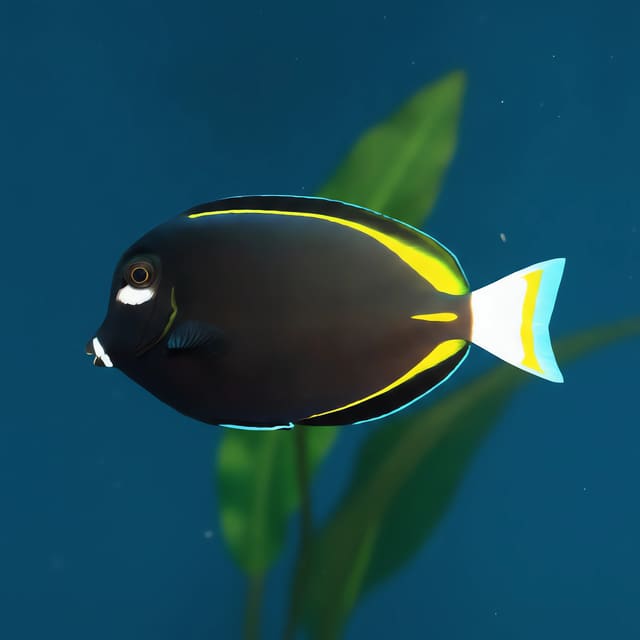
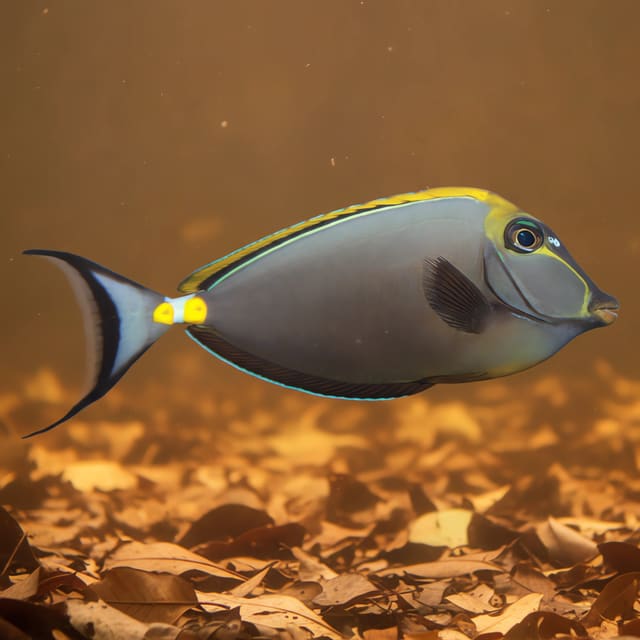
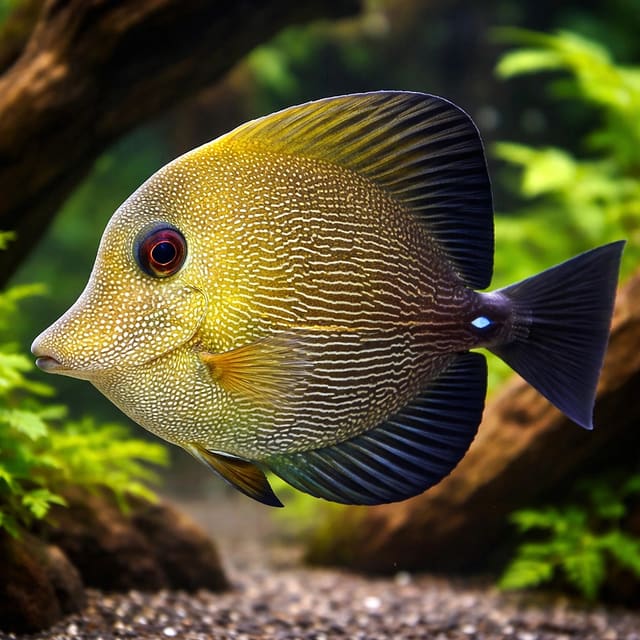
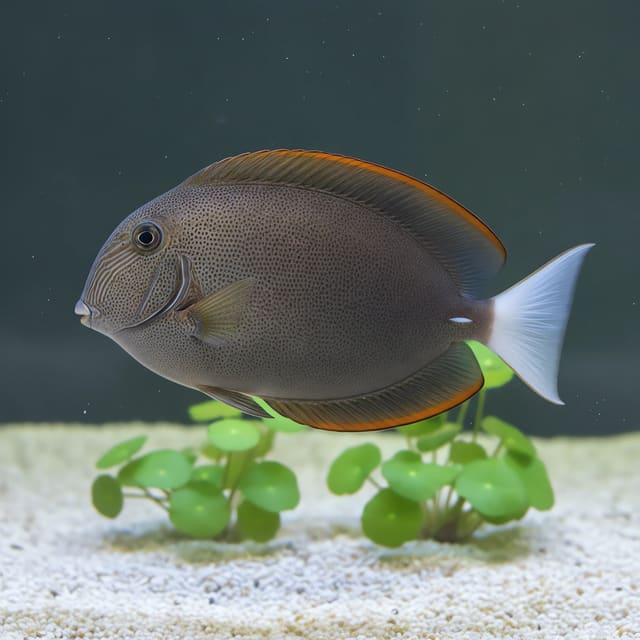
The Ctenochaetus strigosus- yellow (Ctenochaetus strigosus) is a marine surgeonfish from the Hawaiian Islands and Johnston Island that reaches 15.4 cm standard length. It suits keepers who can maintain a stable, filtered marine aquarium; FishBase records solitary behaviour, while the FishBase and OATA temperature overlap is 24–27°C and OATA gives pH 8.0–8.2. Sold individually as one live fish.
Adult size is the maximum length this species reaches at full maturity (scientific sources). The livestock you receive will be younger and smaller. Product-photo provenance and any image-specific limitations are stated on the listing.
Ctenochaetus strigosus
The Ctenochaetus strigosus- yellow (Ctenochaetus strigosus) is a marine surgeonfish from the Hawaiian Islands and Johnston Island that reaches 15.4 cm standard length. It suits keepers who can maintain a stable, filtered marine aquarium; FishBase records solitary behaviour, while the FishBase and OATA temperature overlap is 24–27°C and OATA gives pH 8.0–8.2. Sold individually as one live fish.
Adult size is the maximum length this species reaches at full maturity (scientific sources). The livestock you receive will be younger and smaller. Product-photo provenance and any image-specific limitations are stated on the listing.
Maintain these water conditions for optimal health and vibrant colors
The Ctenochaetus strigosus- yellow is Ctenochaetus strigosus, a marine ray-finned fish in the surgeonfish family Acanthuridae. FishBase records it from the Eastern Central Pacific, where it is endemic to the Hawaiian Islands and Johnston Island, and gives a maximum of 15.4 cm standard length. It suits a keeper prepared to plan a stable, filtered marine aquarium around that full recorded size, its bottom-feeding behaviour and its solitary life in the wild.
The species is also called the kole tang, spotted bristletooth, spotted surgeonfish, goldring bristletooth, goldring surgeonfish, yelloweye tang and yellow-eyed surgeonfish. Wikipedia identifies these names with Ctenochaetus strigosus and places the fish in Acanthuridae, the family containing surgeonfishes, unicornfishes and tangs.
In the wild, this fish is benthopelagic over coral, rock and rubble. It is mainly active by day and works close to the bottom, using comb-like teeth to whisk detritus from the bottom as its mouth closes. Those details make hardscape, accessible bottom surfaces and a detritus-centred feeding plan important aquarium decisions rather than decorative extras.
FishBase describes the wild fish as solitary. Start aquarium planning with one individual and treat every proposed addition, including another member of the same species, as a separate compatibility decision. The 15.4 cm figure is the single long-term size to use when comparing the aquarium, hardscape and total fish population.
This offer is sold individually: one purchase supplies one live fish. Use the recorded 15.4 cm standard length for long-term aquarium planning; it is not a statement of the fish’s length at dispatch. Plan the aquarium and its layout generously around the fish rather than fitting it tightly to the 15.4 cm figure.
Sex is guaranteed only when the selected option explicitly states male or female. This Ctenochaetus strigosus- yellow listing has no sex-guaranteed option.
These checks link the offer to the fish’s permanent welfare needs. They also prevent the supplied animal from being treated as a temporary fit for an aquarium that cannot accommodate its recorded full size or maintain marine water consistently.
For a fish-only aquarium, keep the water at 24–27°C and pH 8.0–8.2. The temperature is the overlap between FishBase’s recorded 21–27°C environment and OATA’s marine aquarium guidance; the pH figure comes from OATA. For a reef containing invertebrates, use OATA’s narrower 24–26°C range.
Choose an aquarium as large as practical and capable of accommodating the fish at 15.4 cm standard length. OATA explains that larger marine aquaria hold more water and are more stable, with less susceptibility to changes in temperature and pH. Build the stocking plan around one Ctenochaetus strigosus, then assess every other animal against the available space, water values, flow requirements and behaviour.
| Suits | Not suited to |
|---|---|
| A well set up, maintained and filtered marine aquarium | An aquarium without a working biological filter |
| A keeper able to plan around 15.4 cm standard length | A setup unable to accommodate the fully grown fish |
| A one-fish starting plan based on recorded solitary behaviour | An unassessed addition to a crowded or incompatible population |
| Water kept at the appropriate marine temperature, salinity and pH | Water with detectable ammonia or nitrite |
Browse the marine fish collection only after defining these limits. A candidate sharing the marine label still needs its temperature, salinity, pH, flow, space and temperament checked against this plan before the combination proceeds.
Plan the permanent aquarium around a maximum recorded length of 15.4 cm standard length. FishBase applies that figure to a male or unsexed specimen, and this offer does not guarantee sex, so 15.4 cm is the consistent planning figure for the animal supplied.
Select an aquarium as large as practical that can accommodate the fish once fully grown. OATA advises choosing a marine aquarium with the eventual size of its inhabitants in mind and explains that larger water volumes are more stable and less vulnerable to fluctuations in temperature and pH. The decision therefore involves both room for the fish and enough water volume to maintain the required conditions reliably.
Do not base the permanent home on an assumed dispatch length. The purchase unit tells you that one fish is supplied, while the FishBase length tells you what the long-term system must accommodate. Keep those two decisions separate when comparing the aquarium, hardscape and remaining capacity for other animals.
OATA notes that there is no single fish-count formula for marine aquaria because body size, water requirements, compatibility and territorial behaviour vary. Before settling the stocking plan, set the aquarium dimensions, volume, water values, established inhabitants and proposed additions side by side and judge the whole plan together.
Keep a fish-only system at 24–27°C, pH 8.0–8.2 and salinity 1.017–1.023 specific gravity, equivalent to 23–30 ppt. The temperature is the overlap between FishBase’s recorded environment and OATA’s group-level marine fish guidance. Keep ammonia at zero mg/l, nitrite at zero mg/l and nitrate at no more than 20 mg/l.
For a marine aquarium containing invertebrates, keep the narrower values of 24–26°C, pH 8.0–8.2 and salinity 1.024–1.026 specific gravity, equivalent to 32–35 ppt. OATA gives nitrate at 5–10 mg/l depending on the species, carbonate hardness at 8–12 dKH and phosphate at 0.04–0.1 mg/l depending on the species. Ammonia and nitrite remain at zero mg/l. If keeping hard corals, monitor calcium and magnesium as well.
| System | Working values |
|---|---|
| Marine fish-only | 24–27°C; pH 8.0–8.2; SG 1.017–1.023; ammonia and nitrite zero; nitrate up to 20 mg/l |
| Marine with invertebrates | 24–26°C; pH 8.0–8.2; SG 1.024–1.026; ammonia and nitrite zero; nitrate 5–10 mg/l depending on species |
Use a hydrometer or refractometer to monitor salinity and aquarium test kits to measure water quality regularly. Check temperature with the heater and other equipment operating normally. Compare each result with the row for the actual aquarium type; do not use the wider fish-only salinity or temperature limits for a reef containing invertebrates.
Use reverse-osmosis water for a marine setup; it is essential when keeping corals or other invertebrates. When mixing saltwater at home, dissolve specialised aquarium salt according to its manufacturer’s instructions and never substitute table salt. Prepare future water-change water in a separate vessel, where flow from a powerhead and heat from a heater can help the aquarium salt dissolve and bring the water to the required conditions.
Use a well set up and maintained biological filter before introducing this fish. The RSPCA explains that fish release toxic ammonia and that a working biological filter supports beneficial bacteria which convert ammonia to nitrite and then to the safer nitrate. The practical target remains zero mg/l ammonia and zero mg/l nitrite.
After initially filling the marine aquarium, set the salinity and temperature and switch on the equipment. OATA advises leaving the system for 24–48 hours so it can settle, salt can dissolve fully, the correct temperature can be reached and equipment operation can be checked. Treat this settling period as an equipment and salt-mixing checkpoint; continue the filter-maturation process until the biological filter can maintain the required water quality.
Add fish slowly. OATA explains that the population of beneficial bacteria must increase as more fish are introduced and feeding rises. Adding too many fish or adding them too quickly can produce new tank syndrome because the filter bacteria cannot process the increased waste.
A protein skimmer may show no waste removal until livestock is added; follow the skimmer manufacturer’s directions on when to start skimming a new aquarium. Keep the biological filter running and maintained as the core waste-processing system.
Place the aquarium away from direct sunlight, heat sources and draughts. Use a flat, level stand or surface capable of supporting the full aquarium indefinitely, and keep the setup away from loud noises, vibration and sudden movements. These choices reduce avoidable environmental changes and disturbance before livestock is considered.
Provide rockwork as refuge and as part of the usable environment. OATA recommends rockwork, ideally including living rock of some description, and a layer of fine coral sand for a marine aquarium. FishBase records Ctenochaetus strigosus over coral, rock and rubble, working its comb-like teeth across bottom surfaces to collect detritus.
Arrange the layout so bottom and rock surfaces remain accessible to the fish’s natural feeding action. At the same time, retain the refuge function of the rockwork and account for the space occupied by the structure when judging whether the aquarium can accommodate the fish at 15.4 cm standard length.
Prepare water for later changes in a separate vessel and bring it to the aquarium’s operating conditions before use. A fish-only system and a reef containing invertebrates have different salinity, temperature and nutrient ranges, so identify the system type before mixing replacement water.
Centre the feeding plan on detrital material that matches the species’ recorded diet. FishBase describes Ctenochaetus strigosus using comb-like teeth over the bottom and taking in detritus as its mouth closes. Its natural feeding action is therefore tied to working across solid surfaces rather than taking food only from the open water.
The hardscape and feeding plan should work together. Rock and rubble are part of the habitat recorded for the species, while OATA recommends rockwork as refuge in marine aquaria. Positioning useful surfaces within the fish’s environment supports its characteristic method of working the bottom with its comb-like teeth.
Judge the feeding plan alongside filtration rather than separately. Feeding increases the waste that beneficial filter bacteria must process, and OATA advises increasing livestock slowly because the bacterial population must respond when feeding rises. Test water regularly and pause further stocking if the filter is not maintaining zero ammonia and nitrite.
Feed only as much as the filter can process, and test the water after any increase in feeding. If feeding behaviour changes markedly, review the water tests, temperature, salinity, recent additions and access to feeding surfaces together.
Maintain the aquarium by checking the same decisive values consistently: temperature, salinity, pH, ammonia, nitrite and nitrate. In a reef containing invertebrates, also follow the applicable carbonate-hardness and phosphate values. A repeatable set of measurements makes a drift visible before another fish or an increase in feeding adds further pressure to the filter.
| Checkpoint | Action |
|---|---|
| Before the fish is introduced | Confirm operating temperature and salinity, with ammonia and nitrite at zero |
| Before adding another animal | Review adult size, compatibility, water requirements and biological filter load |
| Before changing water | Mix and heat replacement saltwater in a separate vessel and measure its salinity |
| After feeding increases | Test regularly because the beneficial bacterial population must process more waste |
Keep a fish-only aquarium within 24–27°C, pH 8.0–8.2 and SG 1.017–1.023. Keep a marine aquarium with invertebrates within 24–26°C, pH 8.0–8.2 and SG 1.024–1.026. Use the correct row every time rather than switching between the two according to whichever value is easier to reach.
Check the physical setup as part of maintenance. The aquarium should remain level and supported, while the heater, filter, salinity instrument and other equipment must continue operating correctly. Preserve the rockwork’s refuge function and the accessible surfaces used by this bottom-feeding fish.
Keep stocking changes gradual. Marine fish differ greatly in adult size, water requirements and compatibility, and many are territorial. Reassess the whole population before each addition instead of treating a previous successful introduction as approval for the next one.
The Tropical Fish Co delivery and Live Arrival Guarantee policy says live fish are hand-bagged in pure oxygen and placed in an insulated box, with a heat pack when the weather calls for it. A licensed live-animal courier carries the parcel, and tracking details and the confirmed delivery date are sent by email so someone can be present. Be at the delivery address to receive the parcel in person, because live fish cannot be left unattended.
Before release, the aquarium should already be operating at the appropriate marine temperature and salinity, with ammonia and nitrite at zero. Those aquarium checks belong in the preparation completed before the parcel arrives; do not wait until the fish is in the bag beside the aquarium to begin testing or correcting the system.
Floating the bag lets the fish acclimatise slowly on arrival. The aquarium itself still needs stable marine conditions, a working filter and a stocking plan that can accommodate the fish permanently.
Begin with one Ctenochaetus strigosus. FishBase records the species as solitary in the wild, so a one-fish plan is the sound starting point. Treat the addition of another member of the same species as a new compatibility assessment rather than assuming a pair or group will share the aquarium peacefully.
Compatibility remains case-by-case. A shared marine water type does not settle the decision because species can differ in body size, preferred flow, behaviour and use of the aquarium. Review the established population and the proposed fish together each time.
Do not use a successful combination in a different aquarium as the only reason to proceed. The available space, hardscape, water values and existing population determine the decision in the actual system. If any required water range conflicts, stop the combination at that stage rather than trying to average the two requirements.
Screen fish, corals and other invertebrates individually before combining them with Ctenochaetus strigosus. A reef aquarium contains invertebrates such as corals, so check each coral and invertebrate against this fish before adding it. The animals still need compatible water, flow, space and behaviour.
A fish-only aquarium can use 24–27°C and SG 1.017–1.023. Once the plan includes invertebrates, use 24–26°C and SG 1.024–1.026, with pH 8.0–8.2. Keep ammonia and nitrite at zero in either system. For the invertebrate system, OATA also gives nitrate at 5–10 mg/l depending on species, carbonate hardness at 8–12 dKH and phosphate at 0.04–0.1 mg/l depending on species.
If a proposed animal fails any stage, do not proceed with that combination. Passing the water stage alone is not enough; a marine fish or reef animal still has to pass every other stage before it joins this fish.
FishBase records Ctenochaetus strigosus at a maximum of 15.4 cm standard length. Plan the aquarium, hardscape and total stocking generously around that figure.
Choose an aquarium as large as practical that can accommodate a 15.4 cm standard-length fish when fully grown. OATA advises planning for full adult size and explains that larger marine aquaria are more stable and less susceptible to temperature and pH changes.
FishBase describes Ctenochaetus strigosus as solitary in the wild, so plan around one fish. Assess any additional member of the same species individually for adult space, water requirements and behaviour before proceeding.
Before choosing Ctenochaetus strigosus, make sure you can keep a filtered marine aquarium stable with ammonia and nitrite at zero and can house the fish at 15.4 cm standard length once fully grown. For a first marine aquarium, OATA describes a fish-only aquarium or a soft-coral reef as a good starting point.
FishBase records Ctenochaetus strigosus feeding on detritus by whisking comb-like teeth over bottom surfaces as its mouth closes. Centre its marine feeding plan on detrital material, accessible grazing surfaces and daytime observation because the wild fish is mainly diurnal.
Keep a fish-only system at 24–27°C and pH 8.0–8.2; the temperature is the FishBase and OATA overlap, while the pH comes from OATA’s marine guidance. For a reef containing invertebrates, keep the water at 24–26°C.
Treat aggression and fin-nipping as a case-by-case compatibility question. FishBase records solitary wild behaviour, so plan around one fish and assess every interaction against adult space, water requirements and the temperaments of the animals involved.
Screen every fish, coral and invertebrate individually. OATA describes reef aquaria as including corals and other invertebrates but requires compatible species; match temperature, salinity, pH, flow, adult space and behaviour before combining them.
The Tropical Fish Co policy says the fish is hand-bagged in pure oxygen, placed in an insulated box with a heat pack when the weather calls for it, and carried by a licensed live-animal courier. Be present, film the sealed parcel opening continuously, inspect it the same day and float the bag for 20–30 minutes before release.
No reviews for this item yet. Bought one? Honest reviews only, good or bad.
What customers say about ordering from us
Easy website plenty of info on fish your buying great to pick a time slot
TRACEY DURRANT · 7 Oct 2026
Got some lovely fish thank you
Kevin Mackie · 7 Oct 2026
Reviews of our shop, collected by Judge.me, an independent third-party review collector. Newest first.