Advanced
Bicolor Angelfish (Centropyge bicolor)
24–26°C · pH 7.9–8.3
£56.99
Copperband Butterflyfish (Chelmon rostratus) is a long-beaked marine butterflyfish reaching 20 cm, best kept singly in a mature, stable saltwater aquarium with calm tank mates. It is likely to eat invertebrates, and one live fish is supplied per purchase.
Adult size is the maximum length this species reaches at full maturity (scientific sources). The livestock you receive will be younger and smaller. Product-photo provenance and any image-specific limitations are stated on the listing.
Chelmon rostratus
Copperband Butterflyfish (Chelmon rostratus) is a long-beaked marine butterflyfish reaching 20 cm, best kept singly in a mature, stable saltwater aquarium with calm tank mates. It is likely to eat invertebrates, and one live fish is supplied per purchase.
Adult size is the maximum length this species reaches at full maturity (scientific sources). The livestock you receive will be younger and smaller. Product-photo provenance and any image-specific limitations are stated on the listing.
Maintain these water conditions for optimal health and vibrant colors
The Copperband Butterflyfish (Chelmon rostratus) is a saltwater reef fish with a long, narrow snout and bold copper-coloured bands. It belongs to the butterflyfish family, Chaetodontidae, and is one of three species in the genus Chelmon, all of which carry a long beak; Wikipedia's species article also gives it the name beaked coral fish. This is a marine fish for an established saltwater aquarium, and it has no place in a freshwater tropical tank.
FishBase records the copperband from the Andaman Sea to the Ryukyu Islands and Australia, and gives a maximum recorded length of 20 cm. Plan the aquarium around that adult length, and around a fish that will need calm company, careful feeding and water that stays clean week after week.
Much of the appeal is its shape: the long beak and banded body are unmistakable. It is also one of the calmer butterflyfish. OATA names the copperband among the species that can be mixed into less boisterous aquariums, and notes that its taste for invertebrates makes it useful for controlling pest anemones. That same appetite is the main thing to weigh up before buying one for a reef. OATA also names it as one of the popular aquarium butterflyfish, alongside the yellow longnose and threadfin butterflyfish.
| Suits | Keepers with a well-matured saltwater aquarium, rockwork for cover and calm tank mates |
|---|---|
| Maximum length | 20 cm total length, as recorded by FishBase |
| Aquarium | At least 250 litres for one butterflyfish, larger with other fish (OATA) |
| Water | Full marine, 24–26°C and pH 7.9–8.3 (OATA butterflyfish figures) |
| Keeping | One per aquarium |
| Temperament | Calm with suitable fish, but a territorial species |
| Natural range | Andaman Sea to the Ryukyu Islands and Australia |
| Diet | Meaty frozen foods; some individuals learn to take pellets or flake |
| Invertebrates | At risk, including shrimps, crabs, fan worms and corals |
| Supplied as | One live fish per purchase |
Each purchase supplies one live Copperband Butterflyfish, hand-packed by our team and sent with a licensed live-animal courier. Sex is guaranteed only when the selected option explicitly states male or female. This Copperband Butterflyfish listing has no sex-guaranteed option. That makes little practical difference for a fish that is best kept on its own, as the sections below explain.
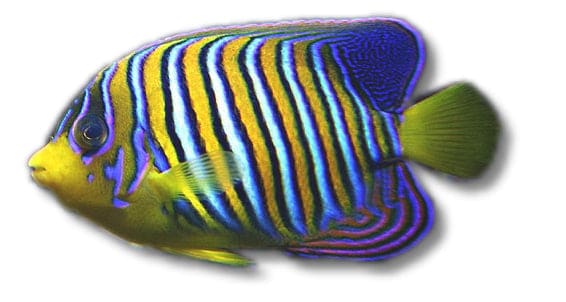
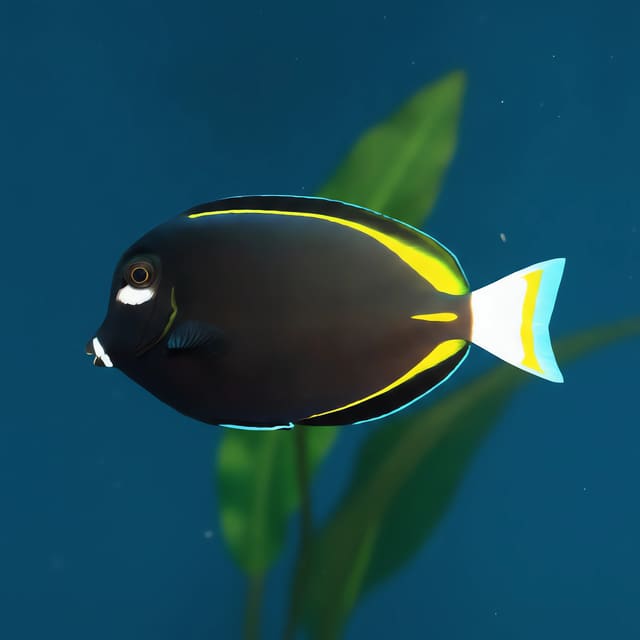
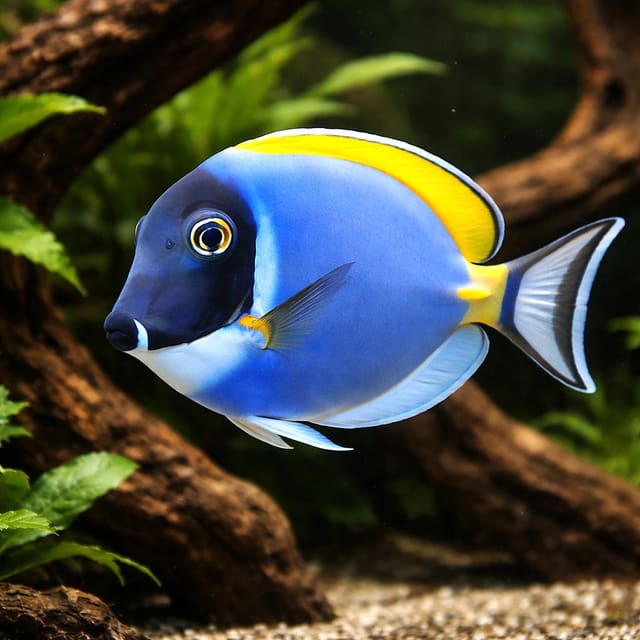
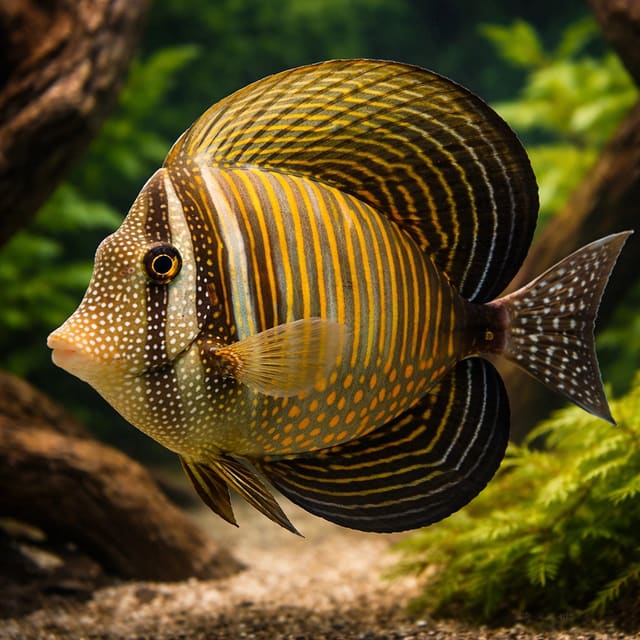
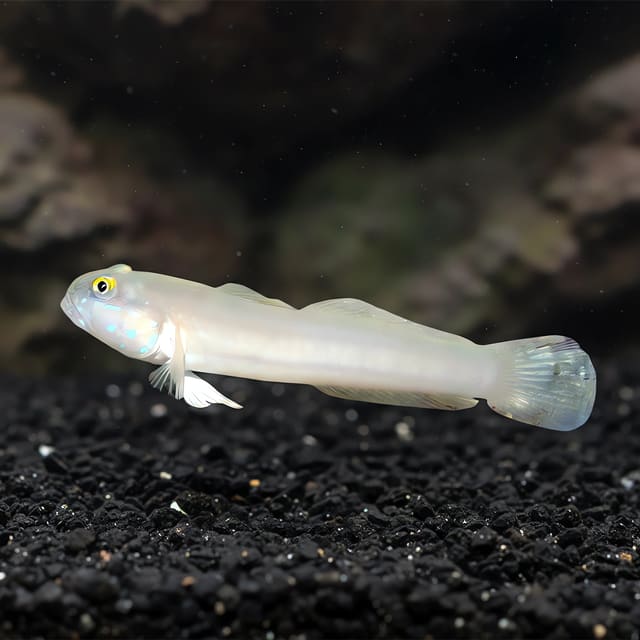
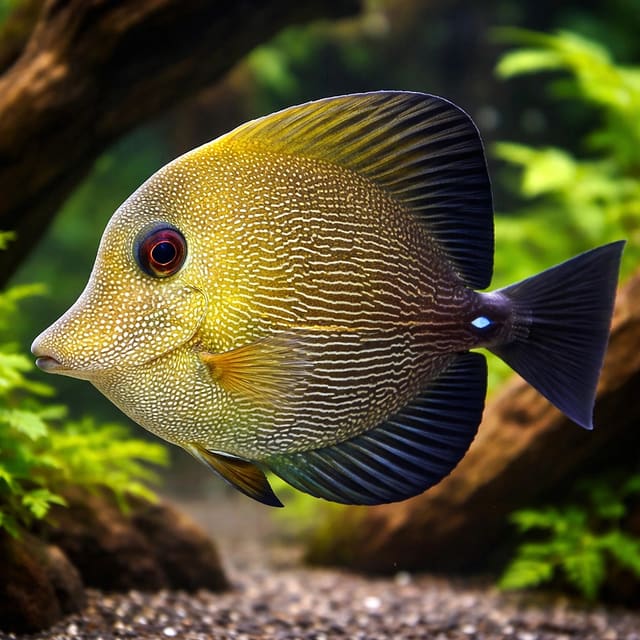
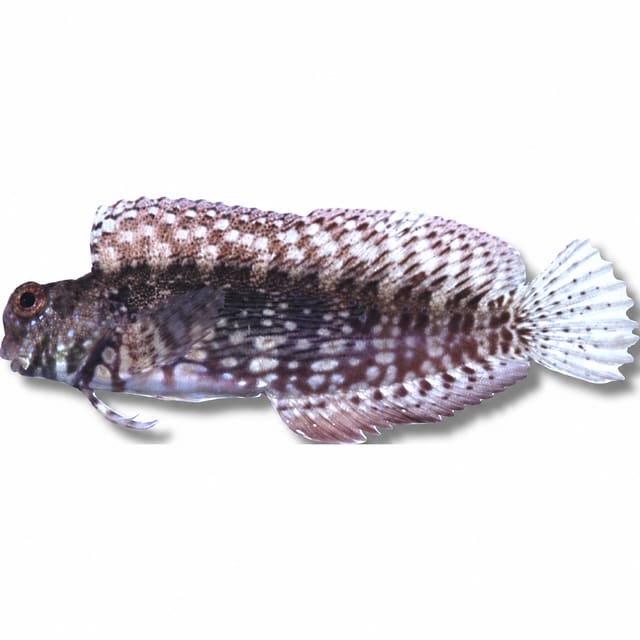
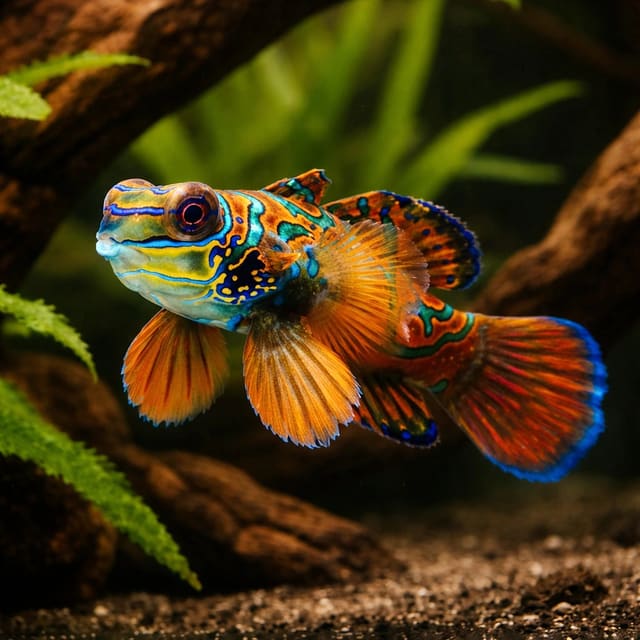
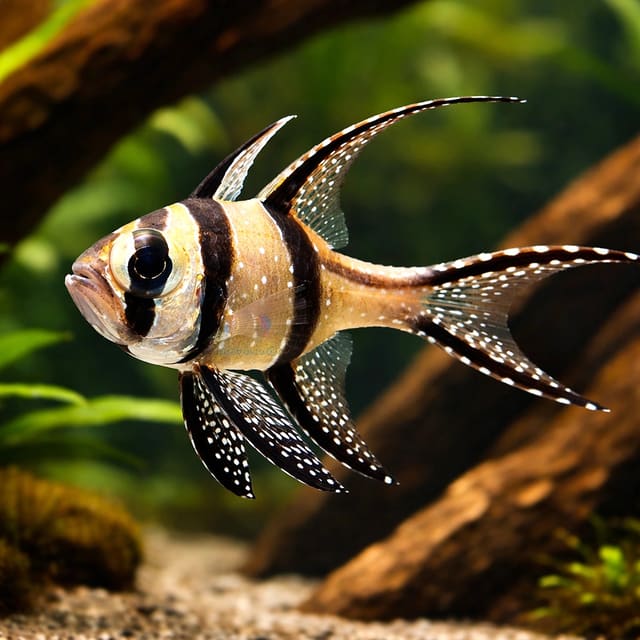
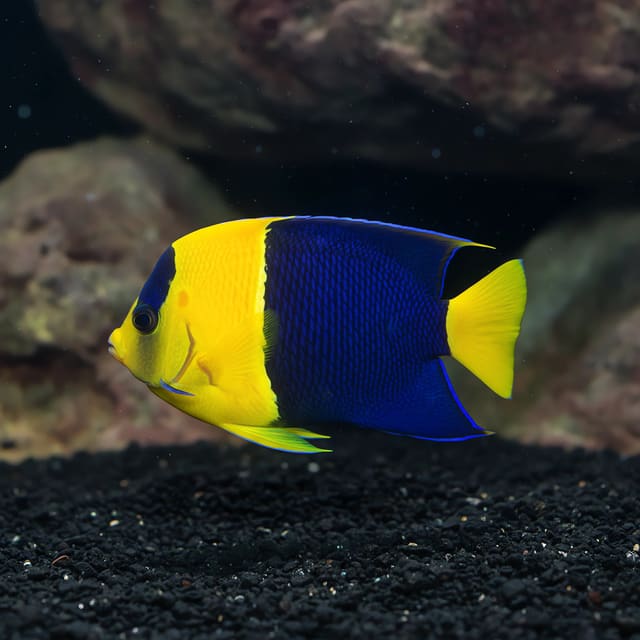
Gallery images have been digitally enhanced to improve image quality. Natural colour, pattern, size and maturity can vary between live animals. The scenery in the product photograph is not a furnishing plan either: this is a saltwater fish, and its aquarium should be built around marine rockwork.
A copperband is a good match if your marine aquarium has been running smoothly and fully stocked for some time, ammonia and nitrite read zero week after week, the fish you already keep are calm at feeding time, and you accept that invertebrates will be at risk. It is a poor match for a newly set-up tank, a crowded or boisterous community, or a reef built around shrimps, fan worms and corals you could not bear to lose.
The copperband rewards patience. OATA notes that butterflyfish can live for many years in a well-matured set-up with good water quality, so buying one is a long-term commitment to keeping conditions that way.
If a copperband does not suit your aquarium, our marine fish collection lists the other saltwater species we sell, and the care guidance below will help you judge whether your system is ready.
OATA's butterflyfish care sheet recommends an aquarium of at least 250 litres for a single individual. It asks for more space for very active species or when butterflyfish are kept with other fish, and makes the general point that you should buy as large an aquarium as is reasonably possible. Those figures are written for butterflyfish as a whole rather than for the copperband alone, so read them alongside the species' own maximum length of 20 cm. For one copperband sharing its home with other fish, treat 250 litres as the floor rather than the target.
A larger volume also buys stability. OATA points out that more water keeps temperature and water quality steadier, and the water quality section explains why steadiness matters so much for this fish. A bigger tank gives you more time to notice and correct a problem before it reaches the fish.
Butterflyfish are relatively undemanding about décor, but OATA recommends live or artificial rockwork to provide cover. That matches the copperband's natural setting of rocky shores and coral reefs, where butterflyfish spend much of their time swimming around the reef looking for food. Arrange the rock so the fish has places to shelter and a varied structure to move around, and keep a clear swimming lane along the front of the tank for a fish that may reach 20 cm.
Live rock earns its place twice over, because it can also form part of the biological filtration described below. If you use artificial rock for cover, size the rest of the filtration without counting on the rock to do that job.
Whatever the size of the aquarium, a filter is essential. For marine systems OATA lists three routes: live rock with sufficient water flow, an internal or external filter, or a sump-based filter. A protein skimmer can also help, because it removes dissolved organic waste before it can break down into more harmful substances.
The RSPCA's guidance on aquarium environments explains what that filter is doing. Fish release ammonia, which is toxic. In a working biological filter, beneficial bacteria convert ammonia to nitrite, which is also toxic, and then to nitrate, which is safer. Those bacteria take time to establish and must increase each time fish are added, which is why a copperband should go into a well-matured aquarium rather than one that has only just been set up.
OATA describes butterflyfish as usually undemanding of water chemistry. Its care sheet for butterfly fish gives the parameters below as a general guide for the whole group and recommends checking any species-specific needs before buying. It also notes that some values may need adjusting in a reef aquarium to suit more sensitive animals, so check the requirements of everything else in the tank as well.
| Parameter | OATA butterflyfish guide |
|---|---|
| Salinity (specific gravity) | 1.020–1.025 |
| Temperature | 24–26°C |
| pH | 7.9–8.3 |
| Ammonia | Zero |
| Nitrite | Zero |
| Nitrate | No higher than 50 mg per litre |
| Carbonate hardness | 8–12°dKH |
| Calcium | 380–450 ppm |
| Magnesium | 1250–1350 ppm |
Once your readings sit inside those ranges, the priority is to keep them there. OATA warns that butterflyfish can be stressed by even the smallest amounts of ammonia and nitrite, and that this stress may lead them to develop various diseases. For a copperband, zero ammonia and zero nitrite are not targets to reach now and then; they are the normal state of the tank. Choose a point inside each range, such as a temperature near the middle of 24–26°C, and aim to hold it rather than letting it wander from one end to the other.
Test ammonia, nitrite and nitrate regularly, as OATA recommends, and check salinity and pH at the same time. Writing the results down makes slow trends easy to spot. A rising nitrate reading tells you that water changes or feeding need attention before it passes 50 mg per litre. Any ammonia or nitrite at all means something has gone wrong with the filtration or the stocking, and it needs dealing with straight away.
Filter bacteria multiply in step with the waste they process. OATA explains that the bacterial population established while an aquarium matures has to increase every time more fish are added and feeding increases. Overstocking, or stocking too quickly, can overwhelm it. The result is known as new tank syndrome: ammonia and nitrite climb to unhealthy levels and fish can become ill or die. A copperband is not a fish to add early in a tank's life, or alongside a batch of other new arrivals.
OATA's figure for salinity is a specific gravity of 1.020–1.025. As with temperature, choose a value inside that band and keep it there. Check it at every water change, so the new salt water matches what is already in the aquarium, and again whenever the fish's behaviour changes.
The calcium and magnesium figures in the table matter most when corals and other reef invertebrates share the aquarium. In a fish-only system with rockwork, your attention belongs on the nitrogen readings, salinity, temperature and pH, because those are the values a copperband feels first when something slips.
Butterflyfish appreciate meaty frozen foods. OATA's feeding advice for butterflyfish names mysis shrimp, enriched brine shrimp and krill, and notes that some individuals can be weaned onto pellet and flake foods. Build the copperband's diet around those frozen foods, and treat pellets or flake as something it may learn to accept rather than something to rely on from the first day.
The rule OATA gives is simple: feed only what the fish can eat within a few minutes, twice a day. Overfeeding leaves uneaten food to break down and release toxic waste into the water, which undermines the stability this fish depends on. If food is still drifting around the tank or settling into the rockwork once the fish has finished, offer less next time.
The most useful thing you can do in the early days is watch. See whether the copperband finds the food, takes it and keeps taking it at each feed. Reduced intake or a lack of interest in food is one of the changes OATA lists as an early sign of trouble, so treat a fish that stops eating as a reason to test the water straight away. If the readings are fine and it still is not feeding, get in touch and we will talk it through with you.
A calm fish can go hungry in a busy aquarium. If faster tank mates race to the food, a copperband may be pushed aside before it has eaten, and repeated missed feeds soon show in its condition. Choose companions that are not too active or aggressive, put the food where the copperband can reach it easily, and keep an eye on its body shape over the weeks: an increase or decrease in body weight and condition is another change on OATA's watch list.
In the wild, butterflyfish prey on invertebrates, and OATA expects them to eat invertebrates in the aquarium too. That is why the copperband is valued for controlling pest anemones, and it is also why any shrimps, crabs, fan worms or corals in the tank count as part of its potential menu. The compatibility section below covers how to plan around that.
OATA also warns that some butterflyfish have very specialised diets, such as coral polyps, and should be avoided because their needs are difficult to meet in aquariums. For the copperband, day-to-day feeding is built around the meaty frozen foods described above, with the fish's own appetite and condition as your guide.
Your copperband is hand-bagged in pure oxygen by our team and packed in an insulated poly box, with a heat pack when the weather calls for it. It travels with a licensed live-animal courier, and we email you the tracking number and your confirmed delivery date so you know when to be in. Someone needs to be at the delivery address to receive the parcel, because live fish cannot be left unattended.
Time the purchase around your aquarium rather than the other way round. The best moment is when the tank is mature and stable, no other new fish have gone in recently, and you will be at home on the delivery date to receive the parcel and to watch the fish over the following days. Avoid ordering straight after adding a batch of new livestock, because the filter bacteria need time to catch up with the extra waste.
Before the fish arrives, OATA advises making sure the aquarium is an appropriate size and that ammonia and nitrite both read zero. Test shortly before the delivery date, and check that temperature and salinity sit where you want them, so there is nothing to correct while the fish is waiting.
Our Live Arrival Guarantee depends on those steps: someone at the address to receive the parcel, the parcel opened and inspected on the day it arrives; an unboxing video is optional and clear photos are accepted. Full terms are on our delivery and Live Arrival Guarantee page. We strongly recommend an unboxing video when practical: it helps us investigate arrival concerns faster, resolve them with less back-and-forth and understand packing or transit issues so we can reduce recurrence. Video is optional and clear photos are accepted. Never delay necessary animal care to record evidence.
OATA describes a healthy fish as having clear, bright eyes, undamaged fins, intact scales, no ulcerations or bumps, and normal swimming behaviour. Look for those signs every day while the copperband settles, alongside its feeding. Add any further fish slowly afterwards, because each addition increases the waste the filter bacteria must handle.
Keep feeding modest during this period. A new arrival that is still finding its way around the rockwork may eat less at first, and uneaten food left in the tank only adds to the load on the filter.
OATA strongly recommends a partial water change of 25% at least once every week, using a siphon to remove solid waste. Make sure the replacement salt water matches the aquarium's salinity and temperature before it goes in, so the change supports the stability the fish needs instead of disturbing it.
Check and clean the filter regularly to prevent blockages. When the media needs cleaning, rinse it lightly in tank water removed during a water change and never run it under the tap: chlorine or chloramine may kill the beneficial bacteria living in the media, and rinsing in tank water keeps those losses down. Clean the protein skimmer regularly too, so it keeps performing.
Every fish varies a little, but OATA's watch list for butterflyfish helps you catch changes before they become a real health issue:
If you notice any of these, test your water quality first, as OATA advises, and then contact us for further guidance. Note what changed and when; it helps us work out the cause with you.
| Task | When |
|---|---|
| Feed what it clears within a few minutes | Twice a day |
| Watch feeding, swimming and breathing | At every feed |
| Partial water change of 25% | At least once every week |
| Test ammonia, nitrite and nitrate | Regularly, and whenever behaviour changes |
| Check and clean the filter and skimmer | Regularly, to prevent blockages |
Routines work best when they are consistent. Doing the water change on the same day each week, and testing before the change rather than after it, gives you readings you can compare from one week to the next and makes a slow rise in nitrate easy to spot.
FishBase's species summary describes Chelmon rostratus as a common, reef-associated marine fish of tropical waters, recorded from the Andaman Sea to the Ryukyu Islands and Australia at depths of 1–25 m. Wikipedia describes the same fish on reefs in both the Pacific and Indian Oceans. The IUCN assesses it as Least Concern, according to FishBase.
Along rocky shores and coral reefs it is found singly or in pairs. FishBase also records it in estuaries and on silty inner reefs, and lists brackish water in its environment. Those are notes about wild habitat, not a reason to lower the salinity at home: the aquarium target stays the full marine range in the water quality section.
FishBase describes the species as territorial. OATA notes that butterflyfish spend much of their time swimming around the reef looking for food, so expect a settled copperband to spend much of its day moving over the rockwork rather than hovering in one spot. A fish that suddenly hides far more than usual, or hangs near the surface, is showing one of the behaviour changes covered in the health checks above.
FishBase records the copperband as an egg-laying, monogamous species in which mature adults form pairs during breeding. OATA notes that butterflyfish are very difficult to sex unless they are in breeding condition, so a pair cannot be put together simply by choosing two fish that look different. For a home aquarium, plan around one fish.
The wild record lines up with the aquarium advice. A reef-associated fish of rocky shores and coral reefs is at home among rockwork. A territorial species found singly or in pairs suits a tank with one copperband. And a tropical reef fish is best kept at a steady temperature within OATA's 24–26°C, with the water held at full marine strength.
The copperband is one of the calmer butterflyfish. OATA's butterflyfish compatibility guidance names it, with the yellow longnose butterflyfish, as a species that can be mixed into less boisterous aquariums. The best community for it is therefore a peaceful one, where it is never harassed and never has to fight for food.
OATA also notes that some butterflyfish, such as the addis butterflyfish, can be kept in small groups. That is a feature of particular species rather than of butterflyfish in general, and FishBase's description of the copperband as territorial points the other way: plan for a single copperband.
Ask yourself three questions before adding a copperband. Is the aquarium big enough, starting from OATA's 250 litres for one butterflyfish and allowing more for other fish? Are the current residents calm at feeding time? And are there invertebrates you would be unhappy to lose? OATA's advice is to check with your retailer before buying any butterflyfish, to make sure it will mix with current tank mates, so tell us what you keep and we will help you judge the fit.
Order matters too. A copperband added to a tank of calm, settled fish has a far easier start than one that arrives into a community where every feed is already contested.
Once the copperband is in, watch how the other fish react to it at every feed. Chasing, a fish kept away from food, or a copperband hiding far more than usual are changes on OATA's watch list that are worth acting on early. If the pressure does not ease, talk to us about the options before the fish's condition starts to slip.
Invertebrates are the biggest compatibility question with a copperband. OATA says butterflyfish prey on invertebrates in the wild and will likely eat them in the aquarium, and it asks keepers to check before mixing a butterflyfish with invertebrates, because some species prey on shrimps, crabs, fan worms, corals and other invertebrates. Some species also eat or occasionally nip at coral polyps or shrimps.
The same appetite is why OATA singles out the copperband as useful for controlling pest anemones. If unwanted anemones are spreading over your rockwork, a copperband may help keep them in check. It cannot tell a pest from a prized invertebrate, though, so weigh that benefit against the other animals in the tank.
| Aquarium | What to expect |
|---|---|
| Fish-only marine tank with rockwork | The simplest home: no invertebrates to protect, so the focus stays on water quality and calm companions |
| Reef with pest anemones | A copperband may help control them, but other invertebrates are at risk too |
| Reef with ornamental shrimps, crabs or fan worms | High risk: these are the kinds of animals OATA says butterflyfish prey on |
| Reef with corals | Some butterflyfish nip at coral polyps; watch closely and decide in advance what you will do if it starts picking at them |
If you plan to keep a copperband in a reef, set your expectations early: keep the invertebrates you value most in a different aquarium, and add the fish only when you are comfortable that some losses may follow.
Remember the smaller residents too. Little shrimps and crabs kept to tidy the rockwork are exactly the kinds of animals OATA names as butterflyfish prey, so count them in your planning alongside the showpiece invertebrates.
FishBase records a maximum total length of 20 cm for this species. Plan the aquarium around that adult length rather than the size of the fish when it arrives.
OATA's butterflyfish care sheet recommends at least 250 litres for a single individual, and more space for very active species or when butterflyfish share the tank with other fish. For a fish that can reach 20 cm, treat 250 litres as the starting point rather than the goal.
Plan for one Copperband Butterflyfish per aquarium. FishBase describes it as a territorial species that lives singly or in pairs in the wild, and a single fish is the practical choice for a home aquarium.
It is best kept by someone whose saltwater aquarium is already mature and stable. OATA warns that butterflyfish can be stressed by even the smallest amounts of ammonia and nitrite, so a tank that is still settling in is the wrong home for it.
Offer meaty frozen foods such as mysis shrimp, enriched brine shrimp or krill, as OATA suggests for butterflyfish; some individuals can be weaned onto pellet and flake foods. Feed only what it can eat within a few minutes, twice a day, and check that it is eating rather than losing food to faster tank mates.
OATA's general butterflyfish guidance gives 24–26°C, pH 7.9–8.3, specific gravity 1.020–1.025 and carbonate hardness of 8–12°dKH, with ammonia and nitrite at zero and nitrate no higher than 50 mg per litre. These are group-level figures, so pick steady values within them and hold them.
OATA names the copperband among the calmer butterflyfish that can be mixed into less boisterous aquariums. FishBase does describe the species as territorial, which is another reason to keep one per aquarium and to avoid butterflyfish that look very similar.
OATA lists marine angelfish, tangs and damselfish as possible companions for butterflyfish, provided they are not too active or aggressive, and different butterflyfish can be mixed if they do not look too similar. Choose calm fish that will not beat it to food.
Treat invertebrates as at risk. Butterflyfish prey on invertebrates in the wild and will likely eat them in an aquarium, which is why the copperband is valued for controlling pest anemones. OATA also warns that some butterflyfish take shrimps, crabs, fan worms and corals, so talk to us before adding one to a reef.
It is hand-bagged in pure oxygen, packed in an insulated poly box with a heat pack when the weather calls for it, and carried by a licensed live-animal courier; we email the tracking number and confirmed delivery date. Someone must be in to receive it. If practical, film a continuous unboxing video from the sealed parcel onwards, float the bag for 20–30 minutes, then release the fish without pouring the bag water into the aquarium.
No reviews for this item yet. Bought one? Honest reviews only, good or bad.
What customers say about ordering from us
Easy website plenty of info on fish your buying great to pick a time slot
TRACEY DURRANT · 7 Oct 2026
Got some lovely fish thank you
Kevin Mackie · 7 Oct 2026
Reviews of our shop, collected by Judge.me, an independent third-party review collector. Newest first.