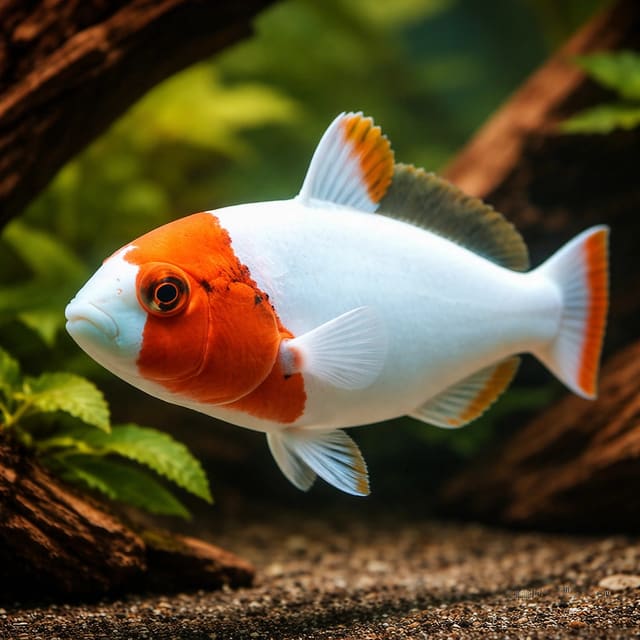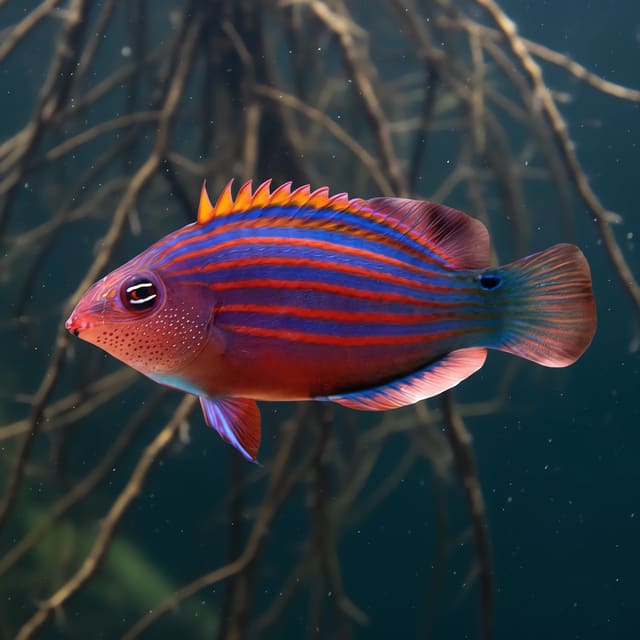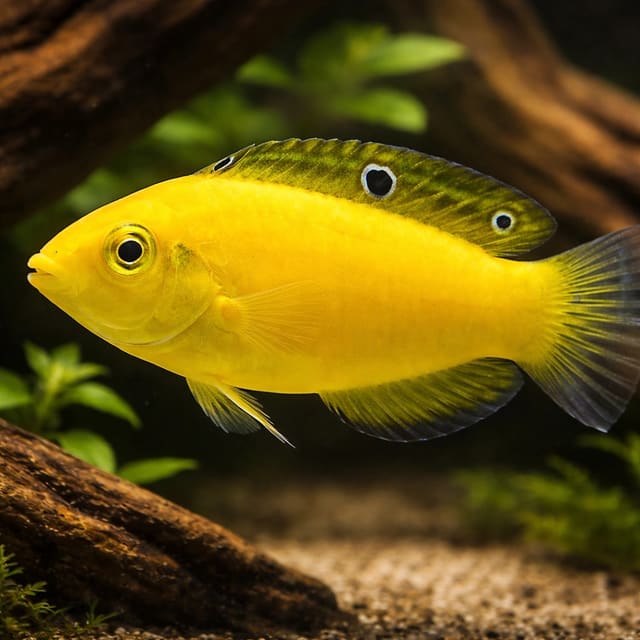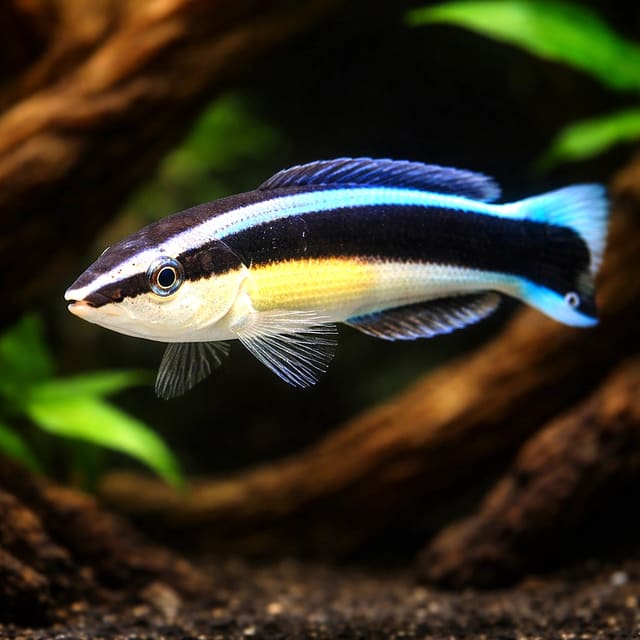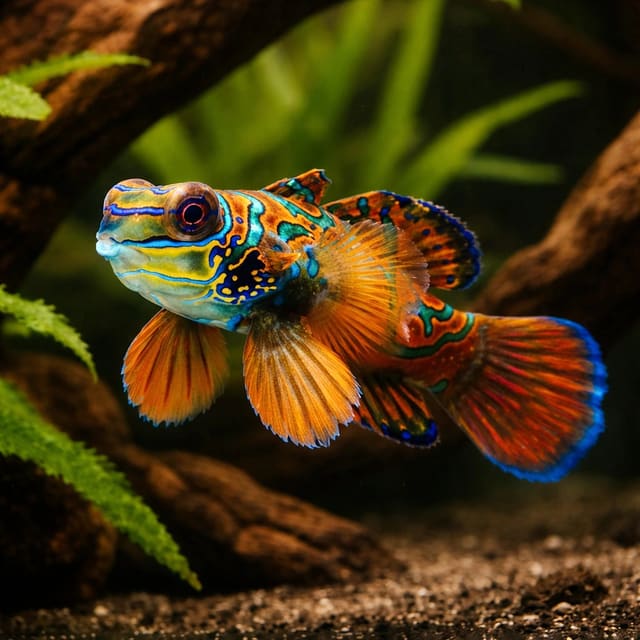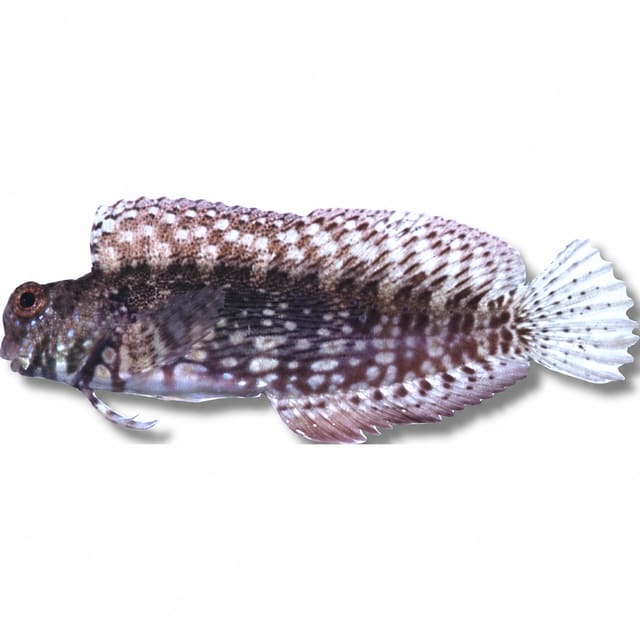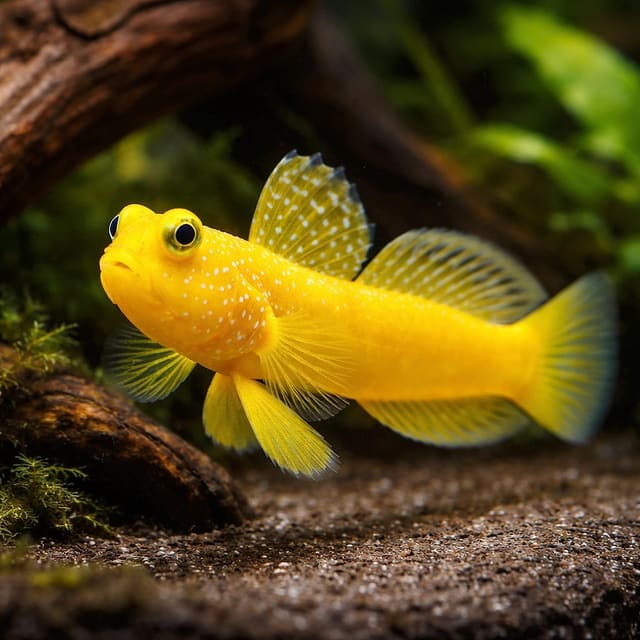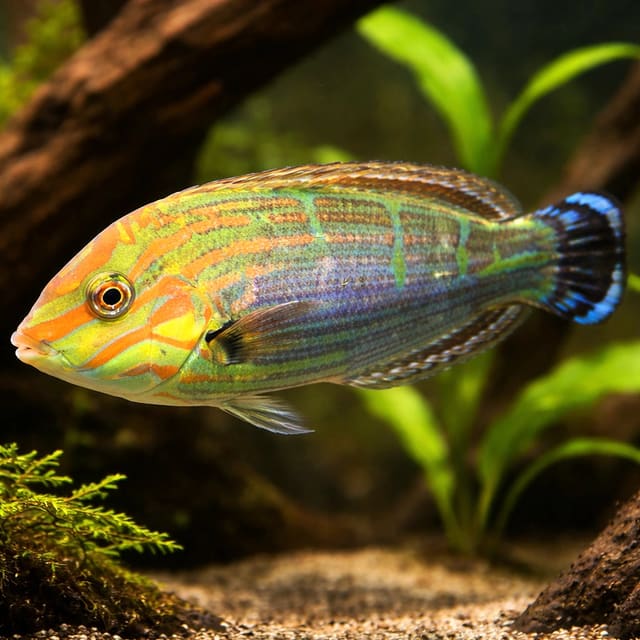
Tail-Spot Wrasse (Halichoeres melanurus)
24–26°C · pH 7.9–8.3
£87.99

Diana's hogfish (Bodianus diana) is an Indian Ocean reef wrasse that reaches 16.9 cm standard length. You receive one fish. In the wild it eats crabs, snails, clams, urchins and worms, so it needs a large, mature marine aquarium kept reef-with-caution at 24-26°C, pH 7.9-8.3 and SG 1.020-1.025.
Adult size is the maximum length this species reaches at full maturity (scientific sources). The livestock you receive will be younger and smaller. Product-photo provenance and any image-specific limitations are stated on the listing.
Bodianus diana
Diana's hogfish (Bodianus diana) is an Indian Ocean reef wrasse that reaches 16.9 cm standard length. You receive one fish. In the wild it eats crabs, snails, clams, urchins and worms, so it needs a large, mature marine aquarium kept reef-with-caution at 24-26°C, pH 7.9-8.3 and SG 1.020-1.025.
Adult size is the maximum length this species reaches at full maturity (scientific sources). The livestock you receive will be younger and smaller. Product-photo provenance and any image-specific limitations are stated on the listing.
Maintain these water conditions for optimal health and vibrant colors
Diana's hogfish, Bodianus diana, is a reef wrasse from the Indian Ocean. It sits in the wrasse family, Labridae, within the hogfish genus Bodianus: fish with long heads, pointed snouts and the habit of working over rock and rubble for food. The French naturalist Lacepède named it from a drawing made by Commerson. FishBase and the World Register of Marine Species give the authority as Lacepède, 1801, while Martin Gomon's 2006 revision of the genus cites the 1802 volume. Both point to the same description, and the name itself is accepted without dispute.
It has collected a couple of other names along the way. Guichenot described a battered adult from Réunion as Cossyphus spilotes in 1865, and in 1956 Smith described a juvenile from Aldabra as a new species, Lepidaplois aldabrensis. Gomon treats both as this fish and calls Smith's slip understandable, because the colours change so much with age and the size at which they change is not consistent. In the trade you will also hear it called the Red Diana hogfish, a name that leans on the warm, spotted colouring of young fish. Gomon suggests the species name itself is a nod to the beauty of its colour and form, Diana being the Roman goddess of the chase and the moon.
Gomon's description of live juveniles is the most useful identification guide we have found. The body is brown, crossed by alternating horizontal rows of large rectangular white spots and smaller round ones, which gives the flanks a net-like look. The top of the head and the snout carry small white spots, and a dark line curves backwards and downwards from the corner of the mouth. Then come the black marks that make the species easy to pick out:
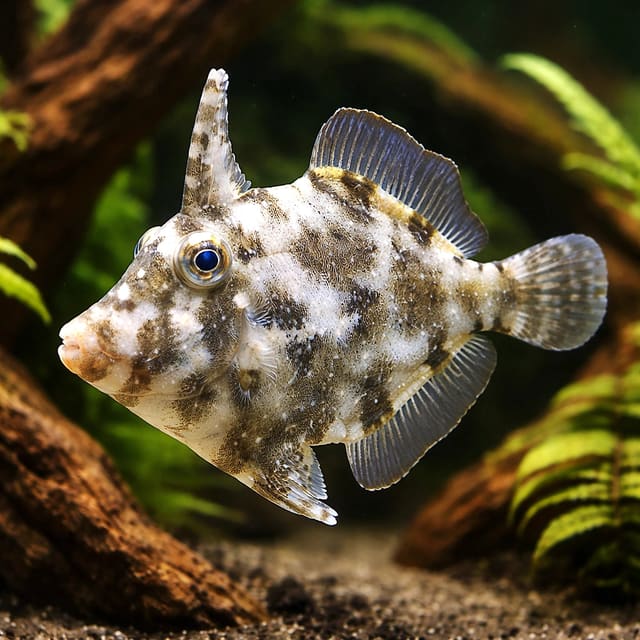
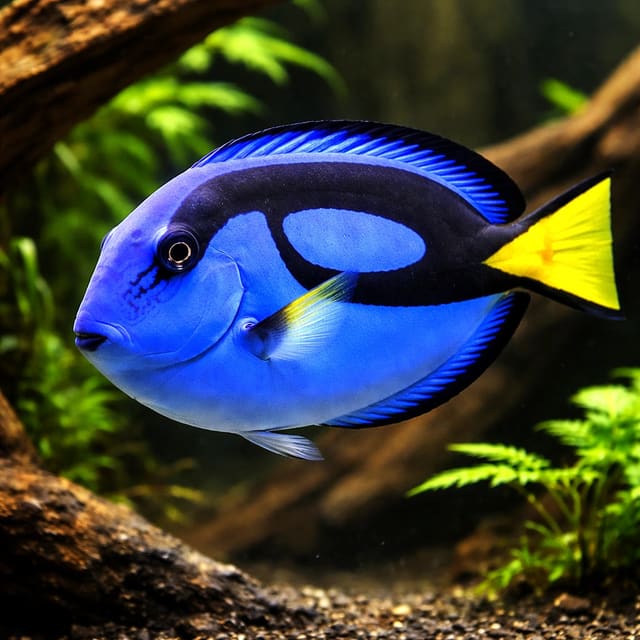
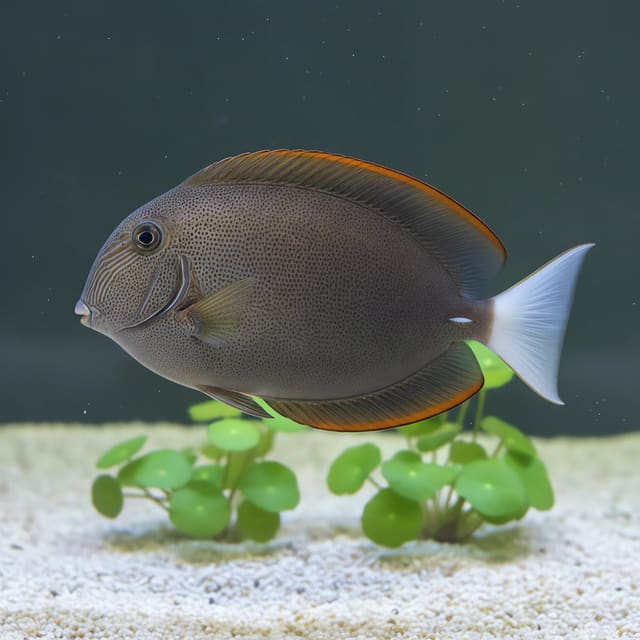
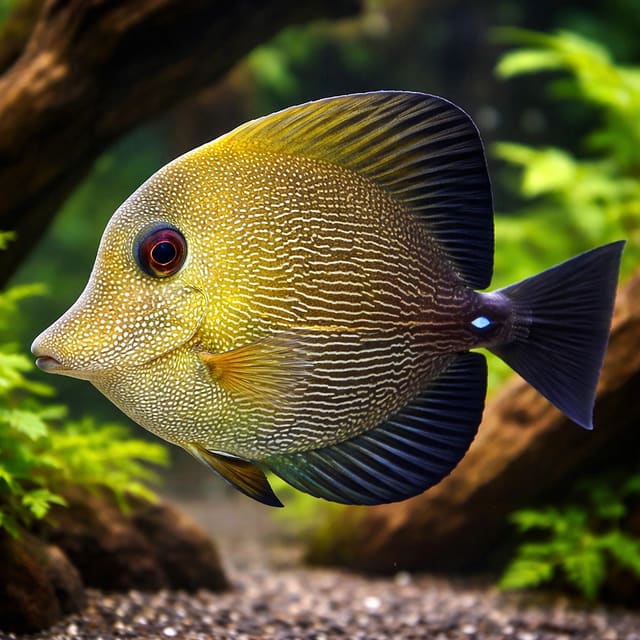
The photographs on this page show that spotted pattern on a red ground colour. Gomon calls the juvenile body brown, so under different lighting the fish in your tank may read more chestnut than scarlet. If you ever get a still, close look, count the fins: the dorsal has 12 spines and 10 soft rays, and the anal fin 3 spines and 12 soft rays. The head and snout are long, the jaws taper, and there are prominent canine teeth at the front of both jaws.
For many years the near-identical hogfish of Pacific reefs was treated as the same species. In 2006 Gomon separated it as Bodianus dictynna, after Dictynna, another name for the same goddess. The two share the same body shape, and the differences are in colour. Young B. diana are more elaborately spotted, with extra rows of fine white spots between the broken white stripes and more spots on top of the head. As adults, B. dictynna keep the black pelvic-fin spot and the black spot at the front of the anal fin, whereas adult B. diana develop a brilliant splash of red in those same places. Wikipedia also notes that reports of B. diana from the Pacific are erroneous. This listing is for Bodianus diana, the Indian Ocean species.
FishBase gives the maximum recorded length of Diana's hogfish as 16.9 cm standard length, and the largest specimen Gomon examined for his revision measured 169 mm. Standard length runs from the tip of the snout to the base of the tail, so it leaves the tail fin out. Gomon's measurements put the tail at roughly 21 to 26 per cent of standard length in this species, which means a record-sized fish would be about 20 to 21 cm from snout to tail tip. Treat 16.9 cm as the largest measured fish rather than a target, but build the aquarium for an adult that could get there.
If you see larger figures quoted elsewhere, check whether they are total lengths and whether a measured specimen stands behind them. The 16.9 cm figure has one, which is why it is the number on this page.
Gomon explains that most wrasses are protogynous hermaphrodites, which means they mature first as females, and that they show three distinct colour patterns linked to age and sex: the juvenile, the initial-phase adult (the mature female) and the terminal-phase adult (the mature male). In Diana's hogfish the initial-phase female looks much like the juvenile, only with a more net-like pattern on the sides. As a fish transforms it loses that net pattern but keeps four white spots below the base of the dorsal fin.
The terminal-phase male looks like a different animal. Gomon describes the head, nape and back as reddish brown, the sides as golden yellow and the tail base as creamy white, with the scales edged in red to reddish brown. The chest and belly are white. There are many small black spots on the upper part of the tail base and below the rear of the dorsal fin, and four small but obvious white spots run along the back. The dorsal fin turns red with a black spot between its first three spines, the anal fin is whitish with a bold red spot at the front, and the pelvic fins become bright red with a broad white rear edge.
Because the size at which the colours change is not consistent, nobody can tell you exactly when a given fish will begin to turn. You receive one fish, and we do not offer a choice of sex or colour stage, so please don't order expecting a particular phase. Enjoy whichever stage arrives and watch for the change over time.
FishBase records that the species lays eggs and forms distinct pairs during breeding. That is the extent of the reliable information we have. None of our sources describes a captive breeding method, so this is a fish to keep for its own sake rather than one to plan a breeding project around.
This is an Indian Ocean fish. FishBase maps it from East Africa eastwards to the Nicobar Islands and the Cocos-Keeling Islands, between about 26°N and 34°S, and marks its presence in the Gulf of Aden and Somalia as questionable. Gomon's revision draws the range a little wider: throughout the tropical Indian Ocean and the Red Sea, with reliable reports from Kenya, the Gulf of Aden, the Gulf of Oman, Pakistan and the Chagos Archipelago. He also calls it the most common Bodianus in the western Indian Ocean, and particularly in the Mozambique Channel. The museum fish he examined came from Zanzibar, Natal in South Africa, the Comoros, Aldabra, the Seychelles, Mauritius and Réunion, among other places.
It is a coral-reef fish through and through. FishBase describes adults living in coral-rich areas of seaward reefs, and Gomon says the species is almost always associated with living coral reefs. Depth records vary with the source. Gomon gives 9 to 30 m as usual, with fish taken at 36 to 49 m off Cocos-Keeling. FishBase lists 6 to 80 m, usually 6 to 25 m. Wikipedia gives 6 to 50 m and notes that it is rarely found deeper than 25 m. Put together, picture the ocean-facing slope of a living reef rather than a sheltered lagoon.
Young fish have an interesting habit. FishBase and Wikipedia both note that juveniles have been seen living among the tentacles of the mushroom coral Heliofungia actiniformis, and Wikipedia adds that juveniles are known to remove parasites from other fishes. That cleaning behaviour is a wild observation. It is worth knowing about, but it is not a service to rely on in a home aquarium.
FishBase describes the climate as tropical, with water of 24 to 28°C. The species is listed as Least Concern by the IUCN (assessed in 2008), is of minor importance to local fisheries and is traded for aquariums. FishBase rates its population resilience as high, with a minimum doubling time of less than 15 months.
Three practical points come out of all this. First, the water: a fish from the seaward side of a coral reef expects stable marine conditions, so salinity and temperature in the aquarium should stay put rather than drift between water changes. Second, structure: this fish lives among coral and rock, so it wants caves, overhangs and gaps to move through and shelter in. Third, food: a reef predator spends its day finding small animals on hard surfaces, which shapes both its diet and the risk it poses to the invertebrates in your tank. Each of these gets its own section below.
The Ornamental Aquatic Trade Association (OATA), the UK trade body for the aquarium industry, recommends at least 150 litres for a single individual of the smaller wrasse species, and says the larger species, those over 15 cm, need a larger aquarium. Diana's hogfish crosses that line, with a measured maximum of 16.9 cm standard length and roughly 20 cm including the tail. Our own planning figure for an adult is 475 litres or more. That gives an active fish room to swim, space for rockwork with proper caves, and a volume of water that stays stable between maintenance sessions.
OATA describes wrasses as highly active swimmers, so length matters more than height. A long tank with good front-to-back depth gives more usable swimming room than a tall, narrow one of the same volume. If you are buying a young fish to grow on in an existing system, be honest with yourself about whether the bigger tank will really happen. It is far easier to plan the final aquarium now than to find a new home for a grown hogfish later.
Build the rockwork so that it stands on the bottom glass, not on top of the sand. OATA makes this point in its wrasse advice: rock resting on sand can collapse if the sand underneath is moved, and a falling rock in a marine tank can crack glass, crush corals and injure fish. Aim for caves, overhangs and a few tunnels running through the structure, with an open swimming lane along the front and over the top. Leave space between the rock and the glass so you can reach every surface for cleaning.
OATA's general wrasse guidance includes a sand bed about 6 cm deep, because many wrasses bury themselves at night or when frightened. None of our sources records that habit for Diana's hogfish, so treat sand as good general practice for a reef-style layout rather than a must for this particular species.
A lid or tight-fitting cover is essential. OATA notes that wrasses can jump, especially if startled, and a fish this active will find any gap. Check the cut-outs for pipework, cables and the overflow, as those are the usual escape routes. Keep the cover in place at all times, feeding time included.
OATA also lists the basics every wrasse set-up needs. You need a heater to hold a suitable temperature all year round and overhead lighting to give a regular day and night. You also need filtration, which OATA says can be live rock, an internal or external filter, or a sump. Whatever you choose, size it for the full volume and for the waste that comes with a meat-eating fish fed twice a day.
Finally, this fish belongs in a mature system that has been running and stable for some time, not one set up the week before it arrives. A settled aquarium has steady water chemistry and established filter bacteria, and it gives you a track record of test results to compare against if anything changes after the new fish goes in.
The numbers below come from OATA's care advice for wrasses. They are the ranges we would ask you to hold before Diana's hogfish arrives and to keep steady afterwards.
| Parameter | Target range |
|---|---|
| Salinity (specific gravity) | 1.020 to 1.025 |
| Temperature | 24 to 26°C |
| pH | 7.9 to 8.3 |
| Ammonia | 0 mg per litre |
| Nitrite | 0 mg per litre |
| Nitrate | no more than 50 mg per litre |
| Carbonate hardness | 8 to 12 dKH |
| Calcium | 380 to 450 ppm |
| Magnesium | 1,250 to 1,350 ppm |
FishBase gives the wild climate as 24 to 28°C. That is the span of the sea the fish comes from, not a reason to run the tank at the top of it. OATA's 24 to 26°C range sits comfortably inside it, and a steady temperature matters more than hitting one exact figure. Choose a heater with enough power for the volume and a thermostat you trust, and check it with a separate thermometer.
OATA warns that wrasses can be stressed by even small amounts of ammonia and nitrite, and that the stress can lead on to disease. A carnivore eating meaty frozen food produces a fair amount of waste, so this is not a fish to add to a tank that has only just finished cycling, or to one that is already carrying a heavy load of fish. If a test ever shows ammonia or nitrite above zero, cut back the feeding, change some water and find the cause before it becomes a health problem.
Keep a simple log of your test results. With a single large fish like this, a slow drift in nitrate or salinity is much easier to spot on paper than by eye, and catching it early is what keeps the routine low-stress for you and the fish.
Diana's hogfish is a predator. Wikipedia describes it as feeding mainly on benthic invertebrates such as molluscs and crustaceans, and FishBase puts it at a trophic level of 3.9, well up the reef food chain. The FishBase food-items list for the species is broad and worth reading in full, because it is the best guide to what this fish will treat as a meal:
That list matters twice over. It tells you what to feed, and it tells you what is at risk in the aquarium, which the next section covers.
OATA's advice for wrasses is frozen meaty foods sized to the fish, with krill and mysis shrimp suiting the larger species and frozen copepods or finely chopped krill or mysis suiting smaller ones. For Diana's hogfish that means mysis for a young fish and whole krill as it grows, rotated with other good-quality frozen marine foods that echo the wild diet, such as chopped shellfish meat. Variety is the point: a carnivore living on one food alone for months will not be getting everything its wild menu provides.
Thaw frozen food in a little tank water before feeding rather than dropping blocks straight in. That way it sinks and spreads, and you can see how much is eaten.
OATA recommends feeding wrasses twice a day, giving only what they can eat within a few minutes. Hold to that. Overfeeding a large carnivore is one of the quickest ways to push nitrate up and water quality down, and leftover meaty food rots fast in warm seawater. Siphon out anything that lands in the rockwork and isn't found within a few minutes.
Watch the fish's shape as well as its appetite. A healthy hogfish should look full along the belly without being bloated. If the body starts to look pinched behind the head or along the back, feed a little more often or try different foods, and test the water in case something else is putting the fish off.
New arrivals often take a day or two to settle before eating properly. Offer a small amount of mysis once the fish has started moving about and exploring, then remove what isn't eaten. Don't chase the fish with food or keep adding more in the hope that it will start. A calm tank and patience usually work better than a heavy first meal.
Diana's hogfish can live in a reef aquarium, but only if you go in with your eyes open. The food list above is the reason. In the wild it eats crabs, other crustaceans, snails, clams, sea urchins, sea stars, brittle stars and polychaete worms. In a home reef those are exactly the animals people add as a clean-up crew or as ornaments.
A young hogfish may leave larger invertebrates alone at first, but it keeps growing. An animal that is too big to tackle today may not be next year.
None of our sources describes Diana's hogfish as a coral specialist, but FishBase records unspecified coral polyps among the food items of fish from Oman, so we cannot call it coral-safe. The wild juveniles living among the tentacles of the mushroom coral Heliofungia actiniformis show that it shares space with coral comfortably. They don't prove it will never take a bite. If you keep corals, watch new fish closely, and be ready to move the hogfish if it starts picking at polyps.
The most straightforward home for Diana's hogfish is a large fish-only aquarium with live rock. If you want corals as well, plan the reef around the fish from the start: skip the ornamental shrimps and crabs, accept that snails and worms in the rock will be eaten, and keep the tank clean through good husbandry instead. Siphon detritus during water changes, wipe the glass yourself and keep feeding under control, so you don't need a clean-up crew that the hogfish would treat as a buffet.
Adding the hogfish to an existing reef full of invertebrates is the set-up most likely to end in disappointment. If that is your tank, ask us before ordering and we will talk it through honestly.
OATA's general rule for wrasses is that compatibility depends on the species. Docile wrasses mix with timid fish, while aggressive types suit boisterous tank mates. Our sources do not describe Diana's hogfish's temperament in aquariums in any detail, so the advice here is built on what is recorded: its size, its diet and its habits on the reef.
FishBase lists bony fish among its food items. That doesn't make it a dedicated fish-eater, but it does mean a very small fish that fits in its mouth is at risk, especially as the hogfish grows. Choose companions that will stay too large to swallow when the hogfish is fully grown, not just on the day it arrives. Tiny gobies, small blennies and similar bottom-dwellers living among the rockwork are the fish we would be most wary of.
The companions that tend to suit a medium-sized carnivorous wrasse are sturdy marine fish of a similar size or larger. They should hold their own at feeding time without needing to bully anything. In practice that means fish chosen for a large, robust community: hardy, active species that are not timid, not tiny and not invertebrate specialists that would compete for the same food. Check every proposed tank mate's own adult size and needs before you buy, because a large tank fills up quickly once the fish reach adult size.
Two fish with the same body shape and the same diet compete for the same food and the same caves. If you are tempted to keep Diana's hogfish with another hogfish or a large wrasse of similar habits, do it only in a very large aquarium with plenty of rock, and be ready to separate them. Our sources describe this species pairing during breeding but say nothing of group living, so we would plan on a single hogfish per tank.
New fish settle best when they aren't walking into territory that has already been claimed. Where you can, add the most peaceful fish first and the more confident ones later. Keep an eye on feeding time for the first couple of weeks, as that is when competition between tank mates shows most clearly.
Keep Diana's hogfish with robust marine fish too big to eat, in a large tank with plenty of rock. Keep it away from ornamental invertebrates and very small fish, and treat corals with caution.
OATA's checklist for a healthy wrasse is a good one to use on any marine fish: clear, bright eyes, undamaged fins, intact scales, no ulcers or bumps, normal swimming and steady breathing. It also advises against buying any fish that shares a tank with sick fish. Those are the same things to look for in your own aquarium once the hogfish has settled.
OATA recommends quarantining new livestock in a separate aquarium for at least a week to cut the risk of bringing disease into an established system. For a fish going into a large display with other valuable fish, that is well worth the effort. A quarantine tank needs the same care as the main one: heated, filtered, covered, and run at the same salinity and temperature, with water tested regularly. Use the same acclimation steps for whichever tank receives the fish first.
OATA lists these as the changes that should make you look more closely at a wrasse:
Colour needs a little extra thought with this species, because Diana's hogfish changes colour naturally as it matures, as described earlier. A slow, steady shift in pattern over weeks or months, with the fish eating well and behaving normally, is the kind of change Gomon describes. A sudden fading, blotchy patches or dull colour alongside poor appetite or fast breathing is different, and calls for a water test and a careful look at the fish.
Most health problems in marine fish start with water. OATA's note that wrasses can be stressed by even small amounts of ammonia and nitrite is the reason this page keeps coming back to testing. If something looks wrong, test before you treat, and fix the water before you reach for medication. Ask for advice before adding any treatment to a tank holding corals or invertebrates, as some marine medications can harm them.
OATA notes that wrasses can live for many years in a well-kept aquarium. Under the Animal Welfare Act 2006, owners must meet five welfare needs: a suitable environment, a suitable diet, the chance to show normal behaviour, appropriate company, and protection from pain, injury and disease. With a large carnivorous wrasse, the environment and diet are where most of the planning goes.
Please read our delivery and live-arrival information before ordering, so you know how the process works and what is expected on the day.
The aquarium must be ready before your fish is on its way. That means the filter running, the water tested and the temperature matched to the ranges on this page. Someone must be at the delivery address to receive the parcel. We email you the confirmed delivery date and tracking details, so you can plan to be in.
Your hogfish travels in an oxygen-filled bag inside insulated packaging, with heat packs added when the weather calls for them. It is carried by a tracked courier licensed to carry live animals.
Start a continuous unboxing video while the parcel is still sealed. Open it in the same take and show the fish in its still-sealed bag. If the fish arrives dead, dying or clearly compromised, email hello@tropicalfishco.co.uk on the day of delivery with your order number and that video. Photographs alone do not meet our live-arrival policy. Where a claim is accepted, we will replace the fish with your next order or refund the affected fish, subject to the guarantee terms.
Keep the lights low for the rest of the first day and keep the room quiet. Expect the hogfish to spend time in the rockwork while it learns the tank. Over the first week, watch three things: breathing, which should slow down and settle; appetite, which should pick up after a day or two; and behaviour, as the fish starts to explore and swim in the open. Offer small feeds and remove what isn't eaten. If breathing stays fast, the fish won't feed after several days, or tank mates are chasing it, test the water and contact us for advice.
Leave the rest of the tank alone for that first week. Avoid adding other new fish, moving rockwork or making big changes to the lighting, so the hogfish can settle into a home that stays the same from one day to the next.
The facts on this page come from the sources below. They are worth reading if you want to go further into the biology or the care of Diana's hogfish.
No reviews for this item yet. Bought one? Honest reviews only, good or bad.
What customers say about ordering from us
I have a small group of long finned mountain minnows. So was delighted to be able to order ten of this variety to increase the genetics in my tank . The ones I recieved are healthy but it’s to early to give a verdict on wether they are of a long finned type since they are small currently.
Gordon Walker · 23 Sept 2026
100% success travel and "installation". Pleased with quality of purchase. The Siamese fighter a bit "shy" so have not yet seen him at his best yet but looking good. Happy customer. GG
George E Garratt · 21 Sept 2026
Reviews of our shop, collected by Judge.me, an independent third-party review collector. Newest first.