Advanced
Naso elegans (Elegant Unicorn Tang)
24–26°C · pH 7.9–8.3
£91.99
The Indian sail-fin surgeonfish (Zebrasoma desjardini) is a marine, reef-associated tang recorded to a maximum 40 cm total length. One purchase supplies one animal. Plan a mature, filtered aquarium around its adult scale and use tang-group care of 24–26°C, pH 7.9–8.3 and salinity 1.020–1.025.
Adult size is the maximum length this species reaches at full maturity (scientific sources). The livestock you receive will be younger and smaller. Product-photo provenance and any image-specific limitations are stated on the listing.
Zebrasoma desjardini
The Indian sail-fin surgeonfish (Zebrasoma desjardini) is a marine, reef-associated tang recorded to a maximum 40 cm total length. One purchase supplies one animal. Plan a mature, filtered aquarium around its adult scale and use tang-group care of 24–26°C, pH 7.9–8.3 and salinity 1.020–1.025.
Adult size is the maximum length this species reaches at full maturity (scientific sources). The livestock you receive will be younger and smaller. Product-photo provenance and any image-specific limitations are stated on the listing.
Maintain these water conditions for optimal health and vibrant colors
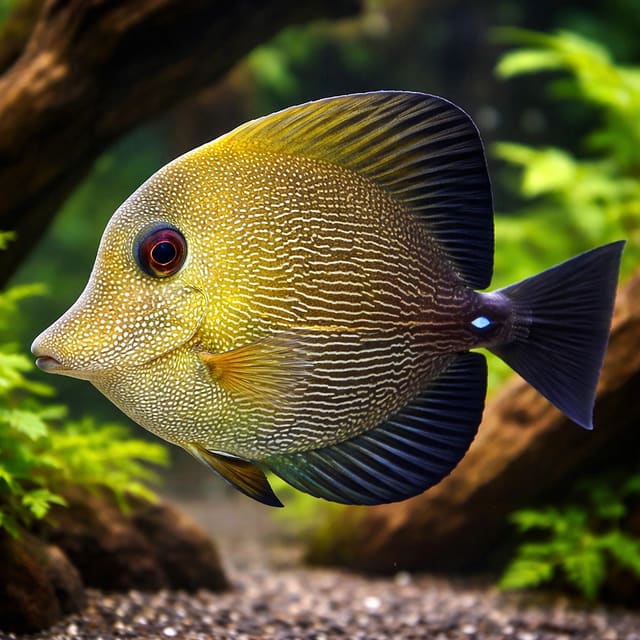
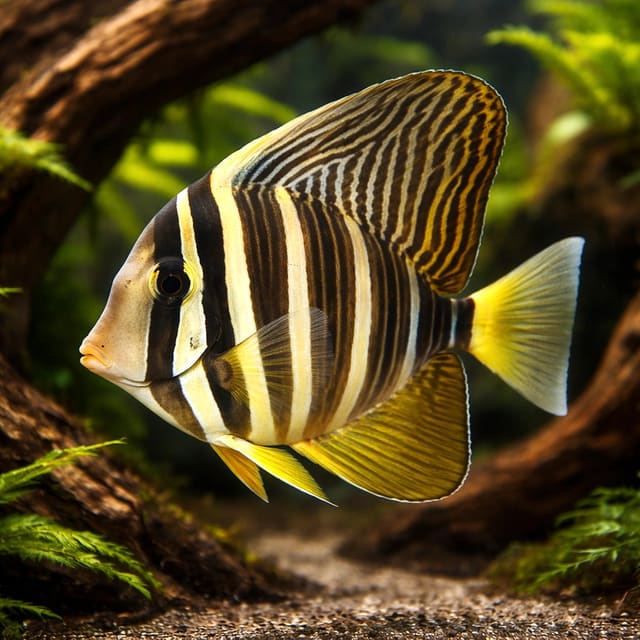
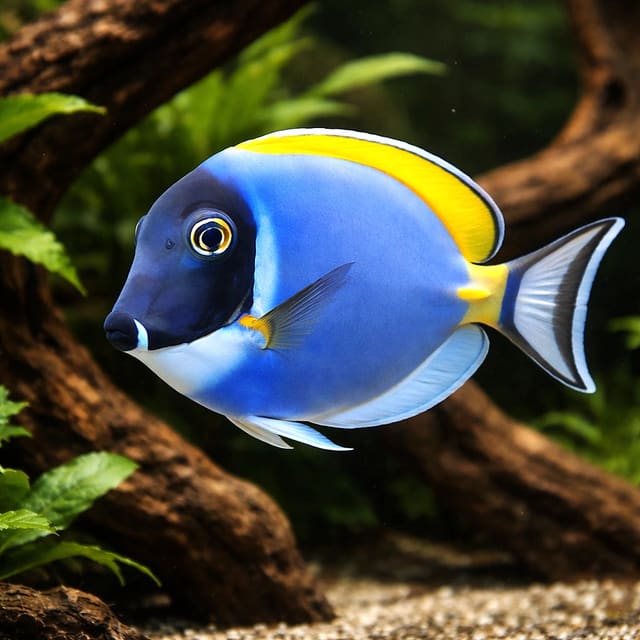
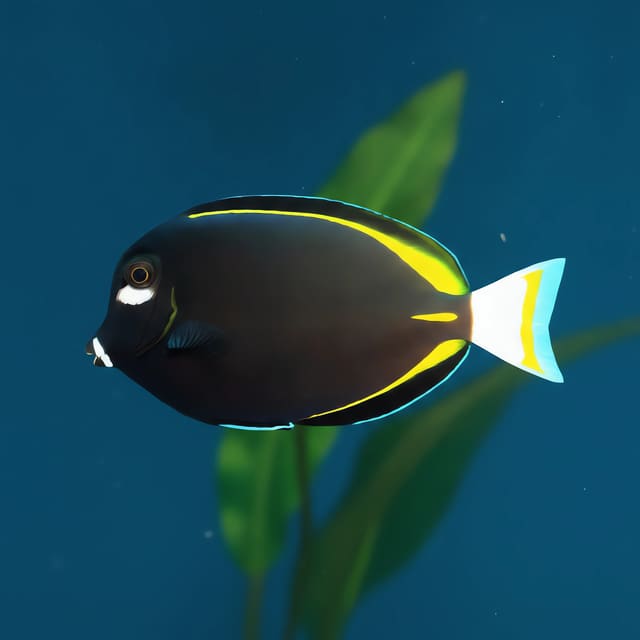
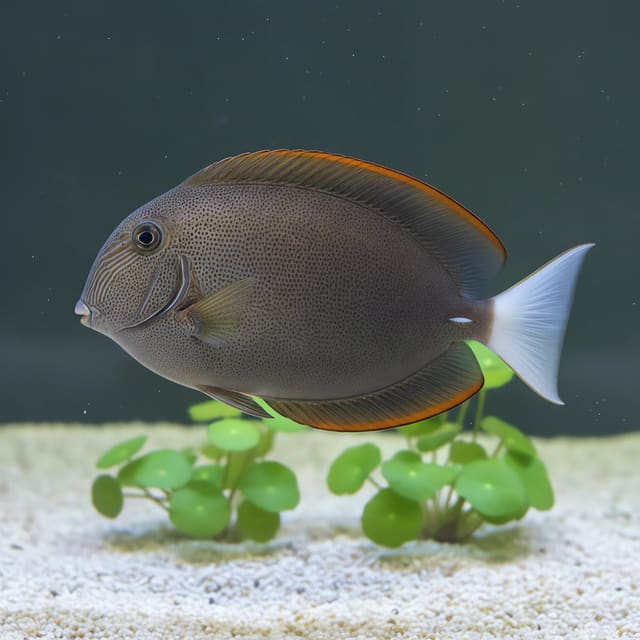
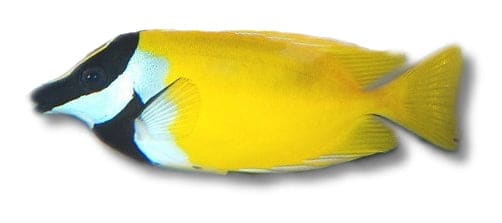
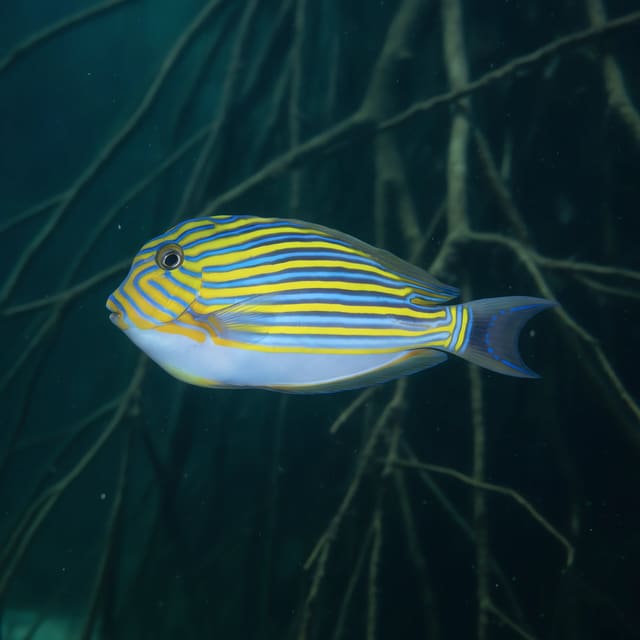
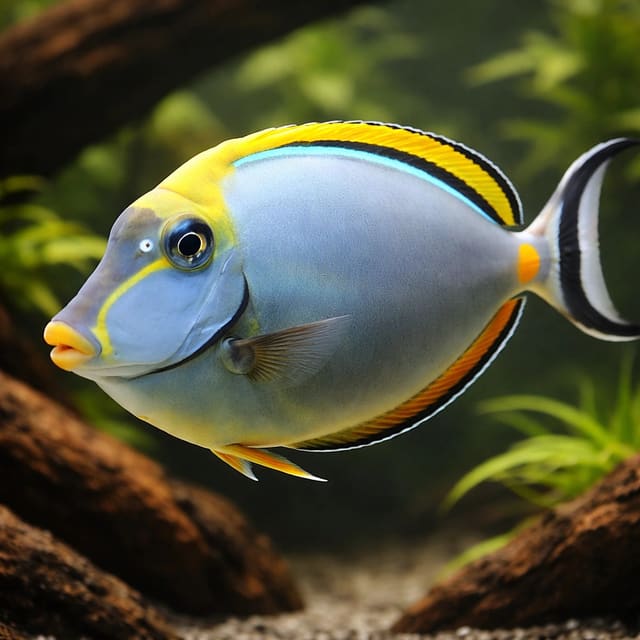
The Indian sail-fin surgeonfish (Zebrasoma desjardini) is a marine, reef-associated member of the Acanthuridae family, which includes surgeonfishes and tangs. Its deep, disc-like outline and enlarged dorsal and anal fins create the tall sail-shaped profile reflected in its common name. The gallery shows the orange vertical striping, spotted face and spotted tail associated with this fish.
FishBase records this species from the Indian Ocean, including East Africa and the Red Sea eastwards to the Andaman Sea, with a recorded wild depth range of 3–30 m. Those details describe its natural distribution rather than an aquarium placement rule. FishBase now lists it as Zebrasoma desjardinii.
A general natural-history summary also calls it the Red Sea sailfin tang, Desjardin's sailfin tang and Indian sailfin tang. These names refer to the same marine ray-finned fish. For aquarium planning, its adult scale, active tang behaviour, algae-centred diet and sensitivity to waste are more decisive than the choice of common name.
This is a fish for a keeper able to reserve substantial swimming room, maintain a mature biological filter and make compatibility decisions before introduction. Its maximum recorded length means the long-term aquarium plan matters from the start.
| Suits | Not suited to |
|---|---|
| A mature, filtered marine aquarium planned around a maximum 40 cm fish | An immature or unfiltered aquarium |
| A keeper able to maintain 24–26°C, pH 7.9–8.3 and salinity 1.020–1.025 | A community containing shy species |
| A layout with open swimming routes and rockwork for cover | A lifetime plan based only on the 300-litre group starting point for a tang under 20 cm |
FishBase records a maximum of 40 cm total length. Treat that figure as the planning ceiling for space, filtration and aquascape access, not as a promised size for every individual. Total length includes the tail, while the fish's tall body and expanded fins also demand clear vertical and lateral space.
OATA's tang and rabbitfish guidance recommends an aquarium of at least 300 litres for one individual under 20 cm, adding that larger and more active species need a larger aquarium. This is broad group guidance rather than a species-specific adult minimum. A 300-litre aquarium therefore serves only as the stated starting point for a fish below 20 cm; it should not be treated as a lifetime volume for an animal recorded at up to 40 cm.
| Planning question | Decision |
|---|---|
| Fish under 20 cm | Use at least 300 litres, then assess dimensions and future growth. |
| Long-term space | Plan around a maximum 40 cm total length and active swimming behaviour. |
| Aquascape | Combine open routes with rockwork that provides cover. |
| Environmental stability | Prefer greater water volume because it changes temperature and waste concentrations more slowly. |
Before choosing the fish, compare its projected body length with the uninterrupted swimming run, turning space around rockwork and access to covered areas. If the adult outline would fill the available route or force tight turns between structures, choose a larger aquarium plan rather than relying on the animal's present size.
One purchase supplies one animal. Plan the aquarium around the species' maximum recorded length of 40 cm total length.
Sex is guaranteed only when the selected option explicitly states male or female. This Indian sail-fin surgeonfish listing has no sex-guaranteed option.
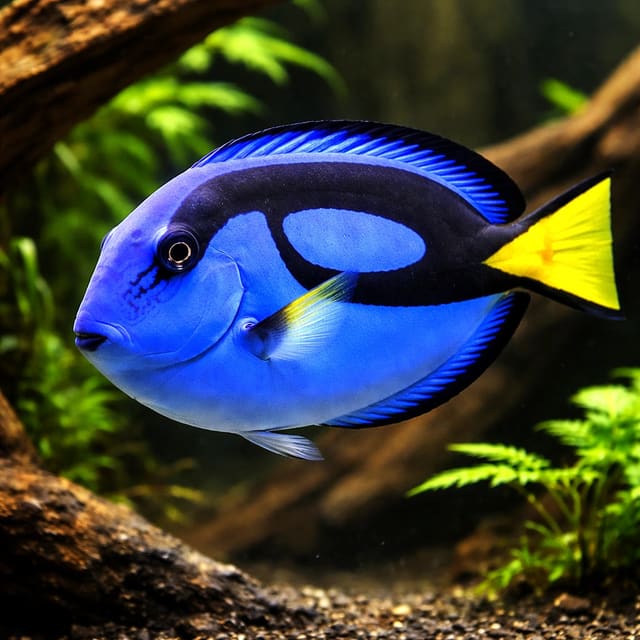
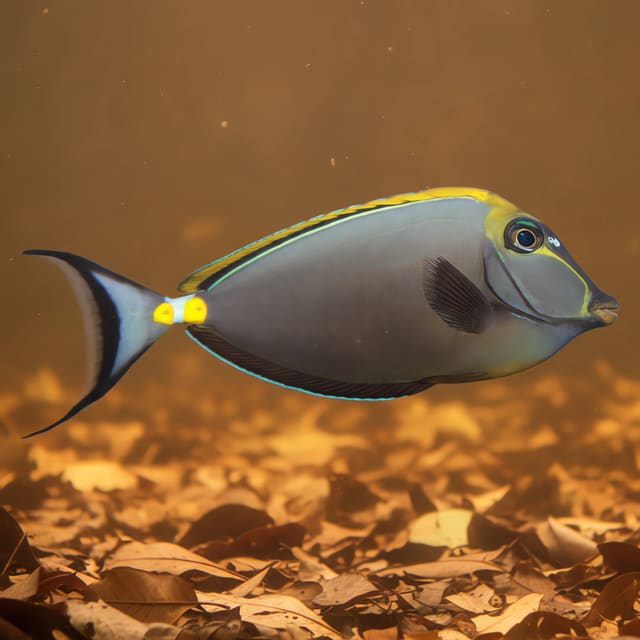
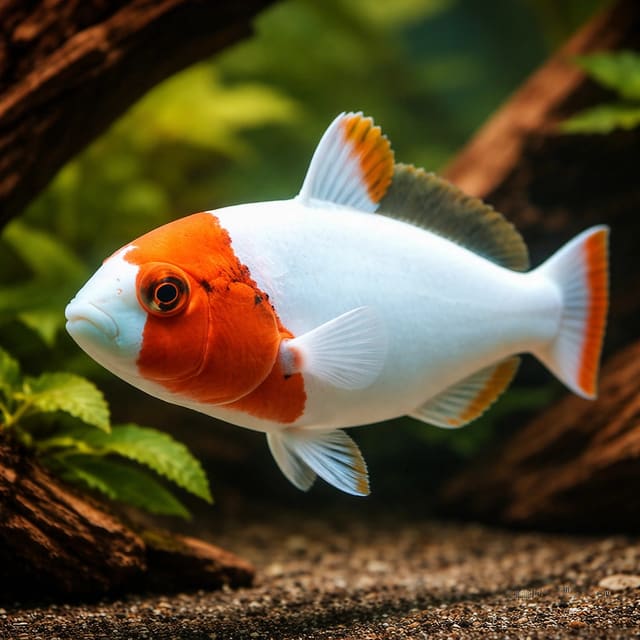
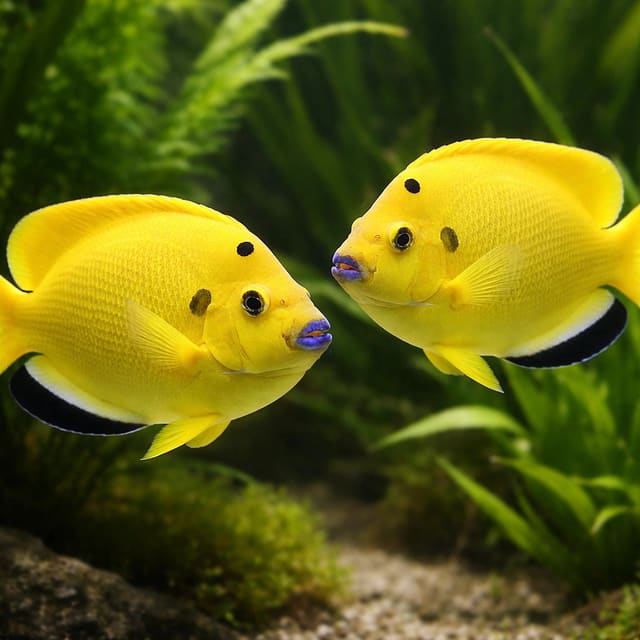
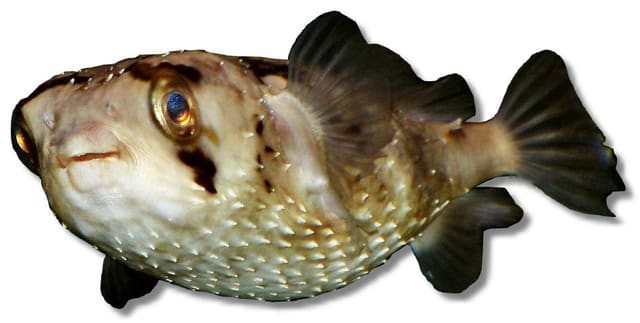
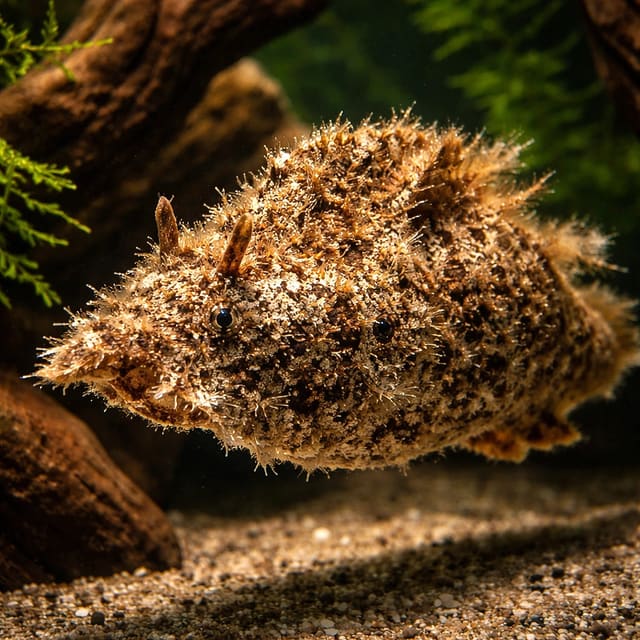
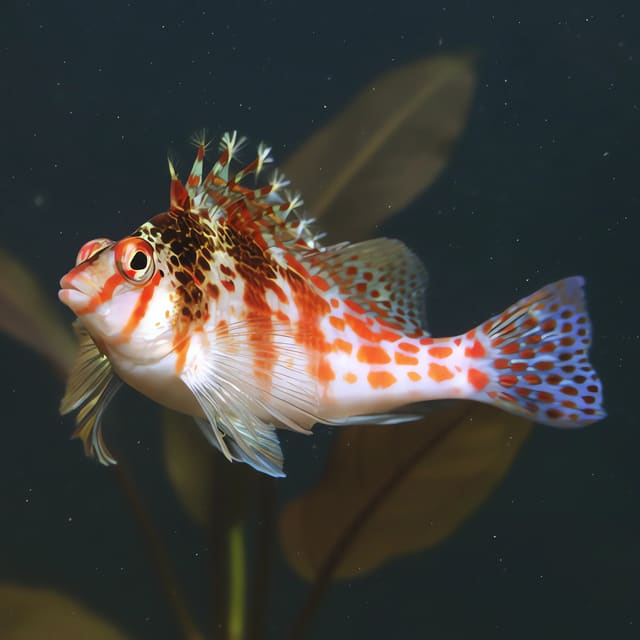
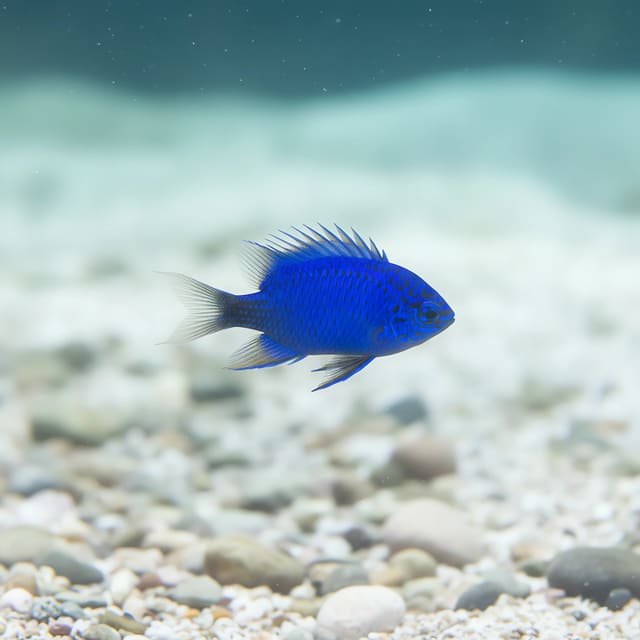
Some gallery images are representative, based on reference photographs of this species, and none shows the exact animal supplied, so colours can look slightly different from the live animal.
The animal should enter a prepared marine aquarium rather than becoming the reason to begin maturing one. Confirm the aquarium's dimensions, filtration, water readings and present community before completing the stocking decision. If delivery timing or the Live Arrival Guarantee affects your preparation, read the current delivery and Live Arrival Guarantee policy before ordering.
Use the tang and rabbitfish targets as the routine starting range: temperature 24–26°C, salinity 1.020–1.025 and pH 7.9–8.3. Keep ammonia at zero mg per litre, nitrite at zero mg per litre and nitrate at no more than 50 mg per litre. In a reef aquarium, the needs of more sensitive inhabitants may require tighter or adjusted targets, so assess the complete community rather than changing one value for this fish alone.
| Measurement | Working target |
|---|---|
| Temperature | 24–26°C |
| Salinity | 1.020–1.025 |
| pH | 7.9–8.3 |
| Ammonia | Zero mg per litre |
| Nitrite | Zero mg per litre |
| Nitrate | Not to exceed 50 mg per litre |
| Carbonate hardness | 8–12°dKH |
| Calcium | 380–450 ppm |
| Magnesium | 1250–1350 ppm |
Test before introduction and continue testing during routine maintenance. If ammonia or nitrite is detectable, pause the introduction and correct the biological-filtration problem. If nitrate is approaching 50 mg per litre, review feeding, waste removal, stocking pressure and water-change consistency before it crosses the stated maximum.
A temperature of 25°C, salinity of 1.023 and pH of 8.1 sit inside the working ranges; the decision then moves to ammonia, nitrite, nitrate and stability. A pH of 8.4 sits above the stated group range even when the other values look suitable, so investigate the complete chemistry rather than focusing on temperature alone.
Record measured values, compare the aquarium with these targets, then act on the actual result.
Give this active tang a layout that permits forward swimming, broad turns and access around both sides of the principal rock structures. The fish should not have to squeeze continuously through narrow gaps or reverse out of dead ends. Its tall dorsal and anal fins make the usable route more important than an empty volume figure alone.
Live or artificial rockwork is recommended for tangs because it supplies cover. Arrange it securely and leave open routes around it rather than creating a solid wall from front to back. A practical layout places stable structures while preserving a continuous route across the aquarium. Check that the route remains usable at the 40 cm planning length, including room for the fish to turn with its fins extended.
Do not judge suitability from litres alone. Two aquariums with the same nominal volume can offer very different swimming routes: one may be long and open, while another loses usable space to dense rockwork. Select dimensions and a layout that accommodate an active, potentially 40 cm fish before considering decorative detail.
Greater water volume also offers more stability in temperature and water quality. That benefit supports the fish only when the filter, water flow and maintenance routine are matched to the complete livestock load.
A filter is essential in this marine aquarium. Suitable arrangements described for tangs include live rock with sufficient water flow, an internal or external filter, or a sump-based filter. A protein skimmer can also help by removing dissolved organic waste before it breaks down into more harmful substances.
The RSPCA's aquarium filtration guidance explains the biological sequence behind the test results: fish release toxic ammonia, beneficial bacteria convert it to nitrite, and further bacterial activity converts nitrite to the safer nitrate. A working filter must therefore be established before the surgeonfish is introduced, and it must remain capable of processing the waste generated by the full aquarium population.
Maturation is demonstrated by stable test results, not by the aquarium merely having contained water for a certain period.
| Observation | Action |
|---|---|
| Ammonia and nitrite are zero | Continue the pre-introduction assessment. |
| Either value is detectable | Pause stocking and restore biological-filter performance. |
| Flow has weakened | Check the filter for blockages before adding livestock. |
| Skimmer performance has fallen | Clean it and confirm normal operation. |
| Several fish are planned | Add them slowly rather than increasing the waste load at once. |
Stocking too quickly can leave the bacterial population unable to process the increased waste and food. The resulting rise in ammonia or nitrite can cause illness or death. Treat zero readings as continuing requirements, not one-off milestones passed before purchase.
Whatever filtration method you use, check that water continues moving through the working media and around the rockwork. A system can still be running while a blockage reduces its effective flow, so compare present performance with its normal operation rather than listening only for equipment noise. If circulation weakens, inspect and clean the affected equipment before increasing livestock or food.
Keep the biological media wet in aquarium water during necessary cleaning and rinse it lightly rather than trying to make it look new. The useful bacterial population lives on those surfaces. Cleaning every component aggressively at the same time can remove more of that population than intended, while leaving blockages untouched reduces the filter's ability to process waste. The practical aim is steady flow with biological media preserved.
After any population increase, repeat ammonia and nitrite tests instead of assuming the established filter has already adjusted. A zero result shows that the system is coping at that point; a detectable result means the waste load has overtaken current processing capacity and further stocking should pause.
Tangs and rabbitfish are mainly herbivorous, and their aquarium diet should contain enough algae-based food to support their condition. Use nori sheets, algae-based flake and grazing tabs as the core choices. Small meaty frozen feeds such as mysis shrimp, enriched brine shrimp or krill can form part of a varied diet without displacing the algae-centred foundation.
Feed twice a day, offering only what the fish can eat within a few minutes. Algae sheets and grazing tabs are the exception to that short observation window because they need to remain in the aquarium longer while the fish grazes. Monitor how much is actually eaten and adjust the next portion rather than adding food automatically.
If food remains uneaten, reduce the next serving and check whether behaviour or water quality has changed. If interest in food falls, test ammonia, nitrite, nitrate, temperature, salinity and pH rather than trying to solve the change by repeatedly adding different foods. Reduced feeding can be an early sign that the fish or aquarium needs attention.
Overfeeding creates two connected problems: uneaten food releases waste as it decomposes, and the filter must process the extra pollution. A twice-daily routine with measured portions gives the fish repeated access to food while keeping the keeper in control of nutrient input.
Complete the aquarium assessment before adding the fish. Confirm that the system is large enough for the present animal and its future growth, that ammonia and nitrite are zero, and that temperature, salinity and pH sit inside the intended ranges. Check filtration flow, cover and turning space at the same time; a suitable water reading cannot compensate for an unsuitable physical layout.
Increase the aquarium population slowly. Every new fish and every increase in feeding adds waste, while the beneficial bacterial population must grow to process that change. Adding several animals over a short period can exceed the filter's present capacity and trigger new tank syndrome, with unhealthy ammonia or nitrite.
| When | What to check |
|---|---|
| Before introduction | Zero ammonia and nitrite, suitable water ranges, working filter and clear swimming routes. |
| After the population changes | Repeat waste tests and watch breathing, swimming and feeding. |
| At each meal | Confirm interest in algae-based food and remove avoidable leftovers. |
| During daily observation | Look for hiding, erratic movement, colour change or aggression. |
| Before another fish | Confirm stable readings and complete a fresh compatibility screen. |
A healthy fish should have clear, bright eyes, undamaged fins, intact scales, no ulcerations or bumps, appropriate swimming behaviour and an active feeding response. Use these points as an observation checklist rather than relying on one feature alone.
Do not use the surgeonfish to test whether a newly assembled aquarium is ready. Establish the biological filter, demonstrate stable readings and make the compatibility decision first. Once the fish is in the community, delay further additions until the aquarium remains stable under the new waste and feeding load.
Carry out a partial water change of 25% at least once every week. Use a siphon where needed to remove solid waste from the substrate, then restore the aquarium to its intended salinity and temperature. Regular water changes work alongside filtration; they do not replace the need for an established biological filter.
Check filters regularly and clean them before blockages reduce performance. Do not rinse biological filter media under the tap because chlorine or chloramine may kill the beneficial bacteria. Instead, rinse it lightly in aquarium water removed during the partial water change. This limits bacterial loss while clearing accumulated debris.
Clean the protein skimmer regularly so that it continues removing dissolved organic waste efficiently. A skimmer is beneficial equipment, but it does not make overfeeding or delayed water changes harmless. Keep food portions, waste removal, filter flow and skimmer performance within one planned routine.
Use the record to recognise gradual movement rather than waiting for a limit to be crossed. For example, a rising nitrate pattern alongside increasing leftovers points to feeding and waste control, while detectable ammonia or nitrite demands immediate attention to filtration and livestock load.
Consistency is particularly important for tangs because even small amounts of ammonia and nitrite can stress them. Keep both at zero mg per litre throughout the life of the aquarium.
Compare each set of tests with the previous result instead of treating every reading in isolation. If nitrate remains below 50 mg per litre but rises from week to week, inspect the connected inputs before the limit is reached: uneaten food, accumulated solid waste, a growing livestock load or reduced filter performance. Correcting the pattern early keeps the routine controlled.
When siphoning, concentrate on places where visible waste settles while preserving the open routes and cover built into the aquascape. Maintenance access is part of the layout decision: if a structure prevents removal of accumulating debris or blocks access to equipment, revise that area so the weekly routine can be completed consistently.
Finish by confirming that filter flow and skimmer performance have returned to normal. Then check temperature and salinity after the water change rather than assuming the replacement water left them unchanged. This closes the maintenance cycle with measured aquarium conditions and gives the next observation a clear starting point.
Watch for changes in swimming, colour, temperament, breathing, appearance, body condition and feeding. Warning signs include hanging at the surface, sitting on the bottom, erratic swimming, becoming darker or paler, hiding more, increased aggression, faster or slower gill movement, white spots, fluffy growths, damaged fins or scales, altered weight and reduced interest in food.
If you remain concerned about a health change after testing the water and checking the system, contact us for further guidance. Do not select a treatment from appearance alone; the immediate supported action is to assess water quality and the aquarium conditions that may be contributing to stress.
Take care whenever hands, nets or containers are near the fish. Tangs have sharp modified scales near the tail that resemble a scalpel and can injure people. Avoid gripping or handling the animal directly, control the working area and allow enough space that the fish is not forced against equipment or rockwork.
Daily observation should happen before feeding as well as during it. A fish may still approach food while showing a change in breathing, colour or swimming, so use the complete checklist. Early recognition gives you a better chance to correct a water-quality, equipment or compatibility problem before it becomes severe.
Tangs and rabbitfish are active fish and should not be mixed with shy species. A companion that repeatedly retreats, loses access to food or remains hidden is not a suitable match simply because direct injury has not occurred. Compare activity level, feeding access, body shape and the available space before introduction.
OATA identifies angelfish, damsels and some butterflyfish as possible tank mates for tangs and rabbitfish. Treat those as candidates for individual screening, not universal approvals. The aquarium's dimensions, present occupants and the behaviour of each fish still decide whether a combination is appropriate.
| Question | Decision |
|---|---|
| Is the candidate shy? | Avoid the combination with this active tang. |
| Does it resemble another tang? | Move to the similar-body planning check. |
| Can every fish reach food? | Proceed only when feeding access can be maintained. |
| Is there adequate swimming room? | Assess the adult community, not only the animals' present sizes. |
| Are water needs compatible? | Use targets that work for every inhabitant, especially sensitive reef animals. |
Reassess the plan whenever an occupant changes. A combination that works with a lightly stocked aquarium may fail when another active fish reduces swimming space or increases competition at meals. Stock slowly so that behaviour and water quality can be evaluated after each addition.
Begin with the surgeonfish's recorded maximum of 40 cm total length, then add the space demands of every proposed companion at its adult scale. Next, look at where those routes overlap. Two active fish may each fit the aquarium on paper yet compete for the same uninterrupted run or feeding position. If the combined plan leaves a shy fish dependent on crossing that busy route to reach food or cover, reject the combination.
Use behaviour after each addition as new information. Repeated hiding, loss of feeding access, increased aggression or a change in body condition means the social arrangement needs attention even when the water tests remain within range. Conversely, calm behaviour does not remove the need to monitor ammonia, nitrite and nitrate after the livestock and food load increases.
For a stocking and compatibility assessment, ask us with the aquarium dimensions, measured water values and a list of present and proposed inhabitants. Those details allow a decision based on the actual community rather than a generic tank-mate label.
You can also browse the marine fish collection while planning, but treat each candidate as a separate compatibility decision.
Tangs and rabbitfish can be mixed when they do not look too similar. Similar-bodied tangs need extra care because they can become territorial and may bully new additions. Compare overall body shape rather than relying only on colour or common name.
Where similar body shapes are part of a carefully assessed plan, add those fish simultaneously and towards the end of stocking the aquarium. This approach follows the stated tang guidance, but it does not turn every similar-shaped combination into a suitable one. Adult dimensions, swimming room, filtration capacity and the complete community still need to support the plan.
Do not solve territorial pressure by adding fish rapidly. The filter bacteria must also adjust to every increase in livestock and feeding, so a rushed social plan can become a water-quality problem. If simultaneous introduction is selected for similar shapes, the aquarium must already be mature and capable of supporting the planned increase.
Behaviour after introduction remains decisive. Increased aggression, hiding, reduced feeding or a change in condition should trigger a review of the stocking arrangement and water quality. Honest uncertainty remains because compatibility depends on individuals and the complete aquarium; the screening rules reduce risk but cannot guarantee a particular social outcome.
FishBase records a maximum of 40 cm total length. Plan the long-term aquarium, swimming routes and filtration around that figure.
One Indian sail-fin surgeonfish purchase supplies one animal. The quantity refers to the number of animals, not a pair or group.
Use a mature, filtered marine aquarium with open swimming routes and rockwork for cover. OATA recommends at least 300 litres for one tang under 20 cm, while larger species need a larger aquarium; this fish is recorded at up to 40 cm total length.
Plan this purchase as one individual. Additional tangs require a full compatibility assessment: favour fish that do not look too similar, and assess similar-bodied tangs for simultaneous introduction towards the end of stocking.
Use 24–26°C, salinity 1.020–1.025 and pH 7.9–8.3 as tang-group guidance. Keep ammonia and nitrite at zero mg per litre and nitrate at no more than 50 mg per litre.
Feed algae-centred foods such as nori sheets, algae-based flake and grazing tabs, with small meaty frozen feeds such as mysis shrimp, enriched brine shrimp or krill for variety. Feed twice daily and limit each ordinary portion to what it eats within a few minutes.
Before introduction, confirm a mature filter, zero ammonia and nitrite, suitable temperature, salinity and pH, clear swimming routes and compatible occupants. Increase fish numbers slowly so the biological filter can adjust to the extra waste and feeding.
Avoid shy species and screen every candidate for activity, feeding access, body-shape similarity and adult space. Angelfish, damsels and some butterflyfish can be considered individually, while similar-bodied tangs need careful territorial planning.
No reviews for this item yet. Bought one? Honest reviews only, good or bad.
What customers say about ordering from us
Easy website plenty of info on fish your buying great to pick a time slot
TRACEY DURRANT · 7 Oct 2026
Got some lovely fish thank you
Kevin Mackie · 7 Oct 2026
Reviews of our shop, collected by Judge.me, an independent third-party review collector. Newest first.