Advanced
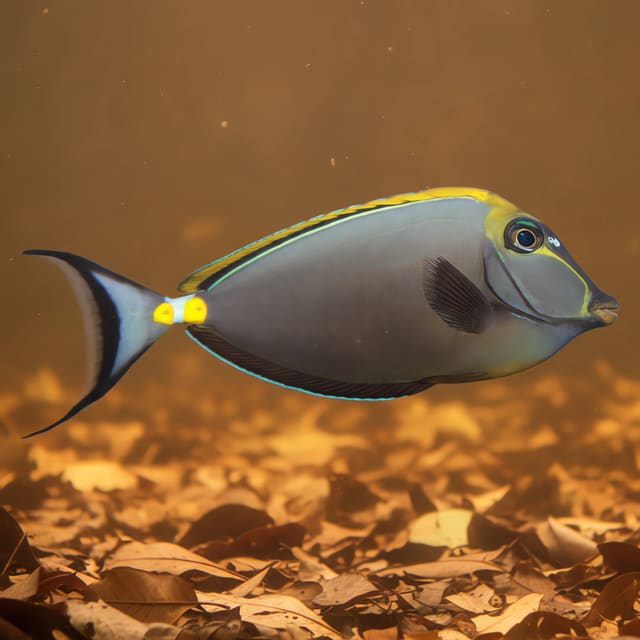
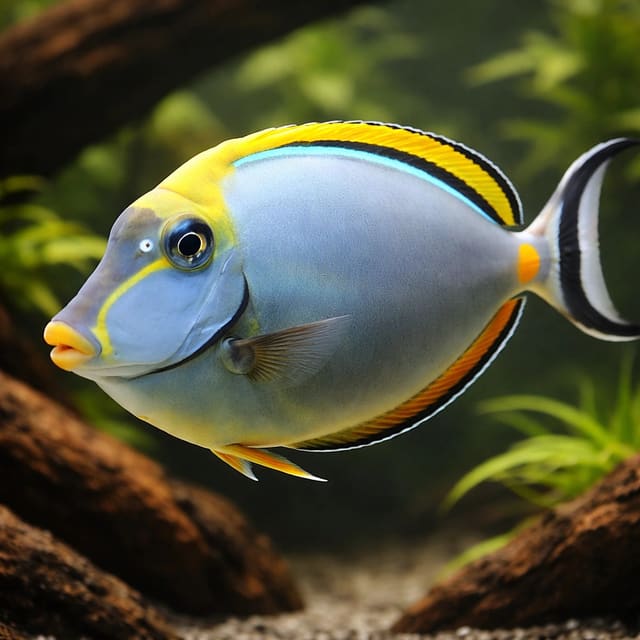
Naso elegans (Elegant Unicorn Tang)
24–26°C · pH 7.9–8.3
£91.99
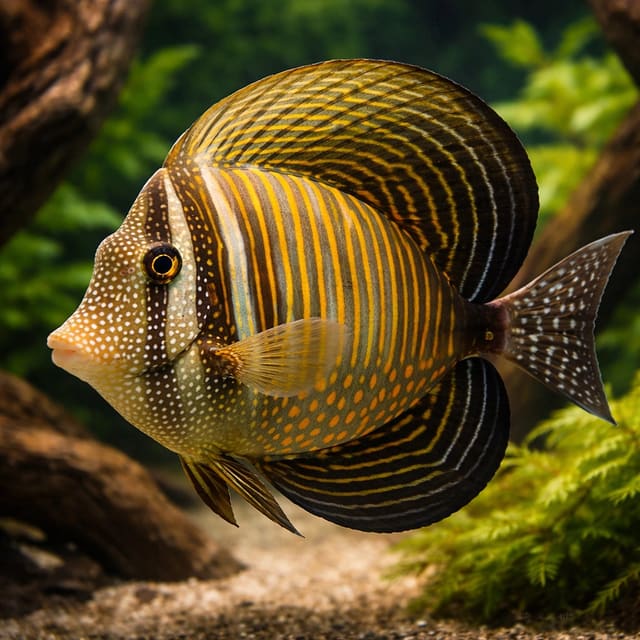
The Twotone tang (Zebrasoma scopas) is a marine, algae-grazing surgeonfish sold as one animal per purchase. Plan around FishBase’s maximum recorded 40 cm standard length, a mature filtered aquarium, 25–26°C routine water and carefully screened tank mates.
Adult size is the maximum length this species reaches at full maturity (scientific sources). The livestock you receive will be younger and smaller. Product-photo provenance and any image-specific limitations are stated on the listing.
Zebrasoma scopas
The Twotone tang (Zebrasoma scopas) is a marine, algae-grazing surgeonfish sold as one animal per purchase. Plan around FishBase’s maximum recorded 40 cm standard length, a mature filtered aquarium, 25–26°C routine water and carefully screened tank mates.
Adult size is the maximum length this species reaches at full maturity (scientific sources). The livestock you receive will be younger and smaller. Product-photo provenance and any image-specific limitations are stated on the listing.
Maintain these water conditions for optimal health and vibrant colors
The Twotone tang, Zebrasoma scopas, is a marine surgeonfish in the family Acanthuridae. It is also known as the brown tang, scopas tang or brush-tail tang. FishBase places the species across the Indo-Pacific, from East Africa and the Mascarene Islands to the Tuamoto Islands, with its range extending north to southern Japan and south to Lord Howe and Rapa islands.
Adults occur around coral-rich parts of lagoon and seaward reefs. They graze on algae and may live in small groups or schools in the wild, while juveniles are described as solitary and usually associated with corals. Those observations explain the fish’s swimming and grazing behaviour, but aquarium stocking still needs to be decided from the space, body shapes and temperaments in the individual system.
The natural-history summary for Zebrasoma scopas describes it as a herbivorous marine ray-finned fish that feeds predominantly on filamentous algae. Build its aquarium routine around that biology: provide open movement routes, rockwork for cover, algae-rich foods and stable filtration rather than treating it as a decorative addition that can live on occasional general feeding.
This is a considered choice for a keeper with a mature marine aquarium and enough long-term room for a large, active fish. Its decisive requirements are the potential adult length, continuous waste processing, twice-daily feeding and careful screening of similar-shaped or shy tank mates.
| Suits | Not suited to |
|---|---|
| A mature, filtered marine aquarium planned around a maximum recorded 40 cm standard length | An immature system or a permanent plan based on the fish remaining under 20 cm |
| A setup with open swimming routes, rockwork cover and algae-rich food twice daily | An aquarium without adequate swimming room, grazing opportunities or biological filtration |
| Carefully screened active tank mates with suitable space and body shapes | Shy species or unplanned combinations of similar-shaped tangs |
FishBase records a maximum of 40 cm standard length for this species. Use that figure as the upper planning reference when choosing the aquarium, arranging rockwork and assessing other large fish. It is not a forecast that every individual will reach exactly 40 cm, but the permanent setup must not depend on the fish remaining near its dispatch size.
One purchase supplies one animal.
Sex is guaranteed only when the selected option explicitly states male or female. This Twotone tang listing has no sex-guaranteed option.
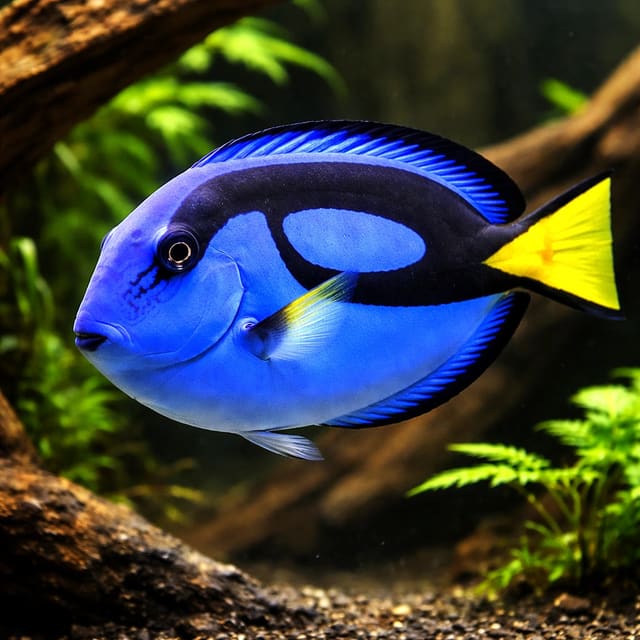
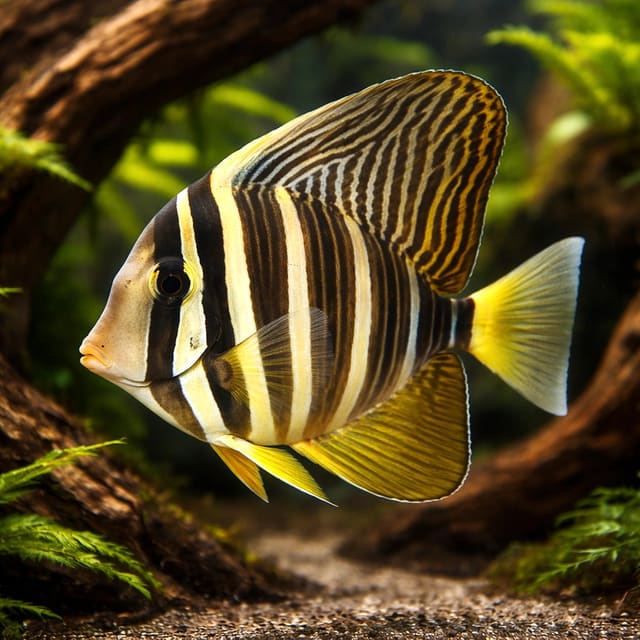
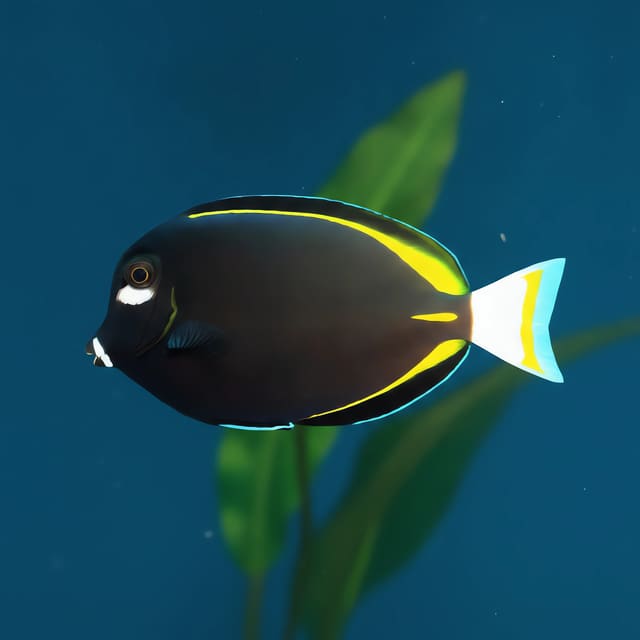
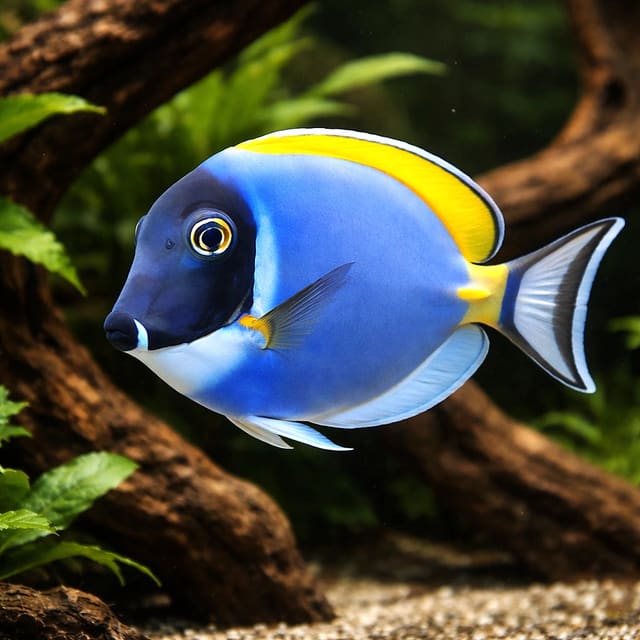
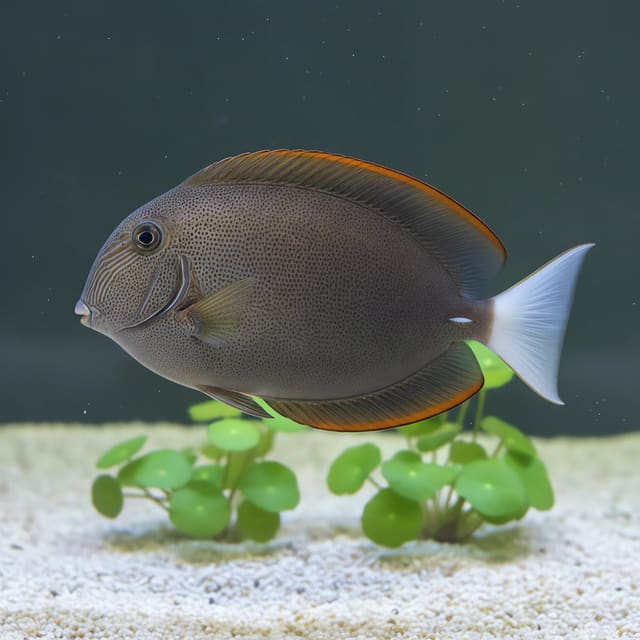
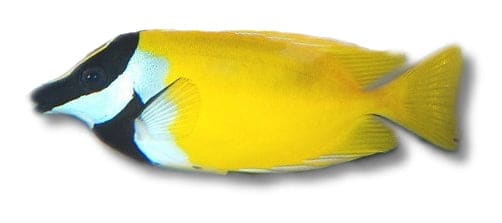
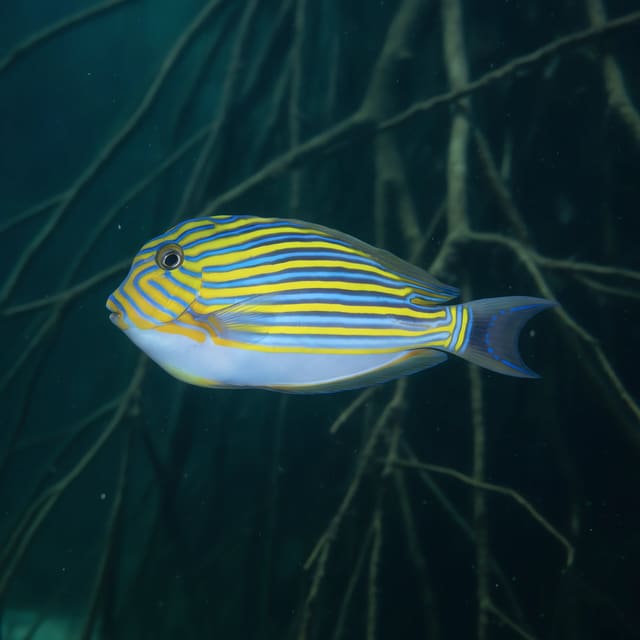
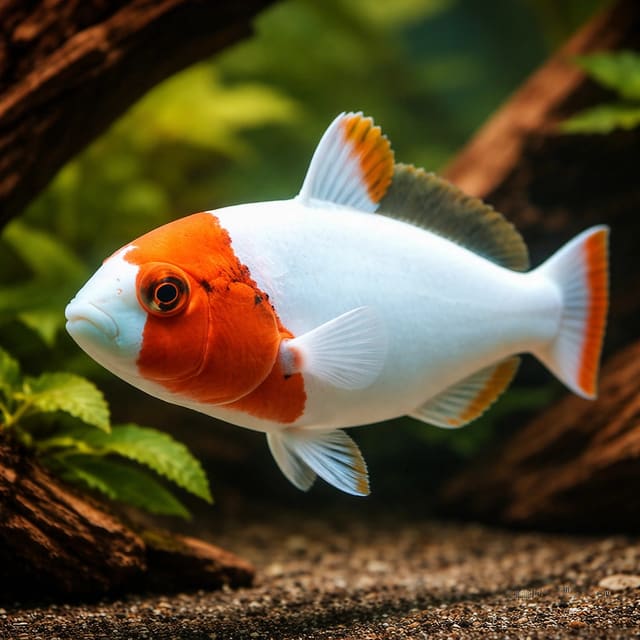
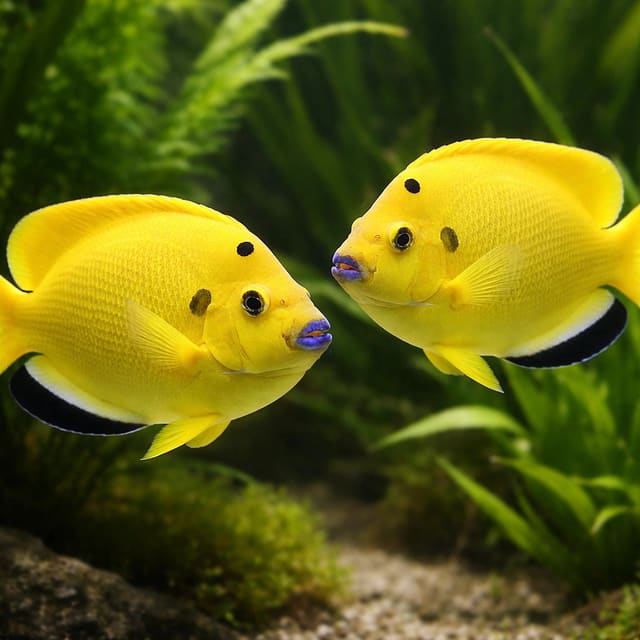
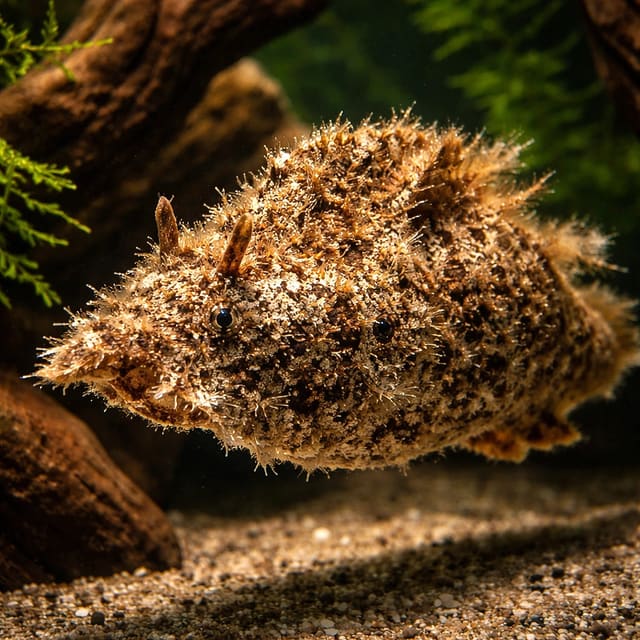
Some gallery images are representative, based on reference photographs of this species, and none shows the exact animal supplied, so colours can look slightly different from the live animal.
Wild social behaviour is useful context rather than a home-aquarium group target. Begin planning around one fish. More than one tang requires enough additional space, dissimilar body shapes where possible, coordinated introduction and a clear response if territorial behaviour develops.
Use this planning table before adding the fish to an existing system. The aquarium must satisfy all of the rows together; a suitable temperature cannot compensate for limited swimming room or an immature biological filter.
| Decision | Planning requirement |
|---|---|
| Adult length | Allow for a maximum recorded 40 cm standard length. |
| Initial volume guide | At least 300 litres applies to one tang under 20 cm; larger or more active fish need a larger aquarium. |
| Routine temperature | Use 25–26°C, the overlap between the recorded wild range and UK tang guidance. |
| Water quality | Keep ammonia and nitrite at zero mg per litre and nitrate no higher than 50 mg per litre. |
| Feeding | Give algae-rich food twice daily, limited to what is eaten within a few minutes except for longer-grazed sheets or tabs. |
| Tank mates | Avoid shy fish and assess tangs with a similar appearance especially carefully. |
The 300-litre figure is a starting floor for a single individual under 20 cm, not an adult minimum for a species recorded at up to 40 cm. Aquarium dimensions, existing livestock and clear swimming routes therefore matter alongside nominal volume.
If this long-term planning envelope exceeds your system, compare animals with different space requirements in our marine fish collection rather than relying on a temporary arrangement.
OATA’s tang and rabbitfish guidance gives 24–26°C for the group, while FishBase records 25–28°C for this species in the wild. Use the shared 25–26°C interval as the routine aquarium target. This keeps the working range inside the species-level environmental record without widening the UK husbandry range.
| Measure | Routine target |
|---|---|
| Temperature | 25–26°C |
| Salinity | 1.020–1.025 |
| pH | 7.9–8.3 |
| Carbonate hardness | Hard, 8–12°dKH |
| Ammonia | Zero mg per litre |
| Nitrite | Zero mg per litre |
| Nitrate | Not to exceed 50 mg per litre |
| Calcium | 380–450 ppm |
| Magnesium | 1250–1350 ppm |
Test the aquarium before introduction and through the normal maintenance cycle. Temperature, pH and salinity need to remain within their working intervals, while ammonia or nitrite must read zero. If either toxic nitrogen compound is detectable, resolve the biological-filtration or stocking problem before adding another fish.
Reef aquariums may need narrower targets to accommodate more sensitive residents. Select shared values that satisfy those animals while remaining inside the ranges above; do not move the tang outside its working range merely to simplify a mixed system.
A temperature reading of 25°C is suitable only when salinity, pH and nitrogen compounds are also in range. Likewise, a nitrate result below 50 mg per litre does not make detectable ammonia acceptable. Record the full set together so a gradual change in one measure is noticed before it becomes a wider stability problem.
Take each routine set of measurements at a consistent point in the maintenance cycle so changes are easier to interpret. For example, compare a pre-water-change result with earlier pre-water-change results rather than treating it as equivalent to a reading taken just after replacing 25% of the water. If temperature remains at 25–26°C but nitrate rises towards 50 mg per litre over successive checks, examine waste removal, feeding and filter performance instead of altering the temperature. If pH or salinity moves within its permitted interval, check the direction across several dated readings and keep the chosen working point steady. This separates an isolated result from a developing pattern and keeps decisions tied to the complete aquarium rather than one convenient number.
OATA recommends an aquarium of at least 300 litres for one tang or rabbitfish under 20 cm and says larger or more active species need a larger aquarium. Because Zebrasoma scopas is recorded at up to 40 cm standard length, treat 300 litres only as the under-20 cm starting threshold. Select the permanent system around adult swimming room rather than the dispatch measurement.
Tangs spend much of their time swimming around the reef and grazing. Arrange live or artificial rockwork to create cover while preserving clear routes around and between structures. Avoid filling the usable water column with a continuous wall of rock. The fish needs places to withdraw as well as unobstructed room to move and turn.
Secure every structure before introduction. The layout should remain stable during routine cleaning, and its surfaces should be reachable without dismantling the fish’s main cover. This makes weekly waste removal and filter maintenance more practical while retaining the grazing-oriented environment.
| Fish and system | Space decision |
|---|---|
| One fish under 20 cm | Use at least 300 litres and still assess swimming room and existing stock. |
| Fish at 20 cm or more | Move beyond the under-20 cm volume guide and provide a larger aquarium. |
| Long-term plan | Allow for the maximum recorded 40 cm standard length. |
| Several active fish | Increase space further and preserve separate movement routes. |
A filter is essential. Marine filtration may use live rock with sufficient water flow, an internal or external filter, or a sump-based filter. A protein skimmer can help by removing dissolved organic waste before it breaks down. Choose capacity around the complete livestock and feeding load, not the tang in isolation.
Before purchase, measure the aquarium, review the adult sizes of existing fish and map the remaining open route. A large nominal volume with crowded rockwork and several active residents may offer less useful space than its litre figure suggests.
Trace a continuous path around the rockwork before deciding that the layout is ready. The route should not end in a narrow pocket where an active fish must reverse beside another resident, and cover should not block access to the main grazing surfaces. Then check the same arrangement from the maintenance side: solid waste collection points must remain reachable, filter flow must not be obstructed and unstable pieces must not depend on neighbouring rocks for temporary support. Finally, compare the route with the adult planning figure rather than the fish’s present dimensions. If existing livestock already occupy the only open corridor or control the approach to cover, nominal volume alone does not solve the conflict; revise the layout or stocking plan before introduction.
The RSPCA’s aquarium guidance explains why a well-established biological filter is essential: fish release toxic ammonia, beneficial bacteria convert it to toxic nitrite, and further bacteria convert nitrite to the safer nitrate. Maturing and maintaining that bacterial population is therefore a core welfare task, not an optional equipment upgrade.
Add livestock slowly. Each increase in fish numbers and feeding increases the waste entering the system, while the beneficial-bacteria population needs time to respond. Stocking too quickly can leave the filter unable to process the added ammonia and nitrite.
Tap water may contain chlorine or chloramine that can kill beneficial bacteria living in filter media. Using removed aquarium water reduces bacterial loss while allowing loose waste to be cleared. Do not make every piece of biological media spotless at the expense of the population that processes fish waste.
| Result | Decision |
|---|---|
| Ammonia or nitrite detected | Stop further stocking and investigate filtration, waste and feeding. |
| Nitrate above 50 mg/l | Restore the recommended maintenance pattern and identify accumulating waste. |
| Reduced filter flow | Check for blockages and clean without tap-rinsing biological media. |
| Stable zero readings | Continue the same testing and maintenance routine rather than reducing it. |
During the first month after introduction, keep the established weekly rhythm and compare each set of readings with the previous one. A trend towards poorer water quality deserves action before another fish or a larger feeding load is added.
In nature, Zebrasoma scopas is herbivorous and feeds predominantly on filamentous algae. Make algae-rich foods the centre of its aquarium diet. OATA recommends nori sheets, algae-based flake and grazing tabs for tangs and rabbitfish, with small meaty frozen feeds such as mysis shrimp, enriched brine shrimp or krill as supplementary foods.
Feed twice a day and offer only the amount eaten within a few minutes. Algae sheets and grazing tabs are the exception to that short window because the fish needs longer to graze from them. Their extended use does not justify leaving unrelated uneaten food to decay.
| Food type | How to use it |
|---|---|
| Nori sheets | Use as an algae-rich grazing food and allow longer access than loose feed. |
| Algae-based flake | Offer a measured portion that is eaten within a few minutes. |
| Grazing tabs | Allow time for grazing while checking that the fish can reach the food. |
| Mysis, enriched brine shrimp or krill | Use small amounts as supplementary frozen food rather than the main diet. |
A practical day can combine one measured algae-flake feed with one nori or grazing-tab period. Rotate the supported algae foods to vary format while keeping the nutritional emphasis consistent. Small frozen additions can add variety, but they should not displace the algal foods needed by a mainly herbivorous fish.
Watch the fish through each loose-food feed. If food remains after a few minutes, reduce the next portion and remove accessible leftovers before they break down. If assertive residents take the whole ration, reassess the combination and the way food is presented rather than adding an uncontrolled surplus.
Track body condition and interest in food alongside the water tests. Reduced intake, loss of condition or a sudden change in grazing behaviour can be an early health warning. Overfeeding creates the opposite problem: uneaten food releases waste as it decomposes and increases the demand on the biological filter.
Use the first feeds to establish a repeatable amount rather than guessing from the fish’s maximum potential size. Begin with a measured algae-rich portion, watch what is consumed within a few minutes and adjust the next loose-food portion down if fragments remain. For nori or a grazing tab, check that the tang actually reaches and uses it before assuming the food has been eaten by the intended fish. Note whether another resident takes most of the ration, whether the tang loses interest unusually early and whether leftovers collect around the rockwork. Those observations distinguish insufficient access from an excessive total portion. Keep supplementary frozen food small and preserve algae-rich food as the staple even when the meaty option draws a faster response.
Complete the aquarium checks before the animal arrives. Confirm that the biological filter is mature, ammonia and nitrite are both zero mg per litre, the routine water values are stable and the permanent layout offers cover plus open swimming routes. Resolve any compatibility question before the bag is opened.
These 20–30 minute floating instructions come from our delivery and Live Arrival Guarantee policy. Follow that page for the delivery window and any guarantee procedure connected with the order.
Do not improvise a shorter floating time because the aquarium already reads 25–26°C. Floating addresses the temperature transition between bag and aquarium; routine water readings remain a separate pre-release check. Equally, do not pour transport water into the established system after floating.
Add fish slowly rather than increasing the aquarium population in a large step. Introduction raises both the feeding load and the amount of waste the filter must process. Continue testing after the addition so ammonia or nitrite is found promptly rather than being inferred from visible illness.
For the first week, keep maintenance, feeding and observation consistent. Avoid changing several husbandry variables at once unless a water-quality result requires action. A stable routine makes changes in appetite, breathing, colour or behaviour easier to recognise.
The arrival process ends only when the fish is swimming appropriately and the aquarium remains within its routine parameters. Use the health checklist below for ongoing observation rather than assuming a successful release removes the need for monitoring.
Learn the individual fish’s normal swimming, colour, breathing, feeding and use of cover. Slight differences occur between fish, so a change from that normal pattern is often more useful than judging one isolated pose.
| Change to watch | Immediate check |
|---|---|
| Hanging at the surface, sitting on the bottom or erratic swimming | Test the full water-quality set and compare it with the routine range. |
| Becoming markedly darker or paler | Check water values, aggression and recent changes to the aquarium. |
| More aggression or hiding than normal | Review tank-mate interactions and whether access to space or food is being blocked. |
| Gill covers moving faster or slower | Check temperature and toxic nitrogen readings promptly. |
| White spots, fluffy growths, ulcers, bumps or damaged fins and scales | Record the appearance and test water quality before choosing the next action. |
| Weight loss or reduced feeding | Review intake, competition and the algae-rich feeding routine. |
If a health change appears, test temperature, salinity, pH, ammonia, nitrite and nitrate and contact us for further guidance. Avoid choosing a treatment from appearance alone, because similar outward signs may occur alongside different water-quality or compatibility problems.
Tangs have sharp modified scales near the tail that resemble a scalpel and can injure people. Minimise handling and keep hands clear of the tail area during any necessary transfer. Prepare the destination and equipment first so the fish is not held longer than needed.
A clear ammonia result does not make reduced feeding irrelevant, and normal feeding does not excuse detectable nitrite. Continue checking both the animal and its environment. Early action is particularly important because even small amounts of ammonia or nitrite can stress tangs and increase their vulnerability to illness.
Keep a simple dated note of unusual behaviour, feeding response and test results. A sequence shows whether the change is brief, worsening or linked to maintenance, stocking or feeding, and it gives a clearer basis for the next welfare decision.
Tangs and rabbitfish are active fish and should not be mixed with shy species. Activity level is therefore the first screen: a fish that withdraws, misses food or remains hidden around active residents is a poor candidate even when its common name normally appears in mixed marine aquariums.
Appearance is the second screen. OATA advises that tangs and rabbitfish can be mixed when they do not look too similar. Tangs with similar body shapes may become territorial and bully new additions, so a shared family name or a large aquarium alone does not settle compatibility.
| Candidate | Screening decision |
|---|---|
| Shy species | Avoid because the tang’s activity may prevent the quieter fish from settling or feeding normally. |
| Similar-shaped tang | Use high caution; assess space and plan simultaneous, late-stage introduction. |
| Dissimilar tang or rabbitfish | Consider only when adult space, activity and introduction order all fit. |
| Angelfish, damsel or some butterflyfish | Treat as candidates for individual screening, not automatic matches. |
| Reef residents | Match shared water values to the most sensitive animals and monitor interactions. |
For a stocking and compatibility assessment, contact us with the aquarium volume and dimensions, current livestock, approximate fish sizes and intended introduction order. Those details allow a practical decision about swimming room, body-shape similarity and competition.
Wild adults may occur in groups, but do not translate a wild group of 20 into a home-aquarium target. Begin with the requirements of one fish and add the extra space and introduction planning demanded by every additional active tang.
Individual responses can differ, particularly where established territories already exist. Plan a combination around the cautious outcome: each fish must retain access to open movement, cover and food without sustained chasing or withdrawal.
First, compare activity: reject a combination in which a shy fish is likely to lose normal access to food or cover. Second, compare body shape and appearance, applying greater caution when another tang looks similar. Third, map adult swimming requirements against the occupied aquarium rather than counting only its litres. Fourth, decide introduction order before changing the stock. A candidate that passes one step can still fail another; dissimilar appearance does not compensate for inadequate space, and ample space does not remove the risk created by an established similar-shaped tang. After introduction, judge the outcome by access and behaviour. Sustained chasing, persistent withdrawal or missed feeding means the practical combination is failing even if every water result remains within range.
If more than one tang is being considered, decide the complete sequence before adding the first one. OATA advises that similar-shaped tangs should be introduced simultaneously and towards the end of stocking because they may be territorial towards later additions.
“Simultaneously” does not remove the need for space. It reduces the advantage of an established territorial resident, while aquarium size, layout, activity and adult growth still determine whether the combination is sensible.
Watch whether every fish can use the aquarium and reach food. More aggression, persistent hiding or reduced intake are warning changes. If one fish is repeatedly bullied, loses access to food or remains withdrawn, end the combination rather than waiting for declining condition to make the decision unavoidable.
Do not solve territorial pressure by adding more food without measurement. Excess food raises the waste load and can damage water quality while leaving the underlying body-shape or territory conflict unchanged. Keep the twice-daily feeding limit and reassess the stocking decision itself.
For reef systems, compatibility has two parts: interactions between animals and water values shared by all residents. Keep the tang inside 25–26°C, salinity 1.020–1.025 and pH 7.9–8.3 while selecting any narrower point required by more sensitive reef inhabitants.
A successful combination remains subject to observation as the fish grow. Recheck swimming room, aggression and feeding access rather than assuming that an arrangement which works at dispatch size will remain suitable at the maximum planning size.
It is a marine surgeonfish in the family Acanthuridae, also called the brown, scopas or brush-tail tang. It is herbivorous and feeds predominantly on filamentous algae in nature.
One purchase supplies one animal. Plan the aquarium independently around the maximum recorded adult length.
FishBase records a maximum of 40 cm standard length, so plan the permanent aquarium around that upper reference.
Use at least 300 litres for one individual under 20 cm, then provide a larger aquarium for a larger or more active fish. Plan permanent swimming room around a maximum recorded 40 cm standard length.
Plan around one fish. More tangs require additional space, dissimilar appearances where possible and careful introduction; similar-shaped tangs should be added simultaneously and towards the end of stocking.
Maintain 25–26°C, salinity 1.020–1.025, pH 7.9–8.3 and carbonate hardness of 8–12°dKH. Ammonia and nitrite must remain at zero mg/l, with nitrate not exceeding 50 mg/l.
Feed algae-rich foods such as nori, algae-based flake or grazing tabs twice daily. Limit loose food to what is eaten within a few minutes and use only small supplementary amounts of mysis, enriched brine shrimp or krill.
Start filming before opening the sealed parcel and continue in one take until the fish is visible inside the sealed bag. Then float the bag for 20–30 minutes before release. Do not pour the bag water into the aquarium.
Avoid shy species and screen every candidate for activity, adult size and body-shape similarity. Dissimilar tangs, rabbitfish, angelfish, damsels or some butterflyfish may be considered only after individual space and introduction checks.
No reviews for this item yet. Bought one? Honest reviews only, good or bad.
What customers say about ordering from us
Easy website plenty of info on fish your buying great to pick a time slot
TRACEY DURRANT · 7 Oct 2026
Got some lovely fish thank you
Kevin Mackie · 7 Oct 2026
Reviews of our shop, collected by Judge.me, an independent third-party review collector. Newest first.