Azure demoiselle (Chrysiptera hemicyanea) - Marine Aquarium Livestock UK
24–26°C · pH 7.9–8.3
£29.99
The Goldtail demoiselle (Chrysiptera parasema) is a reef-associated marine fish recorded to 7 cm total length. One purchase supplies one animal; plan at least 60 litres and follow OATA’s 24–26°C group guidance.
Adult size is the maximum length this species reaches at full maturity (scientific sources). The livestock you receive will be younger and smaller. Product-photo provenance and any image-specific limitations are stated on the listing.
Chrysiptera parasema
The Goldtail demoiselle (Chrysiptera parasema) is a reef-associated marine fish recorded to 7 cm total length. One purchase supplies one animal; plan at least 60 litres and follow OATA’s 24–26°C group guidance.
Adult size is the maximum length this species reaches at full maturity (scientific sources). The livestock you receive will be younger and smaller. Product-photo provenance and any image-specific limitations are stated on the listing.
Maintain these water conditions for optimal health and vibrant colors
OATA describes chromis and damselfish as commonly kept for their colour, relatively small size and hardiness, while also stressing that temperament differs between species. It identifies this particular fish as one of the more peaceful damselfish that may live in a community with other hardy fish. Success still depends on a mature biological filter, suitable marine water and a compatibility assessment based on the complete stocking plan.
You can compare its needs with fish in our marine fish collection. Before arranging an order, read the delivery and Live Arrival Guarantee policy for dispatch days and claim terms.
FishBase lists a maximum of 7.0 cm total length for male or unsexed Chrysiptera parasema. Treat 7 cm as the planning length even when the animal dispatched is smaller. That approach reserves space for the fish after growth and prevents a dispatch description from being mistaken for a permanent size.
OATA’s chromis and damselfish guide gives 24–26°C, salinity of 1.020–1.025 and pH 7.9–8.3 for the group rather than a species-specific optimum. It recommends an aquarium of at least 60 litres for a single damselfish and a much larger aquarium of at least 200 litres for a damselfish or chromis group.
| Planning decision | Value to use |
|---|---|
| Recorded maximum length | 7 cm total length |
| One damselfish | At least 60 litres |
| Damselfish group | At least 200 litres |
| Temperature | 24–26°C |
| Salinity | 1.020–1.025 |
| pH | 7.9–8.3 |
| Ammonia and nitrite | Zero mg per litre |
| Nitrate | Not to exceed 50 mg per litre |
A 60-litre aquarium is the starting recommendation for one damselfish, not permission to ignore filtration, water quality or other residents. If the aquarium already contains fish, judge the complete biological load rather than subtracting the Goldtail demoiselle’s length from a nominal volume. Every additional animal adds waste and requires the filter’s beneficial bacteria to support a larger population.
The 200-litre recommendation becomes relevant when planning more than one damselfish. It does not set a fixed group count. Choose the number only after considering total stocking, filtration and how individual fish use the aquarium. A larger aquarium also resists rapid shifts in temperature and water quality more effectively.
Keep all three water targets—temperature, salinity and pH—within range together. A correct temperature cannot compensate for measurable ammonia, unsuitable salinity or an immature filter. Before choosing the fish, record actual test results and compare the aquarium’s conditions with every target in the table.
| Suits | Not suited to |
|---|---|
| Stable aquarium water maintained at 24–26°C and pH 7.9–8.3 | Water outside 24–26°C and pH 7.9–8.3 |
| Other hardy community fish after water, space, territory and temperament screening | An unscreened damselfish group without the 200-litre group baseline and individual temperament assessment |
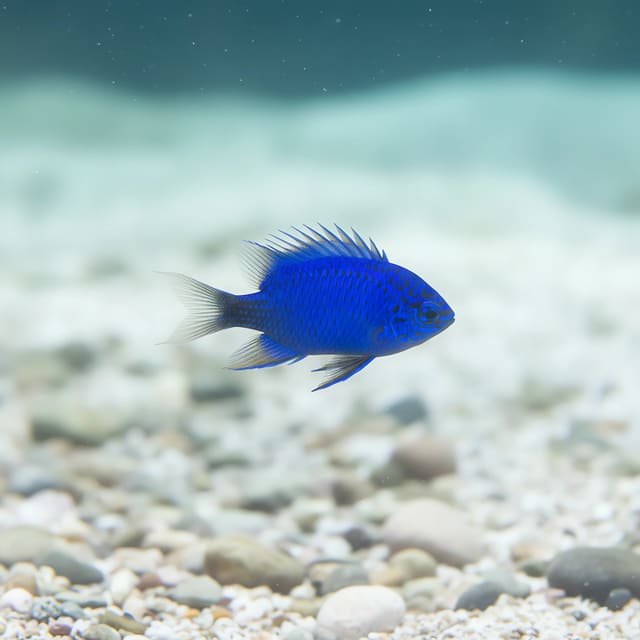
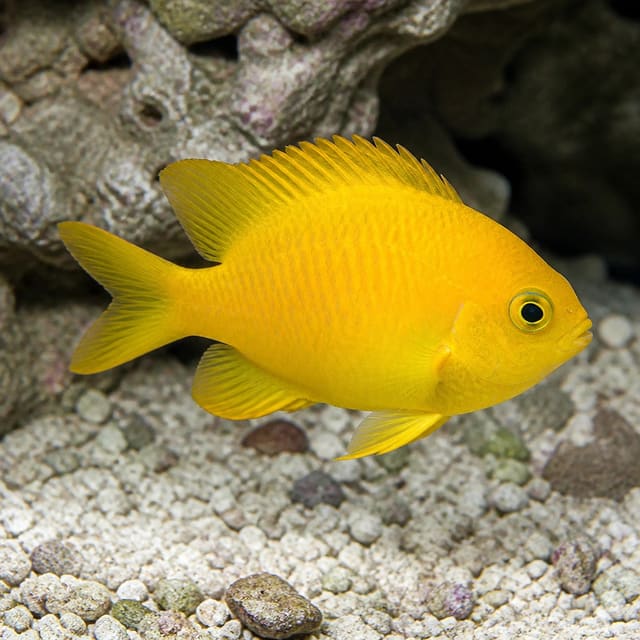
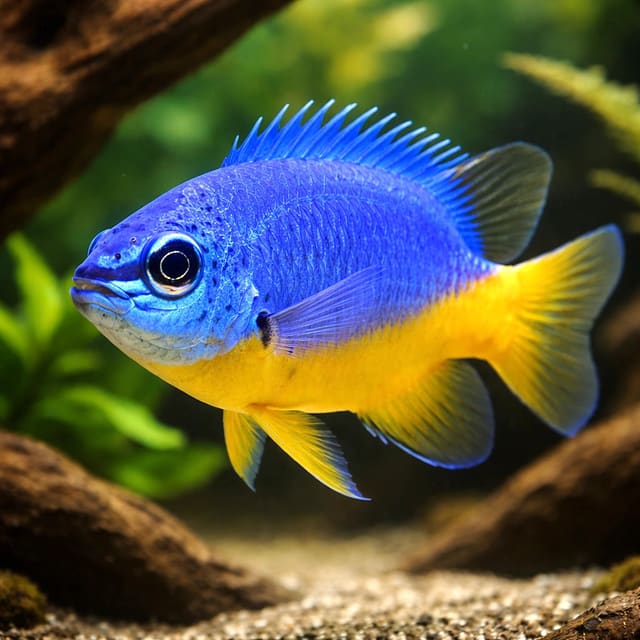
The Goldtail demoiselle (Chrysiptera parasema) is a compact saltwater damselfish whose recognised common names include yellowtail damselfish and yellowtail blue damsel. Its blue-and-yellow appearance gives the fish its familiar trade names, while its scientific identity separates it from other damselfish with superficially similar colours.
A natural-history summary of Chrysiptera parasema describes it as an Indo-Pacific saltwater species. FishBase places it more specifically in the Western Pacific, including the Solomon Islands, northern Papua New Guinea, the Philippines and the Ryukyu Islands. It is reef-associated and has been recorded at depths from 1 to 16 metres. These details explain why its aquarium must be planned as a marine system rather than a freshwater or brackish setup.
One purchase supplies one animal.
Sex is guaranteed only when the selected option explicitly states male or female. This Goldtail demoiselle listing has no sex-guaranteed option.
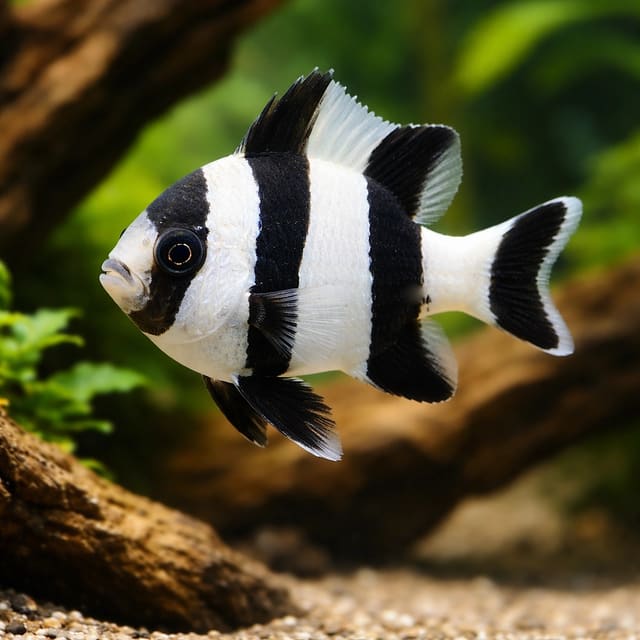
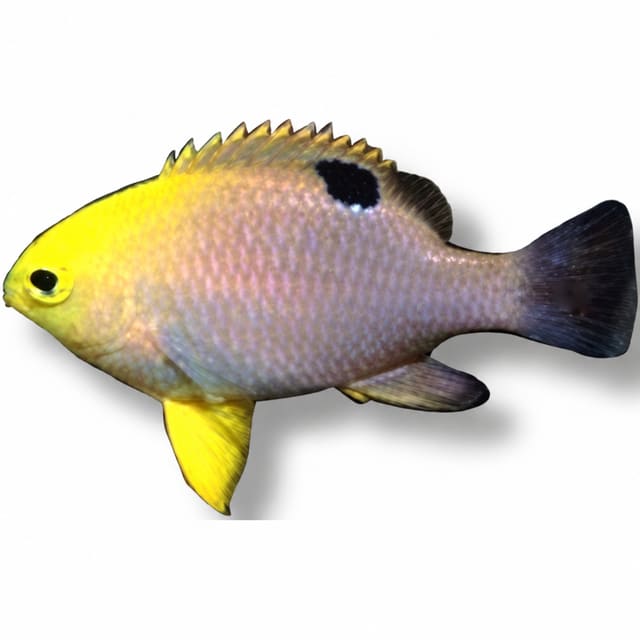
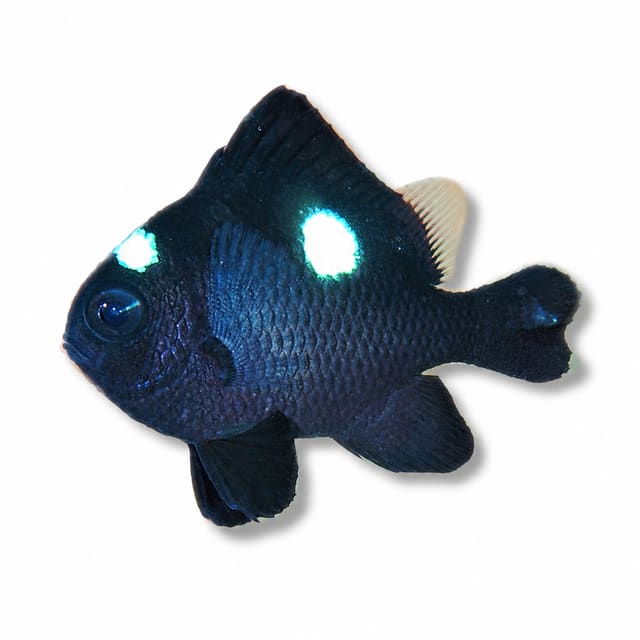
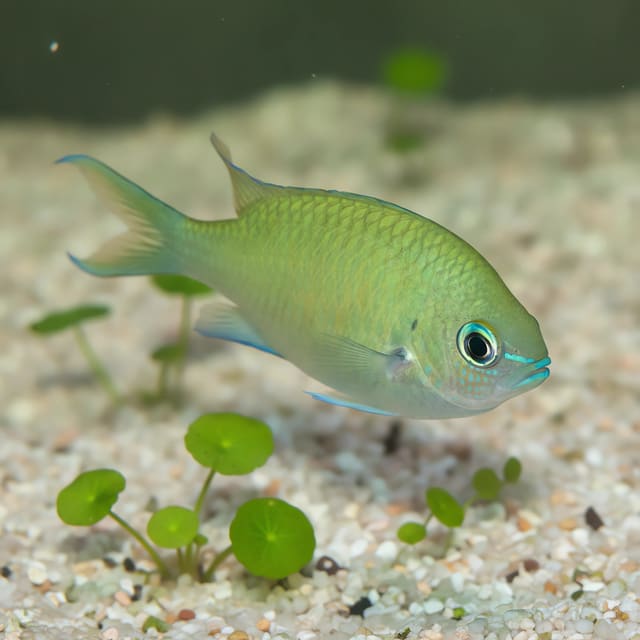
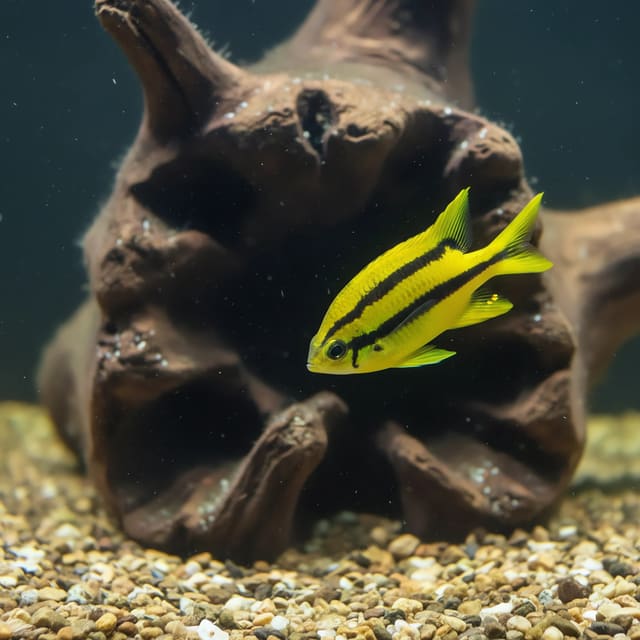
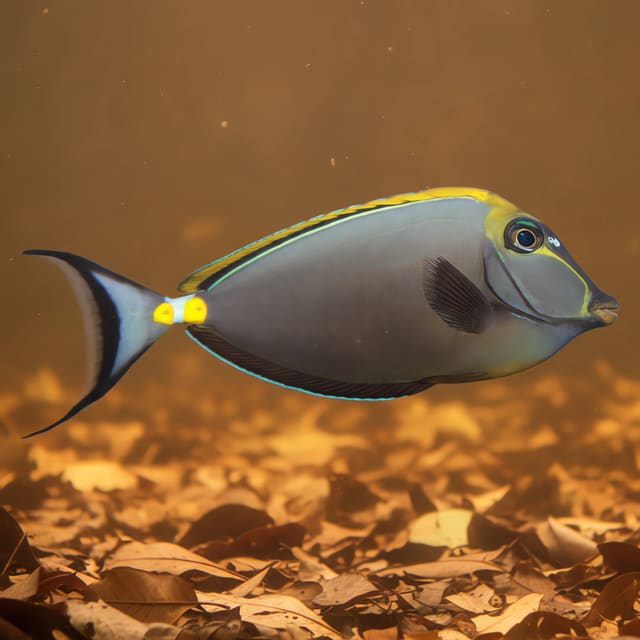
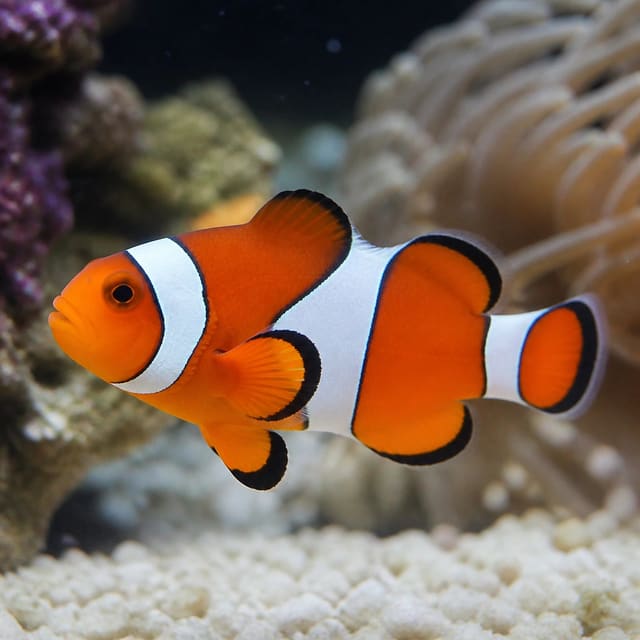
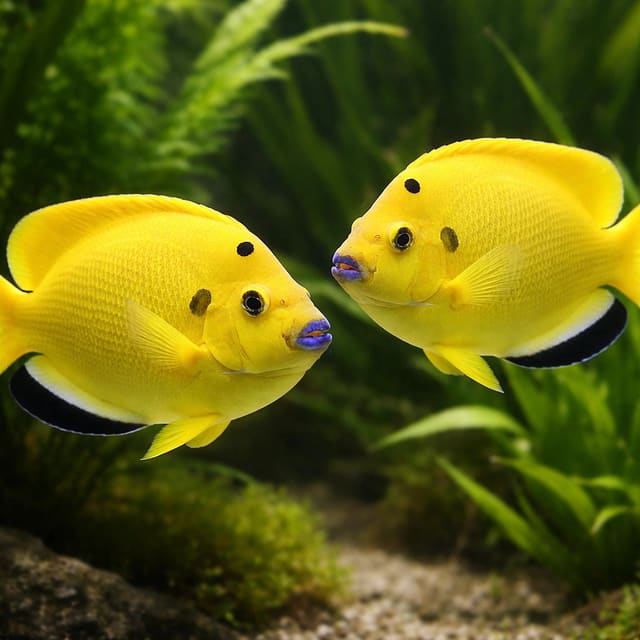
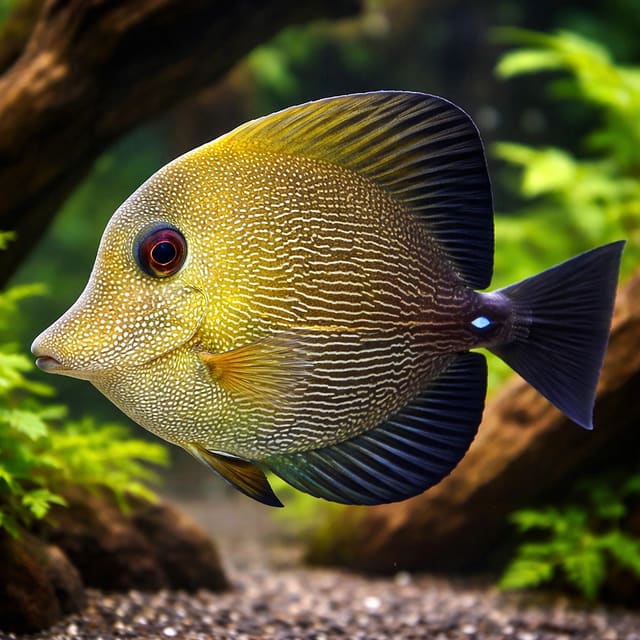
Some gallery images have been digitally enhanced to improve image quality. They show the listed type of animal rather than guaranteeing the exact markings of the individual supplied, so natural colour and pattern can vary.
Prepare the aquarium and establish its biological filter before adding the Goldtail demoiselle. Mature the system before livestock arrives and apply that preparation process to this fish’s marine water requirements.
The RSPCA’s aquarium filtration guidance explains why a working biological filter is essential. Fish release ammonia, which is toxic. Beneficial bacteria in established filter media convert ammonia to nitrite, which is also toxic, and then to the safer compound nitrate. An aquarium may look clear while this biological process remains unable to handle fish waste, so appearance is not a substitute for water testing.
OATA lists several suitable filtration approaches for marine aquariums: live rock with sufficient water flow, an internal or external filter, or a sump-based filter. Whichever method you use, it must remain operational and accessible for routine inspection. A protein skimmer may also help maintain water quality by removing dissolved organic waste before it breaks down into more harmful substances.
OATA warns that adding too many fish, or adding them too quickly, can cause new tank syndrome. This happens when the bacterial population cannot process the increased waste, allowing ammonia and nitrite to reach unhealthy concentrations. Add livestock gradually, feed carefully and test after a stocking change so that a developing problem is found before another animal is introduced.
A mature aquarium is therefore more than an aquarium that has been running for a certain period. It is a functioning system in which filtration, water movement, testing and maintenance work together to hold the required conditions while supporting the intended livestock.
Set the aquarium within the recommended ranges before introduction, then use reliable tests to follow the values that can change with feeding, waste and maintenance. Record each measurement and compare it with the targets below.
| Measurement | Chromis and damselfish target |
|---|---|
| Temperature | 24–26°C |
| Salinity | 1.020–1.025 |
| pH | 7.9–8.3 |
| Ammonia | Zero mg per litre |
| Nitrite | Zero mg per litre |
| Nitrate | Not to exceed 50 mg per litre |
| Carbonate hardness | 8–12°dKH |
| Calcium | 380–450 ppm |
| Magnesium | 1250–1350 ppm |
Ammonia and nitrite must remain at zero mg per litre. Any detectable result matters because even small amounts can stress chromis and damselfish. Test both promptly if behaviour, breathing, colour or feeding changes. Delay new livestock additions while either compound is measurable.
Nitrate must not exceed 50 mg per litre. Treat that figure as an upper limit rather than a target. If a result rises beyond it, review feeding, remove accumulated solid waste during maintenance and complete the recommended partial water change. Continue testing so the response is guided by the measured result.
Temperature, salinity and pH must be considered together. Write down the readings rather than relying on how the aquarium looks. A fish can be exposed to unsuitable chemistry in clear water, and a correct salinity reading does not cancel out ammonia or nitrite.
OATA notes that aquariums containing more sensitive reef species may need altered parameters to accommodate those animals. Before combining the Goldtail demoiselle with corals or other marine livestock, compare the needs of every resident and work within the shared safe range. Do not change one value solely for this fish without checking the consequences for the rest of the aquarium.
Use the same measurement methods consistently, follow the test manufacturer’s directions and record trends. A sequence of results makes gradual movement easier to recognise than isolated readings remembered from week to week.
Goldtail demoiselles come from reef-associated environments. FishBase places the species between 1 and 16 metres, while OATA describes wild chromis and damselfish gathering near hard coral growth and moving quickly into shelter when they detect a threat. Build the aquarium around that need for refuge without treating a decorative layout as a substitute for sufficient water volume.
Chromis and damselfish are relatively undemanding about aquarium décor, so focus on function. Provide structures around which the fish can move and places into which it can retreat. Retain enough usable space for normal swimming and ensure the chosen arrangement does not prevent access to filters, pumps or areas where solid waste collects.
OATA explains that some damselfish defend algae patches in the wild and may therefore become territorial in aquariums. It also places Chrysiptera parasema among the more peaceful members of the group. Both points matter: select this fish for its comparatively community-suitable identity, but still watch the individual animal rather than assuming that every damselfish will use space in the same way.
A larger aquarium gives more scope for separating activity areas and also improves environmental stability. Use at least 60 litres for one damselfish and at least 200 litres when planning a group, then judge the layout by how much functional space remains after equipment and décor have been installed.
Reassess the arrangement when livestock is added rather than changing it simply for visual variety. Behaviour, access for cleaning and stable water quality are the useful measures of whether the layout is working.
Prepare for introduction by testing the aquarium rather than relying on its age or appearance. Temperature should be 24–26°C, salinity 1.020–1.025 and pH 7.9–8.3. Ammonia and nitrite must both be zero mg per litre, while nitrate must not exceed 50 mg per litre. Confirm that filtration and water movement are operating normally before the fish enters the aquarium.
Observe swimming, breathing, colour, condition and interest in food. These behaviours establish what is normal for the individual and make later changes easier to recognise. Clear, bright eyes, intact scales and undamaged fins are useful appearance checks, while appropriate swimming and a reliable feeding response help show how the fish is settling.
Feed only a small amount that can be consumed within a few minutes. Remove the cause of any accumulating uneaten food by reducing the next portion, because decomposing food adds toxic waste to the water. Continue the normal testing routine and test immediately if breathing, swimming or feeding changes.
Do not add several more fish simply because the first water test remains satisfactory. Beneficial bacteria need to increase when animal numbers and feeding rise. A gradual stocking plan gives the filter time to respond and allows you to judge the Goldtail demoiselle’s behaviour before another compatibility decision is made.
OATA describes chromis and damselfish as omnivores that require a wide range of foods. Use a good-quality marine flake or pellet as the main prepared food, then supplement it with frozen mysis shrimp, enriched brine shrimp or red plankton. Damselfish may also graze algae offered to herbivorous fish or growing naturally in the aquarium.
Feed twice a day and offer only what the fish can eat within a few minutes. Begin with a small portion and watch it being consumed. If food remains after the feeding period, reduce the next serving rather than adding another variety on top. Uneaten food breaks down and releases toxic waste, placing extra demand on the biological filter.
| What you observe | What to do next |
|---|---|
| Food is eaten within a few minutes | Keep the portion modest and continue varying suitable foods |
| Food remains uneaten | Reduce the next portion and check where waste collects |
| Interest in food drops | Test water and assess breathing, swimming and appearance |
| Body condition changes | Review intake, portion size and the wider health checklist |
Variation means rotating appropriate foods across feeds, not increasing the total quantity. A prepared marine flake or pellet can cover most nutritional needs, while the listed frozen foods broaden the diet. Algae grazing may form part of that variety, but it does not replace the measured twice-daily feeding routine.
Watch the Goldtail demoiselle eat whenever possible. Feeding behaviour is both a care task and an observation opportunity: reduced intake or a lack of interest can be an early sign that water quality, health or social conditions need attention.
Keep the relationship between food and filtration in mind. More food produces more waste, and an abrupt increase in feeding can challenge the beneficial bacterial population just as an abrupt increase in fish numbers can. This is especially important after introducing new livestock, when both animal numbers and food input may rise together.
Base every adjustment on consumption, condition and test results. The goal is consistent intake of varied food with little or no uneaten material entering the aquarium.
At least once every week, complete a partial water change of 25%. Use a siphon where appropriate to remove solid waste from the substrate, because waste left in the aquarium continues to break down. Keep the maintenance day consistent enough that missed work is easy to notice.
Inspect filters regularly and clean them when required to prevent blockages. Do not rinse established filter media under the tap: chlorine or chloramine may kill part of the beneficial bacterial population. Instead, rinse the media lightly in aquarium water removed during the partial water change. This removes loose debris while reducing bacterial loss.
Clean a protein skimmer regularly if one is installed. Its performance depends on routine care, and reduced efficiency allows more dissolved organic waste to remain in the system. Inspect water flow at the same time so declining output is addressed before it contributes to poorer conditions.
| Weekly task | Decision it supports |
|---|---|
| Change 25% of the water at least once a week | Remove dissolved waste and support water quality |
| Siphon solid debris | Prevent collected waste from breaking down |
| Test ammonia and nitrite | Confirm both remain at zero mg per litre |
| Test nitrate | Keep it from exceeding 50 mg per litre |
| Check filter flow | Find blockages or reduced performance |
| Inspect the fish | Recognise changes in behaviour or appearance |
If ammonia or nitrite appears, or nitrate exceeds its maximum, resolve the water-quality problem before adding livestock. Review feeding as part of that response because uneaten food increases waste. A recent rise in fish numbers may also mean the biological filter has not yet adjusted to the new load.
Record results alongside maintenance work. A written sequence shows whether nitrate rises between changes, filter flow declines repeatedly or a behavioural change coincides with a water-quality movement. That pattern is more useful than treating every weekly reading as an isolated event.
Weekly care does not replace immediate action when the fish changes. Test promptly whenever swimming, breathing, colour, condition or appetite differs from its normal pattern, even if the scheduled maintenance day is still several days away.
Learn the Goldtail demoiselle’s usual swimming, colour, breathing and feeding response. Individual fish vary slightly, so a change from that animal’s normal pattern is often more useful than a single isolated observation. Combine behavioural checks with water tests because chromis and damselfish can be stressed by even small amounts of ammonia or nitrite.
| Change you notice | First response |
|---|---|
| Hanging at the surface, sitting on the bottom or erratic swimming | Test water immediately and inspect filtration |
| Colour becoming darker or paler | Compare water results and observe social interactions |
| More aggression or hiding than normal | Review stocking, usable space and tank-mate behaviour |
| Gill covers moving faster or slower | Test ammonia and nitrite without delay |
| White spots, fluffy growths or lost fins or scales | Record the change, test water and seek health guidance |
| Weight or body condition changing | Review feeding intake and the full health pattern |
| Reduced intake or no interest in food | Check water, breathing, swimming and appearance together |
Test ammonia, nitrite and nitrate whenever a health concern appears, then check temperature, salinity and pH. Ammonia and nitrite must be zero mg per litre, and nitrate must not exceed 50 mg per litre. Inspect filter flow and look for uneaten food or solid waste that may be contributing to the result.
Do not add livestock while the cause of a change is being assessed. Extra fish and extra feeding increase the biological load and make it harder to judge whether the system is recovering. Continue observing the affected fish so you can describe when the change began and whether it is improving.
If the signs persist after the immediate water and equipment checks, speak to our team with the test results and a clear description of the change. Exact readings, recent stocking changes, feeding behaviour and the timing of maintenance provide a practical basis for the next health decision.
Regular observation makes this process faster. A keeper who knows the fish’s normal colour, swimming and appetite can act when a small change appears rather than waiting for several warning signs to develop together.
OATA identifies the yellowtail blue damselfish, Chrysiptera parasema, as one of the more peaceful damselfish and says it can live in a community aquarium with other hardy fish. That is a useful starting point, but it is not a universal tank-mate list. Damselfish vary in temperament, and individual behaviour, aquarium size and the complete stocking plan still shape the outcome.
A compatibility decision continues after introduction. Watch for increased hiding, altered aggression, darker or paler colour, disrupted swimming, changed breathing or reduced feeding. Test water when these signs appear so environmental stress is separated from a social interaction as early as possible.
Do not assume that two fish are compatible merely because each is described as hardy or peaceful. The honest uncertainty is that no named pairing guarantees how every individual will behave. The practical rule is to assess shared water needs, total aquarium volume, territorial use and the temperament of every resident together.
For a mixed community, send our team the exact species, aquarium volume and recent water readings for a stocking assessment. Include existing fish as well as proposed additions, because compatibility depends on the whole community rather than the new fish in isolation.
Reef aquariums need an additional water-value check. OATA notes that parameters may need adjustment for sensitive reef species. Work within conditions suitable for all residents rather than selecting water values solely around the Goldtail demoiselle.
A single damselfish should be planned in an aquarium of at least 60 litres. This provides a clear route for keeping one Goldtail demoiselle without assuming that it requires companions of its own kind. The volume is a starting point: the filter must be mature, water must remain within range and every other resident must be included in the stocking calculation.
For a group of damselfish or chromis, OATA recommends a much larger aquarium of at least 200 litres. Choose the number through a full stocking assessment that includes adult size, total waste load, filtration and individual behaviour. Add livestock slowly so beneficial bacteria can expand as fish numbers and feeding increase.
| Plan | What it requires |
|---|---|
| One Goldtail demoiselle | At least 60 litres, a mature filter and screened community residents |
| More than one damselfish | At least 200 litres and an individual stocking assessment |
Wild chromis and damselfish may gather near hard coral growth where they can take shelter, but an aquarium group still needs deliberate planning. Aquarium boundaries concentrate fish, waste and interactions into a fixed space. Use the larger-volume recommendation and observe how each individual occupies the available shelter and swimming area.
If a group member begins hiding more, changes colour, feeds less or shows altered aggression, test water and watch the interactions before adding another fish. These signs can reflect environmental or social pressure, and increasing the population would add both behavioural complexity and biological load.
Choose the single-fish route when it fits the aquarium and intended community. Choose a group only when the aquarium begins at 200 litres, the filtration can support the complete stock and the proposed individuals have been assessed together. Neither plan removes the need for twice-daily measured feeding, a 25% water change at least once every week and ongoing observation.
The Goldtail demoiselle is Chrysiptera parasema, a reef-associated Western Pacific marine damselfish recorded to a maximum of 7 cm total length.
One purchase supplies one animal.
Plan the aquarium around the recorded maximum of 7 cm total length.
OATA’s group guidance recommends a mature, filtered marine aquarium of at least 60 litres for one fish, with shelter, stable water and ammonia and nitrite at zero mg per litre.
OATA’s group guidance recommends at least 60 litres for one damselfish and at least 200 litres for a group; choose the number through a complete stocking assessment.
Use OATA’s group guidance of 24–26°C, salinity 1.020–1.025 and pH 7.9–8.3, with nitrate not exceeding 50 mg per litre.
OATA’s group guidance recommends a good-quality marine flake or pellet with frozen mysis shrimp, enriched brine shrimp or red plankton, offering only what it eats within a few minutes twice daily.
Before introduction, follow OATA’s group guidance by confirming 24–26°C, salinity 1.020–1.025, pH 7.9–8.3 and zero mg per litre ammonia and nitrite.
Screen other hardy community fish for shared water needs, aquarium volume, territory and individual temperament; no named pairing guarantees how every fish will behave.
No reviews for this item yet. Bought one? Honest reviews only, good or bad.
What customers say about ordering from us
Easy website plenty of info on fish your buying great to pick a time slot
TRACEY DURRANT · 7 Oct 2026
Got some lovely fish thank you
Kevin Mackie · 7 Oct 2026
Reviews of our shop, collected by Judge.me, an independent third-party review collector. Newest first.