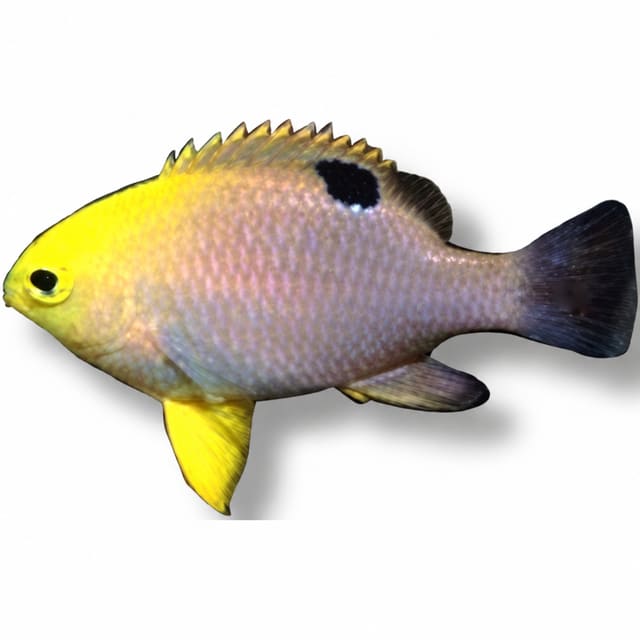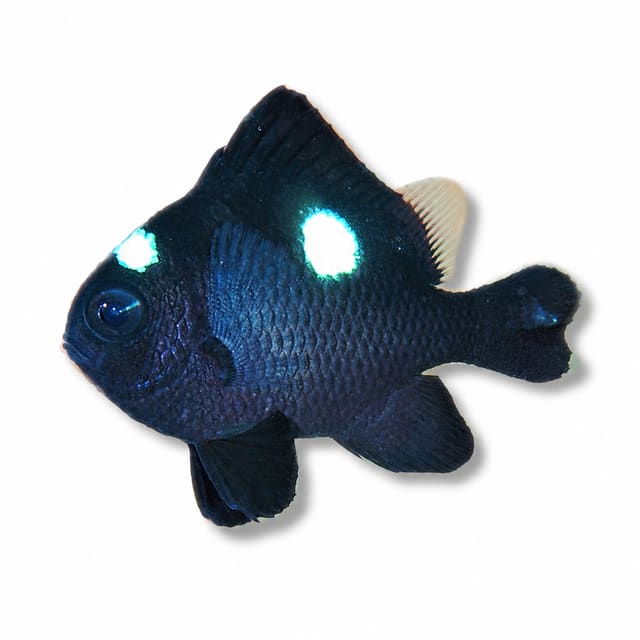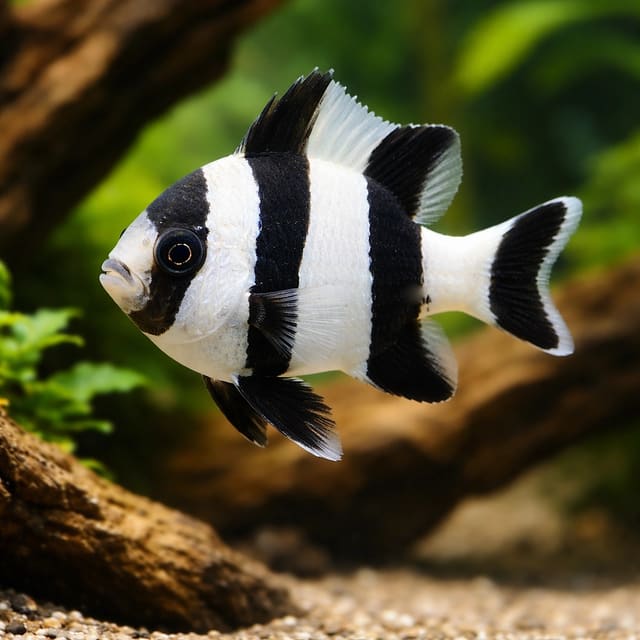
Azure demoiselle (Chrysiptera hemicyanea) - Marine Aquarium Livestock UK
24–26°C · pH 7.9–8.3
£29.99
Springer's Damselfish (Chrysiptera springeri) is a small Western Pacific reef damselfish, recorded to 5.5 cm total length, sold as one live fish per purchase. It needs a mature, stable marine aquarium with plenty of rockwork, a varied omnivorous diet and tank mates chosen with care, because damselfish can be territorial.
Adult size is the maximum length this species reaches at full maturity (scientific sources). The livestock you receive will be younger and smaller. Product-photo provenance and any image-specific limitations are stated on the listing.
Chrysiptera springeri
Springer's Damselfish (Chrysiptera springeri) is a small Western Pacific reef damselfish, recorded to 5.5 cm total length, sold as one live fish per purchase. It needs a mature, stable marine aquarium with plenty of rockwork, a varied omnivorous diet and tank mates chosen with care, because damselfish can be territorial.
Adult size is the maximum length this species reaches at full maturity (scientific sources). The livestock you receive will be younger and smaller. Product-photo provenance and any image-specific limitations are stated on the listing.
Maintain these water conditions for optimal health and vibrant colors
Springer's Damselfish (Chrysiptera springeri) is a small reef damselfish from the Western Pacific, recorded by FishBase at up to 5.5 cm total length. Each purchase is one live fish. It belongs in a mature, stable marine aquarium with plenty of rockwork, and like many damselfish it needs tank mates chosen with care.
In the wild it lives on sheltered lagoon and inshore coral reefs off Indonesia and the Philippines, mostly in groups over reef slopes where low patches of Acropora coral grow on sand. That picture explains most of what it needs at home: clean, stable sea water, solid rock to shelter in and a varied diet. It also explains why space matters, because damselfish differ in temperament and some species hold territories in the aquarium.
Small damselfish earn their place in marine aquariums through colour, activity and hardiness; OATA describes chromis and damselfish as among the most commonly kept marine fish for those reasons. The trade-off is behaviour, which is why this guide spends as much time on territory and tank mates as on water.
OATA lists the yellow tail blue damsel, the domino and the humbug among the most commonly kept damselfish, and notes that the group very rarely grows beyond 10 cm, with some larger species nearer 15 cm. At a recorded 5.5 cm, Springer's damselfish sits at the small end of that range and shares its genus with the peaceful community damsels OATA describes, while dominoes and humbugs belong to a tougher kind of aquarium altogether.
| Suits | Keepers with a mature, stable marine aquarium and room for rockwork |
|---|---|
| Aquarium | At least 60 litres for one damselfish and at least 200 litres for a group, in OATA's group guidance |
| Adult size | Up to 5.5 cm total length (FishBase) |
| Water | Marine; OATA group guidance of salinity 1.020–1.025, 24–26 °C and pH 7.9–8.3 |
| Diet | Omnivore: quality flake or pellet with frozen foods |
| Temperament | Damselfish vary; plan space and rockwork for territorial behaviour |
| Tank mates | Hardy marine fish, with every mix checked first |
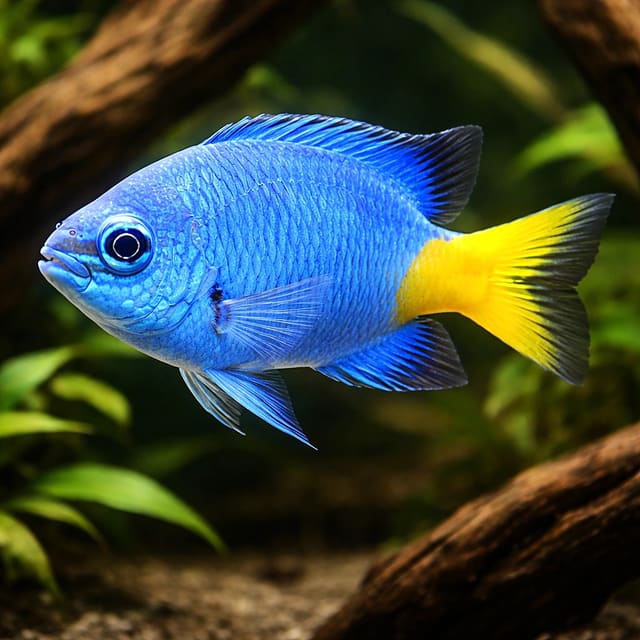
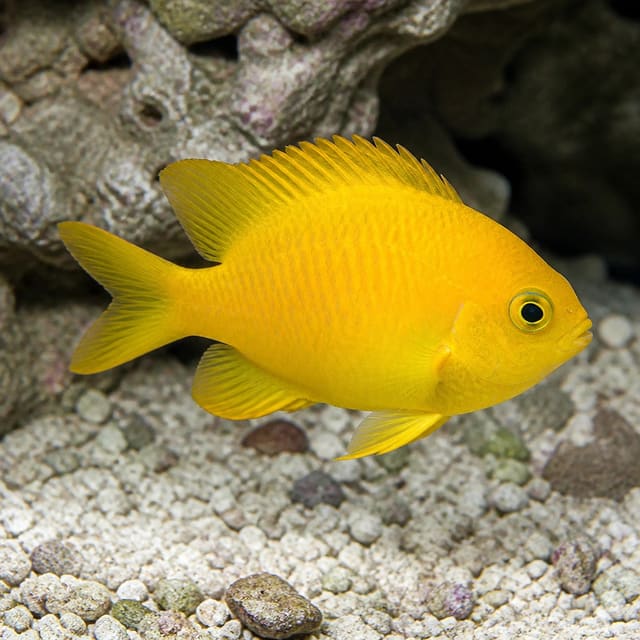
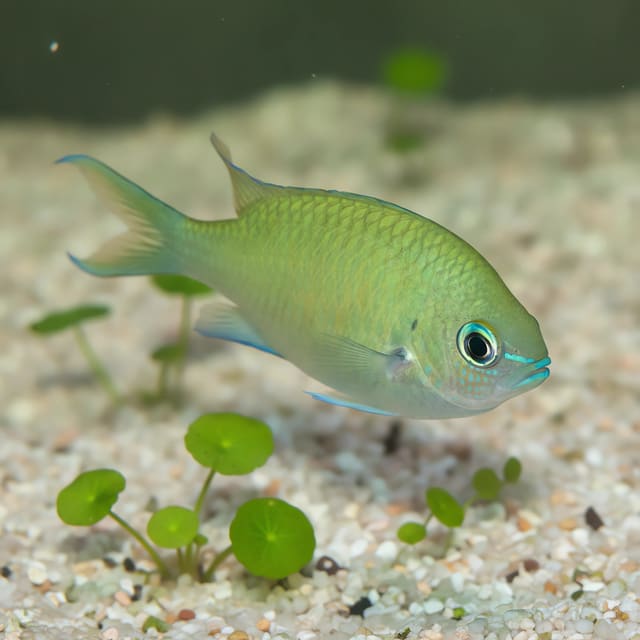
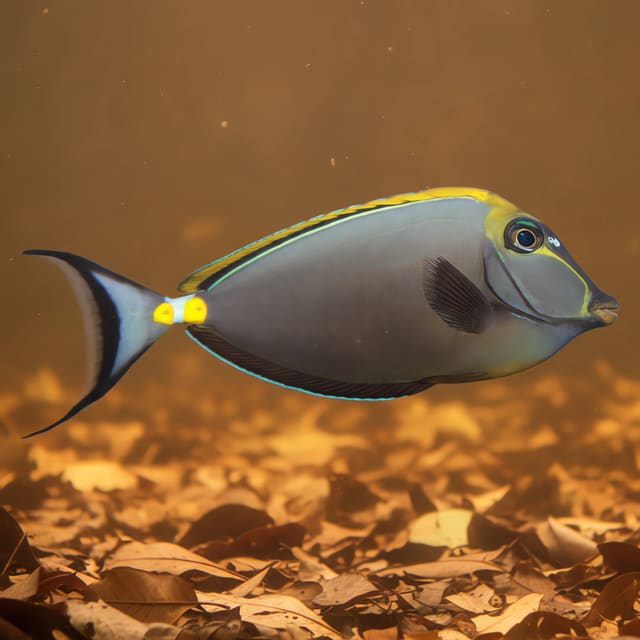
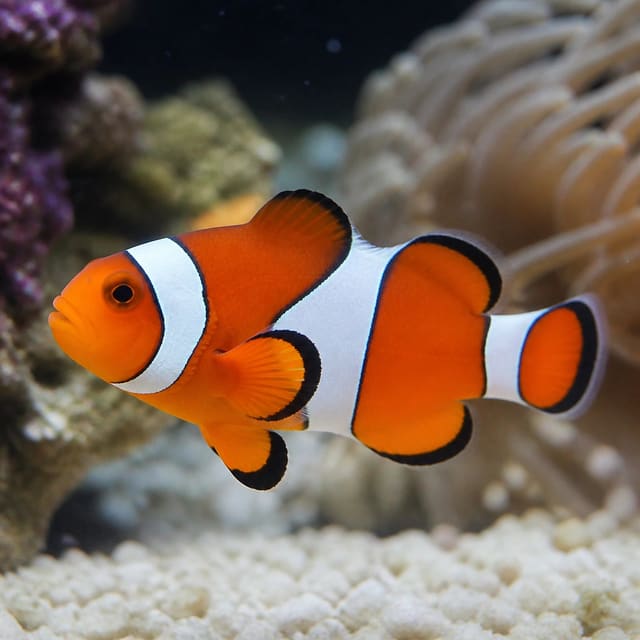
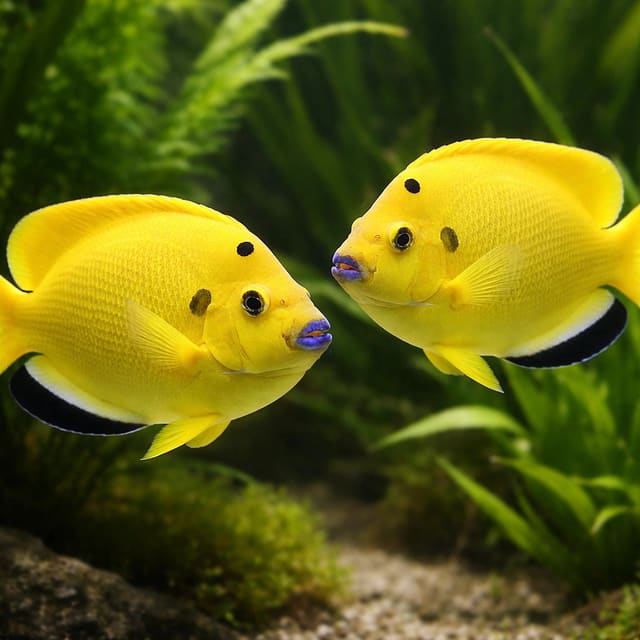
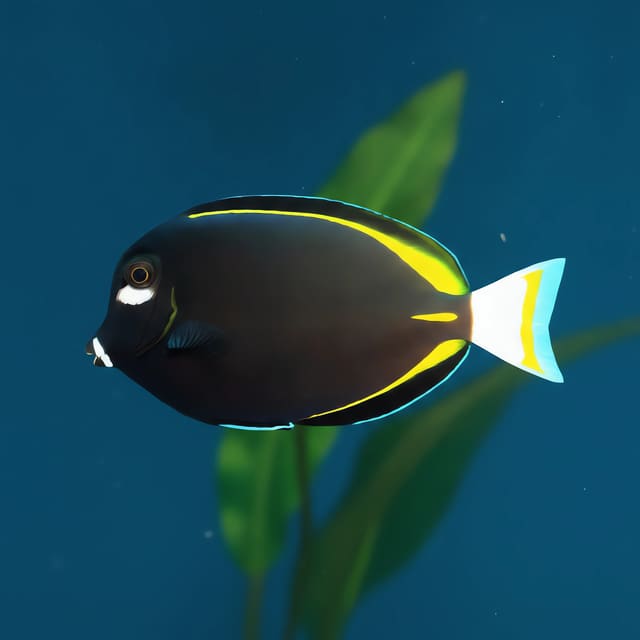
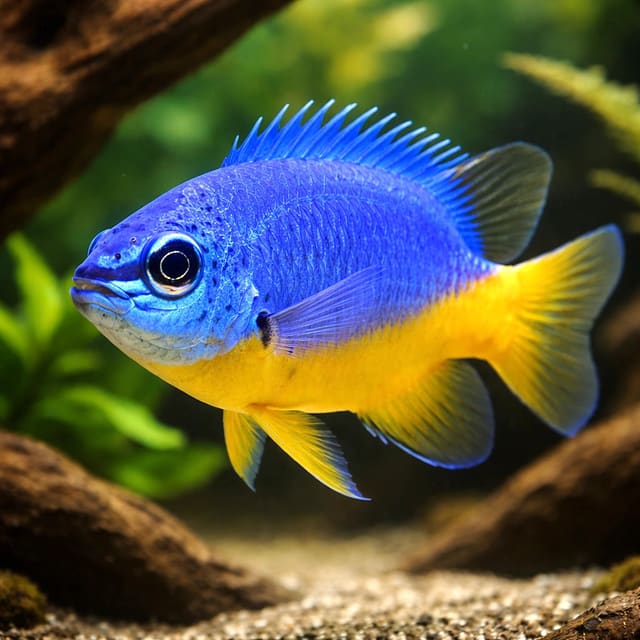
The photograph on this page shows a vivid blue fish with darker markings around the eye and head, fine dark speckling along the flanks and a pale, see-through tail, swimming over pale gravel. Gallery images have been digitally enhanced to improve image quality. Natural colour, pattern, size and maturity can vary between live animals.
Sex is guaranteed only when the selected option explicitly states male or female. This Springers Damselfish listing has no sex-guaranteed option. The care in this guide applies equally to either sex.
To compare other small reef fish before you decide, browse our marine fish collection.
Chrysiptera springeri is a damselfish in the family Pomacentridae. The Wikipedia species summary gives its common name as Springer's demoiselle; we sell it as Springer's damselfish. Both names refer to the same species, and the scientific name is the one to check when you compare listings.
The FishBase species summary describes a marine, reef-associated and non-migratory fish of the tropical Western Pacific, recorded from Indonesia, in the Moluccas and Flores, and from the Philippines. Adults inhabit coral-rich areas of sheltered lagoons and inshore coral reefs, and are mostly found in aggregations on coastal reef slopes with low Acropora patches on sand. FishBase also notes that they are seen with similar yellow-tailed species, often on the same coral patches. The pale tail in our photograph is one visible difference from those similar yellow-tailed species.
The wild depth range of 4–30 m is a field record of where the species has been found, not something to recreate. What matters for an aquarium is the habitat type: rock and coral structure for shelter, open water above it and calm, clean conditions.
FishBase gives a maximum length of 5.5 cm total length for males and unsexed fish. Total length runs from the snout to the end of the tail, so the body itself is a little shorter. That places Springer's damselfish at the small end of the family: OATA's group sheet says chromis and damselfish very rarely grow over 10 cm, with some larger damselfish nearer 15 cm.
Our photograph shows a strongly blue fish, with darker blue-black marks around the eye and across the head and fine speckles on the scales. The fins are tinged and edged with blue, while the tail is pale and almost transparent. Colour in any individual fish can vary with age, mood and lighting.
FishBase records the species as oviparous, with distinct pairing during breeding. Its eggs are demersal and stick to the substrate, and the males guard and aerate them. That is wild biology rather than a home breeding plan, and it is useful mainly as background: a fish that pairs and guards a nest site is a fish that can become attached to a particular patch of rock.
FishBase lists the IUCN status of Chrysiptera springeri as Least Concern.
OATA's advice for chromis and damselfish is to buy an aquarium as large as possible within reason. It recommends at least 60 litres for a single damselfish and at least 200 litres for a group of damselfish or chromis. Those figures apply to the whole group rather than to this species alone, and they are minimums, not targets. A larger volume also holds temperature and water quality steadier, which is the real reason to go bigger.
For Springer's damselfish, think about floor plan as well as litres. A long aquarium with rockwork spread along it gives more separate refuges than a tall, narrow one of the same volume, and separate refuges are what keep a territorial fish from treating the whole tank as its own.
A filter is essential. In OATA's words for marine set-ups, that can be live rock with sufficient water flow, an internal or external filter, or a sump-based filter, and a protein skimmer can be beneficial because it removes dissolved organic waste before it breaks down into more harmful substances.
The filter's real work is biological. As RSPCA guidance on aquarium filters explains, fish release ammonia, which is toxic; beneficial bacteria in a working filter convert it to nitrite, which is also toxic, and then to nitrate, which is safer. Those bacteria take time to build up, which is why a marine aquarium must be matured before fish go in.
OATA describes chromis and damselfish as relatively undemanding in terms of aquarium decor, and notes that in the wild they are found in groups near hard coral, where they quickly take shelter if they notice a threat. Build on that:
Before adding any fish, OATA advises checking that ammonia and nitrite are at zero. Increase the number of fish slowly afterwards, because the bacteria in the filter must grow each time more fish are added and feeding increases. Stocking too many fish, or stocking too quickly, can cause "new tank syndrome", when there are not enough nitrifying bacteria to cope with the extra waste and ammonia and nitrite rise to unhealthy levels that may make fish ill or kill them.
Springer's damselfish comes from coral-rich habitats, and damselfish are kept in both fish-only and reef aquariums. OATA points out that when chromis or damselfish live in a reef aquarium, some water values need to be adjusted to suit the more sensitive species, so in a reef set the water for the corals and invertebrates first.
OATA's group range for chromis and damselfish is 24–26 °C, so most UK homes need a heater with a reliable thermostat. Size it for the aquarium volume, place it where water flows past it, and check the temperature with a separate thermometer rather than trusting the heater dial.
Salinity is the value that defines a marine aquarium, and OATA's group guidance is a specific gravity of 1.020–1.025. Measure it with a refractometer or a hydrometer, and check it both in the aquarium and in each batch of new salt water before it goes in.
OATA's marine filtration options include live rock with sufficient water flow, so plan circulation that reaches through the rockwork as well as across the open water. Aim for movement that keeps the rock clean without pinning a small fish against the glass.
OATA describes chromis and damselfish as usually undemanding of water chemistry and gives the following suggested values. They are a general guide for the whole group, not a measured optimum for Springer's damselfish, so the aim is to hold the aquarium steady within them.
| Salinity (specific gravity) | 1.020–1.025 |
|---|---|
| Temperature | 24–26 °C |
| pH | 7.9–8.3 |
| Ammonia | Zero mg per litre |
| Nitrite | Zero mg per litre |
| Nitrate | Not above 50 mg per litre |
| Carbonate hardness | 8–12 °dKH |
| Calcium | 380–450 ppm |
| Magnesium | 1250–1350 ppm |
OATA warns that chromis and damselfish can be stressed by even the smallest amounts of ammonia and nitrite, which may then cause them to develop various diseases. A hardy reputation is not a reason to tolerate a reading above zero. If either appears, find the cause before adding or feeding anything more: an overloaded filter, too many new fish at once, uneaten food or a dead animal hidden in the rock.
Mix new salt water in a clean, dedicated container using purified water and a marine salt, and let it dissolve fully and reach aquarium temperature before use. Check its salinity against the aquarium reading, so that every water change replaces like with like instead of nudging the values up or down.
Evaporation removes water but leaves the salt behind, so top up losses with fresh, purified water rather than salt water, or salinity will creep upwards between water changes.
OATA strongly recommends a partial water change of 25% at least once every week, using a siphon to remove solid waste from the gravel or sand as you go. Prepare the replacement salt water in advance and match its salinity and temperature to the aquarium, so the change freshens the water without jolting it.
| Every day | Count your fish, watch feeding and check temperature |
|---|---|
| Every week | Partial water change of 25% as a minimum, with siphoning |
| With each change | Test ammonia, nitrite and nitrate, and check salinity |
| As needed | Rinse filter media in removed aquarium water; clean the skimmer |
| Between changes | Top up evaporation with fresh, purified water |
OATA's guidance describes chromis and damselfish as omnivorous fish that need a wide range of foods to be in their best health. For Springer's damselfish, build the diet in layers:
OATA advises feeding chromis and damselfish only what they can eat within a few minutes, twice a day. Overfeeding leaves uneaten food to break down and release toxic waste into the water, which is exactly the ammonia and nitrite this fish is sensitive to. Watch each feed: if food is still drifting or settling into the rock after a few minutes, feed less next time.
Thaw frozen portions in a little aquarium water rather than adding a frozen block, and pour off excess liquid before feeding so less waste reaches the aquarium. Enriched brine shrimp and mysis are supplements to the base food, not a replacement for it.
In a mixed aquarium, make sure the damselfish is getting its share without taking everything. Spreading food across the surface helps several fish eat at once, and it is also a good moment each day to see every fish, check its appetite and notice any change in behaviour.
FishBase lists Springer's damselfish as a diurnal species, active by day. A regular day and night lighting routine therefore suits it, and the lit hours are when you will see it swimming around the rockwork and investigating food. Expect it to stay close to shelter and to dart into the rock if startled, the same habit OATA describes for damselfish near hard coral in the wild.
A damselfish that has claimed a territory usually stays close to one cave or rock structure and chases other fish that come near it. Short chases that stop at the edge of its patch are part of normal damselfish behaviour. Persistent pursuit across the aquarium, a tank mate that stops feeding or hides all day, or torn fins on another fish are signs that the mix is not working and the fish need more space or separating.
OATA describes healthy fish as having clear, bright eyes, undamaged fins, intact scales, no ulcerations or bumps and appropriate swimming behaviour. Use that as your yardstick when the fish arrives and at every daily check.
All fish vary slightly in behaviour and appearance, so look for change from what is normal for your fish. If something concerns you, test the water quality first, then contact us with the results so we can help you work out the next step.
Have the aquarium mature and stable, with ammonia and nitrite at zero, before you order. Our delivery and Live Arrival Guarantee page explains how the fish travels: hand-bagged in pure oxygen, packed in an insulated poly box with a heat pack when the weather calls for it, and carried by a licensed live-animal courier. You are emailed a tracking number and a confirmed delivery date, and someone needs to be at the delivery address to receive the parcel, because live fish cannot be left unattended.
Contact us the same day the parcel arrives, by WhatsApp for the fastest reply, with your order number and the unboxing video showing the sealed parcel being opened, and we will arrange a replacement or refund.
The OATA chromis and damselfish care sheet is clear that damselfish vary. Some are relatively calm and mix well with other species, while others grow large and will attack other fish. The more peaceful species, such as Talbot's damsel (Chrysiptera talboti) and the yellow tail blue damselfish (Chrysiptera parasema), can be kept in a community aquarium with other hardy fish. Dominoes and humbugs, by contrast, need much tougher company such as large angelfish, triggerfish and pufferfish. OATA also notes that some damselfish farm a patch of algae in the wild and defend it aggressively, which makes them territorial in aquariums.
Springer's damselfish shares its genus with the two peaceful examples OATA names, and at 5.5 cm it is one of the smaller damselfish. Plan for it as a small, hardy community fish that may still claim a territory:
| Tank mate type | Guidance |
|---|---|
| Hardy marine community fish | Suitable in principle; check each mix before buying |
| Other small damselfish | Caution: territory clashes are likely without space and rock; a group needs at least 200 litres in OATA's group guidance |
| Dominoes, humbugs and other large, aggressive damselfish | Avoid |
| Corals and invertebrates | Possible in a reef aquarium run for the most sensitive species; watch behaviour |
In the wild, Springer's damselfish is mostly found in aggregations, and FishBase notes it sharing coral patches with similar yellow-tailed species. An aquarium is far smaller than a reef slope, though, and OATA's group figure of at least 200 litres for a group of damselfish reflects that. If you want more than one, add them to a large aquarium with plenty of separate rock structures, and keep a single fish in anything smaller.
OATA's standing advice is to consult your retailer before mixing chromis or damselfish with any other species. Tell us what already lives in your aquarium, its size and how long it has been running, and ask us before you order if you are unsure how this damselfish would fit in.
FishBase records a maximum of 5.5 cm total length for males and unsexed fish, measured from the snout to the tip of the tail. Plan the aquarium and its tank mates around that adult length.
OATA's damselfish guidance recommends at least 60 litres for a single damselfish and at least 200 litres for a group, and as large an aquarium as is reasonable, because more water keeps temperature and quality steadier. These are figures for damselfish as a group, so bigger is always the safer side to err on.
One fish is the simplest choice. In the wild the species is mostly found in aggregations, but damselfish can be territorial in aquariums, so keep a group only in a large aquarium, at least 200 litres in OATA's group guidance, with plenty of rockwork to share.
It suits a keeper whose marine aquarium is already mature and stable. OATA describes damselfish as generally hardy and undemanding of water chemistry, but they can be stressed by even the smallest amounts of ammonia and nitrite, so a new or unsettled tank is the wrong place for one.
It is an omnivore. OATA advises a good-quality flake or pellet as the base, supplemented with frozen foods such as mysis shrimp, enriched brine shrimp or red plankton, and notes that damselfish may also graze algae. Feed only what it eats within a few minutes, twice a day.
OATA's guidance for chromis and damselfish as a group is 24–26 °C, pH 7.9–8.3 and salinity 1.020–1.025, with zero ammonia and nitrite. Keep the aquarium steady within that group range; in a reef, set the water for the most sensitive animals present.
Damselfish vary in temperament. Some species defend a territory in the aquarium and larger ones will attack other fish, so plan for territorial behaviour: give it rockwork to claim, add it to a stable community of hardy fish and watch closely after introduction.
OATA places the more peaceful damselfish with other hardy fish in a community aquarium, while dominoes and humbugs need much tougher species such as large angelfish, triggerfish and pufferfish. For this small damselfish, choose hardy community fish, avoid the larger aggressive damsels and check each mix with us before buying.
It is hand-bagged in pure oxygen and packed in an insulated poly box, with a heat pack when the weather calls for it, then carried by a licensed live-animal courier; you are emailed a tracking number and a confirmed delivery date. Someone must be in to receive it. Film one continuous unboxing video from the sealed parcel to the fish in its bag, open it the same day, float the bag for 20–30 minutes and release the fish without the bag water.
No reviews for this item yet. Bought one? Honest reviews only, good or bad.
What customers say about ordering from us
Easy website plenty of info on fish your buying great to pick a time slot
TRACEY DURRANT · 7 Oct 2026
Got some lovely fish thank you
Kevin Mackie · 7 Oct 2026
Reviews of our shop, collected by Judge.me, an independent third-party review collector. Newest first.