Advanced
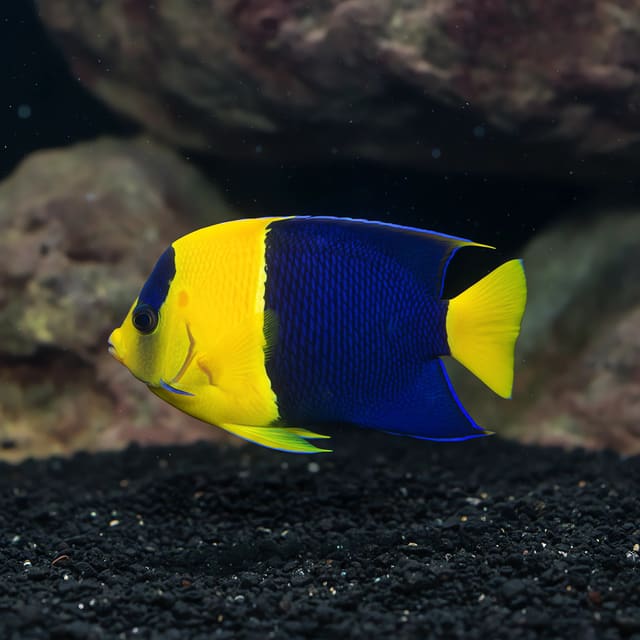
Bicolor Angelfish (Centropyge bicolor)
24–26°C · pH 7.9–8.3
£56.99
Treespot Angelfish (Apolemichthys trimaculatus) is a 26 cm TL Indo-West Pacific reef angelfish for advanced keepers with a large, mature marine aquarium.
Adult size is the maximum length this species reaches at full maturity (scientific sources). The livestock you receive will be younger and smaller. Product-photo provenance and any image-specific limitations are stated on the listing.
Apolemichthys trimaculatus
Save when buying multiple fish. Each quantity is one fish; sex and pair formation are not guaranteed unless the selected variant explicitly states them.
Treespot Angelfish (Apolemichthys trimaculatus) is a 26 cm TL Indo-West Pacific reef angelfish for advanced keepers with a large, mature marine aquarium.
Adult size is the maximum length this species reaches at full maturity (scientific sources). The livestock you receive will be younger and smaller. Product-photo provenance and any image-specific limitations are stated on the listing.
Maintain these water conditions for optimal health and vibrant colors
Treespot Angelfish (Apolemichthys trimaculatus) is a reef-associated marine angelfish from the Indo-West Pacific. The FishBase species profile records a maximum length of 26 cm total length and places it in Pomacanthidae. It occurs around lagoon and seaward reefs near coral, with a natural diet based mainly on sponges and tunicates. Those facts make the buying decision clear: this is a substantial, diet-conscious marine fish for an established keeper, not a small community addition.
The species is also called Threespot Angelfish and Flagfin Angelfish. Its wide Indo-Pacific distribution extends from East Africa east to Samoa, north to southern Japan and south to Australia. The species overview provides additional naming and distribution context. FishBase records a 3–60 m depth range, notes secretive juveniles below 25 m and describes adults in small, loose groups at moderate depths. Wild social observations help explain the animal's natural setting, but they do not prescribe an aquarium group size.
| Suits | Advanced marine keepers with a large, mature aquarium, stable water, strong biological filtration, ample swimming room and the ability to provide a varied diet with an appropriate sponge component. |
|---|---|
| Not suited to | Newly cycled systems, small aquariums, shy communities or a reef plan that cannot accept risk to invertebrates. |
| Adult maximum | 26 cm total length in the FishBase species record. |
| Sold unit | One live fish per purchase. |
| Care position | Advanced store assessment because adult scale, water stability, diet and compatibility all require deliberate planning. |
| Reef context | Assess invertebrate risk before purchase; broad angelfish guidance warns that some species prey on aquarium invertebrates. |
Start with the adult fish, not the size seen on arrival. A 26 cm angelfish needs long-term swimming room, territory, dependable filtration and enough rock structure to move around without being boxed into one corner. OATA uses 300 litres only for a single smaller angelfish below 15 cm and says larger species need significantly larger aquariums. Treespot Angelfish belongs in that larger-species decision, so volume, footprint and existing stocking must be assessed together.
For broader comparisons, browse the marine fish collection. Compare adult size, diet, swimming activity and invertebrate risk rather than choosing by colour alone. A fish that fits the water values may still be unsuitable because the aquarium is too young, the companions are shy or the feeding plan cannot meet a sponge-eating species.
One purchase supplies one live Treespot Angelfish. Choose this standard offer by the scientific identity and adult planning information when deciding whether the aquarium is suitable. Current availability and price belong to the live product page and are not fixed inside this evergreen guide.
Sex is guaranteed only when the selected option explicitly states male or female. This Treespot angelfish listing has no sex-guaranteed option. OATA notes that some marine angelfish are difficult to sex outside breeding condition; photographs, colour and body size must not be treated as a customer sex choice.
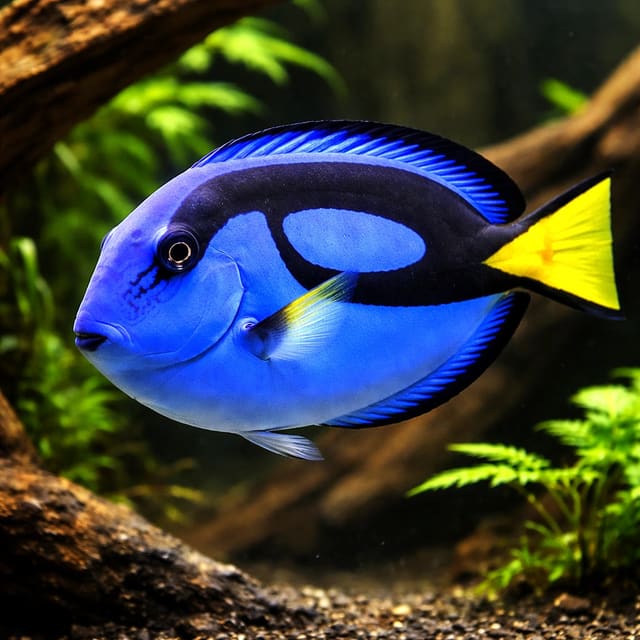
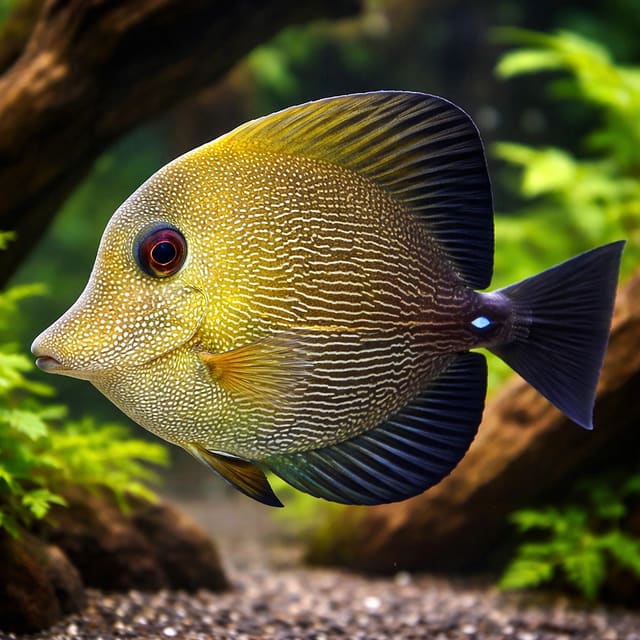
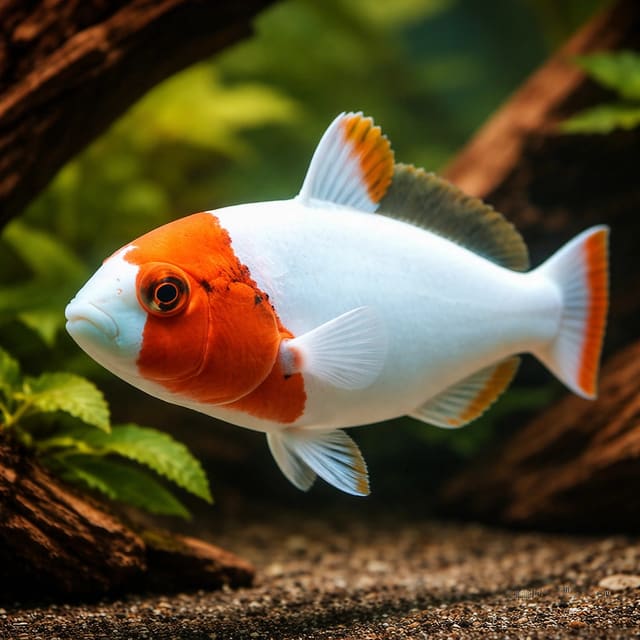
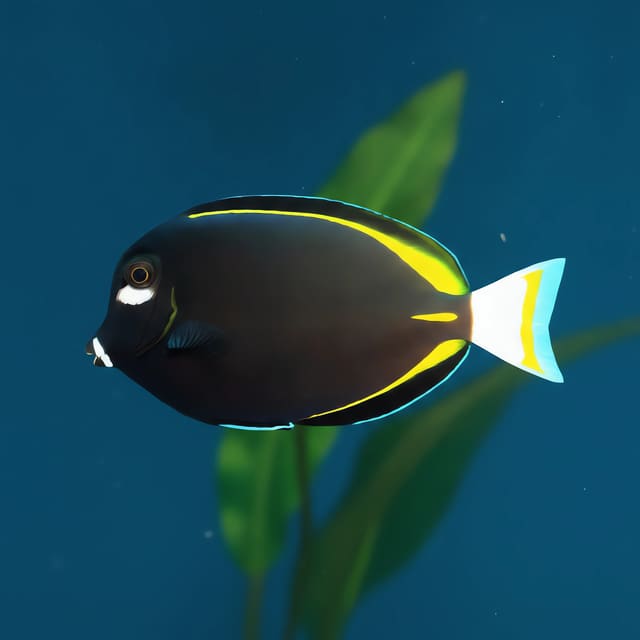
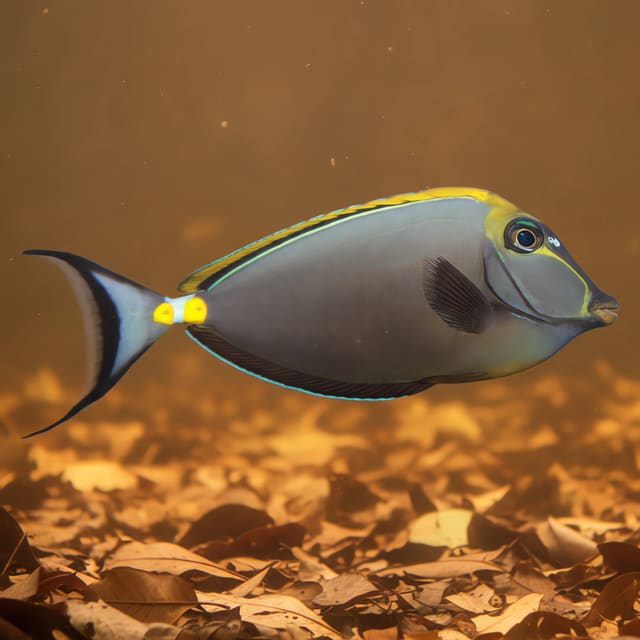
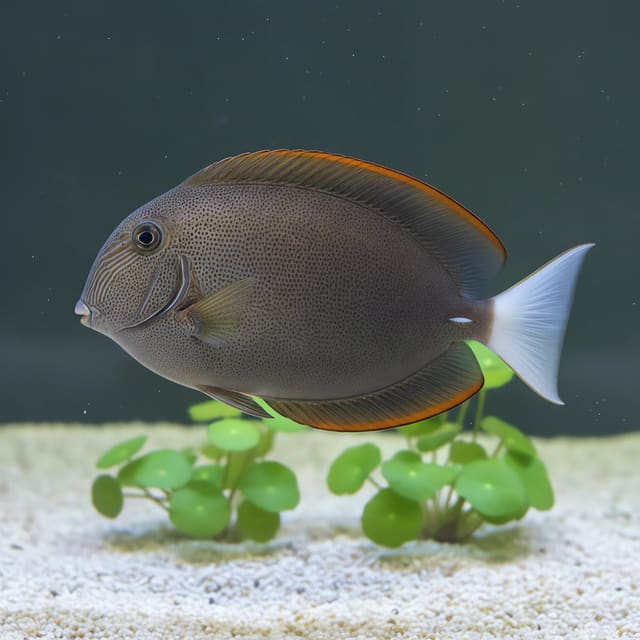
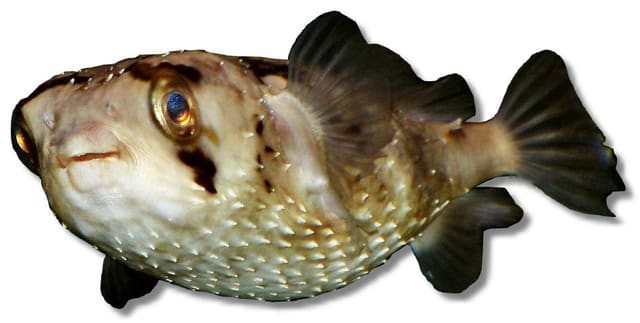
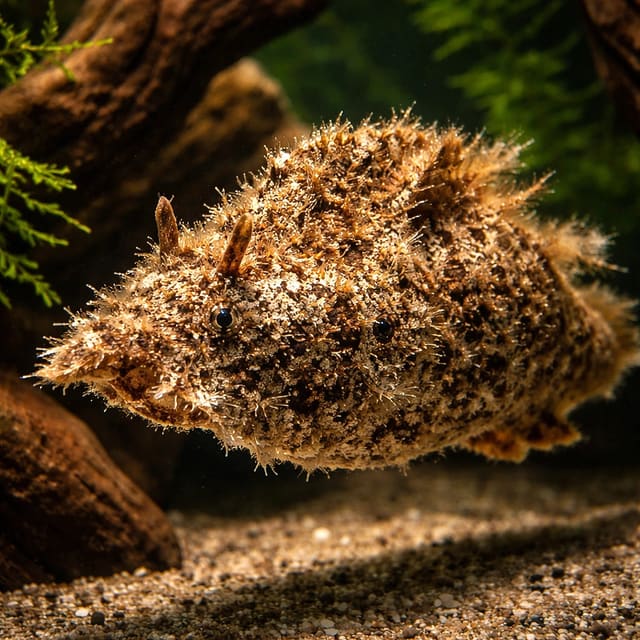
Gallery images have been digitally enhanced to improve image quality. Natural colour, pattern, size and maturity can vary between live animals.
Before ordering, confirm that the filter is mature, ammonia and nitrite are zero, the aquarium has room for a 26 cm active fish and the feeding routine can include the foods this species needs. Check the behaviour and full adult scale of every established resident. Planning these points before the fish travels is safer than trying to solve space, diet or aggression after arrival.
Look at the Treespot Angelfish before feeding. Note its breathing, balance, swimming route, colour, fin condition and willingness to leave shelter. Then watch it eat. A fish that normally approaches food but suddenly hangs back deserves attention even when the test results were acceptable the previous day. Compare its behaviour with the rest of the aquarium so you can tell an individual problem from a system-wide change.
Feed the measured ration in a way that lets the angelfish obtain its sponge-containing food as well as the broader marine variety. Watch for a faster companion taking every high-value item. Remove obvious leftovers and note repeated refusal. Appetite, body condition and access to food are connected; simply offering a correct food is not enough if the fish cannot reach it.
Confirm that pumps, returns and the skimmer are operating normally. A change in sound, bubble production or current can reveal a blockage before water quality deteriorates. Check the temperature display against the aquarium, not only the heater's set point. Observe the water surface for appropriate movement and make sure the fish is not persistently gathering in one high-flow or high-oxygen area.
Carry out the recommended 25% partial water change at least once every week. Prepare and check replacement water before it enters the system. Measure salinity carefully, match temperature sensibly and avoid exposing the aquarium to an abrupt pH change. Use the opportunity to remove settled waste without dismantling the entire habitat.
Test ammonia and nitrite for zero, follow nitrate, and review pH alongside the marine values that influence its stability. OATA's group guidance also gives carbonate hardness, calcium and magnesium ranges, so a keeper running a reef-style system can monitor those values within the needs of the whole aquarium. Record the date and result. A simple sequence of readings is more informative than an isolated number remembered approximately.
Inspect filter flow and clean blocked mechanical areas as needed. When biological media needs rinsing, use water removed from the aquarium rather than chlorinated tap water. Clean the protein skimmer regularly so a falling performance does not become the new normal. Check salt creep, hoses, cables and the security of the rockwork while access is open.
Every added fish increases feeding and waste. OATA warns that beneficial filter bacteria need time to increase as stocking and food increase; adding too many animals too quickly can cause new tank syndrome. Leave time between additions, test after the change and watch how the established territories shift.
A new companion can affect the angelfish even when chemistry remains stable. Check whether it loses access to a cave, is intercepted on its usual swimming route or begins missing meals. Equally, watch whether the angelfish puts a shy resident under pressure. Adult size and activity matter more than the apparent calm of the first hour.
OATA advises investigating changes such as surface hanging, bottom sitting, erratic swimming, colour becoming darker or paler, increased hiding, altered aggression, unusual breathing, white spots, fluffy growth, fin or scale loss, weight change and reduced feeding. Test the water and contact an appropriate retailer or aquatic professional when health is concerning.
Give clear information: recent readings, maintenance dates, new additions, accepted foods and the order in which signs appeared. Avoid making several large chemistry changes at once unless an immediate water-quality emergency demands action. Stable support, accurate observation and timely expert input are safer than guessing from one symptom.
Long-term success comes from repeating sound basics. Mature filtration, measured feeding, a sponge-aware diet, adequate territory, controlled stocking and regular testing work together. No single device or supplement replaces that system.
OATA's general guidance for marine angelfish gives a salinity of 1.020–1.025 specific gravity, a temperature of 24–26°C and pH 7.9–8.3. It also gives carbonate hardness of 8–12°dKH, calcium of 380–450 ppm and magnesium of 1250–1350 ppm. These are broad group-level values, not a species-specific optimum for Treespot Angelfish. If sensitive reef animals share the aquarium, their requirements may call for a narrower operating point within a compatible plan.
Read the OATA marine angelfish care sheet for the group context behind those values. Choose a stable target that suits the whole aquarium, calibrate measuring equipment and avoid abrupt corrections. Specific gravity can shift with evaporation, while pH and carbonate hardness can drift as the system processes waste. Regular measurements show direction before a small change becomes a crisis.
Ammonia and nitrite should both remain at zero. OATA advises keeping nitrate from exceeding 50 mg per litre for marine angelfish as a group. A mature biological filter is essential because fish excrete ammonia, which beneficial bacteria convert first to nitrite and then to nitrate. The RSPCA fish environment guidance explains why clear-looking water alone cannot prove that this cycle is functioning safely.
OATA lists live rock with adequate flow, internal or external filters and sump-based filtration as suitable marine approaches, and notes that a protein skimmer can help maintain water quality. The exact combination depends on the aquarium, but it must provide biological processing, oxygenation and reliable circulation without leaving the fish in a constant harsh jet.
Check pumps, intakes and returns for loss of flow. Inspect heaters and temperature readings rather than assuming the set dial is correct. Top up evaporated water appropriately so salinity does not creep upwards, and confirm salinity before and after a water change. Keep test results in a simple log; trends in nitrate, pH or carbonate hardness are easier to manage when they are noticed early.
Stability is not permission to neglect maintenance. It means making regular, measured interventions that the fish and filter can absorb. Avoid large unplanned swings in temperature, salinity or pH. When a result is surprising, repeat the test and check the instrument before making a major correction.
OATA recommends at least 300 litres for a single smaller angelfish below 15 cm and significantly larger aquariums for larger species. Treespot Angelfish reaches 26 cm TL, so the smaller-species figure is a benchmark to exceed rather than a minimum for this fish. Give priority to usable swimming length, a broad turning area, robust filtration and a sensible final stocking level.
A larger volume also buffers temperature and water chemistry, but litres cannot compensate for a poor shape or overcrowding. Consider the footprint, rock placement and the adult size of tank mates. Leave open routes through the aquarium while providing caves and sheltered spaces. The species occurs on lagoon and seaward reefs near coral, so structured rockwork is relevant; it should be secure and arranged so a large fish can move without becoming trapped.
Live rock can contribute shelter, exploration surfaces and biological filtration. Keep it stable against digging, cleaning and accidental knocks. Do not create narrow gaps that fit a juvenile but not an adult. Make sure pumps and heaters are guarded and that service access remains practical once the aquascape is complete.
If the arriving Treespot Angelfish is a juvenile, FishBase's secretive-juvenile record supports providing a sheltered retreat beside an open swimming route; check that a larger companion cannot guard its only exit, while preserving the unobstructed room the fish will require as a 26 cm adult.
Introduce fish slowly to a mature system. OATA warns that stocking too quickly can create new tank syndrome because the bacterial population has not grown to match the extra waste. Test ammonia and nitrite before adding the angelfish, and postpone the move if either is detectable. A large purchase should never be used to test whether a new filter has cycled.
Marine angelfish spend much of their time swimming around reefs in search of food. A suitable home therefore needs more than one hiding cave. It needs cruising room, several ways around the rockwork and feeding access that cannot be controlled by one territorial resident. Watch how existing fish use the tank at different times of day before deciding that unused visual space is genuinely available.
If the aquarium already contains active tangs, damsels or butterflyfish, count their adult space and waste demands too. Compatibility names do not create capacity. A mixed community needs a larger margin than a single-fish calculation because every resident requires feeding, oxygen, territory and an escape route from conflict.
FishBase states that Treespot Angelfish feeds mainly on sponges and tunicates. That species-level information is the central diet fact. OATA's wider marine-angelfish guidance recommends varied feeding with meaty frozen foods such as mysis shrimp, enriched brine shrimp or krill, vegetable matter such as nori, and pellet or flake foods accepted by the individual. For a species whose natural diet centres on sponges, choose an appropriate marine-angelfish food that includes sponge material rather than relying on generic flake alone.
OATA warns that specialised sponge-eating angelfish can be difficult to maintain in aquariums. That is one reason for the advanced care assessment. Before purchase, make sure the intended foods are available and that established residents will not take everything first. A fish may be physically large enough for the tank yet still fail if it cannot obtain the right diet consistently.
The group sheet advises feeding only what the fish can consume within a few minutes, twice a day. Divide the ration so the angelfish can feed without leaving large amounts to decay. Present suitable foods where the fish can reach them, and observe whether it actively accepts each item. Remove persistent leftovers and account for the effect of richer foods on nitrate and skimmer load.
Watch the fish at both daily feeds. A sudden fall in appetite, repeated rejection of food, abnormal hiding or loss of condition deserves prompt investigation. Check water quality and companion behaviour before changing several foods at once. A dominant resident may exclude the angelfish even when food is technically present in the aquarium.
Variety should be purposeful. Mysis, enriched brine shrimp or krill provide meaty options; nori supplies vegetable matter; a suitable prepared angelfish formula can address the sponge component. Pellet or flake can contribute if accepted, but no single generic food represents the natural feeding profile by itself. Feed measured portions and adjust from observation rather than continuously adding food to tempt a reluctant animal.
Do not turn natural sponge feeding into a claim that the fish is safe with aquarium invertebrates. Diet and compatibility are separate decisions. OATA specifically advises checking before mixing angelfish with shrimp, crabs, fan worms, corals and other invertebrates because some species may prey on them.
OATA strongly recommends a partial water change of 25% at least once every week. Use maintenance to remove settled waste, inspect the fish and verify equipment. Prepare replacement saltwater carefully and match it sensibly for temperature and salinity. A repeatable schedule is safer than waiting for visible deterioration and then making a drastic correction.
Maintain filters so water flow does not fall. If filter media needs cleaning, rinse it lightly in water removed from the aquarium rather than under the tap, because chlorine or chloramine can harm the beneficial bacteria. Clean protein skimmers regularly so they continue to perform. Test ammonia, nitrite, nitrate and pH, and include the relevant marine measurements used to keep salinity and buffering stable.
Look for clear eyes, intact scales, undamaged fins, normal swimming and steady body condition. OATA lists surface hanging, bottom sitting, erratic swimming, darker or paler colour, increased hiding, changed aggression, abnormal breathing, white spots, fluffy growth, fin or scale loss, weight change and reduced feeding as warning signs. Test water and seek suitable advice when a change persists; an observation is a reason to investigate, not a diagnosis by itself.
Finish water checks, equipment checks and the territorial plan before the parcel arrives. Someone must be present to receive live fish. Keep the route from box to aquarium calm and uncluttered, and have the mature system ready rather than completing major rockwork while the fish waits in its bag.
The delivery and Live Arrival Guarantee page explains the current licensed live-animal courier, packing, receipt and claim process. The continuous video protects a possible claim, while a fully prepared mature aquarium protects the animal after arrival.
OATA's marine-angelfish guidance says these active fish should not be mixed with shy species. It names butterflyfish, tangs and damsels as good group-level tank-mate types, provided the aquarium has adequate space and the individual combination is assessed. These names are starting points rather than a universal guarantee.
Most angelfish species do not tolerate members of the same species, although some can be kept in male and female pairs. Keep this unsexed Treespot Angelfish as the only member of its species unless a separately assessed pairing plan is available. Avoid assuming that two unsexed fish will form a compatible pair. Mixing different angelfish also needs caution: OATA advises adequate territory and avoiding combinations that look too similar.
Invertebrates require a separate risk decision. The group sheet warns that angelfish may prey on shrimp, crabs, fan worms, corals and other invertebrates. FishBase records sponges and tunicates as the main natural foods of A. trimaculatus. Together, those facts favour a cautious fish-only or carefully risk-managed approach rather than a reef-safe promise.
| Suitable with | Active butterflyfish, tangs or damsels only where adult size, water needs, territory and aquarium capacity align. |
|---|---|
| Avoid | Shy fish likely to be outcompeted or kept under pressure. |
| Use caution | Other angelfish, especially similar-looking species; conspecifics; shrimp, crabs, fan worms, corals and other invertebrates. |
| Main rule | Assess the individual combination in the full adult aquarium, not from a name list alone. |
Observe access to food, open swimming routes and shelter. A companion that chases briefly can still become a persistent problem, while a fish that appears calm may quietly exclude the angelfish at feeding time. Look for repeated retreat, fin damage, colour change, rapid breathing and missed meals.
If territory is already tightly divided among established residents, adding a large angelfish can destabilise the whole community. More rock is not always the answer if it removes swimming room. The safest plan balances open water, several retreat areas and enough volume for every fish's adult behaviour.
FishBase records Treespot Angelfish at up to 26 cm total length, so plan the aquarium around a substantial adult rather than the arrival size.
OATA starts smaller angelfish below 15 cm at 300 litres and says larger species need significantly larger aquariums. At 26 cm TL, this fish needs a large footprint, mature filtration and space assessed against its companions.
Keep this unsexed Treespot Angelfish as the only member of its species unless a separately assessed pairing plan is available. OATA notes that most angelfish do not tolerate conspecifics.
Treespot Angelfish is an advanced choice because it becomes large, needs stable mature marine water, has specialised sponge feeding and requires cautious compatibility planning.
FishBase says it feeds mainly on sponges and tunicates. Offer an appropriate sponge-containing marine-angelfish formula alongside varied mysis, enriched brine shrimp or krill, nori and accepted pellet or flake foods.
OATA's broad guidance for marine angelfish as a group is 24–26°C and pH 7.9–8.3, with specific gravity 1.020–1.025. Keep a stable point suitable for the whole aquarium.
Treat it as an active angelfish that may compete for territory and food. Avoid shy fish, allow substantial space and watch for repeated chasing, exclusion or fin damage.
OATA names butterflyfish, tangs and damsels as group-level possibilities. Assess adult space and individual behaviour, use caution with other angelfish and accept risk to aquarium invertebrates.
Tropical Fish Co hand-packs live fish for a licensed live-animal courier. Be present, record a continuous unboxing video from the sealed parcel, inspect the fish that day and follow the 20–30 minute floating guidance before release.
Species biology and broad aquarium guidance are kept distinct throughout the page. The live product page remains the source for current price and availability.
No reviews for this item yet. Bought one? Honest reviews only, good or bad.
What customers say about ordering from us
Easy website plenty of info on fish your buying great to pick a time slot
TRACEY DURRANT · 7 Oct 2026
Got some lovely fish thank you
Kevin Mackie · 7 Oct 2026
Reviews of our shop, collected by Judge.me, an independent third-party review collector. Newest first.