Azure demoiselle (Chrysiptera hemicyanea) - Marine Aquarium Livestock UK
24–26°C · pH 7.9–8.3
£29.99
Talbot's Demoiselle (Chrysiptera talboti) is a small reef damselfish from the eastern Indian Ocean and western Pacific, reaching about 6 cm. One fish is supplied per purchase, and the UK trade body OATA names it among the more peaceful damsels for a community of hardy fish in a mature marine aquarium.
Adult size is the maximum length this species reaches at full maturity (scientific sources). The livestock you receive will be younger and smaller. Product-photo provenance and any image-specific limitations are stated on the listing.
Chrysiptera talboti
Talbot's Demoiselle (Chrysiptera talboti) is a small reef damselfish from the eastern Indian Ocean and western Pacific, reaching about 6 cm. One fish is supplied per purchase, and the UK trade body OATA names it among the more peaceful damsels for a community of hardy fish in a mature marine aquarium.
Adult size is the maximum length this species reaches at full maturity (scientific sources). The livestock you receive will be younger and smaller. Product-photo provenance and any image-specific limitations are stated on the listing.
Maintain these water conditions for optimal health and vibrant colors
Talbot's demoiselle, Chrysiptera talboti, is a small reef damselfish from the eastern Indian Ocean and western Pacific, also known as Talbot's damselfish. It reaches about 6 cm and is one of the damsels that the UK ornamental fish trade body, OATA, singles out as more peaceful, suitable for a community aquarium with other hardy fish. Each purchase supplies one fish. The condition that matters most is the aquarium: this is a marine fish for a mature, stable, well-filtered saltwater system, not a first fish for a new tank.
Damselfish belong to the family Pomacentridae, the same family as the chromis, and OATA notes that they are among the most commonly kept marine fish because of their bright colours, small size and hardiness. They also vary a great deal in temperament, from calm species to large, pushy ones. Knowing which end of that range you are buying is the first decision, and it is why this demoiselle is worth considering for a community of smaller, even-tempered fish.
| Suits | An established marine aquarium of 60 litres or more with stable salinity, good filtration and rock shelters |
|---|---|
| Not suited to | Brand-new tanks, freshwater set-ups, or communities built around large, aggressive damsels |
| What you receive | One live Talbot's demoiselle per purchase |
| Adult size | About 6 cm total length |
| Water | 24–26°C, pH 7.9–8.3 and salinity 1.020–1.025 on OATA's damselfish guidance |
| Temperament | One of the more peaceful damsels, kept with other hardy fish |
| Numbers | One fish is the simple choice; OATA suggests 200 litres or more for a group of damselfish |
In the wild, FishBase records the species from the Andaman Sea east to Fiji, north to Palau and south to the southern Great Barrier Reef, with a more recent record from Tonga. Adults live on coral-rich seaward reef slopes and in deep lagoons, at depths of 3 to 35 metres, and are usually seen on their own over mixed patches of coral and rubble. The species is assessed as Least Concern by the IUCN.
It helps to be clear about what this fish is not. It is not an algae-control fish, although damselfish may graze a little algae, and it is not a guaranteed reef companion for every coral or invertebrate. Its appeal is a compact size, a calmer temperament than many damsels and a lively, day-active presence in the rockwork of a well-kept marine tank.
The listing has a single option, so there is no size or sex to choose at checkout. Plan the aquarium for the adult size of about 6 cm, whatever size the fish is when it arrives.
Sex is guaranteed only when the selected option explicitly states male or female. This Talbots demoiselle listing has no sex-guaranteed option.
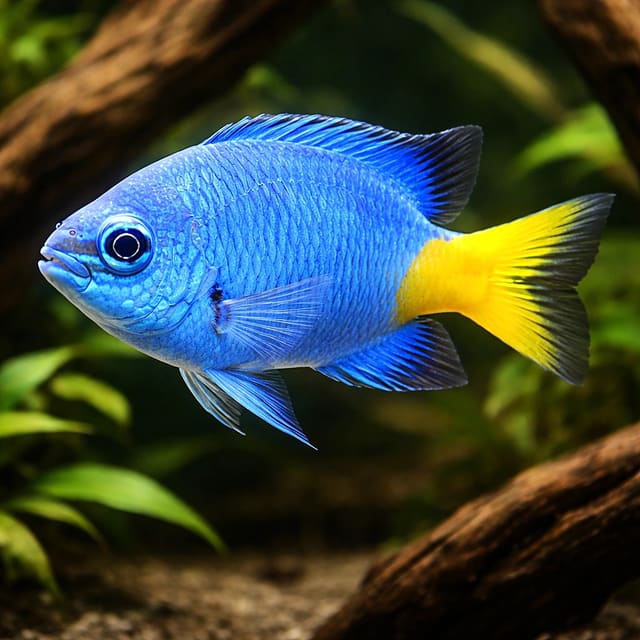
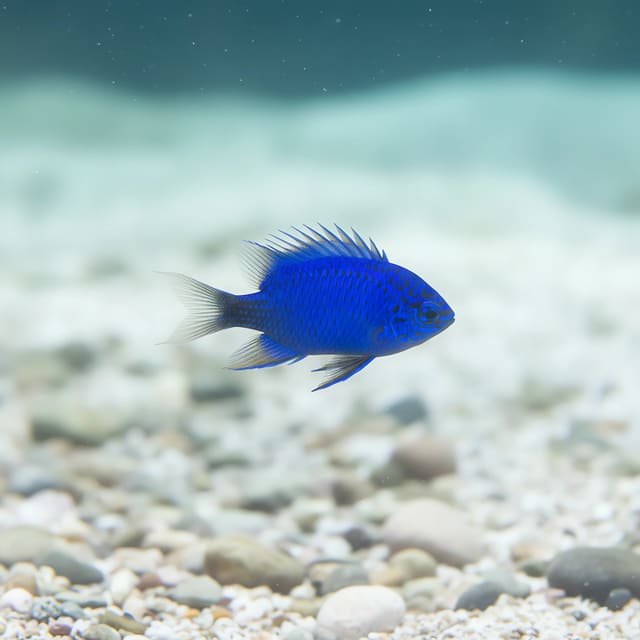
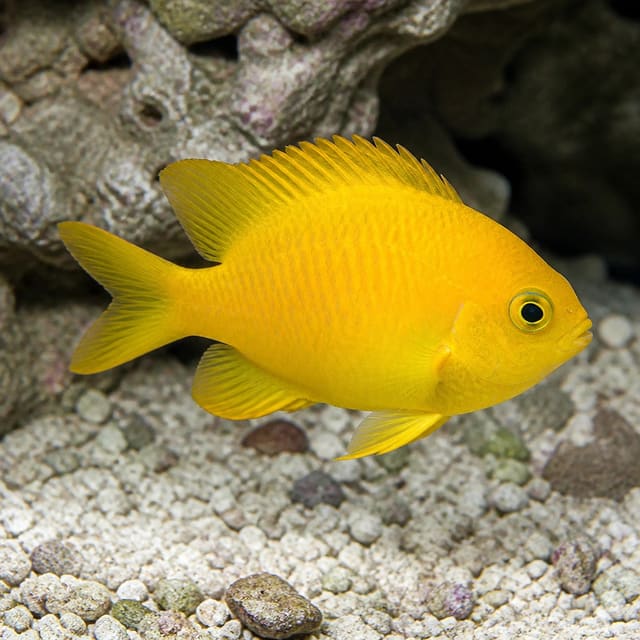
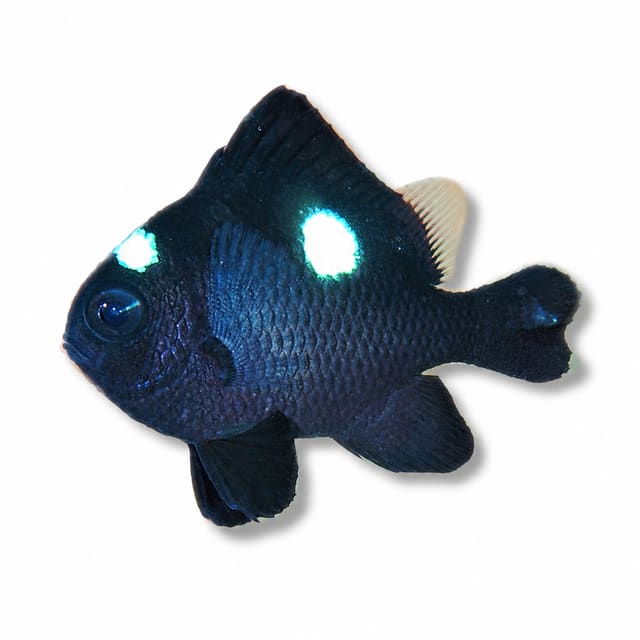
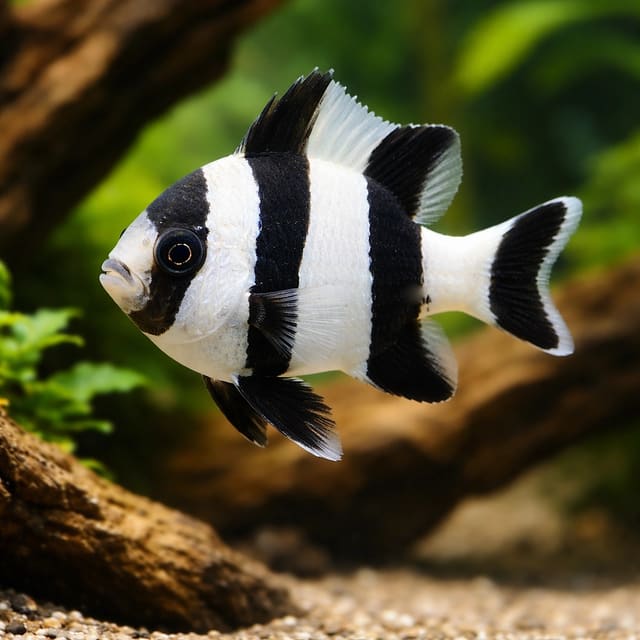
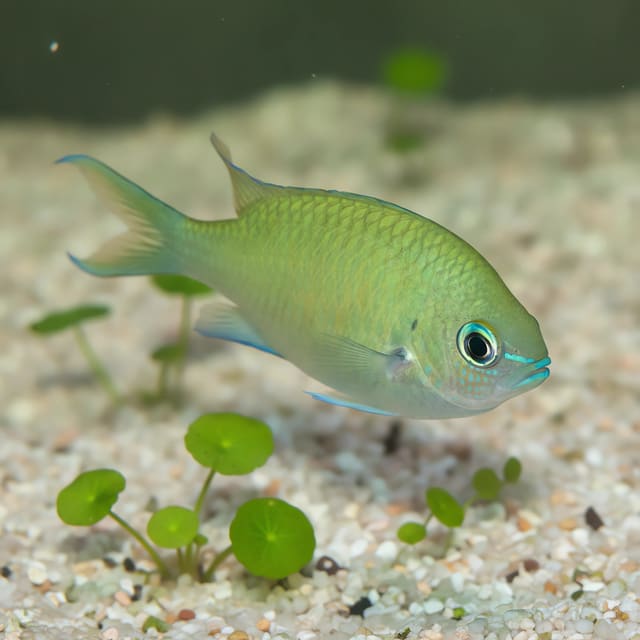
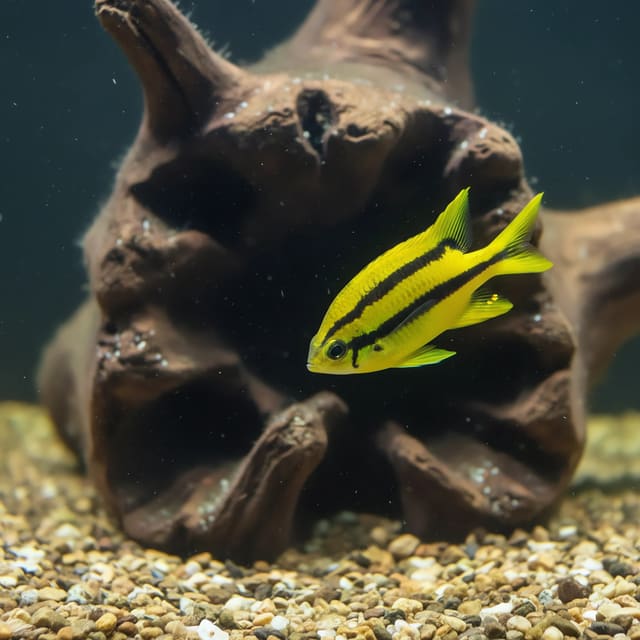
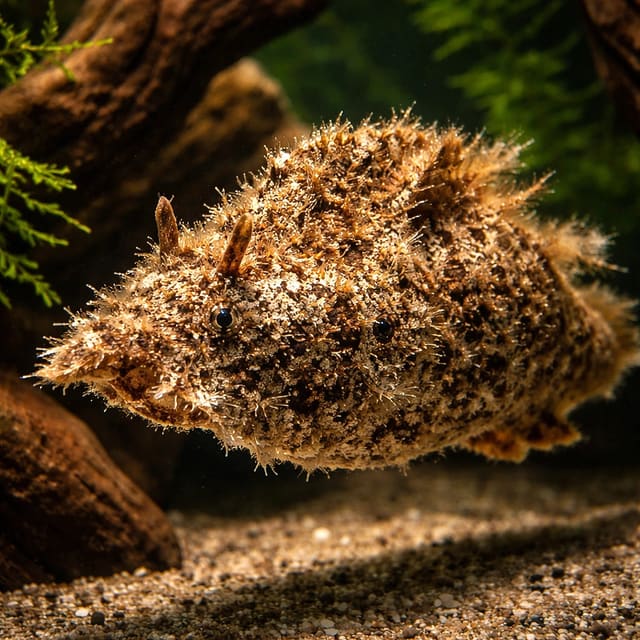
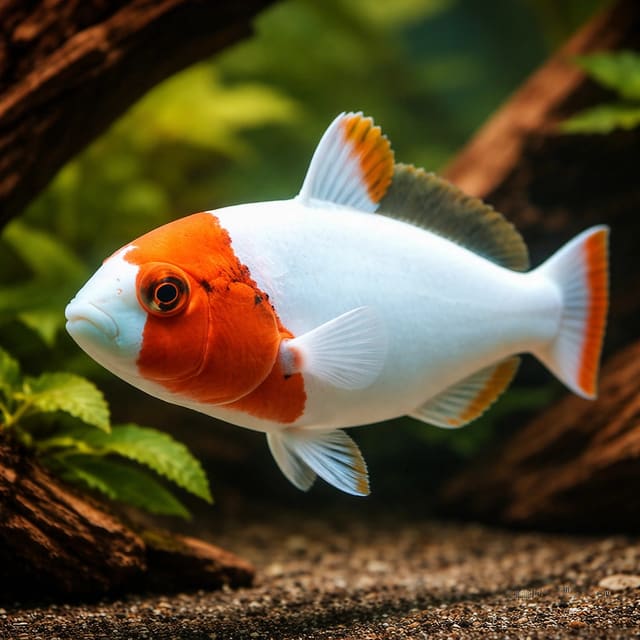
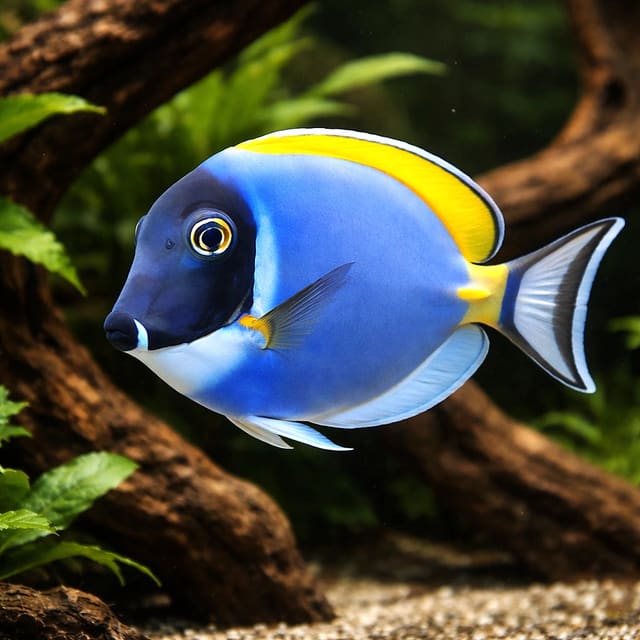
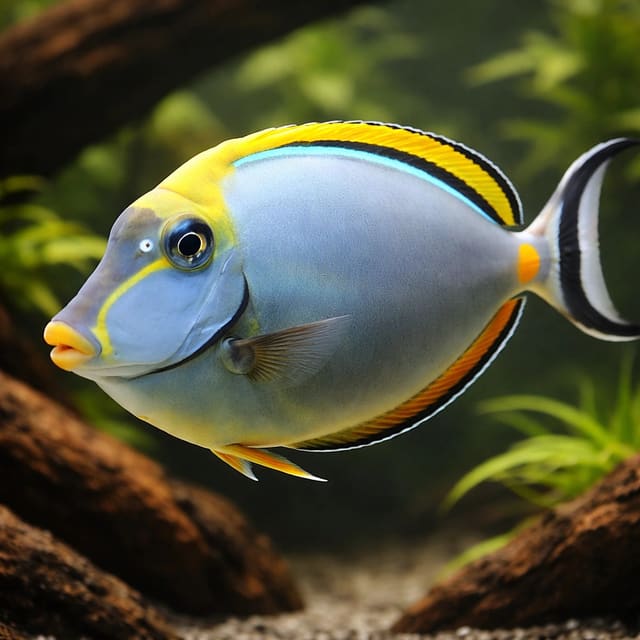
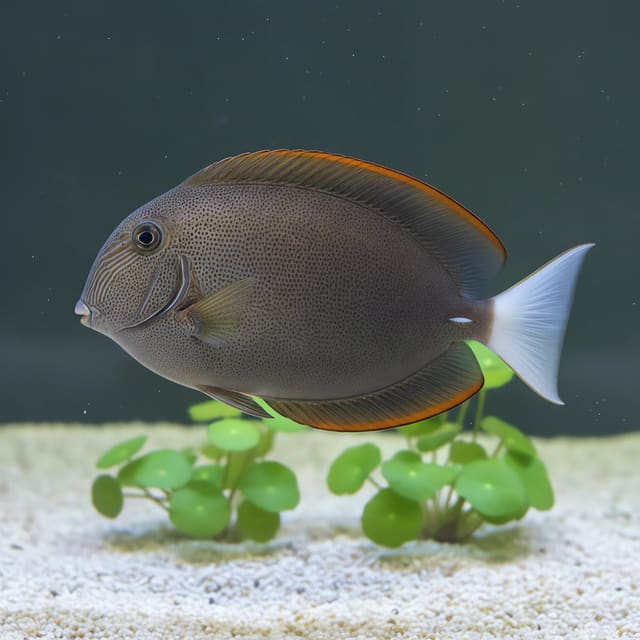
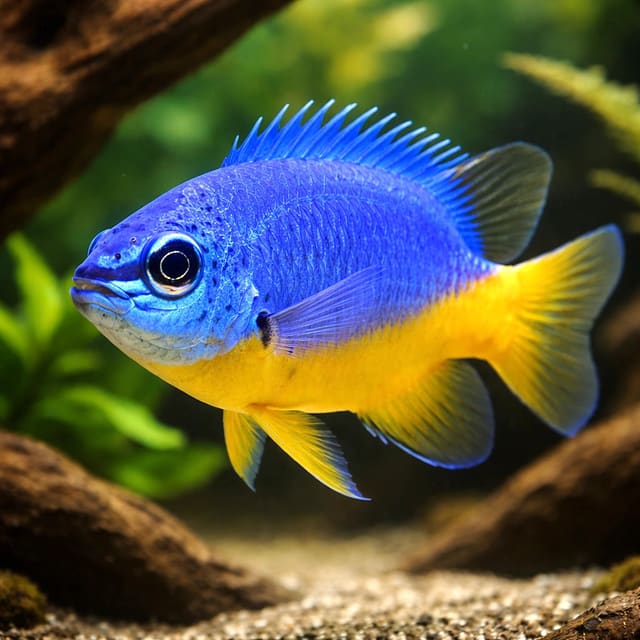
The photographs show a fish with a yellow head, lilac body and dark spot on the soft dorsal fin, and one of them shows two fish together; a purchase is still one fish. Gallery images have been digitally enhanced to improve image quality. Natural colour, pattern, size and maturity can vary between live animals.
Check these points before you order:
If you are still planning the wider stocking list, compare this fish with the rest of our marine fish range before you commit. A calm damsel is often chosen early in a stocking plan, but it should still go into a tank whose filter is ready for it, and whose future residents have been chosen with its temperament in mind.
Damselfish have a reputation for hardiness, but that is no substitute for a mature aquarium. Before ordering, check the tank against each of the points below.
OATA's chromis and damselfish care sheet recommends an aquarium of at least 60 litres for a single damselfish and a much larger one, of at least 200 litres, for a group. It also advises buying as large an aquarium as is reasonable, because a bigger volume holds temperature and water quality more steadily. Those figures are written for damselfish as a group rather than for Talbot's demoiselle alone, so treat 60 litres as the floor for one fish and add capacity for every other resident you plan to keep.
OATA is clear that a filter is essential whatever the tank size. On a marine system that can mean live rock with enough water flow through it, an internal or external filter, or a sump-based filter. A protein skimmer is also worth considering: it removes dissolved organic waste before it breaks down into more harmful substances.
The biology behind that advice is the same in salt water as in fresh. The RSPCA's guidance on aquarium environments explains that fish release ammonia, which is toxic, and that a working biological filter lets beneficial bacteria convert it to nitrite, also toxic, and then to nitrate, which is safer. No fish should be kept without a well set-up and maintained filter.
OATA warns that adding fish too quickly causes new tank syndrome: the filter bacteria cannot keep pace with the extra waste, ammonia and nitrite climb, and fish can become ill or die. The bacteria need to multiply each time more fish are added and feeding increases, so add animals one step at a time and let the system catch up in between.
If the aquarium does not exist yet, work through the stages in this order and give each one time:
OATA describes chromis and damselfish as relatively undemanding in terms of decor. What helps most is somewhere to hide. In the wild, damselfish stay near hard coral and dive into it quickly when they sense a threat, and Talbot's demoiselle itself is found over coral and rubble. Rockwork with caves, overhangs and gaps gives the fish that bolt-hole. Build it securely so it cannot shift, and leave open water in front of the rock for swimming.
A cover over the aquarium slows evaporation, which helps keep salinity steady between top-ups.
OATA describes damselfish as usually undemanding of water chemistry and gives the values below as a general guide for the group. They are the targets to aim for in a fish-focused system.
| Measure | OATA guidance for damselfish |
|---|---|
| Salinity | 1.020–1.025 |
| Temperature | 24–26°C |
| pH | 7.9–8.3 |
| Ammonia | Zero |
| Nitrite | Zero |
| Nitrate | No more than 50 mg/l |
| Carbonate hardness | 8–12 dKH |
| Calcium | 380–450 ppm |
| Magnesium | 1250–1350 ppm |
Two points of scope matter. First, these are figures for chromis and damselfish in general, so check for any species-specific needs before you buy. Second, OATA notes that a reef aquarium may need some values adjusting to suit more sensitive animals. If the tank also holds corals or other delicate invertebrates, set the chemistry around the most demanding resident and make sure the demoiselle is still inside its range.
Carbonate hardness matters because it buffers pH: water at 8–12 dKH resists the gradual fall in pH that comes with accumulating waste. Calcium and magnesium are on the list because many marine systems also hold animals that build skeletons from them, such as corals and coralline algae. In a tank that holds only fish they still belong in range, as part of stable, properly mixed seawater. The 50 mg/l nitrate figure is a ceiling for fish; more sensitive invertebrates are the reason OATA mentions adjusting values for reef aquariums.
Salinity is the value most specific to marine keeping. Water evaporates, but the salt stays behind, so top up lost water with fresh water rather than salt water, and measure salinity regularly so it never creeps upwards. Keep the heater and a separate thermometer in use all year and check that the reading stays within 24–26°C. Steady values matter more than hitting the middle of a range.
OATA stresses that damselfish can be stressed by even the smallest amounts of ammonia and nitrite, and that stress can then lead to disease. A consistent routine is what keeps those readings at zero. Record your results, so a slow change in nitrate or salinity shows up before it becomes a problem.
FishBase describes Talbot's demoiselle feeding on zooplankton a short distance above the bottom. It picks small food items from the water rather than grazing hard surfaces or hunting large prey, and that is a useful guide to food size in the aquarium.
OATA describes damselfish as omnivorous and says they need a wide range of foods to stay in their best health. A good quality marine flake or pellet will cover most of their nutritional needs; add frozen foods such as mysis shrimp, enriched brine shrimp or red plankton to round out the diet. Choose small pieces that suit a 6 cm fish's mouth, and thaw frozen foods before feeding.
OATA also notes that damselfish may graze on algae, whether it grows in the tank or is offered to herbivorous tank mates. Treat that as a small part of the diet, not a reason to buy this fish for algae control.
Overfeeding is an easy way to spoil a healthy marine tank. Leftover food breaks down and releases toxic waste, pushing up ammonia and nitrate.
In a mixed tank, a smaller, calmer fish can miss out if faster species reach the food first. Spread each portion across the surface so it drifts down through more of the tank, and watch the demoiselle at each feed for the first few weeks. If it keeps hanging back, offer a second small pinch once the quicker fish are busy, rather than one large portion that sinks uneaten and fouls the water.
A newly arrived fish may take time to accept unfamiliar foods. Offer small amounts of a frozen food alongside the flake or pellet, remove what is not eaten, and try again at the next feed rather than adding more to the water.
Your fish is hand-bagged in pure oxygen and packed in an insulated poly box, with a heat pack when the weather calls for it. It travels with a licensed live-animal courier and arrives on your confirmed Thursday or Friday date; we email the tracking number and date so you can plan to be in. Someone must be at the address to receive the parcel, as live fish cannot be left unattended.
Test the aquarium in the days before delivery so you know the water is right: ammonia and nitrite at zero, salinity within 1.020–1.025 and the thermometer reading 24–26°C. Check that the heater, filter and skimmer are running, have the aquarium lid and a clear work space ready, and make sure you know who will be in to take the parcel.
The full delivery and Live Arrival Guarantee policy explains the conditions, including the same-day inspection and what the video must show.
OATA describes healthy fish as having clear, bright eyes, undamaged fins, intact scales, no ulcers or bumps, and normal swimming. Use that as your baseline in the first days, and keep an eye out for any change in:
If you notice something, test the water first. Ammonia, nitrite, nitrate, salinity and temperature will tell you whether the tank is the cause, and they are the first things any experienced adviser will ask about. A new fish spending time in the rockwork while it learns the tank is normal; a fish that stops eating, breathes hard or keeps to the surface needs attention.
If ammonia or nitrite shows above zero, deal with that first. Check that the filter and skimmer are running, cut back on feeding, and make a partial water change with matched salt water. Keep testing until both read zero again, and add no more fish until the tank has been stable for a while. If the fish still looks unwell once the water is right, seek experienced advice with your test results to hand; OATA's own advice for any health worry is to test the water quality first.
Increase the number of fish slowly, so the filter can keep up with each addition. OATA advises checking with an experienced retailer before mixing any damselfish with fish you already keep, and that is worth doing with your actual stocking list in hand.
Talbot's demoiselle is a diurnal fish, active by day and resting at night, and in the wild it is usually seen singly over coral and rubble. In a well-furnished aquarium, expect it to patrol a patch of rockwork and dart into cover when startled, which is typical damselfish behaviour.
| In the wild | In your aquarium |
|---|---|
| Coral-rich seaward reef slopes and deep lagoons | Stable marine water in the ranges above, with plenty of rock structure |
| Usually seen alone over coral and rubble | One fish as the default, with shelters among rock |
| Picks zooplankton a short way above the bottom | Small foods that drift through the lower and middle water |
| Active by day | A regular daily routine for lighting and feeding |
| Pairs to breed; eggs stick to the substrate and the male guards them | Rock surfaces a pair could use, and a guarding male if spawning happens |
OATA explains that some damselfish farm a patch of algae in the wild and defend it aggressively, which is why many damsels are territorial in aquariums. Talbot's demoiselle is named by OATA as one of the more peaceful species, but a small, calm damsel can still claim a favourite cave. Plenty of rockwork, with more than one shelter, gives every fish somewhere to go.
FishBase records the species as egg-laying, with distinct pairing during breeding. The eggs are demersal, meaning they are laid on and stick to the substrate, and the male guards and aerates them. This listing sells one fish with no sex guaranteed, so it is not a breeding offer, but the biology explains the pairing you may see if a male and female share a tank, and why a male may stay close to a patch of rock where eggs have been laid.
Wikipedia records both Talbot's damselfish and Talbot's demoiselle as common names for Chrysiptera talboti. The species name is the reliable identity; common names for damselfish overlap, so check the scientific name when comparing listings, particularly among the many Chrysiptera species sold as demoiselles.
OATA adds that, whatever the species, damselfish can live for many years in a well-matured set-up with good water quality. That is a reason to plan the tank for the long term, including the other fish it will share space with in years to come.
OATA's compatibility advice for damselfish starts from one fact: they vary. Some are relatively calm and mix well, while others grow large and will attack other fish. OATA names Talbot's damsel, Chrysiptera talboti, alongside the yellow tail blue damselfish as the more peaceful kind, which can be kept in a community aquarium with other hardy fish.
Choose companions that are hardy and of a similar temperament, so the demoiselle is neither the bully nor the target. Check each species' adult size, water needs and behaviour against your tank, and stock slowly so the filter keeps pace.
| Possible companion | Our advice |
|---|---|
| Other hardy, relatively peaceful community fish | The setting OATA describes for this species |
| Aggressive damsels such as dominoes and humbugs | Avoid. OATA pairs them with much tougher fish |
| Large, tough fish such as triggerfish, pufferfish and large angelfish | Research carefully; OATA suggests them as company for aggressive damsels, not small calm ones |
| More Talbot's demoiselles | Only with plenty of space; OATA suggests 200 litres or more for a group of damselfish |
| Corals and invertebrates | Plan the water for the most sensitive animal and keep the demoiselle within its range |
FishBase records a wild diet of zooplankton, and OATA's care sheet discusses keeping damselfish in reef aquariums with some water values adjusted for more sensitive species. Treat corals and invertebrates as a separate decision, based on the needs of each animal you add, and keep the whole system within a range that suits the fish as well.
OATA says dominoes and humbugs need to be mixed with much tougher species, such as large angelfish, triggerfish and pufferfish. That is the opposite end of the damselfish scale from a 6 cm demoiselle. Build its community around other hardy fish of similar temperament rather than around the tough species those larger damsels need.
A single Talbot's demoiselle is the straightforward choice. In the wild it is usually seen alone, and OATA's guidance for keeping a group of damselfish is an aquarium of at least 200 litres. Pairs form during breeding, but a pair cannot be selected from this listing, and because damselfish can be territorial, two fish bought together will not necessarily get on.
OATA's 60 litres is a figure for one damselfish on its own. Every additional fish needs room and adds waste, so a community built around this demoiselle needs a correspondingly larger, well-filtered system. Provide more shelters than there are fish, so no resident has to compete for the only cave, and plan the order of additions so each fish settles before the next arrives.
OATA advises consulting an experienced retailer before combining any damselfish with other species, and before buying, to make sure a new fish will mix with your current tank mates. Take your full stocking list, the tank volume and your water readings to that conversation. It is also worth keeping a spare, cycled tank or a separation option in mind for any marine community, in case two fish fall out.
FishBase records a maximum length of 6.0 cm total length, so plan the aquarium for an adult of about 6 cm. It stays one of the smaller damselfish; OATA notes that damselfish very rarely grow over 10 cm, and some larger species approach 15 cm.
OATA's damselfish guidance recommends at least 60 litres for a single damselfish and at least 200 litres for a group. Treat 60 litres as the minimum for one fish, add space for every other resident, and make sure the system is fully mature before it arrives.
One is the simple choice. In the wild the species is usually seen on its own, and OATA suggests an aquarium of at least 200 litres for a group of damselfish. Each purchase is one fish, and a breeding pair cannot be selected.
It is small and damselfish are known for hardiness, but the marine aquarium is the harder part. It needs a mature, well-filtered system with ammonia and nitrite at zero, stable salinity and a weekly maintenance routine already in place. If the tank is new, finish maturing it before you order.
In the wild it feeds on zooplankton a short distance above the bottom. In the aquarium, use a good marine flake or pellet with frozen mysis shrimp, enriched brine shrimp or red plankton, fed twice a day in amounts eaten within a few minutes.
OATA's broad guidance for damselfish is 24–26°C, pH 7.9–8.3 and salinity 1.020–1.025, with ammonia and nitrite at zero and nitrate no higher than 50 mg/l. Reef tanks may need values adjusted for more sensitive animals.
OATA names it among the more peaceful damselfish, suitable for a community of other hardy fish. Damsels can still be territorial, so give it rockwork with several shelters and choose companions of similar temperament rather than the large, aggressive damsels such as dominoes and humbugs.
Other hardy, relatively peaceful community fish are the setting OATA describes. Avoid aggressive damsels such as dominoes and humbugs, research large tough species carefully, and check your full stocking list with an experienced retailer before mixing.
It is hand-bagged in pure oxygen, packed in an insulated poly box with a heat pack when needed, and delivered on a confirmed Thursday or Friday by a licensed live-animal courier. Someone must be in. Record a continuous unboxing video from the sealed parcel, open it the same day and float the bag for 20–30 minutes before release.
The references used for the care and identity information on this page:
FishBase and Wikipedia describe the species itself. The OATA sheet covers chromis and damselfish as a group, which is why its water values and tank sizes are presented here as general guidance. Delivery, packing and Live Arrival Guarantee details come from our own delivery policy, linked in the arrival section above.
No reviews for this item yet. Bought one? Honest reviews only, good or bad.
What customers say about ordering from us
Easy website plenty of info on fish your buying great to pick a time slot
TRACEY DURRANT · 7 Oct 2026
Got some lovely fish thank you
Kevin Mackie · 7 Oct 2026
Reviews of our shop, collected by Judge.me, an independent third-party review collector. Newest first.