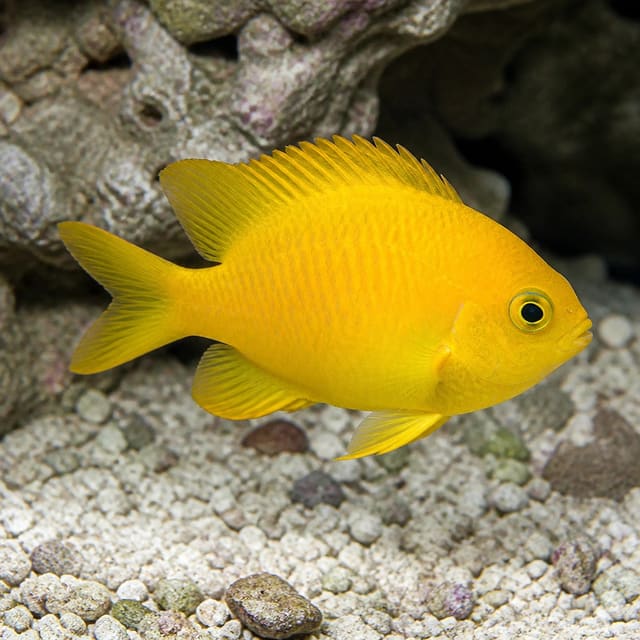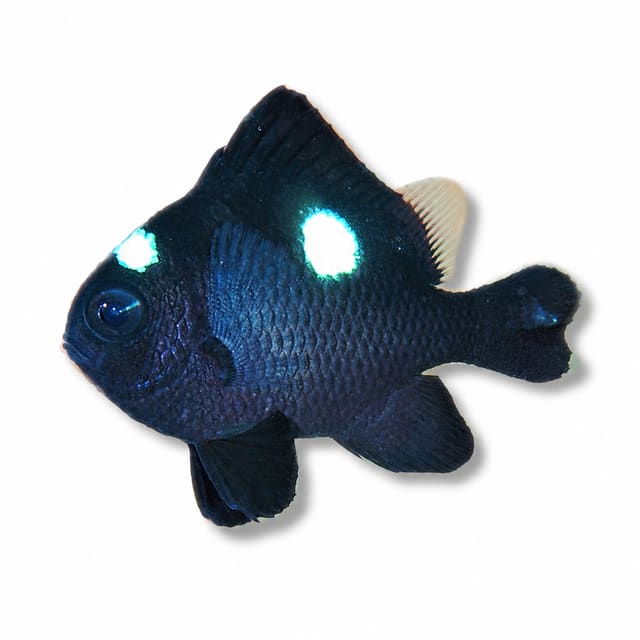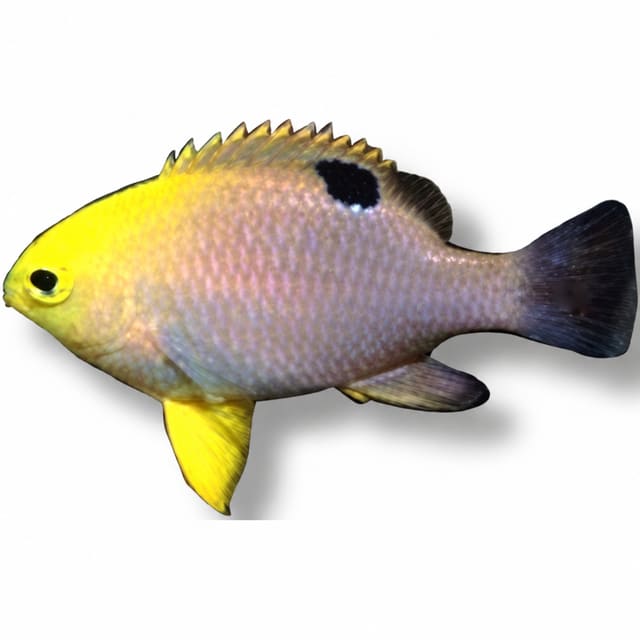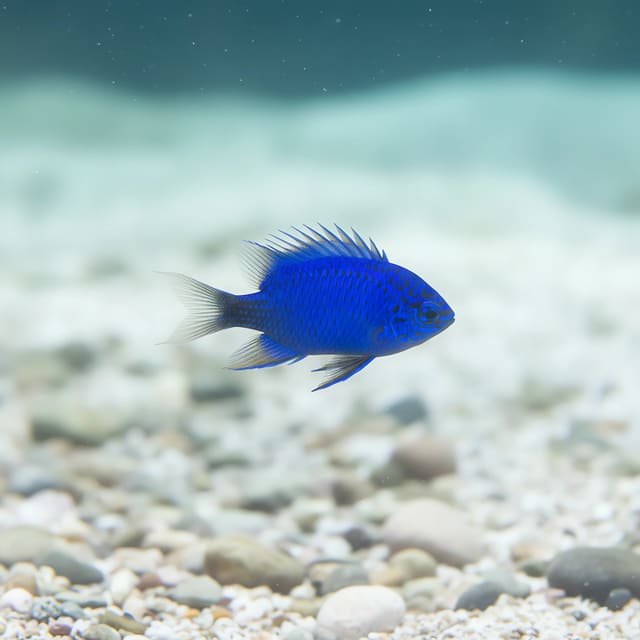
Azure demoiselle (Chrysiptera hemicyanea) - Marine Aquarium Livestock UK
24–26°C · pH 7.9–8.3
£29.99
The Blacktail Humbug (Dascyllus melanurus) is a black-and-white marine damselfish from the western Pacific that reaches 8 cm. It is territorial for its size, so it suits a mature saltwater aquarium shared with much tougher fish rather than a peaceful community.
Adult size is the maximum length this species reaches at full maturity (scientific sources). The livestock you receive will be younger and smaller. Product-photo provenance and any image-specific limitations are stated on the listing.
Dascyllus melanurus
The Blacktail Humbug (Dascyllus melanurus) is a black-and-white marine damselfish from the western Pacific that reaches 8 cm. It is territorial for its size, so it suits a mature saltwater aquarium shared with much tougher fish rather than a peaceful community.
Adult size is the maximum length this species reaches at full maturity (scientific sources). The livestock you receive will be younger and smaller. Product-photo provenance and any image-specific limitations are stated on the listing.
Maintain these water conditions for optimal health and vibrant colors
The blacktail humbug (Dascyllus melanurus) is a compact marine damselfish from the reefs and lagoons of the western Pacific. Its white body is crossed by bold black bands, and the last band runs right across the tail, which is where the name comes from. FishBase records a maximum length of 8 cm, so it stays small, yet it carries itself like a much bigger fish.
That character is the key to buying one well. The Ornamental Aquatic Trade Association (OATA) notes that damselfish are popular for their hardiness and are usually undemanding of water chemistry, but it also places humbugs among the damsels that need much tougher tank mates. A blacktail humbug belongs in a mature saltwater aquarium planned around robust fish, not in a gentle community.
| Suits | Keepers with an established, fully matured marine aquarium and a stocking plan built on robust fish |
|---|---|
| Less suited to | Peaceful community tanks with timid or gentle fish |
| Adult size | Up to 8 cm total length |
| Water | Saltwater; OATA's damselfish guidance is 24–26°C, pH 7.9–8.3 and specific gravity 1.020–1.025 |
| Aquarium | At least 60 litres for one damselfish and 200 litres for a group, by OATA's damselfish guidance; bigger is better |
| Diet | Omnivore: good flake or pellet food plus frozen foods such as mysis |
| Temperament | Territorial and confident for its size |
| Family | Pomacentridae, the damselfish family |
A humbug is a good choice when:
Think again if you are still cycling a new tank, if your plans centre on gentle or timid fish, or if you keep very small shrimps you would not want to risk. In those situations the calmer damsels suited to peaceful communities are the better match, and this guide explains why.
The black tail band is the easiest feature to check when you compare fish. It gives the species its names blacktail humbug and blacktail dascyllus, and it helps separate it from other banded damsels sold as humbugs.
Each purchase is one live blacktail humbug. There is a single choice on this listing, and the fish is supplied at our M (medium) trade grade. That grade describes the size we buy and pack rather than an exact length, and it is quite separate from the 8 cm adult maximum quoted throughout this guide.
Sex is guaranteed only when the selected option explicitly states male or female. This Blacktail humbug listing has no sex-guaranteed option. FishBase notes that the species forms distinct pairs when breeding, but a pair cannot be picked out for you, so buy a humbug for its own sake rather than as half of a breeding plan.
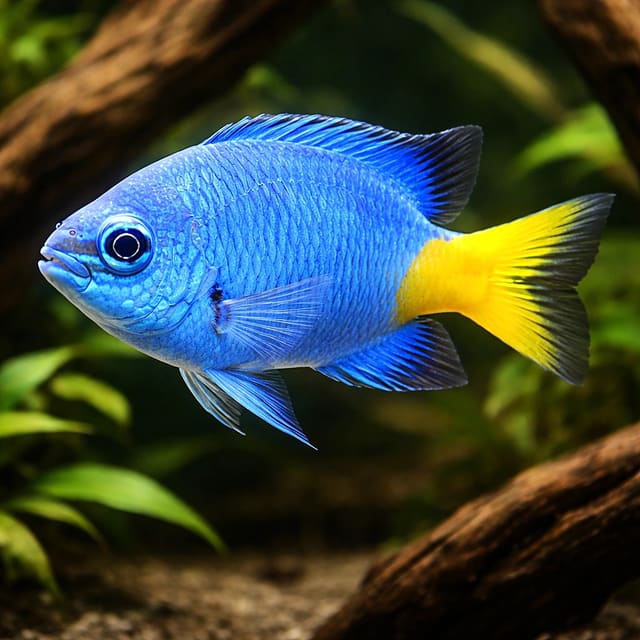
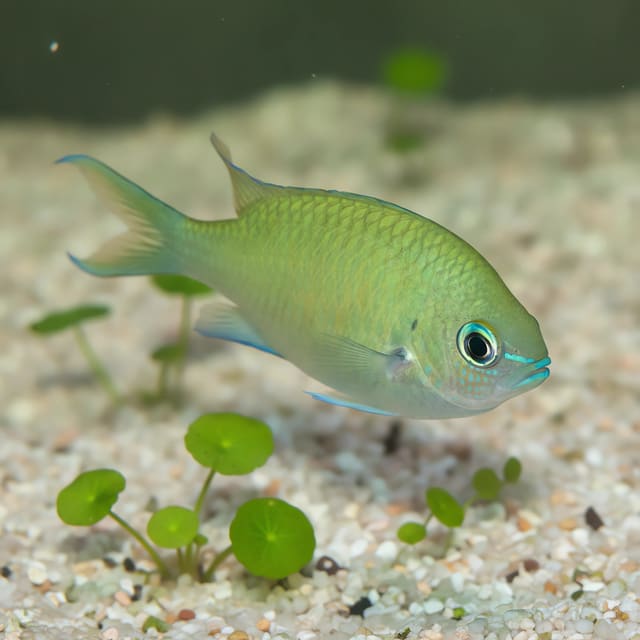
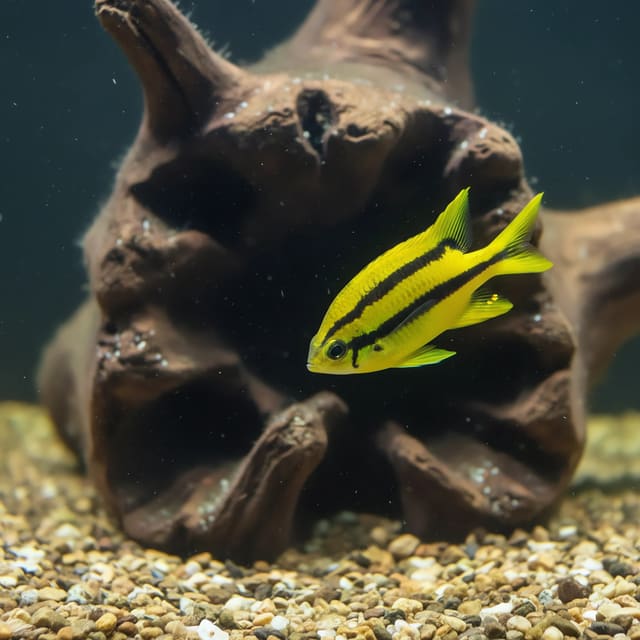
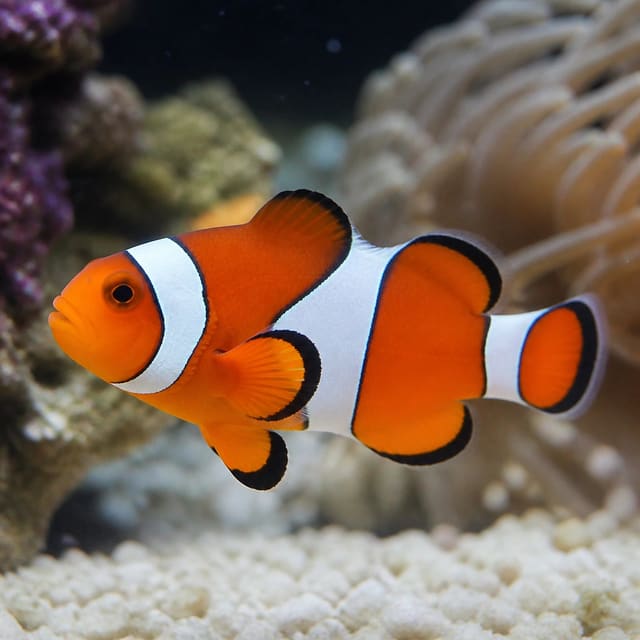
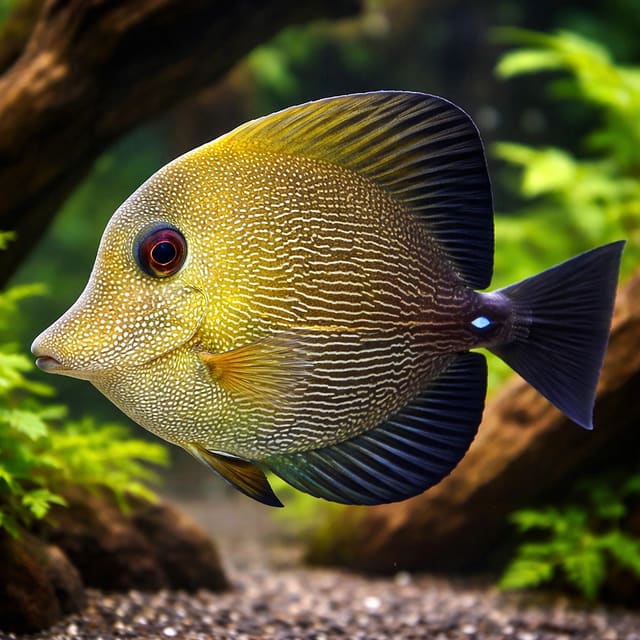
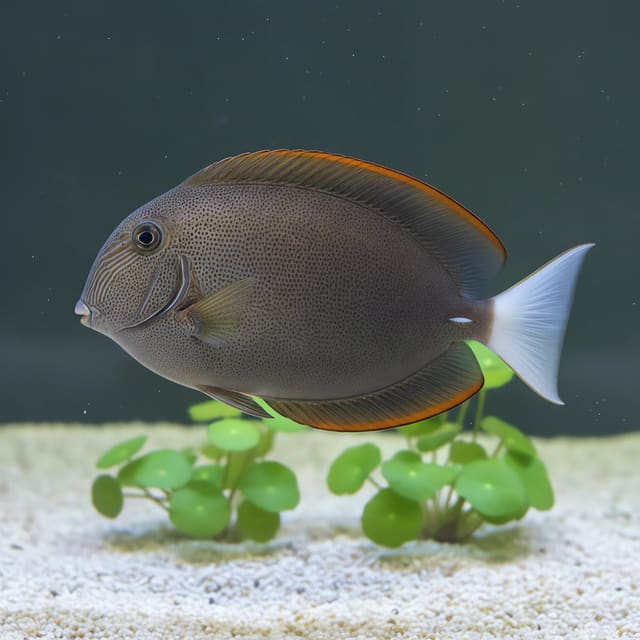
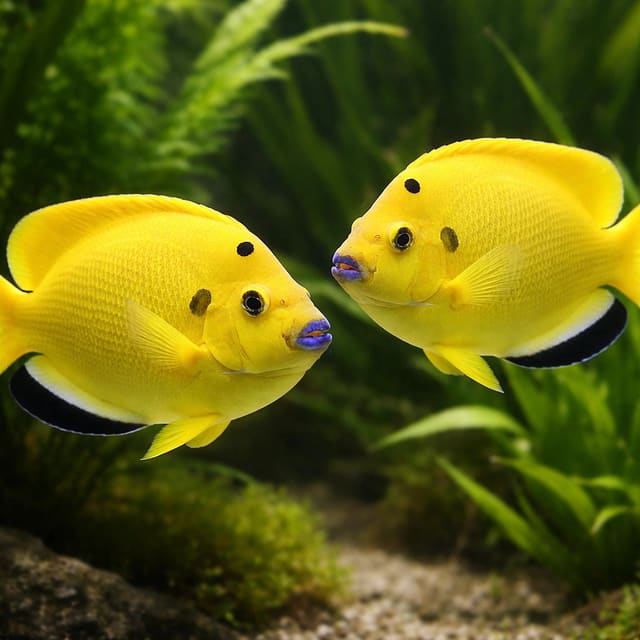
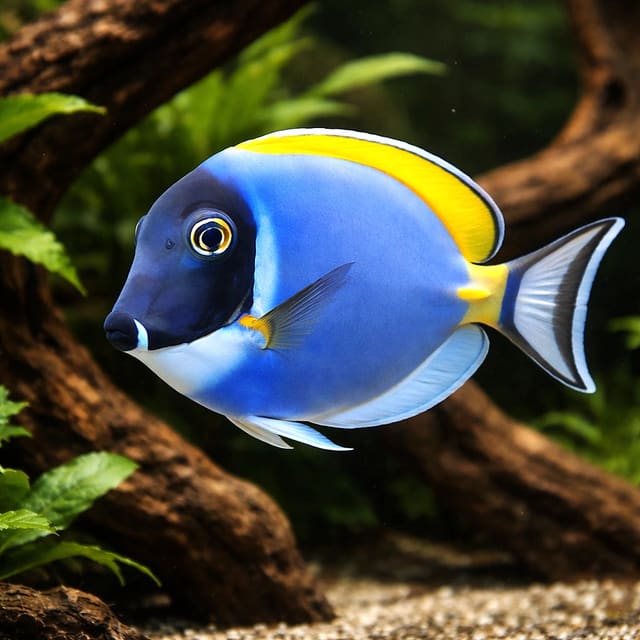
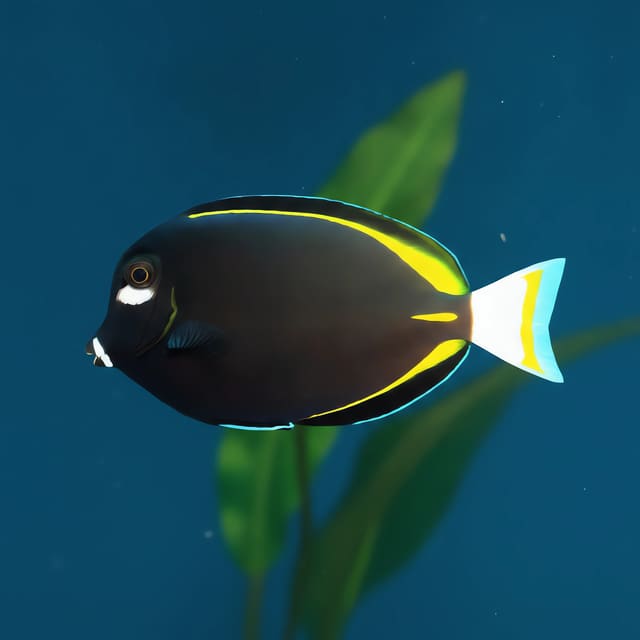
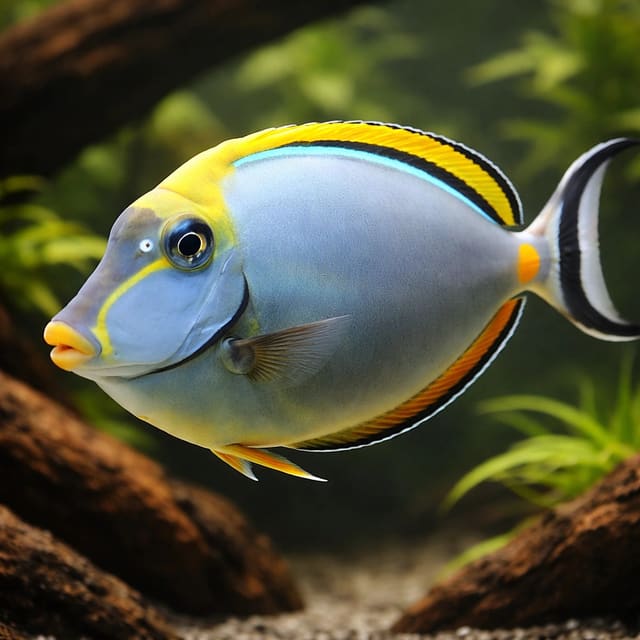
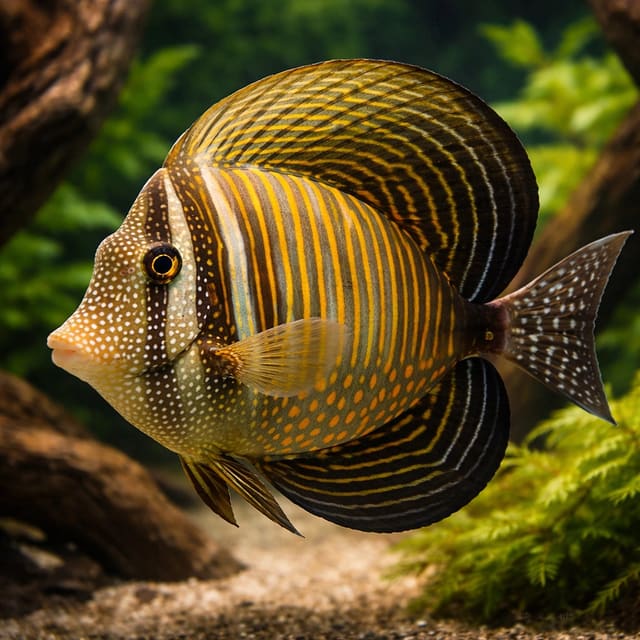
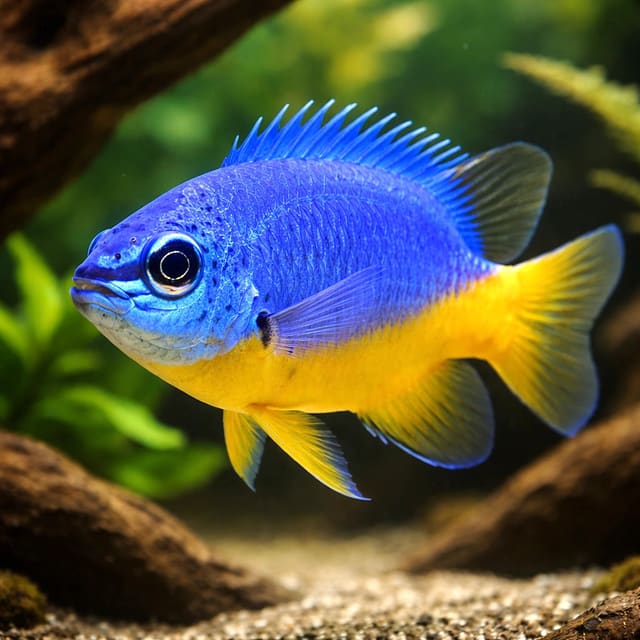
Gallery images have been digitally enhanced to improve image quality. Natural colour, pattern, size and maturity can vary between live animals. Some of the photographs show the fish against planted or driftwood backgrounds. Whatever the scene, this is a strictly marine fish that must live in a properly mixed saltwater aquarium.
Check three things first. The aquarium should be mature, with ammonia and nitrite at zero. It should be large enough for the whole community you plan, not just for this fish. And every fish already in it, or planned for it, should be able to hold its own against a territorial damsel. If all three are true, a humbug is a striking and hardy addition. You can compare other species in our marine fish collection with that same test in mind.
The advice in OATA's chromis and damselfish care sheet is to buy an aquarium as large as you reasonably can. Its minimums are at least 60 litres for a single damselfish and at least 200 litres for a group of damselfish or chromis. Those figures are written for the whole family rather than measured for this species, so treat them as floors, not targets.
For a blacktail humbug the practical answer is usually larger again. The fish itself stays under 8 cm, but it should share its home with much tougher fish, and those companions set the size of the tank. A larger volume also holds temperature and water quality more steadily, which OATA points out as a benefit in its own right.
In the wild, adults live in sheltered lagoons, harbours and inlets, and also over fairly open ground with outcrops of Acropora coral. FishBase notes that they are often associated with small coral heads. In aquarium terms, that means a stable rock structure with crevices and caves the fish can dart into, with open water in front of it for swimming and feeding.
OATA notes that damselfish in the wild stay near hard coral and take shelter quickly when they sense a threat, so a bolt-hole matters, especially to a newly added fish. Spread shelter across the tank rather than building one central cave: every fish then has somewhere to retreat, and no single rock becomes the only safe place in the aquarium. Build the rockwork so that it cannot shift if a fish pushes against it or a tank mate knocks it. OATA describes chromis and damselfish as relatively undemanding in terms of décor, so shape, stability and hiding places matter more than the material.
OATA publishes one set of suggested parameters for chromis and damselfish as a group. These are the values we plan around for this species:
| Salinity (specific gravity) | 1.020–1.025 |
|---|---|
| Temperature | 24–26°C |
| pH | 7.9–8.3 |
| Carbonate hardness | 8–12 dKH |
| Ammonia and nitrite | Zero |
| Nitrate | No more than 50 mg per litre |
| Calcium | 380–450 ppm |
| Magnesium | 1250–1350 ppm |
These are broad family guidance rather than a species-specific optimum. OATA adds that in a reef aquarium some parameters will need to be altered to accommodate more sensitive species, so if you keep corals, set the values for the most demanding animals in the tank; the damselfish group is described as undemanding of water chemistry. FishBase places the species in tropical waters between about 35°N and 25°S, which describes its wild distribution rather than an aquarium setting.
A filter is essential. OATA lists three ways to provide it in a marine set-up: live rock with sufficient water flow, an internal or external filter, or a sump-based filter. A protein skimmer is also worth having, because it removes dissolved organic waste before that waste can break down into more harmful substances.
The biology underneath is the same in every aquarium. The RSPCA's guidance on the aquarium environment explains that fish release ammonia, which is toxic. A working biological filter grows beneficial bacteria that convert it to nitrite, which is also toxic, and then to nitrate, which is safer. That is why the filter must be mature before the humbug goes in, and why it matters so much for a fish that OATA says can be stressed by even the smallest amounts of ammonia and nitrite.
Stability matters more than chasing exact numbers. Keep the heater set within the 24–26°C band and check the thermometer daily. Salt does not evaporate, so replace evaporation losses with fresh water rather than saltwater, otherwise the specific gravity creeps upward over the weeks. Test regularly for ammonia, nitrite and nitrate, and write the results down so you can spot a trend before the fish show it.
Mix replacement saltwater in advance and bring it to the same specific gravity and temperature as the aquarium before a water change. Adding water that is noticeably saltier, fresher or cooler undoes the stability the rest of the routine is built to protect.
FishBase describes a varied wild diet of plankton: larval shrimps and crabs, algae, ostracods, amphipods, pelagic tunicates, copepods and fish eggs. The blacktail humbug is, in other words, an omnivore that picks small items out of the passing water rather than a specialist grazer or a hunter of larger prey.
OATA's feeding advice for chromis and damselfish translates directly into a routine:
Uneaten food breaks down and releases toxic waste into the water, so careful portions protect water quality as much as they protect the fish. Watch where the food goes: if some is still drifting or lying on the rockwork after a few minutes, feed less at the next meal.
In a community of tougher fish, watch each feed during the first weeks and make sure every fish, the humbug included, is actually eating. A fish that loses interest in food is showing one of the early warning signs OATA lists, and it is far easier to act on that in the first days than after a week.
Every order is hand-packed by our team. The fish is bagged in pure oxygen and packed in an insulated poly box, with a heat pack when the weather calls for it. A tracked, licensed live-animal courier carries the parcel, and we email you the tracking number and your confirmed delivery date so you know when to be in.
Have the aquarium ready well in advance. OATA's advice before adding any fish is to check that ammonia and nitrite are at zero, and to increase the number of fish slowly, because the population of filter bacteria has to grow each time more fish are added and feeding increases. Stocking too quickly can lead to new tank syndrome, when there are not enough nitrifying bacteria to cope with the extra waste and ammonia and nitrite rise to harmful levels.
Test the water once more and confirm the temperature sits within 24–26°C. Clear a space next to the aquarium for the box, and keep your phone charged so you can record the unboxing without interruption. If other fish share the tank, keep their routine as normal.
The Live Arrival Guarantee needs someone at the delivery address to receive the parcel, the parcel opened and inspected on the day it arrives, and a continuous unboxing video that starts with the parcel still sealed. Because any claim relies on that video, film every delivery from the sealed box onwards. The full terms are on our delivery and Live Arrival Guarantee page.
Give the humbug time to find its bearings. Check at every feed that it is eating, and note how it and the other fish react to each other. Keep adding any further stock slowly, as OATA advises, so the filter can keep pace. The health signs in the next section are the ones to watch most closely during this period.
OATA describes a healthy fish as having clear, bright eyes, undamaged fins, intact scales, no ulcerations or bumps and appropriate swimming behaviour. The crisp contrast between the white body and black bands of a blacktail humbug is also easy to watch, which helps, because OATA lists a colour turning darker or paler than normal among the early warning signs.
If you see any of these, OATA's advice is to test your water quality first and then seek guidance. Send us your test results and a description of what you have seen, and we can talk through the next step with you.
OATA strongly recommends a partial water change of 25% at least once every week, using a siphon to lift solid waste from the substrate. Alongside that:
In a mixed community, health and compatibility overlap. A fish that hides far more than normal, loses fin tissue or stops feeding may be reacting to a neighbour rather than to the water. When the test results are good but the warning signs persist, look at who is chasing whom before reaching for any treatment.
Good husbandry is the core of damselfish health. OATA notes that chromis and damselfish can be stressed by even the smallest amounts of ammonia and nitrite, which may then cause them to develop various diseases. The reverse is encouraging: kept in a well-matured set-up with good water quality, OATA says these fish can live for many years.
According to FishBase's species summary, Dascyllus melanurus lives in the western Pacific from Sumatra to Vanuatu, north to the Ryukyu Islands and south to New Caledonia, and it has also been recorded from Tonga. It is a reef-associated, non-migratory marine fish. FishBase records it at depths from 1 to 68 m; that is a wild depth record, not something an aquarium needs to imitate.
It is a diurnal, schooling species, active by day, with adults gathering in sheltered lagoons, harbours and inlets and around small coral heads. The IUCN assesses it as Least Concern.
Three details from the wild record translate directly into aquarium planning. It is active by day, so its behaviour is easiest to judge during normal lighting hours. It lives close to coral heads it can dive into, which is why rockwork with crevices matters. And it feeds on small plankton drifting past, which is why small portions of fine foods suit it better than large chunks.
The species has several common names. Wikipedia lists four stripe damselfish, blacktail dascyllus, humbug damselfish, blacktail damselfish and blacktail humbug, all for the same fish in the family Pomacentridae. The word humbug on its own is also used for a close relative, Dascyllus aruanus, which OATA's care sheet names that way, so checking the scientific name is the simplest way to avoid a mix-up.
FishBase describes the species as oviparous, with distinct pairing during breeding. The eggs are demersal, laid on the bottom and stuck to a surface, and the male guards and aerates them. If a pair does form and spawn in your aquarium, expect the eggs to be fixed to rock or another hard surface, with the male staying close to tend them.
Damselfish vary widely in temperament. OATA explains that some species are relatively calm and mix well, while others grow large and are aggressive towards other fish. Some damselfish farm a patch of algae and defend it aggressively in the wild, and those species are territorial in aquariums as well.
Humbugs sit on the assertive side of that line. OATA's care sheet says that species such as dominoes and humbugs need to be mixed with much tougher species, and gives large angelfish, triggerfish and pufferfish as examples. A blacktail humbug is small, but plan its community as if it were a much larger, bolder fish.
| Suitable with | Much tougher marine fish, of the kind OATA names such as large angelfish, triggerfish and pufferfish, in an aquarium big enough for all of them |
|---|---|
| Take care with | Other damselfish, more than one humbug in a small tank, and very small crustaceans |
| Avoid | Gentle, timid community fish |
Tougher does not mean predatory. Choose companions that can stand up to a territorial damsel but that are not large or predatory enough to treat an 8 cm fish as food. The calmer damsels OATA suggests for community aquariums, such as Talbot's damsel (Chrysiptera talboti) and the yellowtail blue damselfish (Chrysiptera parasema), belong in a different kind of tank from a humbug.
Some display behaviour is normal for a territorial damsel: holding a favourite patch of rock, darting out at a fish that comes close and then returning. That is the fish doing what the species does. What matters is whether the other fish can still feed, move around the aquarium and rest without being pinned in one corner.
Signs that the balance has tipped include a tank mate that hides constantly, stops coming out for food or shows torn or missing fin tissue. Treat those as a stocking problem rather than something that will settle by itself, and be ready to separate or rehome one of the fish if changes to the aquarium do not help.
Wild blacktail humbugs live around branching Acropora and small coral heads, and OATA's sheet anticipates damselfish being kept in reef aquariums, noting that such tanks need parameters adjusted for more sensitive species. We still make no reef-safe promise for this fish.
Small crustaceans deserve more thought. FishBase lists larval shrimps and crabs, amphipods and copepods in the wild diet, so very small shrimps and other tiny crustaceans could be taken as food. Plan any invertebrate stocking on the basis that a humbug may not leave them alone.
Start with the companions rather than the humbug. List the fish you intend to keep, check the adult size and needs of each, and let the largest and most demanding of them set the aquarium size. OATA's 60-litre minimum for a single damselfish is a floor for that fish on its own; a community of much tougher fish needs far more room.
In the wild the blacktail humbug is a schooling species, so groups are natural to it. In an aquarium, space decides whether a group works: OATA's guidance for a group of damselfish is an aquarium of at least 200 litres, compared with 60 litres for a single fish. With territorial damsels, a cramped group leaves weaker fish nowhere to retreat. If you want more than one, plan the larger tank from the start and spread rockwork and refuges widely.
Because humbugs are territorial, we suggest adding one after its tougher companions have settled, so that it joins an established community rather than claiming an empty aquarium. Whatever the order, add fish gradually so the filter keeps pace, as OATA advises.
OATA's closing advice for this group is to check with your retailer before mixing chromis or damselfish with any other species. Tell us what already lives in your aquarium, and its volume, and we will help you decide whether a humbug fits.
FishBase records a maximum of 8 cm total length. That is the adult maximum, not the size supplied, which is a medium trade grade.
OATA's damselfish guidance is at least 60 litres for a single damselfish and at least 200 litres for a group. Because this fish should live with much tougher companions, size the tank for the whole community, which usually means well above 60 litres.
In the wild it is a schooling species, but in an aquarium a group needs space. OATA's guidance for a group of damselfish is at least 200 litres, with rockwork and refuges spread widely so no fish is trapped.
Damselfish are popular partly for their hardiness, and OATA describes them as usually undemanding of water chemistry. The challenge is its territorial temperament, so it suits a keeper with a mature, cycled saltwater aquarium and a clear plan for robust tank mates.
It is an omnivore. Use a good-quality flake or pellet as the base and add frozen foods such as mysis shrimp, enriched brine shrimp or red plankton. Offer only what it eats within a few minutes, twice a day.
OATA's broad guidance for chromis and damselfish is 24–26°C, pH 7.9–8.3, specific gravity 1.020–1.025 and carbonate hardness 8–12 dKH, with ammonia and nitrite at zero.
It is territorial. OATA places humbugs among the damselfish that need to be mixed with much tougher species, so expect it to defend its space and plan its companions accordingly.
Much tougher marine fish of the kind OATA names, such as large angelfish, triggerfish and pufferfish, in an aquarium big enough for all of them. Avoid gentle, timid community fish, and choose companions that will not treat an 8 cm fish as food.
It is hand-packed in pure oxygen in an insulated box and carried by a tracked, licensed live-animal courier. Be in to receive it, film a continuous unboxing video from the sealed parcel, then float the bag for 20–30 minutes before releasing the fish. Live Arrival Guarantee claims need that video and same-day contact.
No reviews for this item yet. Bought one? Honest reviews only, good or bad.
What customers say about ordering from us
Easy website plenty of info on fish your buying great to pick a time slot
TRACEY DURRANT · 7 Oct 2026
Got some lovely fish thank you
Kevin Mackie · 7 Oct 2026
Reviews of our shop, collected by Judge.me, an independent third-party review collector. Newest first.