Blacktail Humbug (Dascyllus melanurus)
24–26°C · pH 7.9–8.3
£20.99
The Azure demoiselle (Chrysiptera hemicyanea) is a marine damselfish from the Indo-West Pacific that reaches 7 cm. It suits keepers with a mature marine aquarium; FishBase’s species range and OATA’s damselfish guidance overlap at 24–26°C, while OATA recommends at least 60 litres for one and pH 7.9–8.3. Sold individually as one live fish.
Adult size is the maximum length this species reaches at full maturity (scientific sources). The livestock you receive will be younger and smaller. Product-photo provenance and any image-specific limitations are stated on the listing.
Chrysiptera hemicyanea
The Azure demoiselle (Chrysiptera hemicyanea) is a marine damselfish from the Indo-West Pacific that reaches 7 cm. It suits keepers with a mature marine aquarium; FishBase’s species range and OATA’s damselfish guidance overlap at 24–26°C, while OATA recommends at least 60 litres for one and pH 7.9–8.3. Sold individually as one live fish.
Adult size is the maximum length this species reaches at full maturity (scientific sources). The livestock you receive will be younger and smaller. Product-photo provenance and any image-specific limitations are stated on the listing.
Maintain these water conditions for optimal health and vibrant colors
The Azure demoiselle (Chrysiptera hemicyanea) is a marine damselfish in the family Pomacentridae. It comes from the Indo-West Pacific, including Indonesia and eastern Indian Ocean reefs around Rowley Shoals, Scott Reef and Ashmore Reef, and reaches 7 cm total length. This fish suits a keeper who can provide a mature, filtered marine aquarium and assess every proposed companion for temperament and space.
FishBase records the species at depths of 1–38 metres, with adults on lagoon and near-shore reefs, usually among branching corals. It also records small aggregations, usually with Acropora corals, daytime activity and feeding on plankton about 0.3–0.5 metres above the substrate. Those details point to a fish that uses open water for feeding while remaining closely associated with structured reef habitat.
The Wikipedia species entry also calls it the azure damselfish, half-blue demoiselle and yellow-dipped damsel. These are names for the same species, not separate colour or sex choices.
Its small adult length should not be mistaken for a universal community temperament. OATA notes that damselfish vary considerably: some mix relatively calmly, while others defend space and attack fish. Plan around the individual’s observed behaviour, aquarium volume and the response of its companions rather than assuming that every small damselfish behaves alike.
FishBase records a wild environmental temperature range of 22–28°C. For routine aquarium care, use the narrower 24–26°C range described below, together with stable marine chemistry and a working biological filter.
This offer supplies one live Azure demoiselle per purchase. The fish should be planned for at its recorded adult length of 7 cm, regardless of its length when dispatched. Aquarium volume, filtration capacity and compatibility must therefore be chosen for the adult fish rather than for its arrival size.
Sex is guaranteed only when the selected option explicitly states male or female. This Azure demoiselle listing has no sex-guaranteed option.
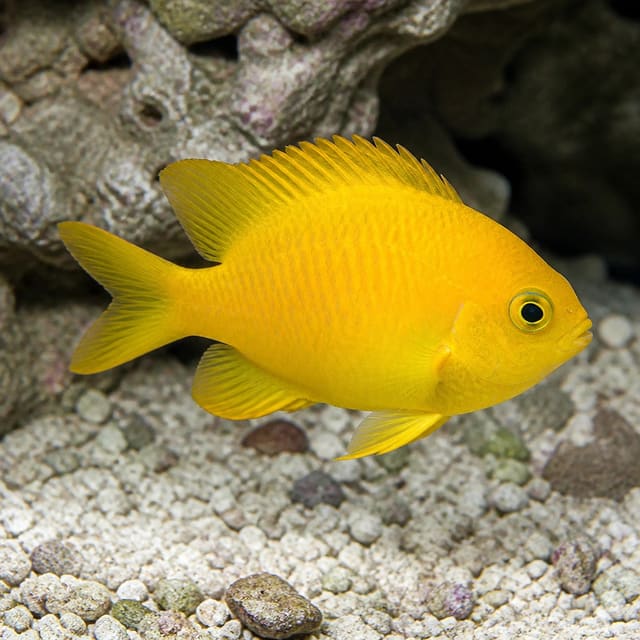
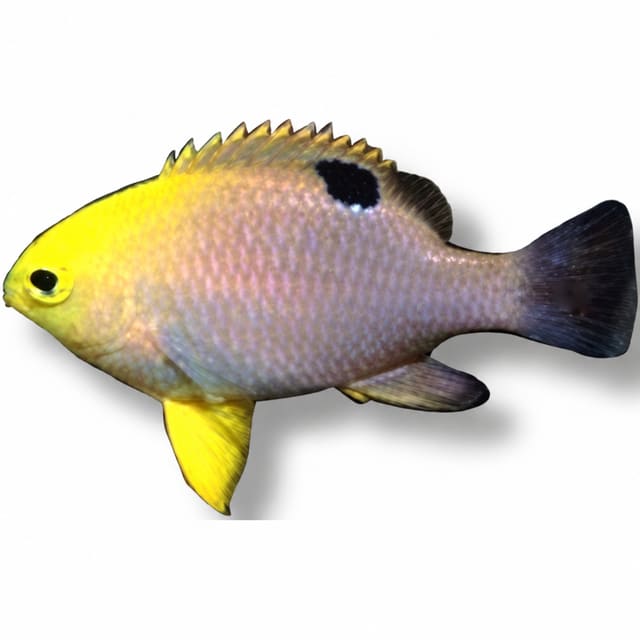
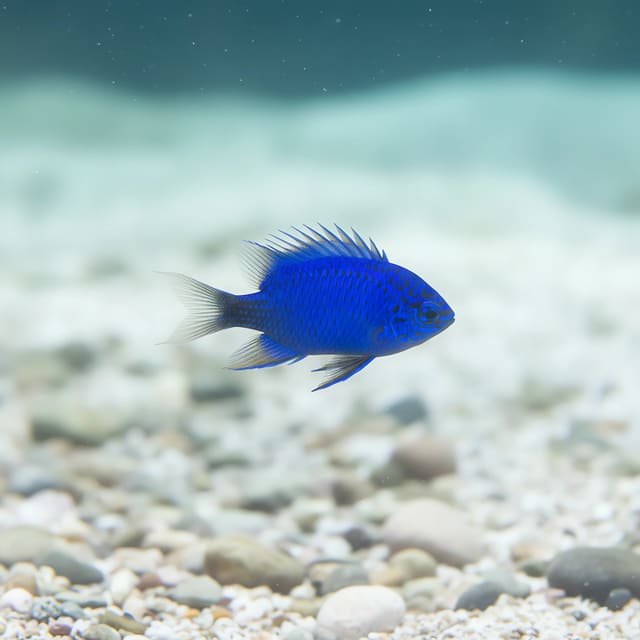
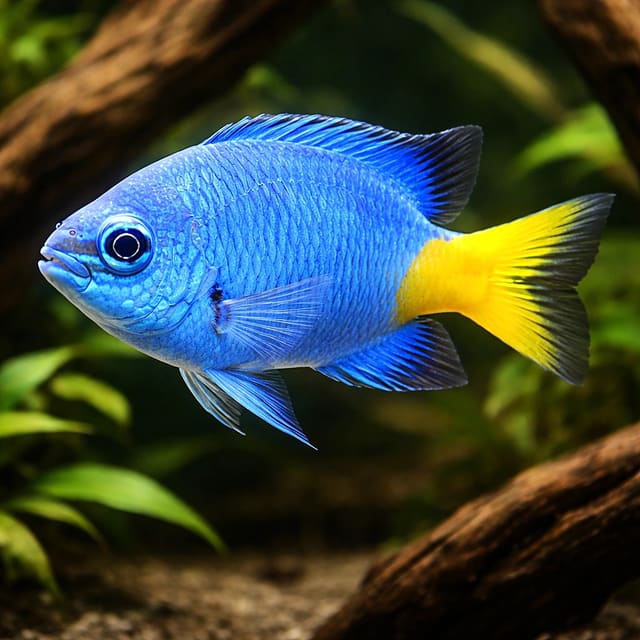
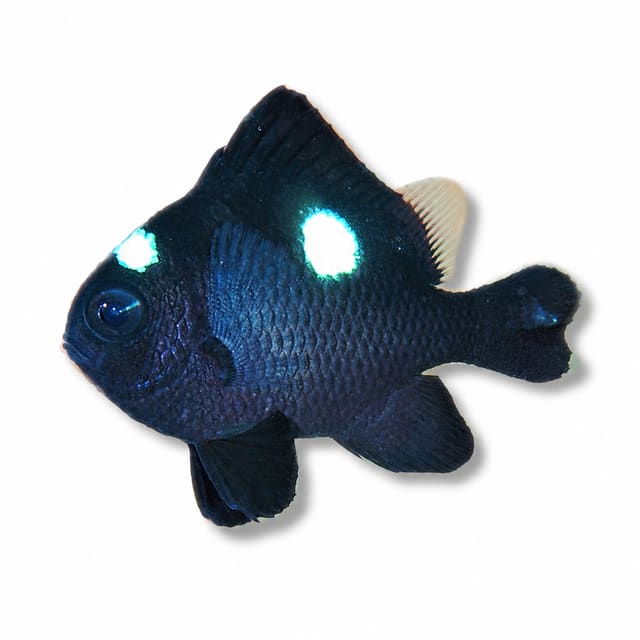
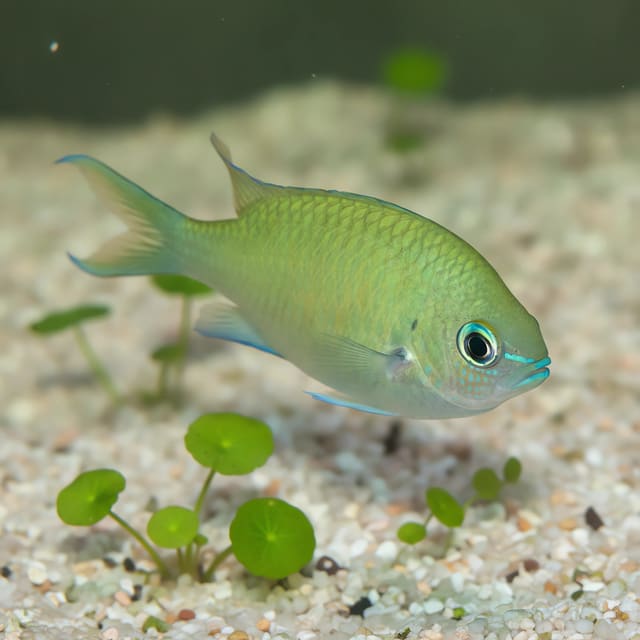
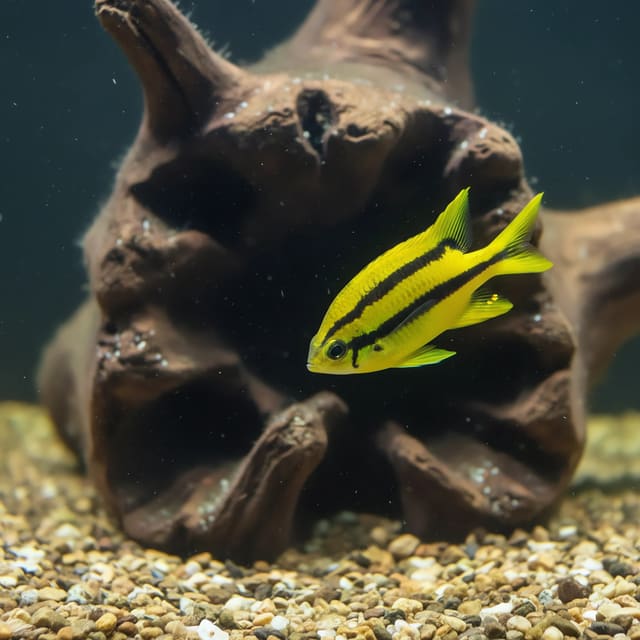
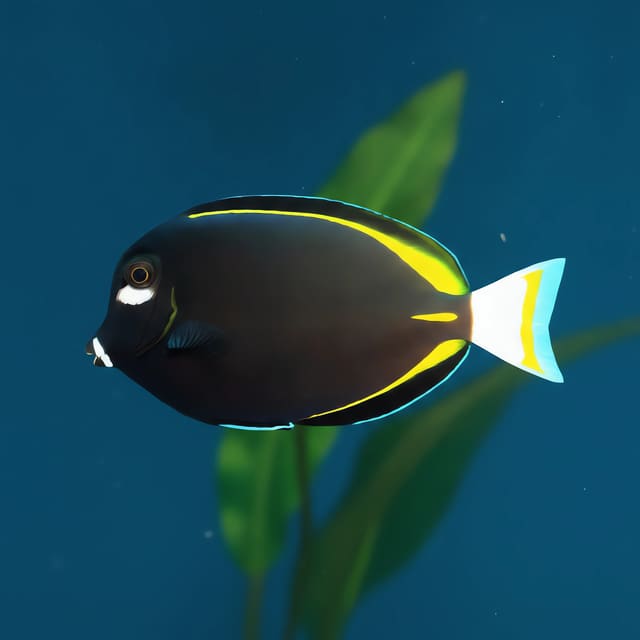
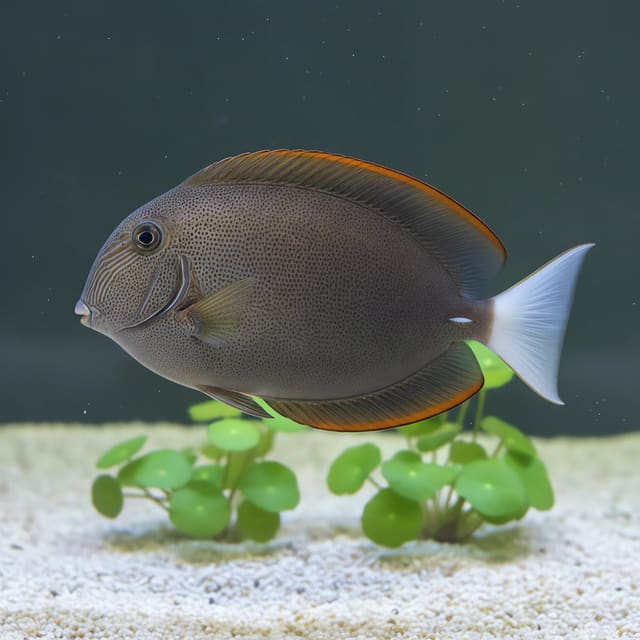
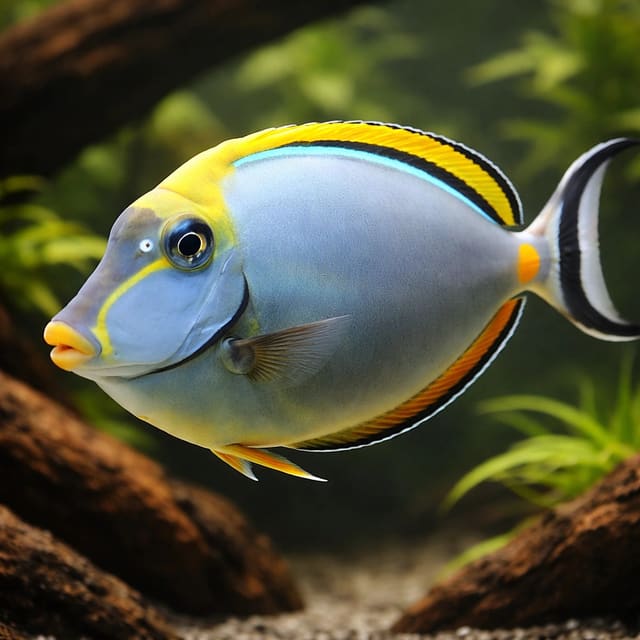
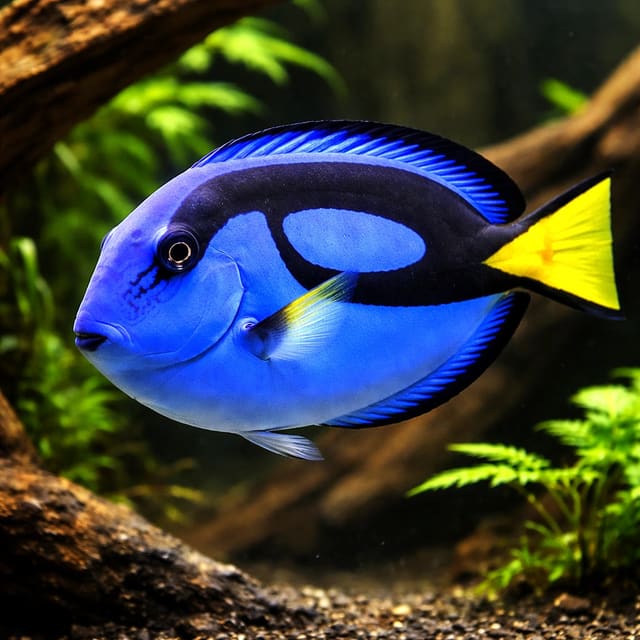
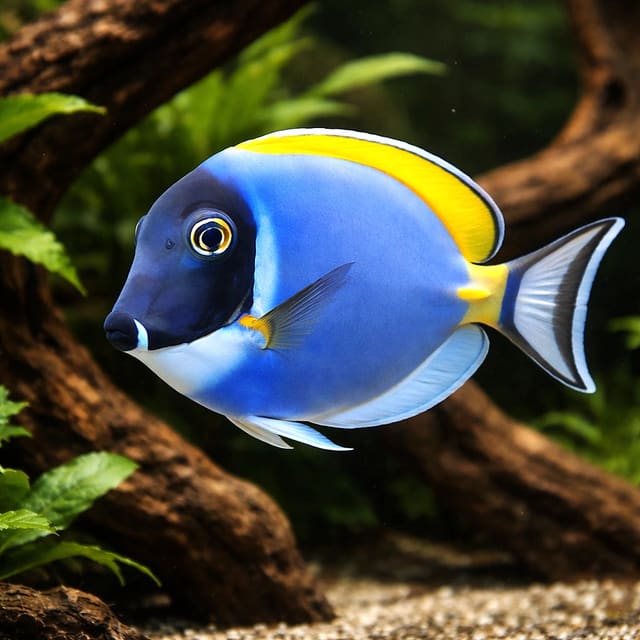
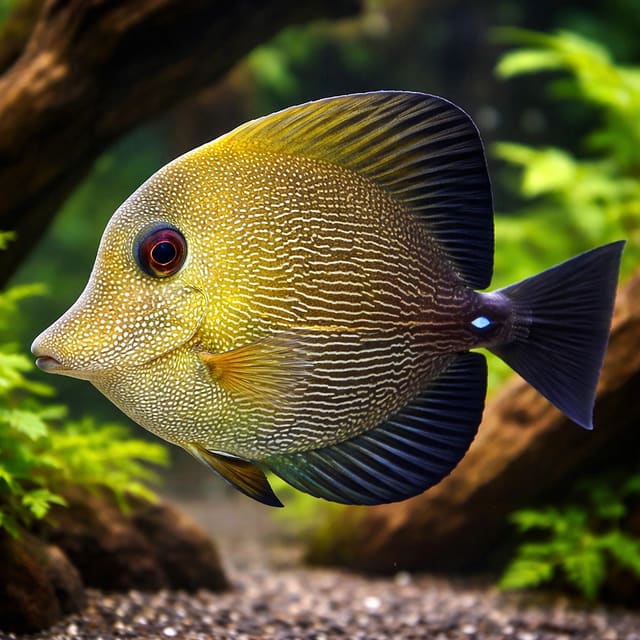
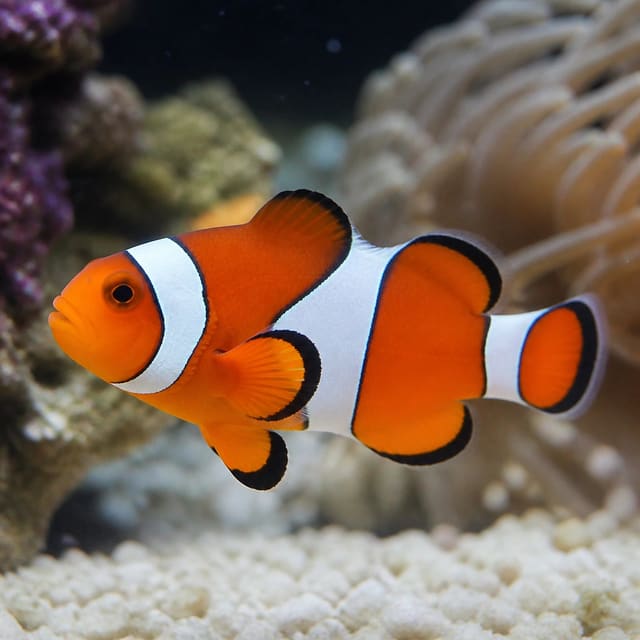
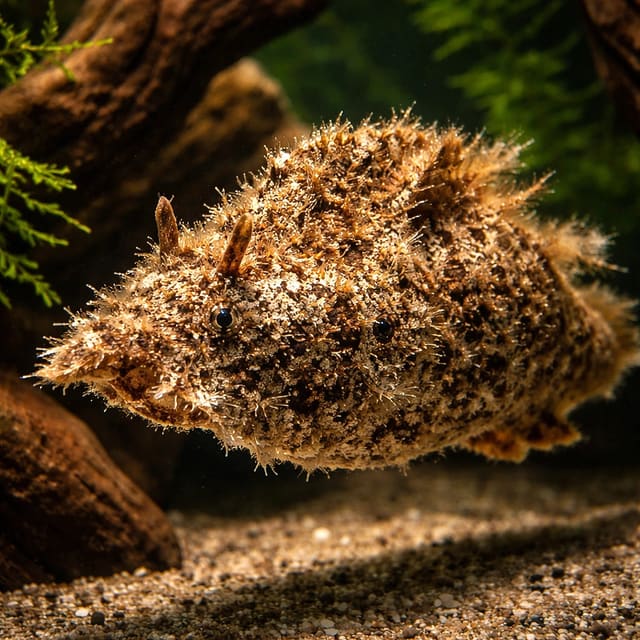
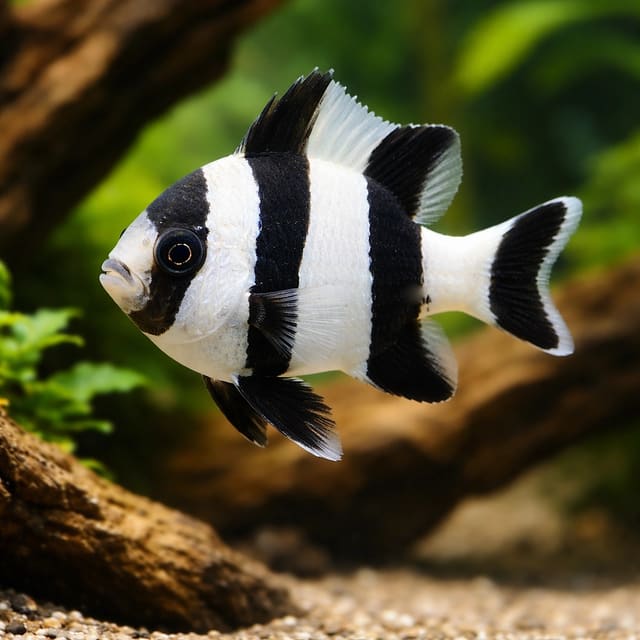
Some gallery images have been digitally enhanced to improve image quality. They show the listed type of animal rather than guaranteeing the exact markings of the individual supplied, so natural colour and pattern can vary.
Use the gallery as a general guide to the species’ appearance; the fish shown cannot confirm the sex or exact markings of the animal supplied.
You can also browse the marine fish collection when comparing identities and care requirements. Treat each species as a separate stocking decision rather than transferring the Azure demoiselle’s care values or temperament to another fish.
Keep one Azure demoiselle in a mature marine aquarium of at least 60 litres, with 24–26°C water, pH 7.9–8.3 and salinity of 1.020–1.025. OATA’s chromis and damselfish guidance gives those aquarium values for the group; the 24–26°C target is the overlap between that guidance and FishBase’s 22–28°C wild temperature record for this species.
Maintain carbonate hardness at 8–12°dKH, calcium at 380–450 ppm and magnesium at 1,250–1,350 ppm. Ammonia and nitrite must remain at zero mg/l, while nitrate must not exceed 50 mg/l. In a reef aquarium, some of these values will need to be altered to accommodate more sensitive species, so check every animal’s requirements before setting one system-wide target.
| Suits | Not suited to |
|---|---|
| A mature, filtered marine aquarium | An unfiltered aquarium or an immature biological filter |
| A keeper able to maintain 24–26°C and pH 7.9–8.3 | A system that cannot hold stable marine chemistry |
| At least 60 litres for one fish | Planning only around the fish’s dispatch size |
| Individual assessment of temperament and space | Assuming every damselfish is either peaceful or aggressive |
| At least 200 litres when planning a damselfish group | A group plan in a smaller aquarium |
Use these figures as the first screening step. Passing the volume and water checks does not settle compatibility by itself: filtration capacity, stocking pace and behaviour still need separate attention.
Keep the routine temperature at 24–26°C and pH at 7.9–8.3. The temperature range is an overlap between OATA’s aquarium guidance and FishBase’s 22–28°C wild environmental record, so it provides a practical target without pushing beyond the species-level temperature range.
Test the aquarium rather than judging water quality by appearance. Clear water may still contain ammonia, nitrite or an unsuitable level of nitrate, and the fish itself produces waste that the filter must process. Record results consistently so that a movement away from the normal range is visible before it becomes a larger problem.
When the aquarium contains more sensitive reef animals, set values that satisfy every inhabitant. OATA notes that in a reef aquarium some parameters will need to be altered to accommodate more sensitive species. The Azure demoiselle’s range must therefore be checked alongside the needs of the other animals rather than applied in isolation.
Stability matters alongside the numerical target. A larger aquarium provides more stability in temperature and water quality, but volume does not replace testing or maintenance. If a result is outside the intended range, identify and correct the husbandry cause before adding more livestock or increasing feeding.
Use the same test method and record the result beside the date, feeding level, livestock additions and maintenance completed. A single reading shows the aquarium at one moment; a sequence shows whether a value is stable, rising or falling. If temperature moves outside 24–26°C, restore the intended range steadily and investigate the equipment or room conditions behind the change. If pH, salinity or mineral values drift, check them again before making further stocking decisions.
Ammonia or nitrite above zero mg/l requires immediate attention to the biological filter, recent additions and decaying food. A nitrate result moving towards 50 mg/l calls for a review of partial water changes, feeding and solid-waste removal. Correct the cause, repeat the test and confirm that the value has returned to the intended range before increasing the aquarium’s biological load.
Use an aquarium of at least 60 litres for one damselfish. For a group of damselfish or chromis, OATA recommends a much larger aquarium of at least 200 litres. Both figures are minimums, so choose an aquarium as large as is reasonably possible.
The Azure demoiselle reaches 7 cm total length. That recorded maximum is the adult-size figure to use for aquascaping and stocking calculations. A small fish on arrival still needs an aquarium planned around its full adult length, waste production and eventual interactions with established inhabitants.
FishBase places adults on lagoon and near-shore reefs, usually among branching corals, and records small aggregations associated with Acropora. Provide stable marine aquarium structure that offers nearby refuge while retaining open water where the fish can swim and take food. Live rock with sufficient water movement can also contribute to filtration when it forms part of a correctly matured marine system.
Structure is useful, but it must not be treated as a guarantee of peaceful behaviour. OATA explains that some damselfish species farm a patch of algae, defend it aggressively in the wild and are therefore territorial in aquariums. The Azure demoiselle should be watched as an individual for chasing, increased aggression or repeated hiding by other fish.
Meeting a minimum volume is only one part of the decision. A mature filter, suitable water chemistry and compatible behaviour are all required at the same time.
During the first weeks, note where the fish feeds, shelters and spends most of its active period. Check that open swimming water remains accessible and that a refuge is not blocked by equipment or another inhabitant. Persistent confinement to one corner, repeated displacement from shelter or an inability to reach food should trigger a fresh compatibility and layout assessment.
Keep swimming routes clear when maintaining live rock or other structure. Any change to the layout can alter how fish use space, so observe interactions again after maintenance. The aim is not to force a territory into a particular shape, but to ensure that the 7 cm adult fish can move, feed and shelter without the aquarium’s structure creating a preventable conflict point.
Use a well-established biological filter and keep ammonia and nitrite at zero mg/l. The RSPCA’s aquarium welfare guidance explains that fish release toxic ammonia, which filter bacteria convert first to nitrite and then to the safer nitrate. The filter must be mature and maintained because the fish’s waste continues after the water first tests correctly.
OATA lists live rock with sufficient water flow, internal or external filters and sump-based filters as suitable filtration approaches for marine systems. A protein skimmer may also help by removing dissolved organic waste before it breaks down. Select an arrangement that can cope with the whole aquarium’s stocking and feeding load, not only this one fish.
Add livestock gradually. Each added fish and each increase in feeding raises the amount of waste that the bacterial population must process. OATA warns that stocking too quickly can lead to new tank syndrome, in which insufficient nitrifying bacteria allow ammonia and nitrite to rise.
Tap water containing chlorine or chloramine may kill beneficial bacteria in filter media. Rinsing media in the water removed during a partial change reduces that loss while allowing accumulated debris to be cleared.
Use the test results to guide action. If ammonia or nitrite appears, pause further stocking, check filtration and remove avoidable sources of decaying food. If nitrate approaches 50 mg/l, review water-change effectiveness, feeding quantity and waste removal before it rises above that level.
Treat a new fish, a larger portion or a change in feeding frequency as an increase in biological load. Test after the change rather than assuming the filter has adjusted. Zero ammonia and zero nitrite show that the system is processing those wastes at the time of testing; continue the normal schedule so a delayed rise is not missed.
If flow weakens, inspect the filter for blockage before water movement falls further. Clean only what needs attention, preserve the bacterial population in the media and confirm that normal flow resumes. After a partial water change, retest the principal values and record the result. This creates a useful comparison between readings taken before and after maintenance and helps show whether the routine is controlling nitrate and accumulated waste effectively.
Make appropriately sized planktonic marine foods the main part of the Azure demoiselle’s diet. FishBase records the wild species feeding on plankton about 0.3–0.5 metres above the substrate, so foods that remain accessible in the water column fit its recorded feeding biology.
Use frozen red plankton, mysis shrimp and enriched brine shrimp as a varied rotation. OATA also recommends good-quality marine flake or pellets for chromis and damselfish. Offer food in a form and particle size the fish can take readily rather than allowing large or uneaten pieces to settle.
OATA describes chromis and damselfish as omnivorous and notes that they may graze algae offered for herbivorous species or growing in the aquarium. That occasional grazing can form part of a varied intake while the Azure demoiselle’s main foods remain aligned with its recorded plankton feeding.
A reduced intake or loss of interest in food is one of OATA’s warning signs. First check the water values, then observe swimming, breathing, colour and interactions with other fish. A fish that is repeatedly displaced at feeding time may not receive an adequate portion even when the total amount placed in the aquarium looks sufficient.
Overfeeding creates a second problem: uneaten food breaks down and releases waste into the water. Portion control therefore protects both nutrition and water quality. Increase food only when the fish consumes the existing amount within a few minutes and the filter continues to hold ammonia and nitrite at zero mg/l.
Begin with a small portion that remains accessible in the water column and watch it through the full feeding period. If the fish finishes promptly and continues searching, make only a modest adjustment at the next meal. If particles settle or remain after a few minutes, reduce the next portion and remove avoidable leftovers during maintenance.
In a shared aquarium, judge access as well as total consumption. One fish taking most of the food can leave another underfed while still producing excess waste. Distribute the appropriate food so the Azure demoiselle can reach its share, then watch for repeated displacement. A sudden change in appetite should lead to water testing and a check of breathing, swimming and interactions before the normal portion is increased.
Arrange for someone to be present to receive the fish. Tropical Fish Co hand-bags live fish in pure oxygen, uses an insulated poly box and includes a heat pack when the weather calls for it. Transport is handled through a licensed live-animal service, and the parcel must not be left unattended.
These steps come from the Tropical Fish Co delivery and Live Arrival Guarantee policy. Read that page before ordering so that the receiving person understands the packing, attendance, acclimatisation and claim requirements.
OATA advises checking that the aquarium is an appropriate size and that ammonia and nitrite are both zero mg/l before adding fish. Complete those checks in advance. The biological filter should already be mature, temperature and salinity should be stable, and the intended stocking plan should already account for this fish.
Add livestock slowly so the bacterial population can adjust to increased waste and feeding. Do not use the fish’s arrival as the point at which to begin maturing the filter or deciding whether the aquarium can hold marine conditions.
Once released, use the same observation points applied to established livestock: swimming, breathing, colour, condition, feeding and interactions. The next care decision should be based on those observations and measured water values, not on assumptions about how every newly introduced damselfish behaves.
Record ammonia, nitrite, nitrate, temperature, pH and salinity before introduction so later readings have a clear comparison point. Test again as the aquarium takes on the additional waste load. Ammonia and nitrite must remain at zero mg/l; any appearance of either value calls for attention to filtration, feeding and recent stocking before another animal is introduced.
Observe whether the fish can move between open water and shelter and obtain food without persistent chasing. Compare its behaviour with the baseline indicators used for established fish, including breathing rate, colour, swimming and appetite. Keep stocking changes slow while the filter and existing inhabitants respond to the addition. Proceed with a wider plan only when water values remain stable and the animals are feeding and using the aquarium without continuing conflict.
Establish a normal baseline for the individual fish, then look for changes. OATA describes healthy fish as having clear, bright eyes, undamaged fins, intact scales, no ulcerations or bumps and appropriate swimming behaviour. Consistent daily observation makes a change easier to recognise than an occasional detailed inspection.
| What changes | What to check |
|---|---|
| Swimming | Hanging at the surface, sitting on the bottom or erratic movement |
| Colour | Becoming darker or paler than normal |
| Temperament | More aggression or more hiding than normal |
| Breathing | Gill covers moving faster or slower than normal |
| Appearance | White spots, fluffy growths or loss of fins or scales |
| Condition | Visible gain or loss of body condition |
| Feeding | Reduced intake or no interest in food |
If any of these changes appears, test ammonia, nitrite, nitrate, temperature, pH and salinity first. Compare the result with the aquarium’s normal readings and correct any husbandry problem that can be identified safely. Check filter flow and recent maintenance, and look for uneaten food or a recent increase in stocking or feeding.
Observe the other fish at the same time. Increased chasing, hiding or loss of access to food may point to a compatibility problem, while several fish changing together makes the shared environment an immediate priority for investigation.
Do not begin an unspecified treatment from appearance alone. Different signs can have different causes, and water quality must be assessed before choosing the next step. If the change persists or the fish’s condition worsens, repeat the water tests, correct any husbandry cause they reveal and add no further livestock until the fish has recovered.
Assess each proposed companion for temperament, aquarium volume and territorial behaviour before combining it with an Azure demoiselle. OATA says damselfish range from relatively calm species that mix with other fish to species that grow larger and attack other fish. A universal compatibility list would therefore be a poor substitute for checking the particular aquarium and animals involved.
OATA contrasts relatively peaceful Talbot’s damsels and yellowtail blue damselfish with dominoes and humbugs, which it says need much tougher companions such as large angelfish, triggerfish and pufferfish. That comparison shows how widely behaviour can vary within the broader group. Do not transfer either example list automatically to the Azure demoiselle.
FishBase records Azure demoiselles in small wild aggregations around branching corals. Wild groups do not mean that several individuals will share the confined space of an aquarium peacefully.
Compatibility remains conditional because individual behaviour, stocking density and aquarium size can change the outcome. Before buying, write down the aquarium volume, every inhabitant and the latest water results, and check each proposed companion against them rather than relying on the word “damselfish” alone.
Use repeated observations rather than one isolated movement. Check whether chasing continues, whether the same fish is repeatedly displaced and whether every inhabitant can still reach food and shelter. Increased hiding, darker or paler colour and reduced feeding are practical signs that an interaction may be affecting welfare even when no visible injury is present.
Review the aquarium after feeding and during the fish’s normal daytime activity because competition may be most obvious when animals use the same water or refuge. If behaviour changes after a new introduction, compare it with the earlier baseline and check water quality at the same time. A compatibility concern and a water-quality problem can occur together, so resolving one should not replace testing for the other.
Plan at least 60 litres for one damselfish. If the intended aquarium will hold a damselfish or chromis group, use at least 200 litres and assess the full stocking plan. OATA gives these minimum volumes for the group and explains that larger aquariums provide greater stability in temperature and water quality.
Any plan involving multiple damselfish needs more than a volume calculation. Temperament varies across damselfish, and some species become territorial in aquariums. The aquarium must also have enough filtration capacity for the additional waste and feeding created by every fish.
| Plan | Starting requirement |
|---|---|
| One damselfish | At least 60 litres, with mature filtration |
| Damselfish or chromis group | At least 200 litres, plus an individual compatibility assessment |
A 60-litre aquarium meeting the single-fish recommendation does not automatically have spare capacity for another fish. Existing stocking, filtration, feeding and behaviour still count. Equally, a 200-litre aquarium does not guarantee that a particular group will remain compatible.
Introduce livestock slowly so the biological filter can respond to the increased waste load. After each addition, confirm that ammonia and nitrite remain at zero mg/l and watch for aggression, hiding or reduced feeding before proceeding with the wider stocking plan.
Choose the group count only after considering the adult length and needs of every inhabitant. The Azure demoiselle’s 7 cm adult size is useful for space planning, but behaviour and filtration prevent a simple fish-per-litre calculation from answering the whole question.
After an introduction, allow the aquarium’s measured results and observed behaviour to guide the next decision. Confirm that every fish can feed, use shelter and swim without persistent displacement. Check ammonia and nitrite for any response to the extra waste, and review nitrate against the maximum of 50 mg/l.
If the new combination produces repeated aggression, hiding or reduced feeding, do not continue adding fish simply because the aquarium exceeds 200 litres. The volume is a starting requirement for a group plan, not a substitute for individual assessment. Likewise, stable behaviour cannot compensate for ammonia or nitrite above zero mg/l. A workable group requires acceptable behaviour, mature filtration and stable water values together.
It reaches 7 cm total length according to FishBase. Plan the aquarium and stocking around that adult figure rather than the fish’s length when dispatched.
OATA’s broad damselfish guidance recommends an aquarium of at least 60 litres for one fish. Use at least 200 litres for a damselfish or chromis group, with mature filtration in either case.
OATA’s damselfish guidance gives at least 60 litres for one fish and at least 200 litres for a group, and any group also needs an individual temperament assessment.
Choose it once you can run a mature, filtered marine aquarium at 24–26°C and pH 7.9–8.3 and assess every tank mate for temperament and space; OATA describes chromis and damselfish as a group as hardy and usually undemanding of water chemistry.
FishBase records it feeding on plankton in the wild. Offer planktonic marine foods such as red plankton, mysis and enriched brine shrimp alongside a good-quality marine flake or pellet, twice daily in portions eaten within a few minutes.
Keep it at 24–26°C, the overlap between FishBase’s species range and OATA’s damselfish guidance; OATA also gives pH 7.9–8.3, salinity 1.020–1.025 and carbonate hardness 8–12°dKH.
OATA says damselfish temperament varies: some are relatively calm, while others attack fish. Watch for chasing, increased aggression or hiding, and reassess the combination if those signs appear.
Assess every proposed marine tank mate individually for temperament, space and territorial behaviour. OATA’s examples range from peaceful damselfish kept with hardy fish to more forceful species paired with much tougher fish, so choose each companion for this fish on its own temperament and space needs.
Tropical Fish Co hand-bags the fish in pure oxygen, uses an insulated poly box and adds a heat pack when the weather calls for it, followed by licensed live-animal transport. Make sure someone is at the delivery address to receive it. Start filming before opening the sealed parcel, record the continuous opening and show the fish still in the bag; then float the bag for 20–30 minutes before release and never pour the bag water into the aquarium.
No reviews for this item yet. Bought one? Honest reviews only, good or bad.
What customers say about ordering from us
Easy website plenty of info on fish your buying great to pick a time slot
TRACEY DURRANT · 7 Oct 2026
Got some lovely fish thank you
Kevin Mackie · 7 Oct 2026
Reviews of our shop, collected by Judge.me, an independent third-party review collector. Newest first.