Advanced
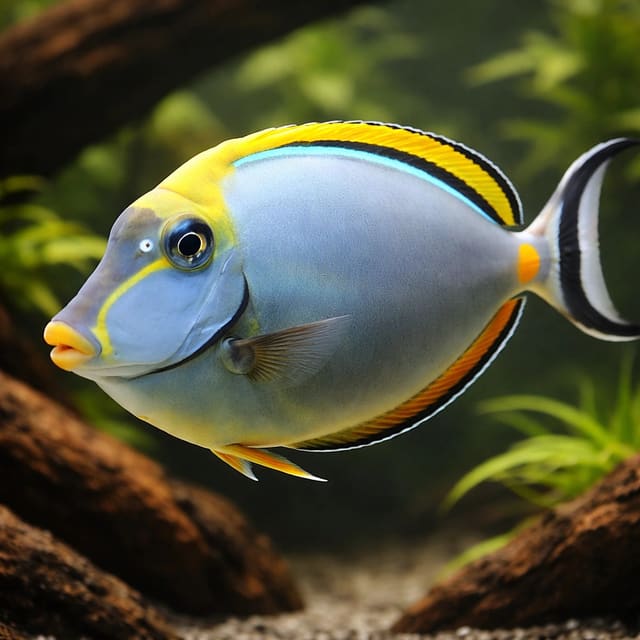
Naso elegans (Elegant Unicorn Tang)
24–26°C · pH 7.9–8.3
£91.99
The Tomini Surgeonfish (Ctenochaetus tominiensis) is a western-central Pacific bristletooth tang recorded to 16 cm standard length. OATA’s tang-and-rabbitfish guidance gives 24–26°C, pH 7.9–8.3 and a 300-litre starting point for one fish under 20 cm. Tropical Fish Co supplies one live fish per purchase.
Adult size is the maximum length this species reaches at full maturity (scientific sources). The livestock you receive will be younger and smaller. Product-photo provenance and any image-specific limitations are stated on the listing.
Ctenochaetus tominiensis
The Tomini Surgeonfish (Ctenochaetus tominiensis) is a western-central Pacific bristletooth tang recorded to 16 cm standard length. OATA’s tang-and-rabbitfish guidance gives 24–26°C, pH 7.9–8.3 and a 300-litre starting point for one fish under 20 cm. Tropical Fish Co supplies one live fish per purchase.
Adult size is the maximum length this species reaches at full maturity (scientific sources). The livestock you receive will be younger and smaller. Product-photo provenance and any image-specific limitations are stated on the listing.
Maintain these water conditions for optimal health and vibrant colors
The Tomini Surgeonfish, Ctenochaetus tominiensis, is a marine member of Acanthuridae, the surgeonfish, tang and unicornfish family. It is also called the Tomini bristletooth, yellowtip bristletooth or orangetip bristletooth. Those names describe one species, not different size or sex choices. FishBase records the accepted species identity, a maximum length of 16 cm standard length and a western-central Pacific distribution.
In nature it is reef-associated, recorded from 0 to 45 metres and usually from 3 to 25 metres. FishBase describes individuals or small groups along steep, coral-rich drop-offs on sheltered coasts, feeding on algae and the tiny animal life among it. That setting points to an active grazer that benefits from open swimming room, mature surfaces and rock structure rather than a sparse, recently assembled aquarium.
The species summary for Ctenochaetus tominiensis places it in the western-central Pacific and in the surgeonfish family. Its bristletooth build is useful context for the grazing role, but it does not make the fish a substitute for filtration or maintenance. Algae on mature surfaces is part of a feeding opportunity; the aquarium still needs deliberate food, stable water and routine waste removal.
This fish suits an experienced marine keeper with a well-matured, filtered aquarium, reliable test results and room for purposeful swimming. It is a poor match for a new marine cycle, a compact display, a collection of shy fish or a plan that assumes every algae-eating species will coexist. The permanent setup matters more than the fish's size on arrival.
| Suits | Not suited to |
|---|---|
| A mature marine aquarium of at least the 300-litre group-guidance starting point | A small or newly cycled aquarium |
| Stable salinity, strong biological filtration and regular testing | Variable salinity or detectable ammonia and nitrite |
| Open swimming room plus live or artificial rock for cover and grazing | A crowded layout with no clear swimming route |
| A planned community of active fish with different enough body shapes | Shy companions or an unplanned mix of similar tangs |
OATA recommends at least 300 litres for one tang or rabbitfish under 20 cm. The Tomini species maximum recorded by FishBase is 16 cm standard length, but litre capacity alone does not describe the useful swimming route, rock displacement or biological load. A long, uncluttered route and a stable, well-maintained system remain essential.
Treat the care level as advanced because the key decisions interact. Water chemistry, oxygenation, food, social pressure and available grazing surfaces all affect condition. A keeper who can interpret test results, maintain marine equipment and change a stocking plan early is better placed than someone hoping the fish will simply control visible algae.
One purchase supplies one Tomini Surgeonfish. Do not infer an arrival measurement from the 16 cm FishBase record. That figure is the maximum recorded standard length for the species and is useful for adult planning, not a description of the individual dispatched.
Sex is guaranteed only when the selected option explicitly states male or female. This Tomini surgeonfish listing has no sex-guaranteed option. Body colour, fin edging or a gallery view should not be used to promise sex. The stocking plan must remain suitable whichever sex the supplied fish proves to be.
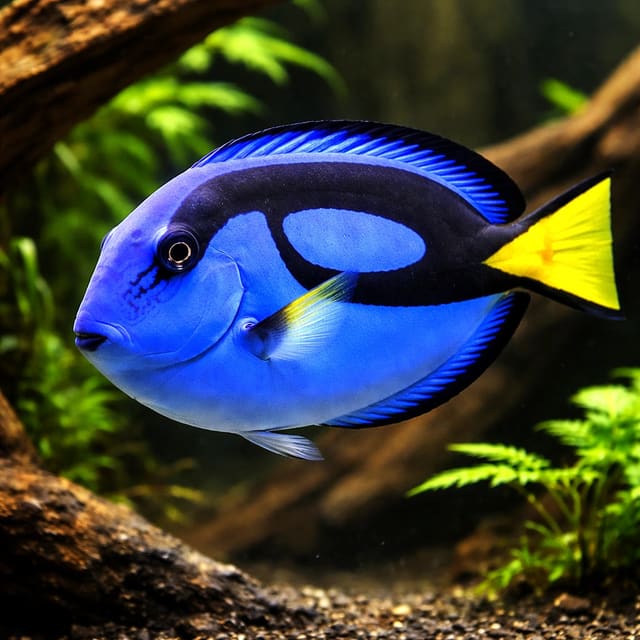
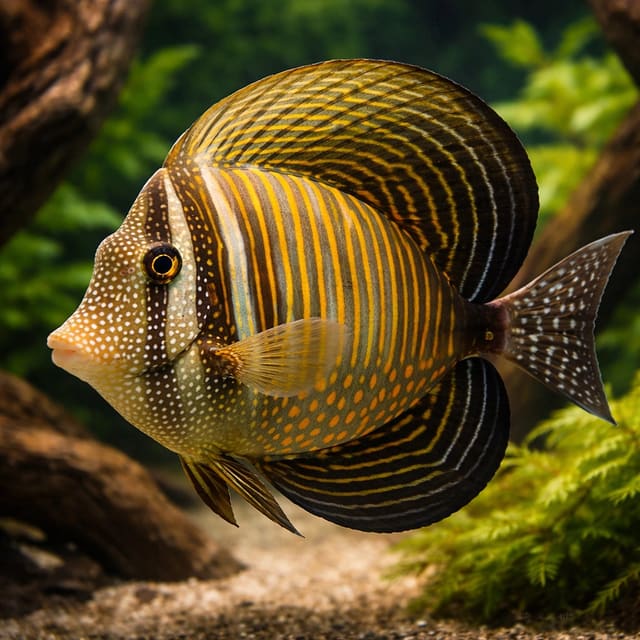
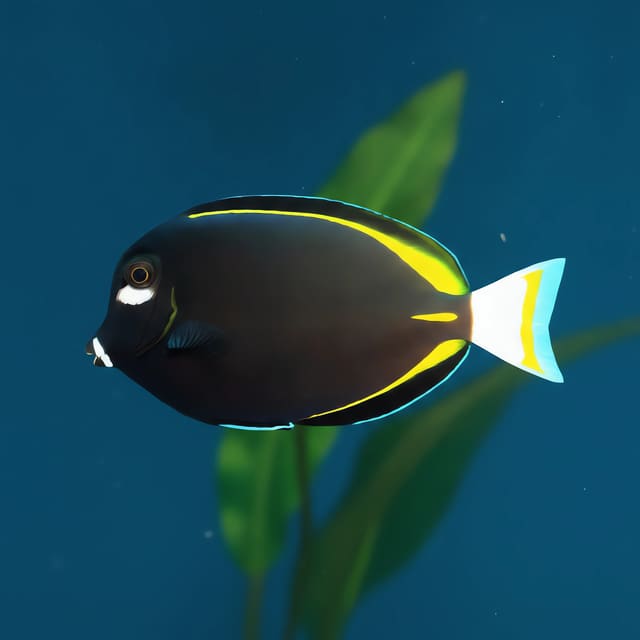
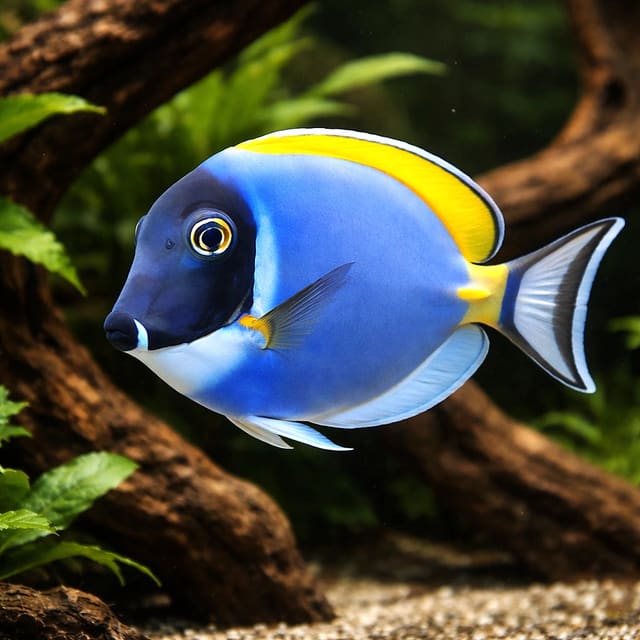
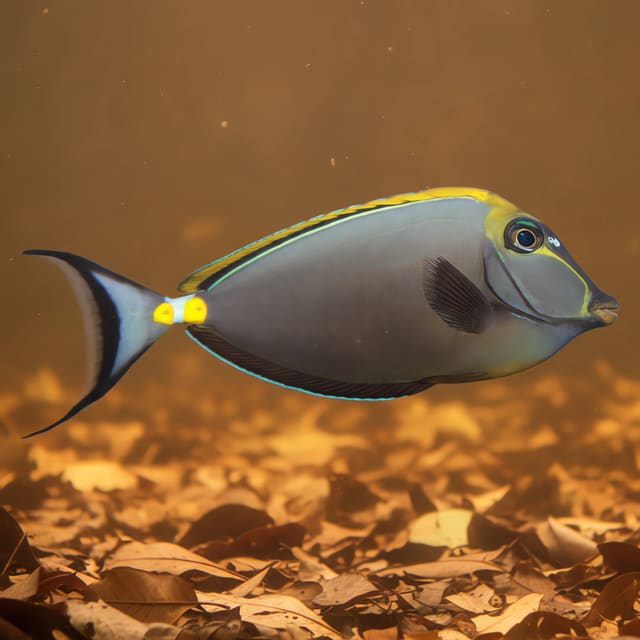
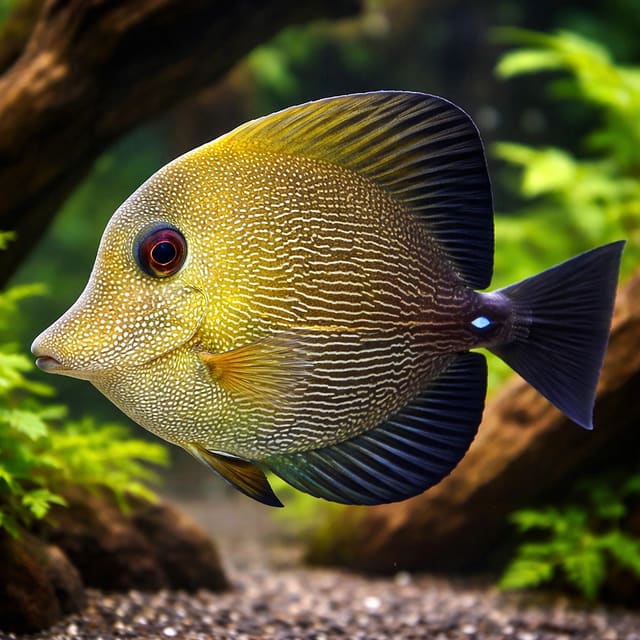
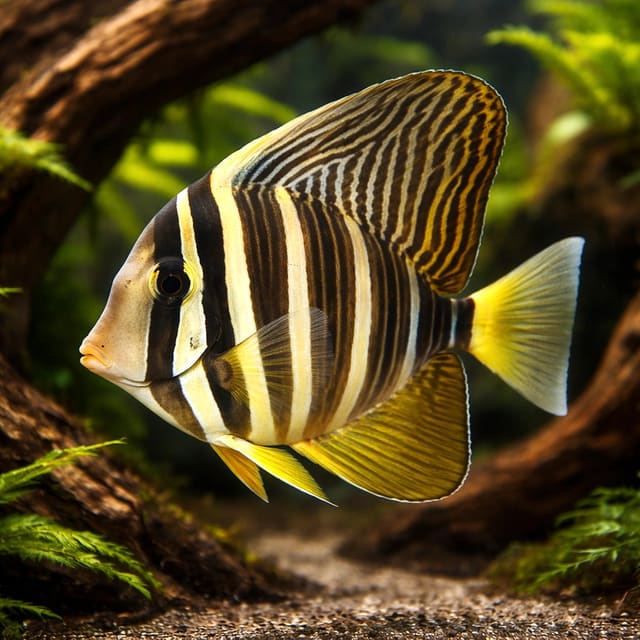
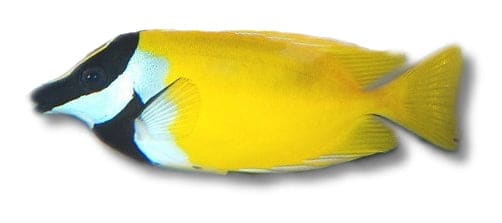
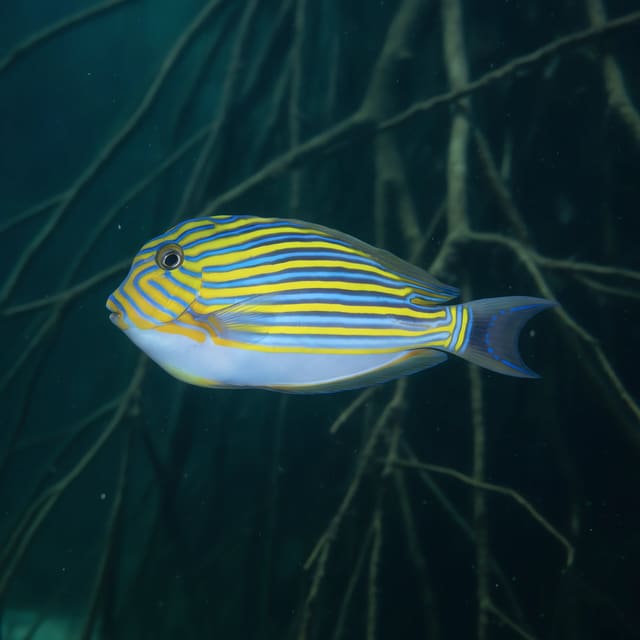
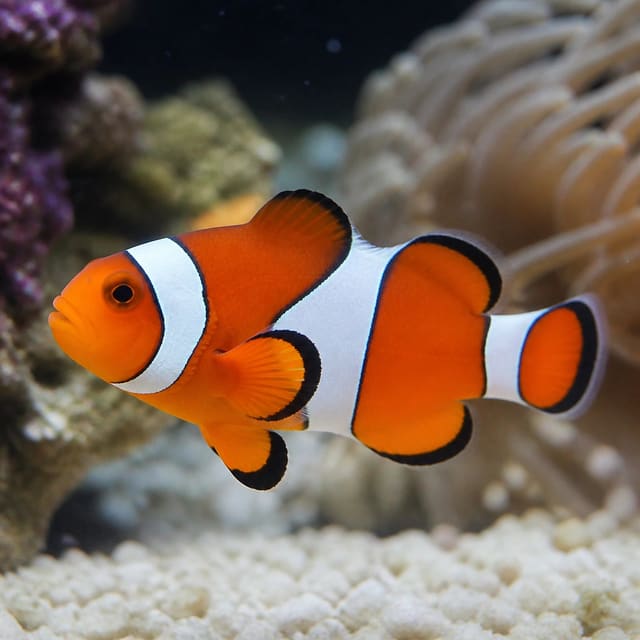
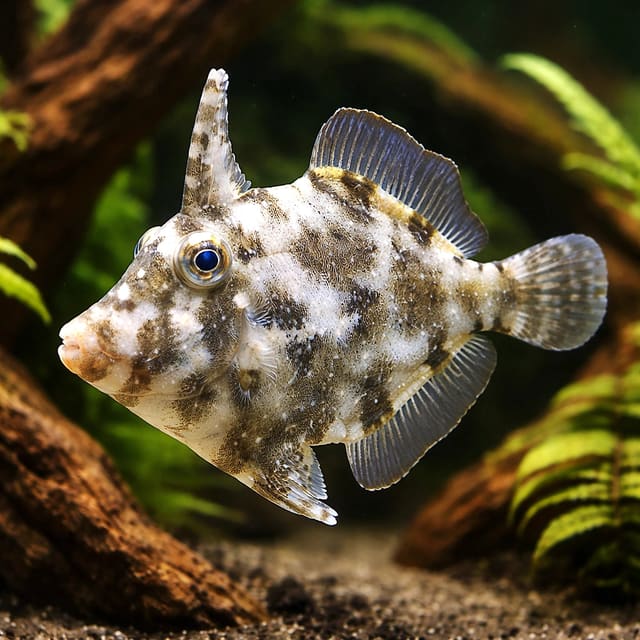
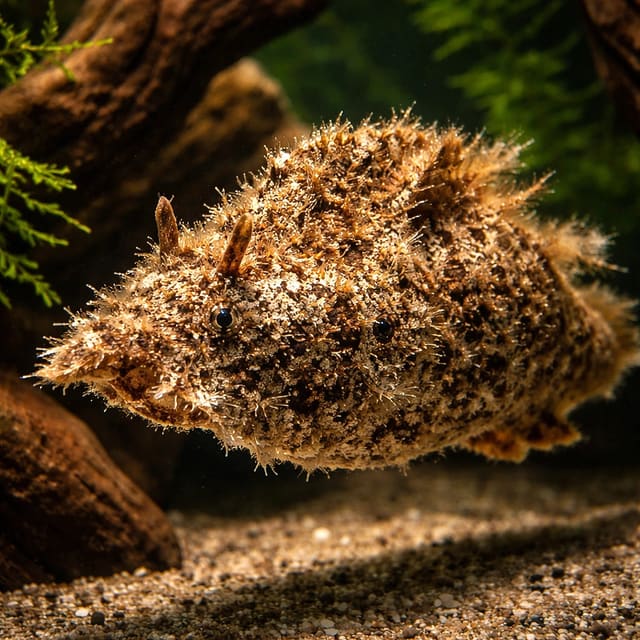
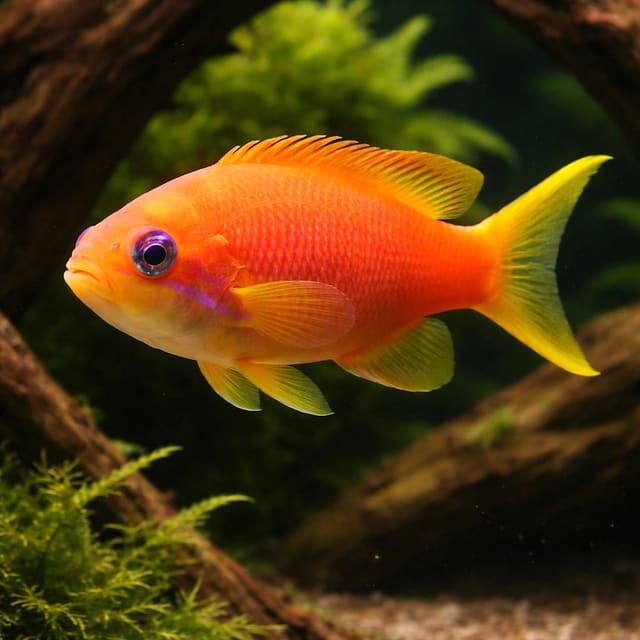
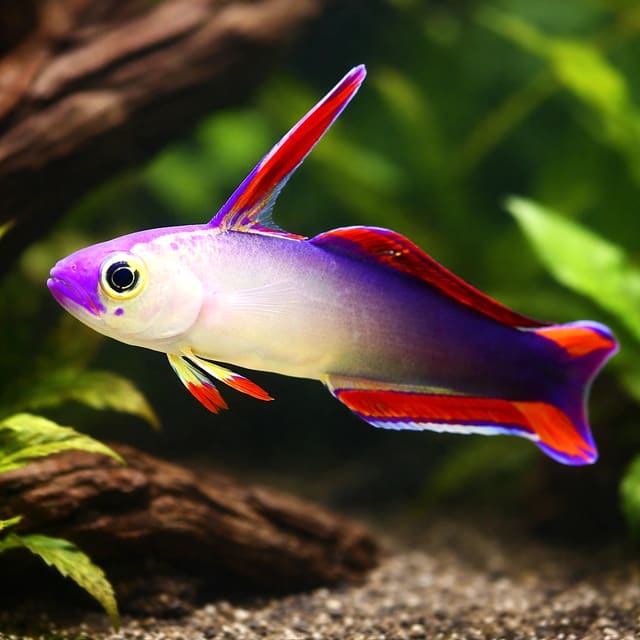
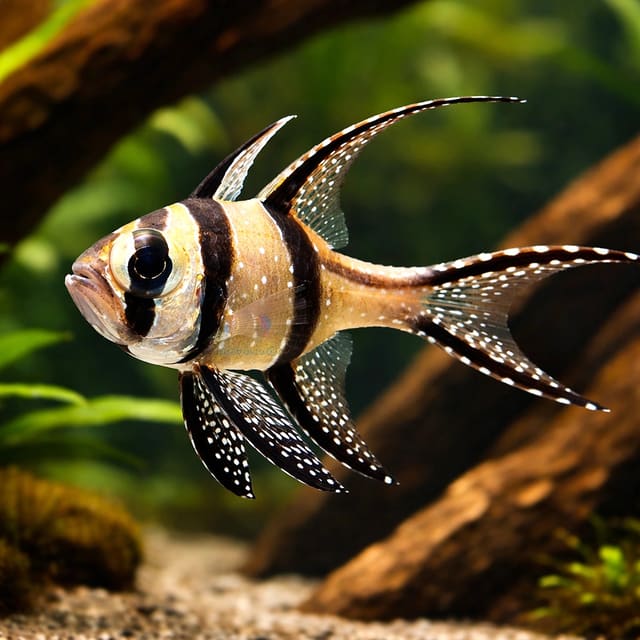
Gallery images have been digitally enhanced to improve image quality. Natural colour, pattern, size and maturity can vary between live animals. The gallery is a recognition aid, while the animal supplied is an individual. Look for clear eyes, intact fins and scales, balanced swimming and a normal feeding response once it has settled rather than expecting an exact match to every shade in the image.
Browse the marine fish collection when planning the wider aquarium. A collection page is not a compatibility chart: compare adult size, activity, feeding access, body shape and water needs before any animals share a system.
Start with a fully matured aquarium whose biological filtration can already keep ammonia and nitrite at zero. OATA recommends at least 300 litres for a single tang or rabbitfish under 20 cm, with larger and more active species needing more. Use that as a planning floor for this fish, not as a guarantee that any shape of 300-litre aquarium or any collection of tank mates will be suitable.
Keep an open route across the aquarium and use live or artificial rockwork to provide cover and surfaces the fish can investigate. FishBase records the species on coral-rich drop-offs, while OATA notes that tangs spend much of their time moving around reef habitat and grazing. A useful layout combines structure with unobstructed movement; a wall of rock that consumes most of the footprint can leave too little practical swimming room.
Marine filtration may use live rock with sufficient flow, an internal or external filter, or a sump-based system. A protein skimmer can help remove dissolved organic waste before it breaks down. Whatever combination is chosen, flow must move oxygenated water through the biological media and around the aquarium without leaving repeated waste traps.
Provide a secure cover and check equipment gaps, overflows and intake areas. Keep the heater, pumps and return outlets accessible for inspection. An aquarium can look calm while a reduced pump output or blocked intake gradually affects oxygenation and filtration, so equipment access is part of animal care rather than a cosmetic detail.
Introduce fish slowly. Every added animal and every increase in feeding asks the established bacteria to process more waste. OATA warns that stocking too quickly can result in new tank syndrome, with harmful ammonia and nitrite appearing because bacterial capacity has not caught up. Test after changes instead of assuming the filter has adjusted.
Keep the aquarium at 24–26°C, pH 7.9–8.3 and a specific gravity of 1.020–1.025. OATA presents these values for tangs and rabbitfish, rather than for the Tomini Surgeonfish alone. Carbonate hardness for the group is 8–12 dKH, with calcium at 380–450 mg per litre and magnesium at 1,250–1,350 mg per litre.
Ammonia and nitrite must be zero. OATA's upper nitrate guide for this group is 50 mg per litre, although a reef aquarium may need tighter targets to suit more sensitive inhabitants. Decide the working values for the complete aquarium, then keep them steady. Avoid chasing the edge of every range through abrupt corrections.
Measure salinity with a dependable instrument and compare readings at a consistent temperature. Evaporation removes freshwater while leaving salt behind, so salinity rises if losses are replaced with salt water. Top up evaporation with suitable freshwater and use correctly mixed marine water for planned water changes. Make adjustments gradually and verify the result.
Record temperature, specific gravity, pH, ammonia, nitrite, nitrate and carbonate hardness. Calcium and magnesium also matter where the aquarium's inhabitants or system demand them. A dated record makes a slow drift visible and gives context when appetite, breathing or behaviour changes. Retest an unexpected result before taking a major action.
Temperature and oxygen are linked. Warm water carries less dissolved oxygen, while active fish and biological filtration both depend on it. Maintain strong gas exchange at the surface, keep pumps clear and look for a change in gill movement or a fish spending unusual time near high-flow areas.
At least once every week, make a partial water change of 25%. Prepare replacement marine water carefully, match salinity and temperature closely, and use a siphon to remove settled solid waste from reachable areas. A regular schedule prevents dissolved and physical waste from accumulating while providing a predictable opportunity to inspect the whole system.
Check filters and pumps for reduced flow or blockage. If filter media needs cleaning, do not rinse it under the tap. Rinse it lightly in water removed from the aquarium so chlorine or chloramine does not damage the bacterial population. Return equipment to service promptly and confirm that normal circulation has resumed.
Clean a protein skimmer often enough to preserve its performance. Inspect its air intake, collection cup and output rather than judging it only by whether foam is visible at one moment. Salt creep and organic deposits can change air and water flow gradually. Follow the equipment maker's safe cleaning procedure while keeping the aquarium's biological filtration operating.
RSPCA aquarium welfare guidance explains the biological filter's role: fish release toxic ammonia, bacteria convert it to toxic nitrite and then to safer nitrate. Clear-looking water does not show whether that process is working. Testing, flow checks and restrained stocking are the practical evidence.
| Daily | Check breathing, swimming, feeding, temperature and equipment flow. |
|---|---|
| Weekly | Test the core water values and make the 25% partial water change. |
| As required | Rinse dirty media lightly in removed aquarium water and clean the skimmer. |
| After stocking changes | Test more often while bacterial capacity adjusts to the extra waste and food. |
FishBase records the Tomini Surgeonfish feeding on algae and the microfauna living among it in the wild. In the aquarium, OATA advises that tang and rabbitfish diets should be high in algae. Offer nori sheets, algae-based flake foods and grazing tabs as the main pattern, with mature rock surfaces adding opportunities to investigate and graze.
Small meaty frozen foods such as mysis shrimp, enriched brine shrimp or krill can provide variety. They should complement rather than displace the algae-rich foundation. A mixed community may rush to meaty foods first, so watch that the Tomini has continuing access to suitable plant-based food instead of assuming it has eaten enough because other fish fed enthusiastically.
Feed only what the fish can consume within a few minutes, twice a day. Nori sheets and grazing tabs need longer because the fish takes repeated bites; remove material before it deteriorates and begins adding avoidable waste. Start with restrained portions, observe what is genuinely eaten and adjust the next feed.
Place food where the fish can reach it without entering a tank mate's defended area. More than one feeding point can reduce crowding in a larger community. Watch body condition over time from both sides and from above where possible: steady condition and an active grazing response are more informative than a single enthusiastic meal.
A Tomini surgeonfish can graze visible algae, but it should never be purchased as maintenance equipment. It still needs planned meals, and algae growth reflects light, nutrients and husbandry throughout the aquarium. Correct the system rather than relying on one fish to consume every unwanted growth.
The delivery and Live Arrival Guarantee policy gives the current packing, receipt, acclimatisation and claim procedure. Fish are hand-bagged with oxygen in an insulated box, with a heat pack when conditions call for it, and carried by a licensed live-animal courier. Someone must be present to receive the parcel.
Healthy fish should show clear bright eyes, undamaged fins, intact scales, no unusual bumps or sores, appropriate swimming and a normal interest in food. Watch for hanging at the surface, sitting on the bottom, erratic swimming, a marked colour change, altered aggression, unusual hiding, faster or slower gill movement, white spots, fluffy growths, fin or scale loss, body-condition change or reduced feeding.
Test the water first when behaviour or appearance changes. Temperature, salinity, ammonia, nitrite, nitrate and pH can reveal an aquarium-wide cause. Record what changed, when it began, recent maintenance and new additions. Avoid guessing at a treatment before water quality and social pressure have been checked.
Tangs carry a sharp modified scale near the tail that resembles a scalpel. Do not handle the fish with bare hands. If it must be moved for welfare reasons, plan the route, use an appropriate container and avoid pinning the tail area against a net or hard surface.
Set a normal baseline once the fish has settled. Note where it spends time, which surfaces it grazes, how it approaches food and how quickly its breathing settles after activity. The point is not to expect identical behaviour every hour, but to recognise a sustained departure from the pattern shown by this individual in this aquarium.
Read behaviour alongside the test record. Hiding can follow a territorial encounter, while faster gill movement can accompany poor water quality, reduced gas exchange or stress. Check temperature, specific gravity, ammonia, nitrite, nitrate and pH before deciding that one visible sign has one cause. Look at pump output and the behaviour of the other fish as well.
The Tomini's grazing habit makes body condition worth following carefully. View the fish from the side during ordinary swimming and, when possible without disturbance, from slightly above. Look for a stable outline, intact fin edges and even movement. A change in weight, reduced feeding or repeated retreat from a food station deserves prompt attention.
Colour can alter with lighting, background, maturity and stress, so do not use shade alone as a diagnosis. Combine it with swimming, breathing, appetite, skin and fin condition. OATA's warning list is deliberately multi-part: unusual colour becomes more informative when it appears with hiding, damaged fins, white spots, fluffy growths or a change in feeding.
If water readings have shifted, correct the aquarium cause gradually and confirm the change with another test. If readings are steady but one fish is excluded at feeding, review the social and spatial plan. If equipment output has fallen, inspect for blockage and restore normal circulation safely. Documenting the order of events helps distinguish a one-off reaction from a repeating pattern.
Keep handling to the minimum because the sharp tail scalpel can injure both fish and keeper during a struggle. Observation, water testing and a prepared container are safer than repeated netting. When a move is unavoidable, clear the route first so the fish spends as little time as possible being pursued around the aquarium.
OATA says tangs and rabbitfish can be mixed when they do not look too similar. Similar body shapes deserve extra caution because territorial behaviour may be directed at fish that appear to use the same space or feeding role. The aquarium must be large enough for every adult animal and laid out so one fish cannot control all food and cover.
Both tangs and rabbitfish are active and should not be mixed with shy species. OATA names angelfish, damsels and some butterflyfish as possible tank mates, but these are categories for consideration, not universal matches. Compare adult size, temperament, diet, swimming behaviour and the needs of the exact species before purchase.
If similar-shaped tangs form part of an experienced keeper's plan, OATA advises adding them simultaneously and towards the end of stocking. That recommendation does not create extra capacity or make an overcrowded aquarium safe. Confirm biological load, usable swimming space and feeding access before arranging an introduction.
FishBase records Tomini surgeonfish singly or in small groups in the wild. A wild social observation does not supply a safe aquarium group number. In an ordinary home setup, planning around one Tomini is the clearer starting point. A different arrangement calls for a much larger system and a deliberate plan for individual territories and retreat.
| Consider | Active marine fish whose adult size, diet, temperament and water needs fit the same established system. |
|---|---|
| Avoid | Shy fish that may be intimidated or excluded from food. |
| Use caution | Other tangs, especially similar body shapes, and any fish competing for the same grazing areas. |
Observe the aquarium at feeding time and during quiet periods. Repeated chasing, one fish holding an entire route, a companion staying behind equipment or a shy animal missing meals all indicate that the social plan needs review. A brief display and sustained exclusion are not the same thing; record frequency and consequence.
Spread algae foods across more than one accessible area in a suitably large aquarium. This can help several animals feed, but it does not cure an incompatible pairing. If one fish remains shut out, reassess body shape, adult size, activity and usable room. Do not simply add more food, since uneaten material adds waste without resolving access.
Rock structure should provide cover while preserving wide swimming routes. Check that a refuge has more than one exit and that pumps still circulate water around the structure. Move only secure pieces and protect the aquarium from falling rock. A layout adjustment is useful when it changes how space can be used, not when it merely moves the same bottleneck.
Separate animals when there is immediate danger. Before any reintroduction, identify the original pressure and change the plan rather than returning fish to the same conditions. The solution may involve permanent separation, a different stocking arrangement or a more suitable aquarium; welfare takes priority over preserving a preferred display.
FishBase records a maximum length of 16 cm standard length for Ctenochaetus tominiensis. That is a recorded adult maximum, not the fish's total length including every fin tip and not an arrival size. Plan its permanent marine aquarium around active swimming, grazing surfaces and the needs of an adult surgeonfish.
Use at least 300 litres for one individual under 20 cm, following OATA advice for tangs and rabbitfish. A larger aquarium gives an active fish more swimming room and usually makes salinity, temperature and water quality easier to keep steady.
FishBase reports that Tomini surgeonfish occur singly or in small groups in the wild, but that does not provide an aquarium group number. For a home aquarium, plan one individual unless a much larger, deliberately designed system and experienced advice support a different arrangement. Similar-shaped tangs can be territorial.
It is better suited to an experienced marine keeper than to a first aquarium. The fish needs a well-matured filtered marine system, at least the group-guidance starting volume, stable salinity and water quality, regular algae-rich feeding and a compatibility plan that accounts for territorial behaviour and its sharp tail scalpel.
Make algae-rich foods the main diet: nori, algae-based flakes and grazing tabs follow OATA tang-and-rabbitfish guidance. Small meaty frozen foods such as mysis, enriched brine shrimp or krill can add variety. Feed only what it can finish within a few minutes twice a day, while allowing grazing sheets or tabs longer in the aquarium.
OATA guidance for tangs and rabbitfish gives 24–26°C, pH 7.9–8.3 and specific gravity 1.020–1.025, with carbonate hardness of 8–12 dKH. Keep ammonia and nitrite at zero and nitrate no higher than 50 mg per litre.
Tomini surgeonfish should be treated as active and potentially territorial, especially around similar-shaped tangs. OATA advises adding similar body shapes simultaneously and towards the end of stocking. Also take care during handling because tangs have a sharp modified scale near the tail that can injure people; use a container rather than bare hands.
OATA says tangs and rabbitfish can be mixed when they do not look too similar, and names angelfish, damsels and some butterflyfish as possible tank mates. Do not mix these active fish with shy species. Every combination still needs matching adult size, water conditions, temperament, feeding access and enough room.
Be present to receive the parcel and start a continuous unboxing video while it is still sealed, before opening it. Inspect the fish in the sealed bag, float the bag for 20–30 minutes, then release the fish without pouring bag water into the aquarium. Contact Tropical Fish Co the same day with the order number and video if anything is wrong.
No reviews for this item yet. Bought one? Honest reviews only, good or bad.
What customers say about ordering from us
Easy website plenty of info on fish your buying great to pick a time slot
TRACEY DURRANT · 7 Oct 2026
Got some lovely fish thank you
Kevin Mackie · 7 Oct 2026
Reviews of our shop, collected by Judge.me, an independent third-party review collector. Newest first.