Blue Green Damsel (Chromis viridis) - Marine Aquarium Livestock UK
24–26°C · pH 7.9–8.3
£28.99
The Black-and-Gold Chromis (Neoglyphidodon nigroris) is a marine damselfish from Indo-West Pacific reefs that reaches 13 cm, sold as one live fish. It needs an established marine aquarium and robust tank mates, and is best kept as the only one of its kind in the tank.
Adult size is the maximum length this species reaches at full maturity (scientific sources). The livestock you receive will be younger and smaller. Product-photo provenance and any image-specific limitations are stated on the listing.
Neoglyphidodon nigroris
The Black-and-Gold Chromis (Neoglyphidodon nigroris) is a marine damselfish from Indo-West Pacific reefs that reaches 13 cm, sold as one live fish. It needs an established marine aquarium and robust tank mates, and is best kept as the only one of its kind in the tank.
Adult size is the maximum length this species reaches at full maturity (scientific sources). The livestock you receive will be younger and smaller. Product-photo provenance and any image-specific limitations are stated on the listing.
Maintain these water conditions for optimal health and vibrant colors
The Black-and-Gold Chromis (Neoglyphidodon nigroris) is a marine damselfish from the coral reefs of the Indo-West Pacific, and each purchase supplies one live fish. FishBase records a maximum length of 13 cm total length, which places it among the larger damselfish. The most important thing to plan for is space: a mature, stable marine aquarium with solid rockwork and room for a fish that may defend its own patch as it grows.
Despite the word “chromis” in its name, this is not one of the small, shoaling Chromis species that reef keepers often buy in groups. It belongs to the damselfish genus Neoglyphidodon, and in the wild it is usually seen on its own. That changes how you stock around it, which is why this guide keeps returning to aquarium size and tank-mate choice.
| Suits | Keepers with an established marine aquarium who want one bold damselfish and will choose robust companions around it |
|---|---|
| Scientific name | Neoglyphidodon nigroris |
| Other common name | Behn’s damsel |
| Family | Pomacentridae (damselfishes and chromis) |
| Natural range | Indo-West Pacific, from the Andaman Sea to Vanuatu and northern Australia |
| Maximum recorded length | 13 cm total length |
| Water | Full-strength marine; OATA’s values for chromis and damselfish are in the care section |
| Diet | Omnivore: prepared foods, frozen foods and some algae |
| Keeping | One per aquarium is our planning advice |
| Sold as | One live fish per purchase |
Common names in marine fishkeeping are not always a guide to behaviour. Wikipedia gives black-and-gold chromis and Behn’s damsel as the common names of Neoglyphidodon nigroris and describes it as a damselfish that occasionally makes its way into the aquarium trade. FishBase notes that it was previously referred to as Paraglyphidodon behnii, so you may still meet that name in older books.
The distinction matters. The Ornamental Aquatic Trade Association (OATA) describes true chromis as generally quite peaceful, while damselfish vary widely: some are calm community fish, and others grow large and will attack other fish. At up to 13 cm, this species sits with the larger damselfish rather than the small chromis, so plan for the assertive end of that range and treat any calmer behaviour as a bonus.
Each purchase is one live fish. Plan the aquarium around the adult length in the table, not around the size of the fish when it arrives, because a damselfish of this size needs its space long before it is fully grown.
Sex is guaranteed only when the selected option explicitly states male or female. This Black-and-gold chromis listing has no sex-guaranteed option. Buy it as an individual fish rather than as half of a planned pair.
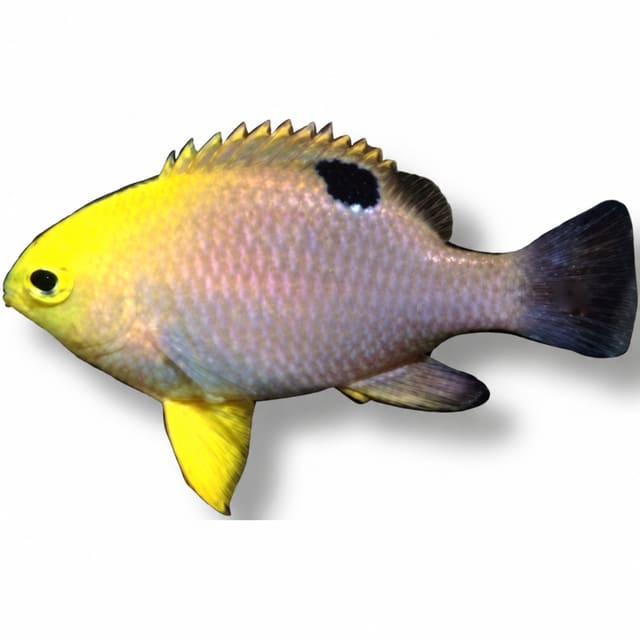
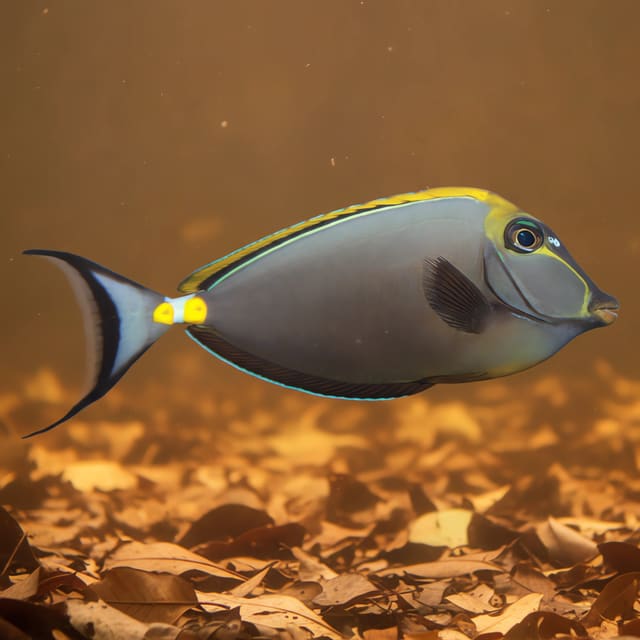
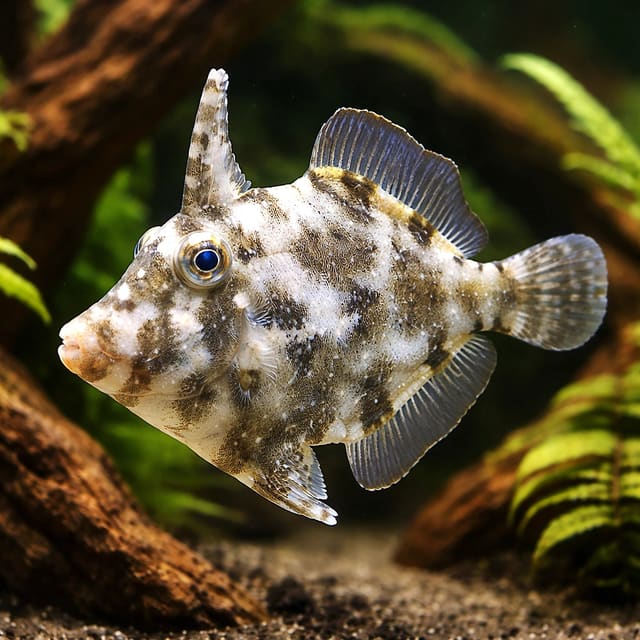
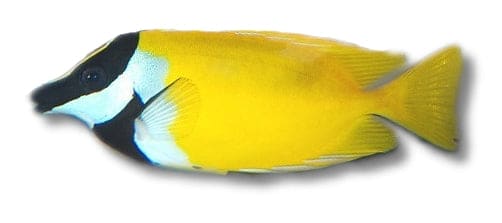
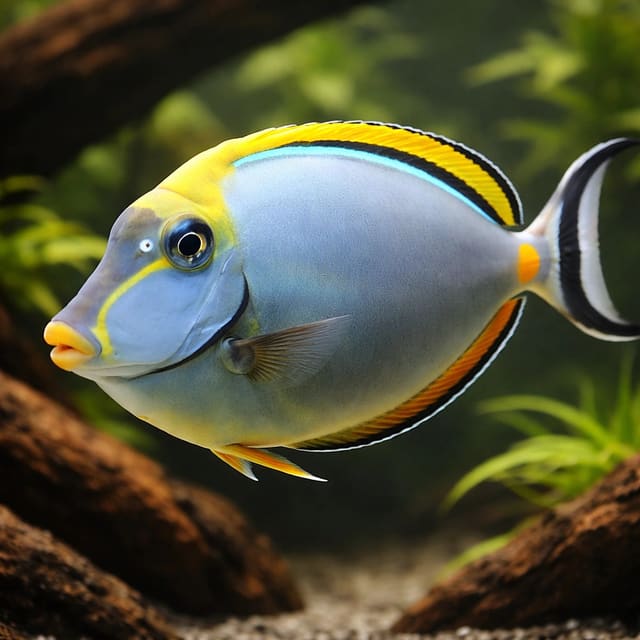
Our photograph shows a bright yellow fish with two black stripes running along the body towards the tail. FishBase describes a form of this species that becomes black as an adult, so the gold colouring should not be treated as permanent. Gallery images have been digitally enhanced to improve image quality. Natural colour, pattern, size and maturity can vary between live animals.
This damselfish is a good choice when most of the following are true:
If several of those points do not fit, a smaller, calmer member of the same family is likely to be the better buy, and the tank-mate section explains why.
If you are still comparing damselfish, chromis and other reef fish, our marine fish collection shows the species we keep for saltwater aquariums.
Knowing where a fish lives explains most of what it needs. FishBase’s species summary records Neoglyphidodon nigroris as a reef-associated marine fish of tropical waters, found across the Indo-West Pacific: the Andaman Sea around Phuket, the Malayan Archipelago, Indonesia, the Philippines, Taiwan, the Ryukyu Islands, Palau, New Guinea, the Solomon Islands, Vanuatu and northern Australia.
In the wild it lives in coral-rich areas of lagoons and seaward reefs, and it has been recorded between 2 and 23 metres deep. That depth band is a field record rather than an aquarium setting, but it tells you this is a fish of shallow to mid-depth reefs, living among hard structure in full-strength seawater.
FishBase describes it as usually solitary and diurnal, which means it is active during the day and does not live in shoals. OATA adds that chromis and damselfish in the wild stay near hard coral growth and quickly take shelter there if they notice a threat. Put together, those notes describe a fish that wants open water to patrol by day and rockwork to retreat into when something worries it.
FishBase lists its natural food as algae, crustaceans, and pelagic tunicates and salps. Pelagic tunicates and salps are soft-bodied animals that drift in open water, so the wild menu combines grazing with picking small animal prey from the water column. That mix is the reason the feeding guidance below pairs a quality prepared food with frozen foods and some algae, rather than relying on a single food.
FishBase describes two forms. Fish that are long-tailed and black as adults occur in the Andaman Sea, ranging east to western Bali and north to Japan. A second form, found in the rest of the West Pacific, is probably a separate valid species, Neoglyphidodon xanthurus, and the two overlap on the north coast of Bali.
We sell this fish as Neoglyphidodon nigroris, the name under which FishBase lists the black-and-gold chromis. It is still worth knowing about the two forms, because adult colour can differ between them, and it explains why photographs of this species can look so different from one another.
The IUCN Red List assessment that FishBase reports for this species is Least Concern.
The aquarium decision comes first, because a damselfish that can reach 13 cm needs more than a small starter tank. OATA’s chromis and damselfish care sheet recommends an aquarium of at least 60 litres for a single damselfish, and a much larger aquarium of at least 200 litres for a group of damselfish or chromis.
Those figures cover the whole group, and OATA explains that chromis and damselfish very rarely grow over 10 cm, although some of the larger damselfish grow nearer to 15 cm. This species belongs with those larger fish. Our advice is to treat 60 litres as the absolute floor for one Black-and-Gold Chromis and to follow OATA’s general rule of buying an aquarium as large as possible, within reason. A larger volume holds its temperature and water quality more steadily and gives this fish and its companions more room.
Whatever the size, a filter is essential. For marine aquariums OATA lists live rock with sufficient water flow, an internal or external filter, or a sump-based filter. It also notes that a protein skimmer can be beneficial, because it removes dissolved organic waste before that waste breaks down into more harmful substances.
The RSPCA’s guidance on the aquarium environment explains why this matters. Fish release ammonia, which is toxic. A working biological filter lets beneficial bacteria grow, and they convert ammonia to nitrite, which is also toxic, and then to nitrate, which is safer. The RSPCA is clear that no fish should be kept without a well set-up and maintained filter.
OATA describes chromis and damselfish as relatively undemanding in terms of aquarium décor. For this species, build the layout around what its wild habitat shows:
Several separate rocky areas, rather than one central pile, can help to spread territory around the aquarium and give every fish somewhere to settle.
Add this fish only to an aquarium whose filter is already mature. OATA’s advice is to check that ammonia and nitrite are both at zero before adding any fish, and to increase the number of fish slowly. The beneficial bacteria established while the filter matured have to increase every time more fish are added and feeding goes up.
Stocking too many fish, or stocking too quickly, can cause what OATA calls “new tank syndrome”. There are not yet enough nitrifying bacteria to cope with the extra waste, ammonia and nitrite rise to unhealthy levels, and fish can become ill or die. A damselfish bought on impulse for a newly filled aquarium is exactly the situation to avoid.
OATA describes chromis and damselfish as usually undemanding of water chemistry, but hardy fish still need clean, stable water. The values below are OATA’s general guide for chromis and damselfish as a group, not a species-specific optimum for Neoglyphidodon nigroris. They give you a sound, steady target to maintain.
| Salinity (specific gravity) | 1.020–1.025 |
|---|---|
| Temperature | 24–26 °C |
| pH | 7.9–8.3 |
| Ammonia | Zero |
| Nitrite | Zero |
| Nitrate | No more than 50 mg per litre |
| Carbonate hardness | 8–12 °dKH |
| Calcium | 380–450 ppm |
| Magnesium | 1250–1350 ppm |
If this fish is going into a reef aquarium with corals or other sensitive animals, OATA notes that some of these parameters will need to be altered to accommodate the more sensitive species. In practice, set the aquarium up for its most demanding inhabitants, then make sure the values still sit comfortably for a hardy damselfish.
Rather than chasing exact numbers from day to day, aim to keep temperature, salinity and pH steady within these ranges. OATA points out that a larger aquarium provides more stability in temperature and water quality, which is one more reason to give this fish plenty of volume.
When the filter needs cleaning, do not run it under the tap. Chlorine or chloramine in tap water can kill the beneficial bacteria that have established in the media. Rinse it lightly in the aquarium water you have just removed during a water change instead, which keeps as much of that bacterial population as possible.
OATA explains why this care is worth the effort: chromis and damselfish can be stressed by even the smallest amounts of ammonia and nitrite, and that stress may then lead them to develop various diseases. Their reputation for hardiness does not extend to a neglected filter.
OATA describes chromis and damselfish as omnivores that need a wide range of foods to be in their best health. That matches the mixed wild diet FishBase records for this species, so the aim is variety rather than one food fed every day.
Feed only what the fish will eat within a few minutes, twice a day. Take care not to overfeed: uneaten food builds up and breaks down, releasing toxic waste into the water, which undoes the work of the filter and your water changes.
A useful habit is to watch every feed for a minute rather than dropping food in and walking away. You will see whether everything is eaten, whether any fish is missing out, and whether this damselfish is feeding with its usual confidence.
In a community, spread food across the surface or feed in two places at once, so that slower or shyer fish are not waiting behind an assertive damselfish for every mouthful. If one fish is consistently missing meals, that is a stocking question as much as a feeding one, and the compatibility tab explains how to think it through.
Reduced intake, or a lack of interest in food, is on OATA’s list of changes that can signal a problem. A Black-and-Gold Chromis that has settled in should come forward readily at feeding time, so if yours stops eating, test the water before anything else.
Every order is hand-packed by our team and delivered on your confirmed Thursday or Friday date by a licensed live-animal courier. Your fish is hand-bagged in pure oxygen and packed in an insulated poly box, with a heat pack when the weather calls for it. We email you the tracking number and the confirmed delivery date, so you know exactly when to be in, and you can follow the parcel once tracking is active. The full terms are on our delivery and Live Arrival Guarantee page.
The guarantee requires someone to be at the delivery address to receive the parcel, because live fish cannot be left unattended. The parcel also needs to be opened and inspected on the day it arrives.
If anything has gone wrong, contact us the same day your fish arrive, with your order number and the unboxing video. WhatsApp is the fastest way to reach us, and we will arrange a replacement or a refund.
Give the new arrival time to find its way around the rockwork. Over the first days, watch that it begins to feed and that its eyes, fins and scales look healthy. Keep an eye on the tank mates as well: a damselfish claiming a patch of rockwork is normal, but persistent chasing of one particular fish is a sign that the mix needs rethinking.
Hold back on adding further fish for a while. OATA’s advice to increase fish numbers slowly applies after every addition, because the filter bacteria need time to catch up with the extra waste.
OATA’s description of a healthy fish makes a practical checklist, both when your fish arrives and at every feed afterwards: clear, bright eyes, undamaged fins, intact scales, no ulcerations or bumps, and normal swimming behaviour.
All fish vary a little in behaviour and appearance, but OATA recommends watching for changes in the following:
If you are concerned, OATA’s advice is to test your water quality and then speak to your retailer. Testing first matters because most of the changes above can follow a rise in ammonia or nitrite, and the first response to poor water is usually a water change and a check of the filter rather than a medicine. Send us your readings and a description of what you have seen, and we will help you work out the next step.
OATA also notes that chromis and damselfish can live for many years in a well-matured set-up with good water quality. That long-term view is the best reason to get the aquarium right before the fish arrives rather than after.
FishBase records that Neoglyphidodon nigroris lays eggs and forms distinct pairs during breeding. The eggs are demersal, which means they are laid on a surface rather than scattered into open water, and they stick to the substrate. The male guards the eggs and aerates them.
That is interesting behaviour to know about, but it is not a reason to buy two fish in the hope of a pair. We cannot choose which sex you receive, and two of a usually solitary, potentially territorial damselfish in one aquarium are more likely to compete for space than to pair.
After aquarium size, tank-mate choice is the biggest decision you will make for this fish. Getting it right at the start is far easier than rehoming a fish later.
FishBase describes the black-and-gold chromis as usually solitary in the wild. OATA’s care sheet explains that damselfish vary in temperament: the more peaceful species, such as Talbot’s damsel (Chrysiptera talboti) and the yellowtail blue damsel (Chrysiptera parasema), can live in a community with other hardy fish, while others grow large and will attack other fish. OATA adds that some damselfish farm a patch of algae, defend it aggressively in the wild, and are therefore territorial in aquariums.
This species reaches 13 cm, lives alone in the wild and includes algae in its diet. It is sensible to plan for it as a potentially territorial damselfish and to choose companions that would cope if it proves assertive. Individual fish differ, and many will be calmer than that, but planning for the harder case protects the rest of the aquarium.
We recommend one Black-and-Gold Chromis per aquarium. A second fish of the same species competes for exactly the same rockwork, food and hiding places, and in most home aquariums that leads to chasing rather than companionship. OATA’s guidance of at least 200 litres for any group of damselfish shows how much space even peaceful groups need.
OATA’s list of changes to watch for applies to every fish in the aquarium, not only to the newcomer. In a community with a damselfish, the ones that matter most are:
If you see these, act early rather than waiting for injuries to build up. Talk to us about the options while every fish is still in good condition.
If you keep corals, the main compatibility question is water rather than behaviour. OATA notes that reef aquariums may need parameters adjusted for more sensitive species, so plan the water for the corals and check that it still suits this fish. Its recorded wild diet is algae, crustaceans, and drifting tunicates and salps, so if your reef relies on a clean-up crew of small shrimps, that is the point to weigh.
OATA advises always consulting your retailer before mixing chromis or damselfish with any other species. Tell us what is already in your aquarium, and its volume, and we will talk the mix through with you honestly, including telling you if this is not the right fish for your set-up.
FishBase records a maximum length of 13 cm total length for this species. That puts it among the larger damselfish, so plan the aquarium for an adult of up to 13 cm rather than for the size it arrives at.
OATA recommends at least 60 litres for a single damselfish and at least 200 litres for a group of damselfish or chromis. Because this species can reach 13 cm, treat 60 litres as the absolute minimum and choose a larger, mature marine aquarium wherever you can.
Keep one per aquarium. FishBase describes it as usually solitary in the wild, and two of the same territorial damselfish usually compete for the same rockwork rather than living peacefully together.
It suits a keeper who already runs a stable, mature marine aquarium. OATA describes chromis and damselfish as hardy and usually undemanding of water chemistry, but this fish’s size and damselfish temperament mean the aquarium and tank mates need planning first.
It is an omnivore. In the wild it eats algae, crustaceans and drifting tunicates and salps. Offer a good quality flake or pellet with frozen mysis shrimp, enriched brine shrimp or red plankton, let it graze algae, and feed only what it eats within a few minutes, twice a day.
OATA’s group guidance for chromis and damselfish is 24–26 °C, pH 7.9–8.3, salinity 1.020–1.025 and carbonate hardness of 8–12 °dKH, with zero ammonia and nitrite. These are broad values for the group, so keep them steady rather than chasing exact figures.
Plan for a potentially territorial fish. OATA notes that some damselfish defend a patch of algae aggressively and that some larger damselfish will attack other fish. Watch for persistent chasing or damaged fins on tank mates, and rethink the mix if either appears.
Choose hardy, robust marine fish of similar or larger size. Avoid small, timid fish and a second fish of the same species, take care with groups of peaceful chromis, and keep in mind that small crustaceans such as ornamental shrimps are at risk.
It is hand-bagged in pure oxygen, packed in an insulated poly box with a heat pack when needed, and delivered by a licensed live-animal courier on your confirmed Thursday or Friday date. Be at home to receive it, start a continuous unboxing video before opening the sealed parcel, float the bag for 20–30 minutes, and contact us the same day with the video and your order number if anything is wrong.
No reviews for this item yet. Bought one? Honest reviews only, good or bad.
What customers say about ordering from us
Easy website plenty of info on fish your buying great to pick a time slot
TRACEY DURRANT · 7 Oct 2026
Got some lovely fish thank you
Kevin Mackie · 7 Oct 2026
Reviews of our shop, collected by Judge.me, an independent third-party review collector. Newest first.