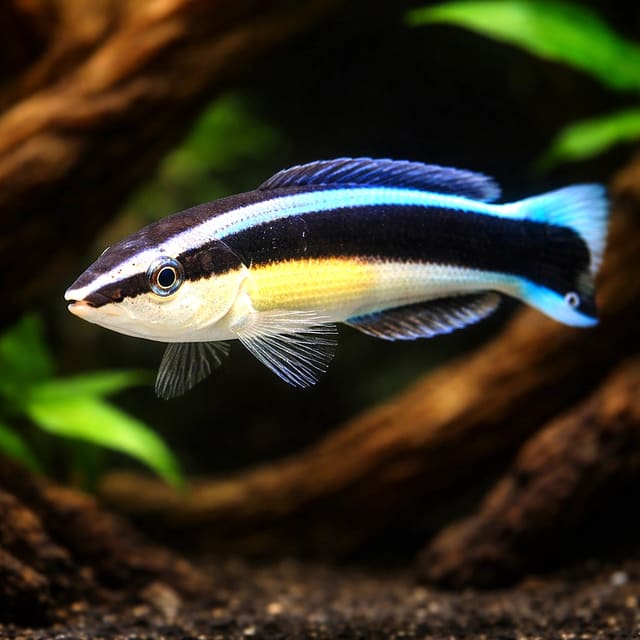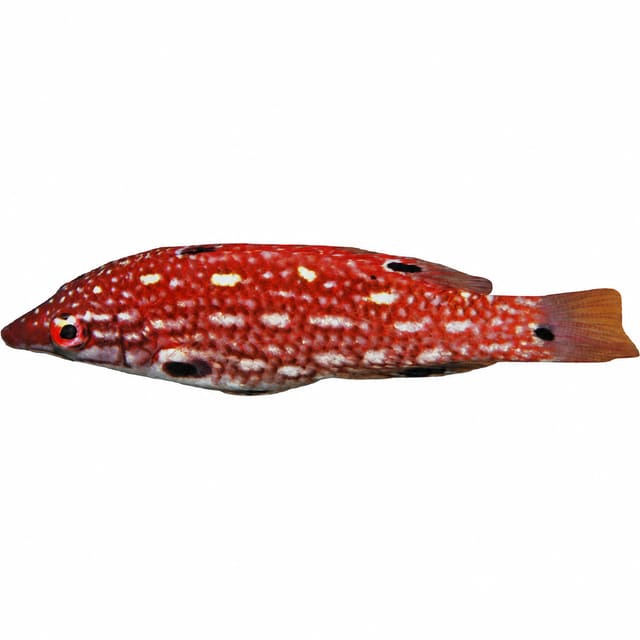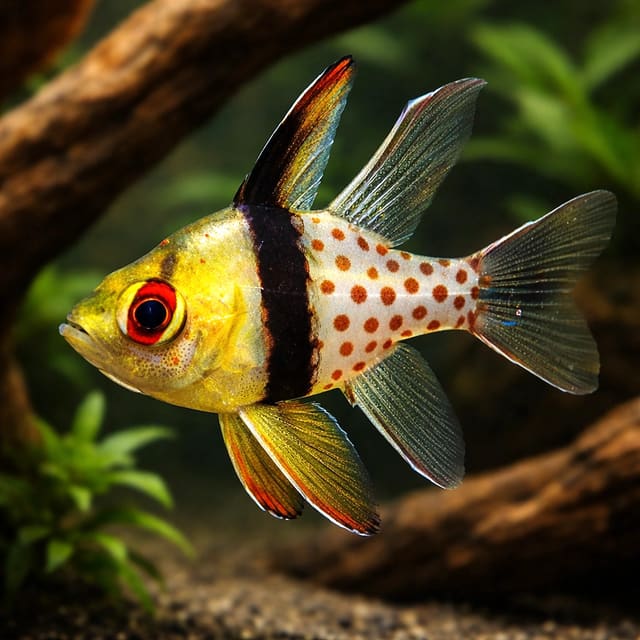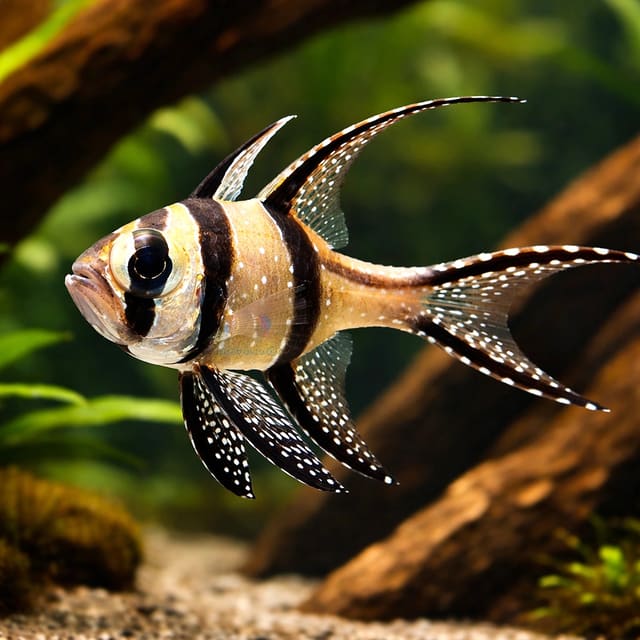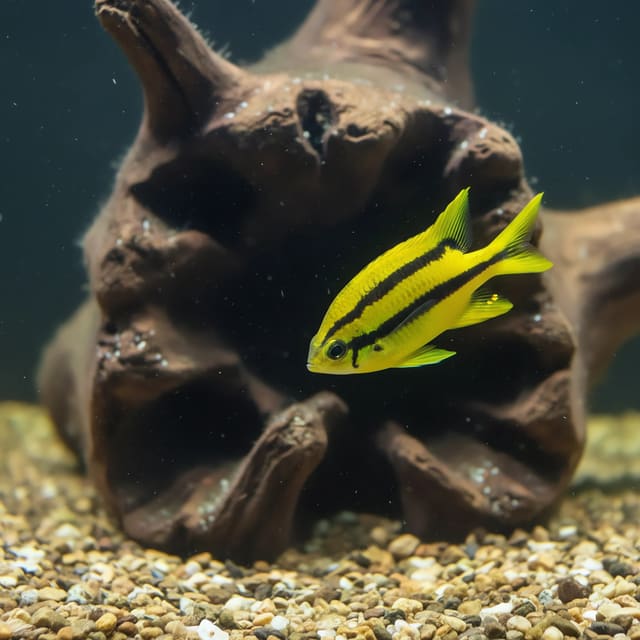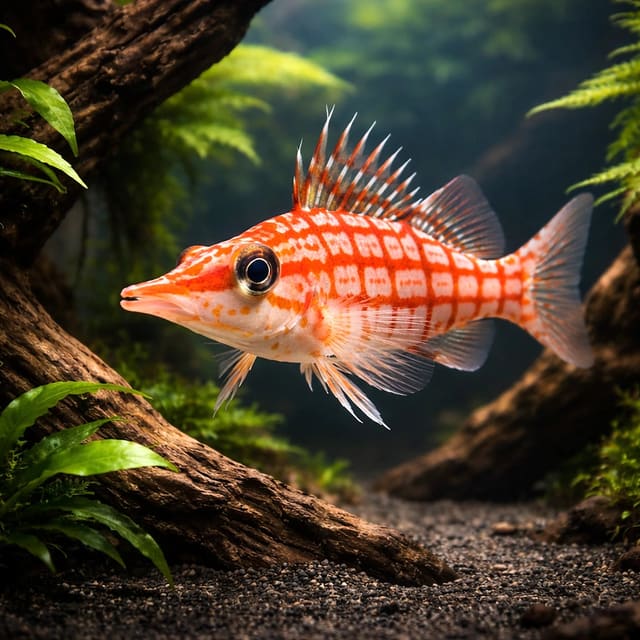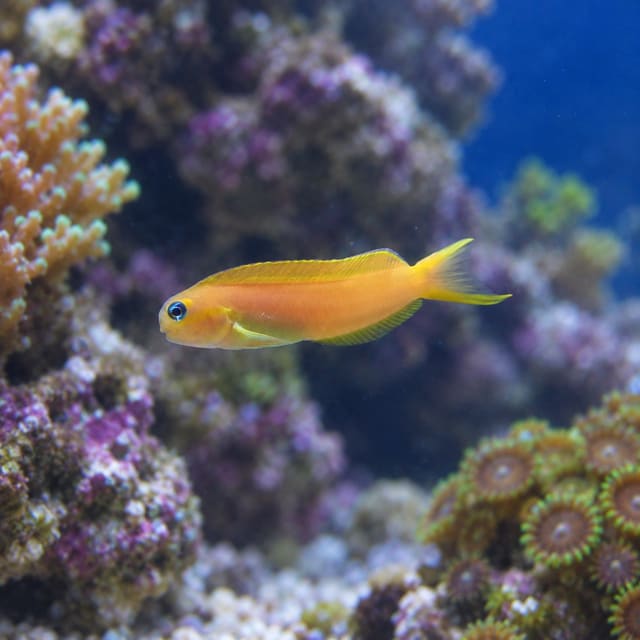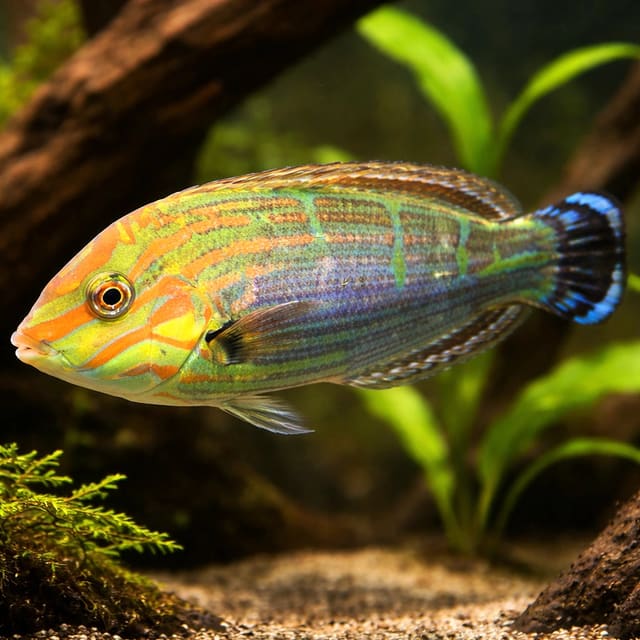
Tail-Spot Wrasse (Halichoeres melanurus)
24–26°C · pH 7.9–8.3
£87.99
The Sixline Wrasse (Pseudocheilinus hexataenia) is a small Indo-Pacific reef wrasse of the family Labridae that reaches 10 cm total length. It suits keepers with some marine experience and a mature aquarium of at least 150 litres, kept at 24–26°C and pH 7.9–8.3 under OATA's wrasse guidance. Sold individually as one live fish.
Adult size is the maximum length this species reaches at full maturity (scientific sources). The livestock you receive will be younger and smaller. Product-photo provenance and any image-specific limitations are stated on the listing.
Pseudocheilinus hexataenia
Save when buying multiple fish. Each quantity is one fish; sex and pair formation are not guaranteed unless the selected variant explicitly states them.
The Sixline Wrasse (Pseudocheilinus hexataenia) is a small Indo-Pacific reef wrasse of the family Labridae that reaches 10 cm total length. It suits keepers with some marine experience and a mature aquarium of at least 150 litres, kept at 24–26°C and pH 7.9–8.3 under OATA's wrasse guidance. Sold individually as one live fish.
Adult size is the maximum length this species reaches at full maturity (scientific sources). The livestock you receive will be younger and smaller. Product-photo provenance and any image-specific limitations are stated on the listing.
Maintain these water conditions for optimal health and vibrant colors
The Sixline Wrasse (Pseudocheilinus hexataenia) is a small marine wrasse from the family Labridae, found on coral reefs across the Indo-Pacific from the Red Sea to the Tuamotu Islands. FishBase records a maximum length of 10 cm total length, which makes it one of the more manageable wrasse for a home aquarium. Its size is modest; its needs are not casual. It is a reef fish that lives among coral branches, feeds on small crustaceans and depends on stable, clean marine water.
It suits a keeper with some marine experience and a mature aquarium of at least 150 litres, the starting point OATA gives for one individual of a smaller wrasse species. Expect an active little fish that keeps close to cover: FishBase describes it in the wild as shy and secretive, usually swimming among the protection of coral branches. We class it as an intermediate fish, a good step for a keeper whose system is settled rather than a first fish for a new one.
Among wrasse it sits at the small end. OATA points out that the family runs from small species such as this one up to the clown coris, which grows to around a metre, and that wrasse are usually very active swimmers, seen constantly moving around the aquarium. Small size and constant movement are what make a sixline worth having: plenty of life in a fish that fits a modest marine system, provided the water and the cover are right.
| Suits | Not suited to |
|---|---|
| Mature marine or reef aquariums of 150 litres or more | New aquariums still settling |
| Rockwork with plenty of crevices and cover | Bare aquariums with nowhere to retreat |
| Keepers who can offer small frozen meaty foods | A diet built on large pieces or plant foods |
| Timid companions such as cardinalfish or dartfish | Tanks of large, boisterous fish |
The core numbers: an adult length of up to 10 cm total length; routine water of 24–26°C and pH 7.9–8.3 from OATA's wrasse care sheet, which is group guidance for wrasse; salinity of 1.020–1.025; and ammonia and nitrite held at zero. The care tab explains how to meet each one.
Each purchase supplies one live Sixline Wrasse. The length it arrives at is simply the size it has reached so far; plan the aquarium, the food size and the companions for the 10 cm adult. Wikipedia spells the name six-line wrasse, and you will see both spellings used for the same species.
FishBase gives the 10 cm total-length maximum, while OATA's wrasse sheet says the six-line wrasse grows to approximately 8 cm. Use the larger FishBase figure for planning, since it is the recorded maximum; many fish may finish smaller, but the aquarium should be ready for one that does not.
Sex is guaranteed only when the selected option explicitly states male or female. This Sixline wrasse listing has no sex-guaranteed option. It is sold as a single fish for its colour, behaviour and place in a reef community.
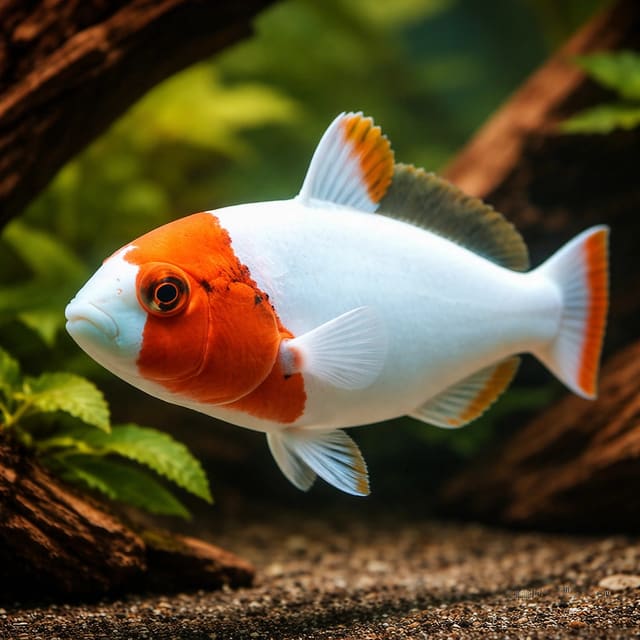
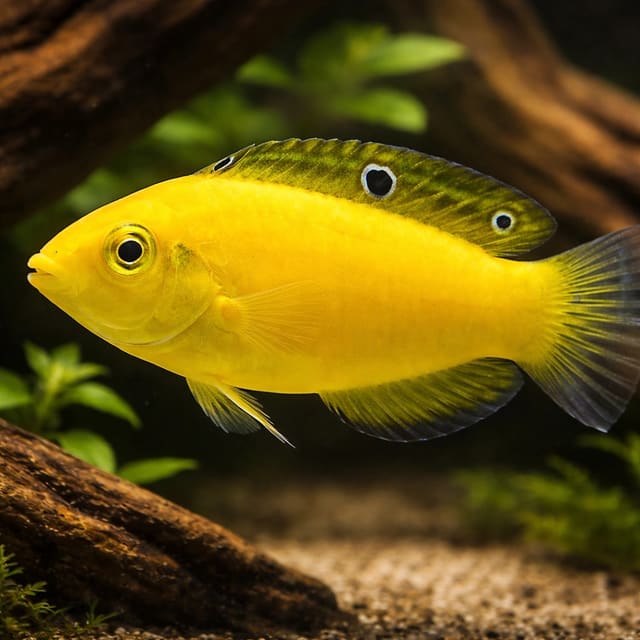
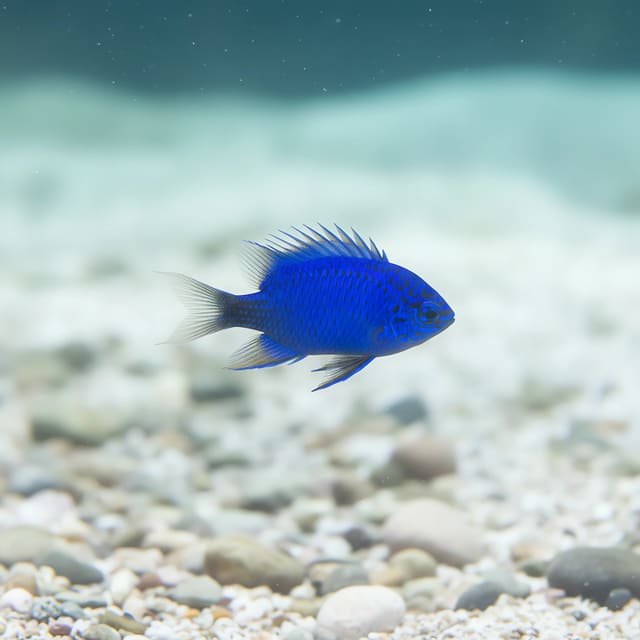
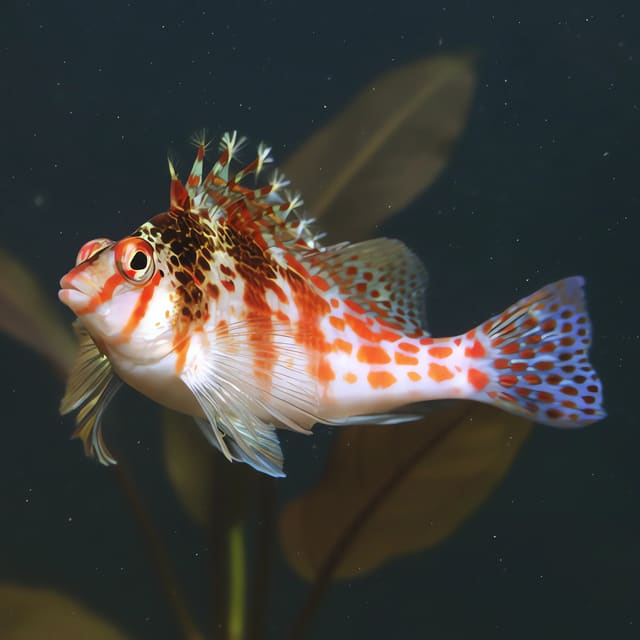
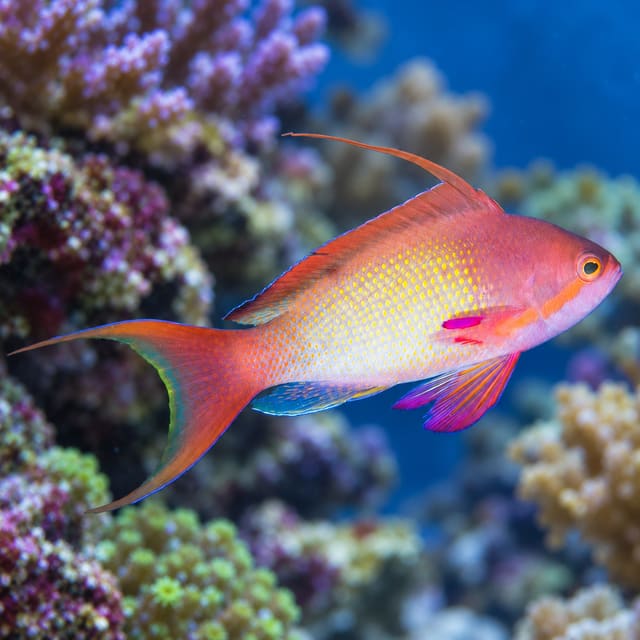
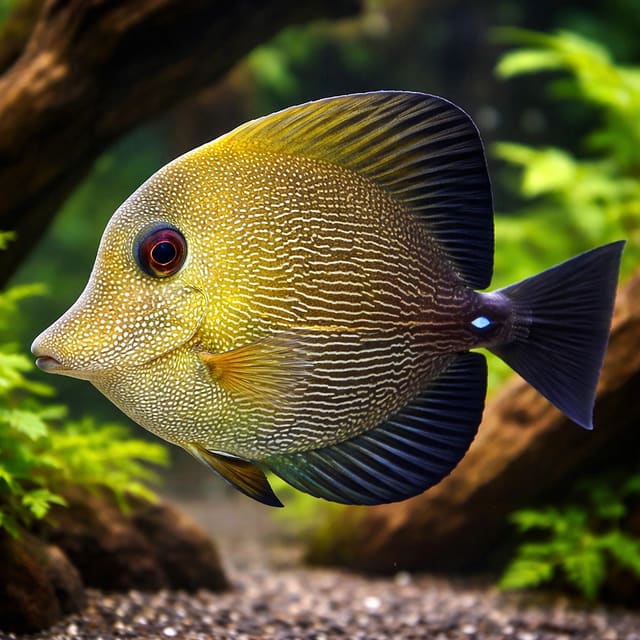
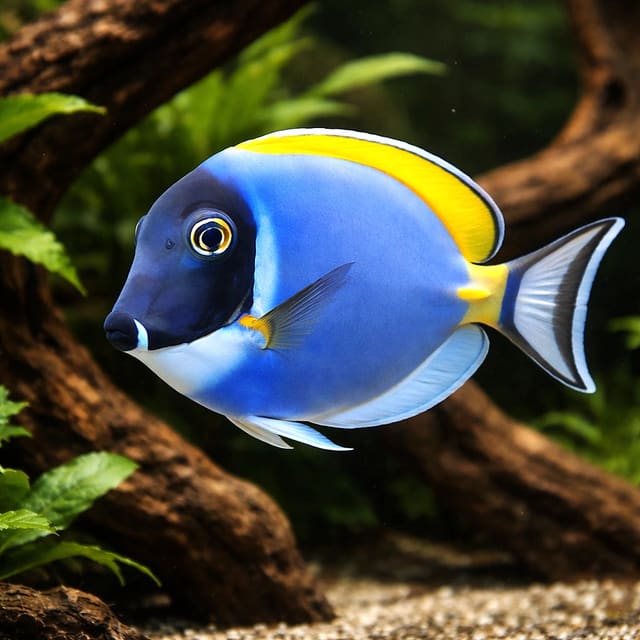
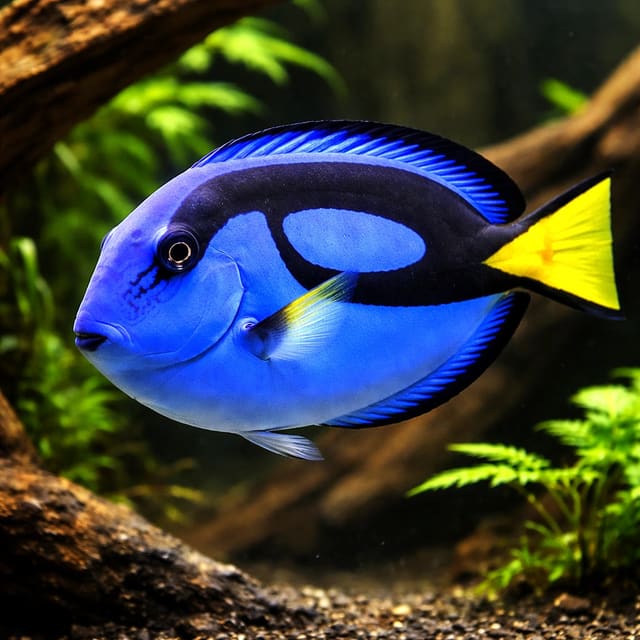
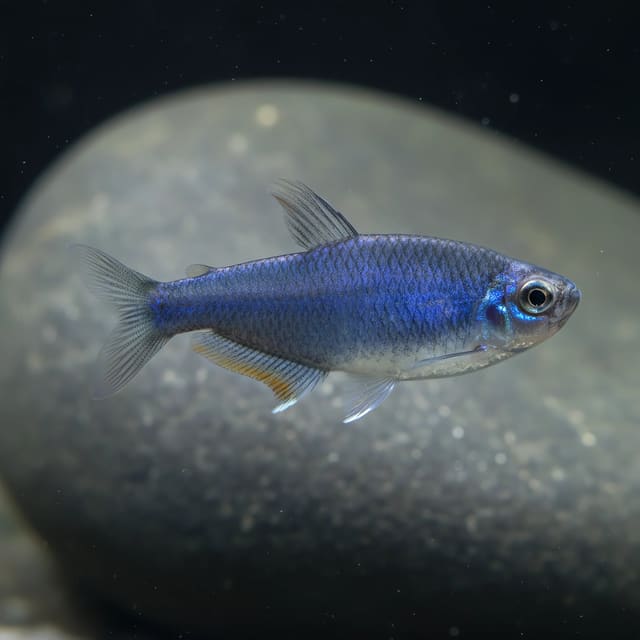
Expect some difference between the fish you receive and the photograph here. Gallery images have been digitally enhanced to improve image quality. Natural colour, pattern, size and maturity can vary between live animals.
| Decision | Plan for |
|---|---|
| Adult size | Up to 10 cm total length |
| Aquarium | At least 150 litres for one, more with companions |
| Food | Frozen copepods, finely chopped krill or mysis |
| Companions | Timid fish such as cardinalfish or dartfish |
| Sold as | One live fish |
When you are planning the rest of the community, browse our marine fish collection with those points in mind, and choose companions for a small, cover-loving wrasse rather than for the busiest open-water fish.
FishBase places the Sixline Wrasse on seaward reefs among coral branches, and also in clear coastal waters and dense coral on shallow reef crests or slopes down to about 20 m. Its full recorded depth range is 1–35 m, usually 4–35 m. These are field records of where wild fish live rather than settings you need to copy, but they describe a fish of bright, clear, coral-rich water.
Its range is wide. FishBase records it from the Red Sea south to Natal in South Africa and east to the Tuamotu Islands, north to the Ryukyu Islands and south to Lord Howe and the Austral Islands, including St Brandon's Shoals and the Gulf of Tadjoura. The IUCN lists it as Least Concern.
In the wild it usually occurs in small, loose groups. FishBase describes it as shy and secretive, usually swimming amongst the protection of coral branches, and records that it feeds mainly on small crustaceans. OATA adds, for wrasse as a group, that they are usually very active swimmers that are seen constantly moving around the aquarium. Put those together and you have a busy fish that likes to travel close to cover.
OATA's general rule for wrasse is to buy an aquarium as large as possible, within reason. It recommends at least 150 litres for an individual of the smaller species, with larger aquariums for species that grow over 15 cm. At a 10 cm maximum, the Sixline Wrasse sits among the smaller species, so 150 litres is the starting point for one fish. OATA adds that aquariums need to be even larger if you want to keep wrasse with other species.
More water also means steadier conditions. OATA notes that a larger aquarium gives more stability in temperature and water quality, and wrasse are stressed by even the smallest amounts of ammonia and nitrite. A slightly bigger system buys you a wider margin for the small mistakes every keeper makes.
Give it both things it uses: open water for its constant patrols and rockwork full of crevices and overhangs to slip into. A wall of tightly stacked rock with no gaps offers little; a structure with channels, caves and ledges lets it move along the rock the way it moves along coral branches on the reef. Leave some open sand as well; the next section explains why.
Whatever the size, a filter is essential. The RSPCA's guidance says no fish should be kept without a well set up and maintained filter. For marine systems OATA lists live rock with sufficient water flow, an internal or external filter, or a sump-based filter, and notes that a protein skimmer is beneficial because it removes dissolved organic waste before it breaks down into more harmful substances.
Say you have a mature 150-litre marine aquarium with no fish yet. That meets OATA's starting point for one Sixline Wrasse on its own. Now say you want to add two cardinalfish as well. OATA's advice is that the aquarium needs to be larger when wrasse share with other species, so either choose a bigger system for that plan or keep the community smaller. Working from the fish's needs first saves a difficult rehoming later.
Do not be alarmed if your Sixline Wrasse disappears from view. FishBase describes a shy, secretive fish that usually swims amongst the protection of coral branches, and OATA notes that some wrasse bury themselves under the sand bed to protect themselves when they sleep or feel threatened. Slipping into rockwork or out of sight is ordinary behaviour for a fish like this, not a sign on its own that something is wrong.
Feeding time is your best check. Offer food near the part of the rockwork it favours and watch whether it comes out to take it. If it stops appearing at feeding times, test the water first, then go through the warning signs in the weekly care section below. Resist digging through the sand or lifting rocks to find it: that disturbs the whole aquarium and every fish in it, and a secretive wrasse that was simply resting is the last one that needs it.
Keep the Sixline Wrasse at 24–26°C, pH 7.9–8.3 and a salinity of 1.020–1.025. OATA gives these as group-level values for wrasse, which it describes as usually undemanding of water chemistry; they are not a species-specific optimum. The temperature sits comfortably inside the 24–28°C that FishBase records for wild fish, so keep to OATA's 24–26°C rather than aiming for the wild upper figure.
| Measure | OATA value for wrasse |
|---|---|
| Temperature | 24–26°C |
| pH | 7.9–8.3 |
| Salinity | 1.020–1.025 |
| Ammonia | Zero mg per litre |
| Nitrite | Zero mg per litre |
| Nitrate | Not to exceed 50 mg per litre |
| Carbonate hardness | Hard, 8–12 dKH |
| Calcium | 380–450 ppm |
| Magnesium | 1250–1350 ppm |
If the wrasse will share a reef aquarium, OATA notes that some parameters will need to be altered to accommodate more sensitive species. Set the fine detail around your most demanding corals or invertebrates, and keep the wrasse's essentials, zero ammonia and nitrite, fixed.
Fish release ammonia, which is toxic. A working biological filter grows beneficial bacteria that convert ammonia to nitrite, also toxic, and then to nitrate, which is safer. Because OATA warns that wrasse can be stressed by even the smallest amounts of ammonia and nitrite, which may then lead to disease, both should read zero at every test.
Suppose a weekly test reads 25°C, pH 8.1, salinity 1.024, ammonia and nitrite at zero and nitrate at 20 mg per litre. Every figure sits inside OATA's wrasse values, so the job is simply to keep the routine going. If a later test shows nitrate at 40 mg per litre, nothing is wrong yet, but the reading is heading for the 50 mg limit: look at how much food is going in and make sure the weekly water change is happening, before it becomes a problem.
This is a carnivore in miniature. FishBase records that the Sixline Wrasse feeds mainly on small crustaceans, so its staple foods should be small and meaty. OATA says most wrasse require frozen meaty foods sized for the species being fed, and that smaller species need frozen copepods or finely chopped krill or mysis. That is the core of this fish's menu.
Prepared foods can round it out. OATA notes that many wrasse will eat prepared diets, but that granules or flakes must be size-appropriate. For a 10 cm wrasse with a small mouth, choose the smallest grades and check that the fish actually takes them before relying on them.
Some wrasse also graze on live food species that naturally live in the aquarium; OATA gives the peacock wrasse as an example. For those fish it advises adding them only to a mature aquarium and topping up prey such as copepods regularly, or offering frozen copepods if the wrasse accepts them. A mature system with established rockwork is the best place for a small crustacean feeder like this one.
OATA's rule is to feed wrasse only what they can eat within a few minutes. Watch the first meals closely, because a secretive fish may feed from the edge of the rockwork rather than in the open.
In a community, a shy fish can lose out to bolder feeders. A few habits help:
OATA notes that wrasse are sometimes added to aquariums to help consume pests such as bristleworms or flatworms. Enjoy any help your Sixline Wrasse gives, but choose it because it suits your aquarium, not as a pest-control plan, since the same sheet makes clear that wrasse vary widely in what they eat.
Our team hand-packs every order. The fish is hand-bagged in pure oxygen and packed in an insulated poly box, with a heat pack when the weather calls for it, then carried by a licensed live-animal courier. You will receive the tracking number and the confirmed delivery date by email, so you know when to be at home. The full terms are on our delivery and Live Arrival Guarantee page.
OATA advises confirming that ammonia and nitrite are at zero before any fish is added. Increase the number of fish slowly, because the beneficial bacteria in a matured filter need to catch up each time stocking and feeding rise. Stocking too many fish or stocking too fast can lead to new tank syndrome, where ammonia and nitrite climb to unhealthy levels that may make fish ill or kill them.
A secretive fish may spend its first hours or days mostly out of sight, as the section on hiding explains, so give it time. OATA's picture of a healthy fish is clear, bright eyes, undamaged fins, intact scales, no ulcerations or bumps and appropriate swimming behaviour, so use that as your checklist once it starts to show itself.
Routine care keeps a small marine fish well. At least once every week, OATA strongly recommends a partial water change of 25%, with a siphon to lift solid waste out of the substrate. For every 100 litres of aquarium water, that means 25 litres out and 25 litres of prepared salt water back in.
| Job | How often |
|---|---|
| Partial water change of 25% and siphoning | At least once every week |
| Ammonia, nitrite, nitrate and pH tests | As part of the weekly routine |
| Filter check for blockages | Regularly |
| Protein skimmer clean | Regularly, to keep it performing |
| A look at feeding and behaviour | At every feed |
When the filter needs cleaning, do not run it under the tap, because any chlorine or chloramine present may kill the beneficial bacteria in the media. Rinse it lightly in the tank water taken out during the water change instead, which keeps the loss of bacteria low.
Every fish varies a little, but OATA lists the signs that can flag a problem early:
Colour is one of the easiest signals to watch. OATA lists turning darker or paler than normal among the early warning signs, and it also notes that some wrasse change colour as they mature. Compare the fish against its own normal: a gradual change as it grows is different from a sudden fade, and any sudden change deserves a water test and a closer look at its breathing and feeding.
With a naturally secretive fish, the hiding sign needs judgement: compare it with how your wrasse normally behaves once settled, not with a bolder open-water fish. If a change appears, test the water first. If the readings are right and the change continues, contact us with what you see and your test results.
OATA's starting point is that mixing wrasse with other fish depends on the species of wrasse, because wrasse vary so much in size and temperament. It gives two useful poles. Small, relatively docile wrasse can be mixed with more timid species such as cardinalfish or dartfish. Large wrasse such as the dragon wrasse can be aggressive to other species and belong with boisterous fish such as pufferfish or triggerfish.
The Sixline Wrasse is firmly at the small end: FishBase records a 10 cm maximum and describes a shy, secretive fish in the wild. That places its natural companions among OATA's timid community fish. Wrasse still vary as individuals, so treat any mix as something to watch rather than a certainty.
OATA's point that mixing depends on the species applies when wrasse share with each other too. Wrasse range from small fish like this one to the clown coris at around a metre, and from relatively docile to aggressive, so check any second wrasse's adult size and temperament before it goes in, and remember that OATA expects a larger aquarium once wrasse share with other species.
| Question | What to look for |
|---|---|
| Size | Companions that will not treat a 10 cm fish as food or a target |
| Temperament | Timid or calm fish, as OATA suggests for small wrasse |
| Space | More than OATA's 150 litres once other species share it |
| Diet | No reliance on small crustaceans you want to keep |
If you would like a second view on a planned community, ask us with your aquarium's volume and the fish and invertebrates already in it.
Reef keepers need to weigh diet as well as temperament. OATA notes that some wrasse will eat invertebrates such as shrimp, crabs and fan worms, or nibble at corals, and advises checking whether a wrasse is reef safe before adding it to an aquarium with those animals. For this species the recorded wild diet, mainly small crustaceans, is the clearest guide: small ornamental shrimp and crabs are the animals most at risk.
Imagine a mature reef aquarium with corals, a group of small ornamental shrimp and two cardinalfish. The cardinalfish fit OATA's timid-companion suggestion. The corals call for OATA's note that reef parameters may need adjusting for more sensitive species. The small shrimp are the open question, because small crustaceans are what this wrasse eats in the wild. If losing them would matter, choose a different fish or keep the shrimp in another aquarium.
OATA's advice to increase fish numbers slowly applies to every addition, so add the wrasse to a stable, mature system and leave time for the filter to adjust before the next fish goes in. After each introduction, watch feeding times: they show quickly whether the wrasse is being crowded out of food, or whether a newcomer is being chased from the rockwork.
OATA lists changes in aggression and more hiding than normal among the signs to watch for. If one fish is harried, kept from food or pinned into a corner day after day, rethink the mix rather than waiting for it to settle. A small wrasse in a well-planned community is a pleasure to watch; the planning is what makes it so.
FishBase records a maximum of 10 cm total length, so it stays a small fish, but plan its space, food size and companions for a 10 cm adult rather than for its length when it arrives.
OATA's wrasse guidance recommends at least 150 litres for one individual of a smaller wrasse species, and more space again when wrasse share the aquarium with other fish. Choose a mature marine system with plenty of rockwork for cover as well as open water.
In the wild it usually lives in small loose groups, but plan the aquarium around one fish. OATA's 150-litre starting point is for a single individual, and it says aquariums need to be larger still when wrasse are kept with other species.
It suits a keeper with some marine experience rather than a complete beginner. We class it as an intermediate fish because it needs a mature aquarium, ammonia and nitrite at zero and small frozen meaty foods sized for its mouth.
In the wild it feeds mainly on small crustaceans. In the aquarium, offer frozen copepods or finely chopped krill or mysis, which OATA recommends for smaller wrasse, plus size-appropriate granules or flakes if it accepts them, and feed only what it can eat within a few minutes.
Keep it at 24–26°C, pH 7.9–8.3 and salinity 1.020–1.025, following OATA's group guidance for wrasse. That temperature sits within the 24–28°C FishBase records for the species in the wild.
FishBase describes it in the wild as a shy, secretive fish that usually swims among the protection of coral branches. OATA notes that wrasse vary in temperament, so watch each introduction closely and give it rockwork to retreat into.
OATA suggests timid fish such as cardinalfish or dartfish for small, relatively docile wrasse. Treat small ornamental shrimp and crabs with caution, because its wild diet is mainly small crustaceans.
It travels hand-bagged in pure oxygen in an insulated poly box, with a heat pack when the weather calls for it, carried by a licensed live-animal courier; tracking and your confirmed delivery date come by email. Be in to receive it. Film the sealed parcel before opening it and keep filming in one take until the fish is visible in its sealed bag, then float the bag for 20–30 minutes before releasing it. Never pour the bag water into your tank. Live Arrival Guarantee claims need that video and a same-day message with your order number.
No reviews for this item yet. Bought one? Honest reviews only, good or bad.
What customers say about ordering from us
Easy website plenty of info on fish your buying great to pick a time slot
TRACEY DURRANT · 7 Oct 2026
Got some lovely fish thank you
Kevin Mackie · 7 Oct 2026
Reviews of our shop, collected by Judge.me, an independent third-party review collector. Newest first.