Yellow prawn-goby (Cryptocentrus cinctus) - Marine Aquarium Livestock UK
24–26°C · pH 7.9–8.3
£57.99
The Sixspot goby (Valenciennea sexguttata) is a marine goby from the Indo-Pacific that reaches 14 cm. It suits a mature, filtered marine aquarium; 24–26°C is the overlap of FishBase’s wild record and OATA’s goby guidance, which also gives pH 7.9–8.3 and 8–12°dKH. Sold individually as one live fish per purchase.
Adult size is the maximum length this species reaches at full maturity (scientific sources). The livestock you receive will be younger and smaller. Product-photo provenance and any image-specific limitations are stated on the listing.
Valenciennea sexguttata
The Sixspot goby (Valenciennea sexguttata) is a marine goby from the Indo-Pacific that reaches 14 cm. It suits a mature, filtered marine aquarium; 24–26°C is the overlap of FishBase’s wild record and OATA’s goby guidance, which also gives pH 7.9–8.3 and 8–12°dKH. Sold individually as one live fish per purchase.
Adult size is the maximum length this species reaches at full maturity (scientific sources). The livestock you receive will be younger and smaller. Product-photo provenance and any image-specific limitations are stated on the listing.
Maintain these water conditions for optimal health and vibrant colors
The Sixspot goby (Valenciennea sexguttata) is a marine goby in the family Gobiidae. It comes from the Indo-Pacific, where its range extends from the Red Sea, Persian Gulf and East Africa to Samoa, north to the Yaeyama Islands and south to Queensland. FishBase records a maximum length of 14 cm. This fish suits a keeper who can provide a mature, filtered marine aquarium, plan around a bottom-associated fish and maintain a consistent feeding and water-care routine.
Keep the aquarium at 24–26°C. That routine range is the overlap between FishBase’s recorded wild environment of 22–28°C and OATA’s goby guidance. OATA also recommends salinity of 1.020–1.025, pH 7.9–8.3 and carbonate hardness of 8–12°dKH for gobies as a group; these are not a species-specific optimum.
At 14 cm, this fish belongs in OATA’s larger-goby planning category. Use an aquarium of at least 120 litres for one, and plan a larger aquarium when it will live with other fish. The volume is a starting point for stability and stocking decisions rather than permission to add any particular companion.
| Suits | Not suited to |
|---|---|
| A mature, filtered marine aquarium | An aquarium without an established, maintained filter |
| A plan based on at least 120 litres | A plan based on the smaller-goby 40-litre category |
| Sand, rocks and space near the bottom | A layout that ignores its sandy, burrow-associated habitat |
| Twice-daily feeding and weekly maintenance | A routine that cannot support regular feeding, testing and water changes |
One purchase supplies one Sixspot goby. The 14 cm figure is its recorded adult planning length, not a statement of the fish’s length at dispatch. Build the permanent aquarium around that adult size from the outset rather than using a smaller temporary volume.
Sex is guaranteed only when the selected option explicitly states male or female. This Sixspot goby listing has no sex-guaranteed option. Do not use colour, apparent size or the gallery image to decide whether the fish will be male or female.
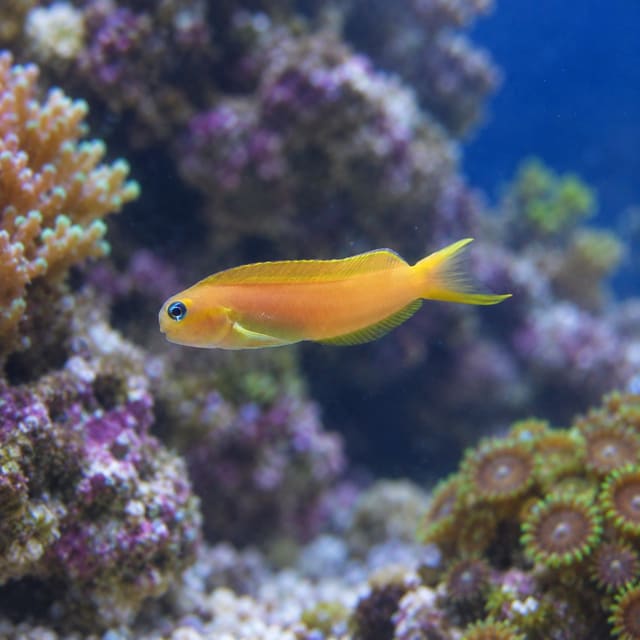
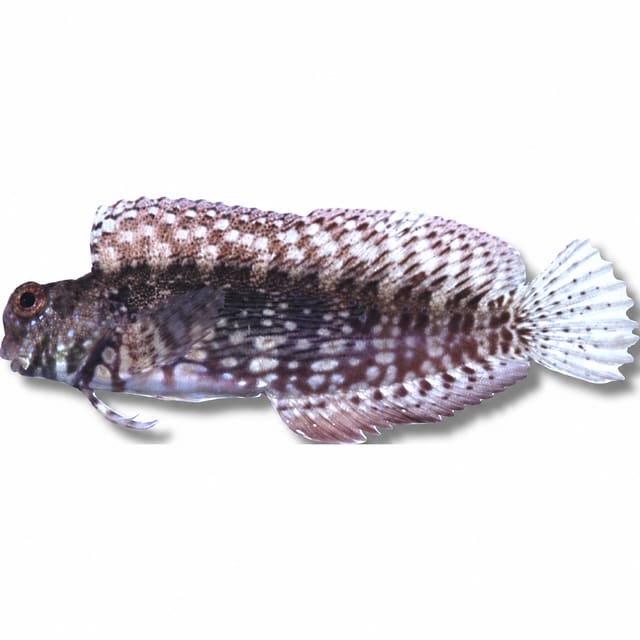
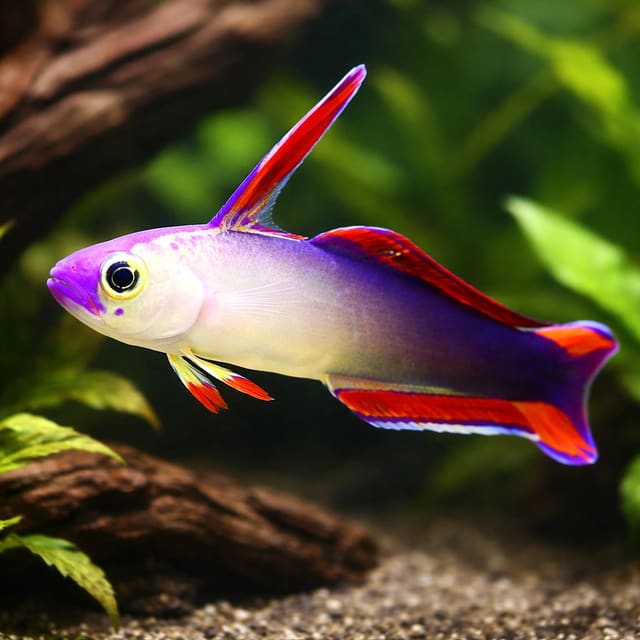
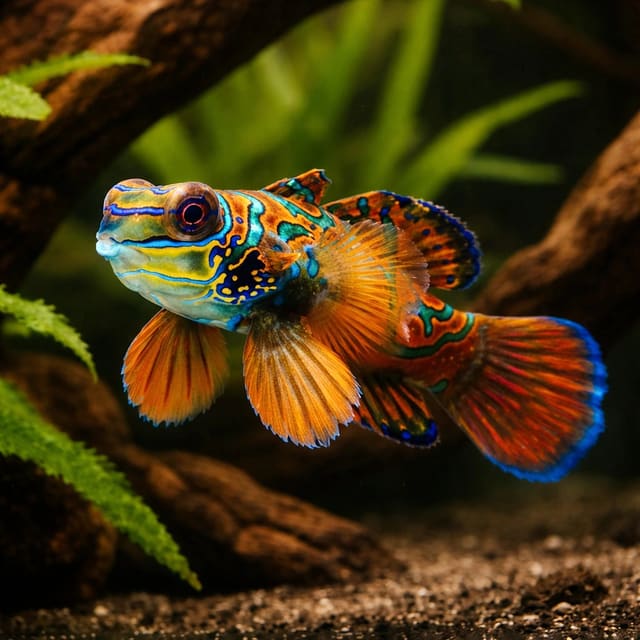
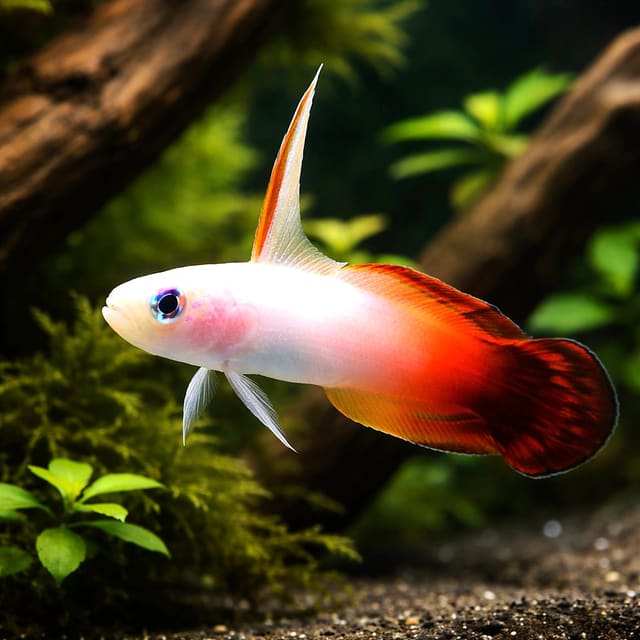
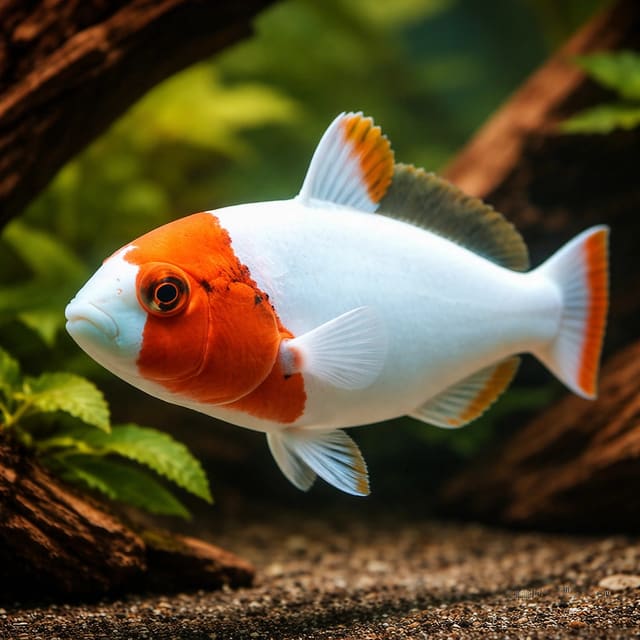
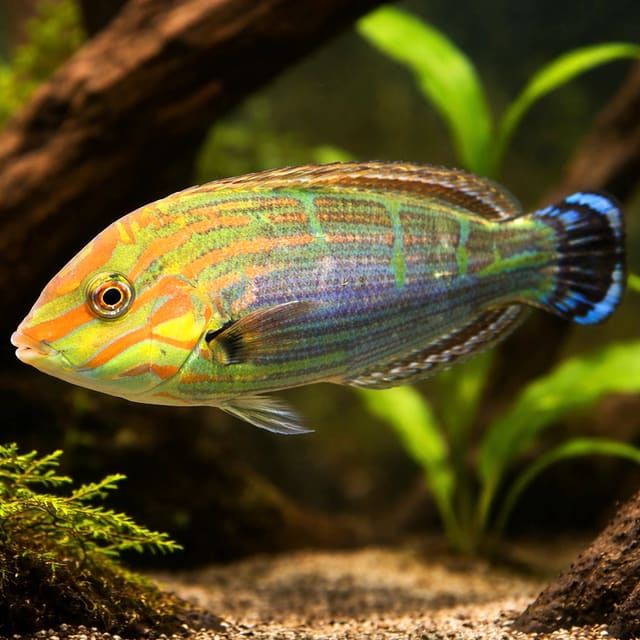
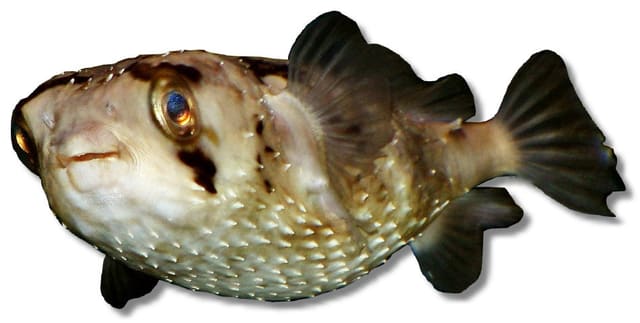
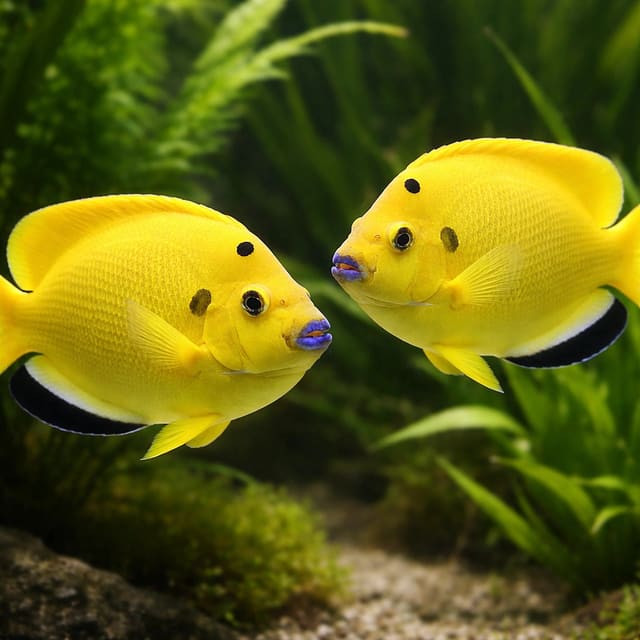
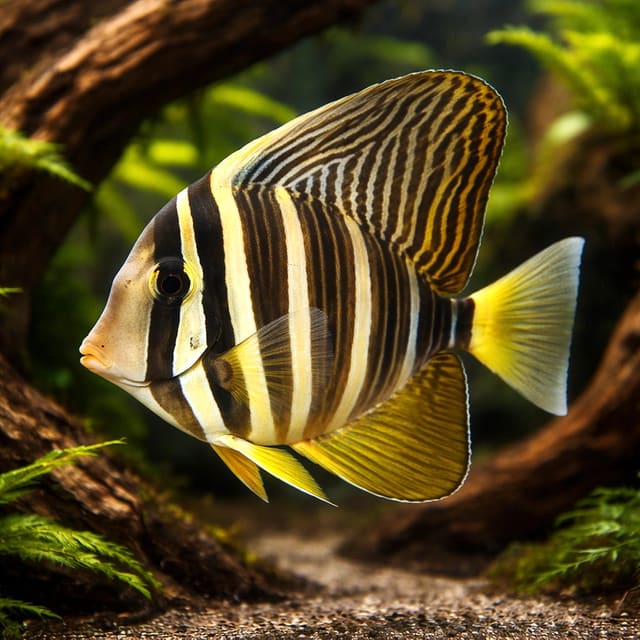
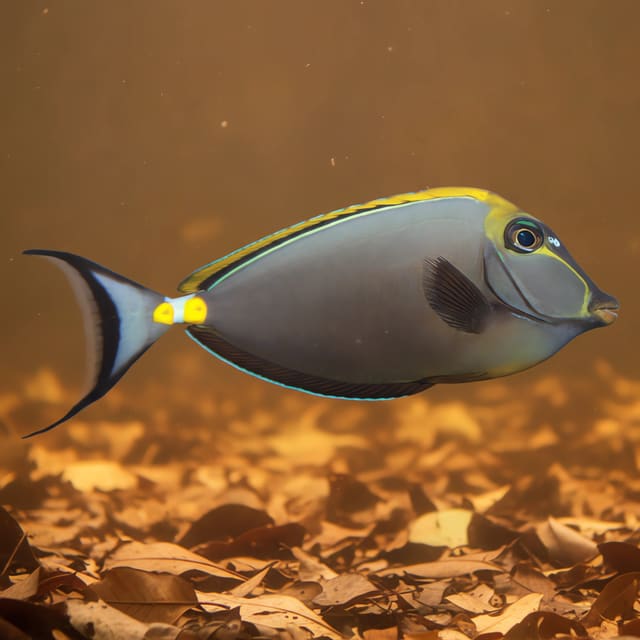
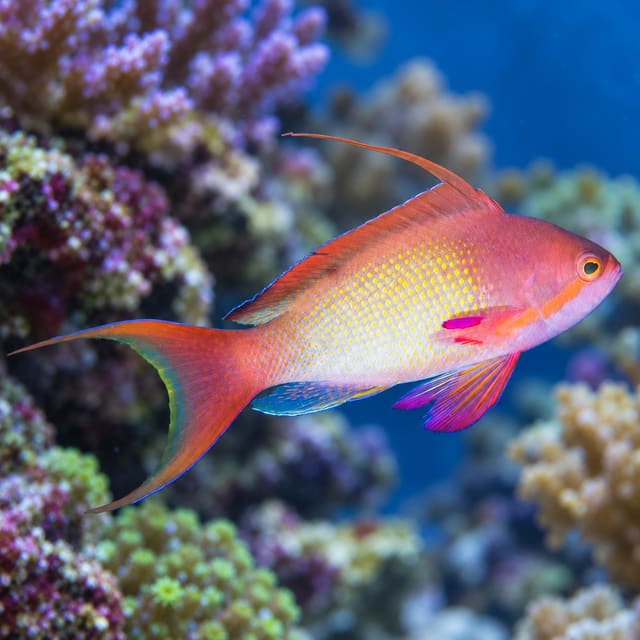
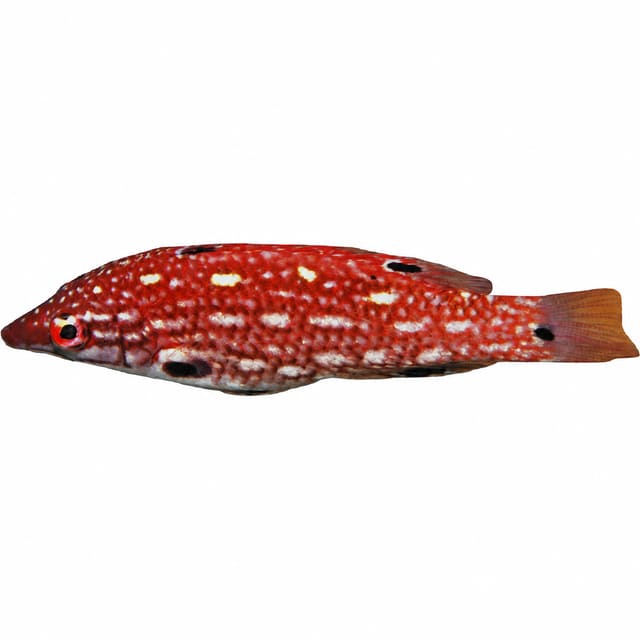
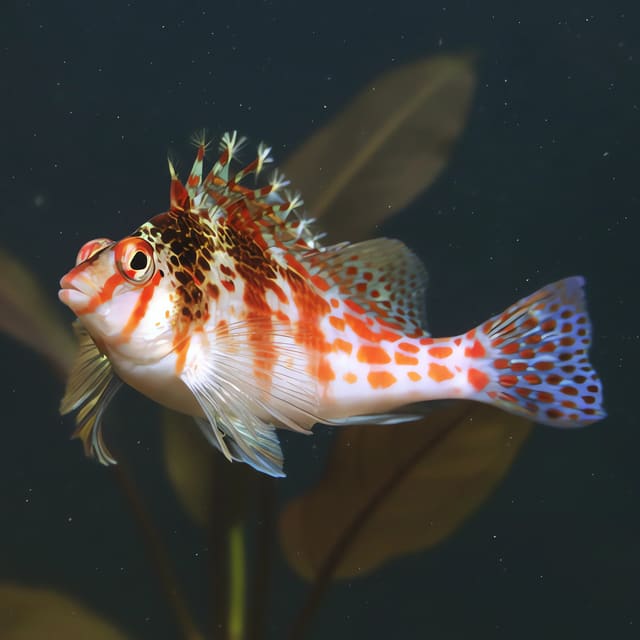
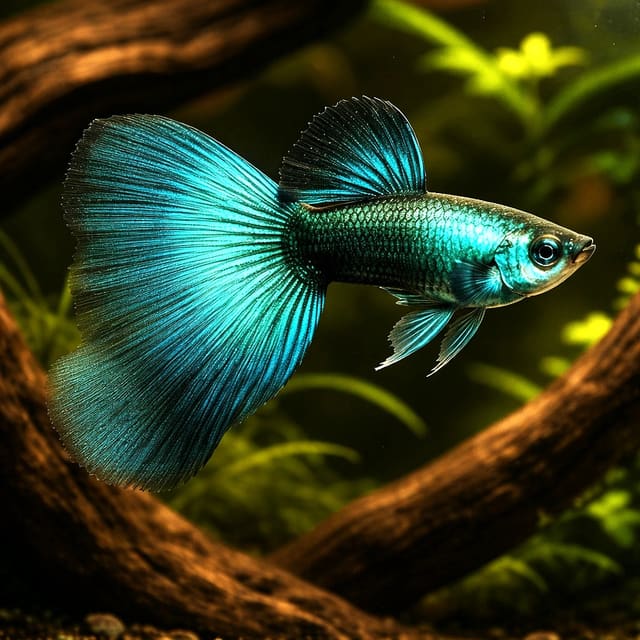
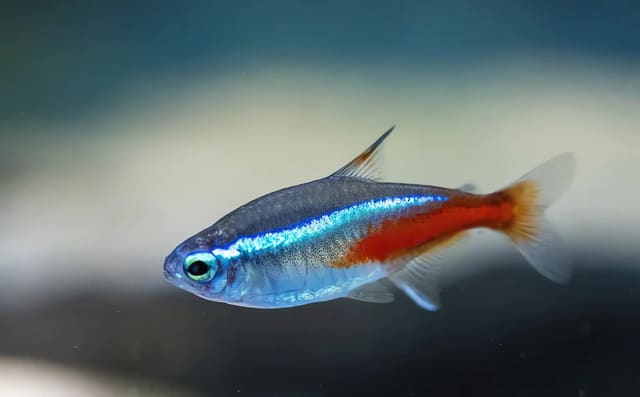
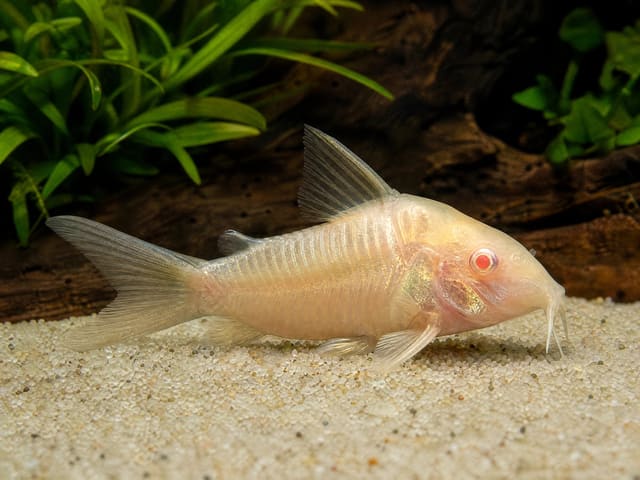
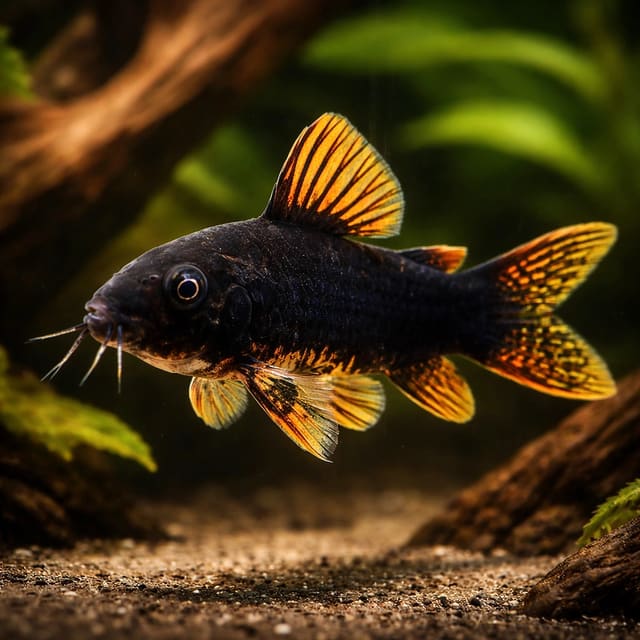
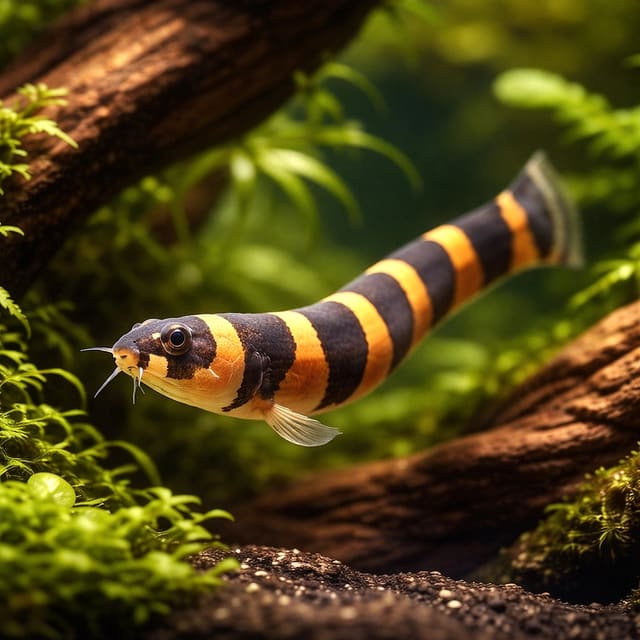
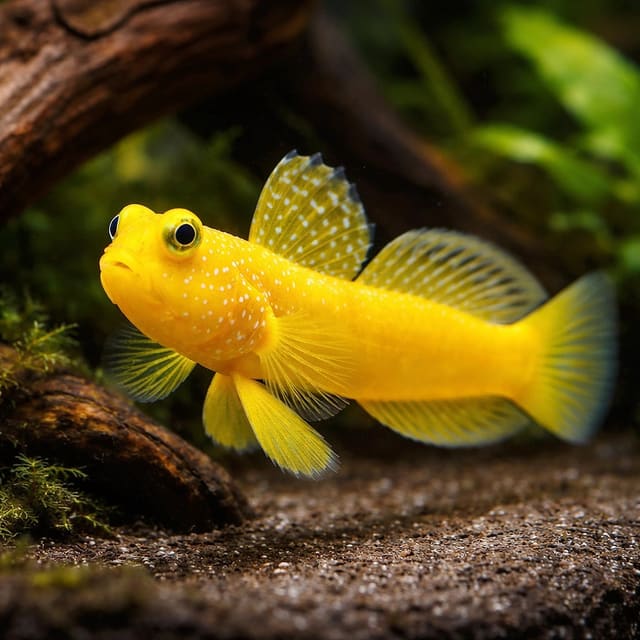
The gallery images are representative of this type of animal rather than photographs of the exact animal supplied, so colours can look slightly different from the live animal. Use the gallery to recognise the overall pale body, translucent fins and blue facial spotting shown, while allowing for natural variation between animals.
For broader aquarium planning, compare the fish’s needs with the body plans and care requirements represented in our marine fish collection. Treat that collection as a way to compare choices, not as a ready-made compatibility list: each proposed combination still needs screening against aquarium volume, temperament, feeding and use of the bottom area.
Plan the lower part of the aquarium around sand, rocks and sheltered spaces. FishBase describes adults living in silty or sandy areas of lagoons and bays, usually occupying a burrow beneath rocks. The Wikipedia species summary likewise places the fish in bays and lagoons with silt or sand substrates and rocks, at recorded depths of 3–25 m.
Those habitat details explain why open water alone is not an adequate layout. Preserve usable bottom space, provide a sand-based area and arrange rocks so the fish has access to cover. Check the layout during routine maintenance because activity near the substrate can move loose material. Rock placement must remain dependable when the fish uses the area around it.
FishBase records wild adults usually in pairs, living in burrows, and also reports aggregations over broad lagoon areas. It describes the species as monogamous. Use those observations to understand its natural social setting, while making aquarium stocking decisions around the actual tank, intended animals and their behaviour rather than assuming that a wild pair or aggregation translates directly into a fixed aquarium group.
Chalk goby and sleeper blue dot goby are additional common names associated with this species. They refer to the same Valenciennea sexguttata identified here, rather than separate colour forms or sex choices.
Keep the temperature at 24–26°C, salinity at 1.020–1.025, pH at 7.9–8.3 and carbonate hardness at 8–12°dKH. The temperature range sits inside FishBase’s recorded wild range of 22–28°C and matches OATA’s aquarium guidance for gobies. Aim for stable readings within the routine ranges rather than moving repeatedly between their limits.
Maintain ammonia at zero mg per litre and nitrite at zero mg per litre. Keep nitrate from exceeding 50 mg per litre. These waste readings are active stocking and maintenance limits: test them before introducing the fish, continue monitoring them after introduction and investigate any departure from zero for ammonia or nitrite.
OATA includes calcium and magnesium in its marine goby profile, but a reef aquarium may need different parameters for more sensitive inhabitants. Assess the needs of every animal in the system together; do not alter one value in isolation while ignoring salinity, pH, hardness or the waste readings.
Record results consistently enough to notice movement before it becomes a large change. A reading is most useful when it can be compared with the aquarium’s previous stable pattern, the condition of the fish and recent stocking or feeding changes.
Use repeated results to guide action. If ammonia or nitrite rises above zero mg per litre after adding livestock or increasing food, stop further stocking, review the feeding load and check that filtration remains unobstructed. If temperature, salinity or pH begins drifting, correct the cause steadily while continuing to monitor the whole marine profile rather than reacting to one isolated reading.
Use a well-established and maintained biological filter before adding the goby. The RSPCA explains that fish release toxic ammonia, which filter bacteria convert first to nitrite and then to the safer nitrate. The filter therefore has to be functioning as a biological system, not merely moving water.
OATA says a filter is essential for every goby aquarium. A marine system may use live rock with sufficient water flow, an internal or external filter, or a sump-based filter. Choose a method capable of supporting the aquarium’s whole livestock and feeding load, then maintain it so water flow is not reduced by blockage.
Adding too many fish or adding them too quickly can leave the bacterial population unable to process the increased waste. OATA describes the resulting ammonia and nitrite rise as new tank syndrome, which can make fish ill or cause death. A large aquarium offers greater environmental stability, but its volume does not replace filter maturation or controlled stocking.
A protein skimmer can help maintain water quality by removing dissolved organic waste before it breaks down into more harmful substances. Treat it as support for the biological filter and maintenance routine, not as a substitute for testing or partial water changes.
Use the first readings after introduction as a filter-capacity checkpoint. Continue testing ammonia and nitrite while the biological filter adjusts to the additional waste. Delay any further increase in livestock or feeding load if either reading departs from zero mg per litre, and keep checking until the aquarium has returned to its established pattern.
Use at least 120 litres for one Sixspot goby. OATA recommends that volume for larger goby species, and the fish’s recorded adult length of 14 cm places it above the smaller-species category of under 7–8 cm. Do not apply the 40-litre recommendation for smaller gobies to this species.
Use a larger aquarium when adding other fish. OATA links increased volume with greater stability in temperature and water quality as well as the extra demands of mixed stocking. The 120-litre figure is therefore a minimum planning reference for one larger goby, not a general capacity figure for a community.
A worked planning decision is straightforward: a 100-litre aquarium remains below OATA’s larger-goby recommendation even if the fish is shorter when it arrives. A 120-litre aquarium reaches the group minimum for one, but adding other fish calls for more space rather than treating the same volume as a complete mixed-stock plan.
Plan the permanent aquarium before purchase. Moving the fish through progressively larger aquariums is not a reason to start below the adult category, and apparent body size in a photograph does not change the 14 cm planning length.
Evaluate usable space as well as nominal volume. A tank can meet the litre figure while leaving too little open substrate if rocks, equipment or other bottom-associated animals occupy most of the lower area. Map where the sand, shelter and feeding space will be, then check that the final arrangement still supports filtration flow and routine access for waste removal.
Feed twice a day, giving only what the fish can eat within a few minutes. OATA’s goby guidance says most gobies require a varied diet and warns that overfeeding can leave uneaten food to accumulate. Judge the portion by what is consumed promptly rather than by a fixed count of pieces.
For a larger goby, offer appropriately sized frozen meaty foods such as krill, mysis shrimp or enriched brine shrimp. OATA also says many gobies accept prepared diets, so suitably sized granules, flakes or sinking pellets may form part of the rotation when the individual takes them. Variety remains important; avoid relying on one food without observing whether it is being eaten.
Some gobies obtain invertebrate food items by sifting sand, but that group behaviour should be confirmed through observation of the individual. A mature sand bed can support a larger population of prey items than a newly established one. Cultured or shop-bought live copepods can supplement those prey when sand-sifting behaviour is seen.
Watch body condition and interest in food over time. Reduced intake is one of OATA’s warning signs for fish health, while excessive food can damage water quality. The feeding decision and the filtration decision are therefore linked: increase neither food nor livestock faster than the mature filter can process the resulting waste.
Use the first week to establish a repeatable portion. Begin with a small amount of appropriately sized food, watch whether it reaches the goby and note what remains after a few minutes. Reduce the next portion if food is left behind; if the fish takes everything promptly, preserve that measured routine rather than adding extra food automatically.
Carry out a 25% partial water change at least once every week. Schedule the 25% change weekly or more often when needed, while continuing to use test results and observations to guide the wider maintenance routine. Use a siphon during the change to remove solid waste from the gravel or substrate where it has collected.
Check the filter regularly and clean it often enough to prevent blockage. If its media needs cleaning, do not run it under the tap. Rinse it lightly in aquarium water removed during the partial water change, which reduces the loss of the established beneficial bacteria. Keep the filter operating as the aquarium’s biological support rather than cleaning it so aggressively that its bacterial population is stripped away.
The readings and observations answer different questions. Water tests show whether the filter and maintenance routine are controlling waste; the fish’s appearance and behaviour show how it is responding. Use both rather than assuming clear-looking water has safe ammonia and nitrite levels.
A larger aquarium helps buffer environmental changes, but it still requires this routine. Weekly maintenance is also the point at which to inspect the bottom area, remove uneaten food and check whether sand has been shifted into places where it could affect equipment or bottom-dwelling animals.
Compare each checkpoint with the previous one. A rising nitrate result, repeated uneaten food or increasing solid waste indicates that feeding, stocking and removal are no longer balanced. Address the cause while preserving the established biological filter, and continue checking ammonia and nitrite at zero mg per litre rather than relying on the aquarium’s appearance.
Our delivery and Live Arrival Guarantee policy says fish are hand-bagged in pure oxygen and placed in an insulated poly box, with a heat pack when the weather calls for it. Be present to receive the parcel because live fish cannot be left unattended.
Before the parcel arrives, prepare a mature, filtered receiving aquarium within the fish’s routine marine ranges and confirm that ammonia and nitrite are zero mg per litre. Complete these checks early enough to address a water or equipment problem before the fish is released.
For a Live Arrival Guarantee claim, contact us the same day with the order number and the continuous unboxing video. The video must begin with the sealed parcel, continue through opening and show the fish in the sealed bag before release. Keeping that sequence intact allows the condition of the parcel and fish to be seen before anything is disturbed.
After release, observe the fish’s swimming, breathing, colour and use of shelter. Keep the established filtration and water-testing routine in place rather than making abrupt changes simply because the animal is new to the aquarium.
Use the first observations as a baseline for the fish’s normal behaviour in its new surroundings. Note whether it uses the sand, rocks or shelter and whether it responds at feeding time. If swimming, breathing, colour or feeding changes, test the water and compare the result with the stable readings recorded before arrival.
Watch for changes in swimming, colour, temperament, breathing, appearance, body condition and feeding. OATA identifies hanging at the surface, sitting on the bottom or erratic swimming as changes that deserve attention. Because gobies naturally spend much of their time near sand or rock, compare the fish with its own normal posture and movement rather than treating every visit to the bottom as a problem.
Test water quality when any of these changes appear. Check ammonia and nitrite first because both should remain at zero mg per litre, then review nitrate, temperature, salinity and pH against the aquarium’s normal readings. A water test turns a general concern into a concrete set of results that can guide the next response.
Contact us if you are concerned about the fish’s health, providing the recent water readings and a concise description of what changed. Do not choose a disease treatment from appearance alone. Continue observing the fish and protect stable filtration while the cause is assessed.
OATA says gobies generally mix well with other fish, but it also stresses that gobies vary greatly in temperament. Treat that general tendency as the start of a compatibility check rather than a universal community-fish guarantee.
Use a larger aquarium when keeping the Sixspot goby with other fish. The 120-litre recommendation applies to one larger goby, while mixed stocking calls for additional space. Aquarium volume is only one part of the decision: check the proposed animals’ behaviour, water requirements, feeding, adult space needs and use of the lower part of the aquarium.
FishBase records wild adults usually in pairs and also describes lagoon aggregations. Those natural observations help explain its social setting, but aquarium grouping still needs to account for the intended individuals and available space. For a stocking and compatibility assessment, ask us with the aquarium volume, current livestock and the exact animals you intend to combine.
Observe the aquarium after any introduction. Changes in hiding, aggression, feeding or body condition are practical signals that the social plan should be reassessed alongside water quality.
Work through the screening points before treating any shared water range as sufficient. Two animals can fit the same temperature and salinity while still competing for bottom space or food. A stronger plan confirms suitable water first, then checks adult space, temperament, feeding access and the effect of each animal’s normal activity on the sand and rock layout.
Use caution with small invertebrates. OATA says some goby species may eat small invertebrates such as shrimp when they can fit into the fish’s mouth. That possibility is conditional rather than a universal outcome, so screen the size and type of invertebrate and do not promise that every shrimp or similar animal will be safe.
Use caution with corals that live on or near the bottom. OATA notes that sand-sifting gobies can deposit piles of sand in unwanted places. If this individual shows sand-sifting behaviour, inspect where displaced sand settles and make sure it is not accumulating over a bottom-dwelling coral.
These risks call for observation and layout planning, not a blanket statement that the species is safe with all invertebrates or all corals. Preserve a usable sand area, position bottom animals with potential sand movement in mind and watch what the fish actually does after introduction.
Reef planning also has a water-chemistry component. OATA advises that parameters may need alteration for more sensitive reef species. Set one coherent marine profile that meets the needs of the whole aquarium rather than assuming that the goby’s group ranges automatically suit every coral or invertebrate.
Other fish remain possible after individual screening, but no named fish is a universal companion. Check volume, temperament, feeding and bottom-space use together before making a mixed-stock decision.
FishBase records a maximum length of 14 cm total length. Plan the permanent aquarium around that adult figure.
At 14 cm, it falls into OATA’s larger-goby category, for which the group guidance recommends at least 120 litres; use a larger aquarium when keeping it with other fish.
FishBase records wild adults usually in pairs and sometimes in aggregations. For an aquarium, have the intended number and tank mates assessed together before adding more than one.
Choose it only if you can maintain a mature, filtered marine aquarium, feed twice daily, carry out weekly maintenance and keep ammonia and nitrite at zero mg per litre.
OATA’s goby guidance recommends a varied diet; offer appropriately sized krill, mysis shrimp or enriched brine shrimp and feed only what it eats within a few minutes, twice a day.
Keep it at 24–26°C, the overlap of FishBase’s 22–28°C wild record and OATA’s goby guidance; OATA also gives pH 7.9–8.3, salinity 1.020–1.025 and 8–12°dKH.
OATA describes goby temperament as varied, although gobies generally mix well with other fish. Screen each proposed combination instead of treating that general tendency as a guarantee.
Other fish may be considered after screening. OATA warns that some gobies may eat small invertebrates that fit into their mouths and that sand sifters can deposit sand on bottom corals.
Start filming the sealed parcel before opening it, show the fish in the sealed bag, then float the bag for 20–30 minutes before release; Tropical Fish Co’s policy also requires someone to receive the parcel.
No reviews for this item yet. Bought one? Honest reviews only, good or bad.
What customers say about ordering from us
Easy website plenty of info on fish your buying great to pick a time slot
TRACEY DURRANT · 7 Oct 2026
Got some lovely fish thank you
Kevin Mackie · 7 Oct 2026
Reviews of our shop, collected by Judge.me, an independent third-party review collector. Newest first.