Moderate
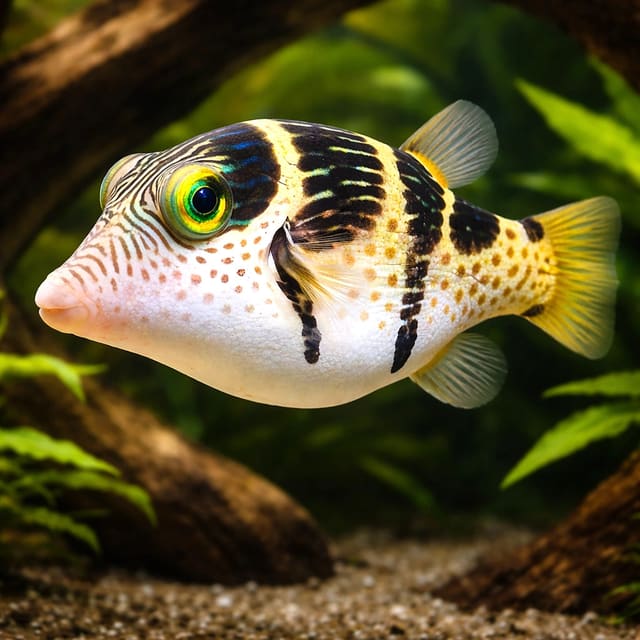
Valentini Puffer (Canthigaster valentini)
24–26°C · pH 7.9–8.3
£54.99
The Longspined porcupinefish (Diodon holocanthus) is a circumtropical marine porcupinefish in Diodontidae that reaches 50 cm. It suits keepers able to plan around that adult size; OATA’s broad marine fish-only guidance gives 24–27°C, pH 8.0–8.2 and 1.017–1.023 SG. Sold individually as one live fish per purchase.
Adult size is the maximum length this species reaches at full maturity (scientific sources). The livestock you receive will be younger and smaller. Product-photo provenance and any image-specific limitations are stated on the listing.
Diodon holocanthus
The Longspined porcupinefish (Diodon holocanthus) is a circumtropical marine porcupinefish in Diodontidae that reaches 50 cm. It suits keepers able to plan around that adult size; OATA’s broad marine fish-only guidance gives 24–27°C, pH 8.0–8.2 and 1.017–1.023 SG. Sold individually as one live fish per purchase.
Adult size is the maximum length this species reaches at full maturity (scientific sources). The livestock you receive will be younger and smaller. Product-photo provenance and any image-specific limitations are stated on the listing.
Maintain these water conditions for optimal health and vibrant colors
The Longspined porcupinefish (Diodon holocanthus) is a marine porcupinefish in the family Diodontidae. It has a circumtropical distribution across parts of the Atlantic, Indian and Pacific oceans, and FishBase records a maximum length of 50 cm total length for male or unsexed fish. It suits a keeper prepared to plan a mature saltwater aquarium around that full adult figure, maintain marine water consistently and choose companions around its natural feeding behaviour.
In nature, this benthopelagic fish occurs from shallow reefs and rocky ground to open muddy or soft-bottom habitats. FishBase usually records it at depths of 2–35 m, within a wider recorded depth range of 2–200 m. The species is described as solitary and a relatively poor swimmer, although it sometimes forms groups and young or sub-adult fish may form small groups. Juveniles are pelagic until roughly 6–9 cm and are often associated with floating Sargassum rafts.
The Long-spine porcupinefish summary also records the common names balloonfish, freckled porcupinefish, porcupine puffer and porcupine pufferfish. These names all refer here to the same species in Diodontidae. It is assessed as Least Concern on the IUCN Red List.
| Suits | Not suited to |
|---|---|
| A mature marine aquarium planned around a 50 cm fish | A freshwater aquarium or a system chosen only for the fish’s arrival size |
| A keeper able to maintain stable saltwater chemistry and biological filtration | An unfiltered or biologically immature aquarium |
| A carefully screened fish-only plan | A community relying on molluscs, sea urchins, hermit crabs or crabs remaining safe |
| Planning one animal as the default | Assuming a particular aquarium group size from occasional grouping in the wild |
One purchase supplies one live Longspined porcupinefish. The 50 cm figure is the maximum recorded adult length; plan the permanent aquarium around it whatever size the fish is on arrival. Build the long-term plan before purchase rather than treating the first aquarium as temporary accommodation without a defined route to an adult-sized system.
Sex is guaranteed only when the selected option explicitly states male or female. This Longspined porcupinefish listing has no sex-guaranteed option.
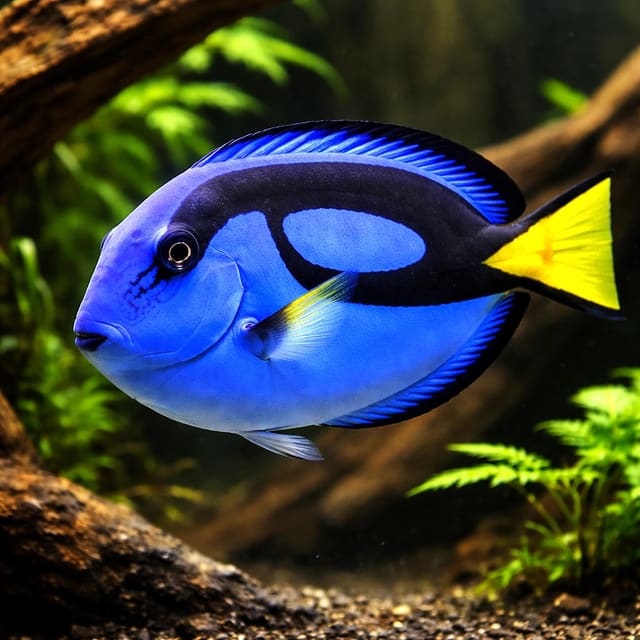
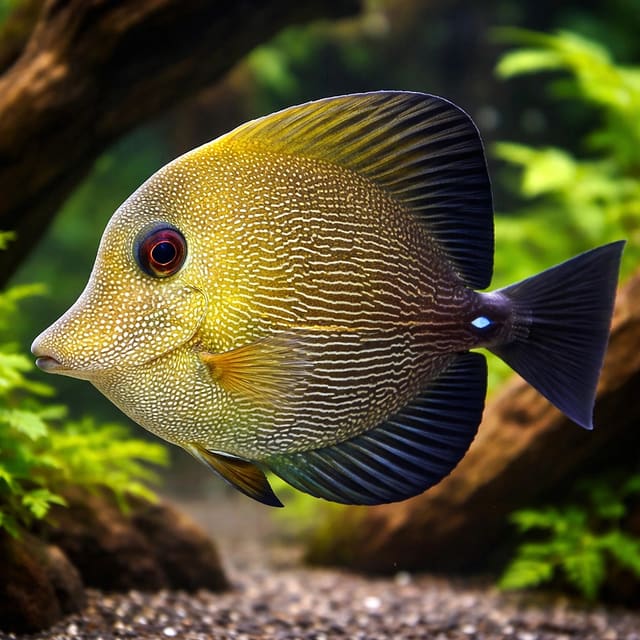
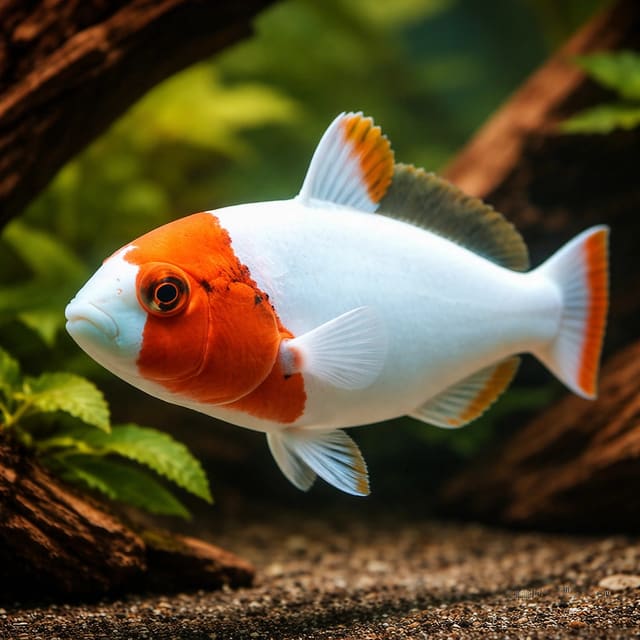
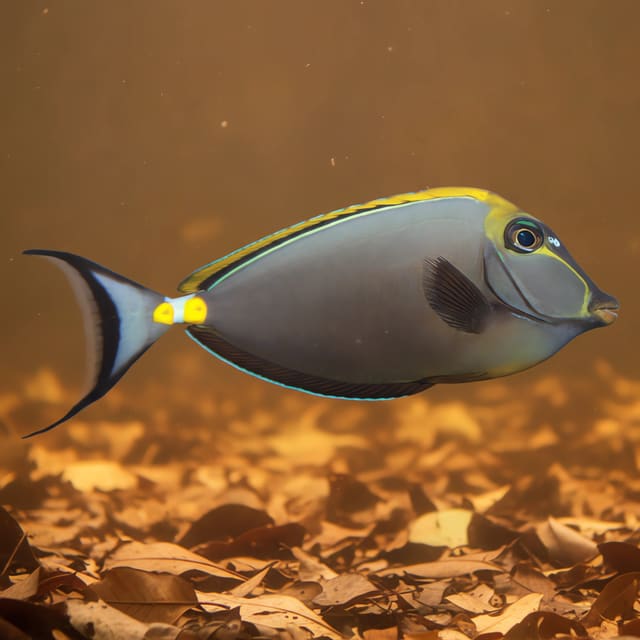
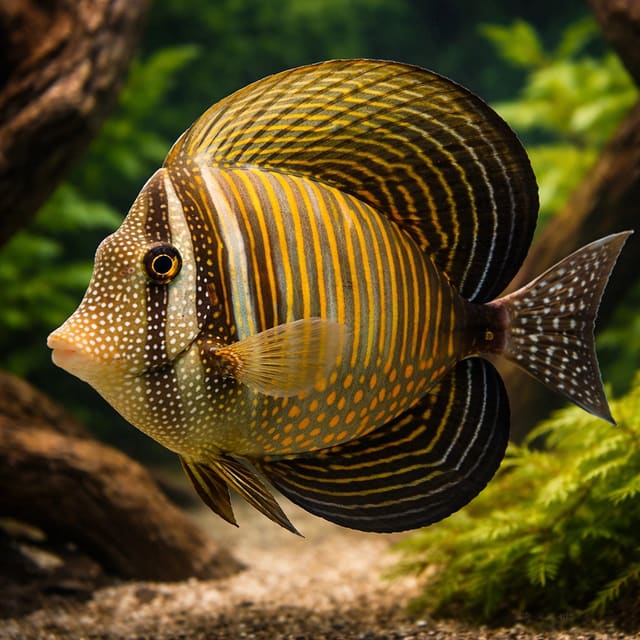
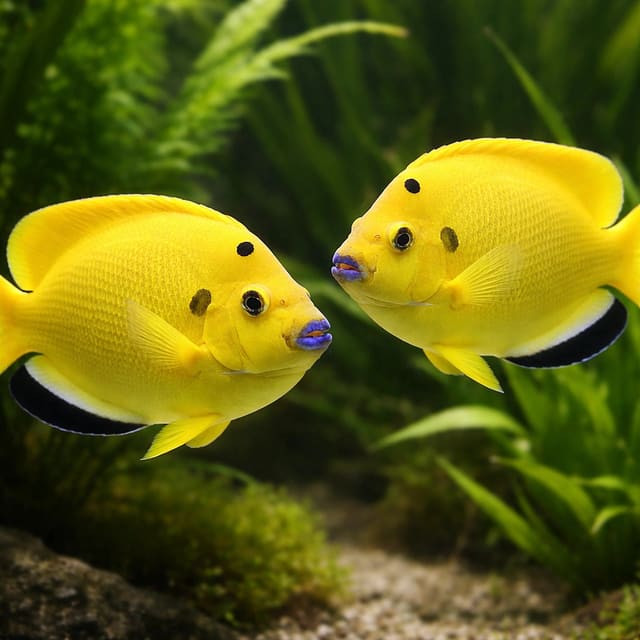
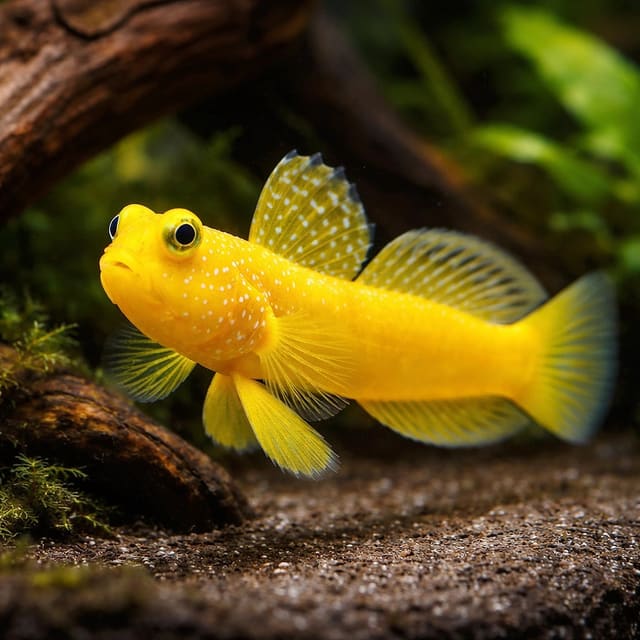
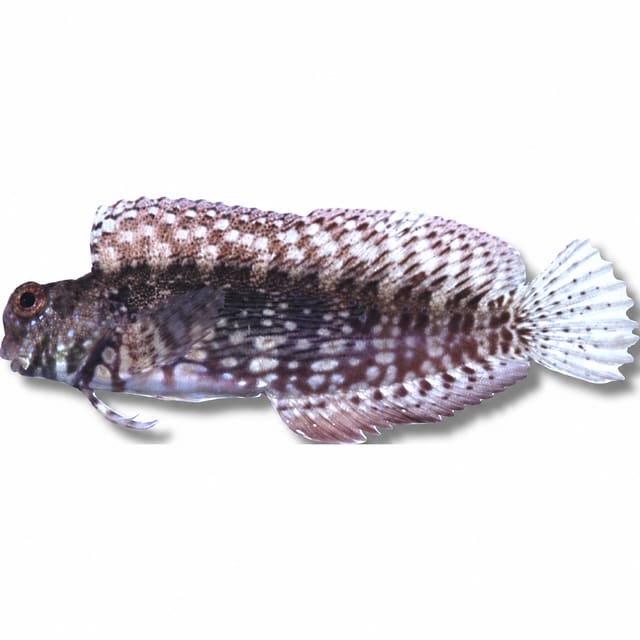
The gallery images are representative of this type of animal rather than photographs of the exact animal supplied, so colours can look slightly different from the live animal.
Use the identity, adult size and care requirements as the selection criteria rather than relying on apparent colour, sex or life stage in an image. If you are comparing different focal animals for an established aquarium, browse the centrepiece fish collection and assess each candidate against the aquarium’s dimensions, chemistry and inhabitants.
Plan for a fish that can reach 50 cm total length and maintain a fish-only marine aquarium at 24–27°C, pH 8.0–8.2 and salinity of 1.017–1.023 SG, equivalent to 23–30 ppt. The OATA marine aquarium sheet gives these as broad group guidance for fish-only systems. Keep ammonia and nitrite at zero mg per litre and nitrate at no more than 20 mg per litre.
| Decision | Plan |
|---|---|
| Adult space | Choose an aquarium that accommodates the fish fully grown at 50 cm |
| Social plan | Plan one animal by default and assess any multi-animal proposal individually |
| Main food basis | Use marine foods matching its recorded mollusc and crustacean prey |
| Filtration | Use a mature, maintained biological filter and test water regularly |
| Companions | Screen every proposed animal for space, water requirements and predation risk |
Judge an aquarium by its usable interior space for a 50 cm fish rather than by its litre capacity alone. Start with the recorded adult length, then consider the usable interior space after rockwork, the demands placed on filtration and the adult requirements of every other inhabitant. OATA advises choosing as large an aquarium as reasonably possible because a larger body of water is more stable and less susceptible to changes in temperature and pH.
Use 50 cm total length as the decisive space figure from the beginning. OATA advises buying, within reason, as large an aquarium as possible, ideally one that can accommodate the chosen fish once fully grown. Larger systems contain more water and are consequently more stable against variations in temperature and pH than small aquaria.
Place the aquarium on a flat, level surface or stand capable of taking the weight of the filled system indefinitely. Keep it out of direct sunlight and away from heat sources, draughts, loud noises, vibration and sudden movement. These choices reduce avoidable environmental variation and disturbance.
If the fish starts in a smaller aquarium, you must be prepared to move it to a bigger set-up as it grows. A sound plan identifies the adult accommodation before the animal is introduced. If a future larger system forms part of the plan, define its dimensions, support, equipment and maturation route in advance rather than relying on growth to set the deadline.
A useful final check is simple: the proposed aquarium should still make sense when the animal is considered as a 50 cm marine fish, the rockwork has been installed and all intended inhabitants are assessed at their adult requirements. If the plan starts with a smaller aquarium, decide the bigger set-up before purchase.
Build a marine environment with refuge, stable equipment and usable open space. FishBase records this species across shallow reefs, rocky substrata, open muddy areas and rich soft-bottom and coral-reef habitats. That range supports a functional layout rather than one rigid decorative formula.
OATA recommends rockwork, ideally living rock of some description, because it provides natural refuge for marine fish. Fine coral sand is its general substrate recommendation for a marine aquarium. Arrange both around the adult-space decision: a refuge is useful, but the completed structure must not prevent the aquarium from accommodating a fish that can reach 50 cm.
| System choice | What to decide |
|---|---|
| Fish-only | Use the fish-only water range and screen each fish for adult space and behaviour |
| Reef | Use the marine-and-invertebrate water range and assess every invertebrate against the porcupinefish’s recorded diet |
| Soft-bottom emphasis | Keep enough usable space after adding the intended substrate and rock refuge |
| Rockwork emphasis | Make the structure stable and retain space appropriate to the adult fish |
FishBase describes the species as a relatively poor swimmer. Design the rock refuge and the usable open space together.
Marine aquaria may be fish-only or include invertebrates such as corals. Water chemistry suitable for a reef does not by itself make every reef inhabitant compatible with this fish. Molluscs, sea urchins, hermit crabs and crabs are all recorded as prey, so the habitat decision and the livestock decision must be made together.
Inspect the completed layout before introduction. Confirm that the rockwork provides refuge, that the substrate suits the intended system, that equipment can operate correctly and that the aquarium still accommodates the planned adult fish. Make structural changes before the animal enters rather than repeatedly rearranging its environment afterwards.
Use a well set up and maintained biological filter in every aquarium for this fish. The RSPCA’s aquarium welfare guidance explains that fish release toxic ammonia into the water. Beneficial bacteria in a working filter convert ammonia to nitrite, which is also toxic, and then to the safer nitrate.
Prepare marine water with reverse-osmosis (RO) water. OATA recommends RO water for marine systems and considers it essential when invertebrates such as corals are kept. If mixing saltwater at home, dissolve specialised aquarium salt according to its manufacturer’s instructions; do not use table salt. Fast flow from a powerhead and heat from the heater will speed up dissolving the salt. Prepare water for later changes in a separate vessel and bring it to the required conditions before use.
After filling the aquarium and reaching the intended salinity and temperature, switch on the equipment. OATA advises leaving a newly set-up marine aquarium for 24–48 hours so the system can settle, the salt can dissolve fully, the correct temperature can be reached and equipment operation can be checked. Before adding fish, also confirm that ammonia and nitrite are both zero; the equipment settling period is only one part of readiness.
Add livestock slowly. OATA explains that the population of beneficial bacteria must increase when fish numbers and feeding increase. Stocking too quickly can leave too few nitrifying bacteria to process the added waste and may lead to new tank syndrome.
Continue maintaining the filter after the aquarium has matured. The biological process depends on a functioning filter and an established bacterial population, so a system that once tested correctly still needs regular testing and maintenance. Any rise above zero ammonia or nitrite is a reason to pause further livestock additions and restore suitable water quality.
For a fish-only aquarium, keep the water at 24–27°C, pH 8.0–8.2 and salinity of 1.017–1.023 SG, equivalent to 23–30 ppt. Ammonia and nitrite must remain at zero mg per litre, while nitrate must not exceed 20 mg per litre.
| Fish-only value | Target |
|---|---|
| Temperature | 24–27°C |
| pH | 8.0–8.2 |
| Salinity | 1.017–1.023 SG or 23–30 ppt |
| Ammonia | Zero mg per litre |
| Nitrite | Zero mg per litre |
| Nitrate | Up to 20 mg per litre |
For a marine aquarium containing invertebrates, use 24–26°C, pH 8.0–8.2 and salinity of 1.024–1.026 SG, equivalent to 32–35 ppt. Keep ammonia and nitrite at zero mg per litre. OATA gives nitrate at 5–10 mg per litre depending on species, carbonate hardness at 8–12 dKH and phosphate at 0.04–0.1 mg per litre depending on species. Hard-coral systems also require monitoring of parameters such as calcium and magnesium.
| Marine-and-invertebrate value | Target |
|---|---|
| Temperature | 24–26°C |
| pH | 8.0–8.2 |
| Salinity | 1.024–1.026 SG or 32–35 ppt |
| Ammonia and nitrite | Zero mg per litre |
| Nitrate | 5–10 mg per litre, depending on species |
| Carbonate hardness | 8–12 dKH |
| Phosphate | 0.04–0.1 mg per litre, depending on species |
Choose one coherent range for the actual aquarium rather than moving casually between fish-only and reef values. The intended inhabitants decide which range applies. If invertebrates form part of the plan, their individual requirements and their compatibility with the porcupinefish both need to pass screening.
Test before introduction and continue testing after livestock is added. If ammonia or nitrite is detectable, delay any new addition. If temperature, pH or salinity is outside the chosen range, restore stable conditions before introducing the fish. Use the hydrometer or refractometer for salinity and suitable test kits for the remaining values.
Base the diet on marine foods that match the species’ recorded animal prey. FishBase records Longspined porcupinefish feeding on molluscs, sea urchins, hermit crabs and crabs at night in nature. Foods based on suitable mollusc and crustacean material therefore provide the clearest basis for an aquarium menu.
In the wild it feeds at night. Use direct observation of the individual’s activity and food acceptance when organising aquarium feeding, while keeping the food itself aligned with the recorded prey. Set feeding times and amounts by watching how this individual feeds and by keeping ammonia and nitrite at zero.
Make dietary variety relevant rather than random. Different marine foods can contribute variety when they remain based on the mollusc and crustacean prey types recorded for this species. Keep the purpose of each item clear: it should help reproduce the kind of animal material the fish consumes, not simply add another format to the menu.
Track feeding together with water quality. OATA explains that increased feeding requires the filter’s beneficial-bacteria population to increase, just as adding more fish does. A feeding change should therefore be accompanied by regular checks of ammonia, nitrite and nitrate. Ammonia and nitrite must remain at zero, while nitrate must stay within the limit for the aquarium type.
When assessing a proposed food, start with one question: does its main content match the recorded prey of molluscs, sea urchins, hermit crabs and crabs? Then consider whether the fish accepts it and whether the aquarium continues to hold its target water values. This keeps the feeding decision tied to both natural biology and the capacity of the maintained system.
Confirm compatibility and water quality before the fish enters the aquarium. Ammonia and nitrite should both read zero, and temperature, pH and salinity should match the range chosen for the system. Increase livestock numbers slowly so the biological filter can adjust as fish numbers and feeding rise.
These arrival steps come from the Tropical Fish Co delivery and Live Arrival Guarantee policy. The continuous video from the sealed parcel onward provides the required view if a Live Arrival Guarantee claim is necessary. If anything has gone wrong, contact us the same day with the order number and video.
Continue checking the same decisive values after introduction: temperature, pH, salinity, ammonia, nitrite and nitrate. Keep ammonia and nitrite at zero and avoid adding further livestock quickly. The filter’s beneficial-bacteria population needs to respond whenever fish numbers or feeding increase.
Watch how the fish accepts foods matched to its recorded prey, and keep the aquarium plan centred on one animal by default. Do not turn an observation of temporary quietness, colour or grouping into a conclusion about sex, age or long-term compatibility. Use measured water values and the fish’s recorded biology to guide each practical decision.
Plan one Longspined porcupinefish as the default. FishBase describes the wild species as solitary, while also noting that it sometimes forms groups and that young or sub-adult fish may form small groups. Assess any proposed multi-animal arrangement individually.
OATA explains that exact marine stocking numbers vary with body size, species requirements, water parameters and compatibility. Many marine fish are also territorial, which reduces the number that can share an aquarium. Apply those factors to every named companion and assess all animals at their adult requirements.
| Screening question | Decision |
|---|---|
| Does the companion share the selected temperature, pH and salinity? | Proceed only when one stable range suits the complete aquarium |
| Can the aquarium accommodate every inhabitant at adult size? | Use the porcupinefish’s 50 cm maximum in the space calculation |
| Is the animal a mollusc, sea urchin, hermit crab or crab? | Avoid the combination because these are recorded prey |
| Is territorial or aggressive behaviour expected from the proposed fish? | Assess the individual species and the usable space before mixing |
| Does the plan depend on a fixed number of fish per litre? | Replace it with a species-by-species stocking assessment |
Check every proposed pairing for aggression, territorial behaviour and fin nipping. Leave out any companion that fails that check. Matching saltwater chemistry is necessary, but it is only one part of compatibility.
Predation is the clearest reason to leave an animal out. Molluscs, sea urchins, hermit crabs and crabs belong under avoid because FishBase records them as food. A larger specimen, a different arrangement of rockwork or matching chemistry does not remove its place on the recorded prey list.
For a proposed marine-fish companion, check the adult space, water range, territorial behaviour and dietary interaction together. Leave out any proposed companion that does not pass every one of these checks.
A fish-only marine plan provides the clearest starting framework for this species. Keep it at 24–27°C, pH 8.0–8.2 and 1.017–1.023 SG, then screen every fish companion for adult size, territorial behaviour and compatibility. The aquarium still needs to accommodate the porcupinefish at its recorded maximum of 50 cm.
A reef aquarium adds a second decision layer because it contains invertebrates. Its chemistry should follow the marine-and-invertebrate range of 24–26°C, pH 8.0–8.2 and 1.024–1.026 SG, with carbonate hardness at 8–12 dKH. However, matching those values does not make an invertebrate safe with the fish.
FishBase records all four as natural food. Avoid housing them with the porcupinefish rather than treating them as possible companions after routine screening. Their role as recorded prey is a direct biological conflict, not merely a difference in preferred water values.
Assess every other intended invertebrate individually before using a reef label for the complete aquarium. Add any other invertebrate only after assessing it individually against this fish’s diet and behaviour. Leave out any invertebrate that does not pass that assessment.
Water choice must follow the complete livestock plan. If the system contains invertebrates, use the marine-and-invertebrate values and monitor nitrate, carbonate hardness and phosphate as OATA directs. If it is fish-only, use the fish-only values. In either case, keep ammonia and nitrite at zero and increase stocking slowly so biological filtration can adjust.
FishBase records a maximum of 50 cm total length. Plan the aquarium around that full adult figure rather than around the fish’s size on arrival.
For this 50 cm marine fish, choose an aquarium that accommodates it fully grown after rockwork and substrate are installed; assess usable interior space, filtration and every inhabitant’s adult requirements rather than relying on a litre figure alone.
Plan one animal by default. FishBase describes the wild species as solitary, although it sometimes forms groups and young or sub-adult fish may form small groups, so any multi-animal aquarium needs an individual assessment.
Choose it only if you can plan for a 50 cm adult, maintain stable marine water and mature biological filtration, provide prey-matched food and screen every companion carefully; treat it as a substantial large-marine-fish commitment.
FishBase records this fish eating molluscs, sea urchins, hermit crabs and crabs at night in nature. Base its aquarium diet on suitable marine foods made from mollusc and crustacean material.
OATA’s marine fish-only guidance gives 24–27°C, pH 8.0–8.2 and salinity of 1.017–1.023 SG; keep ammonia and nitrite at zero mg per litre and nitrate at no more than 20 mg per litre.
FishBase describes this fish as solitary and a relatively poor swimmer, with young or sub-adult animals sometimes forming small groups. Screen each proposed pairing for territorial behaviour, aggression and fin risk rather than assuming a universal temperament.
Avoid molluscs, sea urchins, hermit crabs and crabs because FishBase records them as prey. Consider other marine fish only after checking shared water values, adult space, territorial behaviour and dietary interaction.
Tropical Fish Co packs live fish in pure oxygen inside an insulated poly box, using a heat pack when the weather calls for it, and sends tracking for the licensed live-animal courier; someone must be present to receive the parcel, must film continuously from the sealed parcel through the fish’s condition in its sealed bag, and must open and inspect the parcel the same day it arrives.
No reviews for this item yet. Bought one? Honest reviews only, good or bad.
What customers say about ordering from us
Easy website plenty of info on fish your buying great to pick a time slot
TRACEY DURRANT · 7 Oct 2026
Got some lovely fish thank you
Kevin Mackie · 7 Oct 2026
Reviews of our shop, collected by Judge.me, an independent third-party review collector. Newest first.