

Easy
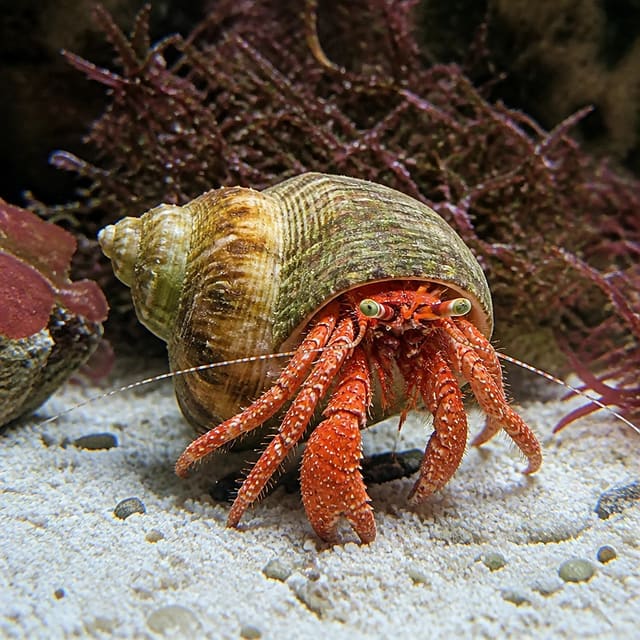
Clibanarius rutilus - Marine Aquarium Livestock UK
22–27°C · pH 8.1–8.4 · 60L
£14.99
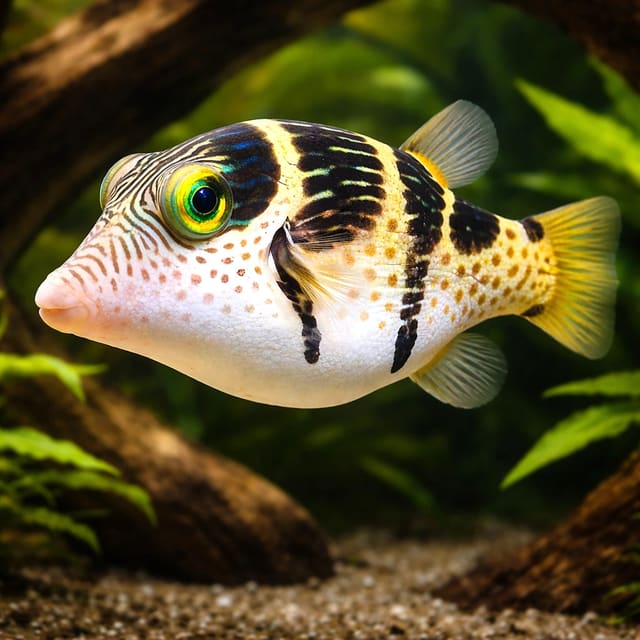
One unsexed supplier-grade M Valentini Puffer per quantity. Canthigaster valentini is a territorial 10-11 cm marine puffer for a mature 150-litre-plus aquarium, varied marine foods and a carefully assessed community.
Canthigaster valentini
Delivered on Thursday or Friday
Orders close every Friday at 5pm (UK time). We confirm the day in your tracking email.
One unsexed supplier-grade M Valentini Puffer per quantity. Canthigaster valentini is a territorial 10-11 cm marine puffer for a mature 150-litre-plus aquarium, varied marine foods and a carefully assessed community.
Valentini Puffer is the familiar aquarium name for Canthigaster valentini, a small but highly specialised marine puffer also called Valentin's sharpnose puffer or the black-saddled toby. Its alert hovering, pointed snout and bold dark saddles make it easy to recognise, but its modest adult length should not be mistaken for simple community-fish care. This species has a hard beak, a varied grazing and invertebrate diet, territorial behaviour and a real capacity to damage ornamental invertebrates.
Each quantity adds one unsexed fish at supplier grade M. The supplier has not provided a dependable centimetre band, sex, age, collection locality or captive-bred versus wild-caught status. Grade M is a trade size label, not an adult-size claim. FishBase records a maximum of about 11 cm total length, while OATA describes this species as unlikely to exceed roughly 10 cm. Plan the aquarium around a 10-11 cm adult rather than the size of a newly delivered fish.
This is best treated as an intermediate-to-experienced marine choice. It needs mature biological filtration, stable salinity, rockwork with open swimming routes, a varied diet and a keeper willing to assess tank mates individually. It is not reliably reef safe: shrimp, crabs, snails and other small invertebrates may be hunted, while hard corals and clams can be nipped. A fish that ignores one coral or cleaner shrimp today is not a permanent compatibility guarantee.
For one adult, Tropical Fish Co recommends a practical starting minimum of 150 litres with a useful horizontal footprint of about 90 cm or more. OATA gives 100 litres as a generic floor for one smaller puffer under 10 cm, but this species can reach 11 cm and OATA also advises larger aquaria when tank mates are present. The 150-litre recommendation therefore adds welfare and water-quality margin; it is not a claim that litres alone determine suitability.
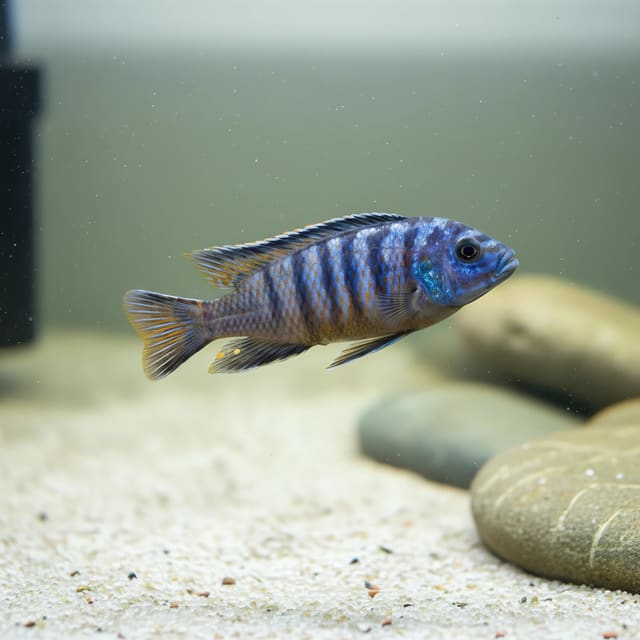
The five existing gallery images remain in place. Four are illustrative aquarium scenes and one is a supplier reference image. Some scenes include plants or driftwood and should not be read as a natural marine-habitat guide. The two-fish scene does not mean that two fish, a bonded pair or a sexed pair are included. None of the images shows the exact animal that will be dispatched or proves its size, sex, locality or source method.
| Care point | Working recommendation | Why it matters |
|---|---|---|
| Adult length | Plan for approximately 10-11 cm total length | Supplier grade M is temporary and is not a lifetime size |
| Aquarium | 150 L+ for one adult, with a footprint around 90 cm or longer | Provides grazing routes, retreat choices and water-quality margin |
| Care level | Intermediate / experienced marine keeper | Diet, beak wear, territoriality and reef risk all need active management |
| Temperament | Semi-aggressive and territorial | Conspecifics and similar-looking puffers are particular conflict risks |
| Temperature | 24-26°C | Use a stable point that also suits every tank mate |
| Specific gravity | 1.020-1.025 | Measure with a calibrated refractometer and avoid abrupt corrections |
| pH and hardness | pH 7.9-8.3; 8-12 dKH | Stable marine buffering supports health and predictable ammonia control |
| Water quality | 0 ammonia; 0 nitrite | Protein-rich foods can quickly increase waste if portions are excessive |
| Diet | Varied marine meaty foods, grazing foods and occasional nori | Variety reflects its broad natural diet and supports condition |
| Feeding | Two small measured feeds daily for most settled adults | Feed what is eaten within a few minutes and remove persistent waste |
| Tank region | All levels around rockwork and open reef edges | The fish hovers, explores surfaces and needs more than one route |
| Reef compatibility | With caution; never guaranteed | Crustaceans, molluscs, clams and some corals may be eaten or nipped |
These are stable home-aquarium targets, not instructions to change a newly delivered fish rapidly. Compare dispatch water with the destination aquarium before transfer. Temperature, salinity and pH differences should be managed calmly, and the transfer method must keep this puffer underwater so it is not encouraged to inflate with air.
The accepted name is Canthigaster valentini (Bleeker, 1853), in the puffer family Tetraodontidae. The World Register of Marine Species accepts that spelling and records Canthigaster valentinii as an unaccepted spelling that resolves to the same species. Using the correct name matters because misspellings can separate care records and make stock comparisons less reliable.
Valentini Puffer is the clearest current aquarium-trade name. Valentin's sharpnose puffer is the common name used by FishBase, while saddled puffer, black-saddled toby and black saddle toby also appear in hobby and search language. These are name bridges for one species, not different colour forms promised by this listing.
FishBase describes two prominent dark bars extending down the sides toward the belly. The pointed snout, compact puffer body, yellow-toned fins and orange-brown spotting also contribute to the familiar appearance. Colour and contrast can vary with maturity, stress, lighting, camera processing and individual condition, so the delivered fish may not match an illustrative image pixel for pixel.
The supplier records this item as Canthigaster valentini, category Salt Water Fish > Puffer Fish, grade M and pack quantity one. Tropical Fish Co has not performed a specimen-level anatomical identification or received collection documents for the individual that will be dispatched. The identity is supplier-declared and supported by the listing record, not a laboratory determination.
One selected quantity means one fish. The product is not sold as a pair, trio or group, and no sex option is supplied. Pufferfish sex can be difficult to determine outside breeding condition, so colour or body shape in a photo should not be used as a retail sex guarantee.
Grade M does not translate to a fixed centimetre measurement across every supplier shipment. It should be used to distinguish the supplier's trade grade, not to calculate adult stocking. If an exact dispatch length is essential for an established stocking plan, contact the store before ordering and wait for a current measurement rather than relying on the grade label.
Four gallery scenes are illustrative and one is a preserved supplier reference. The two-fish illustration does not prove a compatible pair or change the sale quantity. Plants and driftwood in an illustrative scene do not make this a freshwater fish, do not show its natural reef habitat and do not establish compatibility with plants, coral or invertebrates.
FishBase records this species across the Indo-Pacific: from the Red Sea south to Durban, South Africa, east to the Tuamotu Islands, north to southern Japan and south to Lord Howe Island. It is marine, reef-associated and recorded from about 1-55 m depth.
Adults occur among coral heads and rocks in subtidal lagoons and on seaward reefs. They hover around reef structure, inspect surfaces and take a broad range of foods. A home aquarium does not need to copy one photographed reef, but it should reproduce the functional choices: secure rockwork, open routes, moderate water movement, oxygenated water and places to retreat from view.
FishBase reports territorial males and fighting, while Gladstone's field experiments found mature females territorial and showed that males defended access to female territories. This does not mean every individual attacks every unrelated fish. It does mean that a small tank, a similar-looking puffer or an assumed pair can turn natural space defence into repeated conflict.
The species can occur in wild shoals and has a haremic social system, but a home aquarium is a restricted territory. A random purchase of two unsexed fish does not recreate the distribution, escape distance or social structure of a reef. Keep one unless a specialist has planned a much larger system, individual identities can be assessed and a separation tank is ready.
Wild groups may include the non-toxic filefish Paraluteres prionurus, which resembles this poisonous puffer. That evolutionary relationship is interesting, but it is not a tank-mate recommendation. Similar appearance can complicate identification, and aquarium compatibility still depends on space, behaviour and the exact animals involved.
Tropical Fish Co recommends 150 litres or more for one adult, with a horizontal footprint around 90 cm or longer. The figure is a conservative husbandry recommendation derived from the species' 10-11 cm adult size, active exploring behaviour and feeding load. OATA's 100-litre generic minimum applies to one smaller puffer under 10 cm and explicitly increases when other fish are present.
Choose a larger aquarium when the community contains active fish, when the aquascape removes substantial swimming room or when nutrient export is limited. A high but narrow aquarium can hold the same nominal litres while providing less usable territory than a longer system. Use the tank volume calculator to estimate actual water volume after rock, sand and equipment displacement.
Build stable marine rockwork with caves, overhangs and visible grazing surfaces, but keep open lanes around and above it. The fish should be able to leave a feeding area without passing the same territorial tank mate every time. Secure rocks before livestock enters; a puffer should not be able to undermine an unstable stack while investigating crevices.
A thin marine-appropriate sand layer can be used if it is kept clean. OATA recommends moderate flow and good surface movement so detritus does not collect. Provide calmer pauses behind rock as well as moving water. Fit a secure lid or cover to reduce both escape risk and unsafe access by hands or pets.
Use mature biological filtration sized for the full community. Mechanical filtration and a protein skimmer can help remove waste, but neither makes overfeeding harmless. Clean trapped food before it decays, maintain pumps and keep oxygen exchange reliable, especially during warm weather or after adding livestock.
OATA provides practical marine-puffer guidance of 24-26°C, specific gravity 1.020-1.025, pH 7.9-8.3 and carbonate hardness 8-12 dKH. It also requires zero measurable ammonia and nitrite. These values are useful working boundaries, but the best target is a stable point shared safely by every inhabitant.
| Parameter | Working range | Routine check |
|---|---|---|
| Temperature | 24-26°C | Check daily and plan for heater failure and summer heat |
| Specific gravity | 1.020-1.025 | Use a calibrated refractometer; match source water during acclimation |
| pH | 7.9-8.3 | Look for trends rather than correcting a single reading abruptly |
| Carbonate hardness | 8-12 dKH | Test consistently before changing buffer or dosing |
| Ammonia | 0 mg/l | Any detection needs immediate investigation and action |
| Nitrite | 0 mg/l | Do not add this fish to an uncycled or unstable aquarium |
| Nitrate | Keep well controlled; OATA's group ceiling is below 50 mg/l | Aim lower where coral or other sensitive inhabitants require it |
OATA's nitrate figure is a ceiling for the broad puffer and boxfish group, not an ideal reef target. If the aquarium contains coral or sensitive invertebrates, use the stricter requirement of those animals. The water matcher can help compare planned livestock, but regular test results remain the authority for the actual system.
Evaporation removes fresh water and leaves salt behind, so specific gravity rises. Replace evaporated water with suitable fresh reverse-osmosis water, not mixed saltwater. Use correctly mixed and temperature-matched saltwater for planned water changes.
A stable reading within a suitable range is usually safer than repeated abrupt corrections. Verify the test method, measure again and address the cause. Sudden salinity, pH or temperature changes can be more stressful than the original modest drift.
FishBase describes a broad wild diet led by filamentous green and red algae and tunicates, with smaller amounts of coral, bryozoans, worms, echinoderms and molluscs. In captivity, that means varied marine foods rather than a single shrimp-only or pellet-only routine.
OATA recommends meaty frozen foods such as mysis, enriched brine shrimp or krill for smaller puffer species, with occasional nori. Offer appropriately sized shell-on or firm marine foods that require biting, but do not give oversized hard items the fish cannot handle. The purpose is natural feeding and beak wear, not forcing the fish to tackle a large shell.
| Food type | Use | Caution |
|---|---|---|
| Mysis, enriched brine shrimp or krill | Marine meaty-food rotation | Choose a particle size the fish can take cleanly |
| Appropriately sized shell-on marine foods | Encourages biting and beak wear | Use safe marine sources and remove uneaten remains |
| Quality marine pellets | Measured staple after acceptance | Do not starve a new fish while waiting for pellet conversion |
| Nori or suitable marine-algae food | Occasional plant component | Remove uneaten sheets before they break down |
| Live ornamental shrimp, crabs or snails | Not a controlled staple | They may be hunted and are not safe display companions |
| Feeder fish or mammal meat | Do not use | They do not form an appropriate routine marine diet |
For a settled adult, begin with two small measured feeds a day and adjust to body condition, age, competition and water quality. Offer only what is eaten within a few minutes. A newly arrived fish may need smaller, carefully placed portions while it learns the feeding routine.
Do not measure success by food entering the aquarium. Confirm that this individual chews and swallows. Fast tank mates can take every piece, while food trapped behind rock raises nutrients without feeding the puffer. Split a portion between two areas if competition is uneven.
A puffer's fused teeth continue to wear through use. Difficulty picking up food, dropping pieces repeatedly, visible overgrowth or declining body condition requires experienced assessment. Do not attempt a home beak trim without veterinary or genuinely qualified specialist guidance.
Describe this fish as semi-aggressive and territorial, not uniformly peaceful and not a guaranteed bully. It may live without incident beside unrelated, robust marine fish when space and food are adequate, yet react strongly to another Canthigaster or a similarly shaped competitor.
One fish avoids the most predictable conspecific conflict and matches the supplier's single-fish sale unit. A larger aquarium alone does not identify sex or create a stable pair. Multiple Valentini Puffers should be a specialist project with visual barriers, feeding access, an observation plan and an immediately available separation system.
Repeated chasing, cornering, torn fins, a fish refusing open water, missed feeds, rapid breathing or persistent darkening should not be dismissed as normal hierarchy. Check water quality first, then separate the animals if pressure continues. Waiting for obvious injury can turn a reversible stocking error into a welfare emergency.
Choose tank mates by adult size, shape, speed, feeding behaviour and territory, not by a generic peaceful or community label. Suitable candidates are usually robust but not relentlessly aggressive marine fish that cannot swallow the puffer and will not monopolise every food path.
A clownfish may coexist in an appropriately sized aquarium, but there is no blanket guarantee. Species, pair status, established territory and individual behaviour all matter. Introduce deliberately and have a separation plan. Browse the salt-water fish collection for comparison, then verify every proposed species rather than treating the collection as a compatibility list.
| Potential companion | Assessment | Main issue to check |
|---|---|---|
| Robust, suitably sized clownfish | Possible after exact-species and territory checks | Established pair aggression and feeding competition |
| Calm, suitably sized wrasses or dwarf angels | Conditional | Activity, nipping, aquarium length and food access |
| Slow or long-finned fish | Avoid unless a specialist can justify the match | Fin nipping and inability to escape attention |
| Another Valentini or similar sharpnose puffer | High risk | Territory, sex uncertainty and similar body shape |
| Large predators or highly aggressive triggers | Avoid | Predation, injury and chronic stress |
| Shrimp, crabs, snails and small molluscs | Prey risk | Natural feeding behaviour |
The marine puffer-fish collection and Canthigaster collection help compare identity and care. They do not imply that two listed puffers belong together. Always compare adult size, territory and feeding behaviour before purchase.
No puffer should be sold as reliably reef safe. OATA states that puffers may prey on small invertebrates such as shrimp and crabs, and some may nip hard corals and clams. FishBase's wild-diet record also includes coral, molluscs, echinoderms and other reef animals. That evidence is stronger than one keeper's report of a temporarily well-behaved individual.
Ornamental shrimp, small crabs, snails, worms, clams and other accessible invertebrates are at risk of investigation or predation. Fleshy or hard coral tissue may be sampled. The exact outcome varies by fish, but variation is not safety.
Some experienced keepers accept the risk in a large established reef and monitor closely. That is a personal risk decision, not a retailer guarantee. Do not choose this fish if losing a particular coral, clam, shrimp or clean-up-crew animal would be unacceptable.
Feeding well may reduce hunger but cannot remove natural biting and foraging behaviour. Keep a capture and rehoming plan before introduction. Rock-filled reef displays can make a problem fish difficult to remove.
Prepare the aquarium before dispatch. Confirm that temperature and salinity are stable, ammonia and nitrite are zero, the lid is secure and territorial fish can be separated. Read the current delivery and Live Arrival Guarantee guidance before ordering because dispatch days, postcode coverage and claim evidence can change.
OATA advises keeping pufferfish underwater during transfer so they do not swallow air and inflate. Do not provoke puffing for a photograph or to test the fish. Use a suitable submerged container when practical and avoid handling with bare hands.
Switch off bright display lights, compare temperature and specific gravity, then use an acclimation method appropriate to the measured difference and current store instructions. Do not pour transport water into the display. Extended acclimation is not automatically safer if waste chemistry in the opened bag is deteriorating.
Observe breathing, swimming, colour, appetite, waste and interactions at every feed. Offer familiar small foods in a low-competition area. A separate quarantine system is valuable when properly cycled and managed; an uncycled container is not a safe quarantine simply because it is separate.
Healthy fish should have clear eyes, intact skin and fins, steady breathing, controlled swimming and an active feeding response. Puffer body shape can make weight loss harder to notice, so compare the profile behind the head and along the abdomen from week to week.
| Observation | Possible concern | First response |
|---|---|---|
| Rapid or laboured breathing | Low oxygen, ammonia, gill irritation, stress or disease | Test water immediately and improve gas exchange safely |
| Repeated food dropping | Particle size, beak problem, mouth injury or illness | Offer an appropriate food and seek qualified assessment if persistent |
| Persistent hiding or cornering | Harassment, excessive flow, bright exposure or poor water | Check parameters and observe tank-mate behaviour |
| White spots, excess mucus or flashing | Parasite, irritation or water-quality problem | Isolate appropriately and obtain marine-fish treatment advice |
| Inflation | Defensive stress response | Remove the trigger and do not encourage a repeat |
Do not medicate a display aquarium blindly. Confirm the likely problem, calculate true water volume and check puffer sensitivity, invertebrates and biological filtration before treatment. Seek an aquatic veterinarian or experienced marine-fish professional when diagnosis is uncertain.
Many signs overlap. Testing ammonia, nitrite, temperature, salinity and pH is a faster first step than guessing from appearance alone. Record results so a professional can see the trend rather than one isolated number.
Puffing is a defence response, not enrichment. Never chase, net or expose the fish to air just to watch it inflate. If relocation is necessary, reduce stress, keep the animal submerged and use equipment that protects both fish and keeper.
The species is poisonous to eat. It also has a sharp beak capable of a painful bite. Do not eat it, do not allow children or pets access to the aquarium and avoid bare-hand capture. Wash hands before and after aquarium work, cover cuts and never start a siphon by mouth.
The reviewed species source describes the fish as poisonous to eat; it does not describe a venom-delivery apparatus. The practical rule is simple: do not ingest the fish, do not provoke it, and handle aquarium water and equipment hygienically.
A clear submerged container is often safer than prolonged chasing with a net. Know which rocks can be moved safely, isolate powerheads during capture and restore circulation immediately afterwards. Do not dismantle an unstable aquascape around a stressed fish.
FishBase records an oviparous, territorial and haremic system with demersal spawning. Field research shows that female territories and male access are central to the social structure. These facts explain behaviour, but they do not create a practical home-breeding recipe.
OATA notes that breeding puffers in ordinary home aquaria is unlikely because the system does not provide the necessary territories and larvae require microscopic food while facing pumps, filters and predation. This product is unsexed, so no breeding pair is promised.
The reviewed authoritative sources do not provide a dependable species-specific lifespan number suitable for a retail promise. OATA states that puffers can live for many years in a mature aquarium with good water quality. Treat the purchase as a long-term commitment, but avoid repeating an exact age copied from an unsourced retailer page.
No. The supplier offers grade M without a sex option, and most puffers are difficult to sex unless in breeding condition. Gallery colour, relative size and the presence of two illustrated fish do not create a reliable male-female identification.
Qualifying first-time customers can use WELCOME10 for 10% off a first order. The discount does not change husbandry suitability, and the Live Arrival Guarantee remains subject to the current delivery, receiving, evidence and contact requirements. Check the live terms before checkout.
Plan for approximately 10-11 cm total length. FishBase records up to 11 cm, while OATA describes the species as unlikely to exceed about 10 cm. Supplier grade M is not the adult length.
Tropical Fish Co recommends 150 litres or more for one adult, ideally with a footprint around 90 cm or longer. OATA's 100-litre generic floor is for one smaller puffer under 10 cm; use more space with tank mates.
They are semi-aggressive and territorial rather than uniformly aggressive. Conflict is most likely with conspecifics and similar-looking puffers, but any cramped or competitive stocking can fail.
Do not assume so. The product is unsexed and wild social structure does not make a random captive pair safe. Multiple fish need specialist planning, a much larger system and a ready separation option.
No puffer is reliably reef safe. This species may hunt shrimp, crabs, snails and other invertebrates and may nip hard corals or clams. Individual variation is not a guarantee.
It may coexist with a suitably sized clownfish in a well-planned aquarium, but species, pair territory, tank size and individual behaviour matter. Introduce carefully and be prepared to separate.
Use a varied rotation of appropriately sized marine foods such as mysis, enriched brine shrimp, krill, quality marine pellets, suitable biting foods and occasional nori. Do not rely on feeder fish or mammal meat.
Most settled adults can begin with two small measured feeds daily. Watch the fish eat, adjust to body condition and competition, and remove food that remains after a few minutes.
They should not. Inflation is a stress and defence response. Never provoke it for entertainment or a photograph, and keep the fish underwater during transfer.
Authoritative sources reviewed for this page support a many-year commitment but not a precise species-specific retail number. Good water, correct diet, beak care and compatible stocking all influence longevity.
No sex is promised. The supplier provides an unsexed grade-M fish, and most puffers are difficult to sex outside breeding condition.
The supplier gives grade M but no dependable centimetre band. Contact the store before ordering if a current exact measurement is essential, and do not use dispatch size as the adult stocking size.
No. Four images are illustrative scenes and one is a supplier reference. The two-fish scene does not mean a pair is included; each quantity is one unsexed fish.
It is poisonous to eat and can bite with its beak. Do not ingest it, provoke it or capture it with bare hands. Keep it submerged during transfer and use hygienic aquarium practices.
Qualifying first-time customers can use WELCOME10 for 10% off a first order. Eligible livestock is covered only under the current delivery, receiving, evidence and contact terms, so read the live guidance before ordering.
This page separates supplier facts from species and husbandry evidence. The supplier establishes the product identity, grade and sale unit. Taxonomy, wild biology and aquarium recommendations are checked against the following sources rather than copied from another retailer:
Source material describes populations and care principles, not the exact supplied individual. Current price, stock, dispatch availability and offer eligibility are shown by the live selected variant and checkout rather than frozen into this description. For broader planning, the care-guide hub provides additional aquarium preparation resources.
No reviews yet. Bought this fish? You'd be the first — honest reviews only, good or bad.
22–27°C · pH 8.1–8.4 · 60L
22–26°C · pH 8.1–8.4 · 75L
22–27°C · pH 8.1–8.4 · 60L
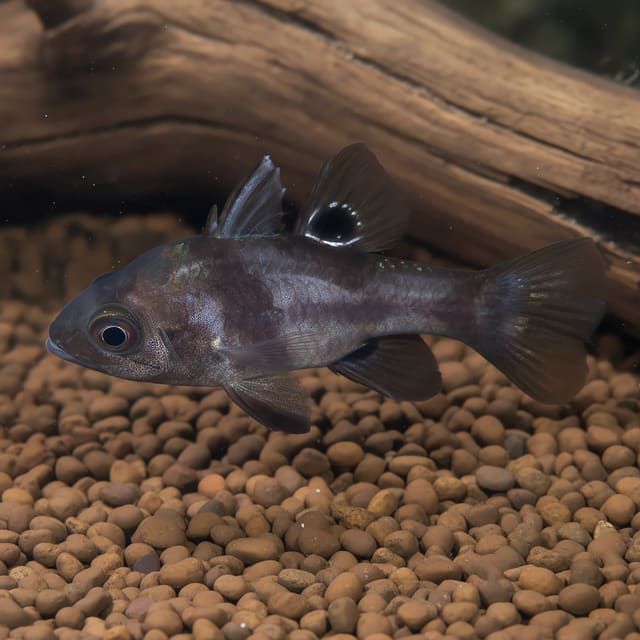
24–28°C · pH 8–8.4 · 200L
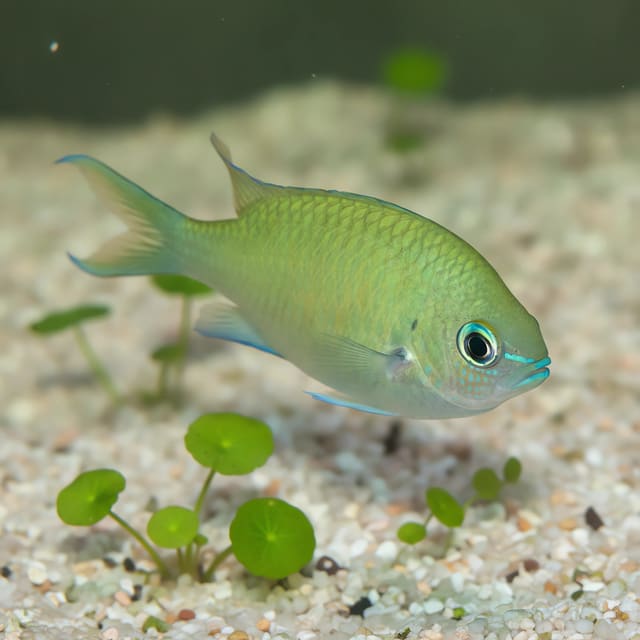
24–27°C · pH 8.1–8.4 · 150L
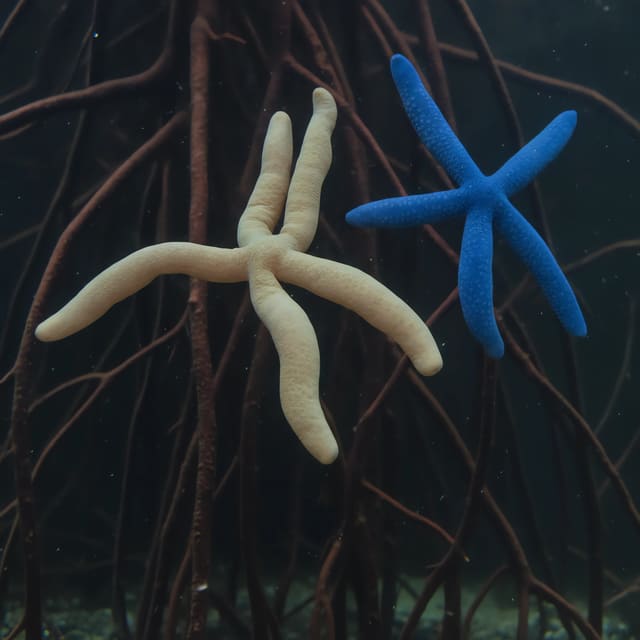
24–28°C · pH 8.1–8.4 · 300L
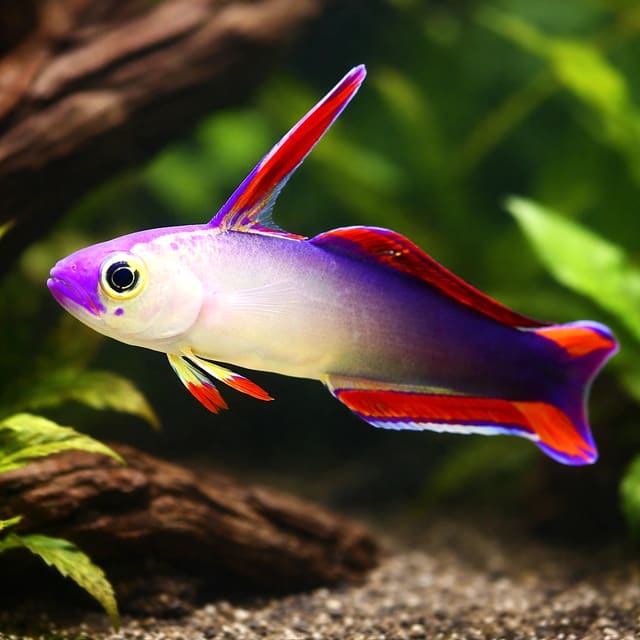
24–27°C · pH 8.1–8.4 · 100L
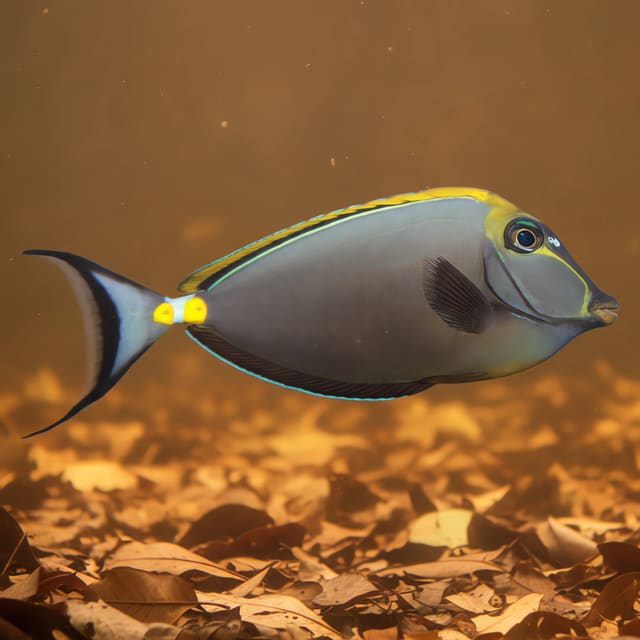
24–27°C · pH 8.1–8.4 · 900L
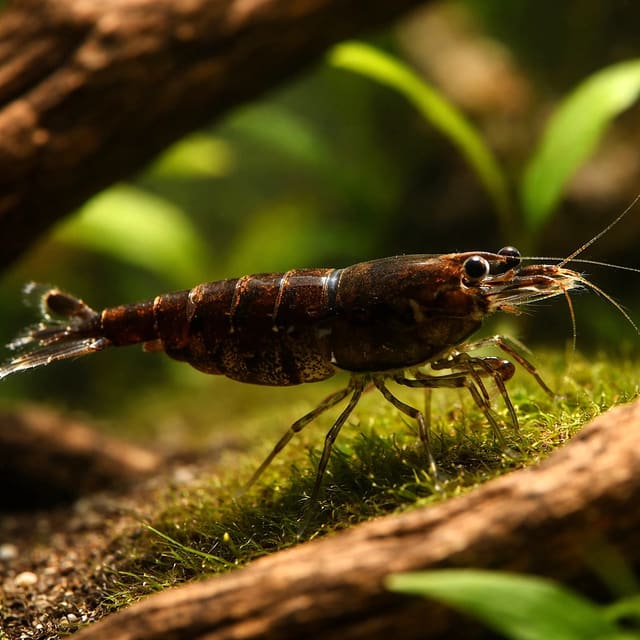
18–26°C · pH 6.5–8 · 30L
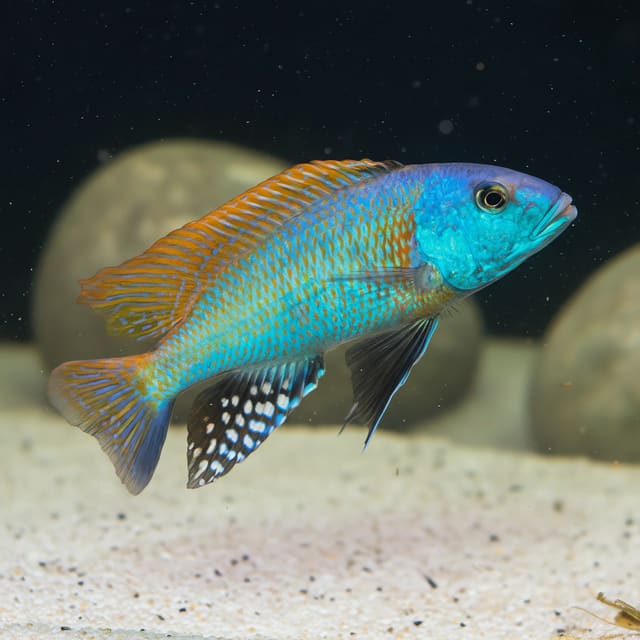
23–27°C · pH 7.4–8.4 · 1000L
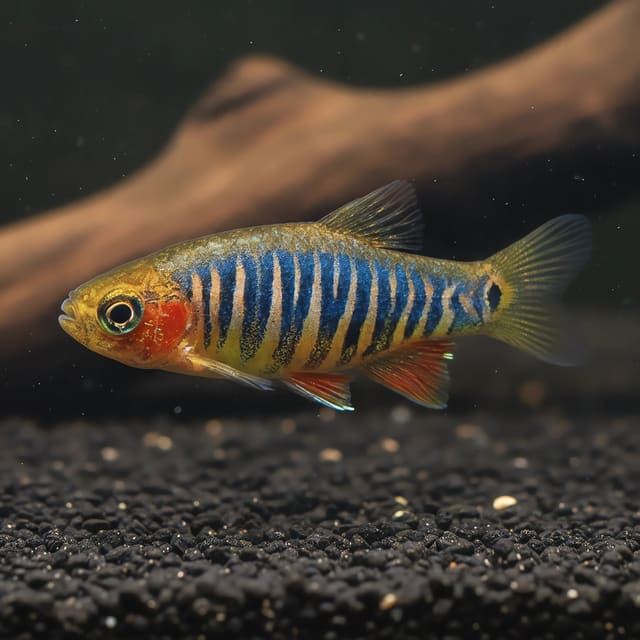
20–24°C · pH 7–8 · 45L
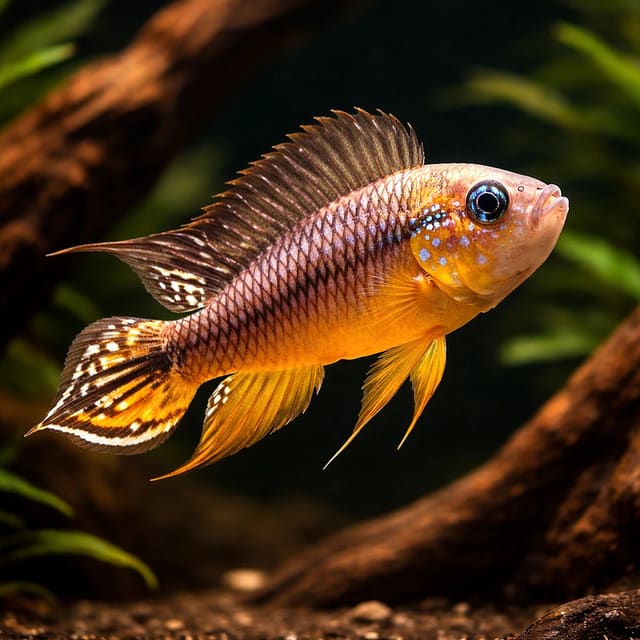
24–28°C · pH 5.5–7 · 60L
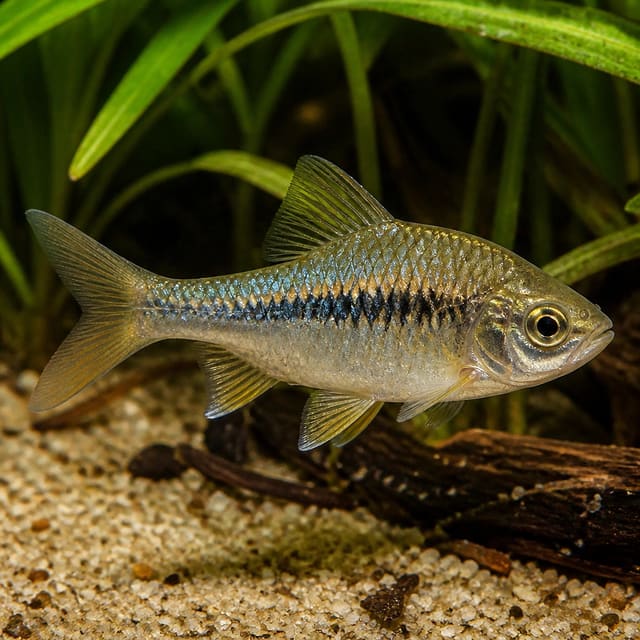
18–25°C · pH 6–8 · 100L
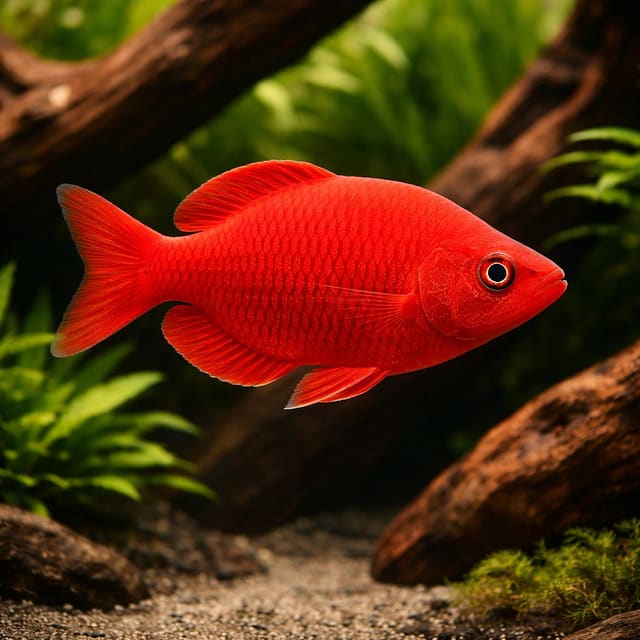
24–28°C · pH 7–8 · 120L
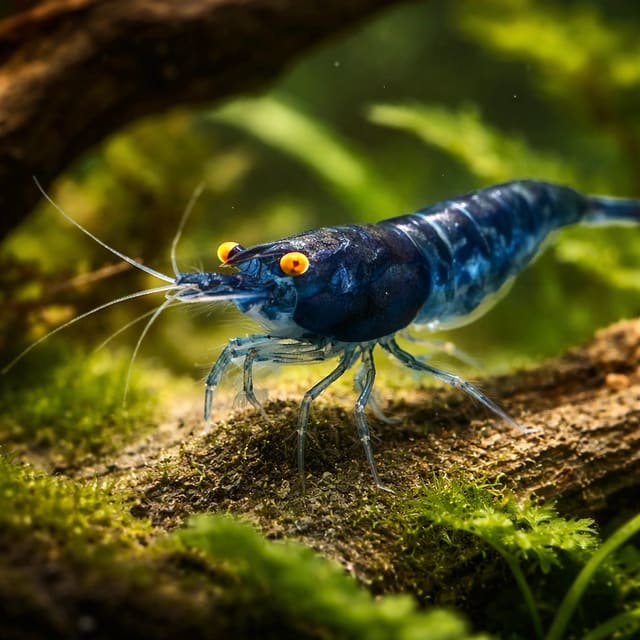
18–28°C · pH 6.5–8 · 20L
24–27°C · pH 7.5–8.8 · 150L