Longnose Hawkfish (Oxycirrhites typus)
24–26°C · pH 8–8.2
£89.99
Falco Hawkfish (Cirrhitichthys falco), also known as the dwarf hawkfish, is a small reef hawkfish reaching 8 cm that rests at the base of rock and coral. One live fish per purchase, best kept singly in an established marine or reef aquarium.
Adult size is the maximum length this species reaches at full maturity (scientific sources). The livestock you receive will be younger and smaller. Product-photo provenance and any image-specific limitations are stated on the listing.
Cirrhitichthys falco
Falco Hawkfish (Cirrhitichthys falco), also known as the dwarf hawkfish, is a small reef hawkfish reaching 8 cm that rests at the base of rock and coral. One live fish per purchase, best kept singly in an established marine or reef aquarium.
Adult size is the maximum length this species reaches at full maturity (scientific sources). The livestock you receive will be younger and smaller. Product-photo provenance and any image-specific limitations are stated on the listing.
Maintain these water conditions for optimal health and vibrant colors
The falco hawkfish, Cirrhitichthys falco, is a small Indo-Pacific reef fish with a maximum recorded length of 8 cm, also known as the dwarf hawkfish. Each purchase supplies one live falco hawkfish. It spends much of its time resting at the foot of rock and coral rather than swimming in open water, and it suits an established marine aquarium, fish-only or reef, where it can be the only hawkfish.
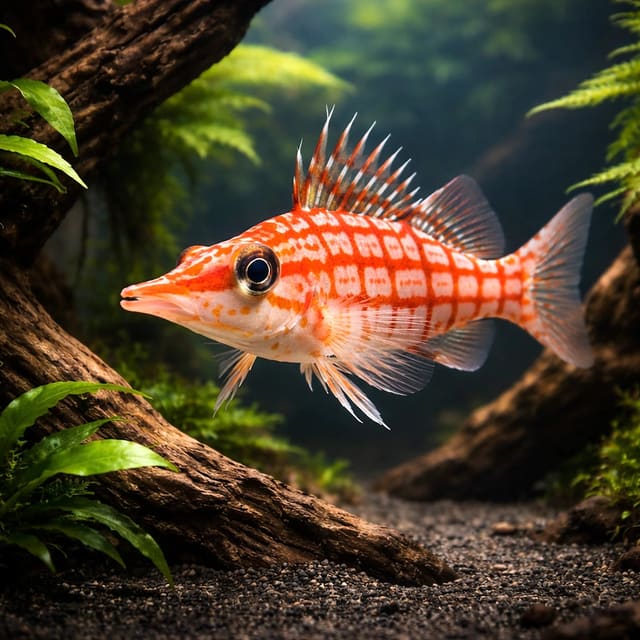
Its appeal is the combination of a compact size and a big personality. The body is white with red to orange-red blotches, the head carries bold red bars, and the dorsal spines end in small feathery tufts. It sits at the base of the rockwork with its large eyes following movement in the room, moves out when food arrives and settles again a moment later.
| Suits | Think again if |
|---|---|
| An established marine aquarium, fish-only or reef | The aquarium is brand new and still maturing |
| Keepers who want a small fish with plenty of character | You want a fish that swims constantly in open water |
| A community of calm fish too large to be eaten | You keep small ornamental shrimp you would hate to lose |
| A single hawkfish as the centrepiece of the lower reef | You hope to build a group or harem of hawkfish |
| Feature | Detail |
|---|---|
| Scientific name | Cirrhitichthys falco |
| Other common name | Dwarf hawkfish |
| Family | Cirrhitidae (hawkfishes) |
| Maximum recorded length | 8 cm total length |
| Wild range | Indo-Pacific, from the Maldives to Samoa, north to the Ryukyu Islands and south to the southern Great Barrier Reef and New Caledonia |
| Wild habitat | Coral reefs from shallow coastal flats to outer slopes, usually resting at the bases of coral heads |
| Wild depth and temperature | 4–46 m, usually 10–20 m, at 24–28 °C (field records, not aquarium settings) |
| Social life in the wild | Usually haremic; occasionally in pairs, sometimes solitary |
| Planning water values | 24–26 °C and pH 8.0–8.2, from OATA's general marine guidance |
| Sold as | One live fish per purchase |
You receive one falco hawkfish. Sex is guaranteed only when the selected option explicitly states male or female. This Falco Hawkfish listing has no sex-guaranteed option. In the wild the species usually lives in harems, with one male and several females, so two fish of unknown sex bought together could turn out to be two males competing for the same space. A single fish is the straightforward and reliable plan.
Plan the aquarium for the adult. At 8 cm this is one of the easier hawkfish to house, but it still needs a stable, fully matured marine system and a layout that gives it sheltered footholds low on the reef.
Day to day it is an easy fish to enjoy. It keeps to a few favourite spots, comes forward when food goes in and spends the rest of its time watching the aquarium and the room beyond it. Learn those habits in the first weeks and you will notice quickly if anything changes.
Because it lives low on the reef, a falco hawkfish uses a different part of the aquarium from fish that spend their time in open water. That makes it a useful addition to a community built around calm midwater species, provided those fish are too large to be eaten and leave the lower rockwork to the hawkfish.
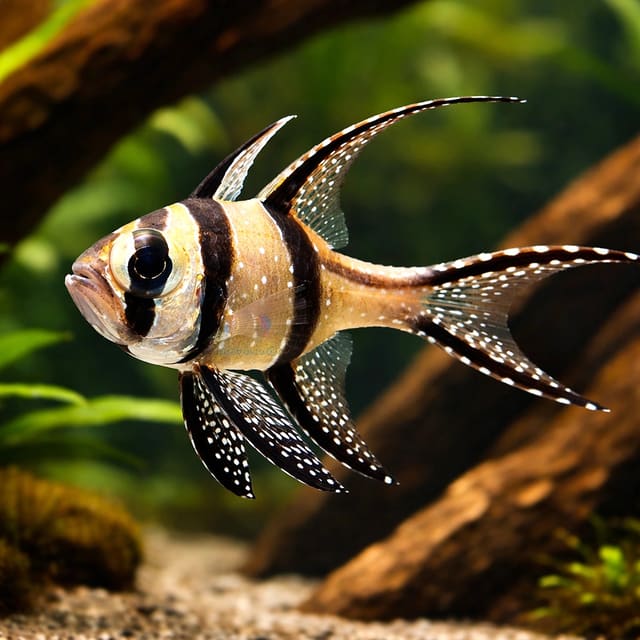
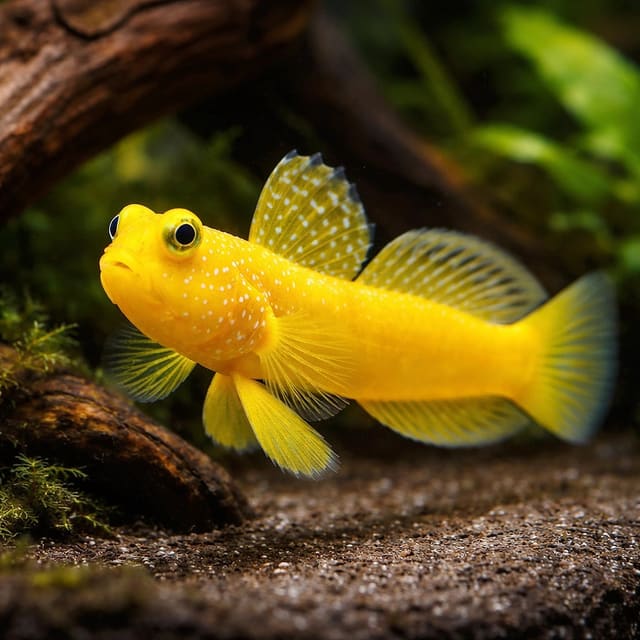
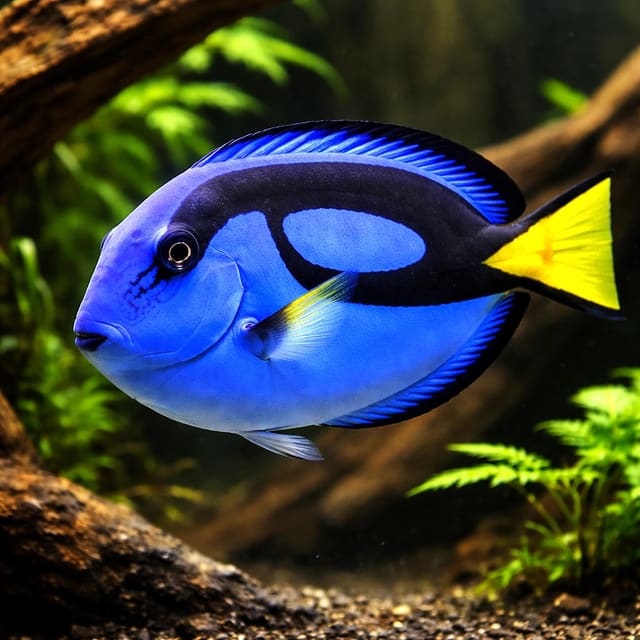
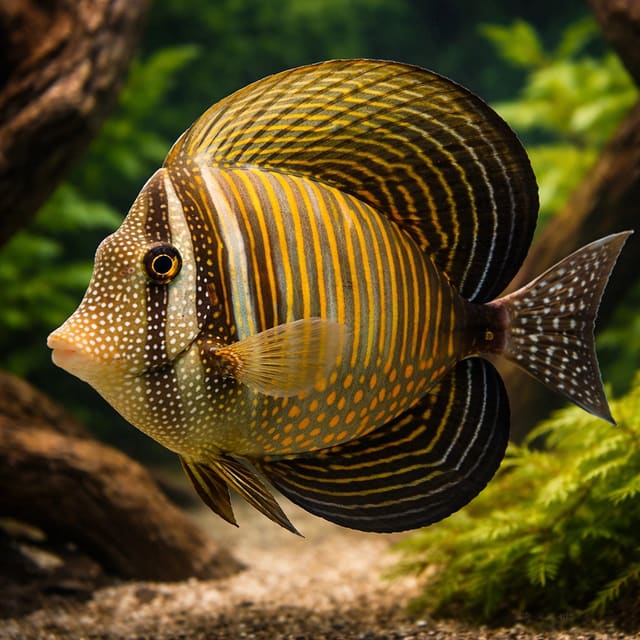
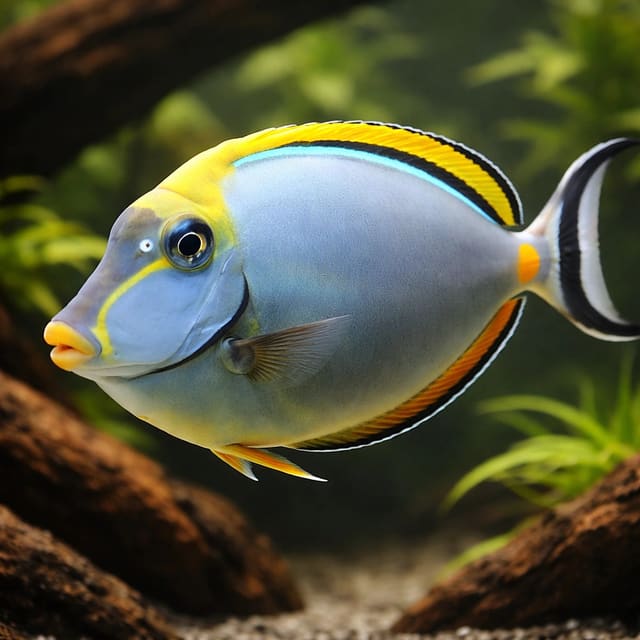
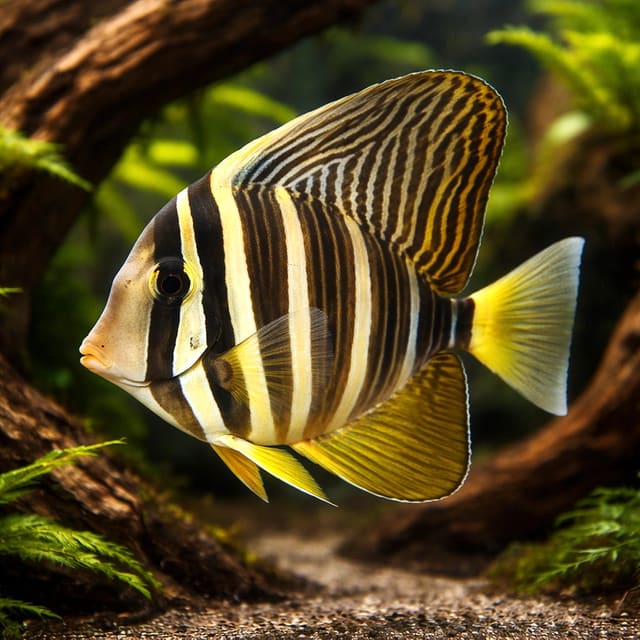
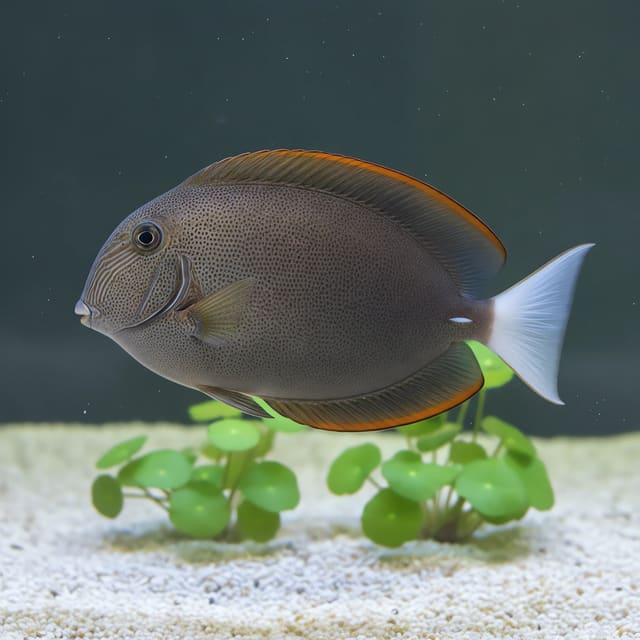
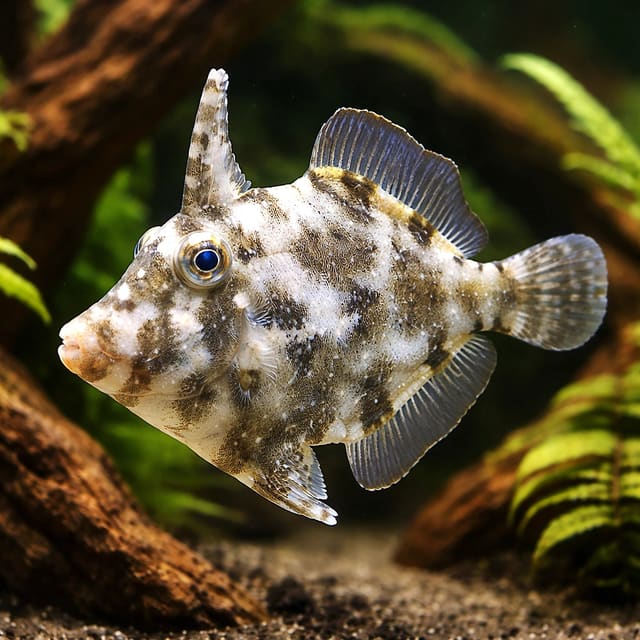
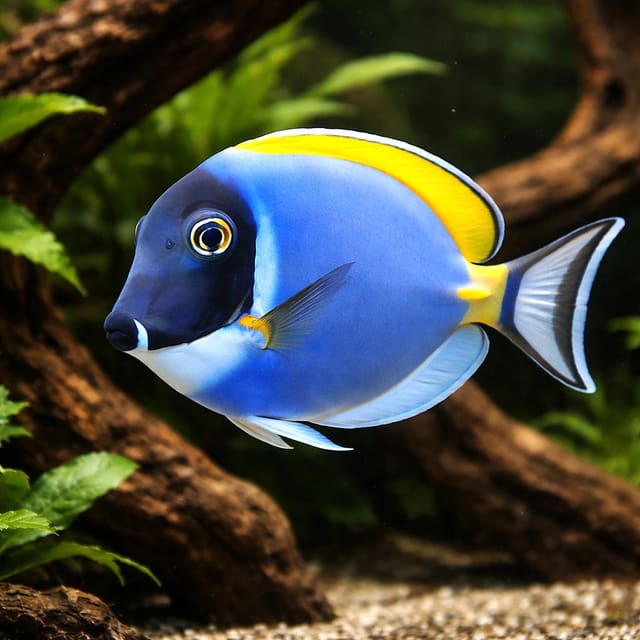
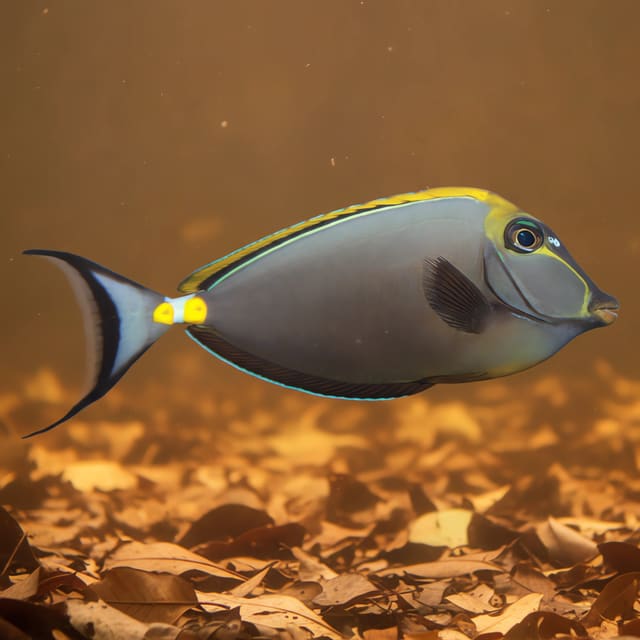
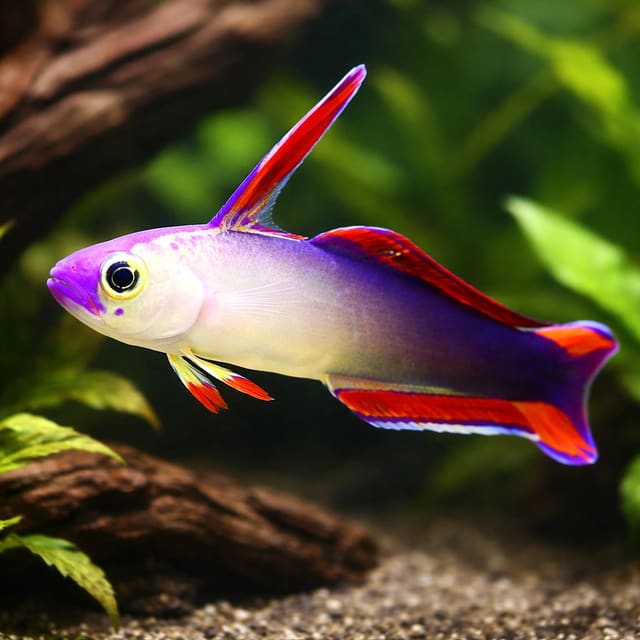
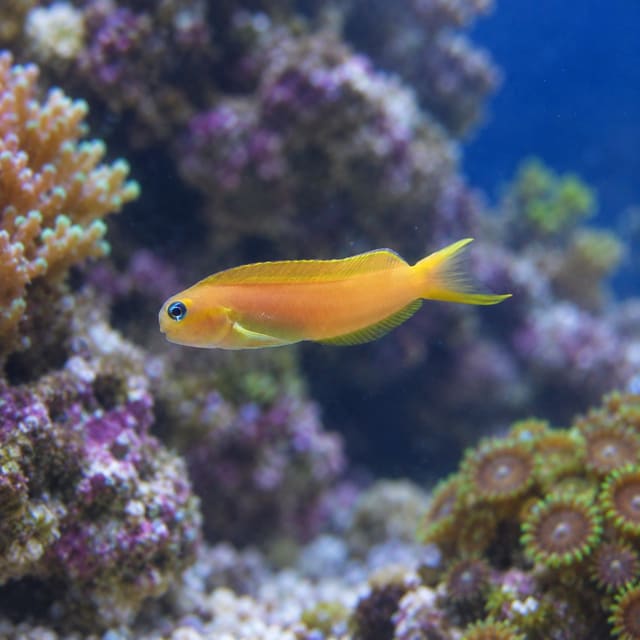
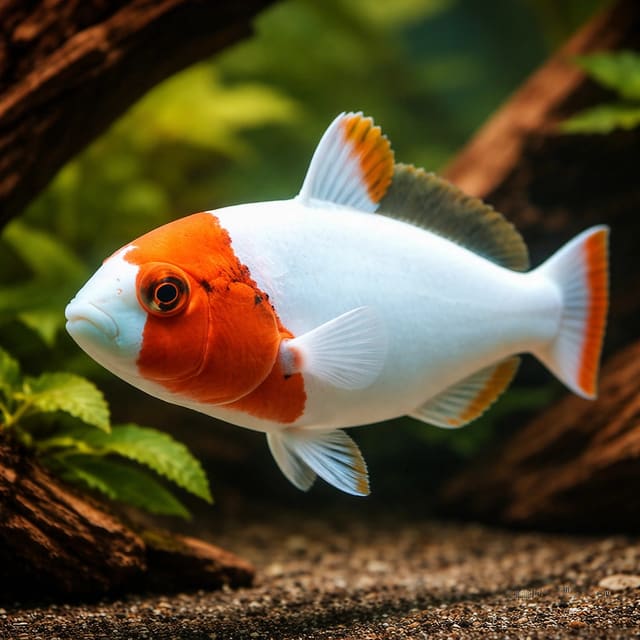
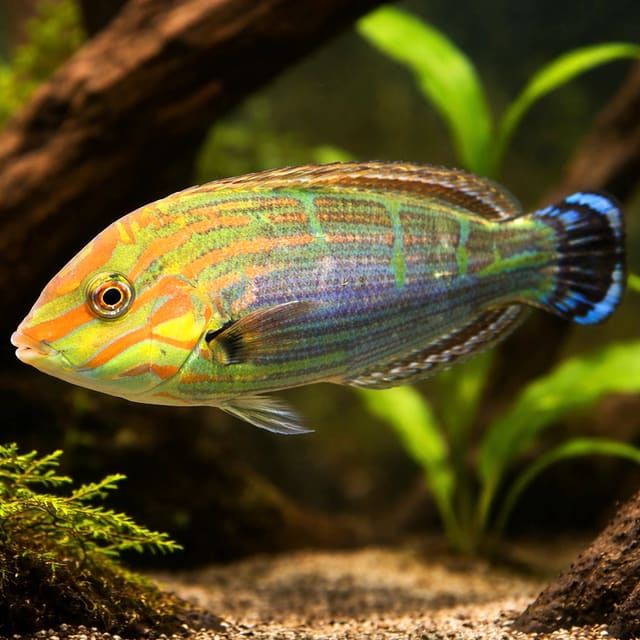
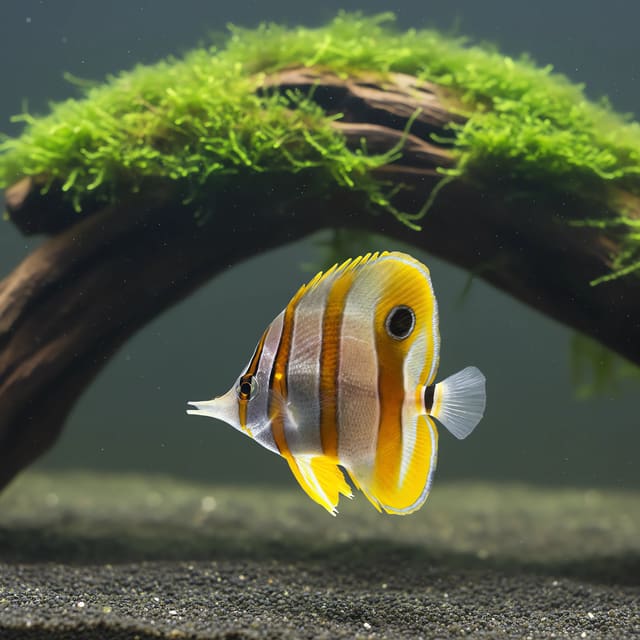
Gallery images have been digitally enhanced to improve image quality. Natural colour, pattern, size and maturity can vary between live animals. The photograph shows the fish in front of soft-focus leaves; a marine aquarium for this species is built around rock, coral and sand rather than plants.
To see how it might sit alongside other saltwater species, browse our marine fish range before you finalise a stocking list.
FishBase describes Cirrhitichthys falco as a reef-associated marine fish of the Indo-Pacific. Its range runs from the Maldives east to Samoa, north to the Ryukyu Islands and south to the southern Great Barrier Reef and New Caledonia. The Wikipedia account of the dwarf hawkfish gives a similar picture, from the Maldives to the Caroline Islands and Samoa, and notes that it is sometimes found in the aquarium trade.
Within that range it lives on coral reefs from shallow coastal and outer reef flats down the slopes, and FishBase calls it a common inhabitant of coral reefs. That makes it a fish of the living reef itself, at home among coral heads and rubble rather than in open blue water.
FishBase records a depth range of 4–46 m, usually 10–20 m, and gives 24–28 °C as the temperature range of its wild environment. Treat these as descriptions of the reef, not as instructions. In the aquarium, the day-to-day temperature target comes from the marine values in the water section below, which sit comfortably inside that wild range.
The most useful field note for keepers is that it typically rests at the bases of coral heads. Rather than hovering in midwater, it settles low on the reef, often in a sheltered spot, and watches what is happening around it. At home you will usually find it in the same few places: the foot of a rock stack, the entrance to a cave, a ledge just above the sand.
That habit shapes almost every care decision. The rockwork needs footholds near the bottom, not just tall peaks; food needs to reach the lower part of the aquarium; and tank mates should leave it room to hold its favourite resting places.
FishBase notes that studies indicate the species is haremic and spawns nightly, and that it is occasionally found in pairs and sometimes alone. Haremic means one male living with several females. These are observations of wild reef populations. They explain why a single fish is the sensible plan when sex cannot be chosen, but they are not a recipe for home breeding, and this listing supplies one fish for display rather than breeding stock.
The species is listed as Least Concern on the IUCN Red List. It is widespread and common on reefs, and a fully prepared aquarium gives the fish you receive the best possible start.
OATA's marine guidance is to buy an aquarium as large as possible within reason, ideally one that can house your chosen fish once they are fully grown. Larger volumes are more stable, with fewer swings in temperature and pH. An 8 cm adult is small by marine standards, which gives you more flexibility than larger hawkfish, but the size of the whole community and the amount of rockwork matter as much as the hawkfish itself.
OATA also points out that it is impossible to state exactly how many fish an aquarium can hold, because body size, needs and compatibility vary so widely, and that territorial species reduce the number further. Leave the falco hawkfish a section of the lower reef it can treat as its own.
OATA recommends rockwork, ideally living rock of some description, as a natural refuge for fish and a base for any corals you add. For this species, think low. Build stable footholds close to the sand: the bases of rock stacks, short overhangs, cave mouths and flat ledges a few centimetres above the substrate. A couple of higher vantage points give it the option to look out over the aquarium, but the ground floor is where it will spend much of its time.
Leave clear sand between structures so the fish has short open runs to food, and so you can see it. Check that every piece of rock is solid; a small fish wedged at the base of a stack is exactly where a slipping rock would do harm.
A fish that spends much of its day in a few favourite spots is easiest to enjoy when at least one of those spots is in view. Place a low ledge or the mouth of a cave towards the front of the rockwork, where the hawkfish can rest with a clear view out and you can see it from the room. Keeping the front third of the sand clear also helps food reach it and makes it easier to check that it is eating.
A layer of fine coral sand is OATA's recommended substrate. It suits the look of a hawkfish resting at the base of the reef, and because some marine fish filter the sand to feed or sleep under it at night, it keeps more companion species open to you.
Coral reefs from shallow flats to outer slopes are places of moving water, so provide good circulation from powerheads. Aim for flow that reaches every part of the aquarium while leaving calmer pockets near the base of the rock where the hawkfish can rest without being pushed about.
OATA's guide to setting up and looking after a marine aquarium gives general values for fish-only systems and for systems that also keep invertebrates such as corals. They are broad marine guidance rather than measurements for this species, and they are the practical targets to work to.
| Parameter | OATA guidance |
|---|---|
| Salinity | Fish-only 1.017–1.023 SG (23–30 ppt); with invertebrates 1.024–1.026 SG (32–35 ppt) |
| Temperature | Fish-only 24–27 °C; with invertebrates 24–26 °C |
| pH | 8.0–8.2 in both |
| Ammonia and nitrite | Zero |
| Nitrate | Fish-only: do not exceed 20 mg/l; with invertebrates 5–10 mg/l, depending on species |
| Carbonate hardness | 8–12 dKH with invertebrates |
| Phosphate | 0.04–0.1 mg/l with invertebrates, depending on species |
For the falco hawkfish, work to 24–26 °C and pH 8.0–8.2. That band suits both OATA columns and sits inside the fish's wild 24–28 °C, so it works in a fish-only system or a reef. If the aquarium holds corals or other invertebrates, follow the reef salinity of 1.024–1.026 SG, and with hard corals monitor calcium and magnesium as well, as OATA advises.
OATA recommends reverse osmosis (RO) water for marine aquariums and describes it as essential when invertebrates such as corals are kept. Dissolve specialised aquarium salt, never table salt, according to the manufacturer's directions, and mix and heat water for future changes in a separate vessel rather than in the display. A refractometer or hydrometer lets you check salinity each time, and test kits cover the rest.
The RSPCA explains why the filter matters so much: fish release ammonia, which is toxic, and a working biological filter lets beneficial bacteria convert it to nitrite, which is also toxic, and then to nitrate, which is safer. No fish should be kept without a well set up and maintained filter.
After filling a new marine aquarium, OATA advises leaving it for 24 to 48 hours so the salt fully dissolves and the equipment reaches temperature, then maturing the filter before any livestock goes in. Add fish slowly. The bacteria need to increase every time more fish are added and feeding increases, and stocking too many too quickly leads to 'new tank syndrome'. An 8 cm hawkfish adds less waste than a large fish, but the same rule applies.
| When | What to check |
|---|---|
| Every day | Temperature, equipment running, the hawkfish in its usual places and feeding |
| Regularly | Salinity, pH and nitrate, plus carbonate hardness and phosphate in a reef |
| Before and after new stock | Ammonia and nitrite, which should read zero |
| At each water change | New saltwater matched for temperature and salinity before it goes in |
Like other hawkfishes, the falco hawkfish is a carnivore. Its habit of resting on the reef and watching its surroundings suits a fish that takes small animals as they come within reach, and its aquarium diet should be built around meaty marine foods.
A prepared marine food can be added for convenience once the fish is feeding well, but offer it alongside frozen foods rather than instead of them, and make sure it is eaten rather than lost in the rock.
Because it rests near the bottom of the reef, food that races past at the surface is often taken by faster fish before the hawkfish moves. Release small amounts where the flow carries them down past its favourite resting place, and watch that it actually gets its share.
Feed small amounts and stop when the fish stops taking food. Leftovers that settle in the rock break down and add to the load on the filter, which shows up in your nitrate readings over time.
Rotate between two or three frozen foods rather than relying on one. Variety helps you find what the individual fish prefers, and it keeps feeding interesting for a fish that watches everything that drifts past. Keep an eye on its shape from week to week: a fish that looks steadily thinner than its tank mates may not be getting enough, and the answer is usually to change where and how the food goes in rather than simply adding more.
Give a new falco hawkfish time. Offer a little thawed mysis near where it has chosen to rest, remove anything it ignores, and keep notes on which foods it takes in the first week. Once you know what it accepts, build a varied routine around those foods.
Your falco hawkfish is hand-bagged in pure oxygen and packed in an insulated poly box, with a heat pack when the weather calls for it. A licensed live-animal courier carries the parcel, and you receive the tracking number and your confirmed delivery date by email.
OATA's first step is to check that the new fish is compatible with those you already keep and that the water quality is right, with ammonia and nitrite at zero. Someone needs to be at the delivery address to receive the parcel, as live fish cannot be left unattended.
The Live Arrival Guarantee needs someone at the address to receive the parcel, the parcel opened and inspected the same day it arrives, and a continuous unboxing video that starts with the parcel still sealed. Our delivery and Live Arrival Guarantee terms set out the full details.
OATA's release guidance includes switching off the aquarium lights as you take the bag from its outer wrapping, avoiding exposure to bright light. Once released, expect the hawkfish to look for a sheltered spot low on the reef before it starts exploring.
Leave the rockwork alone and hold back on further additions while the hawkfish settles. It will usually pick a few resting places near the base of the rock and return to them, and every change to the layout or stocking sends it looking again. Test ammonia and nitrite in the days after arrival; even one small fish adds to the work of the filter, and any reading above zero means feeding lightly and finding the cause before anything else goes in.
A hawkfish that stops coming out for food, hides in unusual places for days, or shows new marks is telling you something has changed. Start with the water and the equipment, then look at the community: a new or growing tank mate may have taken over its resting places. Correct what you can find, keep the aquarium calm, and contact us with your order details and a description or photo if you would like help deciding what to do next.
Steadiness is the goal. Match the temperature and salinity of every batch of new water to the aquarium, change one thing at a time, and keep a written log of test results so a drift in nitrate, pH or salinity is spotted before it becomes a problem. If something seems wrong with the fish, check the water first: the filter and pumps, the latest ammonia and nitrite readings, and how much food has been going in. Then correct the water with properly prepared saltwater mixed and heated in a separate vessel.
Given its own resting places, suitable food and stable water, a falco hawkfish settles into its corner of the lower reef and becomes one of the most watchable small fish in a marine aquarium.
Wild falco hawkfish usually live in harems of one male with several females, and they are also seen in pairs or alone. Because sex cannot be chosen, two fish added together or one after another could be two males competing for the same space. Keep one per aquarium. Other hawkfish species are best avoided too, since they are likely to compete for the same low resting places at the base of the rock.
Hawkfishes are carnivores, and small crustaceans are the kind of animal they eat. Treat small ornamental shrimp and other small crustaceans as possible prey rather than guaranteed tank mates. The smaller the animal relative to the hawkfish's mouth, the higher the risk; if a particular shrimp matters to you, keep it in a separate system.
OATA notes that some marine fish need to be kept in groups while others are territorial or aggressive and will not live together peacefully. For a small hawkfish that rests low on the reef, look for companions that are:
Large, boisterous or aggressive fish are a poor match for an 8 cm fish. Check each proposed combination for size and temperament before you buy.
OATA reminds keepers that territorial marine fish reduce how many fish an aquarium can hold. Even a small hawkfish needs its own section of lower rockwork, and every other fish that claims a patch of reef needs one too. When you plan a community, map out where each resting or territorial fish will live before you buy, and leave enough rock for all of them to have somewhere to retreat.
FishBase calls the falco hawkfish a common inhabitant of coral reefs, typically resting at the bases of coral heads, so corals are part of its natural setting and a reef aquarium suits it. The only invertebrates to think twice about are the small crustaceans covered above.
| Kind of animal | What to expect |
|---|---|
| A second falco hawkfish | Likely rival when sex is unknown; keep one |
| Other hawkfish | Competition for low resting places; avoid |
| Small ornamental shrimp and crabs | Possible prey; keep separately if they matter to you |
| Corals | Natural companions on the reef |
| Calm fish too large to be eaten | Generally suitable |
| Large or aggressive fish | Unsuitable for a small resting fish |
Following OATA's advice, check compatibility with your current fish first and increase stock numbers slowly. Adding the hawkfish on its own, rather than with a batch of other newcomers, gives the filter time to adjust and lets you watch how it and the existing fish react to each other.
FishBase records a maximum total length of 8 cm, and Wikipedia describes it as a small species of hawkfish. Plan for that adult size rather than the size of the fish on arrival; it stays compact, but it still needs its own resting places among the rock.
No single volume suits every set-up. OATA's general marine advice is to buy as large an aquarium as you reasonably can and to size it for fish once they are fully grown, because a bigger volume keeps temperature and pH steadier. For an 8 cm hawkfish, what matters most is a fully matured system with stable rockwork, low ledges near the sand and room for its companions.
Plan on a single fish. Wild falco hawkfish usually live in harems, one male with several females, though pairs and solitary fish also occur. Sex cannot be chosen from this listing, so two fish could easily turn out to be rival males.
It can be, provided the aquarium itself is ready. Its small size makes it easier to house than larger hawkfish, but it still needs a fully matured marine system with ammonia and nitrite at zero, and OATA advises adding fish gradually while the filter bacteria catch up.
Like other hawkfishes it is a meat eater. Offer thawed frozen marine foods such as mysis shrimp and finely chopped krill, cut small for an 8 cm fish, and release them where they drift down near its resting place. Give only what is eaten and remove leftovers.
Aim for 24–26 °C and pH 8.0–8.2. Those planning values come from OATA's general guidance for marine aquariums, fit both its fish-only and coral columns, and sit inside the 24–28 °C that FishBase gives for the fish's wild environment. Ammonia and nitrite should always read zero.
It is not known as a fin nipper. It spends much of its time resting at the base of rock or coral, and the usual concerns with hawkfishes are rivalry with other hawkfish and a taste for animals small enough to swallow, such as small shrimp.
Yes. FishBase describes it as a common inhabitant of coral reefs that typically rests at the bases of coral heads, so a reef aquarium suits it well. Treat small ornamental shrimp and other small crustaceans as possible prey, and pair it with calm fish too large to be eaten.
It is hand-bagged in pure oxygen inside an insulated poly box, with a heat pack when the weather calls for it, and carried by a licensed live-animal courier. Be at the address to receive it, film one continuous unboxing video from the sealed parcel to the fish still in its bag, then float the sealed bag for 20–30 minutes before releasing the fish, and never pour the bag water into your tank.
No reviews for this item yet. Bought one? Honest reviews only, good or bad.
What customers say about ordering from us
Easy website plenty of info on fish your buying great to pick a time slot
TRACEY DURRANT · 7 Oct 2026
Got some lovely fish thank you
Kevin Mackie · 7 Oct 2026
Reviews of our shop, collected by Judge.me, an independent third-party review collector. Newest first.