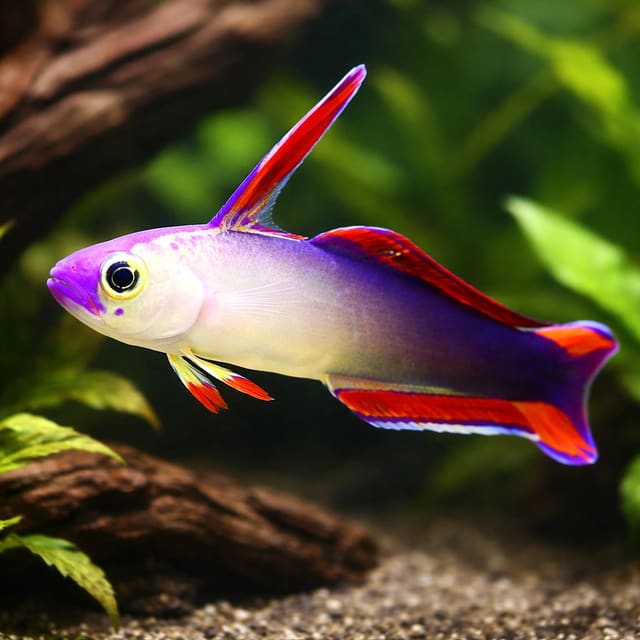
Elegant Firefish (Nemateleotris decora)
24–26°C · pH 7.9–8.3
£64.99
The Yellow prawn-goby (Cryptocentrus cinctus) is a marine goby from the Western Pacific that reaches 10 cm standard length. It suits a stable, filtered aquarium of at least 120 litres, OATA’s recommendation for larger gobies; keep 24–26°C as the FishBase and OATA overlap, with pH 7.9–8.3 from OATA’s goby guidance. Sold individually as one live fish.
Adult size is the maximum length this species reaches at full maturity (scientific sources). The livestock you receive will be younger and smaller. Product-photo provenance and any image-specific limitations are stated on the listing.
Cryptocentrus cinctus
The Yellow prawn-goby (Cryptocentrus cinctus) is a marine goby from the Western Pacific that reaches 10 cm standard length. It suits a stable, filtered aquarium of at least 120 litres, OATA’s recommendation for larger gobies; keep 24–26°C as the FishBase and OATA overlap, with pH 7.9–8.3 from OATA’s goby guidance. Sold individually as one live fish.
Adult size is the maximum length this species reaches at full maturity (scientific sources). The livestock you receive will be younger and smaller. Product-photo provenance and any image-specific limitations are stated on the listing.
Maintain these water conditions for optimal health and vibrant colors
The Yellow prawn-goby (Cryptocentrus cinctus) is a marine member of the goby family Gobiidae from the Western Pacific. FishBase records it from Japan’s Yaeyama Islands south through Singapore and the southern Great Barrier Reef, with Palau and Truk in Micronesia. It reaches 10 cm standard length and suits a marine keeper prepared to provide stable water, effective biological filtration, a sand-and-rock lower level and carefully screened companions.
In nature it occupies sandy areas in shallow lagoons and protected coastal bays. It lives in a burrow with alpheid shrimps and usually remains close to the bottom rather than swimming continually in open water. Its fused pelvic fins form the suction-disc structure characteristic of gobies, helping it perch against the substrate or rock.
Wikipedia’s species account also describes the shared-burrow relationship and notes that appearance can range from brilliant yellow to grey, brown or mixed colouring. Plan for the identified species and its adult needs rather than expecting every individual to match one particular shade.
Plan at least 120 litres for the 10 cm adult. OATA places gobies over 7–8 cm in its larger category and recommends an aquarium of at least 120 litres, while Wikipedia notes that this species can be kept in aquariums as small as 20 gallons. Use more space when other fish will share the aquarium because the extra volume improves environmental stability and room for compatible stocking.
Keep the aquarium at 24–26°C. This is the overlap between FishBase’s recorded marine environment of 22–28°C and OATA’s marine goby guidance of 24–26°C. OATA’s group guidance also gives pH 7.9–8.3, salinity 1.020–1.025 and carbonate hardness 8–12°dKH as broad aquarium targets. Hold these values stable and test them as part of routine care.
| Suits | Not suited to |
|---|---|
| A stable, filtered marine aquarium | An unfiltered or newly overloaded aquarium |
| At least 120 litres for adult planning | Space planned only around its arrival size |
| Sand and rock at the lower level | A layout with no suitable bottom area |
| Carefully screened fish and invertebrates | Predatory species |
| Twice-daily, measured feeding | Heavy portions left to impair water quality |
This offer is for one Yellow prawn-goby per purchase. Plan the aquarium around the adult length of 10 cm standard length rather than the size supplied. Standard length is measured without the tail fin.
Sex is guaranteed only when the selected option explicitly states male or female. This Yellow prawn-goby listing has no sex-guaranteed option.
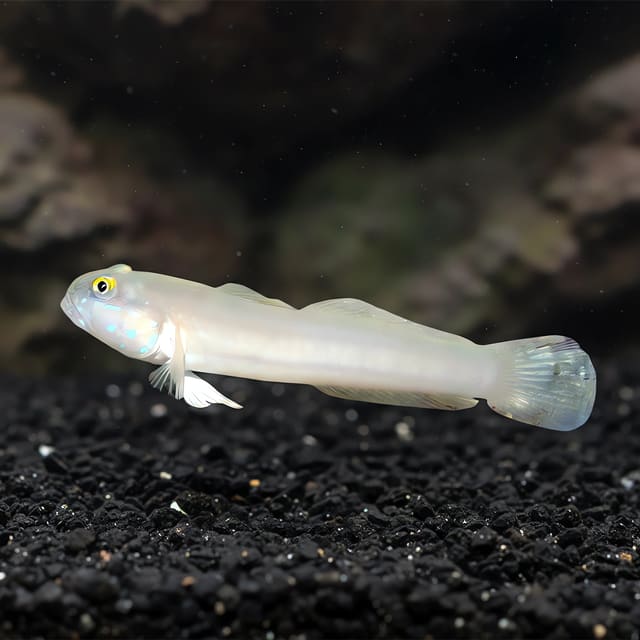
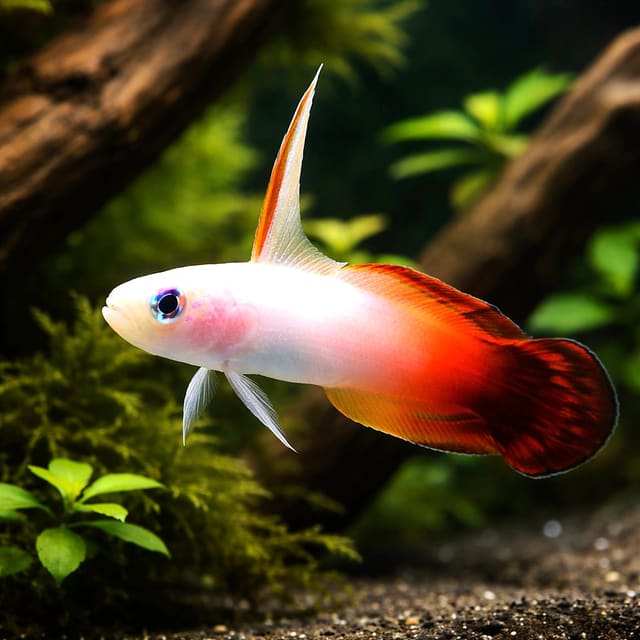
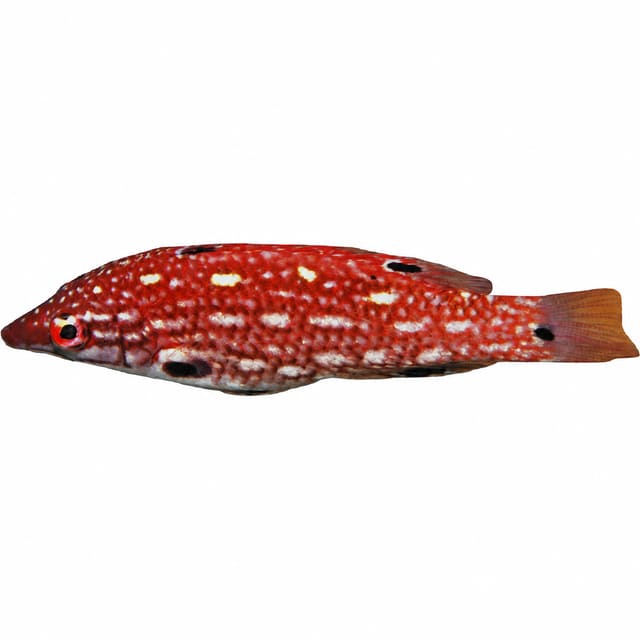
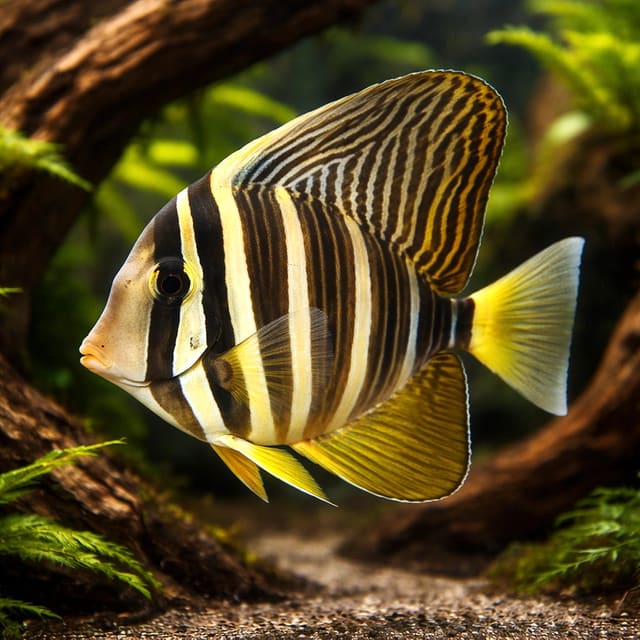
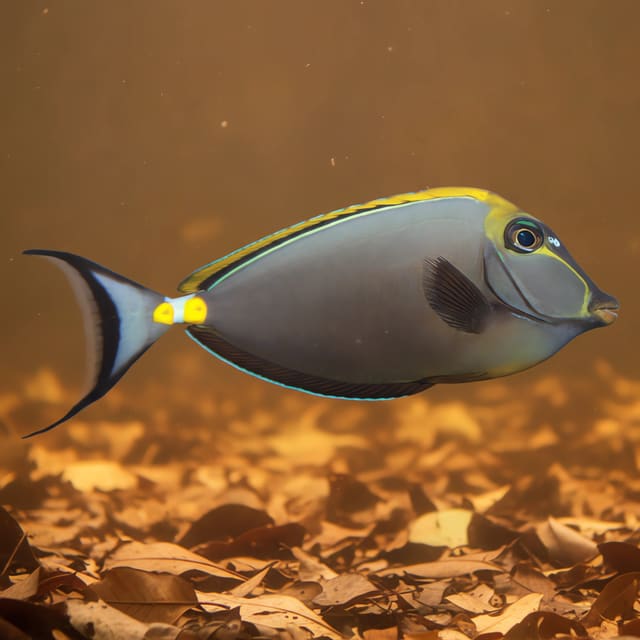
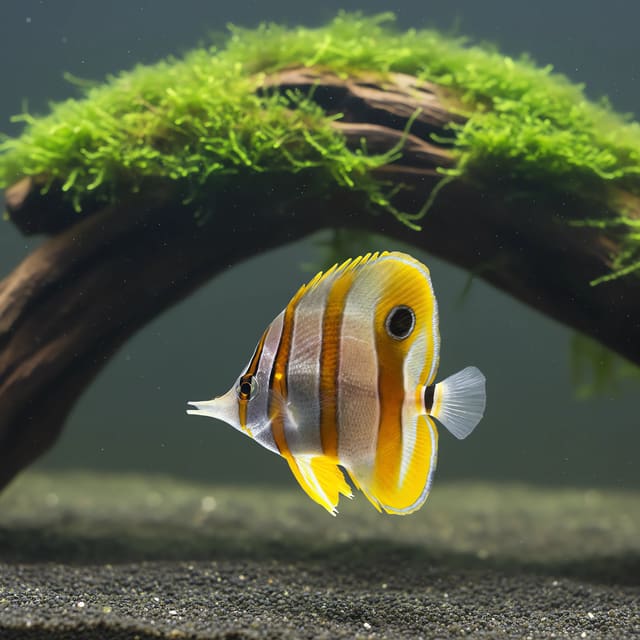
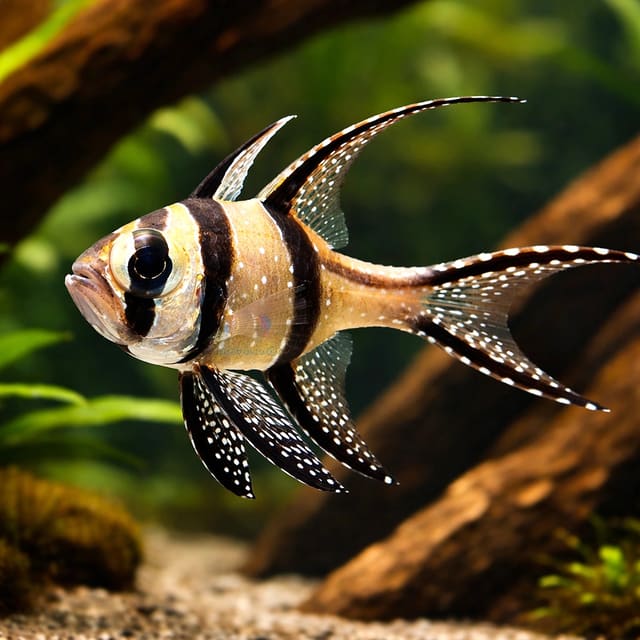
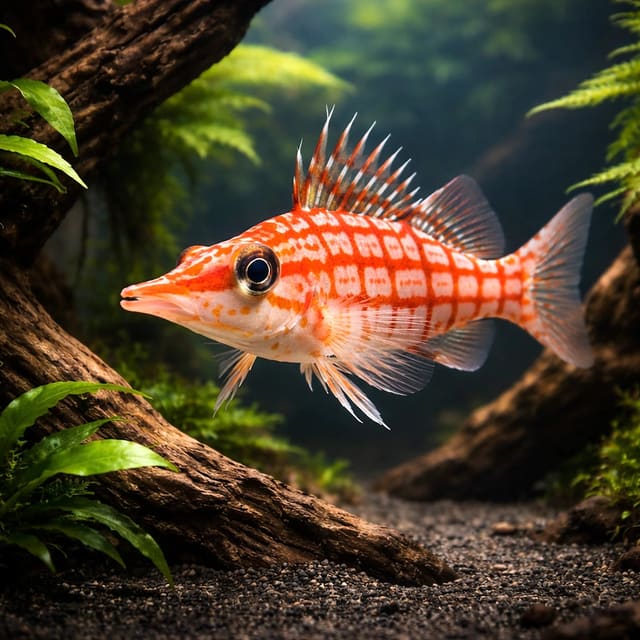
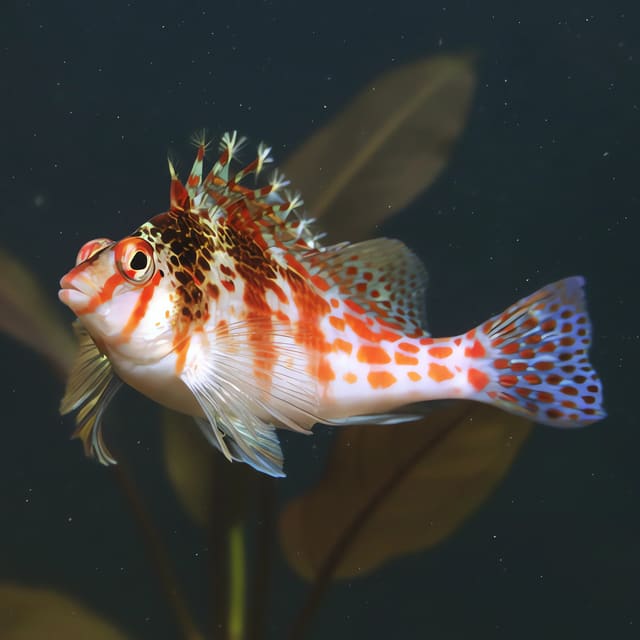
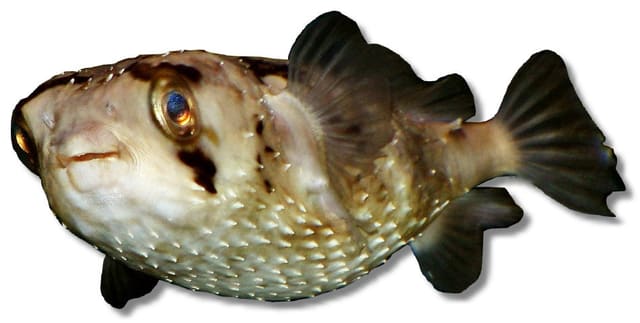
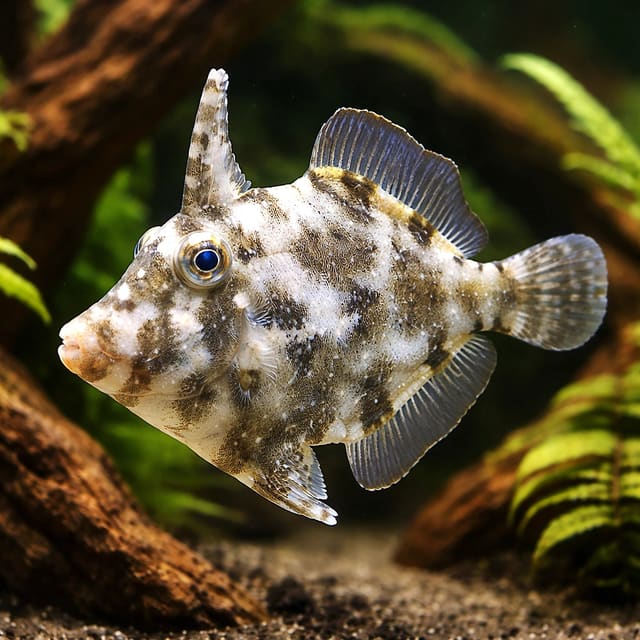
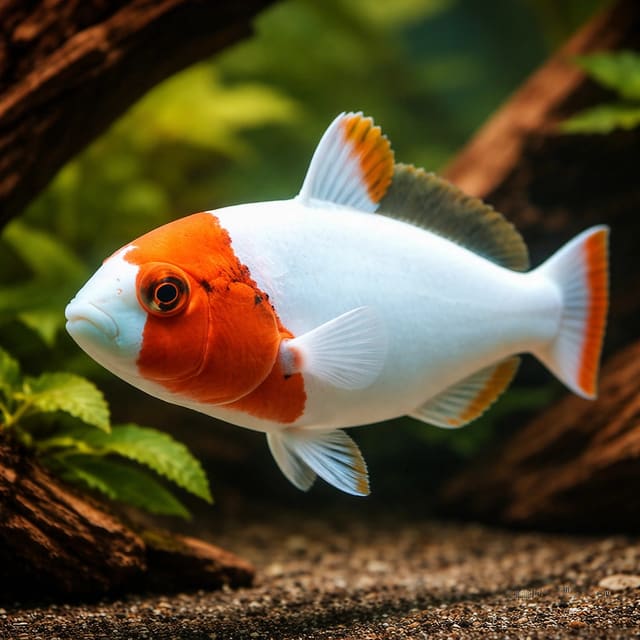
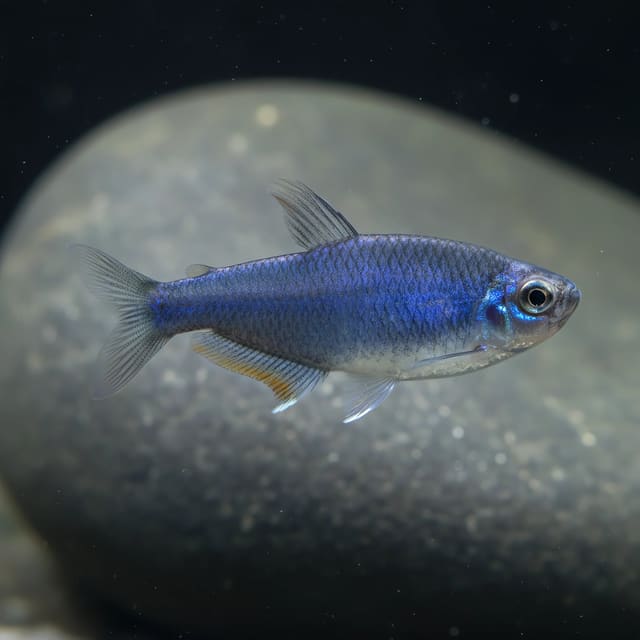
The gallery shows the bright yellow form with pale spots over the head and first dorsal fin. Natural colouring can also include grey, brown or combinations of these colours.
Some gallery images have been digitally enhanced to improve image quality. They show the listed type of animal rather than guaranteeing the exact markings of the individual supplied, so natural colour and pattern can vary.
The main commitment is not constant open-water swimming but maintaining a stable marine environment around a bottom-associated fish. Provide at least 120 litres, a mature biological filter, zero ammonia and nitrite, compatible lower-level space and food that reaches the goby. A tiger pistol shrimp can be considered as a partner, but each purchase is one fish, and the goby needs the same care with or without a shrimp.
Before deciding, compare the aquarium’s established temperature, pH, salinity and carbonate hardness with the target values. Check the existing animals for predatory behaviour and consider whether small invertebrates could fit into the goby’s mouth. These decisions matter more than matching a particular gallery colour.
Browse the marine fish collection when comparing this bottom-dwelling goby with other marine fish, but assess every proposed combination against adult size, temperament, water requirements and feeding behaviour.
Give the Yellow prawn-goby a sand bed and rockwork areas at the lower level of the aquarium. FishBase places the species in sandy lagoons, coastal bays and clear coastal sand slopes, while OATA explains that gobies generally live near the sand bed or rock and that few, if any, swim in the open. A layout planned around this behaviour gives the fish somewhere appropriate to perch and occupy the bottom.
The recorded maximum is 10 cm standard length. That places this fish above OATA’s smaller-goby category of under 7–8 cm, so use the larger-goby recommendation of at least 120 litres. Do not treat a young or smaller individual as a reason to begin with a smaller aquarium; the filtration, bottom area and stocking plan need to work for the adult.
Use at least 120 litres, then increase the aquarium size when adding other fish. OATA specifically notes that aquariums need to be larger when gobies are kept with other fish species.
Look at the aquarium from the goby’s position rather than judging only its total volume. Check whether other bottom-associated animals already occupy the sand and rock, whether food can reach that level and whether the goby can perch without continually meeting an incompatible animal. A large aquarium can still be a poor match if all of its suitable lower space is already contested.
The wild shrimp association does not change the basic setup decisions: stable marine water, effective filtration, sand, rock and enough room for the complete community. Consider a shrimp partnership only after screening the particular shrimp and every other inhabitant.
Keep the aquarium at 24–26°C, pH 7.9–8.3, salinity 1.020–1.025 and carbonate hardness 8–12°dKH. Maintain calcium at 380–450 ppm and magnesium at 1,250–1,350 ppm when managing the marine system. These figures provide working targets, but stability and clean water remain essential.
Keep ammonia at zero mg per litre and nitrite at zero mg per litre. Do not allow nitrate to exceed 50 mg per litre. OATA warns that even small amounts of ammonia or nitrite can stress gobies and leave them more vulnerable to disease, so a reading above zero requires prompt attention to filtration, feeding, stocking and water quality.
The 24–26°C routine range sits inside FishBase’s recorded 22–28°C marine environment and matches OATA’s narrower aquarium guidance. Aim for the overlap rather than moving repeatedly across the wider environmental range. Stable values reduce avoidable stress and make changes in behaviour or appetite easier to interpret.
A correct temperature does not compensate for detectable ammonia, unsuitable salinity or a sudden pH change. Review the full set whenever the fish breathes differently, hides more than normal, loses interest in food or changes colour. Test before assuming that a behavioural change is simply temperament.
In a reef aquarium, some of these parameters will need to be altered to suit the more sensitive species kept there. Keep any adjustment within the needs of every animal in the aquarium and avoid shifting a stable value merely to chase the edge of a range. Compatibility includes shared water requirements as well as behaviour.
| Value | Routine target |
|---|---|
| Temperature | 24–26°C |
| pH | 7.9–8.3 |
| Salinity | 1.020–1.025 |
| Carbonate hardness | 8–12°dKH |
| Ammonia and nitrite | Zero mg/l |
| Nitrate | Up to 50 mg/l |
Use a well-established biological filter before adding the goby. The RSPCA’s aquarium welfare guidance explains that fish release toxic ammonia and that filter bacteria convert it first to nitrite and then to the safer nitrate. A filter is therefore part of the animal’s life-support system, not an optional way to make the water look clear.
OATA lists live rock with sufficient water flow, an internal or external filter, or a sump-based filter as possible approaches for a marine setup. Whichever method is used, it must cope with the waste produced by the complete aquarium community. A protein skimmer can also help by removing dissolved organic waste before it breaks down into more harmful substances.
Confirm zero ammonia and zero nitrite before introduction. Add fish slowly because the beneficial bacterial population needs to grow when stocking and feeding increase. Adding too many animals too quickly can create new tank syndrome, in which the filter bacteria cannot process the added waste and ammonia or nitrite rises to harmful levels.
Do not assume that a running pump means the aquarium is biologically ready. Test the water and review whether flow, filter media and maintenance are producing the required readings. A larger aquarium provides more environmental stability, but it still needs a working and maintained filter.
After adding the goby, continue checking ammonia, nitrite and nitrate rather than treating maturation as a completed event. Changes in stocking, feeding or filter cleaning can change the biological load. If ammonia or nitrite appears, test the other key values, review recent changes and restore safe water conditions before adding any further livestock.
Feed twice a day, offering only what the goby can eat within a few minutes. OATA’s goby sheet gives group-level feeding guidance: most gobies are omnivorous, need a varied diet and commonly accept frozen meaty foods as well as appropriately sized prepared diets. Use the fish’s mouth size, feeding response and body condition to set each portion.
Offer suitably sized mysis shrimp, enriched brine shrimp or krill. Finely chop larger items when necessary so the goby can take them cleanly. Frozen copepods can add variety, while appropriately sized granules or flakes may also be used when the fish accepts them.
Place food where this bottom-associated fish can reach it. A portion eaten by faster fish in open water has not fed the goby, even if the aquarium as a whole appears active at feeding time. Watch the food reach the lower level and confirm that the goby takes it rather than relying on food disappearing from view.
Stop adding food when a few minutes have passed. Excess food can break down and impair water quality, which is especially important for a goby that needs zero ammonia and nitrite. If food remains untouched, check the portion size, food size, access at the bottom and the fish’s behaviour before offering more.
Variety should come from rotating suitable foods, not from increasing the total quantity. Keep the twice-daily schedule measured and use appetite as an observation tool rather than a reason to overfeed.
Carry out a 25% partial water change at least once every week. Use a siphon to remove solid waste from the substrate while preserving an appropriate sand-and-rock layout for the goby.
Check and clean filters regularly so blockages do not reduce their performance. If filter media needs cleaning, do not run it under the tap. Rinse it lightly in aquarium water removed during the partial water change, which reduces the loss of established beneficial bacteria.
Clean a protein skimmer regularly when one is used. Its ability to remove dissolved organic waste depends on maintaining its performance, and it does not replace biological filtration, water testing or partial water changes.
Monitor ammonia, nitrite, nitrate, pH, temperature and salinity. The desired result is zero ammonia, zero nitrite, nitrate no higher than 50 mg per litre and stable marine values within the target ranges. A completed water change is useful only when it supports those outcomes.
Review feeding and stocking if nitrate rises or waste repeatedly accumulates. Larger portions create more uneaten food and fish waste, while rapid stocking increases demand on the filter bacteria. Correct the cause as well as performing the maintenance task.
| Observation | Action |
|---|---|
| Reduced filter flow | Check for blockages and clean appropriately |
| Ammonia or nitrite above zero | Test the full water set and review filtration, feeding and stocking |
| Rising nitrate | Complete the water-change routine and review waste input |
| Skimmer performance falls | Clean it and confirm normal operation |
| Filter media needs rinsing | Use removed aquarium water, not the tap |
Be at the delivery address to receive the parcel because live fish must not be left unattended. Tropical Fish Co hand-bags livestock in pure oxygen, uses an insulated poly box and adds a heat pack when the weather calls for it. A licensed live-animal courier carries the parcel.
Read the current delivery and Live Arrival Guarantee policy before the delivery date so the recipient understands the receipt and claim requirements and recommended video guidance. We strongly recommend an unboxing video when practical: it helps us investigate arrival concerns faster, resolve them with less back-and-forth and understand packing or transit issues so we can reduce recurrence. Video is optional and clear photos are accepted. Never delay necessary animal care to record evidence.
OATA advises confirming that aquarium water is suitable and that ammonia and nitrite are zero before adding a fish. Check the established temperature, pH, salinity and filtration before the parcel arrives; the acclimatisation period is not the time to discover that the aquarium falls outside the target range.
Increase the aquarium population slowly after the filter has matured. Every added fish and every increase in feeding raises the biological load, so the filter bacteria need time to adjust. Do not combine an arrival with several other stocking changes when that would make water quality or compatibility harder to assess.
Learn the goby’s normal posture, breathing, colour, hiding pattern and feeding response. Individual fish vary, but a change from that individual’s usual pattern can provide an early warning that water quality, compatibility or health needs attention.
When a change appears, measure temperature, pH, salinity, ammonia, nitrite and nitrate. Compare the results with 24–26°C, pH 7.9–8.3, salinity 1.020–1.025, zero ammonia, zero nitrite and nitrate no higher than 50 mg per litre. Review recent feeding, maintenance and stocking changes at the same time.
If another animal is chasing the goby or preventing it from feeding, reassess the combination rather than increasing food indiscriminately. If water values are wrong, correct the husbandry problem and confirm that filtration is functioning. Whenever visible lesions, breathing changes or appetite loss appear or continue, test the water again and correct any value outside the target range straight away.
Compatibility is conditional. OATA says gobies generally mix with other fish, but temperament varies across the family. It names Cryptocentrus cinctus as the yellow watchman goby, one of the larger, more confident gobies that can be mixed with more active fish. Assess the particular companions, shared water needs and lower-level space before adding it to any community.
Avoid predatory species. OATA warns that yellow gobies should not be kept with predators, and a community plan should not depend on the goby escaping or remaining hidden. Screen the adult behaviour and feeding method of every proposed fish before introduction.
FishBase records this species living in burrows with alpheid shrimps in the wild. Wikipedia notes that tiger pistol shrimp are often partnered with Yellow prawn-gobies in marine aquariums. A tiger pistol shrimp can therefore be considered after compatibility screening, but the association is not a reason to overlook aquarium size, stable water or the needs of either animal.
Use caution with other small invertebrates. OATA notes that some gobies may eat small invertebrates, including shrimp, when they can fit into the fish’s mouth. The documented partnership with a burrow-sharing shrimp is not a universal rule for every small shrimp or invertebrate.
Introduce livestock gradually and observe whether the goby can use the lower level, reach food and maintain normal breathing and colour. A companion that shares the correct water values can still be a poor match if it chases the goby, monopolises the bottom or consumes every food item before it arrives.
OATA’s description of the yellow watchman goby as confident enough to mix with more active fish does not mean that every individual or every active companion will behave identically. Use confidence as a reason to assess the combination, not as a guarantee of peaceful behaviour.
Watch for chasing, increased hiding, altered posture, darker or paler colour, rapid breathing, reduced appetite and damaged fins. These signs can also accompany water-quality problems, so test ammonia, nitrite, nitrate, pH, salinity and temperature before deciding that another fish is the only cause.
Consider a tiger pistol shrimp or suitably screened active fish as companions. Other animals require the same water, space, predation and feeding checks before they are introduced.
It reaches 10 cm standard length according to FishBase and Wikipedia. Standard length is measured without the tail fin, so plan the aquarium around a 10 cm adult rather than the fish’s arrival size.
Plan at least 120 litres: OATA places gobies over 7–8 cm in its larger category and recommends at least 120 litres, while Wikipedia notes that this species can be kept in aquariums as small as 20 gallons. Use more space when keeping it with other fish.
Each purchase supplies one fish; add further gobies or other fish only after checking that space, bottom area and feeding access suit them all. Goby behaviour varies, so always check that the fish will mix with the current tank mates before buying; increase fish numbers slowly so the biological filter can adjust to added waste and feeding.
It suits a keeper who can maintain a filtered marine aquarium at 24–26°C, pH 7.9–8.3 and salinity 1.020–1.025, keep ammonia and nitrite at zero and feed measured portions twice daily. Stable marine water and careful compatibility screening are the essential skills.
Feed it suitably sized frozen meaty foods such as mysis shrimp, enriched brine shrimp or krill, with frozen copepods and accepted prepared foods for variety. OATA’s goby guidance says to offer only what it can eat within a few minutes, twice a day.
Keep it at 24–26°C, the overlap between FishBase’s recorded 22–28°C marine environment and OATA’s 24–26°C goby guidance. OATA also gives pH 7.9–8.3, salinity 1.020–1.025 and carbonate hardness 8–12°dKH.
OATA says goby temperaments vary and describes the yellow watchman goby as confident enough to mix with more active fish. Screen each companion and act if you see chasing, increased hiding, appetite loss or damaged fins.
A tiger pistol shrimp is often partnered with this goby, and suitably screened active fish can be considered. Avoid predatory species and use caution with small invertebrates that may fit into the goby’s mouth.
Tropical Fish Co hand-bags the fish in pure oxygen, uses an insulated poly box and adds a heat pack when the weather calls for it. A licensed live-animal courier carries the parcel, which must be received in person; if practical, film the sealed parcel continuously through opening and float the bag for 20–30 minutes before release.
No reviews for this item yet. Bought one? Honest reviews only, good or bad.
What customers say about ordering from us
Easy website plenty of info on fish your buying great to pick a time slot
TRACEY DURRANT · 7 Oct 2026
Got some lovely fish thank you
Kevin Mackie · 7 Oct 2026
Reviews of our shop, collected by Judge.me, an independent third-party review collector. Newest first.