Elegant Firefish (Nemateleotris decora)
24–26°C · pH 7.9–8.3
£64.99
The Fire goby (Nemateleotris magnifica) is a marine wormfish from Indo-Pacific coral reefs that reaches 9 cm. It suits a calm, mature marine aquarium; FishBase and OATA overlap at 24–26°C, while OATA’s dartfish guidance recommends at least 60 litres and pH 7.9–8.3. Sold individually as one live fish per purchase.
Adult size is the maximum length this species reaches at full maturity (scientific sources). The livestock you receive will be younger and smaller. Product-photo provenance and any image-specific limitations are stated on the listing.
Nemateleotris magnifica
The Fire goby (Nemateleotris magnifica) is a marine wormfish from Indo-Pacific coral reefs that reaches 9 cm. It suits a calm, mature marine aquarium; FishBase and OATA overlap at 24–26°C, while OATA’s dartfish guidance recommends at least 60 litres and pH 7.9–8.3. Sold individually as one live fish per purchase.
Adult size is the maximum length this species reaches at full maturity (scientific sources). The livestock you receive will be younger and smaller. Product-photo provenance and any image-specific limitations are stated on the listing.
Maintain these water conditions for optimal health and vibrant colors
The Fire goby (Nemateleotris magnifica) is a small marine fish in the wormfish family Microdesmidae, commonly described as a dartfish. It is native to Indo-Pacific coral reefs and reaches a recorded maximum of 9 cm total length. This fish suits a keeper who can provide a mature, filtered marine aquarium, calm companions and two measured feeds each day.
FishBase describes its wild range from East Africa across the Indo-Pacific to island groups including Hawaii, the Marquesas and Pitcairn Islands, north to the Ryukyu Islands and south to New Caledonia and the Austral Islands. Adults inhabit upper areas of outer reef slopes and hover above the bottom while facing the current.
That hovering position is part of its feeding strategy. Wild fish take zooplankton, copepods and crustacean larvae carried through the water. They flick their pennant-like first dorsal fin back and forth, and OATA notes that dartfish dart quickly into their burrow when frightened. These behaviours explain the need for both open water near the bottom and accessible caves or crevices.
The species is also called the fire dartfish, red fire goby and magnificent fire fish. Wikipedia identifies it as a dartfish from Indian and Pacific coral reefs.
Plan for one 9 cm fish in a mature marine aquarium of at least 60 litres. OATA’s broad dartfish guidance recommends at least 60 litres for one dartfish and pH 7.9–8.3, and its 24–26°C range sits inside FishBase’s species range, so the two overlap at 24–26°C.
Keep routine aquarium conditions at 24–26°C, pH 7.9–8.3 and salinity 1.020–1.025. Ammonia and nitrite must remain at 0 mg/l, while nitrate must not exceed 50 mg/l. The aquarium also needs a functioning biological filter and caves or crevices beside open water where the fish can hover and intercept food.
| Suits | Not suited to |
|---|---|
| A mature marine aquarium of at least 60 litres | An uncycled aquarium or one without a maintained filter |
| Calm fish that allow it to leave shelter and feed | Boisterous inhabitants that intimidate dartfish |
| A keeper able to feed small foods twice daily | A routine based on one large daily meal |
| Stable water at 24–26°C and pH 7.9–8.3 | Water with detectable ammonia or nitrite |
| Caves or crevices beside open hovering space | A layout without accessible retreat sites |
A larger aquarium is required when more fish are added. Extra water volume also gives greater stability, but it does not replace filtration, testing or measured feeding. Assess every proposed companion by its behaviour, adult size, use of space and ability to compete for food.
One purchase supplies one live Fire goby. Plan from the recorded adult length of 9 cm rather than estimating size from a gallery scene.
Sex is guaranteed only when the selected option explicitly states male or female. This Fire goby listing has no sex-guaranteed option.
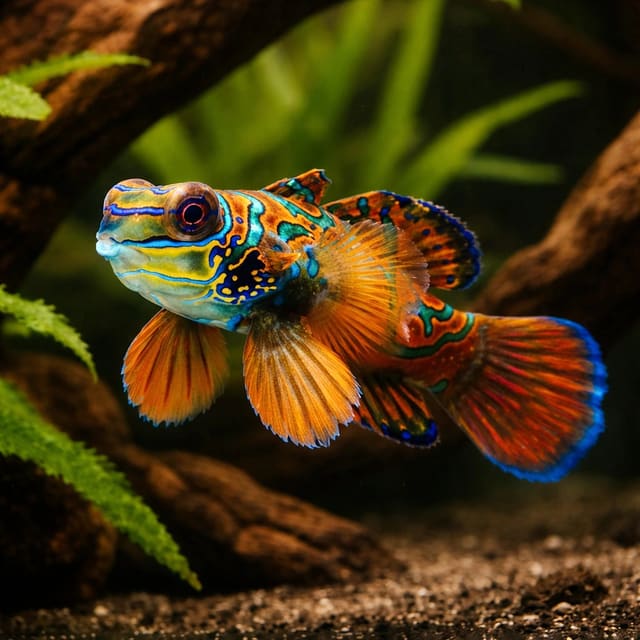
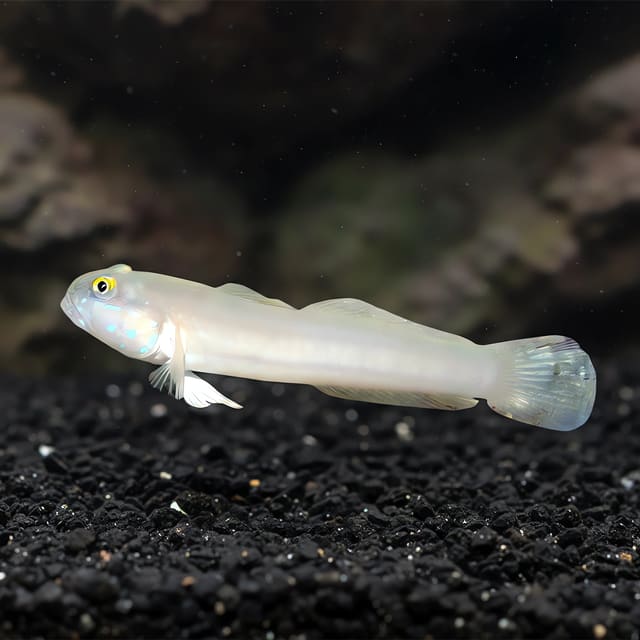
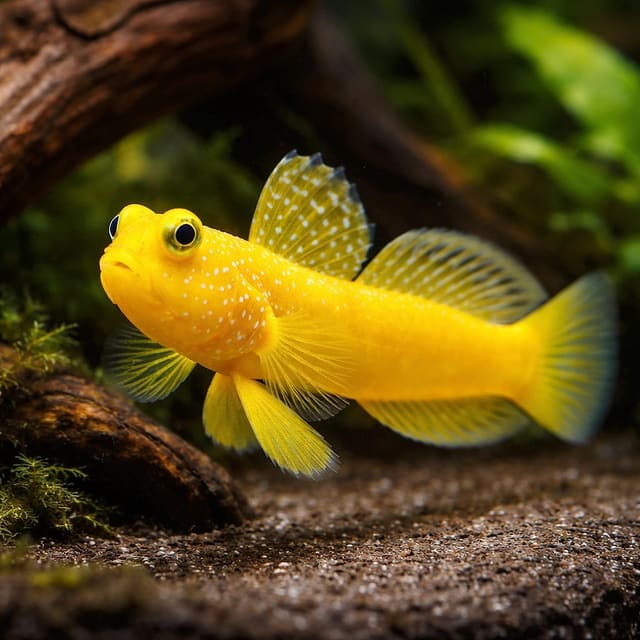
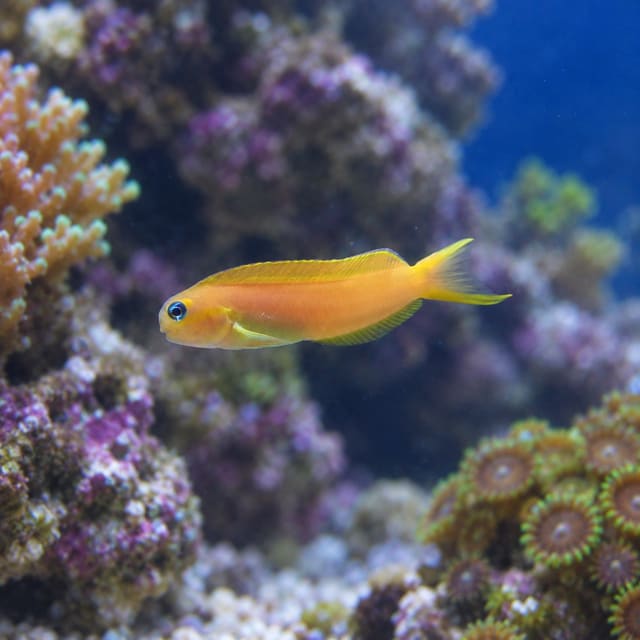
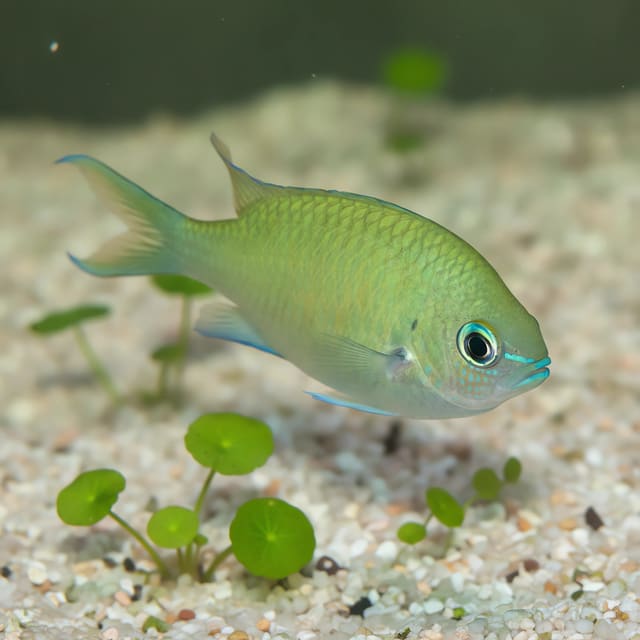
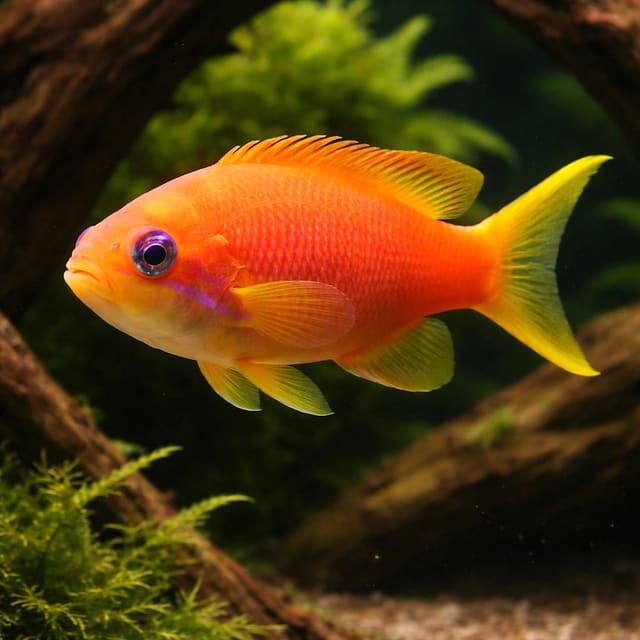
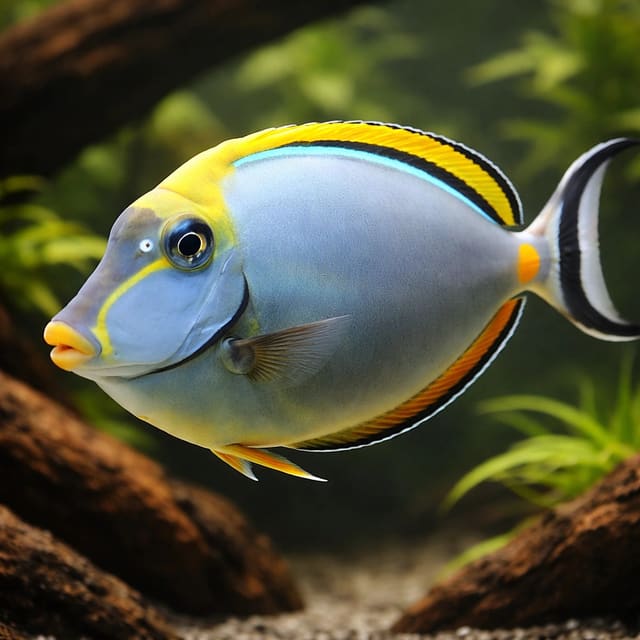
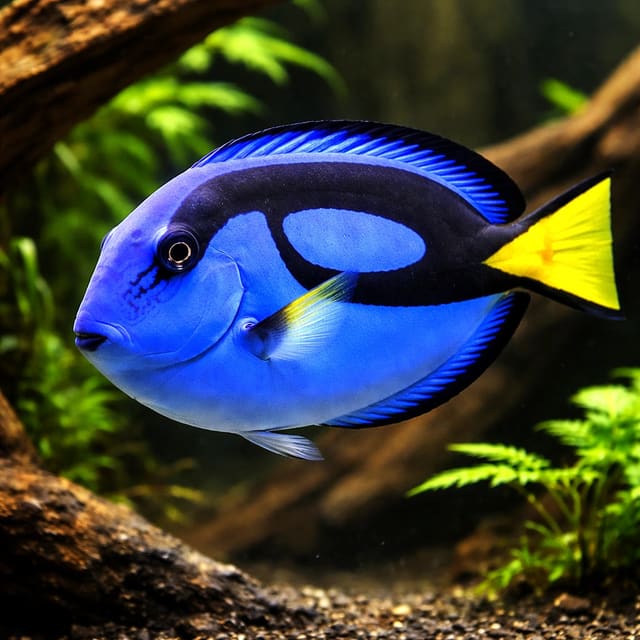
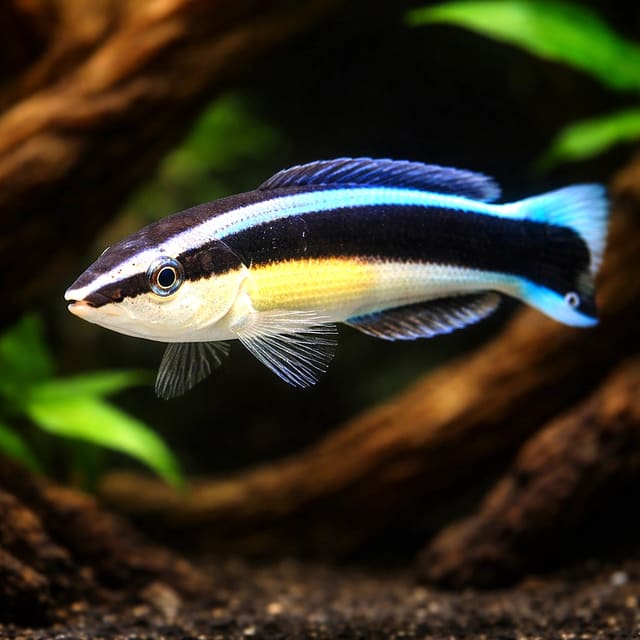
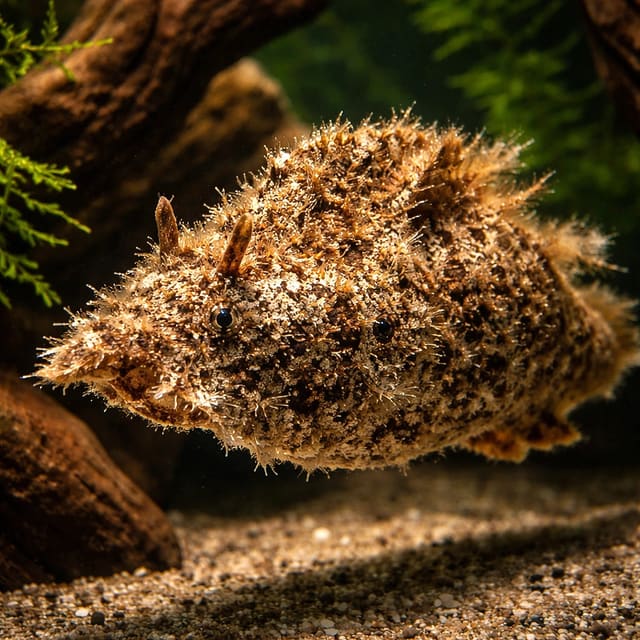
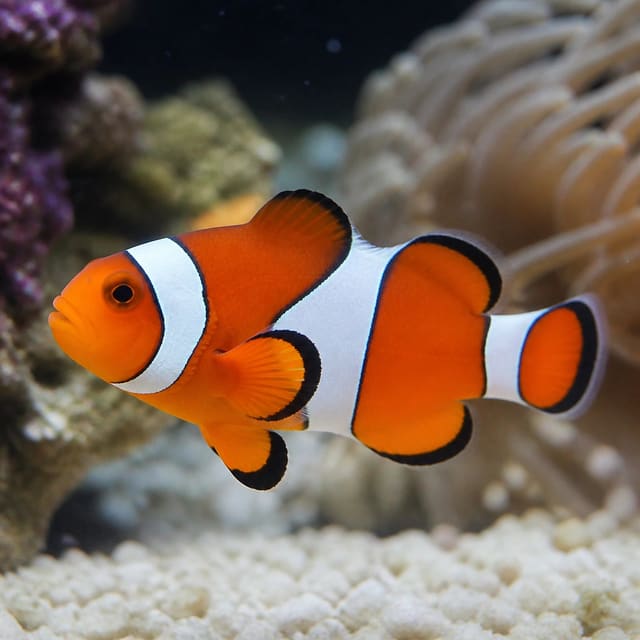
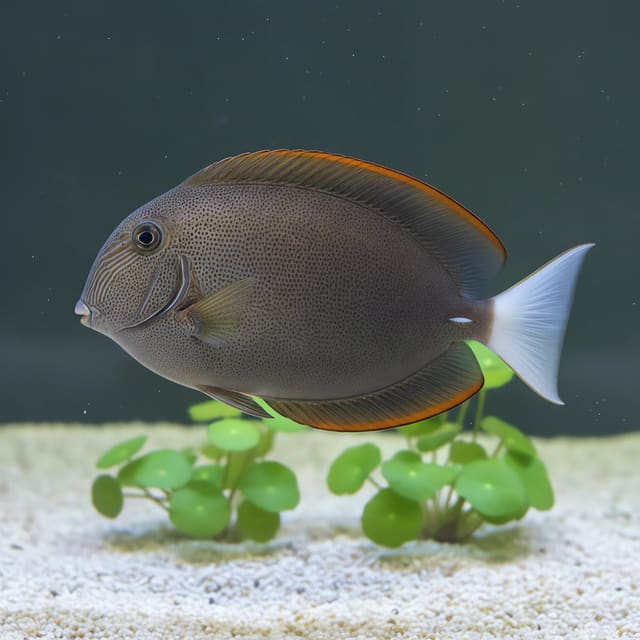
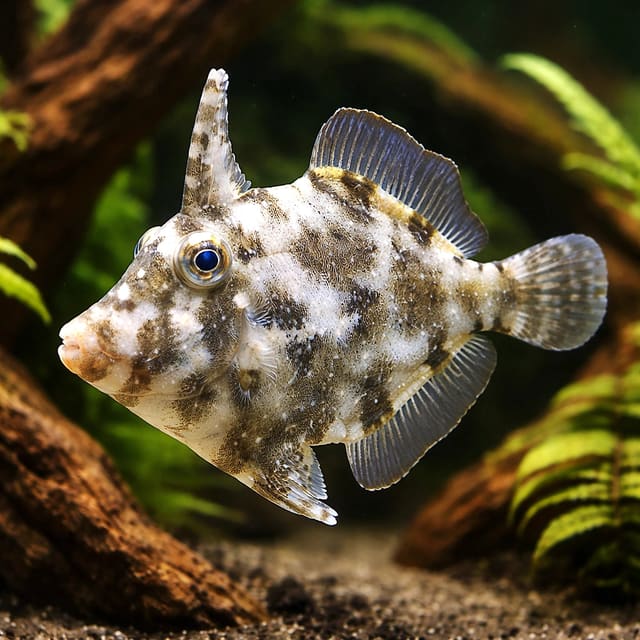
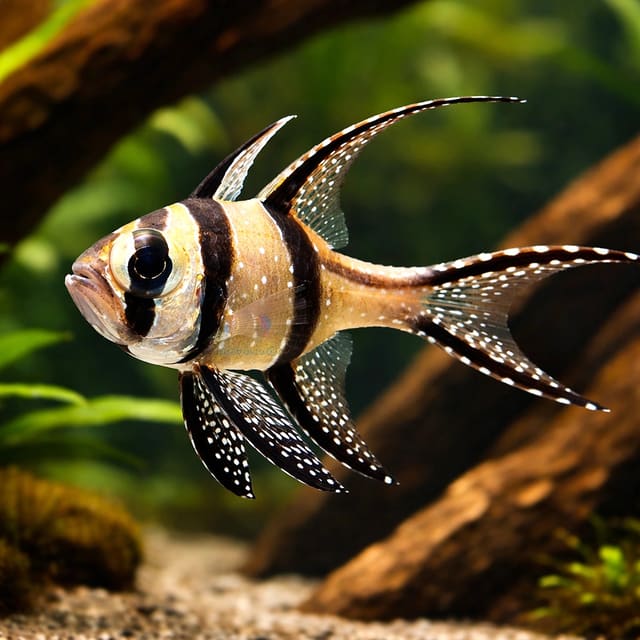
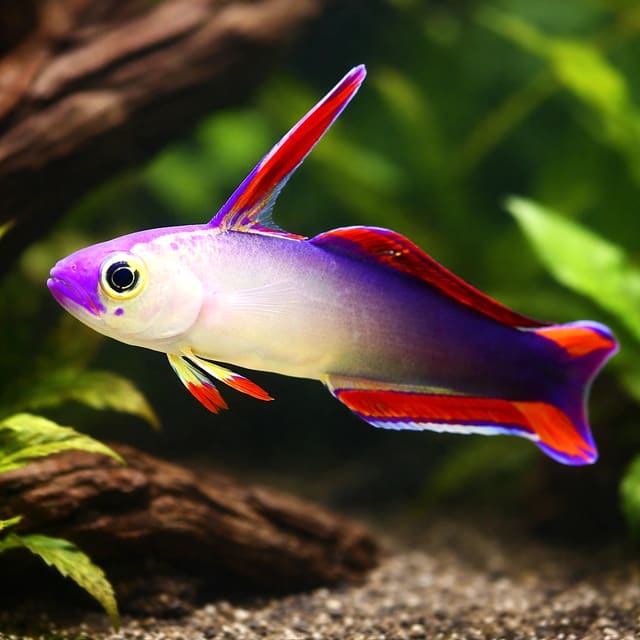
Some gallery images are representative, based on reference photographs of this species, and none shows the exact animal supplied, so colours can look slightly different from the live animal.
Gallery scenes can show one or two fish, different backgrounds and different poses. Use them to recognise the pale front, red-orange rear, dark tail and extended first dorsal fin, not to judge the purchase quantity or sex.
Once this care pattern fits your aquarium, you can browse the marine fish collection while planning the wider community. Compare each candidate against the Fire goby’s need for calm feeding access, stable marine water and an accessible retreat.
Plan around an adult length of 9 cm. FishBase records this as the maximum total length for male or unsexed Nemateleotris magnifica. OATA’s broader note that dartfish are unlikely to grow over 10 cm is consistent with this species measurement.
Use an aquarium of at least 60 litres for one Fire goby. That figure is OATA’s group recommendation for an individual dartfish. Choose a larger aquarium if the Fire goby will share space with other animals or if you intend to keep more than one dartfish.
The 60-litre figure is a minimum, not a reason to crowd the remaining space. OATA notes that a larger aquarium improves environmental stability, including temperature and water quality. It also gives tank mates more room to establish their own positions without constantly occupying the Fire goby’s feeding and retreat area.
Do not assume a fish’s life stage from its apparent size. Base the physical layout on the adult length, then use water testing and behaviour to decide whether the completed aquarium functions as intended.
Keep the Fire goby at 24–26°C and pH 7.9–8.3, with salinity between 1.020 and 1.025. FishBase records a species environmental temperature range of 22–28°C, while OATA gives 24–26°C as routine dartfish aquarium guidance; the two sources overlap at 24–26°C. OATA gives the pH, salinity and other aquarium values below as broad guidance for dartfish and jawfish.
| Measure | Routine instruction |
|---|---|
| Temperature | 24–26°C |
| pH | 7.9–8.3 |
| Salinity | 1.020–1.025 |
| Carbonate hardness | 8–12°dKH |
| Calcium | 380–450 ppm |
| Magnesium | 1250–1350 ppm |
| Ammonia | 0 mg/l |
| Nitrite | 0 mg/l |
| Nitrate | Up to 50 mg/l |
Test the aquarium before introducing the fish, then continue testing as part of maintenance. Do not add livestock while ammonia or nitrite is detectable. If a result changes, check it alongside temperature, pH and salinity rather than adjusting one number without understanding the wider pattern.
The RSPCA explains the role of biological filtration: fish release toxic ammonia, beneficial bacteria convert it to nitrite, and another stage converts nitrite to the safer nitrate. A well-set-up and maintained filter is therefore essential rather than optional equipment.
When a reef aquarium contains more sensitive animals, set shared parameters around the needs of every resident while keeping conditions appropriate for the Fire goby. Test after changes to stocking or feeding because both increase the waste handled by the biological filter.
Provide caves or crevices beside an open area where the Fire goby can hover. Wild adults occupy upper parts of outer reef slopes, hold position above the bottom and face the current while feeding. Dartfish also retreat quickly into a hole when frightened, so shelter and feeding space must work together.
The retreat should not be isolated from the feeding area. A fish that must cross a busy community whenever it leaves shelter may remain hidden or lose food to faster inhabitants. Position the two zones so it can emerge, hover and return without passing through the most contested part of the aquarium.
A filter remains essential whatever form the aquascape takes. OATA identifies live rock with sufficient water flow, internal or external filters and sump-based filters as possible marine filtration approaches. A protein skimmer may help maintain water quality by removing dissolved organic waste before it contributes further load.
Look from the intended feeding position towards the retreat entrance. The route should remain open, and drifting food should pass close enough for the fish to intercept it without crossing the busiest part of the aquarium. If another resident routinely occupies that route, revise the aquascape or community plan before relying on extra food to solve the conflict.
Check the same route again after rockwork, filtration outlets or other aquarium equipment are moved. A cave can remain physically present while becoming difficult to approach or poorly connected to the feeding area. The useful test is whether the fish can leave shelter, hold position and return without repeated displacement.
Watch how the fish uses the completed arrangement. Briefly retreating when frightened matches its documented behaviour. Persistent hiding, a reduced feeding response or repeated displacement by another fish calls for a review of tank-mate behaviour, shelter access and water quality.
Make small plankton-sized animal foods the main diet. FishBase records wild Fire gobies feeding on zooplankton, copepods and crustacean larvae, so frozen copepods, enriched brine shrimp and finely chopped mysis or krill fit the species’ recorded feeding biology.
OATA says dartfish will usually take prepared pellets or flake as well. Treat these as part of a varied routine rather than replacing the small crustacean foods that match the wild diet. Choose pieces small enough to be taken while the fish hovers in the water column.
Uneaten food breaks down and adds toxic waste to the water. A larger portion is therefore not a substitute for checking that the Fire goby actually receives its share. If food repeatedly passes untouched, check water quality, breathing, colour, hiding and competition before simply adding more.
| What you see | What to do |
|---|---|
| The fish takes small drifting items | Continue the portion and stop within a few minutes |
| Large pieces pass uneaten | Use a smaller item such as copepods or finely chopped mysis |
| Tank mates take everything first | Change the feeding position and reassess the companions |
| Food remains after the meal | Reduce the next portion and test water quality |
| Interest in food falls | Check behaviour, appearance and water values promptly |
Rotate frozen copepods, enriched brine shrimp and finely chopped mysis or krill so the diet stays varied and matches the fish’s zooplankton feeding biology.
The Fire goby is hand-bagged in pure oxygen and placed in an insulated poly box, with a heat pack when the weather calls for it. Transport is handled by a courier licensed to carry live animals. Make sure someone is at the delivery address to receive the parcel, because live fish cannot be left unattended.
These are the store’s arrival and acclimatisation steps. Open and inspect the parcel the same day it arrives, and if anything has gone wrong, contact us the same day with your order number and the unboxing video.
Read the delivery and Live Arrival Guarantee policy before the parcel is sent so the receiving and claim requirements are understood. The policy explains the insulated packing, tracking, attendance requirement, acclimatisation and unboxing-video process.
Before release, confirm that the prepared aquarium remains at 24–26°C, where FishBase and OATA overlap, with OATA’s dartfish values of pH 7.9–8.3 and salinity 1.020–1.025 and ammonia and nitrite at 0 mg/l. The filter must already be mature and operating because acclimatisation cannot compensate for an uncycled aquarium.
These checkpoints connect arrival observations to the established care routine. They help distinguish a brief retreat from a continuing pattern involving missed food, altered breathing or unsuitable water.
Once released, judge the fish against its normal biology. A frightened Fire goby may retreat rapidly into a hole. Continue to observe its breathing, colour, swimming and later feeding response rather than treating the first retreat alone as a diagnosis.
Change 25% of the aquarium water at least once every week. OATA strongly recommends this schedule for dartfish and jawfish, using a siphon where useful to remove solid waste. Match the replacement water to the aquarium’s operating conditions so maintenance does not create an avoidable swing.
Check the filter regularly and clean it often enough to prevent blockages. When filter media needs rinsing, use aquarium water removed during the partial water change. Do not rinse it under the tap because chlorine or chloramine may kill part of the beneficial bacterial population established in the media.
Clean a protein skimmer regularly if one is used. Its performance depends on removing collected material before the equipment becomes fouled. Continue checking the main filter as well because a skimmer does not replace biological filtration.
Add fish to a mature aquarium slowly. OATA explains that beneficial bacteria must increase when more fish and more food increase waste production. Adding too many animals too quickly can create new tank syndrome, with ammonia and nitrite rising beyond the filter’s capacity.
Keep nitrate at no more than 50 mg/l and ammonia and nitrite at 0 mg/l. Use the test results to judge whether the weekly routine is controlling waste rather than assuming that completing a water change automatically makes the water suitable.
Know the Fire goby’s baseline before deciding that something has changed. It naturally hovers above the bottom, faces current while feeding and may dart into a retreat when frightened. A change becomes more significant when it persists, affects feeding or appears alongside altered breathing, colour or body condition.
| Change | First response |
|---|---|
| Hanging at the surface, sitting on the bottom or erratic swimming | Test water quality and compare it with the normal swimming pattern |
| Colour becoming darker or paler | Check water values, companions and feeding response |
| Hiding more than normal | Look for intimidation, blocked retreat access and water changes |
| Gill covers moving faster or slower | Test temperature, ammonia, nitrite, pH and salinity promptly |
| White spots, fluffy growths or fin and scale loss | Record the change and seek health guidance |
| Weight or body condition changing | Observe how much food the fish actually takes |
| Reduced interest in food | Test water and check whether tank mates prevent feeding |
Begin with water testing because dartfish can be stressed by even small amounts of ammonia and nitrite. Confirm both remain at 0 mg/l, then check nitrate, temperature, pH and salinity against the normal operating range.
Do not increase food automatically when appetite falls. Extra leftovers add waste and can worsen water quality. Offer the normal small portion, observe access to it and remove the cause of competition if another fish takes every item.
If a concerning change continues after the immediate checks, contact us for health guidance. Describe the swimming, breathing, colour, appearance and feeding changes together with recent test results so the next decision is based on the whole pattern rather than one sign.
Choose calm fish that allow the Fire goby to leave its retreat and feed. OATA names cardinalfish and small gobies as examples because they may let a dartfish emerge for food. Treat those names as screening examples rather than automatic approval for every individual or aquarium.
Avoid boisterous inhabitants. OATA warns that dartfish can easily be intimidated in a tank with boisterous inhabitants, so they should be kept with fish that allow them to come out to feed. The practical test is not simply whether another fish is labelled peaceful; it is whether that animal repeatedly occupies the retreat entrance, chases the Fire goby or takes every drifting food item.
Avoid mixing different dartfish species. OATA says different species should not be mixed, so a calm-companion assessment does not override that restriction.
| Question | Decision |
|---|---|
| Will it allow the Fire goby to leave shelter? | Reject a plan that blocks or contests the retreat |
| Will it take every small food item first? | Change the mix or feeding plan before introduction |
| Does the aquarium exceed the 60-litre individual minimum? | Use a larger aquarium when adding other animals |
| Can both animals use separate positions? | Provide enough room and reassess if displacement occurs |
A proposed cardinalfish or small goby still needs enough room and a feeding pattern that leaves the Fire goby access to food. If the companion remains in a separate position and both animals feed, the arrangement meets the central screening rule. If it blocks the retreat or takes every drifting item, revise the plan even though its general type appears among OATA’s examples.
Apply the same test after any change to stocking. A community that worked before another fish was added may develop new competition around the retreat or feeding route. Recheck who reaches the food, where each animal holds position and whether the Fire goby emerges consistently.
Compatibility depends on individual behaviour, adult size, aquarium space and feeding style. Other proposed fish and invertebrates need an individual assessment rather than a universal safe or unsafe label.
Ask us for a stocking and compatibility assessment before adding the Fire goby to an established community. Include the aquarium volume, water values, existing species and their adult sizes, because a name alone cannot show whether the fish will have calm access to shelter and food.
Plan around one Fire goby unless the aquarium and social assessment support more. Wild observations do not translate into a fixed aquarium group number: FishBase notes that several individuals may share the same hole, especially juveniles, and also records monogamy for the species.
OATA says an aquarium must be larger when multiple dartfish are kept. Do not calculate the requirement by treating 60 litres per fish as a guaranteed formula. A larger system must also give each fish usable retreat space, open hovering room and access to food.
Do not infer a compatible pair from colour, apparent size or a two-fish gallery scene. The wild note that this species is monogamous describes its natural biology; it is not a method for selecting two aquarium fish.
If the Fire goby shares the aquarium with other species, apply the same space test. The aquarium must be larger than the individual minimum, and every resident must allow the dartfish to emerge, hover and feed. Persistent hiding or missed meals is a reason to revisit the social arrangement rather than simply increasing the food offered.
It reaches a recorded maximum of 9 cm total length. Plan the aquarium around that adult figure rather than the fish’s apparent size in an image.
Use an aquarium of at least 60 litres for one fish. That is OATA’s dartfish recommendation; choose a larger aquarium when adding other animals or keeping more than one.
Plan around one fish unless the social and space assessment supports more. FishBase notes that several may share a hole in the wild, especially juveniles, while OATA says multiple dartfish need a larger aquarium.
It suits a keeper who can mature and maintain a marine filter, hold ammonia and nitrite at 0 mg/l, feed twice daily and choose calm tank mates.
Use small plankton-sized meaty foods such as frozen copepods, enriched brine shrimp and finely chopped mysis or krill. Feed only what it finishes within a few minutes, twice daily.
FishBase and OATA overlap at 24–26°C; OATA’s dartfish guidance also gives pH 7.9–8.3, salinity 1.020–1.025 and carbonate hardness 8–12°dKH. Keep ammonia and nitrite at 0 mg/l.
Treat it as a retreating dartfish that needs calm company. OATA warns that dartfish can easily be intimidated by boisterous inhabitants, so avoid boisterous tank mates and choose fish that allow it to come out to feed.
OATA names cardinalfish and small gobies as examples of fish that may let dartfish come out to feed. Avoid boisterous inhabitants and different dartfish species, and assess every other proposed companion individually.
Film every delivery from the sealed parcel onward, open it in one continuous take and show the fish still in the bag for any Live Arrival Guarantee claim. It is packed in pure oxygen in an insulated poly box; be home to receive it, float the bag for 20–30 minutes and keep bag water out of the aquarium.
No reviews for this item yet. Bought one? Honest reviews only, good or bad.
What customers say about ordering from us
Easy website plenty of info on fish your buying great to pick a time slot
TRACEY DURRANT · 7 Oct 2026
Got some lovely fish thank you
Kevin Mackie · 7 Oct 2026
Reviews of our shop, collected by Judge.me, an independent third-party review collector. Newest first.