Pajama Cardinalfish (Sphaeramia nematoptera)
24–27°C · pH 8–8.2
£43.99
Banggai Cardinalfish (Pterapogon kauderni) is an endangered cardinalfish from Indonesia's Banggai Islands that reaches 8.6 cm and, in the wild, hovers in groups above long-spined sea urchins. It needs a mature, stable marine aquarium with rockwork for refuge, and one live fish is supplied per purchase.
Adult size is the maximum length this species reaches at full maturity (scientific sources). The livestock you receive will be younger and smaller. Product-photo provenance and any image-specific limitations are stated on the listing.
Pterapogon kauderni
Banggai Cardinalfish (Pterapogon kauderni) is an endangered cardinalfish from Indonesia's Banggai Islands that reaches 8.6 cm and, in the wild, hovers in groups above long-spined sea urchins. It needs a mature, stable marine aquarium with rockwork for refuge, and one live fish is supplied per purchase.
Adult size is the maximum length this species reaches at full maturity (scientific sources). The livestock you receive will be younger and smaller. Product-photo provenance and any image-specific limitations are stated on the listing.
Maintain these water conditions for optimal health and vibrant colors
The Banggai Cardinalfish (Pterapogon kauderni) is a small marine cardinalfish from one island group in Indonesia. Its silvery body carries bold black vertical bars, one of them running through the eye, and its long, pointed fins are speckled with white. Wikipedia notes that it is the only member of its genus and a popular aquarium fish, and FishBase records a maximum total length of 8.6 cm.
It is also an endangered species. FishBase gives its IUCN status as Endangered and names collection for the aquarium trade as a threat. Wikipedia adds that it is among the relatively few marine fish bred regularly in captivity, although significant numbers are still captured in the wild. Keeping one well, in a mature aquarium and for the long term, is the best way to respect that. If the origin of the fish matters to you, ask us about it before you order.
| Suits | A mature, stable marine aquarium with rockwork for refuge and calm companions |
|---|---|
| Maximum length | 8.6 cm total length (FishBase) |
| Water | Marine; 24–26°C and pH 8.0–8.2 fit both OATA's fish-only and invertebrate guidance |
| Natural home | Shallow seagrass and sand around the Banggai Islands, Indonesia |
| Social life | Wild groups of 2 to 60; aquarium numbers depend on tank size |
| Natural food | Small crustaceans, probably taken at night |
| Conservation | Endangered on the IUCN Red List |
| Supplied as | One live fish per purchase |
Each purchase is for one live Banggai Cardinalfish, hand-packed by our team and sent with a licensed live-animal courier. Sex is guaranteed only when the selected option explicitly states male or female. This Banggai cardinal fish listing has no sex-guaranteed option. If you are thinking of keeping more than one, read the section on groups and tank mates before deciding how many your aquarium can hold.
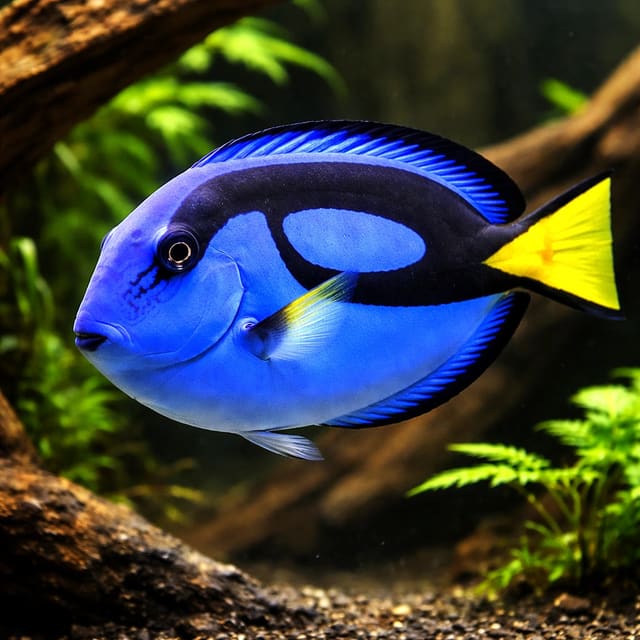
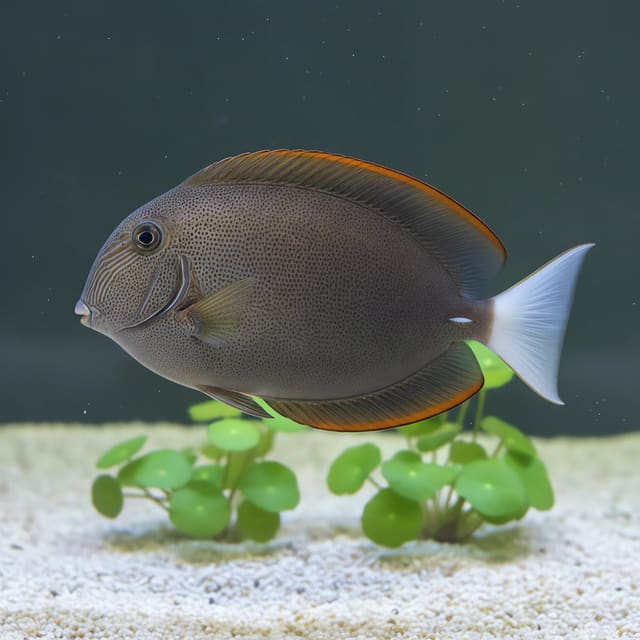
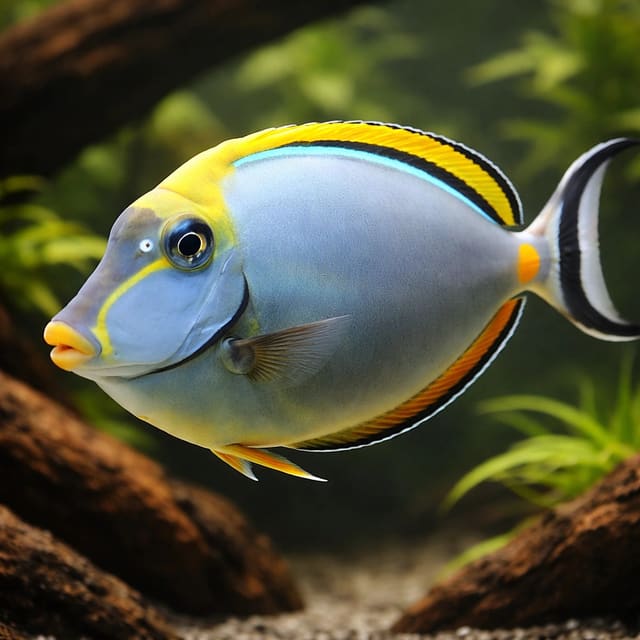
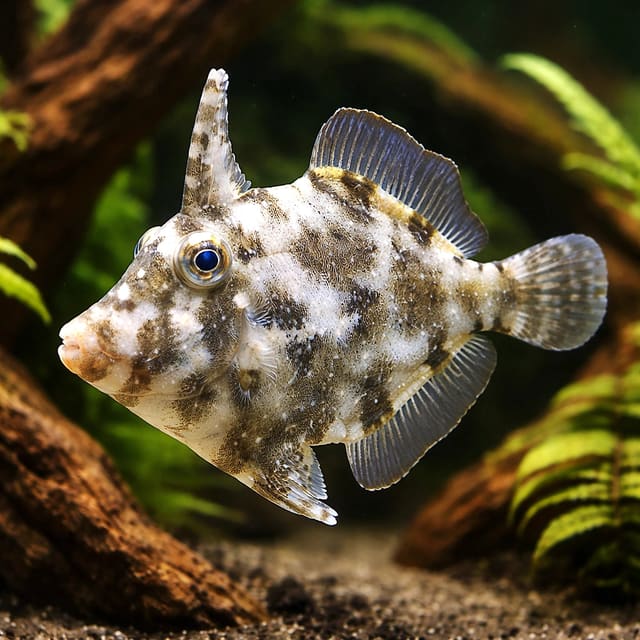
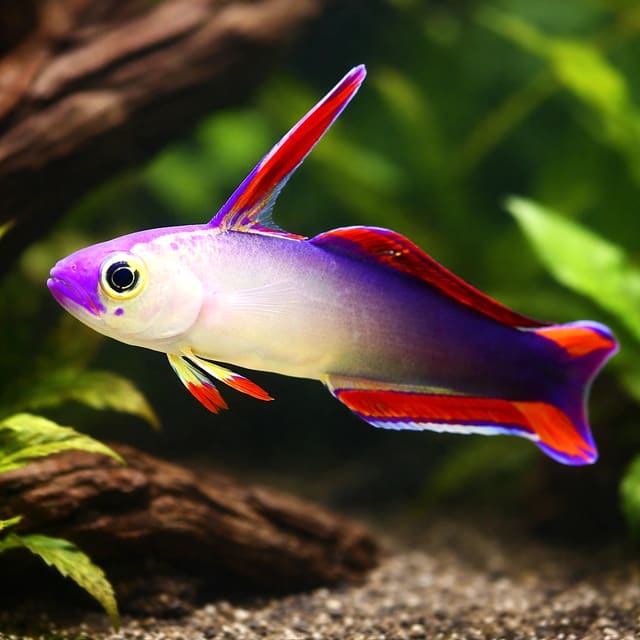
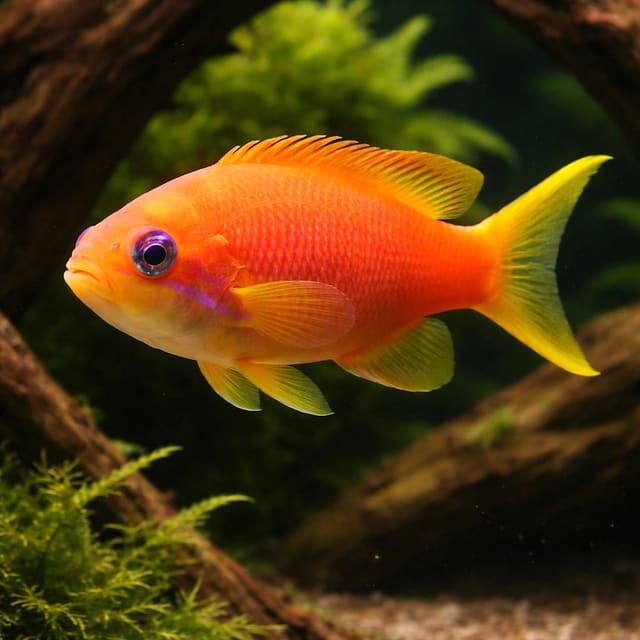
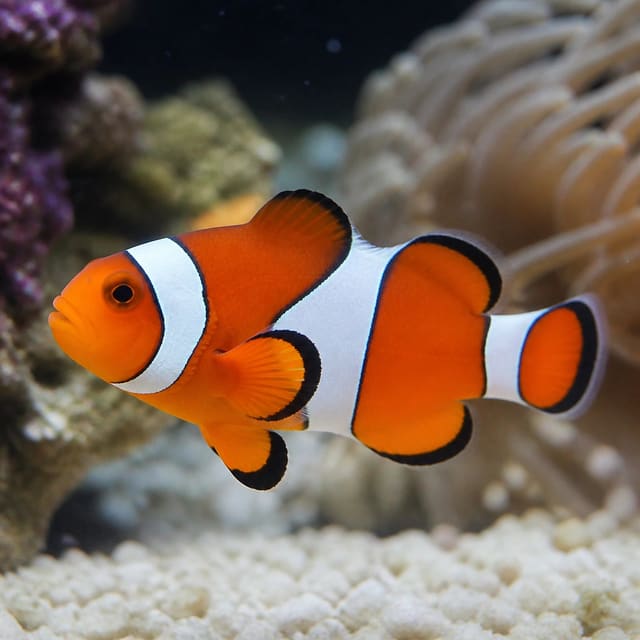
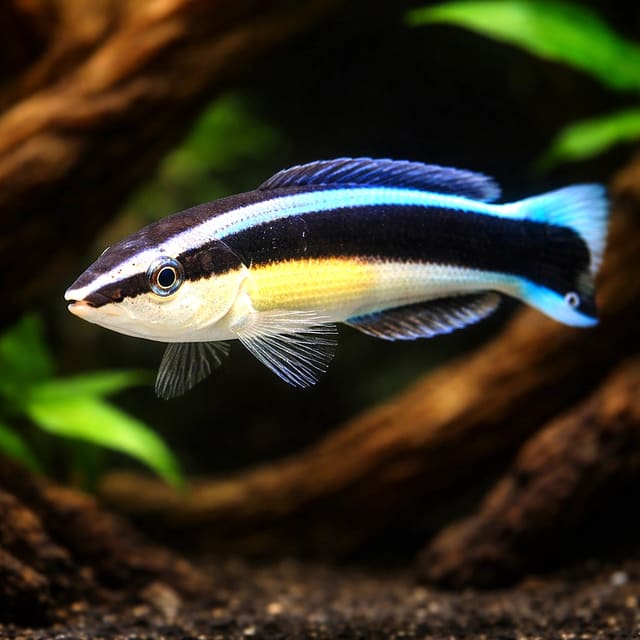
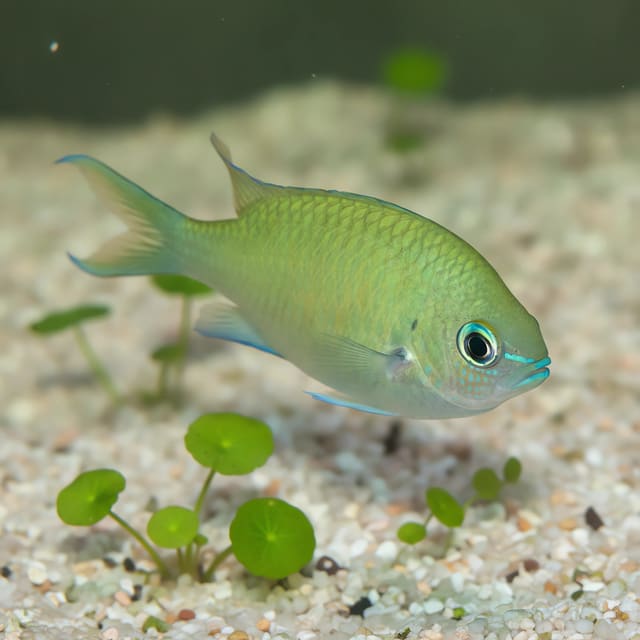
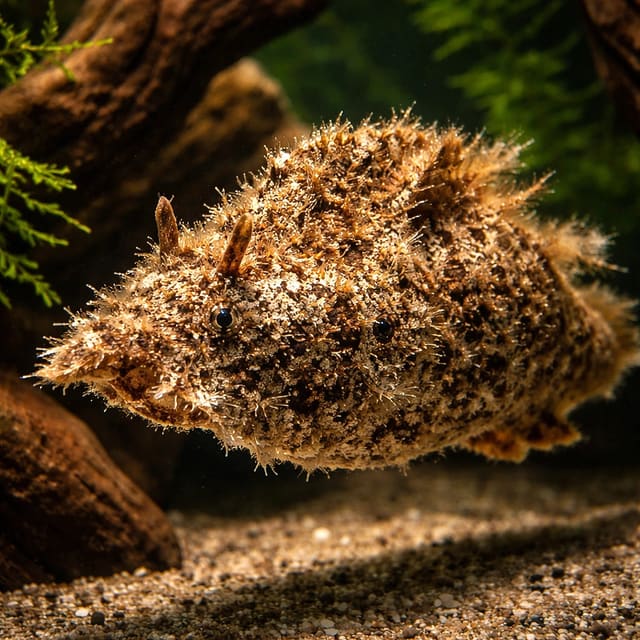
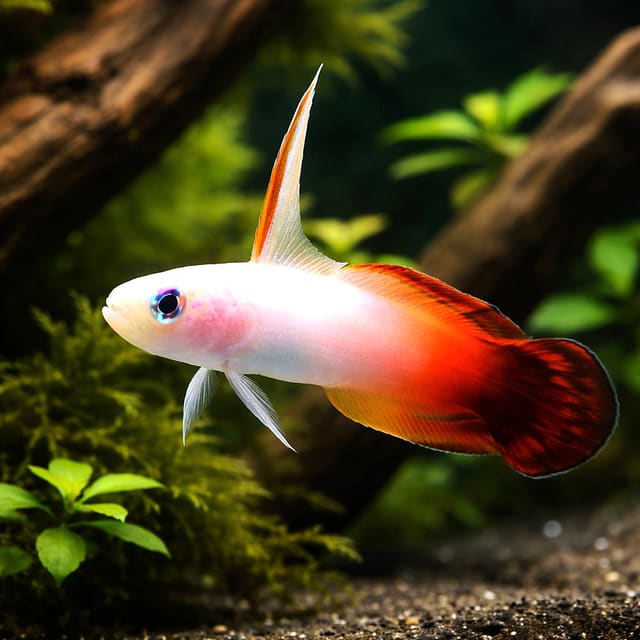
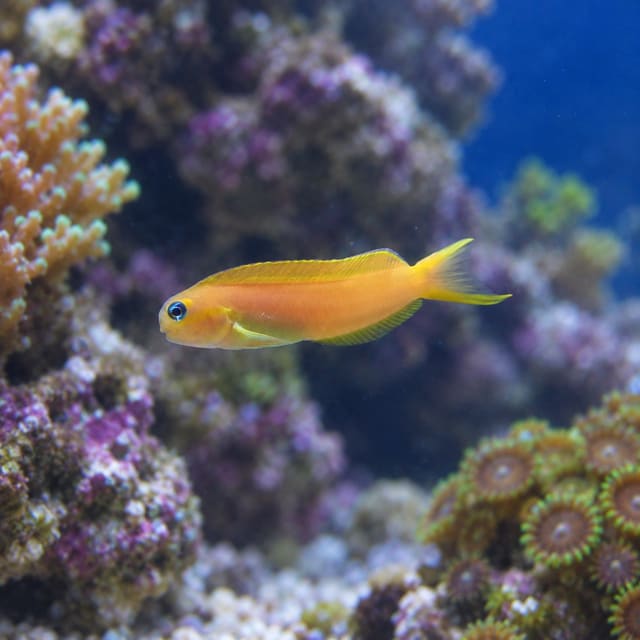
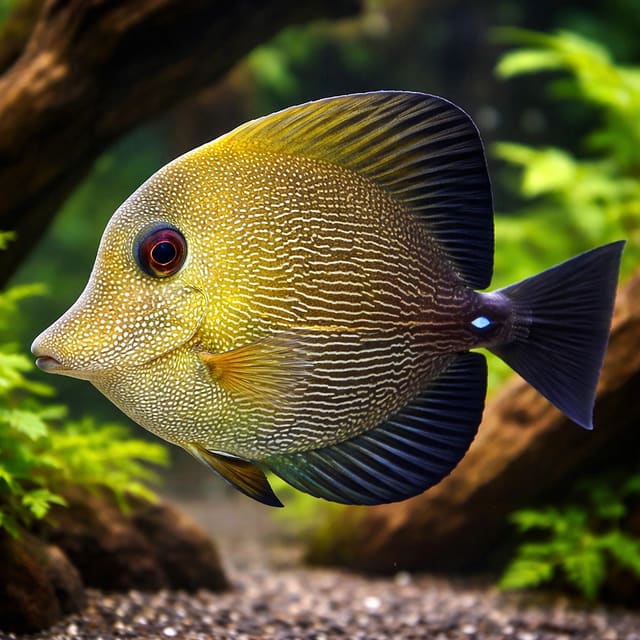
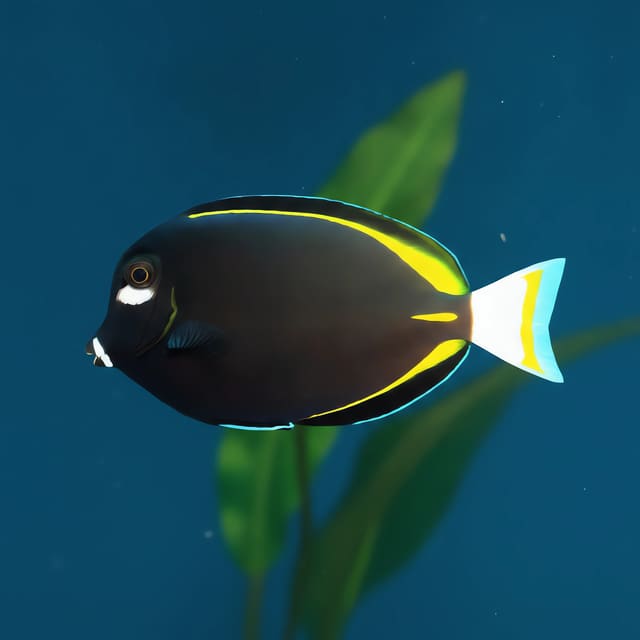
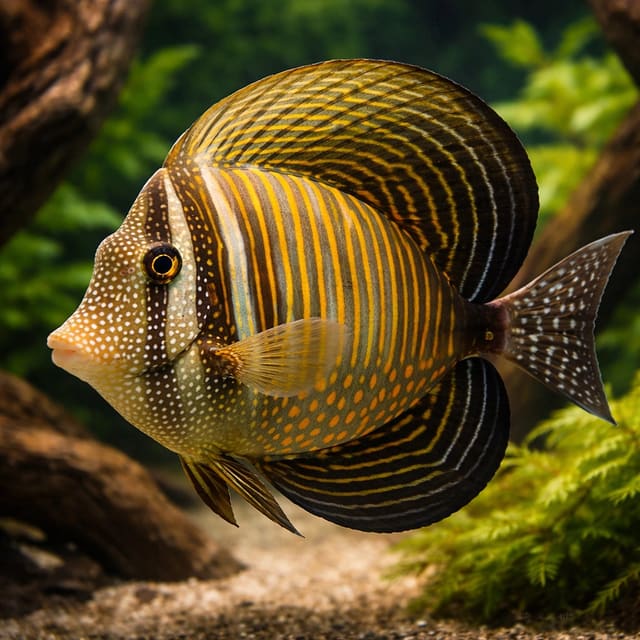
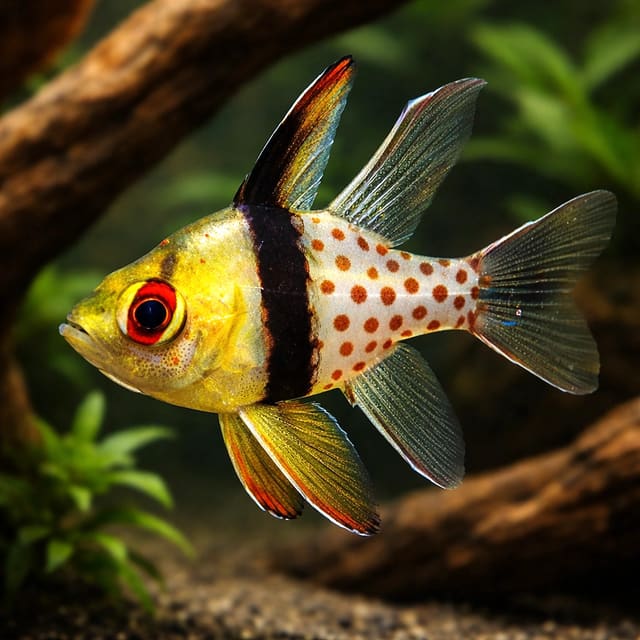
Gallery images have been digitally enhanced to improve image quality. Natural colour, pattern, size and maturity can vary between live animals. Some photographs show the fish among green plants and wood. That scenery is not a plan for a marine aquarium; the aquarium planning section explains what to furnish it with instead.
A Banggai Cardinalfish is a good match for a marine aquarium that has matured and holds steady water, has rockwork the fish can hover beside, and is shared with calm fish that will not rush every meal. It also suits a keeper who is happy to plan around an endangered species: deciding in advance how many the tank can hold, and keeping them well for the long term.
It is a poor match for a brand-new tank, a community of fast or aggressive feeders, or a reef stocked mainly with very small shrimps and similar crustaceans, which are close to its natural food. Its modest adult size is an advantage in a home aquarium, provided the companions are chosen with the same care.
To compare other saltwater species, browse our marine fish collection, and use the care sections below to check that your aquarium is ready for this one.
FishBase's species summary describes Pterapogon kauderni as a marine, demersal cardinalfish of the family Apogonidae. It has been recorded from the surface down to 16 m, but usually lives in just 1–2 m of water. The range is remarkably small: FishBase describes it as apparently restricted to the Banggai Islands of Indonesia, with further records from several small islands off eastern Taliabu Island and around Luwuk.
FishBase places that range between roughly 1° and 2° south and 123° and 124° east: a patch of sea so small that collection for the aquarium trade is listed as a threat to the species' survival. That is worth keeping in mind when you decide how many to buy.
It is common around jetties, over silty sand with seagrass (Enhalus acoroides). Its closest partner is the long-spined sea urchin, Diadema setosum. Groups of 2 to 60 fish hover directly above the urchins, and when threatened they retreat among the spines. The youngest fish, at about 2–3 cm standard length, stay closest to the urchins, and juveniles also use anemones for protection.
FishBase notes that it probably feeds on small benthic and planktonic crustaceans at night: prey taken from the bottom as well as from the open water. That points to a diet of small crustaceans rather than grazing, which shapes both its aquarium diet and the invertebrates it can safely share a tank with.
OATA's guide to setting up a marine aquarium gives a general rule rather than a single number: within reason, buy an aquarium as large as possible, ideally one that can hold your chosen fish once they are fully grown, or be prepared to move to a bigger set-up as they grow. Larger aquariums hold more water, so they are more stable and less susceptible to swings in temperature and pH than small ones.
For a Banggai Cardinalfish, three things set the size: its adult length of up to 8.6 cm, how many you intend to keep, and the other fish and invertebrates that will share the tank. A tank chosen with all three in mind will also be easier to keep stable.
OATA distinguishes fish-only aquariums from reef aquariums, which also hold invertebrates such as corals. The choice changes the water values you aim for, the water you use and the monitoring you do, so decide early. Both kinds can suit this cardinalfish; the compatibility section explains what to consider with invertebrates.
OATA advises positioning the aquarium:
That last point suits a fish whose instinct is to retreat when alarmed. A quiet corner lets it spend its day hovering in view rather than hiding.
OATA notes that different species prefer different water types and flow rates. A fish whose habit is to hover in one place near cover is easiest to keep, and to watch, where the flow lets it hold position comfortably, so keep strong jets away from the rockwork it favours while still moving water through the whole aquarium for the filter and skimmer.
OATA recommends rockwork, ideally living rock of some description, as a natural refuge for fish and a place to site corals if you keep them, along with a layer of fine coral sand. Build the rock so there are sheltered spots with open water in front of them, where the cardinalfish can hover close to cover. OATA also notes that live plants are generally not kept in marine aquariums, apart from specialist set-ups such as refugiums or mangroves.
OATA recommends reverse osmosis (RO) water for marine aquariums, because it has been filtered to remove impurities, and describes it as essential if you want to keep invertebrates such as corals. RO water can be bought ready-salted or as freshwater to mix at home. If you mix it yourself, dissolve specialised aquarium salt, never table salt, following the manufacturer's instructions; water flow from a powerhead and warmth from the heater speed the process up.
For the first fill this can be done inside the aquarium. After that, OATA advises mixing and heating water for water changes in a separate container, so it is ready at the right salinity and temperature before it goes in. Coral sand can be rinsed in RO water and added once the salt is in.
Once the aquarium is filled, at the correct salinity and temperature, the rest of the equipment can be switched on. OATA suggests leaving it for 24 to 48 hours so any salt fully dissolves, the temperature stabilises and you can confirm everything works. A protein skimmer may not remove any waste until livestock is added, and recommendations on when to start skimming vary, so ask us if you are unsure. That short settling period is only the start: the filter still has to mature before fish go in.
The RSPCA's advice on fish environments sets out why. Fish release ammonia, which is toxic. In a working biological filter, beneficial bacteria convert it to nitrite, also toxic, and then to nitrate, which is safer. OATA adds that this bacterial population has to grow every time more fish are added and feeding increases. Overstocking, or stocking too quickly, leaves too few bacteria to cope, and the resulting rise in ammonia and nitrite is known as new tank syndrome.
Because new salt water is mixed and heated in a separate container, you can check it before it goes in. Bring it to the aquarium's temperature, confirm its salinity with the hydrometer or refractometer, and only then make the change. Matching the two keeps the stability that larger volumes are chosen for, rather than undoing it with every water change.
OATA publishes two sets of home-aquarium values: one for fish-only systems and one for aquariums that also hold invertebrates. They are broad marine guidance rather than figures measured for this species, so pick the column that matches your system and keep the water steady within it.
| Measure | OATA guidance |
|---|---|
| Salinity | 1.017–1.023 SG (23–30 ppt) fish-only; 1.024–1.026 SG (32–35 ppt) with invertebrates |
| Temperature | 24–27°C fish-only; 24–26°C with invertebrates |
| pH | 8.0–8.2 in both |
| Ammonia | Zero |
| Nitrite | Zero |
| Nitrate | Not above 20 mg per litre fish-only; 5–10 mg per litre with invertebrates, depending on species |
| Carbonate hardness | 8–12 dKH with invertebrates |
| Phosphate | 0.04–0.1 mg per litre with invertebrates, depending on species |
Temperature and pH are where the two sets overlap. A steady 24–26°C with pH 8.0–8.2 sits inside both, so those are sensible targets whichever kind of aquarium the cardinalfish lives in. Salinity is different: the fish-only and invertebrate bands do not overlap, so set it for the most demanding animals in your tank.
OATA's point about larger aquariums, that they are less susceptible to variations in temperature and pH, is the practical heart of marine care. Choose your targets inside the ranges above and keep the water there: a steady reading day after day matters more than chasing an exact number.
If you keep hard corals, OATA adds that calcium and magnesium should also be monitored, and its separate coral care sheets cover them. The lower nitrate and phosphate limits for invertebrate systems are another reason to feed carefully and keep stocking modest in a reef.
Check salinity with your hydrometer or refractometer and test ammonia and nitrite regularly, adding nitrate and the reef measures if invertebrates share the tank. Any ammonia or nitrite reading above zero means the filter is not keeping up, and it needs attention before more livestock is added.
The starting point is the wild record. FishBase notes that the Banggai Cardinalfish probably feeds on small benthic and planktonic crustaceans at night. Mysis shrimp and brine shrimp are small crustaceans themselves, so frozen foods of that kind are the closest match to its natural diet and the obvious base for its menu.
Feed modest amounts, and watch what happens to the food. Anything the fish does not eat breaks down in the aquarium and adds to the waste the filter bacteria must process; OATA links rising feeding directly to the load on a maturing filter. In a reef, the tighter nitrate and phosphate limits make that restraint even more important.
Watch the new fish closely at each feed during its first days. Note whether it rises to take food, how readily it eats and whether it seems more interested at some times of day than others; its wild feeding probably happens after dark. A fish that feeds steadily is settling in. One that ignores food should prompt a water test straight away, and a message to us if the readings are fine.
Because its wild feeding probably happens at night, a fish that seems hesitant at a morning feed may be keener later in the day. Try offering food at different times during the first weeks and settle on the routine it responds to best, keeping each portion modest.
A hovering fish of up to 8.6 cm is easily beaten to food by faster, bolder tank mates. Offer food where the cardinalfish is waiting near its shelter, and check that it is actually eating rather than watching others take everything. If it is losing out at every feed, the mix of fish needs rethinking.
Our team hand-bags your cardinalfish in pure oxygen and packs it in an insulated poly box, adding a heat pack when the weather calls for it. A licensed live-animal courier carries the parcel, and we email you the tracking number and your confirmed delivery date. Because live fish cannot be left unattended, someone must be at the address to receive them.
OATA's advice is to check first that the new fish is compatible with those you already keep and that ammonia and nitrite are both at zero. Test in the days before delivery, confirm the salinity and temperature, and make sure the rockwork gives the newcomer somewhere to shelter straight away.
The Live Arrival Guarantee relies on three things: someone at the address to receive the parcel, the parcel opened and inspected on the day it arrives, and a continuous unboxing video that starts with the parcel still sealed. Read the full terms on our delivery and Live Arrival Guarantee page.
Expect a new Banggai Cardinalfish to stay close to cover at first; retreating to shelter is how it responds to threats in the wild. Keep the room around the aquarium calm, watch it at each feed, and hold off adding other new fish until it is settled and eating, so the filter bacteria are not asked to cope with several arrivals at once.
OATA notes that fish are easily stressed by bright lights, extreme temperatures, noise and movement. Those are worth keeping to a minimum for the first days too: keep people and pets from crowding the glass, avoid working in the aquarium unless you need to, and let the fish learn its surroundings from its chosen shelter.
FishBase records that the male incubates the eggs until they hatch. The eggs are large, about 2.5 mm in diameter, and the young remain in his mouth cavity for an undetermined period after hatching. Newly hatched larvae have no planktonic stage, so the young do not spend a drifting larval phase in open water.
FishBase notes that the species has been reared in captivity, and Wikipedia describes it as among the relatively few marine fish bred regularly in captivity. This listing sells single fish and the sex of each one is not selected, so it is not set up to supply a breeding pair.
FishBase lists the Banggai Cardinalfish as Endangered and names collection for the aquarium trade as a threat to it. Wikipedia adds the detrimental impact of humans on its environment and certain fatal diseases, noting that iridovirus diseases are a significant cause of mortality.
Wild Banggai Cardinalfish live in groups of 2 to 60, hovering together above sea urchins. An aquarium is a different matter. OATA's marine stocking guidance states that it is not possible to say exactly how many fish an aquarium can hold, because body size, species needs, water values and compatibility vary so widely, and that territorial behaviour in many marine fish reduces the number further.
So the right number depends on your aquarium, not on a rule of thumb. Each purchase supplies one fish; tell us your tank's volume and current residents before buying several, and we will help you settle on a number that leaves room to grow and space for everyone to find shelter.
If you plan a group, remember that several fish arriving together are still one large addition for the filter to absorb. OATA's advice to increase fish numbers slowly applies here as well, so make sure the biological filtration is well established before a group goes in, and hold back other new livestock until they have settled.
OATA notes that some marine species need to be kept in shoals, while others are territorial or aggressive and will not live together peacefully, and it advises checking that any new fish is compatible with those you already keep. For this cardinalfish, the wild picture is a slow, hovering fish whose defence is to retreat to shelter. Build the community around that:
| Check | What to look for |
|---|---|
| Aquarium size | Room for every fish at full adult size, with the cardinalfish's 8.6 cm included |
| Current residents | Calm fish that leave hovering neighbours alone |
| Feeding speed | No tank mate that clears the food before the cardinalfish reaches it |
| Refuge | Enough rockwork for every fish to find cover |
| Invertebrates | No colony of very small crustaceans you would not want eaten |
Add new fish gradually, one change at a time, and watch feeding times closely after each addition.
In the wild the Banggai Cardinalfish lives among seagrass and long-spined sea urchins, and its juveniles also shelter in anemones. Its recorded food is small benthic and planktonic crustaceans; corals are not part of that recorded diet.
Its wild partnership with long-spined sea urchins, and the way juveniles shelter in anemones, is one of the most interesting things about this fish. An urchin or anemone is not needed for it to settle, though; rockwork provides the refuge. If you are thinking of adding either, treat it as a separate animal with care needs of its own and talk to us first.
A fish-only aquarium with plenty of living rock is the simpler home. It avoids the question of small crustaceans, allows OATA's wider fish-only ranges and still gives the cardinalfish the refuge it relies on. If you choose a reef instead, set the aquarium up for the invertebrates first and add the fish once the water is stable at the tighter values.
FishBase records a maximum total length of 8.6 cm. That is the adult figure to plan around, whatever size the fish is when it arrives.
OATA's marine guidance is to buy as large an aquarium as is reasonably possible, sized for your fish once they are fully grown, because larger volumes are more stable and less susceptible to swings in temperature and pH. Size it for the number of cardinalfish you plan to keep and everything else that will share the tank.
In the wild they hover in groups of 2 to 60 fish. OATA points out that no one can say exactly how many fish a particular aquarium can hold, and that territorial behaviour in many marine fish reduces the number, so tell us your tank size and current fish and we will help you decide.
Add it only once the filter has matured and ammonia and nitrite read zero. OATA explains that stocking too quickly can cause new tank syndrome, when there are not enough filter bacteria to cope with the extra waste, so build up any marine tank slowly and bring this fish in once the system is stable.
FishBase records that it probably feeds on small benthic and planktonic crustaceans at night. Frozen crustacean foods such as mysis shrimp and brine shrimp are the closest match to that natural diet; feed modest amounts so uneaten food does not add to the waste in the aquarium.
OATA's broad marine guidance gives 24–27°C for fish-only aquariums and 24–26°C where invertebrates are kept, with pH 8.0–8.2 in both, zero ammonia and zero nitrite. A steady 24–26°C and pH 8.0–8.2 suits either kind of set-up.
Its wild behaviour is to hover in groups near cover and retreat among sea urchin spines when threatened. Plan its community around that: calm companions, rockwork to shelter in, and no fish likely to harass a slow, hovering species.
In the wild it lives among seagrass and long-spined sea urchins, and juveniles also shelter in anemones. In an aquarium, choose calm fish and treat very small crustaceans with caution, because small crustaceans are its natural food.
Our team hand-bags it in pure oxygen and packs it in an insulated poly box, adding a heat pack when the weather calls for it, and a licensed live-animal courier delivers it after we email your tracking number and confirmed delivery date. Be at home to receive it, record a continuous unboxing video that begins with the parcel still sealed, then float the bag for 20–30 minutes before letting the fish out.
No reviews for this item yet. Bought one? Honest reviews only, good or bad.
What customers say about ordering from us
Easy website plenty of info on fish your buying great to pick a time slot
TRACEY DURRANT · 7 Oct 2026
Got some lovely fish thank you
Kevin Mackie · 7 Oct 2026
Reviews of our shop, collected by Judge.me, an independent third-party review collector. Newest first.