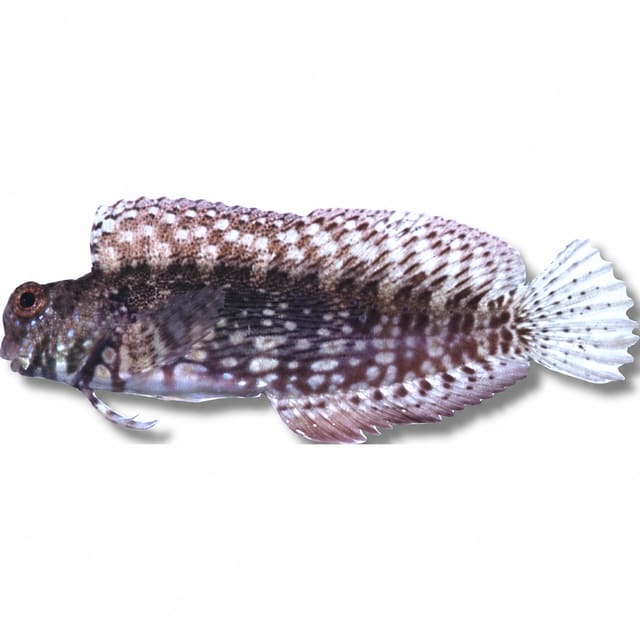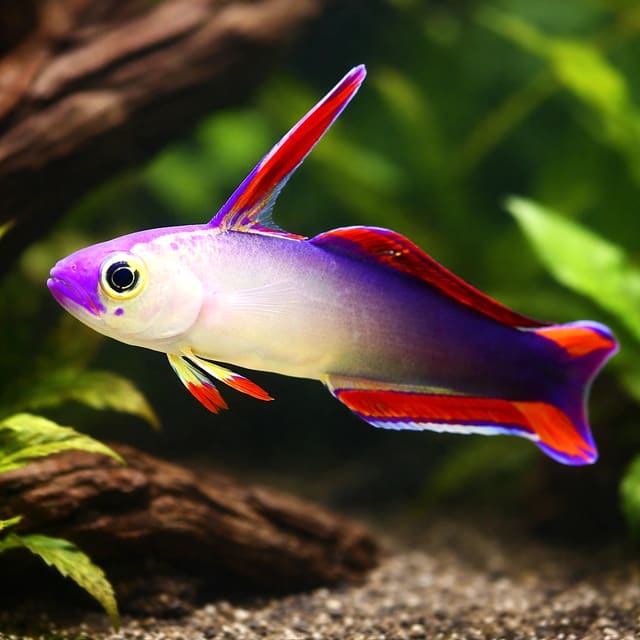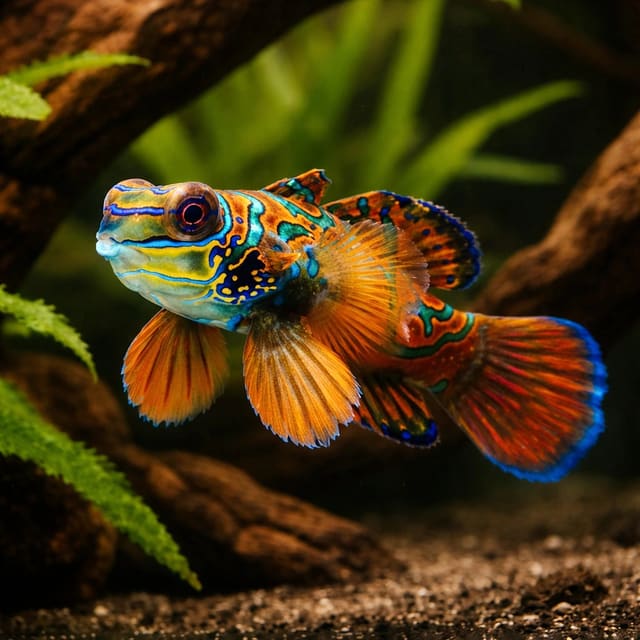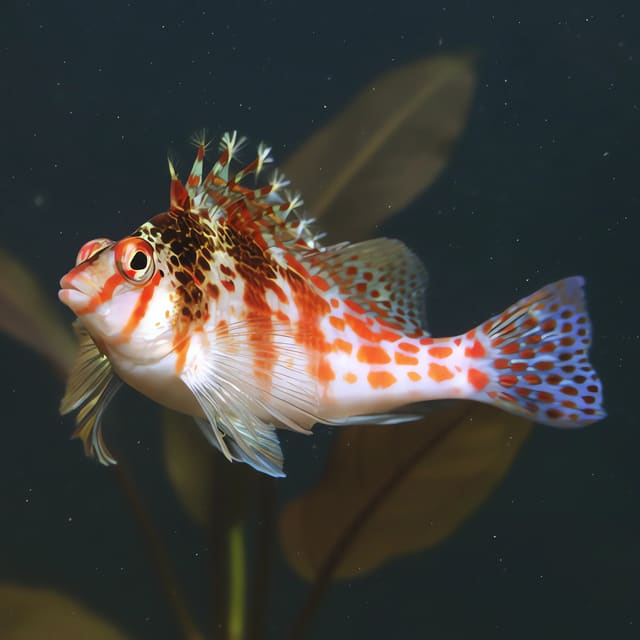
Falco Hawkfish (Cirrhitichthys falco)
24–26°C · pH 8–8.2
£55.99
Longnose Hawkfish (Oxycirrhites typus): a slim, red-grid reef hawkfish reaching 13 cm that perches on rockwork and hunts small crustaceans. One live fish per purchase, best kept singly in an established marine aquarium without small shrimp.
Adult size is the maximum length this species reaches at full maturity (scientific sources). The livestock you receive will be younger and smaller. Product-photo provenance and any image-specific limitations are stated on the listing.
Oxycirrhites typus
Longnose Hawkfish (Oxycirrhites typus): a slim, red-grid reef hawkfish reaching 13 cm that perches on rockwork and hunts small crustaceans. One live fish per purchase, best kept singly in an established marine aquarium without small shrimp.
Adult size is the maximum length this species reaches at full maturity (scientific sources). The livestock you receive will be younger and smaller. Product-photo provenance and any image-specific limitations are stated on the listing.
Maintain these water conditions for optimal health and vibrant colors
The longnose hawkfish, Oxycirrhites typus, is one of the most recognisable small reef fish: a slim, pale body crossed by a fine red grid, a long pointed snout and a spiny dorsal fin with small tufts at the spine tips. Each purchase supplies one live longnose hawkfish. Its natural food is small crustaceans, so it belongs in an established marine aquarium where shrimp and other small crustaceans are not part of the stocking plan.
It is a member of the hawkfish family, Cirrhitidae, and the only known species in its genus. On the reef it lives on steep outer slopes swept by strong currents, perching among large gorgonians and black corals rather than cruising open water. That habit shows as soon as it settles at home: it picks a lookout, rests there for long spells, watches everything that moves and then darts out to snatch food before returning to its post.
| Suits | Think again if |
|---|---|
| A mature, stable marine aquarium with plenty of rockwork for perching | The aquarium is new and its filter is still maturing |
| Fish-only systems, or reef aquariums with corals | You keep small ornamental shrimp or other small crustaceans |
| Keepers who enjoy a watchful fish with a strong personality | You hope to keep several hawkfish in the same aquarium |
| A community of fish too large to be mistaken for prey | Large, boisterous fish would dominate every perch |
| Feature | Detail |
|---|---|
| Scientific name | Oxycirrhites typus |
| Family | Cirrhitidae (hawkfishes) |
| Maximum recorded length | 13 cm total length |
| Wild range | Red Sea and South Africa east to Hawaii; also the eastern Pacific from the Gulf of California to northern Colombia and the Galápagos |
| Wild habitat | Steep outer reef slopes with strong currents, among gorgonians and black corals |
| Natural food | Small crustaceans from the reef surface and the water column |
| Social pattern | Monogamous and strongly territorial in the wild |
| Planning water values | 24–26 °C and pH 8.0–8.2, from OATA's general marine guidance |
| Sold as | One live fish per purchase |
One purchase supplies one longnose hawkfish. Sex is guaranteed only when the selected option explicitly states male or female. This Longnose hawkfish listing has no sex-guaranteed option. That matters with this species in particular: wild fish live in monogamous pairs and defend territory strongly, so a second fish added later could turn out to be a rival rather than a partner. Plan on one per aquarium.
The appeal is easy to see. Few marine fish combine such a clean geometric pattern with such an obvious personality, and a hawkfish sitting on the highest rock, turning its eyes to follow you across the room, quickly becomes the fish visitors ask about. It rewards a keeper who enjoys watching behaviour as much as colour.
Build every part of the set-up around the adult fish rather than the size it arrives at. A 13 cm hawkfish is not a large fish, but it is long and slim, it needs raised places to sit, and it will claim part of the aquarium as its own.
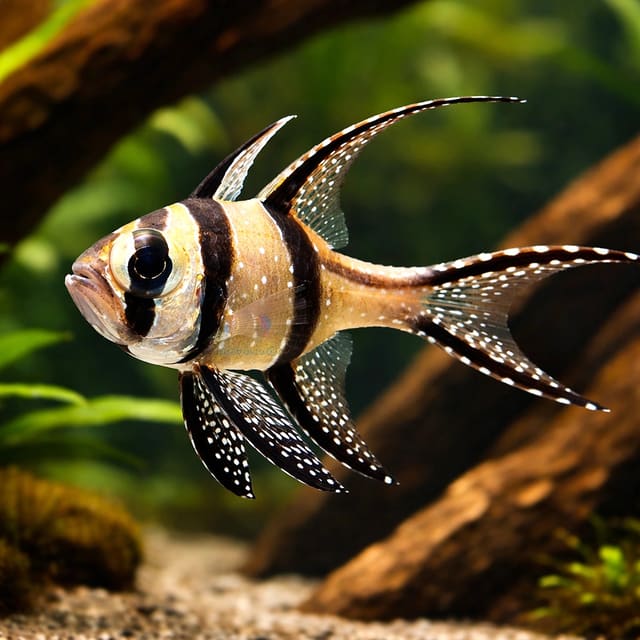
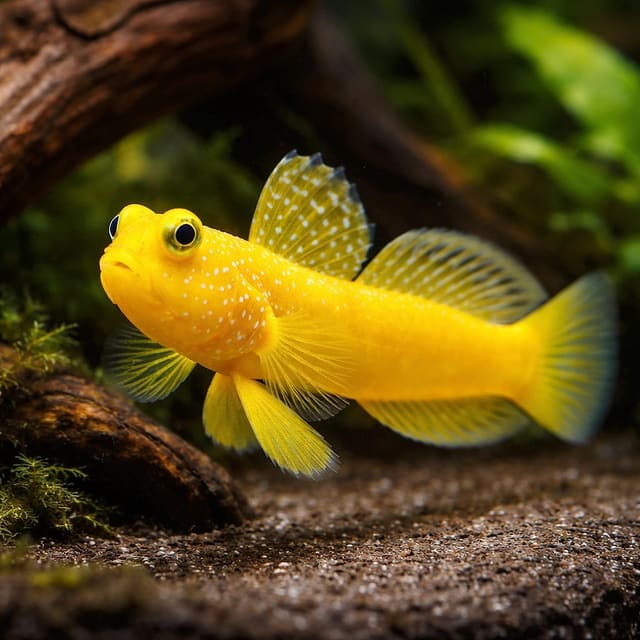
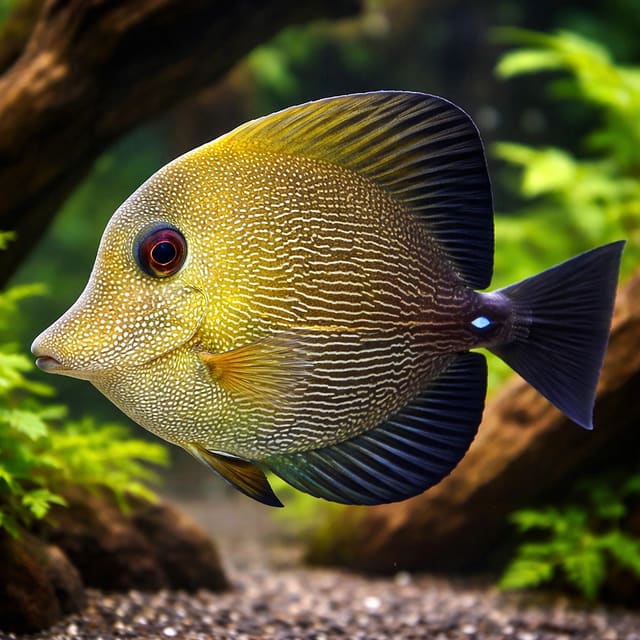
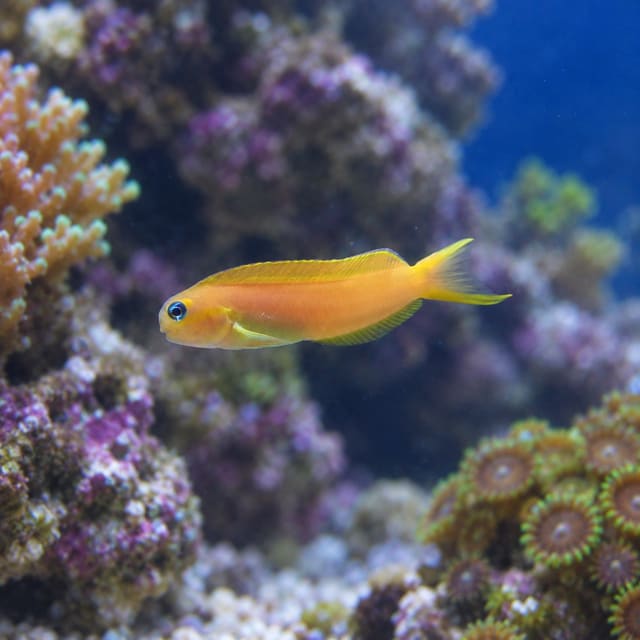
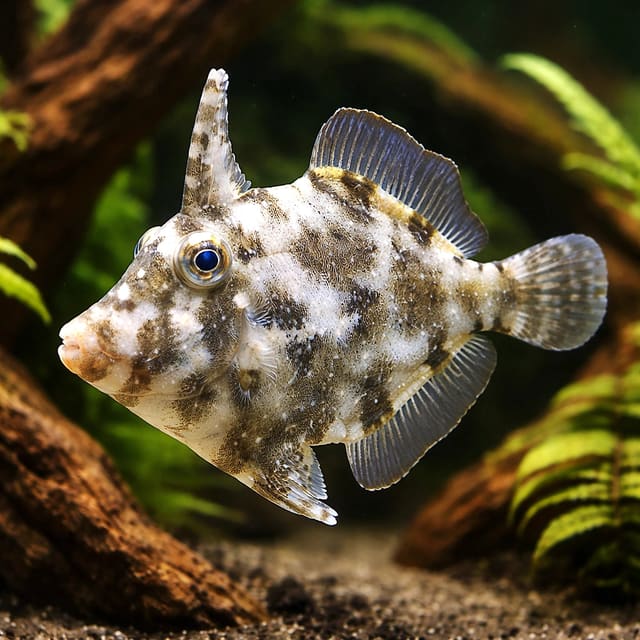
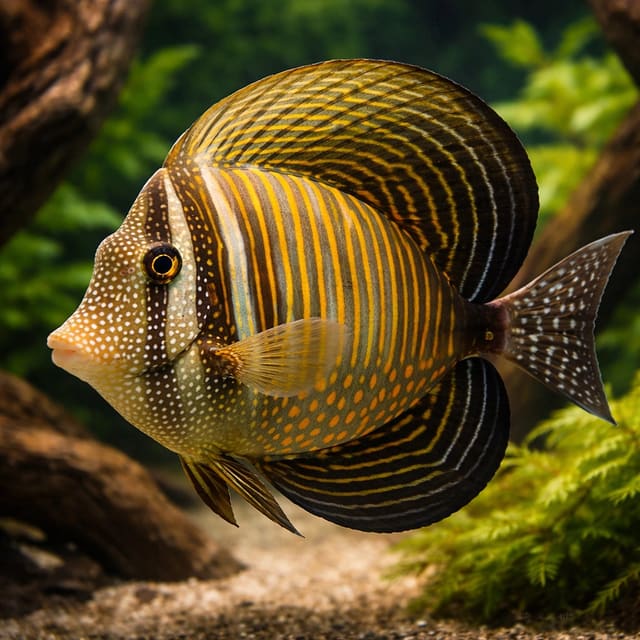
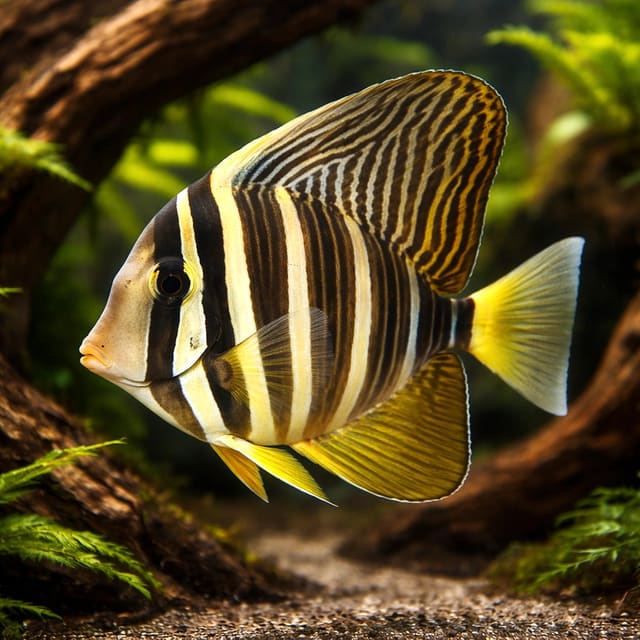
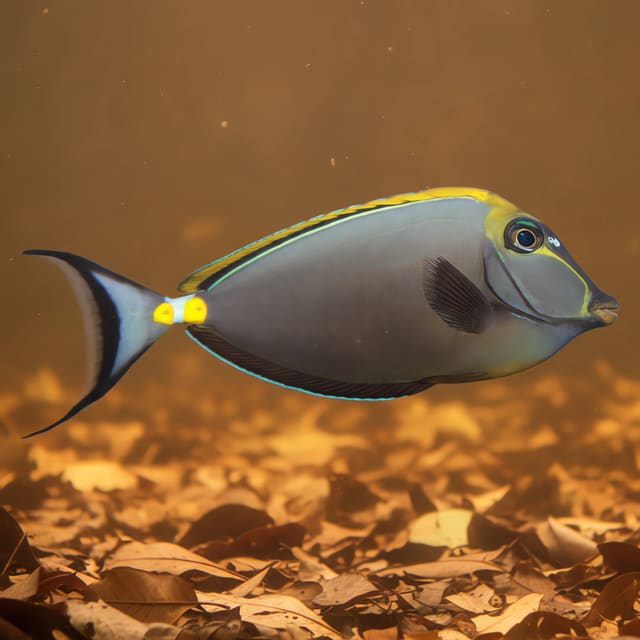
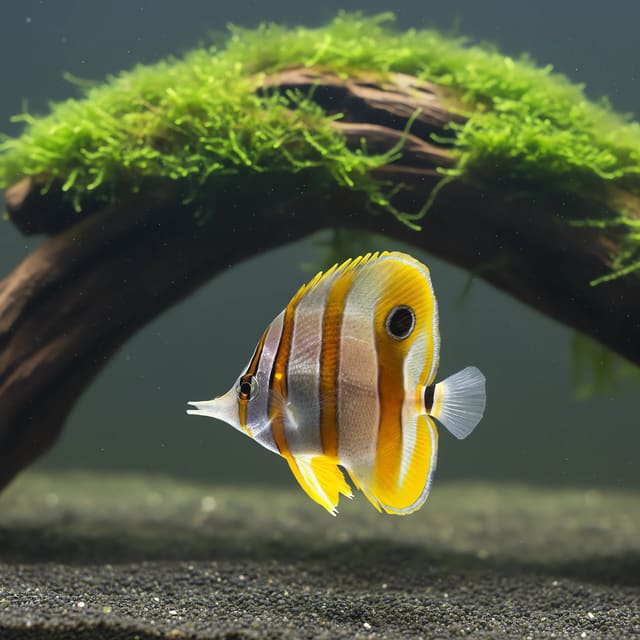
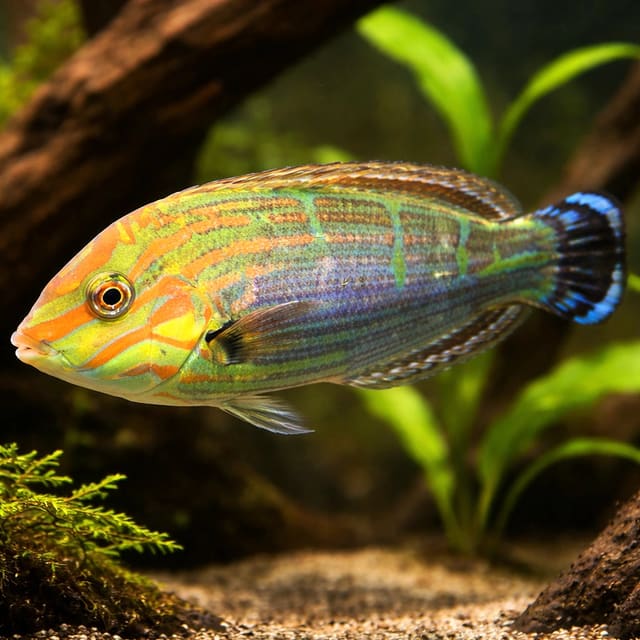
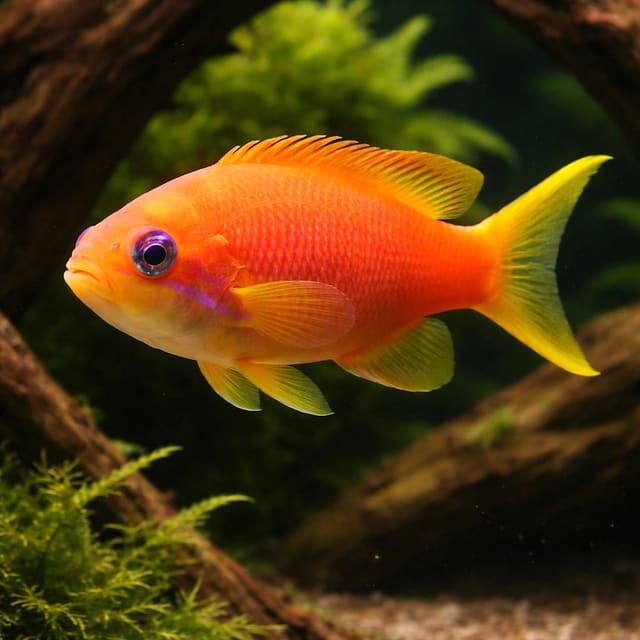
Gallery images have been digitally enhanced to improve image quality. Natural colour, pattern, size and maturity can vary between live animals. A few of the gallery scenes show the fish among plants and driftwood. In a real marine aquarium, rockwork and coral sand take their place, and live plants are generally not part of a saltwater set-up.
If you are still choosing the rest of your stock, our marine fish collection lets you compare other saltwater species before deciding how a hawkfish will fit in.
According to FishBase, Oxycirrhites typus is a reef-associated marine fish with a remarkably wide range. In the Indo-West Pacific it occurs from the Red Sea and South Africa to the Hawaiian Islands, north to southern Japan and south to New Caledonia. It is also found in the eastern Pacific, from the Gulf of California to northern Colombia and the Galápagos Islands.
Adults live on steep outer reef slopes exposed to strong currents, where they settle in large gorgonians and black corals. FishBase records a wild depth range of 10–100 m and notes that the fish is common below 25 m. Those figures describe where wild fish are found, not conditions to copy. The useful lesson for the aquarium is that this is a fish of vertical structure and moving water, happiest with a high perch and a view.
The Wikipedia species account gives the same 13 cm maximum total length, places the fish among the reefs of the Indian and Pacific Oceans, and notes that it is also found in the aquarium trade.
The body is pale, almost white, and crossed by a lattice of red to orange-red lines that form a neat grid of squares along the flanks. The head carries the same red colouring along the snout, often with small yellow spots below the eye, and the spiny dorsal fin is banded with darker red-brown marks. Colour and pattern vary a little between individual fish.
FishBase describes the adult as benthic, meaning it lives on or close to the reef rather than in open water, and records its food as small benthic or planktonic crustaceans. Those are tiny animals picked from the reef surface or taken as they drift past in the current. The long, narrow snout suits that way of feeding.
At home you see the same pattern: a long, patient watch from a high perch, a short and precise dash, then a return to the same lookout. That behaviour, more than the colour, is what makes the fish so engaging: it follows movement along the glass and seems far more aware of its surroundings than fish that simply cruise.
Wild longnose hawkfish are described as monogamous and strongly territorial. In practice a settled fish treats its favourite perches as its own and may drive off other hawkfish or fish that want the same spots. Wild pairing does not mean that any two fish placed together will pair; with the sex of each fish unknown, a second hawkfish may simply be treated as an intruder.
Spawning has been observed in the field and is described as pelagic, which means the eggs are released into open water rather than laid on a surface. FishBase regards the suggestion that the species lays demersal eggs as questionable. Home breeding is not something to plan around with this fish, and this listing supplies a single fish for display rather than breeding stock.
FishBase lists the species as Least Concern on the IUCN Red List, while noting that it is uncommon to rare in most areas. That is one more reason to have the aquarium fully matured and the rockwork finished before the fish arrives, so it can settle straight into a stable home.
OATA's marine set-up advice is simple and sensible: within reason, buy an aquarium as large as possible, and ideally one that can hold your chosen fish once they are fully grown. Larger aquariums contain more water, so temperature and pH drift more slowly than in small systems. For a fish that reaches 13 cm and wants a lookout of its own, stability and room to claim a territory matter more than any single headline figure.
Think about the whole community rather than the hawkfish alone. OATA points out that many marine fish are territorial, which reduces the number of fish an aquarium can hold, and that differences in body size, needs and compatibility make an exact stocking number impossible to give. Plan a zone of rockwork for the longnose hawkfish, and make sure any other perching or territorial fish have space well away from it.
Rock is the backbone of the layout. OATA recommends rockwork, ideally living rock of some description, because it gives fish a natural refuge and provides places to position corals if you add them. For this species, build the rock so that it offers perches at several heights: ledges, arches and the tops of stacks where the fish can sit with a clear view of open water. Wild fish rest in the branches of gorgonians and black corals, so raised, exposed resting points suit it far better than a low, flat scape.
Leave open lanes between the rock structures. The hawkfish spends much of its time still, but when food appears it moves quickly, and a wall of rock with no gaps leaves it nowhere to make those short hunting runs. A mix of high perches and open water also lets you see the fish at its best.
Make sure every piece of rock is stable. A perching fish uses the highest and most exposed points, and a stack that shifts when fish or equipment brush against it puts both the animals and the glass at risk.
OATA recommends a layer of fine coral sand. Some marine fish filter the sand to feed or sleep under it at night, so a sand bed keeps more companion species open to you, and it gives the aquarium the look of a natural reef floor beneath the hawkfish's perches.
Wild fish sit on reef slopes exposed to strong currents, so good water movement from powerheads suits the species. The aim is lively flow through the aquarium with sheltered perches where the fish can sit without being pushed about. Watch where it chooses to rest during the first weeks; if it is struggling to hold on to the rock, change the direction of flow rather than taking movement away altogether.
OATA's positioning advice applies to every marine set-up, and it helps a watchful fish like this one settle:
A hawkfish that watches the room from its perch will soon learn the rhythm of a quiet household. A spot beside a slamming door or a busy walkway gives it little rest.
OATA's marine aquarium care sheet gives two sets of values: one for fish-only home aquaria and one for aquaria that also hold invertebrates such as corals. They are general values for marine aquariums rather than figures measured for this hawkfish, and they are the right starting point for it.
| Fish-only aquarium | OATA value |
|---|---|
| Salinity | 1.017–1.023 SG (23–30 ppt) |
| Temperature | 24–27 °C |
| pH | 8.0–8.2 |
| Ammonia and nitrite | Zero |
| Nitrate | Do not exceed 20 mg/l |
| Aquarium with corals or other invertebrates | OATA value |
|---|---|
| Salinity | 1.024–1.026 SG (32–35 ppt) |
| Temperature | 24–26 °C |
| pH | 8.0–8.2 |
| Ammonia and nitrite | Zero |
| Nitrate | 5–10 mg/l, depending on species |
| Carbonate hardness | 8–12 dKH |
| Phosphate | 0.04–0.1 mg/l, depending on species |
For the longnose hawkfish, aim for 24–26 °C and pH 8.0–8.2. That temperature band sits inside both of OATA's columns, so it works whether or not you keep corals. Match the salinity to your system: a fish-only aquarium can follow OATA's fish-only band, while any aquarium with corals or other invertebrates should follow the reef column of 1.024–1.026 SG. If you keep hard corals, OATA adds that calcium and magnesium should also be monitored.
The RSPCA is clear that filters are vital and that no fish should be kept without a well set up and maintained filter. Fish release ammonia, which is toxic. A working biological filter allows beneficial bacteria to grow; they convert ammonia to nitrite, which is also toxic, and then to nitrate, which is safer. An aquarium is only ready for a hawkfish once that process is established and ammonia and nitrite read zero.
OATA advises leaving a newly filled marine aquarium for 24 to 48 hours so that any salt fully dissolves, the correct temperature is reached and the equipment can be checked, before the filter maturing stage begins. Only after the filter has matured should livestock go in, and the longnose hawkfish is best added to a system that has been running steadily for some time.
Stock gradually. OATA explains that the beneficial bacteria need to increase every time more fish are added and feeding increases, and that stocking too many fish too quickly can cause 'new tank syndrome', when there are not enough nitrifying bacteria to cope with the extra waste. Adding the hawkfish straight after several other new fish carries the same risk.
Keep a simple log. Test ammonia and nitrite before and after any new addition, and follow nitrate over time against the limit for your type of system. In a reef aquarium, add carbonate hardness and phosphate to the routine, and calcium and magnesium where hard corals are kept. A steady run of readings tells you far more than a single perfect result, and it makes any change easy to spot before the fish shows it.
FishBase records that adults feed on small benthic or planktonic crustaceans. In other words, the longnose hawkfish eats tiny crustaceans picked from the reef or snapped from the water column, and every feeding decision at home should follow from that.
Dry flake on its own is a poor match for a fish built to hunt small crustaceans. If you want to include a prepared marine food for convenience, offer it alongside frozen foods and check that it is actually eaten rather than drifting into the rockwork.
Offer small portions into the water flow near its favourite perch, so the food drifts past the way prey would on the reef. Feed only as much as the fish takes, then stop. Food that falls into the rock and is left to break down adds to the waste your filter has to process, and in a marine aquarium that shows up quickly in the water tests.
Smaller offerings suit a fish that picks off individual items rather than gorging, and they make it easier to see whether the hawkfish is eating well.
A newly arrived fish may take time before it feeds with confidence. Offer small amounts of thawed crustacean food near where it perches and remove anything left uneaten. Keep a note of which foods it accepts in the first week, then build a varied routine around them.
In a mixed community, fast fish can reach food before a hawkfish leaves its perch, and a quick hawkfish can equally beat slower fish to it. Watch the whole aquarium at feeding time and spread food so every fish gets its share. If faster fish take everything first, release a little food close to the hawkfish's perch so it can feed without a chase.
Get the aquarium ready before you order. OATA's advice is to check that a new fish is compatible with those you already keep and that the water quality is suitable, with ammonia and nitrite at zero. Make sure someone can be at the delivery address to receive the parcel, because live fish cannot be left unattended.
Your hawkfish is hand-bagged in pure oxygen and packed in an insulated poly box, with a heat pack when the weather calls for it, then carried by a licensed live-animal courier. You receive a tracking number and a confirmed delivery date by email, so you know when to be in.
Our Live Arrival Guarantee requires someone to be at the address to receive the parcel, the parcel to be opened and inspected on the day it arrives, and a continuous unboxing video that begins with the parcel still sealed. Full terms are on our delivery and Live Arrival Guarantee page.
OATA also suggests switching off the aquarium lights while you take the bag out of its outer wrapping, so the fish is not exposed to bright light. After release, let the hawkfish explore and choose a perch. Avoid rearranging rock or adding more livestock while it settles, because each change sends it looking for a new lookout.
Test ammonia and nitrite over the following days. Even a single new fish adds to the work of the biological filter, and a reading above zero is a signal to feed lightly and find the cause before anything else goes in.
The best health check is knowing what normal looks like for your own fish. A settled longnose hawkfish usually has a few favourite perches, watches movement in and around the aquarium and comes forward for food. Make a habit of looking for it at the same times each day, especially at feeding time, so that any change stands out quickly.
Water quality is the first thing to check whenever the fish seems off. If ammonia or nitrite reads above zero, act before adding any more livestock: check that the filter and pumps are running, reduce feeding, and correct the water using properly prepared saltwater mixed and heated in a separate vessel, as OATA describes. Rising nitrate over the weeks usually points to more food or waste than the system is processing.
Sudden changes do more harm than slow ones. Match the temperature and salinity of new water to the aquarium, make changes to rockwork or stocking one at a time, and give the hawkfish time to adjust. A fish from steep, current-swept reef slopes is at its best in a system that stays steady from week to week.
FishBase records that adult longnose hawkfish feed on small benthic or planktonic crustaceans. Small ornamental shrimp, tiny crabs and similar crustaceans are therefore natural prey rather than tank mates. The risk is highest for anything small enough to be swallowed; judge any larger crustacean against the size of the hawkfish's mouth, and accept that keeping the two together is a gamble with the smaller animal.
The species is strongly territorial. Keep one longnose hawkfish per aquarium, and think carefully before adding other hawkfish or fish that also like to sit on high perches and defend them. If you do combine perching fish in a large system, give each one a separate area of rockwork well away from the others.
OATA notes that some marine fish need to be kept in shoals while others are territorial or aggressive and will not live together peacefully. For a longnose hawkfish, the best companions share a few traits:
Avoid large, boisterous or aggressive fish that could harass a slim 13 cm fish or push it off every perch. Ask for advice on specific combinations before you buy, because suitability depends on the size and temperament of the individual fish as well as the species.
In the wild this hawkfish lives among large gorgonians and black corals, and its recorded diet is crustaceans rather than coral. A reef aquarium with corals therefore suits it, provided the water follows OATA's reef values. Keep the crustacean rule in mind for any clean-up animals you plan to add alongside the corals.
| Kind of animal | What to expect |
|---|---|
| Small ornamental shrimp and small crabs | Natural prey; leave them out |
| A second longnose hawkfish | Likely rival; keep one per aquarium |
| Other hawkfish and perching fish | Possible competition for perches; needs space and separate rockwork |
| Corals | Suited; the recorded diet is crustaceans, not coral |
| Fish too large to be treated as prey | Generally suitable if calm and not aggressive |
| Large, aggressive or boisterous fish | Risky; may bully the hawkfish or take its perches |
Check compatibility with the fish you already keep before the hawkfish arrives, as OATA advises, and add it on its own rather than in a batch of new fish, so the filter bacteria can keep pace. Introduce it when you can watch the aquarium for the rest of the day, so any chasing is spotted early.
FishBase records a maximum of 13 cm total length. Because the body is slim and the snout long, it carries far less bulk than a stockier fish of the same length, but plan the aquarium around that adult length rather than the size of the fish when it arrives.
Choose an established marine aquarium that can house it comfortably at its full 13 cm, with rockwork offering several raised perches and open water for short hunting dashes. OATA's general advice for marine fish is to buy as large an aquarium as you reasonably can, because a bigger volume holds temperature and pH more steadily, and territorial fish reduce how many fish any aquarium can hold.
Keep one per aquarium. The species is strongly territorial, and although wild fish live in monogamous pairs, a male and a female cannot be chosen from this listing, so a second fish may simply be treated as a rival.
It suits a keeper who already runs a stable, fully matured marine aquarium and tests the water regularly. It is not a fish for a brand-new saltwater set-up, because OATA advises increasing fish numbers only slowly while the filter bacteria build up.
In the wild it feeds on small crustaceans taken from the reef surface and from the water column. At home, offer meaty marine foods built around crustaceans, such as thawed frozen mysis shrimp and krill chopped small enough to swallow, in portions it clears without leaving waste.
Aim for 24–26 °C and pH 8.0–8.2. These values come from OATA's general guidance for marine aquariums and fit both its fish-only and coral columns; they are sensible planning values rather than measurements taken for this species alone. Ammonia and nitrite should always read zero.
FishBase describes it as strongly territorial, so expect it to defend a favourite perch, especially against other hawkfish. Its recorded prey is small crustaceans rather than the fins of other fish, so the animals most at risk are small shrimp and similar crustaceans.
Wild fish live among large gorgonians and black corals, and the recorded diet is crustaceans rather than coral, so a reef aquarium with corals suits it. Small shrimp, small crabs and other small crustaceans are natural prey. Choose fish too large to be treated as food and calm enough to let it keep a perch, and avoid a second hawkfish competing for the same lookouts.
It is hand-bagged in pure oxygen, packed in an insulated poly box with a heat pack when the weather calls for it, and carried by a licensed live-animal courier. Someone must be at the address to receive it. Open the parcel the same day on one continuous unboxing video, then float the sealed bag for 20–30 minutes before releasing the fish, and never pour the bag water into your tank.
No reviews for this item yet. Bought one? Honest reviews only, good or bad.
What customers say about ordering from us
Easy website plenty of info on fish your buying great to pick a time slot
TRACEY DURRANT · 7 Oct 2026
Got some lovely fish thank you
Kevin Mackie · 7 Oct 2026
Reviews of our shop, collected by Judge.me, an independent third-party review collector. Newest first.