Expert
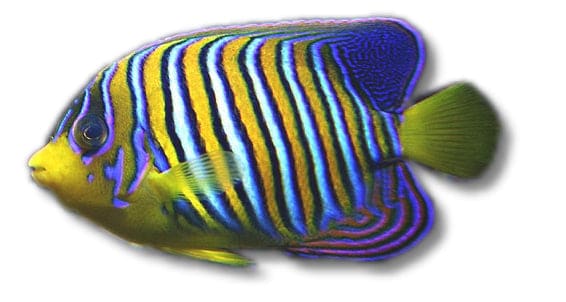
Regal Angelfish (Pygoplites diacanthus)
£159.99
The Bicolor Angelfish (Centropyge bicolor) is a dwarf marine angelfish from Indo-Pacific reefs, from East Africa to Samoa, that reaches 15 cm. It suits an established marine aquarium with one dwarf angelfish, kept within OATA's dwarf angelfish guidance of 24–26°C and pH 7.9–8.3. Sold as one live fish per purchase, in dispatch sizes of 4–6 cm or over 6 cm.
Adult size is the maximum length this species reaches at full maturity (scientific sources). The livestock you receive will be younger and smaller — pick a size above for the actual shipping size. Product-photo provenance and any image-specific limitations are stated on the listing.
Centropyge bicolor
Save when buying multiple fish. Each quantity is one fish; sex and pair formation are not guaranteed unless the selected variant explicitly states them.
The Bicolor Angelfish (Centropyge bicolor) is a dwarf marine angelfish from Indo-Pacific reefs, from East Africa to Samoa, that reaches 15 cm. It suits an established marine aquarium with one dwarf angelfish, kept within OATA's dwarf angelfish guidance of 24–26°C and pH 7.9–8.3. Sold as one live fish per purchase, in dispatch sizes of 4–6 cm or over 6 cm.
Adult size is the maximum length this species reaches at full maturity (scientific sources). The livestock you receive will be younger and smaller — pick a size above for the actual shipping size. Product-photo provenance and any image-specific limitations are stated on the listing.
Maintain these water conditions for optimal health and vibrant colors
The Bicolor Angelfish (Centropyge bicolor) is a dwarf marine angelfish in the angelfish family Pomacanthidae. It comes from the Indo-Pacific, from East Africa to the Samoan and Phoenix Islands, north to southern Japan, south to New Caledonia and throughout Micronesia. FishBase records a maximum length of 15 cm total length, so every tank and stocking decision should be made for a fish of that size. It suits a keeper who already runs a stable, well-filtered saltwater aquarium and wants one dwarf angelfish as a centrepiece, added near the end of stocking.
On the reef it lives in lagoons, channels and protected seaward reef slopes, around drop-offs and in coral and rubble areas, between 1 and 25 m deep. Wild fish are usually seen in pairs or small groups, dart from one hiding place to the next and feed on algae, small crustaceans and worms. That behaviour shapes the aquarium you need: plenty of rock to hide in and pick over, clean and stable marine water, and companions calm enough to let it move about.
The species is commonly exported through the aquarium trade and is listed as Least Concern by the IUCN. Tropical Fish Co rates it advanced, mainly because it needs a mature marine system, more space than its arrival size suggests and a stocking plan built around one territorial dwarf angelfish.
| Suits | Not suited to |
|---|---|
| An established, fully matured marine aquarium | A newly set-up tank whose filter is still maturing |
| One dwarf angelfish per aquarium | A tank that already holds another dwarf angelfish or a similar species |
| A relatively calm community, such as clownfish, gentler damsels or small basslets | A reef where any nipping of corals or clams would be unacceptable |
| A tank planned for a 15 cm adult | A tank chosen for the size of a young fish |
| Keepers who test regularly and change water weekly | Set-ups that go weeks between water changes |
Each purchase supplies one Bicolor Angelfish in the size you pick on the product page: 4–6 cm, or the larger size shown as >6, meaning over 6 cm. The size you select is the size supplied, not the adult size. Whichever you choose, set the aquarium up for the 15 cm maximum rather than the length it arrives at. The larger size is the same species with the same care needs, not a different form.
Sex is guaranteed only when the selected option explicitly states male or female. This Bicolor angelfish listing has no sex-guaranteed option. OATA notes that it can be very difficult to tell the sex of dwarf angelfish unless they are in breeding condition, which is one more reason to plan for a single fish rather than trying to build a pair.
You may see this species sold under other names. Wikipedia lists Pacific rock beauty, oriole angelfish, oriole dwarf angel, blue and gold angel and two-colored angel, and OATA spells it bicolour angelfish. Every one of those names refers to Centropyge bicolor, and the scientific name is the reliable way to confirm you are reading about the same fish.
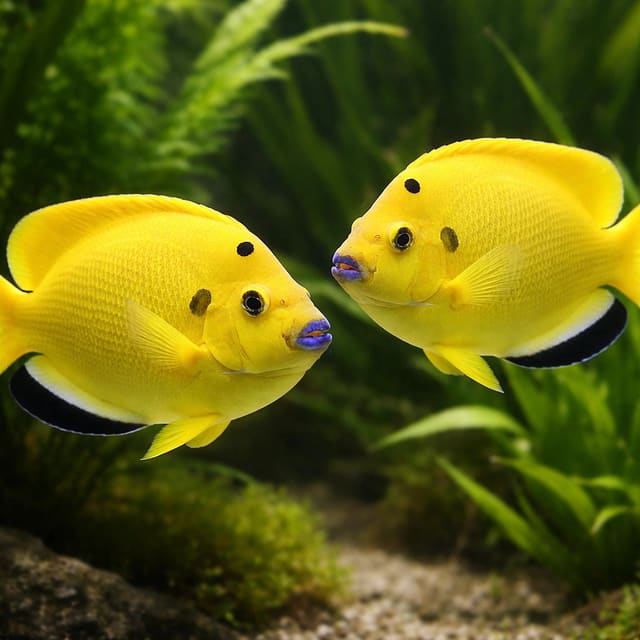
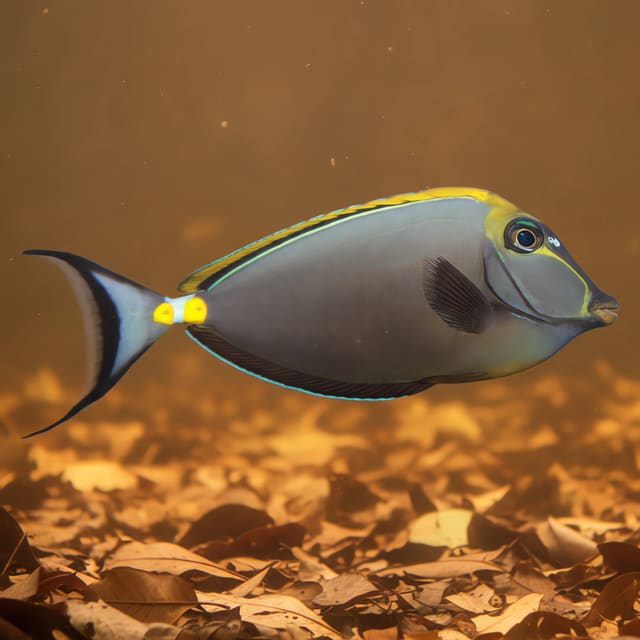
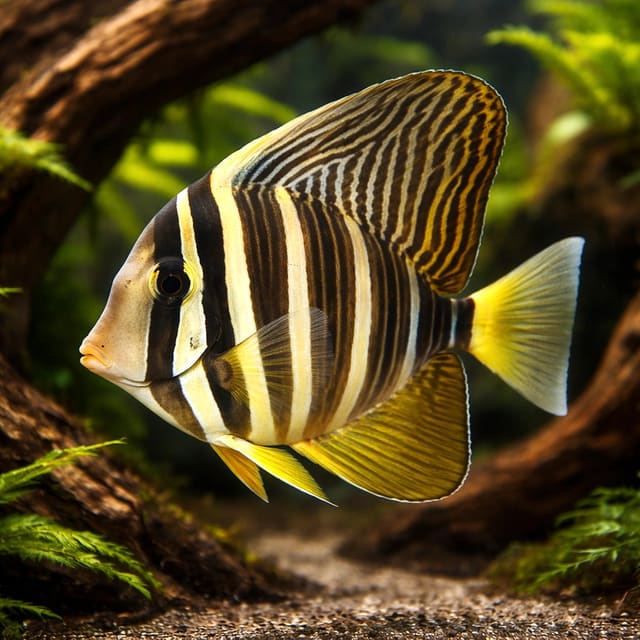
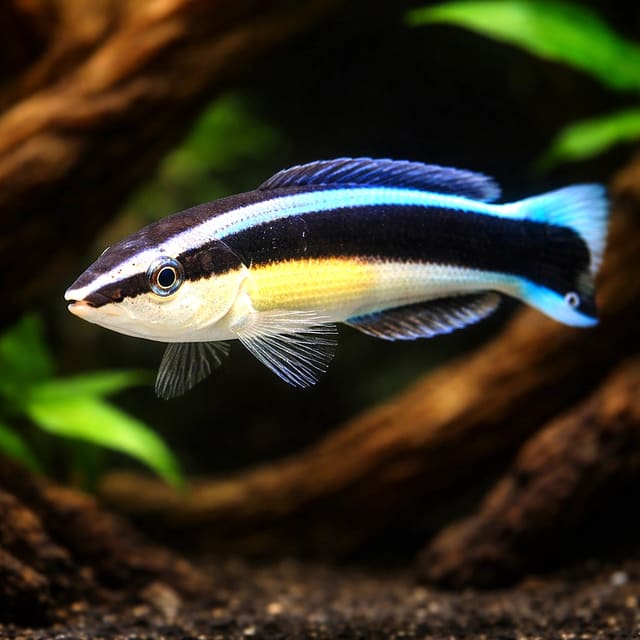
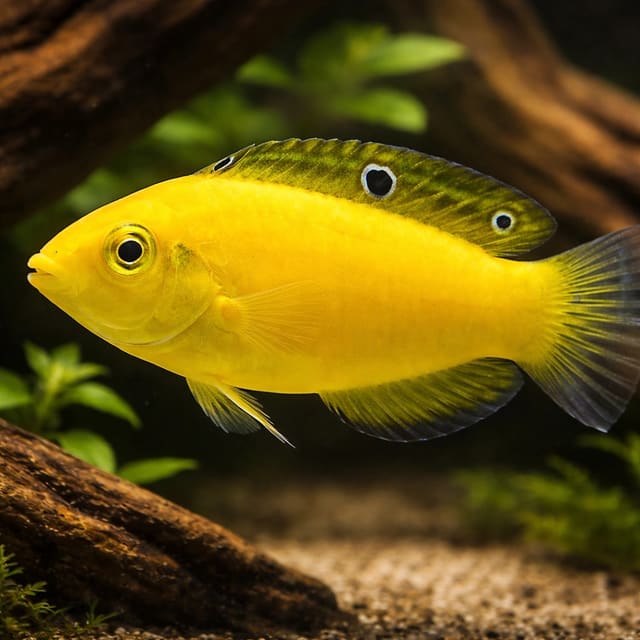
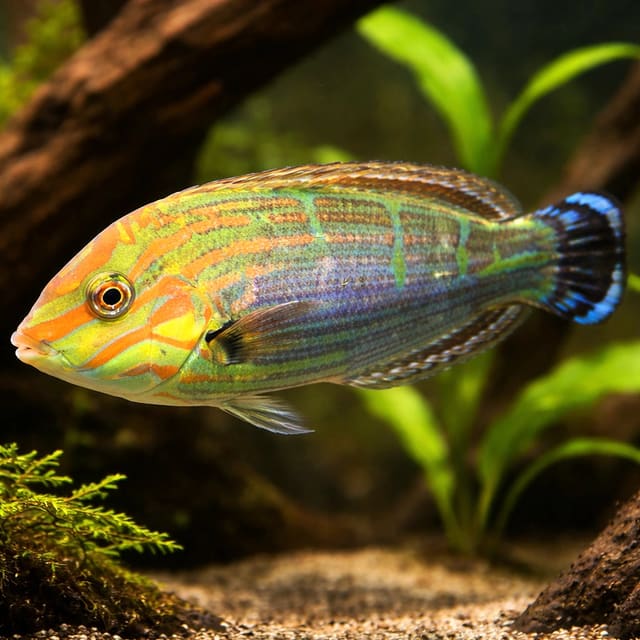
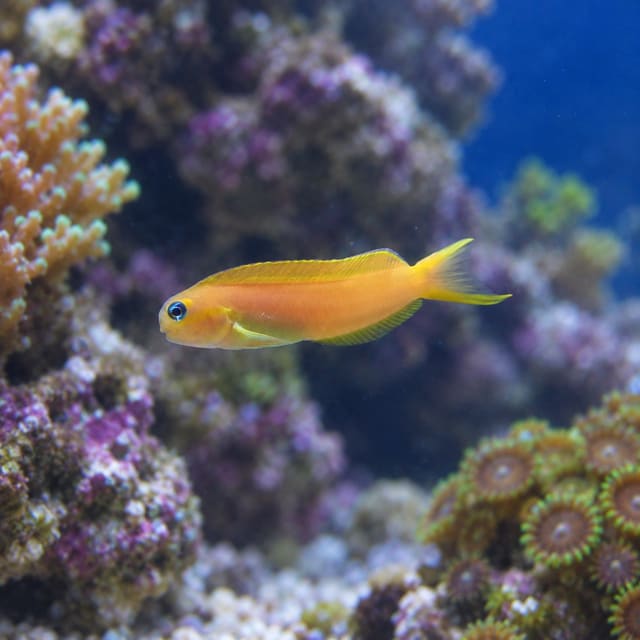
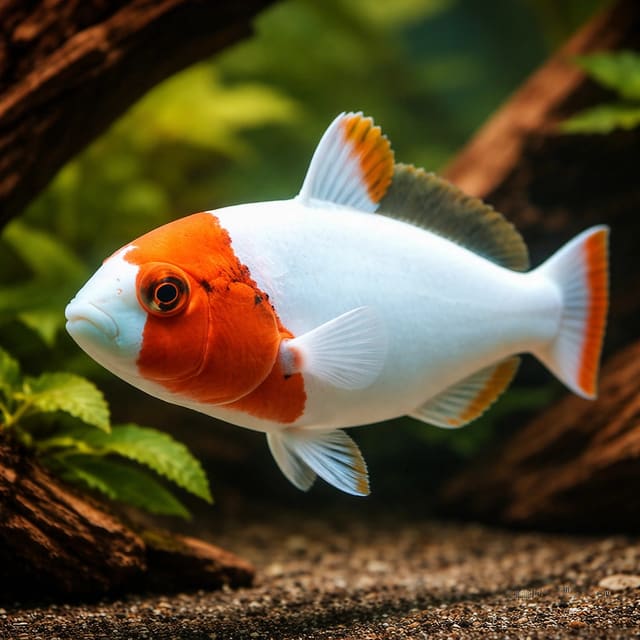
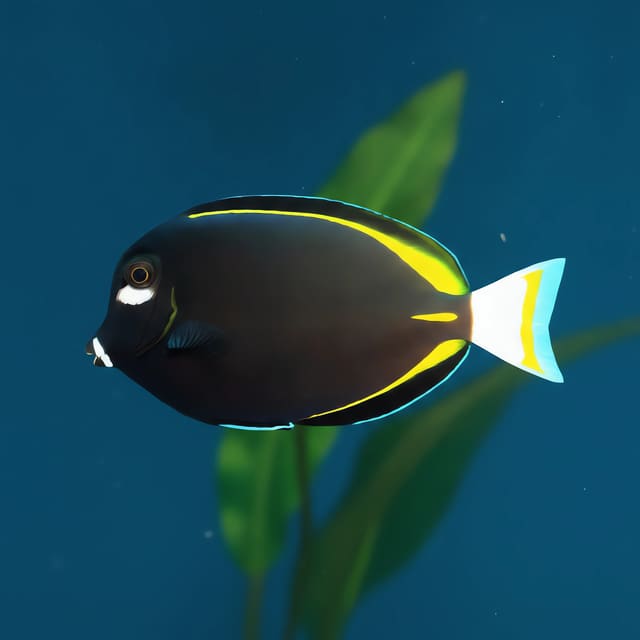
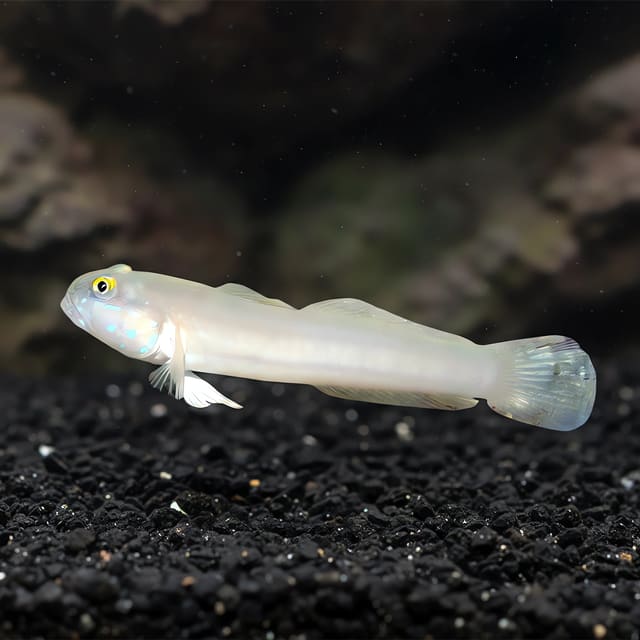
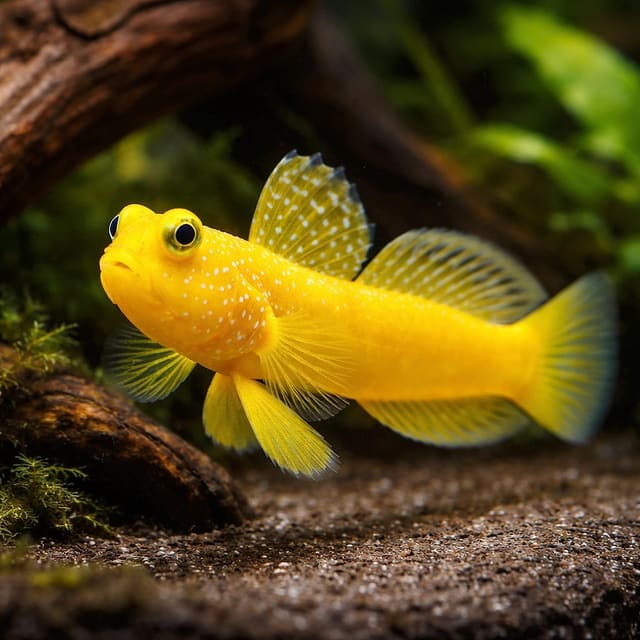
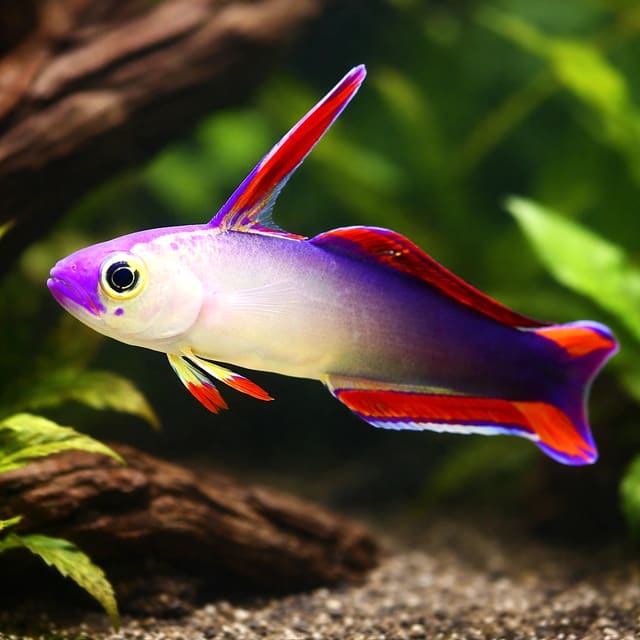
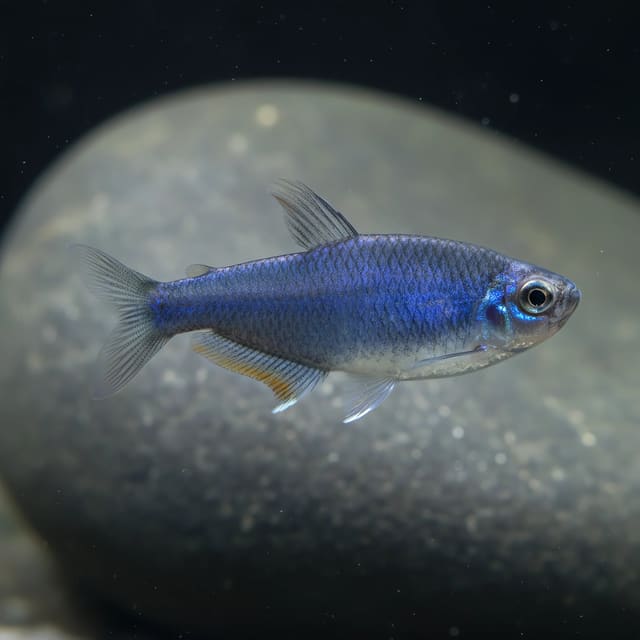
The gallery photograph shows a fish with a bright yellow head, forebody and tail and a deep blue rear body, over dark gravel in front of rockwork. Gallery images have been digitally enhanced to improve image quality. Natural colour, pattern, size and maturity can vary between live animals.
Most problems with dwarf angelfish start before the fish is ordered, so settle these three points first.
If all three answers point the right way, the care sections cover water values, feeding, the weekly routine and arrival day in the order you will need them, and the compatibility sections explain how to build a calm community around it.
OATA's general rule is to buy an aquarium as large as you reasonably can. It recommends an aquarium of at least 120 litres for a single individual of the smaller dwarf angelfish species, and says aquariums need to be larger if you want to keep dwarf angelfish with other species. The same sheet contrasts the cherub angelfish, which grows to about 8 cm, with the bicolour, which is unlikely to grow over 15 cm. This fish sits at the larger end of the group, so 120 litres is a floor, not a target.
A worked example makes the point. If you run a 120 litre marine tank and plan to add the angelfish to clownfish and a basslet, OATA's guidance already points you towards a larger aquarium, because 120 litres is the minimum for one dwarf angelfish of a smaller species on its own. A bigger tank also gives more stability in temperature and water quality, which OATA gives as one of the reasons to buy as large as you can.
OATA describes dwarf angelfish as relatively undemanding in terms of décor but recommends plenty of live or artificial rockwork. Build it with this fish's wild habits in mind. It darts from one hiding place to the next, so give it several separate caves and overhangs with short gaps of open water between them, rather than one solid wall of rock. In the wild dwarf angelfish spend much of their time swimming around the reef looking for food, and rock surfaces give this one somewhere to pick over between meals.
Spread the hiding places along the length of the tank. When the angelfish claims one area, the other fish still have cover of their own, which helps a territorial fish and its companions share the space.
Whatever the size, a filter is essential. For a marine set-up OATA lists three workable approaches: live rock with sufficient water flow, an internal or external filter, or a sump-based filter. A protein skimmer can also help, because it removes dissolved organic waste before that waste breaks down into more harmful substances. Choose the approach you can maintain every week, since a neglected filter protects nothing.
Keep the aquarium at 24–26°C, pH 7.9–8.3 and salinity 1.020–1.025. These are OATA's suggested parameters for dwarf angelfish, a general guide for the group rather than a species-specific optimum, and OATA describes dwarf angelfish as usually undemanding of water chemistry. The full set is below.
| Parameter | OATA guidance for dwarf angelfish |
|---|---|
| Salinity | 1.020–1.025 |
| Temperature | 24–26°C |
| pH | 7.9–8.3 |
| Ammonia | Zero mg per litre |
| Nitrite | Zero mg per litre |
| Nitrate | Not to exceed 50 mg per litre |
| Carbonate hardness | Hard, 8–12 dKH |
| Calcium | 380–450 ppm |
| Magnesium | 1250–1350 ppm |
OATA adds that if you keep dwarf angelfish in a reef aquarium, some parameters will need to be altered to accommodate more sensitive species. In practice that means setting the reef's values for its most demanding corals and invertebrates while staying inside a range the angelfish tolerates, and checking with us if the two pull in different directions.
Stable numbers inside these ranges are the goal. A marine angelfish copes far better with a tank that holds steady at 25°C than with one that swings across the whole range from day to day.
The RSPCA describes filters as vital for removing waste, and says no fish should be kept without a well set up and maintained filter. Fish release ammonia, which is toxic. A working biological filter lets beneficial bacteria grow, and those bacteria convert ammonia to nitrite, which is also toxic, and then to nitrate, which is safer. A marine tank depends on that chain just as a freshwater one does.
OATA explains that the bacteria established while maturing a filter need to increase every time more fish are added and feeding goes up. Overstocking, or stocking too quickly, causes new tank syndrome: there are not enough nitrifying bacteria to cope with the extra waste, ammonia and nitrite rise, and fish become ill or die. Increase the number of fish slowly, and give the filter time to catch up after each addition.
This matters twice over for a dwarf angelfish. It should be one of the last fish added, which suits a mature system well, and OATA notes that ammonia and nitrite stress can lead dwarf angelfish to develop various diseases.
If any item on that list is still open, finish it first. Waiting for a filter to mature is far easier than nursing a stressed angelfish through poor water.
FishBase records that wild Bicolor Angelfish feed on algae, small crustaceans and worms, and OATA notes that dwarf angelfish in the wild spend much of their time swimming around the reef looking for food. Build the aquarium diet on the same two halves: meaty foods that stand in for small crustaceans and worms, and vegetable matter that stands in for algae.
| Food | How to use it |
|---|---|
| Mysis shrimp, frozen | A meaty base food matching the crustaceans in its wild diet |
| Enriched brine shrimp, frozen | Adds variety alongside mysis |
| Krill, frozen | Another meaty option; offer pieces it can manage |
| Nori sheets | The vegetable part of the diet, standing in for algae |
| Pellet and flake foods | Many individuals accept them; useful for variety once settled |
OATA's advice for dwarf angelfish is to feed only what they can eat within a few minutes, twice a day. Take care not to overfeed: uneaten food builds up and breaks down, releasing toxic waste into the water. In a tank with other fish, watch the angelfish itself at feeding time rather than judging by how quickly the food disappears, because faster companions can take the lion's share.
Reduced feeding or a lack of interest in food is on OATA's list of early warning signs, so treat appetite as a daily health check. A fish that feeds eagerly twice a day, picks at the rock between meals and holds its body condition is doing well. If a new arrival is slow to take frozen foods at first, keep offering the variety above in small amounts, remove what it leaves, and test the water, as OATA advises whenever feeding or behaviour changes.
Rotate the foods through the week rather than relying on one. Variety is the core of OATA's feeding advice, and it covers both halves of a diet that, in the wild, includes algae as well as small animals.
OATA strongly recommends a 25% partial water change at least once every week, using a siphon to lift solid waste from the gravel. In a 120 litre aquarium that is 30 litres each week; in a larger system, work out the same quarter of your own volume and keep to it. Holding the same quarter every week keeps the routine easy to follow, and your test results show whether it is enough.
Check and clean filters regularly so they do not block. When filter media needs cleaning, do not run it under the tap, because any chlorine or chloramine present may kill the beneficial bacteria. Rinse it lightly in the tank water you have just removed during the water change instead, so fewer bacteria are lost. Clean the protein skimmer regularly as well, as a dirty skimmer loses performance.
Good husbandry is essential with dwarf angelfish, which is why this routine carries as much weight as the tank itself. A written log of your weekly readings makes slow changes easy to spot long before the fish shows them.
Your angelfish is hand-packed by our team: hand-bagged in pure oxygen, in an insulated poly box, with a heat pack when the weather calls for it. We email the tracking number and your confirmed delivery date, and a licensed live-animal courier carries the parcel on a tracked service. The full terms are on our delivery and Live Arrival Guarantee page.
The Live Arrival Guarantee needs someone at the address to receive the parcel, the parcel opened and inspected the same day it arrives, and clear photos or an optional continuous unboxing video showing the parcel still sealed. The video makes claims quicker and fairer, and our courier may request it when we raise a claim. We strongly recommend an unboxing video when practical: it helps us investigate arrival concerns faster, resolve them with less back-and-forth and understand packing or transit issues so we can reduce recurrence. Video is optional and clear photos are accepted. Never delay necessary animal care to record evidence.
OATA advises checking that ammonia and nitrite are at zero before adding any fish, so test the aquarium on the morning the parcel is due rather than after the bag is floating. Once the angelfish is in, use OATA's description of a healthy fish as your first check: clear bright eyes, undamaged fins, intact scales, no ulcerations or bumps, and appropriate swimming behaviour. Brief dashes between rocks are normal for this species; a fish that stays wedged in one spot and refuses food over the following days needs closer attention.
All fish vary slightly in behaviour and appearance, but OATA recommends watching for changes in the following, so that problems are caught before they become a real health issue.
A Bicolor Angelfish that darts from one hiding place to the next is behaving as it does on the reef. That is different from a fish that hides more than it did last week, or stops coming out to feed. Spend a few minutes each day watching it at feeding time, when most of the signs above are easiest to see.
If something changes, test your water quality before anything else, as OATA advises for any of the signs above. Then contact us with the readings and a description of what you have seen, and we will help you work out the next step.
OATA notes that dwarf angelfish can live for many years in a well-matured set-up with good water quality. The weekly routine, a steady feeding pattern and daily observation are how you give it that set-up.
OATA's compatibility advice is clear: most dwarf angelfish will not tolerate other members of the same species or similar species, so it is best to keep one per aquarium unless the aquarium is particularly large with lots of visual barriers. For almost every home aquarium, that means one Bicolor Angelfish and no other dwarf angelfish alongside it.
FishBase notes that wild fish are usually seen in pairs or in small groups. That describes fish with a whole reef to spread across, not a stocking target for a closed tank. Sex cannot be chosen when you buy, and dwarf angelfish are very hard to sex outside breeding condition, so an attempt at a pair is really two fish of the same species sharing a territory.
OATA's warning covers similar species as well as the same one. Treat other dwarf angelfish, such as the flame angelfish (Centropyge loriculus), the coral beauty (Centropyge bispinosus) or the cherub angelfish (Centropyge argi), as incompatible in a normal home aquarium.
Dwarf angelfish should generally be added last, because they can become territorial in aquariums. A fish that arrives into a tank where the other residents already hold their own spaces has less room to claim the whole aquascape. If you are still building the rest of the community, choose and settle those fish first, then bring the angelfish in as the final addition.
Dwarf angelfish are not as boisterous as their larger relatives, and OATA says most species can be mixed in a relatively calm community, with species like clownfish, gentler damsels and small basslets. Those are the kinds of fish to build around. Before buying, ask us with a list of what is already in your tank and its volume, and we will check the combination with you.
| Kind of fish | How it fits |
|---|---|
| Clownfish | Named by OATA as a suitable kind of companion in a calm community |
| Gentler damsels | Suitable when the damsels themselves are among the calmer kinds |
| Small basslets | Named by OATA as a suitable kind of companion |
| Boisterous or pushy fish | Work against the calm community OATA describes |
| Other dwarf angelfish | Keep apart; one dwarf angelfish per aquarium |
Choose the calm companions first and let the filter mature to their waste before the angelfish goes in. You can browse our marine fish collection while you plan, and it helps to decide on the full community before the first fish arrives rather than adding species one by one without a plan. The angelfish then arrives into a settled tank as the last addition, which is exactly where OATA places it.
Every companion adds to the space the tank needs. OATA's 120 litre minimum refers to a single dwarf angelfish of a smaller species with no other fish, and the sheet asks for a larger aquarium as soon as other species share it. Plan the volume for a 15 cm angelfish plus its companions at their adult sizes, and give each fish its own share of rock to shelter in.
A reef aquarium needs more thought. OATA advises always checking before mixing a dwarf angelfish with invertebrates, because some individuals may nip on corals and clams, and some dwarf angelfish will prey on invertebrates they find in the aquarium. The wild diet FishBase records for this species, algae, small crustaceans and worms, shows that small animals living in the rockwork are part of what it looks for.
Remember OATA's note that a reef aquarium may need its parameters altered to suit more sensitive species. Set the reef for its invertebrates while keeping temperature, pH and salinity inside the values described in the care section, and include every coral, clam and other invertebrate in the stock list you send us before ordering.
FishBase records a maximum length of 15 cm total length for this species, and OATA says the bicolour is unlikely to grow over 15 cm. Plan the aquarium, the rockwork and every companion for that adult length rather than the length of the fish on the day it arrives.
OATA recommends an aquarium of at least 120 litres for a single dwarf angelfish of the smaller species, and a larger one when other fish share the tank. This fish reaches 15 cm, so treat 120 litres as the starting point and choose a larger, well-filtered marine aquarium with plenty of rockwork.
Keep one per aquarium. OATA advises that most dwarf angelfish will not tolerate other members of the same species or similar species, so one is best unless the aquarium is particularly large with lots of visual barriers. FishBase notes that wild fish usually live in pairs or small groups, which describes life on an open reef rather than a stocking target for a home tank.
We rate it as an advanced fish. It needs an established marine aquarium with steady salinity, pH and carbonate hardness, zero ammonia and nitrite, more space than OATA's 120 litre minimum for the smaller dwarf angelfish, and a keeper who will test the water and make a 25% partial water change at least once every week.
In the wild it feeds on algae, small crustaceans and worms, according to FishBase. In the aquarium, offer a varied diet of meaty frozen foods such as mysis shrimp, enriched brine shrimp or krill alongside vegetable matter such as nori, and try pellet and flake foods too. Feed only what it can eat within a few minutes, twice a day, as OATA advises for dwarf angelfish.
OATA's guidance for dwarf angelfish as a group is 24–26°C, pH 7.9–8.3, salinity 1.020–1.025 and carbonate hardness 8–12 dKH, with ammonia and nitrite at zero and nitrate not exceeding 50 mg per litre. Hold those values steady in an established marine aquarium rather than chasing small changes.
It is territorial rather than boisterous. OATA describes dwarf angelfish as less boisterous than their larger relatives but able to become territorial in aquariums, which is why it should go in last. Some individuals may nip corals and clams, and some dwarf angelfish will prey on invertebrates they find in the aquarium.
In a relatively calm community, OATA names clownfish, gentler damsels and small basslets as the kind of fish most dwarf angelfish can mix with. Keep other dwarf angelfish and similar species out unless the aquarium is particularly large with lots of visual barriers, and treat corals, clams and other invertebrates as a risk rather than a certainty.
If practical, start filming before the parcel is opened: one continuous video showing the sealed box, the opening and the fish still inside its sealed bag. It travels hand-bagged in pure oxygen in an insulated poly box, with a heat pack when the weather calls for it, carried by a licensed live-animal courier. Someone must be in to receive it; open and inspect it the same day, float the bag for 20–30 minutes before releasing the fish, and never pour the bag water into the tank. If anything has gone wrong, contact us the same day with your order number and clear photos or an optional video for a replacement or refund.
No reviews for this item yet. Bought one? Honest reviews only, good or bad.
What customers say about ordering from us
Easy website plenty of info on fish your buying great to pick a time slot
TRACEY DURRANT · 7 Oct 2026
Got some lovely fish thank you
Kevin Mackie · 7 Oct 2026
Reviews of our shop, collected by Judge.me, an independent third-party review collector. Newest first.