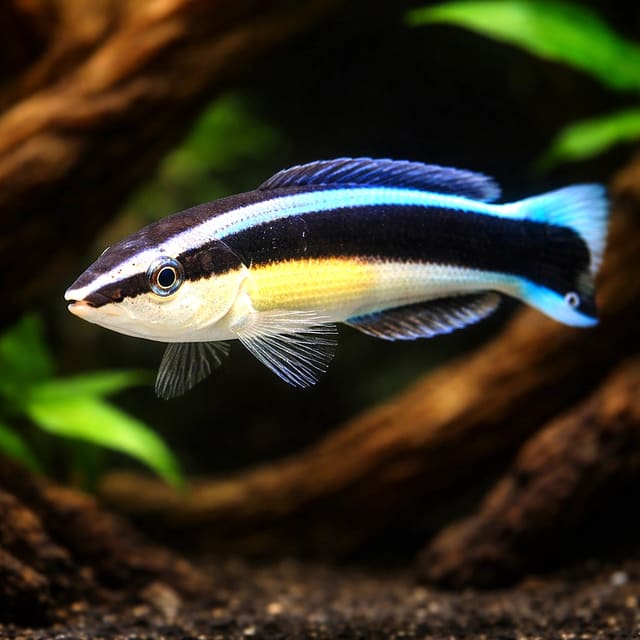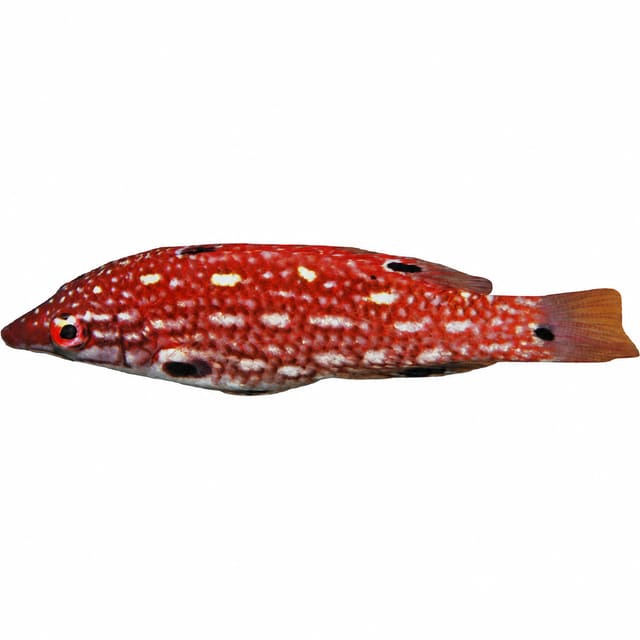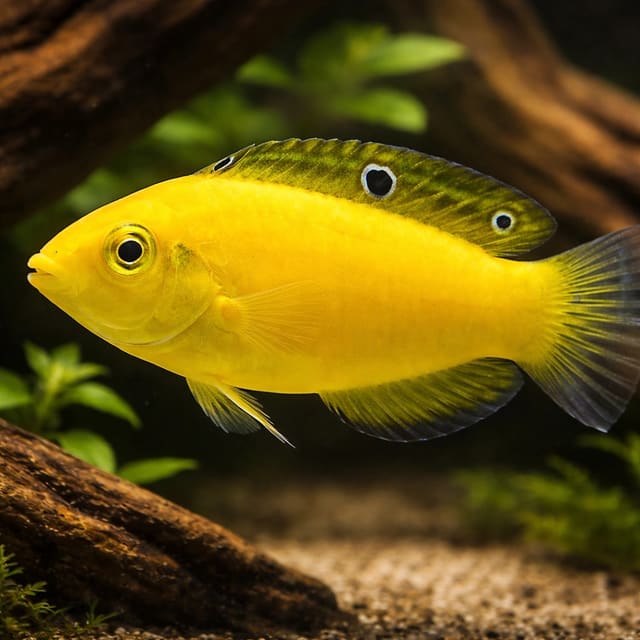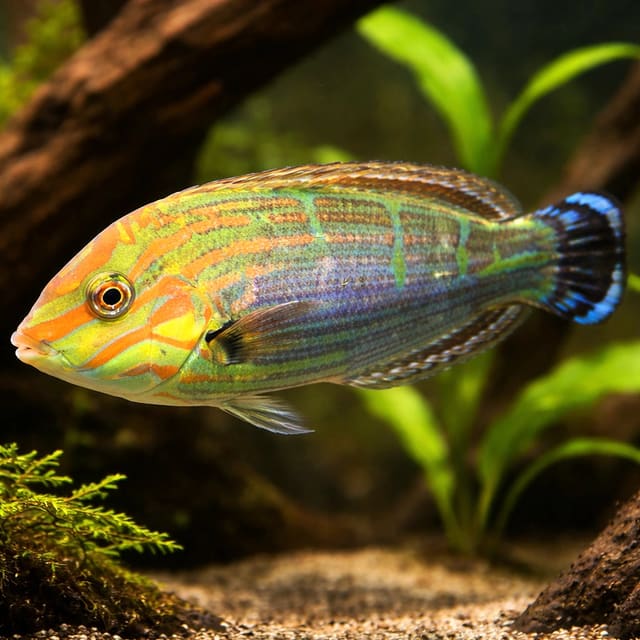
Tail-Spot Wrasse (Halichoeres melanurus)
24–26°C · pH 7.9–8.3
£87.99
Striking juvenile Rockmover Wrasse with bold patterning. A hardy, active marine fish for spacious reef or fish-only systems.
Adult size is the maximum length this species reaches at full maturity (scientific sources). The livestock you receive will be younger and smaller. Product-photo provenance and any image-specific limitations are stated on the listing.
Novaculichthys taeniourus
Confirm your email, then we’ll send an availability message for this exact item if it returns within 180 days.
This request is only for this product—no newsletter or other promotions. A mail-provider retry may very rarely duplicate the same availability message. Unconfirmed addresses are removed after 48 hours. See our privacy policy.
Striking juvenile Rockmover Wrasse with bold patterning. A hardy, active marine fish for spacious reef or fish-only systems.
Adult size is the maximum length this species reaches at full maturity (scientific sources). The livestock you receive will be younger and smaller. Product-photo provenance and any image-specific limitations are stated on the listing.
Maintain these water conditions for optimal health and vibrant colors
The Rockmover Wrasse juvenile (Novaculichthys taeniourus) is one of the most eye-catching marine wrasses available, especially in its juvenile stage where it displays dramatic camouflage and a distinctive, almost “leaf-like” appearance. As it matures, this species transforms into a powerful, active wrasse that is best suited to experienced marine keepers with a large aquarium and secure aquascape.
This is a fish with real personality. Juveniles are inquisitive, bold and constantly on the move, often using their pectoral fins and snout to investigate the substrate and rockwork. In the wild, Rockmover Wrasses are famous for shifting sand, rubble and small stones while searching for food. That natural behaviour makes them fascinating to watch, but it also means they are not a good fit for delicate reef displays or loosely stacked aquascapes.
At Tropical Fish Co, we supply healthy marine livestock with a focus on quality and care. This juvenile Rockmover Wrasse is covered by our live arrival guarantee and available with fast UK delivery, helping you receive your fish in excellent condition and settle it into its new home with confidence.
Please note: this species grows large and becomes increasingly assertive with age. It is best purchased with a long-term plan in mind, not as a temporary addition.
| Care Point | Recommendation |
|---|---|
| Scientific name | Novaculichthys taeniourus |
| Common name | Rockmover Wrasse, Juvenile Rockmover Wrasse |
| Care level | Expert |
| Temperament | Semi-aggressive |
| Adult size | Up to around 30 cm |
| Minimum tank size | 700 litres+ |
| Temperature | 24–28°C |
| pH | 8.1–8.4 |
| Diet | Carnivorous, meaty marine foods |
| Tank region | Bottom to middle |
Novaculichthys taeniourus is found across the Indo-Pacific, including reef flats, lagoons, sandy channels and rubble zones. Juveniles often inhabit shallow coastal areas where their unusual shape and colouration help them blend in among seaweed, debris and broken coral. As they grow, they become more robust and spend much of their time foraging over sand and rock.
In nature, this wrasse is a sand and rubble specialist. It uses its mouth to probe for small crustaceans, worms and other invertebrates, and it is well known for moving substrate while hunting. This behaviour is completely normal and should be expected in the aquarium. A mature Rockmover Wrasse will rearrange parts of the tank, so aquascaping must be stable, secure and built with this in mind.
The species is often associated with warm tropical waters and bright reef environments. Although juveniles may appear delicate, they are actually hardy fish when provided with the right space, stable water quality and a varied diet.
Because this wrasse can reach around 30 cm and is highly active, it requires a large aquarium with plenty of open swimming space. A minimum of 700 litres is recommended, though larger is always better. The tank should have a deep sand bed or at least a generous sandy area, as the fish may bury itself or rest in the substrate, particularly when stressed or at night.
Use secure rockwork placed directly on the tank base rather than on top of loose sand, as the fish may undermine unstable structures. Smooth, rounded rock and plenty of hiding places are ideal. A tight-fitting lid is essential; wrasses are strong jumpers and can launch themselves from the water when startled.
Stable marine conditions are key. Aim for a temperature of 24–28°C, salinity around 1.023–1.026, and pH between 8.1 and 8.4. Good oxygenation and strong filtration are important, especially in larger systems where the fish’s feeding and digging behaviour can disturb the substrate.
Although some keepers attempt to house juveniles in reef aquaria, caution is advised. This species may disturb sand, move small decorative items and prey on ornamental invertebrates. It is generally better suited to a fish-only marine setup or a robust reef with carefully chosen tank mates and secure coral placement.
Regular maintenance is essential. Perform routine water changes, monitor nitrate and phosphate levels, and ensure the tank has enough room for the fish to establish territory without constant conflict.
The Rockmover Wrasse is a carnivore with a strong appetite. In the wild it feeds on small crustaceans, worms, molluscs and other benthic invertebrates. In captivity it should be offered a varied diet of high-quality marine meaty foods such as mysis shrimp, enriched brine shrimp, chopped krill, clam, mussel, squid and suitable frozen marine preparations.
Juveniles usually adapt well to prepared foods, especially when introduced gradually. Feed small portions two to three times daily, adjusting the amount so that all food is eaten promptly. A varied diet helps maintain colour, condition and immune health. Occasional vitamin enrichment can also be beneficial.
Because this species is active and grows quickly, underfeeding can lead to poor body condition. At the same time, overfeeding can increase waste and water quality issues, so balance is important. Watch the fish’s body shape and behaviour closely and adapt feeding accordingly.
Juvenile Rockmover Wrasses can be relatively manageable, but adults become more assertive and may dominate smaller or more timid fish. Choose tank mates carefully and avoid anything that could be eaten, bullied or stressed by the wrasse’s constant activity.
Good companions include larger, robust marine fish such as tangs, rabbitfish, larger angelfish, triggerfish in appropriate systems, groupers in fish-only setups, and other sturdy species that can hold their own. In a reef environment, only the hardiest and most secure livestock should be considered.
Avoid very small fish, ornamental shrimp, crabs, snails, worms, brittle stars and other delicate invertebrates, as these may be viewed as food. Also avoid passive species that may be intimidated by the wrasse’s size and energy. Mixing with other large wrasses can be risky unless the aquarium is very spacious and the fish are introduced with care.
As with many wrasses, individual temperament varies. Providing ample space, multiple hiding places and a sensible stocking plan will greatly improve long-term compatibility.
When you buy a live marine fish, you want confidence in the health of the specimen, the packing standards and the support behind the sale. Tropical Fish Co is committed to supplying quality livestock with careful handling from dispatch to delivery. Our live arrival guarantee gives you added peace of mind, while fast UK delivery helps reduce transit stress and gets your fish into stable conditions sooner.
We understand that species such as the Rockmover Wrasse require informed husbandry, so we aim to provide clear, accurate information to help you make the right choice for your aquarium. Whether you are building a fish-only marine system or planning a large, carefully managed display, this striking juvenile wrasse can become a standout addition when kept correctly.
Choose Tropical Fish Co for reliable service, healthy livestock and practical advice for marine fishkeeping in the UK.
Important: this is an expert-level species with significant adult size and behavioural needs. Please ensure your aquarium is fully mature, securely covered and appropriately sized before purchase.
No reviews for this item yet. Bought one? Honest reviews only, good or bad.
What customers say about ordering from us
Easy website plenty of info on fish your buying great to pick a time slot
TRACEY DURRANT · 7 Oct 2026
Got some lovely fish thank you
Kevin Mackie · 7 Oct 2026
Reviews of our shop, collected by Judge.me, an independent third-party review collector. Newest first.