Gryllus Bimaculatus Black Cricket Packet - UK
£7.99

One supplier-listed pack of 15 live Dendrobaena earthworms. The exact species and individual size are not verified; inspect and portion each worm for an animal already known to accept earthworms.
One supplier-listed pack of 15 live Dendrobaena earthworms. The exact species and individual size are not verified; inspect and portion each worm for an animal already known to accept earthworms.
Dendrobaena worms in a supplier-listed 15-worm live-food pack. This listing is for one pack containing 15 live earthworms recorded by the supplier as Dendrobaena sp. It is a manageable quantity for a keeper who already knows that an appropriately sized earthworm is suitable for the animal they feed. The exact species, individual length, weight and culture history have not been supplied, so this page does not turn a trade label into a false species identification or a fixed size promise.
Earthworms can be useful live food for selected fish, amphibians and reptiles, but they are not automatically suitable for every animal. The portion must fit the individual, the keeper must supervise feeding, and uneaten material must be removed before it affects water or enclosure hygiene. This guide explains exactly what one quantity buys, what the image does and does not show, how to assess the pack on arrival, how to hold it for a short period, and how to decide whether these worms fit your existing feeding plan.
The product is sometimes found through searches for red earthworms, fishing worms or compost worms. Those phrases describe overlapping markets, not guaranteed uses. This pack is documented by its supplier as vivarium animal food. It is not documented as a selected angling strain, a measured composting culture, a breeding colony, a feeder with a verified preparation history or a complete diet. That distinction protects the buyer from paying for promises the source record does not make.
| Sale unit | One supplier-listed pack of 15 live worms per quantity |
|---|---|
| Identity | Dendrobaena sp.; exact species is not verified |
| Individual size | Variable and not specified by the supplier; inspect before use |
| Supplier category | Vivarium animal food |
| Main decision | Use only for an animal and life stage known to take appropriately portioned earthworms |
| Storage | Follow the label or dispatch instructions received with the pack; keep cool, shaded and ventilated while confirming product-specific guidance |
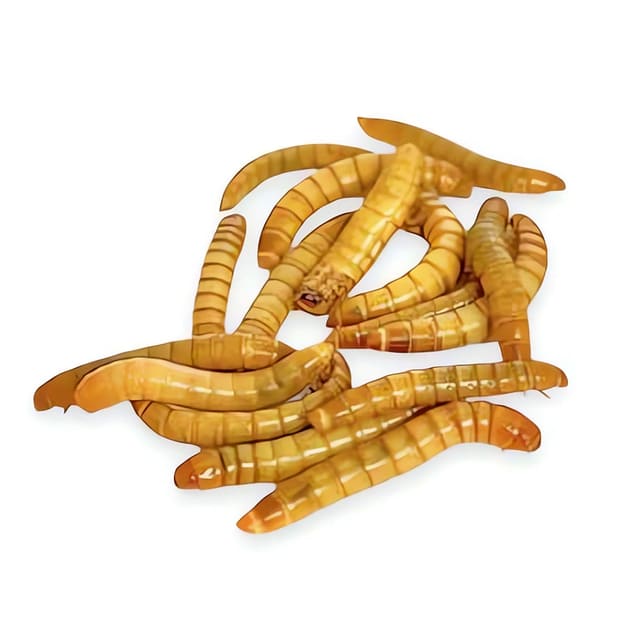
| Image | Representative group image, not the exact 15 worms dispatched |
The strongest product fact is our stock records: Dendrobaena sp., 15 pieces, catalogued as vivarium animal food. In biological naming, "sp." means the genus is named while the species is not. That is why the customer-facing scientific label on this page is Dendrobaena sp., not Dendrobaena veneta, Dendrobaena hortensis or Eisenia hortensis.
Dendrobaena veneta is a recognised earthworm species in the family Lumbricidae, and European nightcrawler is one common name recorded for that species. Those taxonomy facts help explain why similar names appear in live-food, bait and vermiculture shops. They do not identify this pack. Without a batch record, diagnostic specimen, voucher or genetic result, using a species name would create confidence that the supplier evidence cannot support.
Colour alone is not a reliable species test, and lighting, substrate, age and individual condition can alter appearance. The revised title therefore leads with the supported genus and pack count rather than treating colour as proof of identity.
You are buying a trade pack labelled Dendrobaena sp. You are not buying a laboratory-confirmed species, a sexed group, a measured strain or a culture with documented genetics. If an exact species is essential to a research, breeding or ecological project, this retail live-food pack is not the right source.
One quantity means one supplier-listed pack of 15 live worms. It does not mean 15 packs, a weight-based bulk bag or the approximately 35 worms advertised on a different competitor product. The supplier source does not state a tolerance around the count, so check the pack promptly on arrival and use the current problem-reporting terms if something appears wrong.
No individual length or weight is promised. A count-based live pack can contain natural variation, and the largest worm in one pack may not match the largest worm in another. This matters because suitability depends much more on the feeder animal's mouth, body size, swallowing behaviour and condition than on a broad label such as "small" or "medium". Inspect each worm and prepare only a manageable portion.
The existing 1200 x 1200 gallery asset shows a representative group of reddish earthworms on a clean white background. It helps a shopper recognise the product class, but it is not a photograph of the exact pack selected for dispatch. It does not prove the precise species, count, size distribution, substrate or packaging. The image remains in place because it is useful; the wording simply makes its limit honest.
| The listing supports | The listing does not promise |
|---|---|
| A supplier-listed 15-worm pack | A fixed total weight or equal-sized worms |
| Dendrobaena at genus level | A confirmed species or strain |
| Live-food use as the supplier category | Suitability for every fish, amphibian or reptile |
| A representative worm image | The exact dispatched animals or exact scale |
| UK ordering through Tropical Fish Co | A fixed dispatch or arrival day in this static description |
This pack is most appropriate when you have already checked a reliable care plan for the species and life stage you keep, know that earthworms are an accepted food, and can judge or cut an appropriate portion. It is also useful when a 15-count trial quantity is more sensible than a large culture. The pack should supplement informed husbandry, not replace it.
Pause before ordering if you are unsure whether the animal can digest terrestrial earthworms, if the recipient is very small, sick, refusing food, recovering from surgery or under veterinary treatment, or if the enclosure cannot be cleaned after live feeding. In those situations, ask an exotics or aquatic veterinarian, experienced breeder, zoo-quality husbandry source or species specialist before changing the diet.
For an aquarium, remember that "fish food" is not a universal compatibility label. A large predatory or omnivorous fish may investigate a suitably sized earthworm, while a small fish may be unable to swallow it safely. Some fish need prepared diets with controlled nutrient balance, and many should not receive a whole terrestrial worm. The decision belongs to the animal's documented feeding biology, not the search phrase that led to this page.
Open the outer parcel promptly and inspect the live-food pack before putting it into storage. Keep the shipping label and packaging until you have completed the check. Count is only one part of the assessment: look for movement when gently disturbed, a clean earthy smell, a container that is neither flooded nor completely dried out, and no obvious widespread breakdown of the animals.
Do not try to revive a cool pack by placing it on a radiator, heat mat, sunny windowsill or warm vivarium. A rapid temperature change can add stress and dry the container. Move it to a stable shaded place, read any supplied instructions, and contact us if the pack condition is in doubt.
The supplier record for this exact pack does not provide a storage temperature, substrate formula or shelf life. That means a precise claim such as "keep at 8-18 C for 10 days" would be borrowed from another product rather than verified for the worms sold here. Use the label, leaflet or dispatch message supplied with your pack as the first instruction.
Until product-specific advice is confirmed, keep the original container cool, shaded and well away from direct sunlight, radiators, heated reptile rooms and other heat sources. Preserve ventilation and avoid sealing the worms in an airtight secondary bag. Keep the container upright and prevent both flooding and complete drying. Do not use a household refrigerator unless the received instructions specifically say that the supplied container and stock should be refrigerated.
If longer holding is necessary, seek stock-specific advice before transferring the worms. A larger culture box introduces decisions about bedding composition, moisture, ventilation, food, temperature and escape control that are outside the verified specification of this retail feeder pack.
Worms gathering persistently at the lid, a sour or rotten smell, standing liquid, visible mould overgrowth, extreme dryness or widespread loss of responsiveness can indicate a problem. Check the supplied instructions, ventilation and location. Do not compensate for a sour, wet container by adding more food. If the pack arrived in that state, document it before making changes and contact support.
Start with the recipient animal, not the pack. Confirm that its care guidance includes terrestrial earthworms and decide what portion the individual can safely take. A whole worm that suits a large animal may be unsuitable for a juvenile or small-mouthed fish. There is no honest one-size-fits-all quantity for the broad mix of animals that can appear in search results.
Rinsing and cutting methods vary with the recipient and water source. For an aquatic animal, do not rinse live food under untreated chlorinated water and then transfer that water into the aquarium. Use a clean dedicated container and follow species-appropriate advice. For reptiles and amphibians, prevent substrate or worm bedding from being ingested with the food.
A live prey item can encourage investigation and feeding behaviour, but movement alone does not make the item nutritionally complete. Rotate foods where the animal's recognised husbandry guidance calls for variety, and use any required calcium, vitamin or complete prepared diet under competent advice. The laboratory composition of one identified earthworm species cannot be used as a guaranteed nutrient label for this unidentified retail pack.
Earthworm biomass has been investigated as a feed ingredient for ornamental and food fish, including a small controlled guppy study using the different species Eisenia fetida. That is useful evidence that earthworms can have a place in fish feeding; it is not proof that whole Dendrobaena worms suit every aquarium species.
Use this pack for fish only when a reliable species care source supports earthworms, the fish is large enough to take the prepared portion, and you can remove anything uneaten. Avoid dropping a whole worm into a community aquarium simply to see what happens. Competition can cause an unsuitable fish to seize food, and a lost portion can foul the substrate or filter.
If you need smaller aquatic live food, compare the direct product formats rather than treating every live-food name as interchangeable. Live White Worms are a different worm product, while live microworms are aimed at fry and tiny fish. Live Daphnia and live bloodworms provide other aquatic formats. Each has its own pack size, handling needs and suitability limits.
A specialist axolotl husbandry reference describes earthworms as a food source for adults while stressing safe sourcing and food that can be swallowed. That supports a careful statement: an appropriately prepared earthworm can form part of an established adult axolotl feeding plan. It does not support calling every whole worm the right size for every axolotl.
Choose and portion the worm for the individual, keep loose bedding out of the water, observe swallowing and remove leftovers. Juveniles, animals with a history of food refusal and animals under treatment need life-stage-specific guidance. If you are uncertain, consult an experienced amphibian veterinarian or a recognised axolotl husbandry programme rather than relying on a generic product keyword.
Some frogs, toads, salamanders, lizards and other insectivorous or carnivorous exotics accept earthworms, but feeding ecology differs widely. A food that works for one species can be too large, too wet, nutritionally imbalanced or simply inappropriate for another. Confirm the adult and juvenile diet separately, because life stage can change prey size and feeding frequency.
For a reptile or amphibian, use a clean feeding area and prevent loose holding medium from entering the mouth. Monitor whether the food is accepted, remove it when uneaten, and maintain the animal's established supplementation and diet plan. Do not use this product page as veterinary advice for an individual with weight loss, impaction risk, mouth injury or persistent refusal to eat.
If you keep a specialist animal outside the groups discussed above, use an authoritative species-specific diet source before offering earthworms. The supplier's vivarium-food category is not a blanket compatibility list.
Dendrobaena worms are widely searched and sold in the angling market, and the retained handle includes the historical phrase "fishing bait". However, the supplier record categorises this exact pack as vivarium animal food and gives no angling specification. There is no verified hook-holding test, bait size, target species, legal-water guidance or bait-freshness claim.
An angler may decide that live earthworms are permitted and suitable for a particular water, method and target fish, but that decision must follow local fishery rules and current law. Do not release unused worms at the bank. A dedicated bait supplier is the better choice when exact bait grade, size, quantity or storage duration matters.
Some members of the broader earthworm trade are cultured for vermicomposting, and Dendrobaena veneta is studied in vermiculture. That does not make an unidentified 15-worm feeder pack a guaranteed compost starter. The exact species, maturity, culture substrate, sex/reproductive status and breeding history are not supplied. A count of 15 is also not evidence of the stocking density needed for a productive worm bin.
If your goal is food-waste processing, buy a documented composting culture with a known species or mix, an appropriate population and supplier care instructions. If you already own this pack and wish to keep rather than feed the worms, seek stock-specific culture advice and use a secure system. Do not tip live worms or their bedding into a garden, compost heap, drain, pond or natural habitat.
| Intended task | What this pack can support | When to choose another source |
|---|---|---|
| Trial live-food pack | Yes, when recipient suitability and portioning are already known | Choose another format if the animal needs much smaller aquatic prey |
| Exact-species culture | No exact species is verified | Use a voucher-backed or breeder-documented culture |
| Bulk fishing bait | No bait grade or performance is guaranteed | Use a dedicated bait pack with water-specific guidance |
| Compost-bin starter | No breeding or composting specification is supplied | Use a documented compost-worm culture and setup guide |
| Complete pet diet | No | Use the recipient species' established complete diet and professional advice |
The right comparison is based on recipient size, feeding position, food type, storage and how quickly the quantity can be used. It is not based on which product can carry the most search phrases. The table below is a shopping orientation, not a universal feeding chart.
| Product | Format | Useful decision question |
|---|---|---|
| This Dendrobaena pack | 15 terrestrial earthworms; individual size unverified | Can the intended animal safely take a selected or prepared earthworm portion? |
| Lumbricus terrestris Earthworms | Separate 10-worm product with a different stated identity | Do you specifically need the larger earthworm product and can the animal handle it? |
| Live White Worms | Smaller worm live food in volume/pack options | Would a smaller worm format fit the fish and feeding method better? |
| Live Microworms | 20 ml culture-style live food for very small mouths | Are you feeding fry or tiny fish that cannot manage an earthworm piece? |
| Live Daphnia | Aquatic water-flea format | Would suspended aquatic prey better match the fish's feeding behaviour? |
| Live Bloodworms | Aquatic insect-larva pack with separate volume options | Does the recipient's established care plan call for bloodworms rather than terrestrial worms? |
Browse the live-food category to compare current stock and pack formats. A related link means "compare this option"; it does not mean that all products suit the same animal or can be substituted at the same amount.
Live animal food should be handled as animal food, not alongside human ingredients. UK Government animal-care guidance stresses clean receptacles, hygienic preparation and separating human and animal food utensils. The same practical discipline is appropriate in the home even though the guidance is written for licensed activities.
Do not release unused worms into the garden, a compost bin, drain, pond, river or fishery. The stock identity is incomplete and live organisms can be moved beyond their intended setting through careless disposal. Keep them securely, arrange an appropriate rehome, or ask the supplier/local authority for responsible disposal advice. Never flush live worms.
Live products need a buyer who can receive and inspect the parcel promptly. Read the current UK delivery schedule and packing information before ordering; static product copy does not promise a fixed arrival day. If plans change, contact us before dispatch rather than relying on a parcel being left unattended.
The store publishes a Live Arrival Guarantee and claim process. Read the current coverage and evidence requirements for the product in your basket, keep the packaging during inspection and report an arrival problem within the stated window. This page does not extend or rewrite those policy terms.
New customers can currently use WELCOME10 for 10% off a first order. Check the current offers page at checkout because promotion terms can change. The discount is a store offer, not a reason to order more live food than you can use responsibly.
One quantity buys one supplier-listed pack of 15 live worms. The listing is count-based, not a bulk weight or multiple-pack offer.
The supplier identifies them only as Dendrobaena sp. The genus is supported, but the exact species is not verified, so this page does not call them D. veneta or European nightcrawlers as a stock fact.
The supplier has not supplied an individual length or weight. Expect natural variation, inspect each worm before use and prepare a portion suited to the recipient animal.
No. It is a representative group image and not a photograph of the exact 15 worms selected for your order. It does not guarantee the individual size distribution, substrate or exact colour.
Selected appropriately sized fish may take prepared earthworm portions, but whole terrestrial worms are not suitable for every aquarium species. Confirm the fish's documented diet, portion carefully, supervise and remove leftovers before they affect water quality.
Specialist husbandry guidance includes earthworms for adult axolotls. Suitability still depends on the individual's size, health and feeding plan. Keep bedding out of the water, use a manageable portion and seek specialist advice for juveniles or unwell animals.
This pack is not labelled as a complete bearded-dragon diet. Only offer an earthworm if current species-specific guidance supports it for the dragon's age and condition, and maintain the required balanced diet and supplementation.
The genus is common in the bait market, but the exact supplier record classifies this pack as vivarium animal food and gives no bait grade or performance specification. Check fishery rules and use a dedicated bait product when exact size or bait quality matters.
It is not sold with a verified composting species, maturity profile or breeding specification. A documented compost-worm culture with an appropriate population is the better choice for a reliable vermiculture start.
No exact storage temperature is supplied for this pack. Follow the instructions received with it; meanwhile keep it cool, shaded, ventilated and away from direct heat. Do not invent a refrigerator or room-temperature rule from another seller's product.
No shelf life is verified for this pack. Condition depends on dispatch, temperature, container, ventilation, moisture and time. Plan to use live food promptly and seek pack-specific advice if longer holding is required.
The supplier does not provide a gut-loading claim or a holding diet. Do not add food to a small transit pack without product-specific instructions, because excess food can sour the medium and reduce condition.
Inspect promptly for responsive movement, intact bodies, a normal earthy smell and a container that is not flooded, completely dry or foul. Cool worms can move slowly. Document any concern before changing or discarding the pack.
Remove it promptly with dedicated tools. A lost or decaying portion can add organic waste, affect water quality and disappear into the substrate or filter.
No. The exact identity and provenance are incomplete. Keep unused live food secure, arrange an appropriate rehome or seek responsible disposal advice; do not release it outdoors, into compost, drains or natural water.
Use the live-food category and compare the direct white-worm, microworm, daphnia and bloodworm product pages. Choose by recipient species, life stage, mouth size and feeding method rather than by a generic "best live food" claim.
This product page separates stock facts from general scientific and husbandry evidence. The supplier record is the authority for the sale unit and genus-level label. The sources below explain taxonomy, possible nutritional context and cautious animal-care practice; they do not add undocumented specifications to the pack.
Last evidence review: 14 July 2026.
No reviews for this item yet. Bought one? Honest reviews only, good or bad.
What customers say about ordering from us
I have a small group of long finned mountain minnows. So was delighted to be able to order ten of this variety to increase the genetics in my tank . The ones I recieved are healthy but it’s to early to give a verdict on wether they are of a long finned type since they are small currently.
Gordon Walker · 23 Sept 2026
100% success travel and "installation". Pleased with quality of purchase. The Siamese fighter a bit "shy" so have not yet seen him at his best yet but looking good. Happy customer. GG
George E Garratt · 21 Sept 2026
Reviews of our shop, collected by Judge.me, an independent third-party review collector. Newest first.