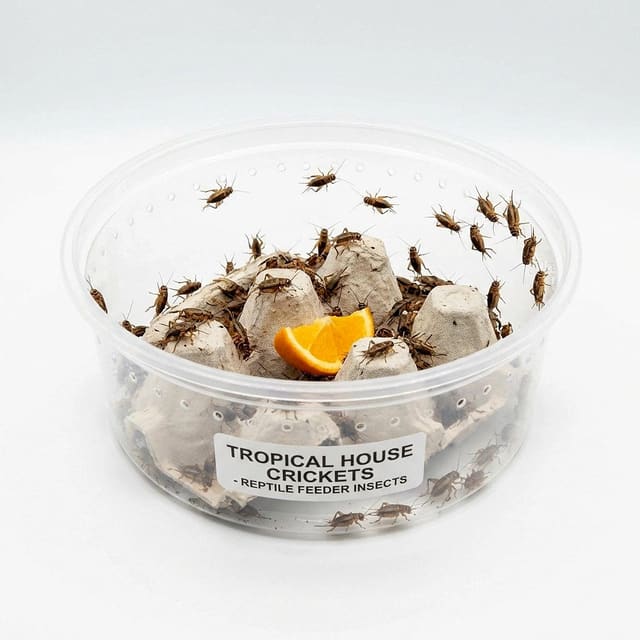

Gryllodes Sigillatus Tropical House Cricket Packet - UK
Live tropical house crickets for dependable feeding of reptiles, amphibians and invertebrates. Handy packet size and fast UK delivery. Buy online today.
Premium Quality
Healthy, vibrant fish from trusted suppliers
Expert Care
Detailed care guides and support
Live Arrival Guarantee
Your fish arrives healthy or we'll replace it
Acclimated
Properly quarantined and ready for your tank
Why Choose This Fish?
Live tropical house crickets for dependable feeding of reptiles, amphibians and invertebrates. Handy packet size and fast UK delivery. Buy online today.
Gryllodes sigillatus, the tropical house cricket, is one of the most practical live feeder insects for keepers who want reliable movement, good nutrition, and easier storage than many traditional cricket species. If you have ever asked what are house crickets, what is a house cricket, or what is house cricket insect, this packet gives you the answer in a form that is useful for daily reptile, amphibian, and invertebrate feeding. These live tropical house crickets in multiple sizes are valued because they are active enough to trigger a strong hunting response, yet straightforward for beginners learning how to house crickets or how to house crickets for reptiles. They are widely used as easy to keep live crickets for reptile feeding, especially for keepers who need natural movement feeder insects for feeding response.
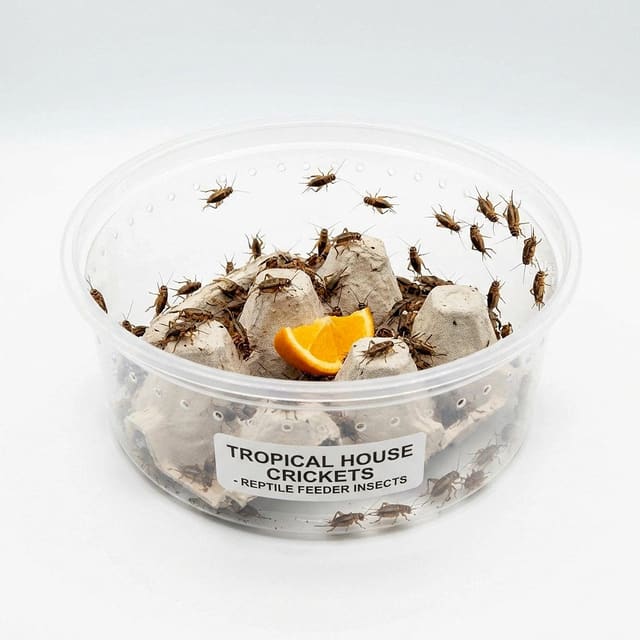
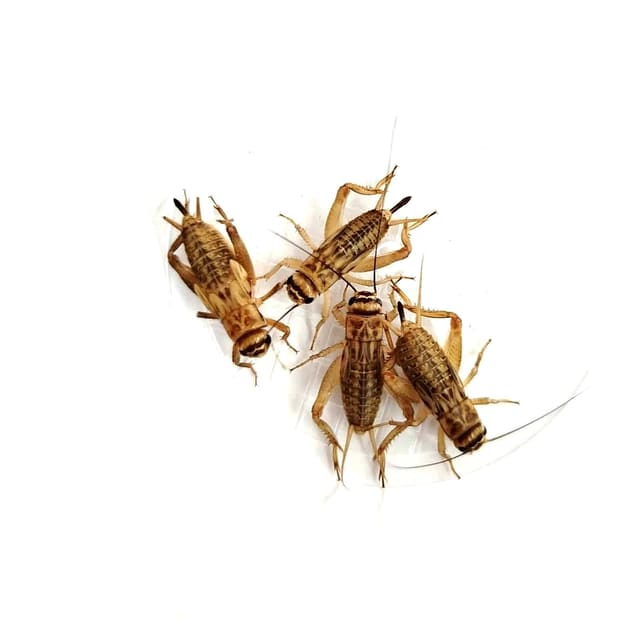
Compared with some noisier or smellier feeder options, tropical house crickets are a smart choice for home reptile rooms, school vivariums, and regular feeding routines. Their manageable house cricket size, useful house cricket protein, and simple tropical house cricket care make them popular for bearded dragons, leopard geckos, chameleons, mantids, tarantulas, and many frogs. See our detailed photos showing the body shape, colour, and condition of this feeder species in the product image gryllodes-sigillatus-tropical-house-cricket-packet-vivarium-animal-food.webp. If you want nutritious feeder insects for reptiles and amphibians that are easy to gut load, easy to dust, and practical to use, this cricket packet is an excellent everyday option.
🔹 Quick Facts
- Scientific Name: Gryllodes sigillatus
- Common Name: Tropical House Cricket
- Care Level: Moderate
- Use: Live feeder insect for reptiles, amphibians, arachnids, and invertebrates
- Storage Temperature: 24-30°C ideal
- Humidity: Low to moderate, with dry ventilation
- Lifespan: Several weeks to a few months depending on age and care
- Diet: Fresh veg, dry cricket feed, hydration gel, gut-loading foods
Classification
- Order: Orthoptera
- Family: Gryllidae
- Genus: Gryllodes
If you have searched tropical house cricket order, tropical house cricket family, house cricket family and order, house cricket order, house cricket order and family, or what order is a house cricket, this species belongs to the cricket family Gryllidae within the order Orthoptera. In the feeder trade, Gryllodes sigillatus is widely chosen for its feeding response, practical upkeep, and suitability as a live food insect in UK reptile collections.
Why choose a Gryllodes sigillatus cricket packet for feeder use?
This product is designed for keepers who need a convenient amount of live food without committing to a bulk box. A packet works well for smaller collections, occasional feeding, or testing whether your animal prefers tropical house crickets over locusts, roaches, or worms. It is also a sensible option if you are comparing house cricket vs grasshopper feeding behaviour and want to see which prey item triggers a better strike response.
Because these are high protein feeder crickets for muscle development, they are especially useful for growing juveniles, active insectivores, and reptiles recovering appetite after settling into a new enclosure. Many keepers also prefer them because there is no ph level required for feeder crickets and no tank size minimum for feeder crickets in the usual aquarium sense. Instead, success comes from airflow, warmth, dryness, and food quality. That makes this product far simpler to manage than many first-time buyers expect.
Where do tropical house crickets come from and where do house crickets live?
If you have wondered where do house crickets come from, where do house crickets live, or where do tropical house crickets live, Gryllodes sigillatus is associated with warm regions and human-managed environments where heat and food are available. In feeder culture, the focus is less on a narrow wild locality and more on recreating a stable tropical house cricket habitat indoors. Their natural preference is for warmth, shelter, and access to dry hiding spaces, which is why egg trays and ventilated tubs work so well.
The typical house cricket habitat or tropical house cricket habitat used by keepers is simple: smooth-sided storage tub, stacked cardboard, dry floor, and a separate food and hydration area. If crickets escape in a home, people often ask where do house crickets hide. They usually seek dark, warm cracks near appliances, cupboards, radiators, or under furniture. This also explains what attracts house crickets and what causes house crickets to linger indoors: warmth, food crumbs, moisture, and shelter.
Some buyers compare them with field cricket habitat setups, but tropical house crickets generally perform best in warmer, cleaner indoor feeder systems. If you are keeping them for feeding rather than long-term colony work, think of them as a managed live food culture rather than a display species. Questions such as when tropical house crickets, when tropical house crickets come out, or even quirky searches like tropical house cricket live stream usually reflect curiosity about activity patterns. In practice, they are often most active when warm and disturbed, which is exactly what makes them useful as feeder insects.
💡 Expert Tip
For better survival, copy their preferred habitat rather than overcomplicating it: warm air, dry ventilation, stacked cardboard for surface area, and fresh food changed daily. In our experience, this simple approach keeps feeder packets cleaner and more usable for longer.
How do you keep and house crickets properly at home?
The key to how to keep house crickets away from becoming escapees is good storage from day one. For feeding use, keep this packet in a secure, ventilated container with smooth sides and a tight-fitting lid. This is the foundation of how to house crickets well. If you are specifically learning how to house crickets for reptiles, add egg crate for climbing, keep the container dry, and avoid deep loose substrate that traps waste and dead insects.
House cricket temperature matters more than many beginners realise. Aim for about 24-30°C for active feeding insects, with best performance usually in the upper 20s. Cooler conditions slow them down, reduce feeding, and shorten the useful feeding window. For most homes, room temperature live cricket storage in ventilated container is possible for short periods, but warmer dedicated reptile rooms usually give better results.
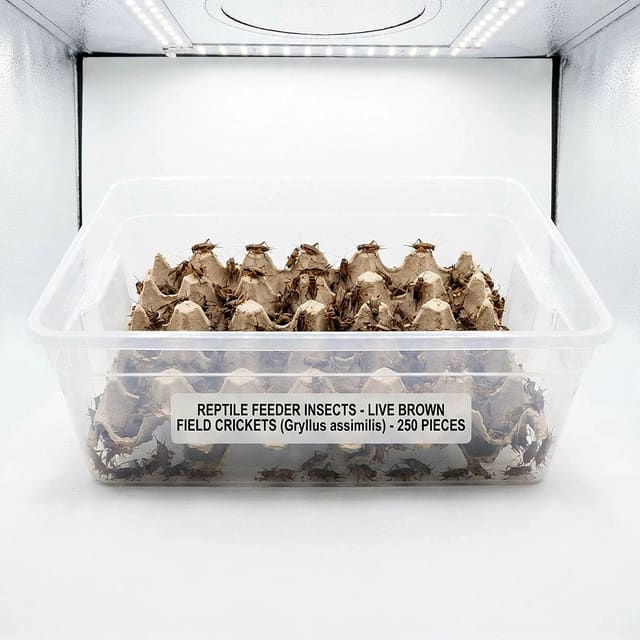
There is no aquarium-style filtration requirement here. Instead, hygiene replaces filtration. Remove dead crickets daily, replace damp food before it moulds, and avoid standing water. If you need more volume for regular feeding, step up to the Gryllodes Sigillatus Tropical House Cricket - 500pcs pack for larger collections. If you are comparing species for tougher-bodied prey, Gryllus Assimilis Field Cricket Large - 250pcs is a useful alternative.
For keepers building a broader feeding rotation, browse our live food UK range to compare packet sizes and species. A good tropical house cricket quick start guide is simple: ventilated tub, egg crate, dry feed, fresh veg, hydration source, warmth, and regular cleaning. If your concern is escape prevention, this also answers how to prevent house crickets, how to remove house crickets, and even house cricket how to get rid of in a practical way: secure lids, no overfilling, and no gaps around ventilation.
Quick Setup Checklist
- Use a smooth-sided, ventilated storage tub
- Add egg trays or cardboard for climbing space
- Keep at 24-30°C where possible
- Provide dry cricket feed and fresh veg
- Use hydration gel or moisture-rich veg, not open water
- Remove dead insects and spoiled food daily
💡 Pro Tip
If you buy feeder packets weekly, keep a dedicated cricket tub ready before delivery. Moving them into a warm, dry setup within hours noticeably improves survival and feeding value.
What do house crickets eat and how should you feed them before offering them to reptiles?
One of the most common questions is what do house crickets eat, what do tropical house crickets eat, what does tropical house cricket eat, or what tropical house crickets eat. The answer is simple: they do best on a mixed diet of dry cricket feed plus fresh vegetables for moisture and gut loading. Good options include carrot, leafy greens, squash, and small pieces of potato. This supports a better house cricket diet and stronger tropical house cricket diet before feeding out.
For reptile keepers, the real goal is not just keeping the crickets alive but improving their nutritional value. Learn how to gut load crickets by feeding them quality greens and insect feed for 24-48 hours before use. You can also learn how to dust crickets with calcium just before feeding by placing a small number in a bag or tub with supplement powder and gently shaking. This is especially important for live crickets suitable for bearded dragons chameleons and leopard geckos.
Questions like how do house crickets eat, house cricket eat, and house cricket food come up often with first-time keepers. They chew soft plant matter and dry feeds readily, and they will also scavenge. If overcrowded or underfed, do house crickets eat each other can unfortunately become a real issue, so always provide enough food and surface area. People also ask how long tropical house crickets live without food; the answer is not long enough to ignore feeding. Even short periods without food or moisture reduce condition fast.
As feeder insects, they are widely used as house cricket as food because of their digestibility and movement. Searches like house cricket in food, house cricket meat, house cricket novel food, and are house crickets edible relate to human food discussions, but this packet is intended as animal feed. For reptile care, portion size matters: how much tropical house crickets to feed depends on the predator’s size, age, and species. As a rule, offer only what your animal can catch in a short session and remove leftovers to avoid stress.
| Time | Food | Amount |
|---|---|---|
| Morning | Dry cricket feed | Small shallow dish, topped up as needed |
| Evening | Fresh carrot or leafy greens | Enough for 12-24 hours, remove leftovers next day |
⚠️ Feeding Warning
Do not leave large numbers of uneaten crickets in a reptile enclosure overnight unless the species is an active hunter and the setup allows it. This is one of the easiest ways to create stress, hidden escapes, and wasted food. If you are learning how to stop uneaten crickets stressing reptiles, feed in smaller batches and remove extras after the session.
What does a tropical house cricket look like?
If you have searched what does a house cricket look like or what tropical house crickets look like, Gryllodes sigillatus is typically light brown to tan with darker markings and a slimmer, softer-bodied look than some field crickets. Typical house cricket length varies by age and size grade, but feeder specimens are usually selected to match common reptile feeding stages, from small nymphs up to larger subadults. That makes them useful from micro crickets for baby reptiles through to subadult crickets for larger reptiles.
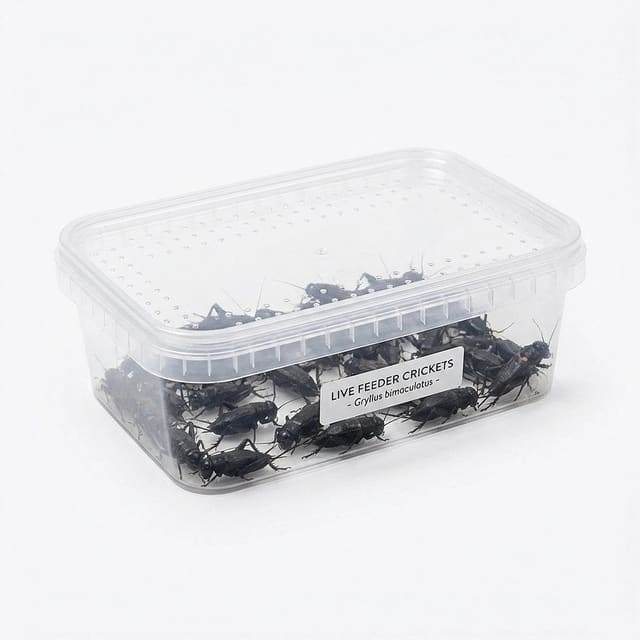
The usual tropical house cricket size is manageable for a wide range of pets, which is one reason they are considered among the best feeder insects for beginners. Their body colour is not usually a deep house cricket black like some darker species, and they are not truly house cricket white except during moulting. Like other orthopterans, they go through incomplete development rather than a full house cricket metamorphosis with larval and pupal stages.
Our product photos show the clean, active condition expected from a healthy feeder packet. You may also see online searches like house cricket reddit or tropical house cricket reddit where keepers compare colour, noise, and survival. In practical use, what matters most is activity level, body fullness, and freshness on arrival.
Are tropical house crickets dangerous, harmful, or bad in the home?
Google users often ask tropical house cricket dangerous, are house crickets dangerous, are house crickets harmful, and are house crickets bad. As feeder insects, tropical house crickets are not considered dangerous in the usual pet-keeping sense. They are not venomous, and for most keepers they are simply a manageable live food insect. Questions such as tropical house cricket bite and house cricket bite symptoms do appear online, but bites are uncommon and usually minor if they happen at all.
People also ask do house crickets carry diseases or worry about tropical house cricket disease. In normal feeder use, the main concern is not disease transmission to people but poor hygiene in the cricket tub, which can create smell, die-off, and reduced food quality. Clean storage, fresh food, and removal of dead insects solve most issues. If a few escape, the bigger problem is chirping and nuisance rather than danger.
Curious searches like what does a cricket in the house mean, what does a cricket inside the house mean, what does it mean if you see a cricket in your house, what does it mean when a cricket comes in your house, what does it mean when a cricket enters your house, or what does it mean when you have a cricket in the house often come from folklore. Some people associate them with luck, which is why are house crickets good luck is common, but in a reptile room it usually just means one escaped. If you are wondering what happens if a cricket gets in your house or what to do if cricket in house, check warm dark spots and remove it promptly before it settles.
⚠️ Common Mistake
Do not assume escaped crickets will simply die off immediately. If your home is warm and there is access to crumbs or moisture, they can survive long enough to become annoying. Good lids and careful feeding prevent most problems.
Will tropical house crickets eat my plants or household items?
Another frequent concern is will tropical house crickets eat my plants or the broader topic of tropical house cricket plant care. In feeder storage, they may nibble soft plant material used as food or moisture, but they are not a substitute clean-up crew and should not be left loose around houseplants. If they escape, they are more likely to seek shelter than attack healthy ornamental plants in large numbers.
People also ask do house crickets eat clothes or house cricket eat clothes. While crickets can chew certain fabrics or paper if they are desperate for food, this is not typical behaviour in a well-managed feeder setup. The best prevention is simple: keep them fed, contained, and dry.
Can you breed Gryllodes sigillatus at home?
Yes, house cricket breeding and tropical house cricket reproduction are both possible at home, although this packet is mainly intended for feeding rather than colony production. If you are curious about house cricket reproduction, adults breed readily when warm, fed well, and given a moist laying medium. Searches such as house cricket eggs, tropical house cricket eggs, tropical house cricket eggs look like, and how many eggs do.house crickets lay reflect how common home breeding has become among serious keepers.
To start a colony, keep a breeding group warm and provide a shallow tray of moist substrate for egg laying. A house cricket female can be identified by the long ovipositor, while house cricket male vs female comparisons usually focus on that feature and chirping behaviour. The eggs are tiny and pale, and after incubation they hatch into nymphs often described in searches as house cricket baby or tropical house cricket baby. Although some people search house cricket larvae, crickets do not have a true larval stage like beetles or flies.
If you are researching what day tropical house crickets hatch, hatch time depends heavily on temperature. Warmer incubation speeds development, while cooler conditions slow it down. Commercial keepers looking for scale may even search tropical house cricket eggs for sale, but for most hobbyists it is easier to buy fresh feeder packets or larger feeder boxes as needed.
Advanced Breeding Tip
For better hatch rates, remove the egg-laying tray after adults have used it for a day or two and incubate it separately in warm conditions with light moisture. This reduces egg disturbance and prevents adults from damaging the developing young.
How do tropical house crickets compare with field crickets?
Choosing the right feeder often comes down to size, body texture, and how your animals respond to movement. Tropical house crickets are often preferred when you want a softer-bodied, active prey item that is easy to keep in moderate numbers. Field crickets are often chosen for larger mouths and a sturdier prey profile. If you are comparing which tropical house cricket is best for your setup, the answer depends on the predator rather than a universal ranking.
| Feature | Tropical House Cricket Packet | Field Cricket Large |
|---|---|---|
| Species | Gryllodes sigillatus | Gryllus assimilis |
| Care Level | Moderate | Moderate |
| Temperature | 24-30°C ideal | 24-30°C ideal |
| Body Type | Softer, lighter-bodied | Larger, tougher-bodied |
| Best For | General feeder use, mixed collections | Bigger insectivores and stronger feeders |
If you need larger prey, compare this packet with Gryllus Assimilis Field Cricket Large - 250pcs. If you already know your collection eats tropical house crickets well, moving up to the 500pcs Gryllodes sigillatus pack can be more efficient. Keepers in the field cricket uk market often rotate both species to match different animal sizes and feeding days.
What common issues affect feeder crickets and how can you prevent them?
The most common problems with feeder packets are die-off, dehydration, mould, crowding, and escapes. Good cricket care is mostly preventive. Keep the container dry, provide food daily, avoid open water, and remove waste. If you are wondering which tropical house cricket setup works best, the answer is almost always the cleanest, driest, best-ventilated one.
House cricket predators and tropical house cricket predators are relevant only if they escape into a wider environment, where spiders, centipedes, and small vertebrates may take them. In the home, your main predator is poor husbandry. Crickets weaken fast in damp, dirty tubs. This is also why people searching tropical house cricket how to get rid of or how to prevent house crickets are usually advised to remove food sources, reduce hiding places, and seal entry points.
There are also odd search terms in this niche, such as house cricket michigan, what happened to tropical house, what time tropical house cricket open, what time tropical house cricket close, what time tropical house crickets, or what time tropical house crickets come out. These are not husbandry factors, but they highlight how often buyers are simply trying to understand cricket behaviour and availability. In real care terms, activity rises with warmth and disturbance, while poor condition shows as sluggish movement, shrivelling, and rising mortality.
Cricket Care Troubleshooting
- High losses: Usually caused by cold, dampness, or poor ventilation
- Bad smell: Remove dead insects and spoiled veg immediately
- Cannibalism: Increase food, moisture source, and surface area
- Escapes: Use smooth-sided tubs and secure lids
- Low feeding value: Gut load for 24-48 hours before use
What do tropical house crickets do and when are they most active?
If you are asking what do house crickets do or what tropical house crickets do, the answer is straightforward: they hide, feed, climb, chirp, moult, and scatter quickly when disturbed. That burst of movement is exactly why they are so effective as feeder insects. Reptiles that ignore static prey often respond immediately to crickets.
People also search what day tropical house crickets, what day tropical house crickets come out, or even what time tropical house cricket game today, which are not care questions but do reflect curiosity about timing. In practical husbandry, tropical house crickets are most active when warm and often become more noticeable in lower light or after the container is opened. For feeding sessions, warm them slightly and use a small feeding tub if you want better control.
This natural activity is one reason they remain a staple in every good live insect feeder guide. For many keepers, they are the default feeder because they combine movement, manageable size, and broad species acceptance.
Why buy tropical house crickets from Tropical Fish Co?
When you buy a tropical house cricket for sale packet, freshness matters more than fancy claims. This product is selected for active feeder use, packed for transport, and suited to UK reptile and vivarium keepers who want practical live food rather than stale shelf stock. If you are searching for house cricket for sale, tropical house cricket online, tropical house cricket online store, or a reliable tropical house cricket order, this listing is built around usability: manageable quantity, straightforward care, and species identification you can trust.
We clearly label this as Gryllodes sigillatus so buyers know exactly what they are ordering. That matters when comparing feeder species, packet sizes, and prey suitability. Customers feeding geckos, young dragons, frogs, and invertebrates often choose this packet first, then move to the 500pcs tropical house cricket option once they know their animals take them well. Larger keepers may combine this packet with large field crickets for a broader feeder rotation.
We also know buyers often arrive through unusual searches such as what is tropical house, what tropical house crickets, or even unrelated terms like house with cricket pitch for sale. What matters here is that you get a clearly identified feeder insect with practical care guidance. Order your cricket packet today if you want a simple, active live food option that is easy to gut load, easy to dust, and suitable for a wide range of insect-eating pets.
Why Choose Tropical Fish Co for Tropical House Crickets
- Clearly identified Gryllodes sigillatus feeder packets for accurate species selection
- Ideal for keepers wanting a manageable packet before stepping up to bulk quantities
- Supported by practical care advice on storage, gut loading, dusting, and feeding use
You might also like
If you are building a reliable feeder routine, the Gryllodes Sigillatus Tropical House Cricket - 500pcs is the natural upgrade for multi-pet homes and heavy weekly feeding. For larger prey, Gryllus Assimilis Field Cricket Large - 250pcs offers a sturdier alternative. You can also explore our wider live food collection if you want to compare cricket sizes for different reptiles.
Many customers use this packet as part of a rotation that includes bulk tropical house crickets for regular feeding days and large field crickets for bigger reptiles when extra prey size is needed. If you are still deciding, start with this packet to test acceptance, then scale up once you know what your animals prefer.
Popular Right Now


Aulonocara sp. 'Firefish' - Tropical Fish for Sale UK

Yellow Lepturus Cichlid - UK

Apistogramma agassizii “Super Red” - UK

Endler Gold Guppy Breeding (Poecilia wingei) - UK

X Neon Green Rasbora - UK

Rasbora Heteromorpha (Trigonostigma heteromorpha) - UK