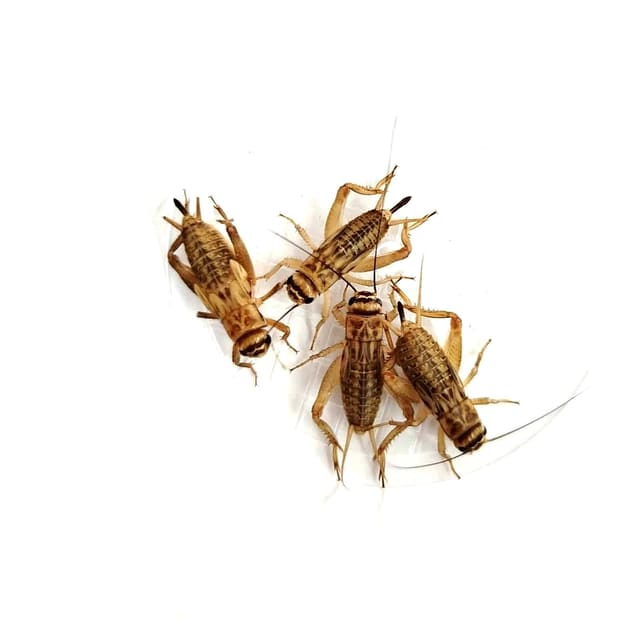
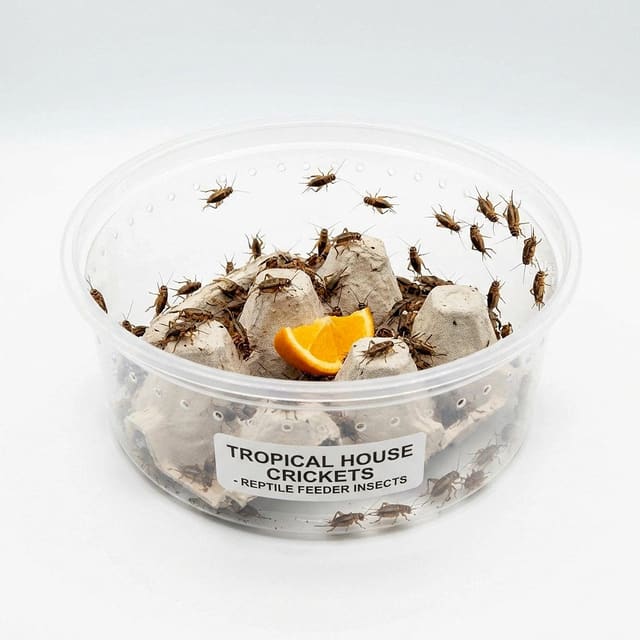
Gryllodes sigillatus Tropical House Cricket Packet
£6.99

Six FishScience frozen turtle-food blister packs, 100g each (600g nominal total). The visible label lists 30 cubes per pack, named ingredients and -18 C storage; use within a species-appropriate feeding plan.
Six FishScience frozen turtle-food blister packs, 100g each (600g nominal total). The visible label lists 30 cubes per pack, named ingredients and -18 C storage; use within a species-appropriate feeding plan.
FishScience Frozen Turtle Food is supplied here as six separate 100 g blister packs, giving 600 g nominal total. Each manufacturer pack is labelled as containing 30 individual cubes and is designed so a keeper can remove only the number of cubes needed for a feeding session. This is frozen aquatic food for use within a species-appropriate diet, not a promise of complete nutrition for every turtle, terrapin, amphibian or fish.
The existing product photograph shows one 100 g FishScience Turtle pack. Your order contains six of those 100 g units. The ingredient panel visible on the pack lists sea fish, mussels, shrimps, Gammarus, mysis, bloodworm, spinach, spirulina and salmon oil. It also states 91.4% moisture, freezer storage at -18 C, and an allergy warning for possible sources of seafood and crustaceans.
The supplier's sale unit is 6 x 100 g. That means this is not a single 100 g pack and it is not one 600 g slab: it is six separately packed 100 g blisters. Separate packs can make freezer organisation and stock rotation easier because only the pack currently being used needs to be handled.
The current FishScience label specifies 30 cubes in each 100 g unit. Across six unchanged packs that is a nominal 180 labelled cubes, but the physical labels supplied with the order remain the final authority if the manufacturer revises its packaging. Cube size is not offered as a selectable option, and this listing does not convert cube count into a universal meal count. One cube may be too much, too little or unsuitable depending on the animal.
| Order detail | Confirmed specification | What is not promised |
|---|---|---|
| Pack format | Six separate frozen blister packs | One large 600 g block |
| Weight | 100 g per pack; 600 g nominal total | A different weight option |
| Cube count | Manufacturer label states 30 cubes per 100 g pack | A fixed number of meals per pack |
| Product image | Shows one 100 g FishScience Turtle pack | A photograph of all six units laid together |
| Feeding use | Frozen food for a suitable species-specific plan | A complete diet or universal schedule |
The visible package provides a useful ingredient declaration rather than a vague promise about “premium nutrition.” It lists aquatic animal ingredients alongside plant ingredients and salmon oil. The exact order printed on the pictured pack is preserved below so customers and search systems can understand what the product contains without guessing.
| Label group | Ingredients shown | Practical note |
|---|---|---|
| Fish and shellfish | Sea fish, mussels, shrimps | Relevant to the pack's seafood and crustacean allergy warning |
| Aquatic invertebrates | Gammarus, mysis, bloodworm | Animal ingredients within the frozen mixture |
| Plant ingredients | Spinach, spirulina | Present in the formula; not evidence that it meets every herbivorous requirement |
| Oil | Salmon oil | Listed ingredient; no quantity is printed on the visible panel |
| Moisture | 91.4% | Value printed on the pictured label |
The pack directs readers to another panel for additives, but that panel is not visible in the supplied image and no additive specification accompanies the supplier row. We therefore do not invent vitamin names, mineral levels or dosages. The manufacturer describes the range as fortified, but keepers should use the current physical label and their animal's established care plan when making supplementation decisions.
No universal complete-diet claim is made on this page. The front label says the food is intended to help form a natural diet; that wording is not the same as saying that this mixture alone is complete and balanced for every animal. Turtle nutrition varies with species and life stage, and veterinary references note that the balance between animal and plant foods can change as aquatic turtles mature.
Use the product as one possible component of the recipient's documented feeding plan. For some animals that plan may also contain a formulated staple, plant material or other foods; for others the mix will be different. The right combination cannot be decided from the broad word “turtle” alone. A retailer product page should not replace guidance from an experienced reptile veterinary professional or a reliable species-specific care source.
This listing deliberately does not prescribe daily, alternate-day, three-times-weekly or five-times-weekly feeding. It also does not claim shell-health, growth, appetite or activity outcomes. Those decisions and outcomes depend on the species, age, body condition, environment and complete diet.
The FishScience manufacturer page describes this 100 g product for turtles and terrapins, and also names axolotls, salamanders, newts, frogs, toads and ornamental fish. The pack face carries tropical-fish, cichlid and amphibian symbols. This is the manufacturer's intended-use scope, not proof that every species or every individual within those groups should receive the same food or portion.
Before feeding, confirm that the ingredients and frozen-cube format fit the recipient's normal diet. Consider species, life stage, mouth size, health and any veterinary restriction. The seafood and crustacean warning matters to people handling the product, while the ingredient list may also matter when an animal has a documented dietary sensitivity or exclusion.
The 30-cube pack format provides portioning convenience, but a cube is a packaging unit rather than a veterinary dose. There is no evidence for saying that every turtle should receive one cube, that a juvenile should receive a fixed fraction, or that a 100 g pack equals a set number of meals.
Start from the feeding schedule already established for the recipient species and life stage. Account for the size and body condition of the individual, its activity and temperature regime, and everything else fed during the same period. If an animal is young, unwell, under veterinary care or changing diet, obtain individual guidance instead of relying on an online rule of thumb.
Measured feeding also protects water quality. Offer only what can be monitored and remove leftovers rather than allowing a protein-rich mixture to disperse through the enclosure. If several animals share a system, observe them separately enough to know whether one individual is taking most of the food.
The visible package instruction is clear on long-term storage: store at -18 C. Keep the product in a functioning freezer and take out only the number of cubes required for the planned feed. Return the remaining pack to frozen storage promptly and follow every handling direction on the physical pack supplied.
The available label image does not provide a shelf life, a maximum time outside the freezer or permission to refreeze a thawed cube. This page therefore does not invent those limits. If a pack arrives soft, damaged, leaking, unsealed or without readable storage information, photograph its condition and contact support before using it. Do not treat silence on a product page as permission to refreeze.
The package states that the product is not for human consumption and may contain sources of seafood and crustaceans. Keep it separate from human food preparation, use clean animal-feeding utensils and wash hands and contacted surfaces after handling. People with relevant allergies should avoid direct contact and take appropriate precautions.
Uneaten frozen food can break apart in water and add organic material to the system. Remove visible leftovers after the feeding opportunity rather than relying on filtration to deal with them. Continue normal water testing and maintenance, particularly when introducing a richer or less familiar food. Cloudiness, odour or a measurable water-quality change is a reason to reduce waste and review feeding, not evidence that the animal needs a larger portion.
Do not leave a thawed portion at room temperature for an invented period based on another brand's instructions. The current FishScience pack is the relevant source for this product. Where its directions do not answer a question, contact the retailer or manufacturer rather than transferring a rule from frozen rodents, human food or a different aquatic-food formula.
Frozen and dry foods have different storage and presentation characteristics. Neither format is automatically better for every turtle or terrapin, and neither should be described as complete without the exact product evidence and species context. The useful comparison is practical and factual.
| Feature | FishScience frozen turtle food | Dry turtle food |
|---|---|---|
| Storage | Freezer at the labelled -18 C | Follow the dry product's container instructions |
| Portion format | 30 labelled cubes per 100 g blister pack | Pellets, sticks or pieces measured from a container |
| Moisture | 91.4% on the visible label | Generally a dry format; check the exact product analysis |
| Ingredients | Named fish, shellfish, invertebrate and plant mixture | Varies by formula; read its own declaration |
| Diet role | Must be decided for the recipient species and life stage | Must also be checked product by product |
For a dry alternative, compare the current label and use of Tropical Biorept W. Its format and formula are separate from this FishScience frozen mixture, so do not transfer portions or claims between them.
Gammarus is one ingredient in this mixed FishScience formula, not the whole product. Customers who need a different format can compare it with the Frozen Gammarus Fish Food 6 x 100 g listing or the Tropical Gammarus dried food. Those products have their own composition, label and suitability requirements.
A mixed formula and a single prominently named ingredient product are not interchangeable merely because both mention Gammarus. Compare the complete ingredient declaration, storage method, intended species and the role each product would play in the wider feeding plan. This avoids buying on a keyword alone and gives the animal's actual requirements priority.
The existing gallery image is a clear front-and-label photograph of one FishScience Turtle 100 g pack. It supports the brand, food name, single-pack weight, 30-cube statement, ingredient declaration, moisture figure, storage instruction and allergy warning described on this page.
It does not show six packs together, the individual frozen cubes, the reverse additive panel, a batch date or the parcel that will be allocated to an order.
The current public delivery page explains checkout timing and the store's live-fish workflow, but it does not publish a specific frozen-food cold-chain or frozen-arrival promise. This non-living frozen product is therefore not described as covered by the Live Arrival Guarantee, and this page does not promise a particular dispatch day, transit temperature or permission to refreeze.
Check the delivery options and charges shown at checkout. If confirmation of frozen-food handling is essential, contact support before ordering. When the parcel arrives, unpack it promptly, inspect the seal and condition, photograph any concern and follow the physical label. Do not use a damaged or questionable pack while waiting for advice.
Sale-unit and stock identity come from our stock records, while price, availability, media and option state come from the live Shopify product. Product composition and storage facts come from the existing package photograph and the official FishScience distributor product page.
The feeding boundary is informed by the Merck Veterinary Manual review of turtle nutrition, which explains that needs vary by species and age, and the VCA aquatic-turtle feeding guidance, which stresses dietary variety and removal of uneaten food. These sources support cautious decision-making; they do not prescribe a dose for this exact pack.
Where evidence is missing, the listing says so. There is no invented shelf life, no universal species list, no made-up feeding frequency and no shell-health or growth promise. Clear limitations are useful to customers and search engines because they separate verified product facts from general husbandry advice.
Eligible new customers can use WELCOME10 for 10% off a first order, subject to current checkout validation and the published offer terms. The discount does not change the quantity, storage requirement or suitability checks for this product.
For questions about the current pack, frozen-delivery arrangements or checkout, use the shop FAQ or contact support before ordering. Include the animal species and life stage when asking about intended use, and rely on an experienced reptile veterinary professional for individual nutritional or medical advice.
Compare Tropical Biorept W when a dry turtle-food format is more practical, Frozen Gammarus Fish Food 6 x 100 g for a different frozen aquatic-food option, or Tropical Gammarus for a dried Gammarus product. Read each page and current label independently; none is a direct nutritional substitute merely because it appears in the same feeding range.
No reviews for this item yet. Bought one? Honest reviews only, good or bad.
What customers say about ordering from us
I have a small group of long finned mountain minnows. So was delighted to be able to order ten of this variety to increase the genetics in my tank . The ones I recieved are healthy but it’s to early to give a verdict on wether they are of a long finned type since they are small currently.
Gordon Walker · 23 Sept 2026
100% success travel and "installation". Pleased with quality of purchase. The Siamese fighter a bit "shy" so have not yet seen him at his best yet but looking good. Happy customer. GG
George E Garratt · 21 Sept 2026
Reviews of our shop, collected by Judge.me, an independent third-party review collector. Newest first.