Acheta domestica Large Crickets – 250 Pack
£20.79

Order 250 large black crickets for reliable reptile feeding. Ideal live food for bearded dragons and other insectivores, with fast UK delivery.
Order 250 large black crickets for reliable reptile feeding. Ideal live food for bearded dragons and other insectivores, with fast UK delivery.
If you need dependable live food UK keepers can use for hungry insect-eating pets, Gryllus bimaculatus is one of the most practical choices. This pack of Gryllus Bimaculatus Black Cricket Large - 250pcs gives you robust, active feeder insects with a good body size for medium to large reptiles, amphibians, invertebrates, and some birds. Often called the Mediterranean Field Cricket, this species is widely chosen as live food for bearded dragons, mantids, tarantulas, and larger geckos because it offers strong feeding response, useful protein levels, and easy portion control. If you have been searching for live reptile food near me, live reptile food UK, or live reptile food delivery, this 250-count tub is a convenient way to keep a steady supply on hand without overbuying.
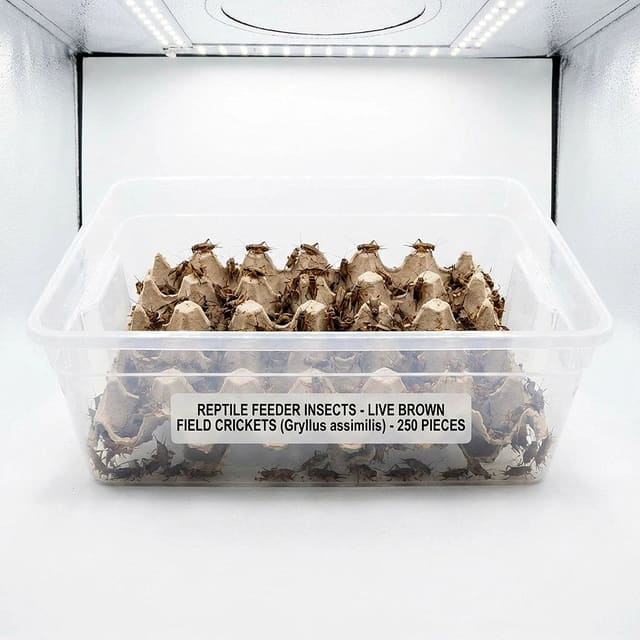
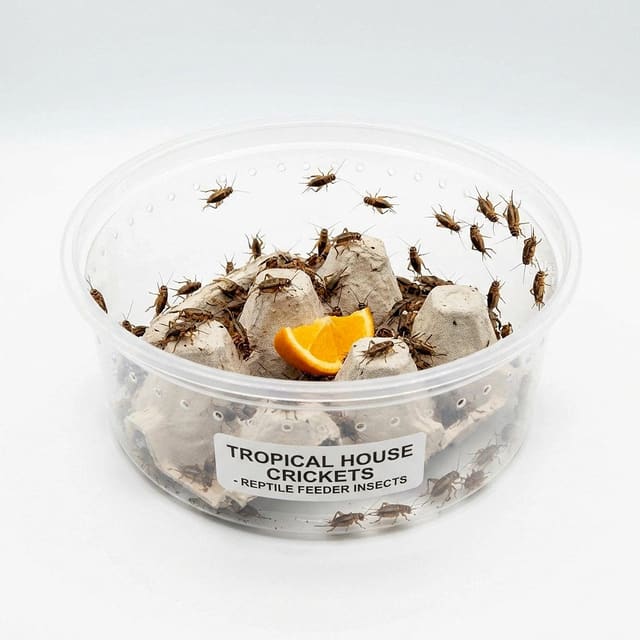
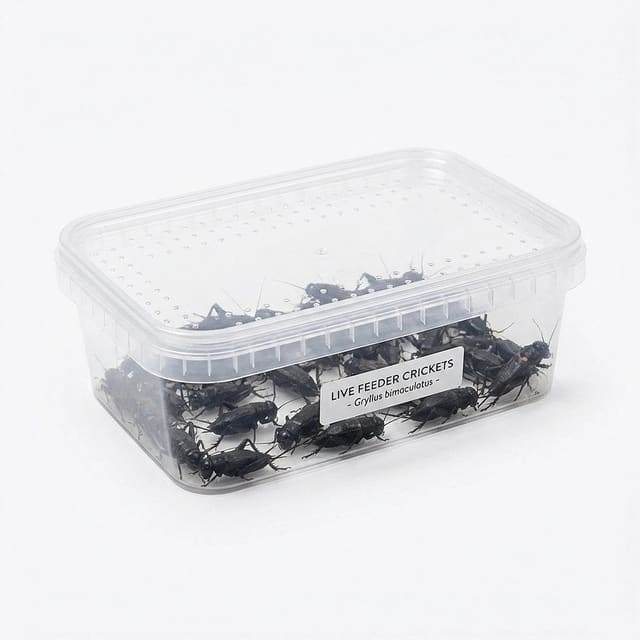
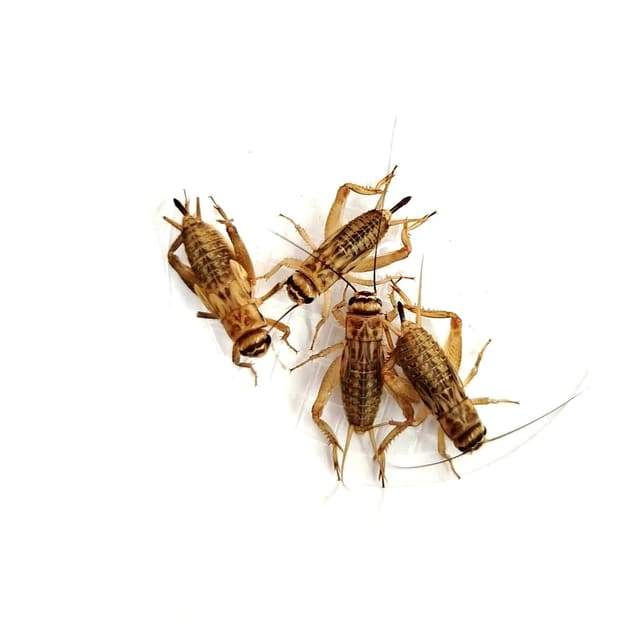
Large black crickets are especially popular because they are lively enough to trigger interest in fussy feeders, yet simple to house for short-term use. See our product image live-food-uk.webp for a clear look at the size and dark coloration of these Live Black Feeder Crickets. Whether you are comparing black crickets UK options, looking for best black cricket feeder insects UK, or planning a mix and match live food order alongside worms and flies, this pack is designed for practical feeding, sensible storage, and reliable use across many setups.
Gryllus bimaculatus is a true cricket species used extensively in reptile feeding. In the hobby, it sits alongside other common feeder species such as Acheta domestica, Gryllodes sigillatus, and Gryllus assimilis. Its larger, sturdier build makes it a strong option when you need active feeder insects for pets that ignore smaller prey.
Large Black Crickets 250pcs are a practical middle ground between small daily feeders and oversized prey that may be unsuitable for younger animals. For keepers buying feeder insects UK wide, this size works well for adult leopard geckos, juvenile to adult bearded dragons, many frogs, and medium tarantulas. They move quickly, which encourages a natural hunting response, and their firmer body shape makes them easier to pick up with feeding tongs.
This product is also useful if you buy live food bulk but still want manageable quantities. A 250-count tub is easier to rotate through than very large breeder boxes, especially if you feed several times per week. Customers often choose this size when comparing black cricket feeder price UK options because it gives a strong quantity-to-value balance without the waste that can happen if too many insects are stored too long.
These live black crickets are suitable for many insectivores. They are especially popular as black crickets for bearded dragon UK keepers, but they also work well for leopard geckos, crested geckos that take occasional live prey, chameleons, tree frogs, horned frogs, mantids, scorpions, and spiders. If you are specifically looking for live large black crickets for tarantula UK setups, this size is often ideal for medium to large specimens that need active prey.
For variety, many keepers rotate these with Acheta Domestica Cricket Large - 250pcs, Gryllodes Sigillatus Tropical House Cricket Large, or Gryllus Assimilis Field Cricket Large - 250pcs. That kind of rotation can help if your pet becomes selective or if you want to compare black crickets vs brown crickets for reptiles in your own setup.
| Pet Type | Suitable? | Notes |
|---|---|---|
| Bearded dragons | ✅ Yes | Excellent as part of varied live food for bearded dragons |
| Tarantulas | ✅ Yes | Useful active prey for medium and large spiders |
| Very small hatchlings | ❌ Avoid | Choose smaller crickets or flies instead |
When customers ask about reptile crickets, they usually want to know how black crickets compare with locusts, brown crickets, dubia roaches, and worms. Black crickets tend to be more active and more solidly built than many tropical house crickets. That makes them useful for pets that need movement to trigger feeding. Compared with some softer feeders, they can also be easier to handle individually.
If you are comparing gryllus bimaculatus vs acheta domestica, black crickets are generally chunkier and more assertive in movement, while brown crickets can be a familiar all-rounder. If you want a second cricket type for comparison, see Acheta Domestica Cricket Large - 250pcs. If you prefer another field cricket species, Gryllus Assimilis Field Cricket Large - 250pcs is another strong option.
Many keepers also alternate with Galleria Mellonella Waxworms - 18g as an occasional high-fat treat, Lumbricus Terrestris Earthworm - 10pcs for amphibians and some reptiles, or Musca Domestica Housefly Non-Fly - 1/2 Litre for smaller hunters. This is often better than relying on one feeder alone.
| Feature | Black Cricket Large | Brown Cricket Large |
|---|---|---|
| Movement | Very active | Active |
| Body build | Chunkier | Slimmer |
| Best for | Larger insectivores | General use |
A simple black cricket keeping guide starts with space, airflow, warmth, and dryness. Once delivered, move the crickets into a well-ventilated holding tub or cricket keeper with egg crate for climbing area. Keep them at around 24-28°C for best activity. Cooler conditions slow them down; excessive damp encourages odour and losses. This is the core of any sensible gryllus bimaculatus care guide.
Do not leave them crowded in a sealed shipping tub longer than necessary. Add dry food, fresh vegetable pieces in small amounts, and a safe moisture source such as insect water gel. Avoid open dishes of water, as crickets drown easily. If you regularly buy buy large black crickets UK quantities, having a dedicated keeper box makes management much easier.
For better survival, keep black crickets warm, dry, and uncrowded. A common mistake is adding too much wet food at once. Small, fresh portions reduce mould and help the whole tub stay cleaner for longer.
A good black cricket gut loading guide matters because the insect is only as nutritious as what it has eaten recently. For 24-48 hours before feeding out, offer a balanced dry gut-load plus fresh greens or vegetables such as carrot, squash, or leafy greens. This improves black cricket nutrition for reptiles and helps turn ordinary feeders into more useful prey.
Keepers searching for gut loaded insects for sale often want convenience, but home gut loading is simple and effective. Well-fed crickets are especially important for growing dragons, geckos, and frogs. If you use this pack as regular reptile food UK, adding calcium and vitamin dusting according to your pet species is still important.
| Time | Food | Amount |
|---|---|---|
| Morning | Dry gut-load | Small constant supply |
| Evening | Fresh veg + water gel | Only what is eaten quickly |
Do not feed out starving crickets straight from a neglected tub. Poorly kept feeders lose condition quickly, which reduces their value as food and can lead to avoidable nutritional gaps in your reptile’s diet.
Yes, they are one of the most useful options for live food for bearded dragons when chosen in the right size. This large grade suits older juveniles and adults better than small babies. As with all feeders, use the rule that prey should not be wider than the space between the dragon’s eyes. For UK keepers searching black crickets for bearded dragon UK, this pack is ideal for routine rotation with locusts, roaches, and occasional worms.
Many dragon owners alternate black crickets with Gryllodes Sigillatus Tropical House Cricket Small for younger animals, Galleria Mellonella Waxworms - 18g as a treat, and other feeders when building a broader menu. If your dragon ignores static food bowls, active crickets live food often gets a much faster response.
Absolutely. Keepers looking for live large black crickets for tarantula UK often choose this species because the movement level encourages a strike response. Medium and large tarantulas, mantids, and many frogs will take them readily. For amphibians that prefer softer or slower prey, earthworms or flies may be useful alternatives, such as Lumbricus Terrestris Earthworm - 10pcs or Musca Domestica Housefly Non-Fly - 1/2 Litre.
If you also buy live locusts for sale, roaches, or worms, black crickets fit nicely into a varied feeding plan. They are not a complete diet by themselves, but they are an excellent staple feeder in many collections.
Black Cricket Large feeders are dark brown to near-black, with a more solid appearance than many brown cricket lines. Our photos show the typical deep body colour and long hind legs used for jumping. Large specimens are generally suited to medium and larger predators, and females can be identified by the long ovipositor at the rear, while males lack this egg-laying tube.
Customers comparing buy gryllus bimaculatus large UK listings often notice the darker colour first. The darker body can make them easier to spot in a feeding tub, though in a planted vivarium they may still hide under cork, leaf litter, or decor. If you use naturalistic enclosures with swell reptiles substrate, swell reptiles soil, or swell reptiles bark, monitor uneaten crickets so they do not remain in the enclosure too long.
Feeding frequency depends on the animal, not the cricket. Adult bearded dragons may take insects several times per week, while growing juveniles need more frequent live feeds. Tarantulas may eat one to several prey items depending on size and feeding schedule. Frogs vary widely by species and age. That is why a 250-count tub works well: it supports regular use without forcing every keeper into true live food bulk storage.
If you are building a varied menu, combine these with occasional Mouse 18-22g for suitable snake species, Galleria Mellonella Waxworms - 18g for conditioning, or smaller cricket species for younger animals. For keepers comparing live mealworms 1kg, buy mealworms uk, or 500g morio worms options, remember that black crickets usually provide more movement and often trigger stronger hunting behaviour.
The biggest issues are overcrowding, poor ventilation, damp conditions, and lack of food. Many complaints about feeder quality actually come from storage problems after arrival, not from the species itself. If you follow a sensible black cricket keeping guide, losses are usually much lower. Remove dead insects daily, keep food fresh, and avoid piling wet vegetables into the tub.
Another mistake is leaving uneaten crickets loose in the vivarium. In some setups they may hide, nibble soft shed skin, or stress resting animals. This matters in enclosures using swell reptiles live plants, swell reptiles plants, or loose naturalistic decor. Feed in sensible portions and remove leftovers where possible.
Do not store black crickets in a cold garage or a sealed plastic tub without airflow. Chilling slows them down and damp stale air can cause rapid decline. Warmth and ventilation are far more important than fancy housing.
Black crickets are best used as part of a rotation. They pair well with worms, flies, and other cricket species. If you are comparing cockroaches reptile food, livefoods4u, livefood direct, live foods 4 u, or other online feeder options, the key question is not just source but variety. Most insectivores do best when offered more than one prey type over time.
A practical rotation might include these black crickets, Gryllodes Sigillatus Tropical House Cricket Large for a different cricket profile, Musca Domestica Housefly Non-Fly - 1/2 Litre for aerial hunters, and Lumbricus Terrestris Earthworm - 10pcs for amphibians. Keepers asking about locust box setups or livefood locusts often use black crickets alongside locusts rather than instead of them.
If you are deciding between black crickets large for sale UK, brown crickets, or other field crickets, think about your pet’s feeding response and your own handling preference. Black crickets are often chosen by keepers who want a lively, substantial feeder. Brown crickets remain a common all-round choice. Other field crickets can sit somewhere in between depending on line and size.
For side-by-side alternatives, compare this product with Gryllus Assimilis Field Cricket Large - 250pcs and Acheta Domestica Cricket Large - 250pcs. If you want a smaller option for younger pets, Gryllodes Sigillatus Tropical House Cricket Small is worth considering.
| Feature | Gryllus bimaculatus Large | Gryllus assimilis Large |
|---|---|---|
| Typical use | Larger active feeders | Alternative field cricket option |
| Movement level | High | Moderate to high |
| Best for | Dragons, frogs, tarantulas | Keepers wanting a different field cricket profile |
People shopping for live reptile food free delivery, live reptile food uk free delivery, or live food by post often ask the same practical questions: how quickly should live insects be unpacked, how are they shipped, and what quantity makes sense? For live feeders, prompt unpacking is important. Open the parcel as soon as it arrives, check ventilation, and transfer the crickets into a proper holding tub.
Many search terms online are brand-specific, such as swell reptiles delivery, swell reptiles delivery times, swell reptiles shipping, swell reptiles standard delivery, swell reptiles tracked delivery, swell reptiles order tracking, swell reptiles track order, swell reptiles order, and swell reptiles shop. Those are common buyer-intent searches, but the key point for any live insect order is the same: choose a quantity you can use promptly, unpack immediately, and maintain the feeders correctly after arrival.
If you regularly feed several animals, a 250-count tub is often the most efficient size. It is large enough to be economical, but still manageable for keepers who do not want the complexity of breeding or storing very large live food bulk quantities.
This product is selected for keepers who want a dependable feeder size with strong feeding response. Rather than treating all feeder insects as interchangeable, we describe this line for what it is: a large, active black cricket suited to medium and larger insectivores. That matters when you are trying to decide between bulk large black crickets for reptiles UK, smaller house crickets, worms, or mixed prey boxes.
It is also a straightforward option for customers searching gryllus bimaculatus buy online UK, large black crickets 250 for sale UK, or buy gryllus bimaculatus large UK. If your pet does best with active prey and you want a practical quantity for routine feeding, this pack makes sense. It also pairs well with other feeder lines if you prefer a broader menu rather than relying on one insect alone.
For younger reptiles, try Gryllodes Sigillatus Tropical House Cricket Small for a more suitable prey size.
If you want a second cricket type for comparison, Acheta Domestica Cricket Large - 250pcs is a classic all-round feeder.
For another robust field cricket option, see Gryllus Assimilis Field Cricket Large - 250pcs.
Add variety with Musca Domestica Housefly Non-Fly - 1/2 Litre for fast-moving aerial prey.
For occasional treats or conditioning, Galleria Mellonella Waxworms - 18g can be useful in moderation.
Amphibian keepers may also like Lumbricus Terrestris Earthworm - 10pcs for a very different prey profile.
No reviews for this item yet. Bought one? Honest reviews only, good or bad.
What customers say about ordering from us
I have a small group of long finned mountain minnows. So was delighted to be able to order ten of this variety to increase the genetics in my tank . The ones I recieved are healthy but it’s to early to give a verdict on wether they are of a long finned type since they are small currently.
Gordon Walker · 23 Sept 2026
100% success travel and "installation". Pleased with quality of purchase. The Siamese fighter a bit "shy" so have not yet seen him at his best yet but looking good. Happy customer. GG
George E Garratt · 21 Sept 2026
Reviews of our shop, collected by Judge.me, an independent third-party review collector. Newest first.