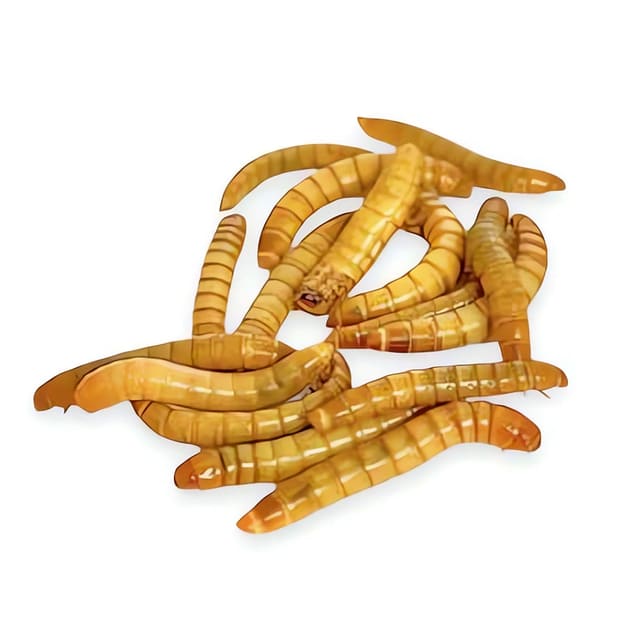
Meal worms — Tenebrio Molitor Mealworms - UK
£9.99

Live Locusta migratoria feeder packs in small, medium, large and subadult options for suitable insect-eating reptiles. Includes detailed short-term holding, gut-loading and feeding guidance.
Locusta migratoria
Live Locusta migratoria feeder packs in small, medium, large and subadult options for suitable insect-eating reptiles. Includes detailed short-term holding, gut-loading and feeding guidance.
Live locust packs provide active feeder insects for suitable insect-eating reptiles and other exotic pets whose established care plan includes live prey. The species supplied is Locusta migratoria, the migratory locust. Its climbing, jumping and visible movement can encourage stalking and striking behaviour, which makes locusts particularly useful for visual hunters. They should still be treated as one part of a varied, species-appropriate diet rather than a complete food on their own.
Choose from four pack options: small, medium, large and subadult. Each option has its own declared pack count, shown clearly in the selector and in the table below. The size names are supplier size bands rather than guaranteed millimetre measurements, and live insects naturally vary within a band. Select prey for the individual animal you intend to feed, not simply by the age label on the pet. If you are uncertain about safe prey size, feeding frequency or supplementation for your species, use a current specialist care source or ask an experienced exotic-animal veterinary professional.
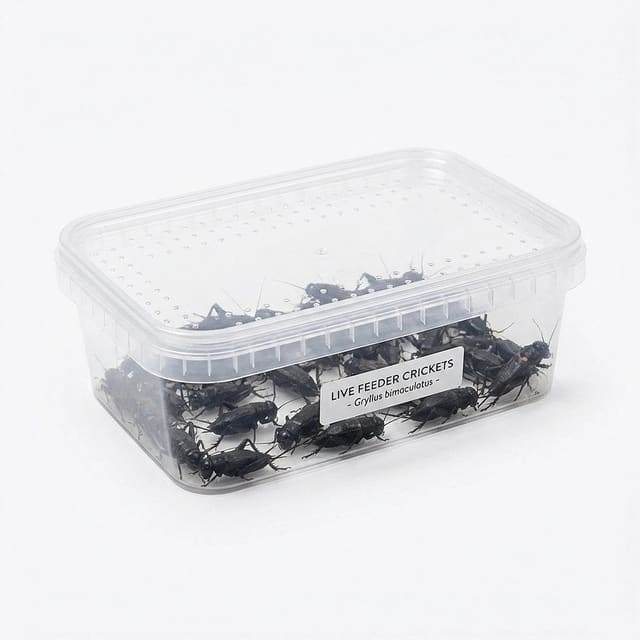
The locusts are intended for short-term holding and feeding, not as a breeding colony or outdoor-release product. They need a secure, well-ventilated, warm and dry setup after arrival. Prompt unpacking, suitable food, clean housing and protection from temperature extremes all affect their condition. The single gallery image is a representative illustration of locusts in a ventilated holding container; it is not a photograph of the exact insects dispatched, the illustrated enclosure is not included, and the picture cannot show the exact appearance or count in your selected pack.
| Option | Declared pack count | How to choose |
|---|---|---|
| Small | 25 locusts | For animals whose current feeding guidance calls for smaller moving prey |
| Medium | 15 locusts | For animals already taking medium feeder insects safely |
| Large | 10 locusts | For larger animals whose care guidance supports larger prey |
| Subadult | 11 locusts | A later life-stage option for appropriately sized insect-eaters |
One purchase unit is one pack in the selected option. The labels and counts above match the available sale units; they do not promise an exact body length, sex ratio, colour, weight or developmental age for every insect. Natural size and appearance variation is normal. Check the selected option in the basket before completing the order, especially when ordering for a small or juvenile animal.
| Scientific name | Locusta migratoria (migratory locust) |
|---|---|
| Product type | Live feeder-insect pack |
| Primary use | Part of a varied diet for suitable insect-eating reptiles and other exotic pets |
| Sale unit | One pack in the selected size band and declared count |
| Holding purpose | Short-term care before feeding; not sold as a breeding culture |
| Broad holding range | About 24-32°C, adjusted through a safely controlled setup |
| Housing | Secure, escape-resistant, tall, warm, dry, clean and well ventilated |
| Food | Fresh suitable plant food plus an appropriate dry feeder-insect diet |
| Water | Moisture through suitable fresh food; avoid an open water dish that can cause drowning |
| Important precautions | Do not release; remove uneaten insects from the pet enclosure; wash hands after handling |
Locusta migratoria is an accepted scientific species name recorded by biodiversity authorities including GBIF and the Natural History Museum. In the livefood trade, migratory locusts are used because they remain visible and move actively across climbing surfaces. That behaviour can provide a more natural feeding opportunity for an animal that locates prey visually. Movement may help prompt interest, but no feeder can guarantee that a stressed, unwell or newly introduced animal will eat.
Locusts are often easier to spot and retrieve than insects that immediately hide under decor. Their relatively large body and distinct size bands also let keepers choose among several prey sizes. Those practical advantages do not make every locust suitable for every pet. A prey item that is appropriate for a large adult lizard may be unsafe for a smaller animal, and some species need different feeder types or a very different balance of plant and animal foods.
Use live locusts within an established feeding programme that accounts for the pet's species, size, health, life stage and veterinary advice. Examples seen in reptile care literature include bearded dragons and other insect-eating lizards, but this listing is not a blanket recommendation for all reptiles, amphibians, birds, mammals or invertebrates. The RSPCA's bearded dragon guidance, for example, recommends varied live invertebrates and correctly sized prey rather than dependence on one feeder. Equivalent guidance should be checked for the animal in your care.
Choose the smallest option that comfortably fits the feeding guidance for your animal. A commonly used safety principle is that prey should not be larger than the animal can take and swallow safely; the RSPCA describes prey for bearded dragons as no larger than the animal's mouth. Some keepers use other visual rules, but no one shortcut applies reliably to every species. The pet's current body size, mouth size, feeding ability and health matter more than a generic age category.
Observe each feeding. An animal should be able to capture and swallow the locust without repeated difficulty. Stop if prey is clearly too large, if the pet is struggling, or if feeding causes distress. Do not assume that a pet should move to a larger feeder simply because it has reached a particular age. Growth rates and individual condition vary.
The small, medium, large and subadult labels on this listing are commercial size bands. They are useful for selecting a pack but are not precision measurements. If an exact dimension is essential for a very small or medically vulnerable animal, contact us through the contact page before ordering so current stock information can be checked. Never cut, crush or otherwise alter a live feeder in a way that creates avoidable suffering; choose a more suitable size or feeder type instead.
Prepare the holding container before the order arrives. A suitable setup is secure, escape-resistant and strongly ventilated, with enough height and internal surface area for the insects to spread out and climb. A purpose-made faunarium or another appropriately ventilated feeder-insect enclosure can work. The transport tub may be useful briefly when it remains clean and well ventilated, but a larger prepared container is generally easier to manage when holding a pack for more than a short period.
Add clean cardboard egg flats or similar untreated climbing material. Extra vertical and horizontal surfaces reduce crowding and let locusts move away from one another. Keep the floor easy to inspect and clean. Avoid loose, damp substrate, fragranced papers, chemically treated materials or decor that makes dead insects and spoiled food impossible to remove. Do not rely on the illustrated container in the gallery: it is part of the representative image, not an included accessory or a specification for the container you must use.
Ventilation is essential. Warm insects produce moisture and waste, and fresh plant food adds more humidity. A sealed or poorly ventilated box can become damp, stale and fouled even when it started clean. At the same time, holes and mesh must be fine and secure enough to prevent escape. Check lids, cable openings and feeding doors each time the enclosure is handled.
Keep the setup away from direct sunlight, draughts, radiators and other uncontrolled heat sources. Sunlight through glass or clear plastic can overheat a small container rapidly. If supplementary warmth is needed, use equipment intended for animal housing, control it with a suitable thermostat where applicable, and measure the temperature at the insects' position with a reliable thermometer. Never place the container directly on an unregulated heat mat or against a hot surface.
A broad short-term holding range of about 24-32°C is commonly advised for feeder locusts. The aim is a warm, dry, active environment without overheating. There is no need to chase a single exact number if the locusts are active, feeding and housed safely within an appropriate range. Cooler conditions can slow their movement and feeding, while excessive heat can dehydrate or kill them. Room temperature may be adequate in a warm home and inadequate in a cold outbuilding, so measure rather than guess.
Warmth and dryness should not be confused with neglecting hydration. Locusts obtain useful moisture from suitable fresh plant food. The container itself should remain dry and airy, while fresh feed should be replaced before it wilts, ferments or develops mould. An open water bowl is usually unsuitable because small insects can drown and spilled water quickly damages the environment. Water gels and other feeder products should only be used according to their own instructions and should not be allowed to foul the enclosure.
Inspect the pack daily. Remove dead insects, shed material that is becoming dirty, and old plant food. Replace soiled cardboard when necessary. Clean hands and dedicated feeding tools help reduce contamination between animal enclosures. Do not spray household cleaners, deodorants, insecticides or aerosols near the locust container. If the enclosure itself needs cleaning, transfer the insects securely and use a method appropriate for livefood equipment, allowing it to dry fully before reuse.
Feed a combination of fresh suitable plant material and an appropriate dry feeder-insect food. Common practical choices include leafy greens and pieces of vegetables such as carrot, alongside bran or a commercial locust diet. Offer modest portions that can be kept clean rather than filling the enclosure with wet food. Wash fresh produce, avoid spoiled pieces, and remove leftovers before they decay.
Do not assume that every household plant or vegetable is safe. Avoid plants exposed to pesticides, roadside contamination or unknown garden chemicals. Do not feed leaves from an unidentified species. A varied, controlled feeder diet is preferable to one large piece of watery food left in the tub for several days. The purpose is to maintain active insects and improve what they contribute when fed, without creating a damp environment.
Locust nutrition changes with the food they consume. Research on Locusta migratoria has shown that diet can change the insect's chemical composition, which supports the practice commonly called gut-loading. Gut-loading means feeding the insects an appropriate nutrient-rich diet before they are offered to the pet. It improves the value of a feeder only within the limits of the ingredients used; it does not turn locusts into a nutritionally complete food or remove the need for dietary variety.
There is no universal gut-loading recipe or timing schedule for every exotic pet. Follow current guidance for the animal being fed and for any commercial gut-loading product. The RSPCA provides a practical gut-loading resource for livefood used with reptiles. When using supplements, choose the product and frequency for the pet's species, life stage, UVB provision, wider diet and veterinary plan. Automatically coating every feeder heavily with calcium or vitamin powder can be as inappropriate as never supplementing at all.
Offer a manageable number and watch the animal eat. Live prey should not be tipped into a vivarium and forgotten. Uneaten locusts can hide in decor, add waste, disturb a resting animal and, in some circumstances, nibble at vulnerable skin. Remove uneaten insects after the feeding opportunity recommended for the species. The RSPCA similarly advises removing livefood that has not been eaten.
Use clean feeding tongs or a controlled feeding area when that suits the animal, but allow enough natural movement for safe hunting. Count feeders in and check how many are consumed. This is especially useful when monitoring appetite or caring for several animals. Sudden refusal to eat, weight loss, poor coordination, repeated regurgitation or difficulty swallowing warrants review of husbandry and professional veterinary advice rather than repeated attempts with more live prey.
Rotate feeder types where the species' care guidance calls for variety. Locusts can contribute movement and a useful nutritional profile, but crickets, suitable roaches, worms or other approved feeders may provide different characteristics. The correct balance depends on the pet. Herbivorous or omnivorous animals may need a much larger plant component, while some animals should receive live insects only occasionally. This product page cannot replace a complete species care plan.
Do not feed insects that are dead on arrival, decomposing, contaminated, mould-exposed or suspected of contact with household chemicals. A recently dead insect is not automatically safe merely because it came from a livefood pack. Remove and dispose of questionable insects, clean the setup, and review temperature, food and ventilation if losses are clustering.
| Consideration | Locusts | Why it matters |
|---|---|---|
| Visibility | Often climb and remain easy to see | Useful for visual hunters and easier retrieval after feeding |
| Movement | Active jumping and climbing | Can encourage hunting, but requires secure handling |
| Holding | Warm, dry, clean and strongly ventilated | Different feeder species should not be assumed to share one ideal setup |
| Nutrition | Influenced by feeder diet and supplementation | Gut-loading helps but does not replace a varied pet diet |
| Size choice | Available here in four commercial bands | Allows a closer match to the animal's current safe prey size |
Locusts and crickets are best housed separately. They differ in behaviour and may not thrive under identical conditions; mixed housing also makes losses, feeding and hygiene harder to monitor. Roaches and worm-based feeders likewise have their own needs. A keeper using several feeder types should maintain each according to its own care requirements and prevent tools, waste or escaped insects moving freely between cultures.
No single feeder is automatically the “best” for every animal. Locusts are a practical choice when visible movement, climbing behaviour and selectable size are useful. Cost, storage time, the pet's response, nutritional plan and the number of animals being fed all affect the decision. Buy a quantity that can be housed correctly and used while the insects remain in good condition rather than over-ordering for an uncertain long holding period.
Have the holding setup ready before delivery. When the parcel arrives, bring it indoors promptly, inspect the pack and follow any shipment instructions. Do not leave live insects in a porch, vehicle, parcel locker or other place exposed to heat or cold. Transfer or open the transport container only inside a secure area where an escape can be recovered.
Delivery methods, dispatch days, geographic restrictions and the process for reporting a problem can change. Check the current delivery information before ordering rather than relying on an old search snippet or a fixed promise in this description. Contact the team before ordering if product-specific coverage or evidence requirements are unclear. If there is an arrival problem, keep the original packaging, take clear evidence promptly and contact the team so the order can be assessed under the terms that apply.
Live insects can look less active immediately after transport, especially when cool. Move the pack to an appropriate controlled environment and assess it according to the current delivery instructions; do not apply uncontrolled intense heat. For order questions or a problem that falls outside the arrival process, use the current returns policy and contact route. Availability and dispatch timing can vary because this is a live product.
Check the measured temperature first, then inspect ventilation and food. Cool locusts often move and feed less, but excessive heat and dehydration can also cause weakness. Adjust conditions gradually within a suitable range. Do not put the container directly against a heater in an attempt to force rapid activity. If the insects have just arrived, follow the delivery guidance and document any suspected losses before altering the pack substantially.
Remove spoiled fresh food and dead insects, improve airflow, and replace wet or fouled cardboard. Review portion sizes: a small amount of fresh food replaced regularly is safer than a large amount left to decay. Condensation is a sign that moisture production and ventilation are out of balance. Do not mask odour with sprays or fragrances.
Check for overheating, chilling, crowding, stale air, mould, contaminated food and chemical exposure. Separate obviously dead insects and clean the enclosure. A single loss in a live pack does not identify the cause, but repeated losses require prompt husbandry review. If the issue began on arrival, follow the evidence and timing requirements on the delivery page.
Move the container into a secure room, close doors and inspect every opening. Repair or replace damaged mesh and check that the lid closes without trapping insects in the rim. Do not release recovered or surplus locusts outdoors. Reduce the chance of another escape by preparing food and cleaning tools before opening the enclosure.
Confirm that the feeder size is appropriate and that the species should receive locusts. Appetite can be affected by temperature, lighting, UVB, stress, season, illness and many other factors. Do not leave extra insects loose in the enclosure to solve a refusal. Remove uneaten prey and review the animal's full husbandry. Seek an exotic-animal veterinary professional when appetite loss is persistent or accompanied by other signs.
These locusts are sold as animal feed. They are not prepared or certified for human consumption. Wash hands with soap and water after handling livefood, its waste, the holding container or the pet enclosure. Keep livefood equipment away from human food-preparation areas and supervise children during any handling.
Locusta migratoria is a non-native feeder animal in this context. Maintain secure containment and never deliberately release surplus insects outdoors. GOV.UK guidance restricts the release or escape of non-native animals. If you cannot use a pack, contact an appropriate local exotic-pet professional for responsible advice rather than abandoning it.
The locusts should not be used for novelty experiments or subjected to avoidable harm. Provide suitable care for as long as they are held. Dispose of dead insects and contaminated bedding in a secure way that prevents access by wild animals and avoids accidental release of any surviving locusts.
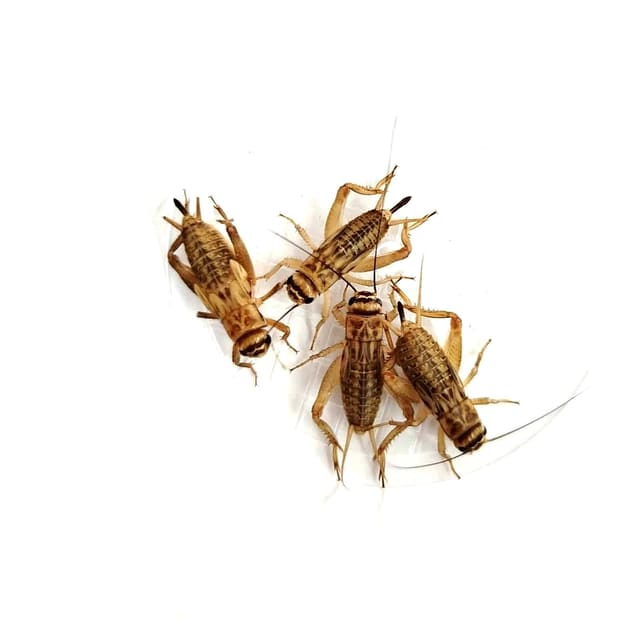
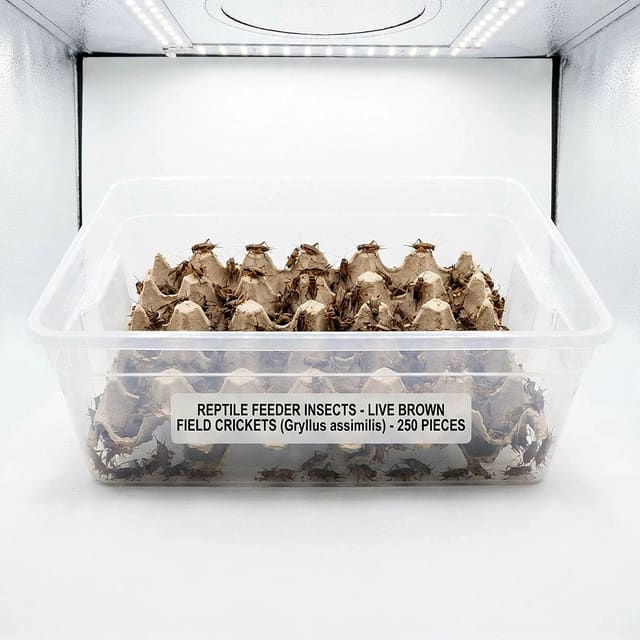
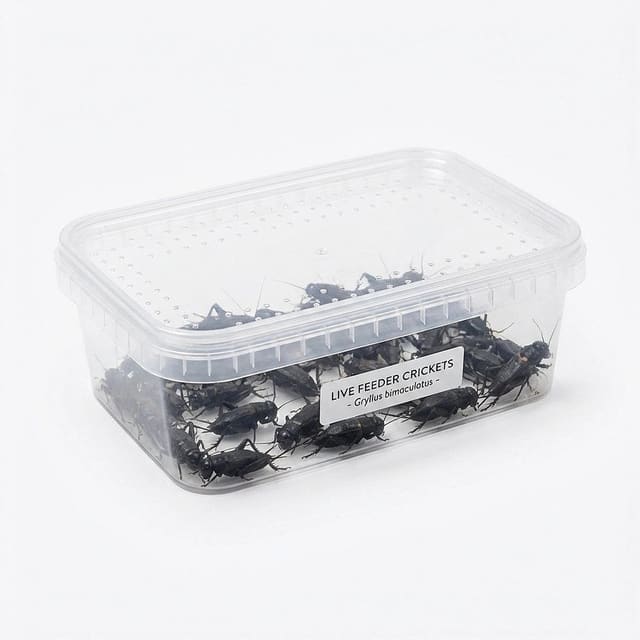
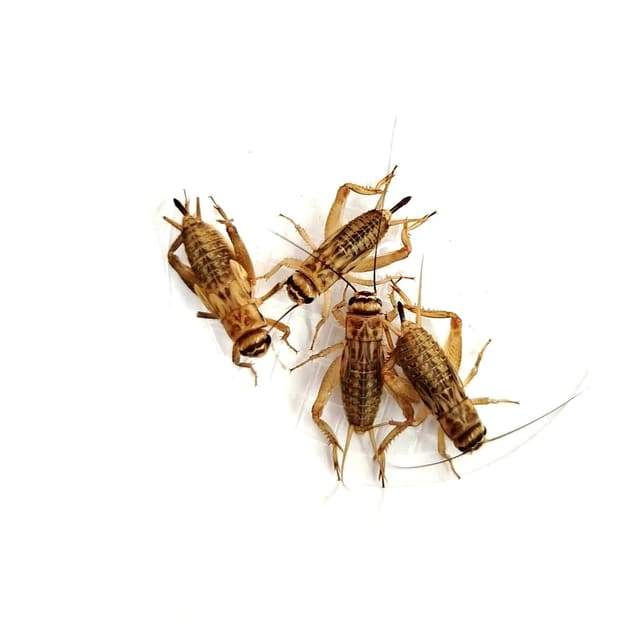
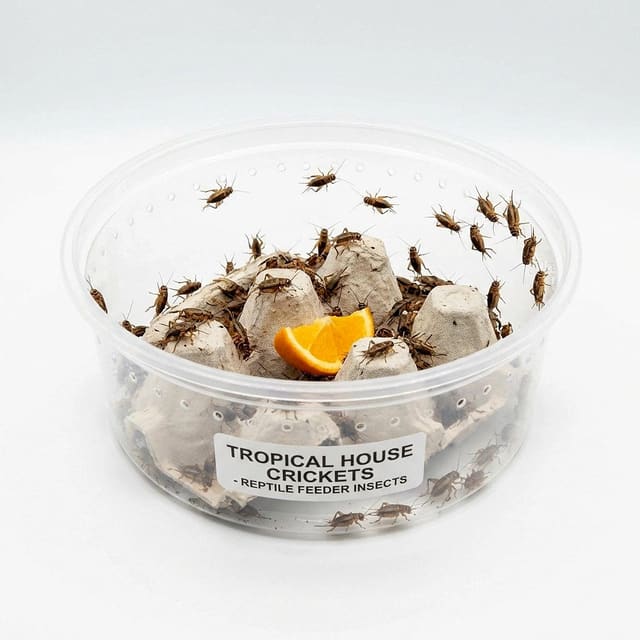
The gallery contains one representative illustration showing several brown locust-like insects in a transparent ventilated holding container. It is intended to help identify the general product type. It is not a photograph of the exact pack dispatched, does not verify the selected count or size, and does not promise identical colour or appearance. The pictured container is not included.
Taxonomy was checked against GBIF and the Natural History Museum. Feeding and prey-safety guidance was checked against RSPCA resources for bearded dragons and gut-loading livefood. The qualified nutrition statement is supported by Oonincx and van der Poel's published study on how diet changes the chemical composition of Locusta migratoria. Responsible containment follows GOV.UK guidance for non-native animals. External sources support general care principles; the exact sale options, availability, delivery terms and problem-reporting process are controlled by the current Tropical Fish Co listing and policy pages.
You can browse the wider Tropical Fish Co shop for other currently listed products. For this livefood item, rely on the option selector for the pack being purchased and on the policy pages for current service terms. The title, description and image are designed to explain the product accurately; they do not replace the individual animal's complete husbandry plan.
No reviews for this item yet. Bought one? Honest reviews only, good or bad.
What customers say about ordering from us
I have a small group of long finned mountain minnows. So was delighted to be able to order ten of this variety to increase the genetics in my tank . The ones I recieved are healthy but it’s to early to give a verdict on wether they are of a long finned type since they are small currently.
Gordon Walker · 23 Sept 2026
100% success travel and "installation". Pleased with quality of purchase. The Siamese fighter a bit "shy" so have not yet seen him at his best yet but looking good. Happy customer. GG
George E Garratt · 21 Sept 2026
Reviews of our shop, collected by Judge.me, an independent third-party review collector. Newest first.